-
1st slide
-
2nd slide
-
3rd slide
-
4th slide
-
5th slide
-
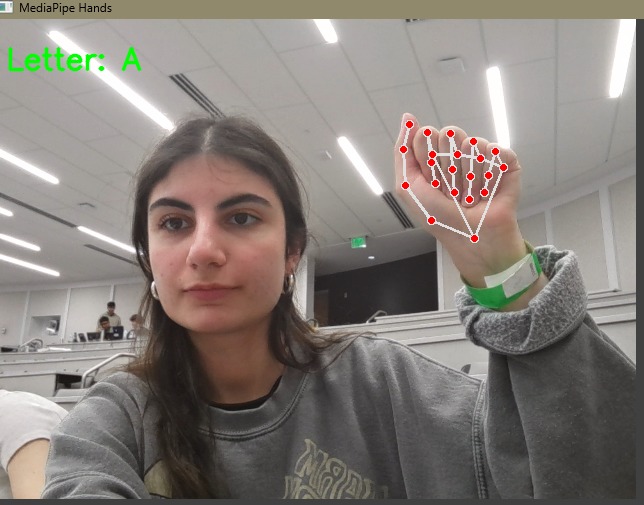
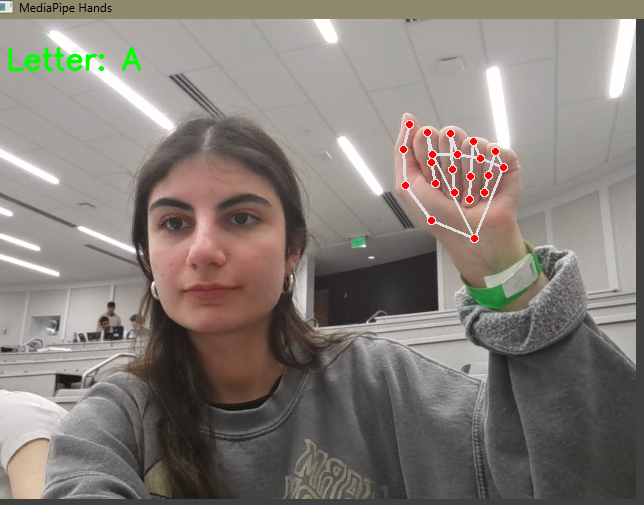
Letter A
-
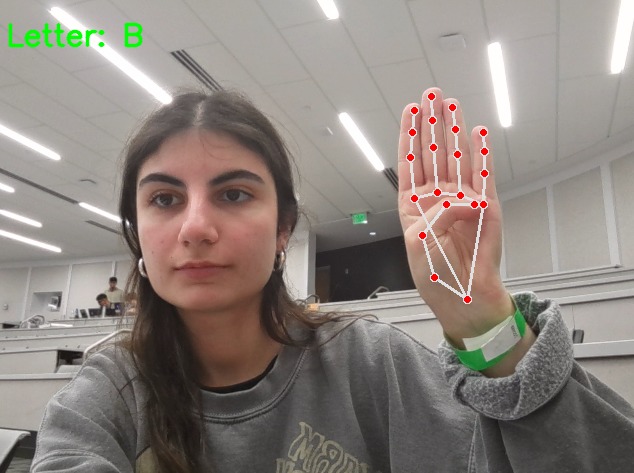
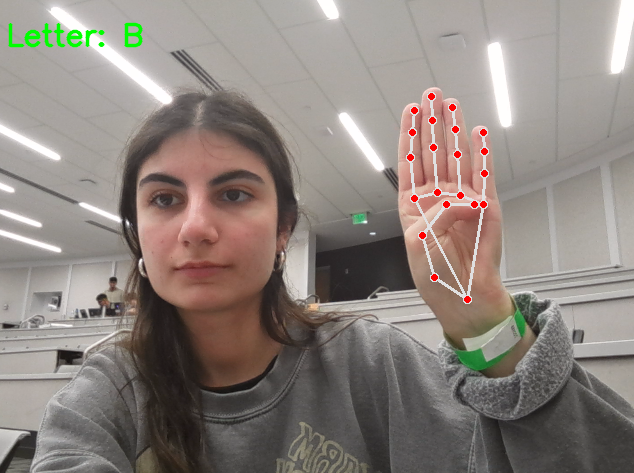
Letter B
-
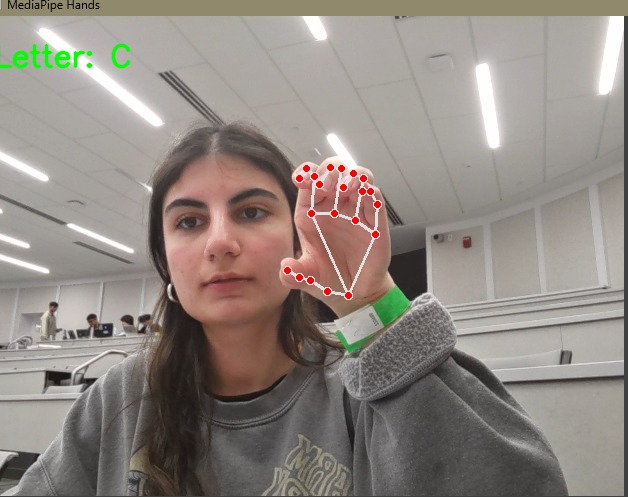
Letter C
-
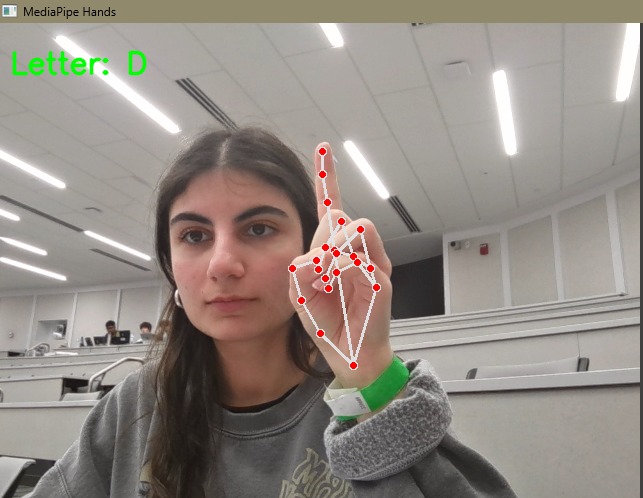
Letter D




Inspiration
Approximately 250,000 to 500,000 Americans use American Sign Language (ASL), which doesn't include deaf or hard of hearing people. Our group wanted to create a tool that not only assists in recognizing hand gestures but also raises awareness about ASL and its importance in communication for the deaf and hard of hearing community.
What it does
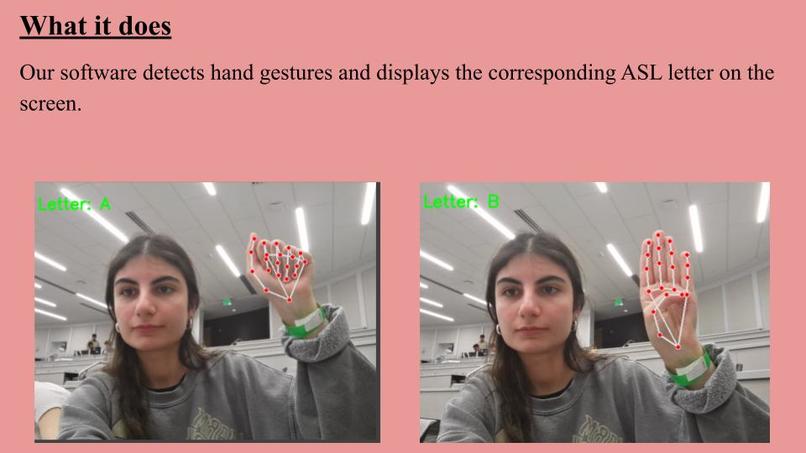
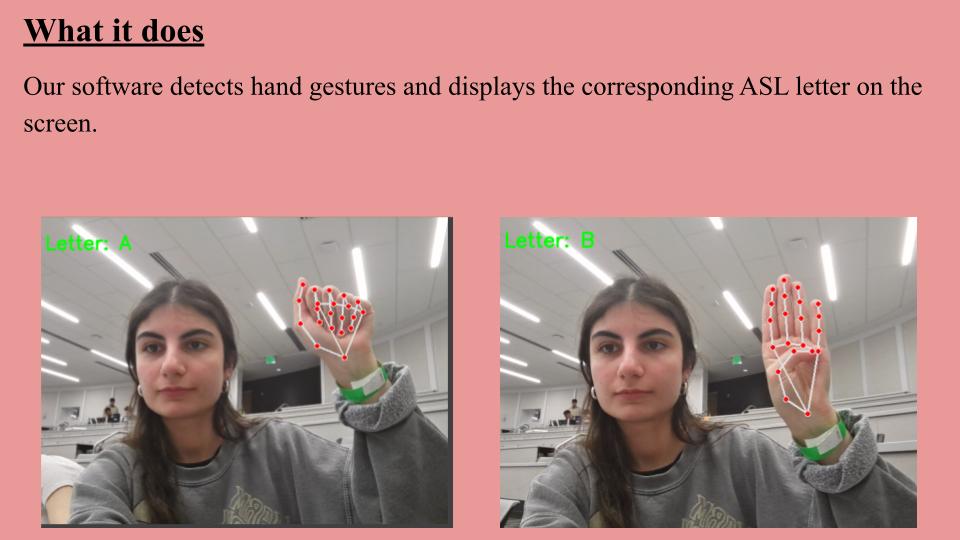
Our software detects hand gestures and displays the corresponding ASL letter on the screen.
How we built it
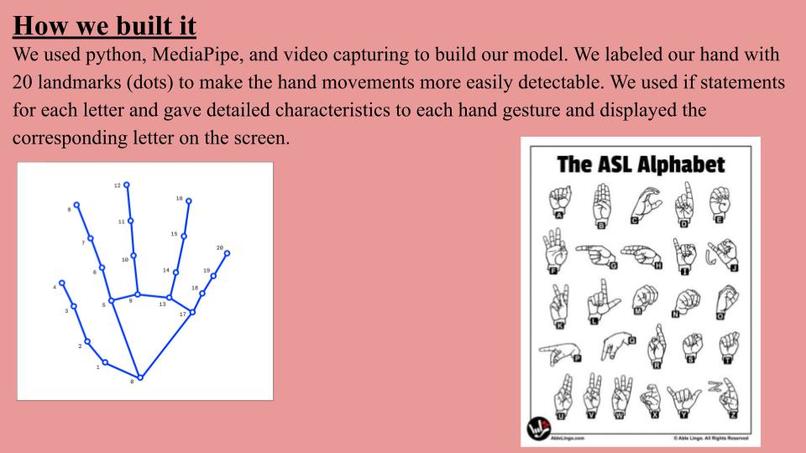
We used python, mediapipe, and video capturing to build our model. We labeled our hand with 20 landmarks (dots) to make the hand movements more easily detectable. We used if statements for each letter and gave detailed characteristics to each hand gesture and displayed the corresponding letter on the screen.
Challenges we ran into
One of the biggest challenges was distinguishing similar hand gestures, especially under different lighting conditions and hand positions.
Accomplishments that we're proud of
We successfully built a working prototype within 24 hours that can recognize and display letters with reasonable accuracy.
What we learned
Through this project, we gained a deeper appreciation for ASL and the importance of inclusive technology. We also learned more about machine learning and pattern recognition.
What's next for ASL Translator
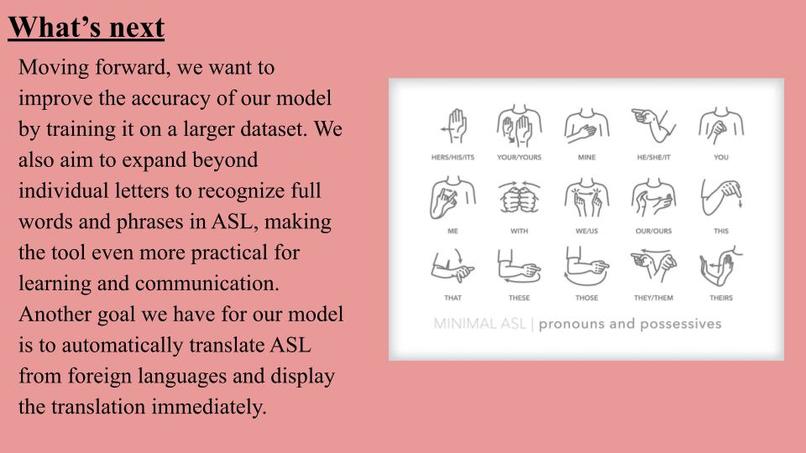
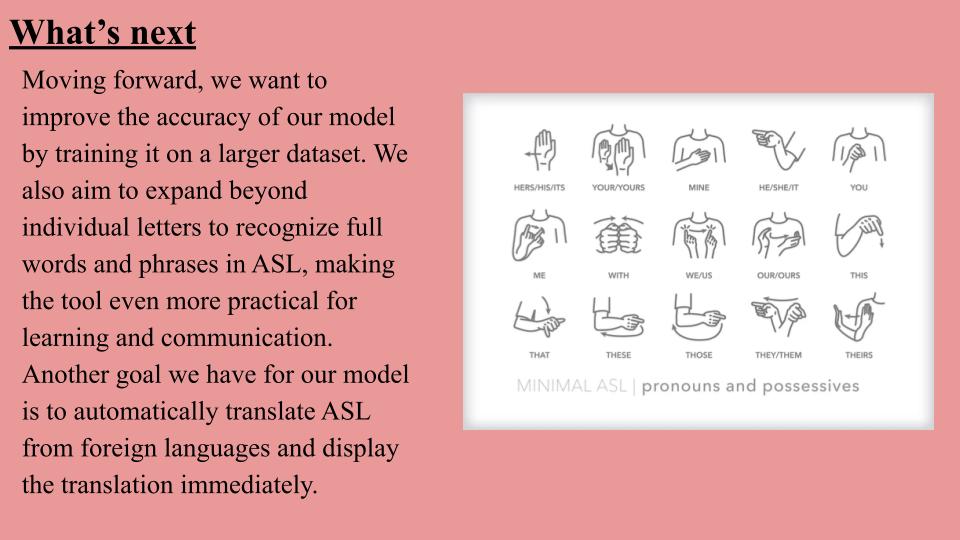
Moving forward, we want to improve the accuracy of our model by training it on a larger dataset. We also aim to expand beyond individual letters to recognize full words and phrases in ASL, making the tool even more practical for learning and communication. Another goal we have for our model is to automatically translate ASL from foreign languages and display the translation immediately.

Log in or sign up for Devpost to join the conversation.