Inspiration
We were inspired by the lack of truly accessible and engaging platforms for learning American Sign Language (ASL). Many existing resources feel outdated, text-heavy, or rely on static images that fail to capture the movement, facial expressions, and body language that are essential to ASL communication.
We wanted to create a modern learning experience similar to Duolingo, but specifically designed for visual language learning. Our goal was to make ASL more approachable, interactive, and practical for beginners while also respecting the importance of authentic signing and Deaf communication culture.
The project was driven by the belief that communication should be more inclusive and that technology can help bridge the gap between hearing and deaf communities.
What it does
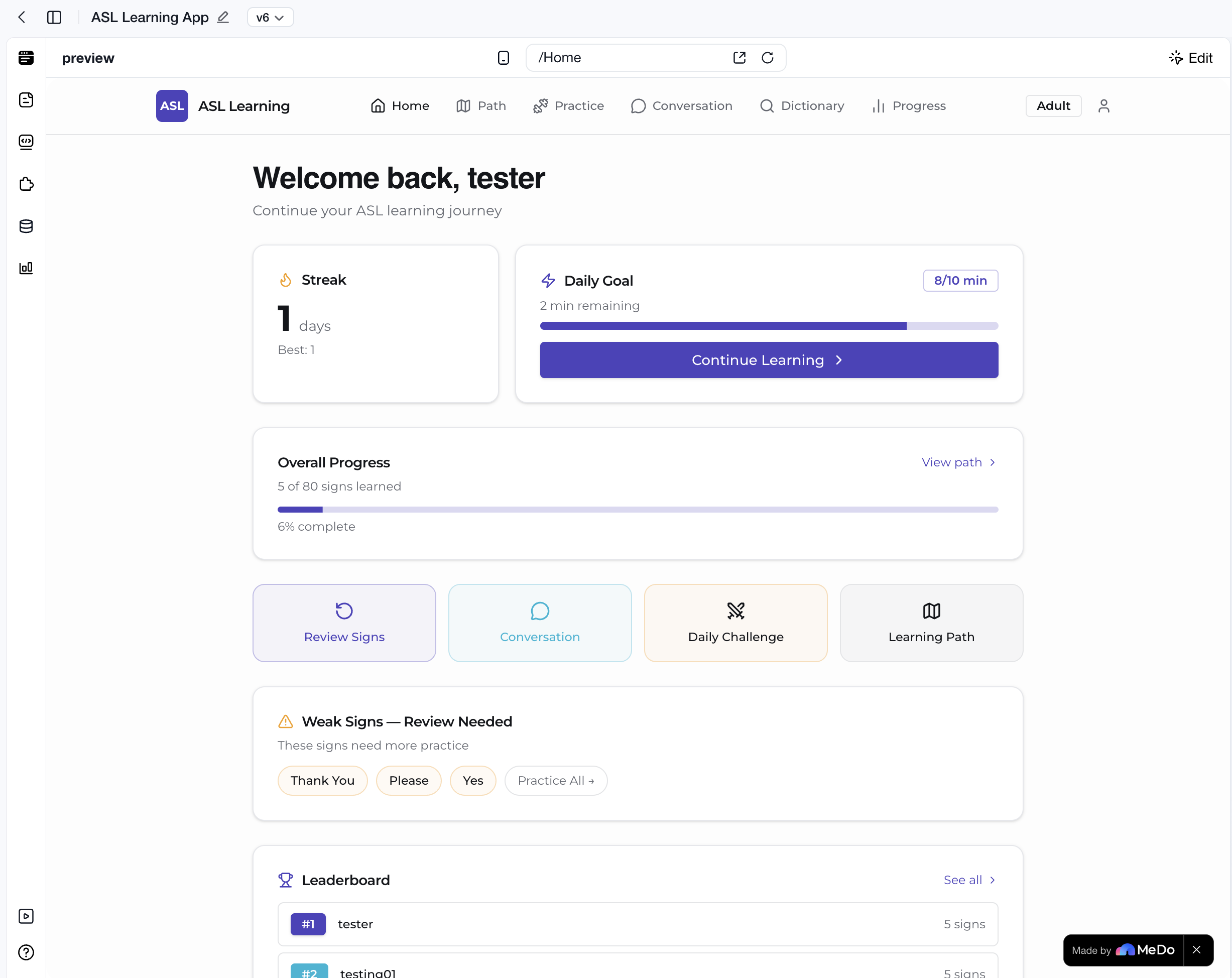
ASL Learning App is a mobile-first ASL education platform that teaches users through short, mastery-focused lessons using real human signing videos.
Key features include: Duolingo-style progression system Short 3–5 sign lessons for focused learning Real looping ASL videos using authentic human signers Interactive quizzes with active recall Spaced repetition for long-term memory retention Progress tracking, streaks, XP, and achievements Conversation practice modules Searchable ASL dictionary Adaptive UI for children, teens, and adults Social motivation through leaderboards and friends systems
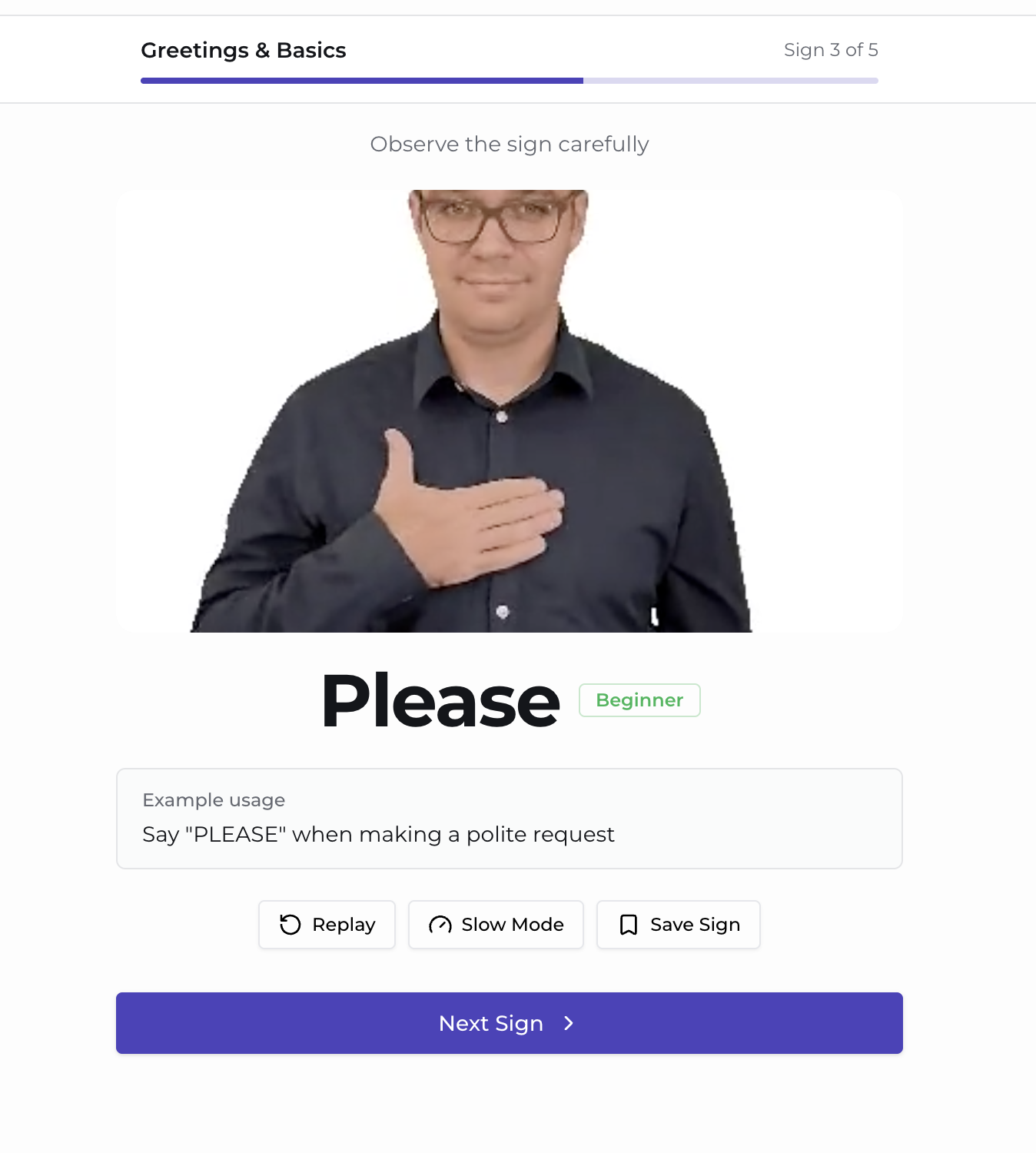
The app focuses heavily on proper visual learning by ensuring all signing media clearly shows:
Facial expressions Hand movement Forearms Upper torso Full signing motion without cropping
Instead of memorising isolated flashcards, users progressively build real-world ASL comprehension and communication skills.
How we built it
We designed the application using a mobile-first architecture focused on accessibility, scalability, and media-heavy performance.
The frontend was built with:
React / React Native Tailwind-inspired modern UI styling Animated card-based interfaces Smooth transition systems
The backend included:
User authentication Progress tracking systems Lesson progression logic Quiz evaluation and spaced repetition algorithms Cloud-based media delivery
One of the biggest technical focuses was the ASL media system. We designed strict validation requirements to ensure all videos:
Used real human signers Maintained proper framing Kept both hands and facial expressions visible Avoided cropped gestures Supported smooth looping playback
We also structured the curriculum into scalable learning paths ranging from beginner vocabulary to advanced conversational ASL.
Challenges we ran into
One of the biggest challenges was handling ASL media correctly.
Unlike traditional language apps, ASL relies heavily on movement, facial expressions, body positioning, and timing. Many available sign clips online were:
Poorly cropped Low quality Missing facial expressions Zoomed too closely into the hands Inconsistent in framing
We had to rethink how sign media should be validated and displayed to ensure users could actually learn effectively instead of guessing the signs.
Another challenge was balancing:
Simplicity for beginners Long-term scalability Accessibility Gamification Educational effectiveness
Designing lessons that felt lightweight while still supporting real mastery-based learning was also difficult.
Accomplishments that we're proud of
We are proud that we built a platform that feels like a real modern learning product rather than a simple prototype.
Some accomplishments we are especially proud of include:
Creating a scalable ASL learning structure beyond beginner greetings Prioritising authentic human signing instead of AI-generated content Designing media validation rules to improve sign clarity Building mastery-based learning instead of passive memorisation Creating a visually polished and accessible user experience Developing adaptive interfaces for different age groups Combining education, accessibility, and gamification into one platform
We are also proud that the project has the potential to make ASL learning more accessible to a wider audience.
What we learned
This project taught us that accessibility-focused products require much deeper design thinking than we initially expected.
We learned:
Visual languages require very different UX decisions from spoken-language apps Small framing issues can completely change sign comprehension Educational apps need strong progression systems to maintain engagement Accessibility and good design should work together, not separately Authenticity matters when building tools connected to real communities
We also learned how important it is to build technology that solves meaningful real-world communication problems.
What's next for ASL Learning App
Our long-term vision is to turn the project into a fully featured ASL learning ecosystem.
Future plans include:
AI-powered signing feedback using camera recognition Real-time hand tracking for practice correction Advanced conversational ASL simulations Community practice rooms Offline lesson downloads Regional ASL variation support Teacher dashboards and classroom tools Expanded Deaf culture education modules Daily live practice challenges Cross-platform mobile deployment Full App Store and Play Store release
We also want to collaborate with Deaf educators and ASL professionals to ensure the platform remains accurate, respectful, and educationally valuable as it grows.
Built With
- medo
- ui


Log in or sign up for Devpost to join the conversation.