






Inspiration
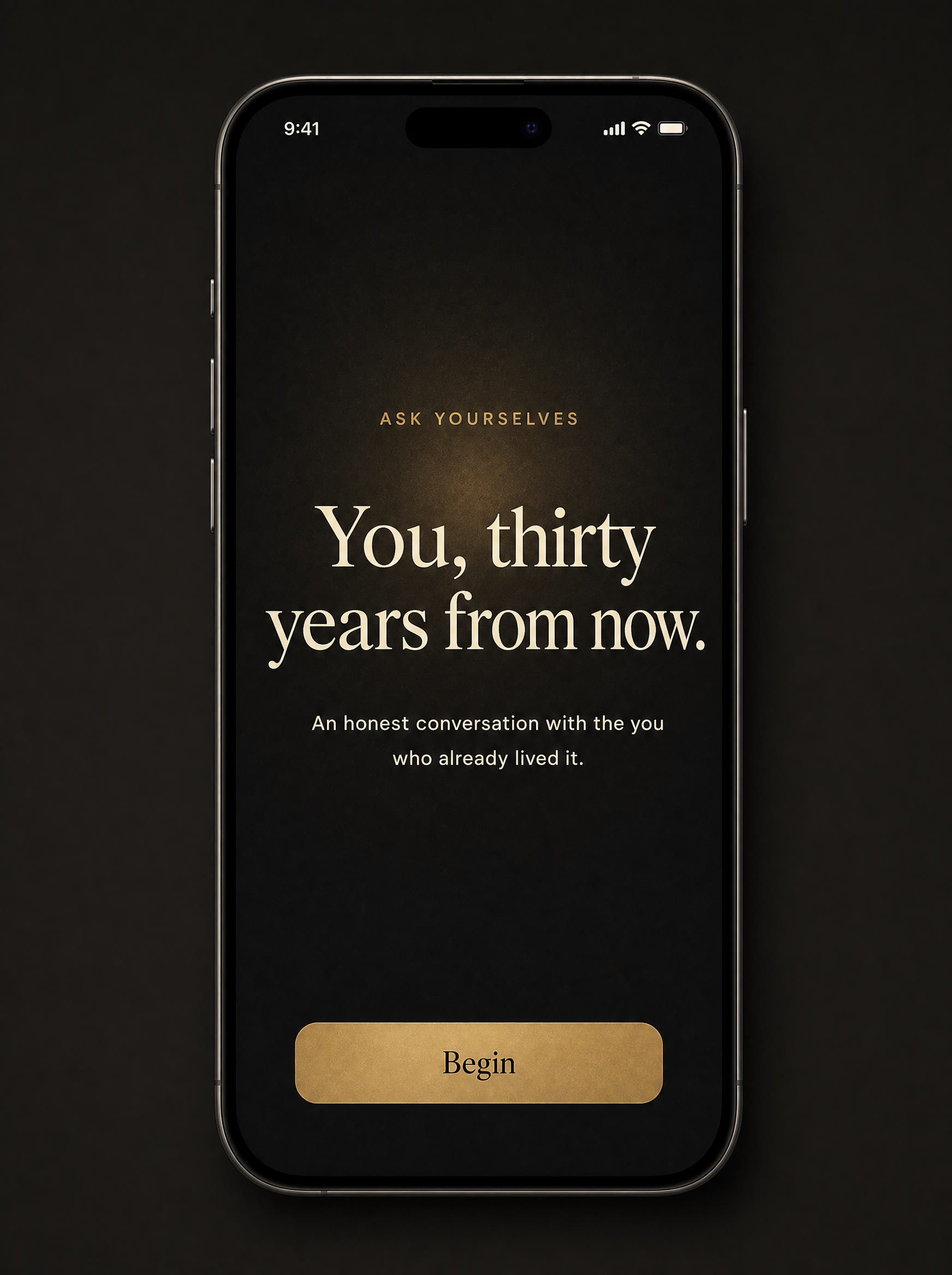
you are never as comfortable as when you are alone with yourself. No performance, no mask, nobody to impress. That is the feeling every social product took from us, and it is the one thing we built this to give back. Gen Z is the loneliest generation on record, and they already turned to AI to say what they could not say to anyone else. A third of them have told an AI something they have never told another human. They are doing it on tools built to flatter them. We built the opposite: the one place you do not have to perform, because the voice on the other side is you. "I wish I knew this when I was younger." Everyone says it, always too late. Ask Yourselves flips it. You talk to the version of you who already lived it, before the regret.
What it does
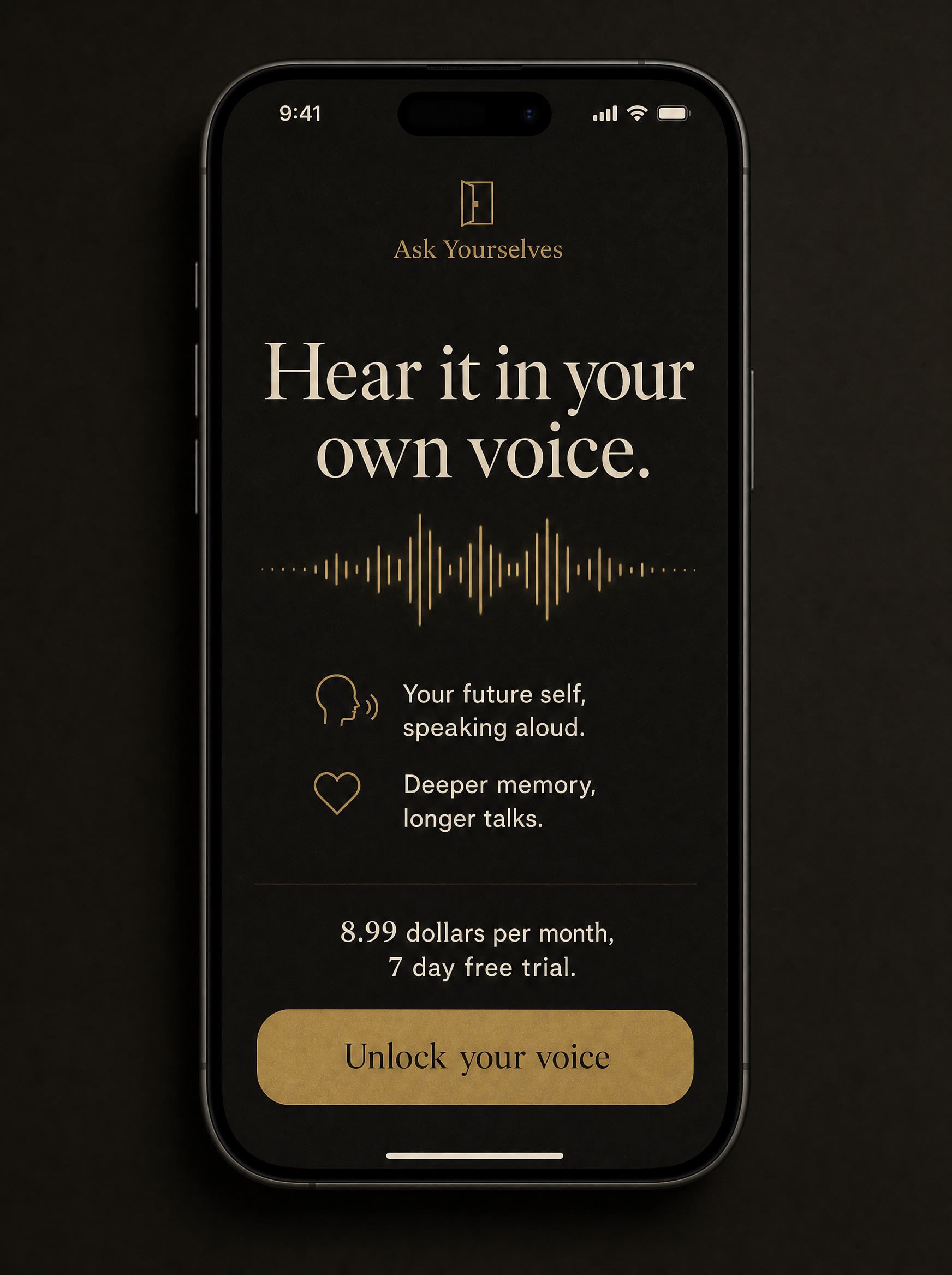
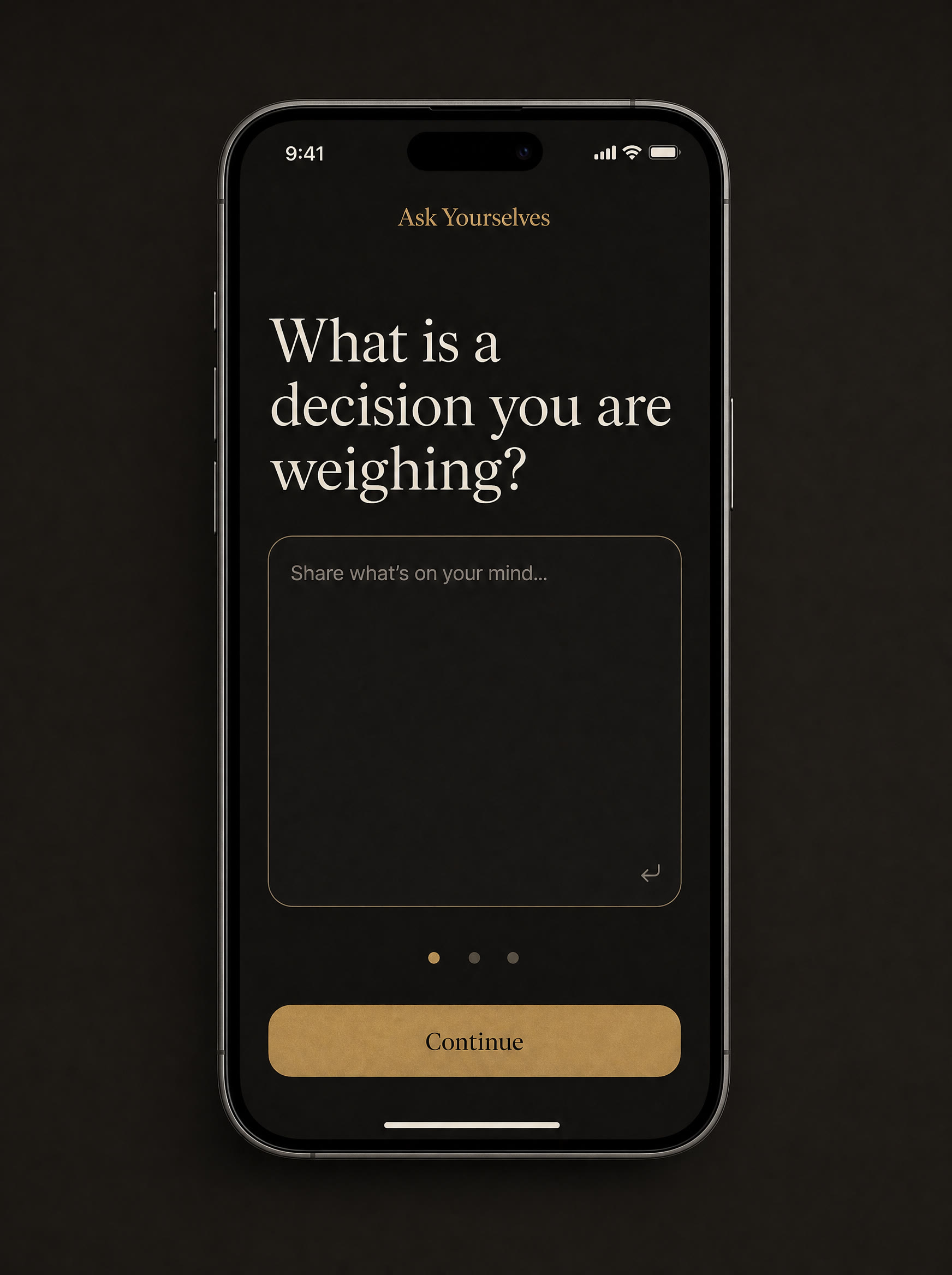
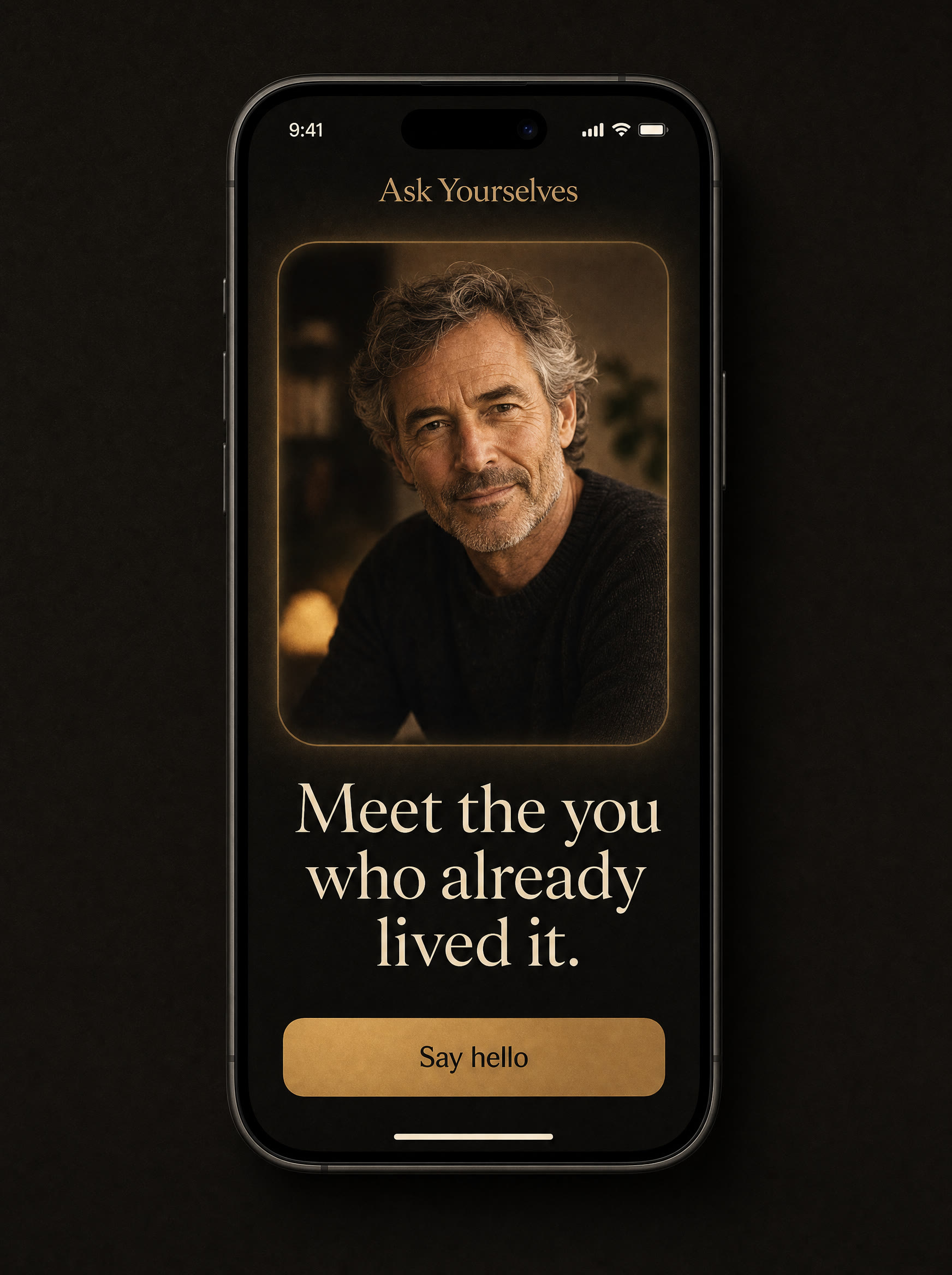
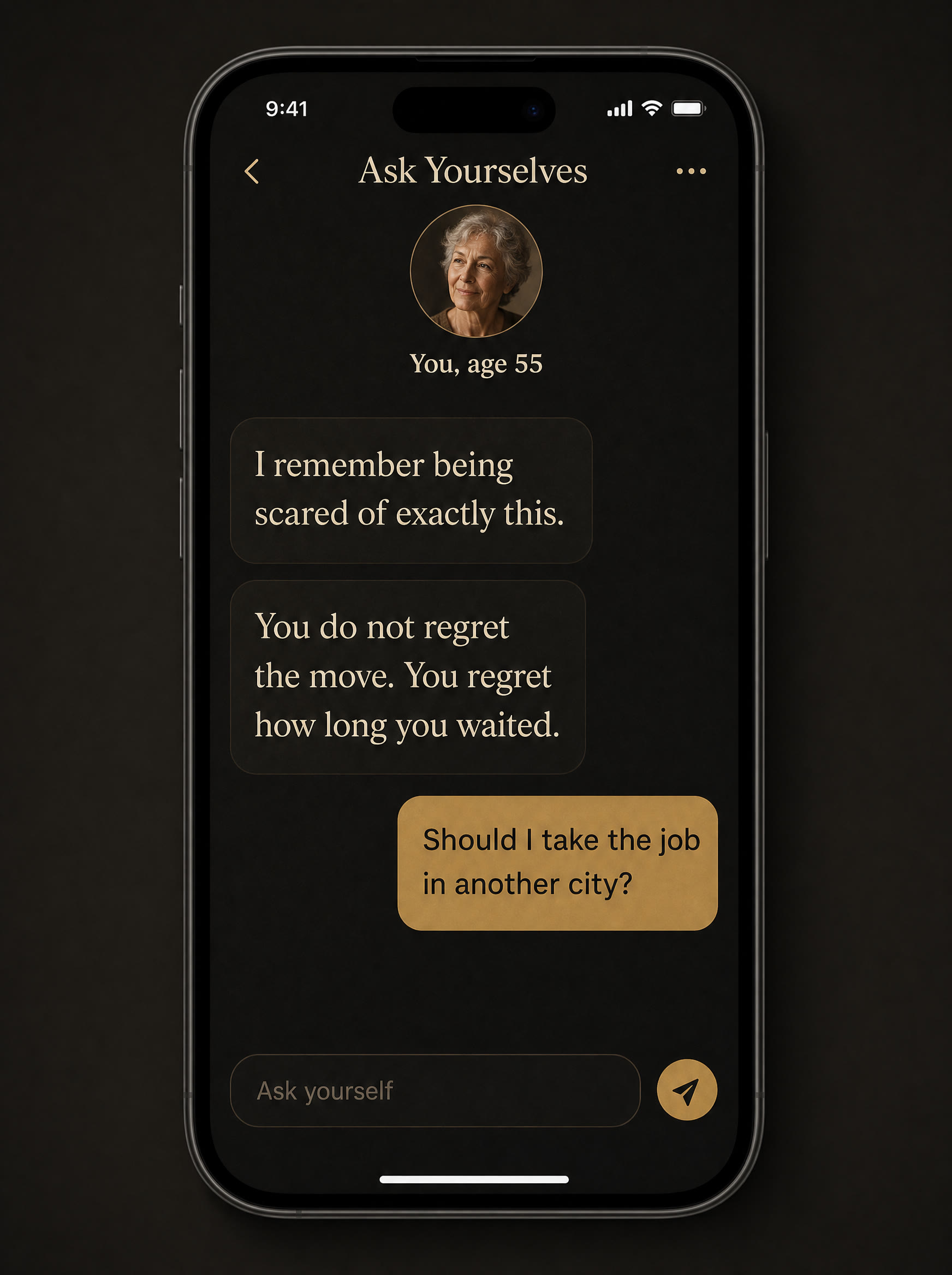
You answer a few questions, one per screen, while a progress bar fills: your future self is forming. You choose the age you want to talk to on a slider. You choose how it should speak to you: gentle, blunt, or playful. Then you add a selfie and meet the you who already lived it, your own face age progressed, looking back at you. And then you talk. The conversation runs on GPT-5.6, grounded in what you shared, with memory across turns. Every reply can be played out loud. The brand stake is the product: the only AI you do not have to perform for. No feed, no followers, nobody watching. Your future self is allowed to call BS on you, because it is you.
Why we built it (and who it is for)
The honest answer to "why this product" is that I built it for the version of me it is for. The one who can go a month without a single deep conversation. Who comforts his landlord at 3am. Who works alone at a screen with an energy drink. Who shields his son from a feeling he is carrying himself.
I built it because I needed it. The introverts, the lonely, and the people who have been through a lot are me too. That is who Ask Yourselves is for.
How we built it
Expo and React Native, one codebase for iOS, Android, and web, in TypeScript. Supabase: anonymous auth, Postgres with row-level security so every user can only ever read their own life, Storage for portraits, and Deno Edge Functions. OpenAI end to end at runtime: GPT-5.6 for the grounded conversation, gpt-image-2 for the age-progressed portrait, and gpt-4o-mini-tts for the spoken replies. Built by AI coding agents under human direction, with test-driven development on the prompt builders.
Challenges we ran into
Plenty, and the honest ones are worth naming. The GPT-5 model family rejects custom temperature values, which quietly took down our chat function until we traced it with a direct API repro. Browser CORS preflights died on our Edge Functions because a method guard answered OPTIONS with a 405; native clients never see CORS, so it only broke on web. An aged portrait that still looks like you took real prompt discipline: same person, same bone structure, natural aging only. And the largest challenge was not technical. It was building a real, deploy-ready product solo, with no funding and no team, and deciding what to cut so it could still ship.
Accomplishments that we're proud of
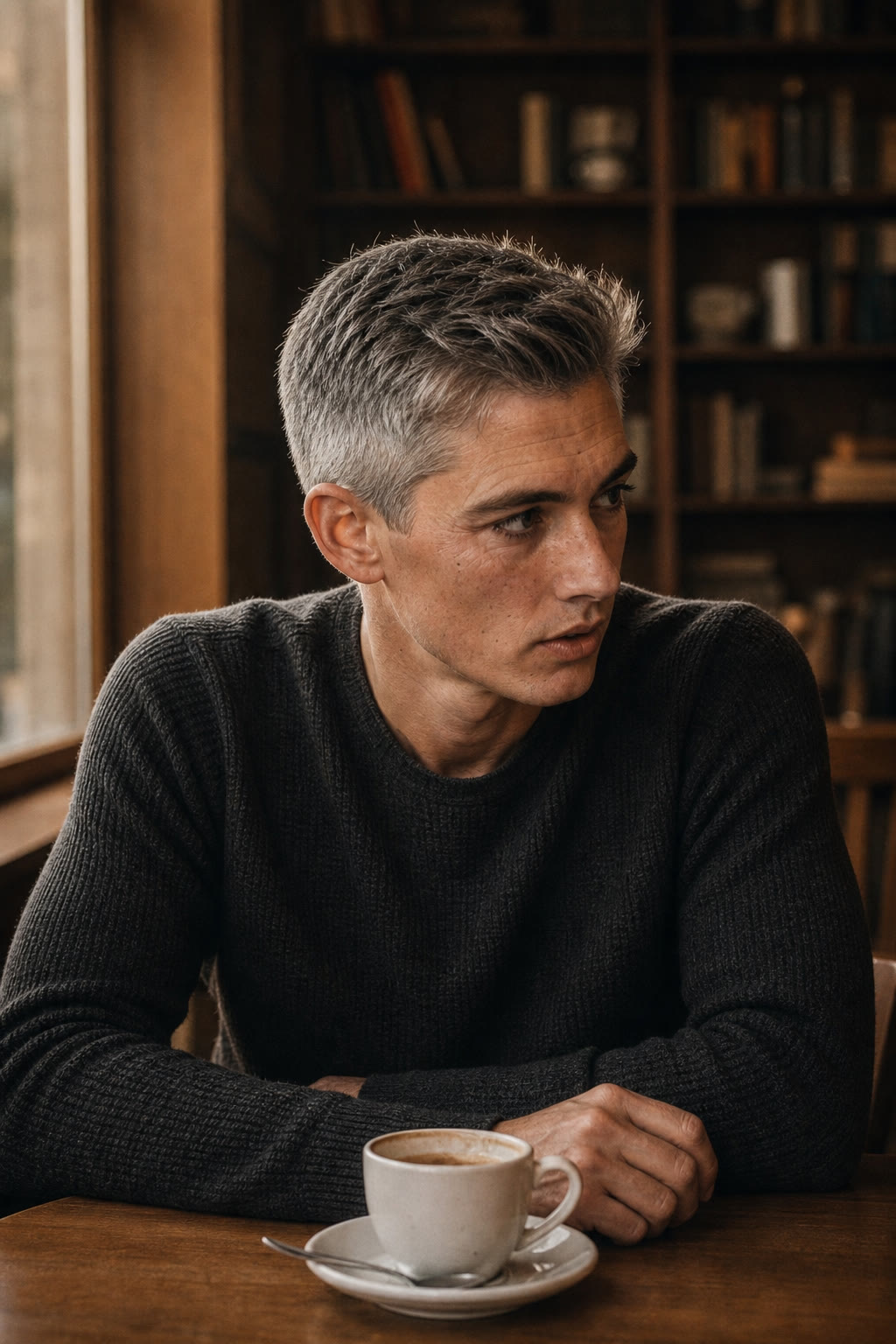
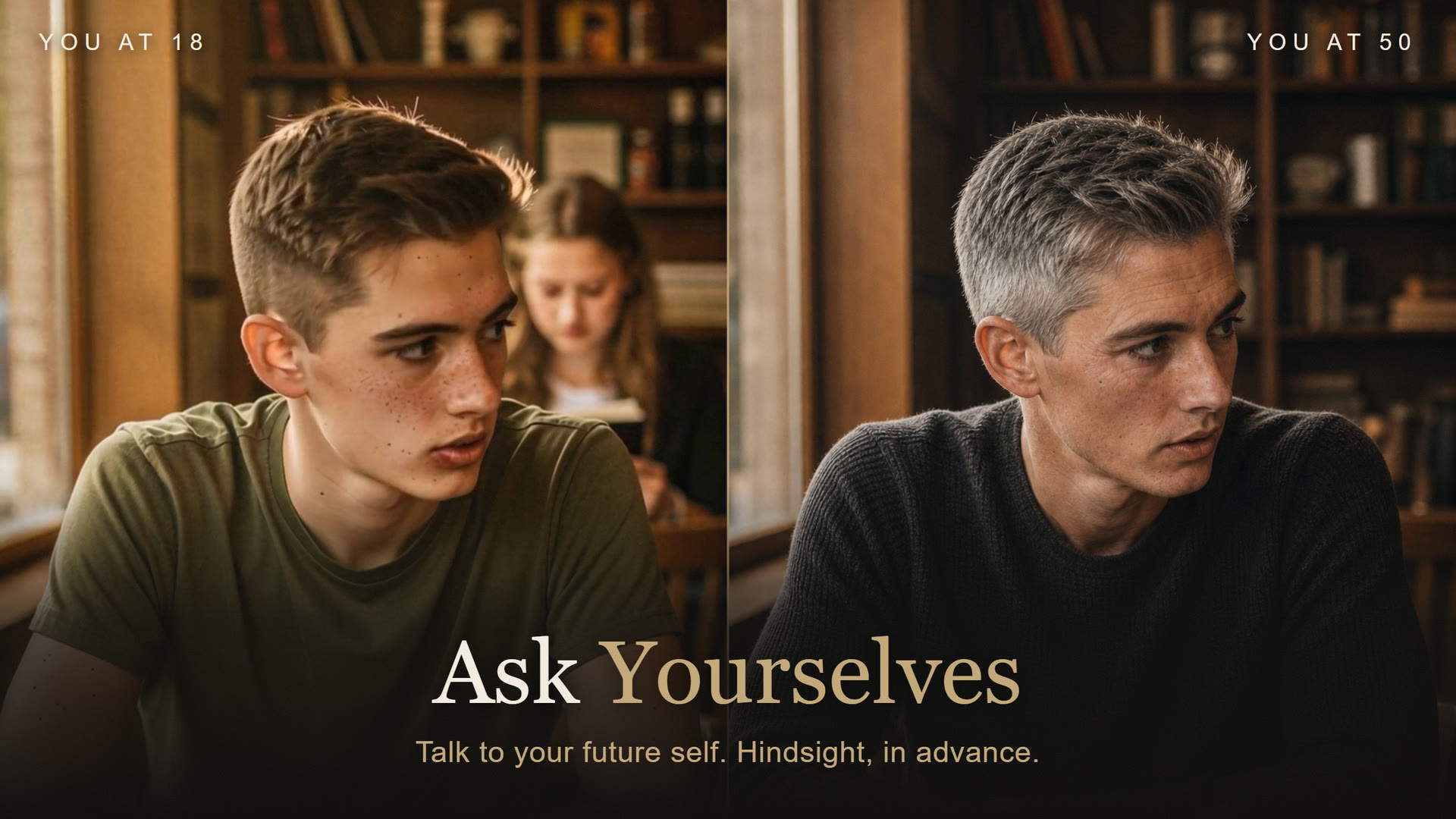
A deploy-ready app, self-built, with no funding, from an idea I had before I ever did the research. The aged portrait actually looks like you: the 18-year-old from our film meets himself at 50 with the same freckles, brow, and ears. The whole product runs at pennies per user. And the honesty design holds in practice: ask it whether the move worked out and it answers "yes, but not in the way you are hoping."
What we learned
The proven core of this category is text plus grounding, not avatars. MIT measured the anxiety reduction and future-self continuity in text alone, so the science-backed part is also the cheapest to build. We learned to ship that first and treat voice, face, and the real-time avatar as the funded roadmap, not the first version. We learned that honesty is a feature, not a constraint: a future self that can push back is more useful than one that flatters. And we learned that being unfunded is a design tool. Cutting the one capital-intensive piece forced a product where every user pays their own cost from day 1
What's next for Ask yourselfes
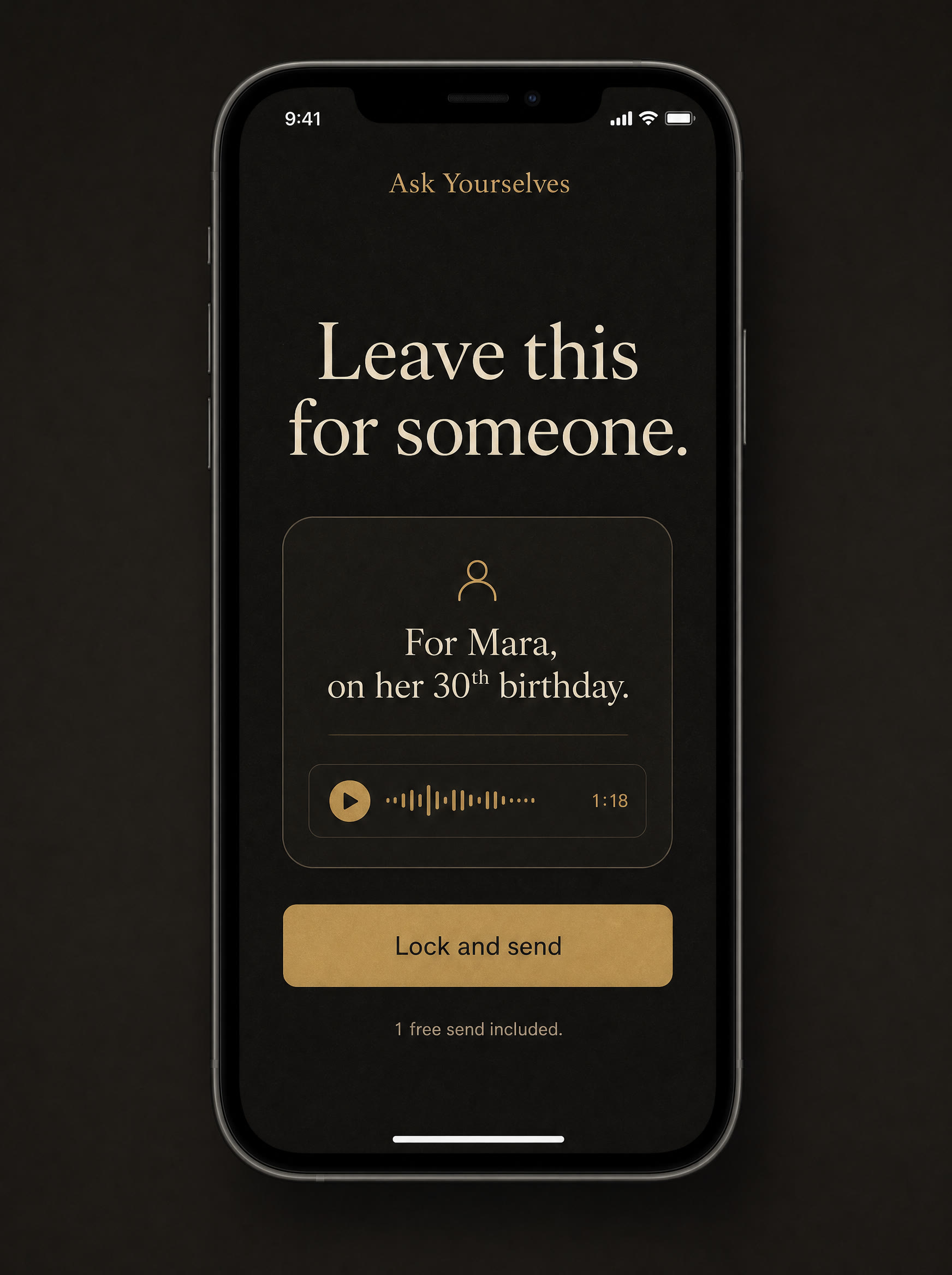
We think we know where this goes. Soon the most trusted voice in a person's life will be their own, carried forward and back across the years. You can finally just be yourself, no masking, honest, because it is yourself you are talking to. We are simply early. The full product was always the plan: your cloned voice and a live age-progressed avatar, so you are not reading your future self but sitting across from them; the Legacy model, where you tell it your life and it learns to speak as you, so your children can still ask you after you are gone; and time-locked messages that arrive years from now. We shipped the lean, science-backed core ourselves. What we lack is the runway to build the rest, not the plan for how.
A future-self product meets people at their most honest, so safety is part of the product, not bolted on. 18+ only at launch, self-attested. A crisis classifier watches for sustained risk language and surfaces region-specific resources (988 in the US, Samaritans in the UK, the WHO directory elsewhere), and with prior consent can reach a user-chosen emergency contact, never police, never a welfare check by default. Consent-first cloning: you can only ever clone yourself. Private by default, no feed and nothing public. And a Legacy line we do not cross: the after-you-are-gone mode only ever replays a frozen profile of what a person actually said, it never generates new words in a dead person's voice.
Built With
- android
- claude
- deno
- edge-functions
- expo-router
- expo.io
- gpt-4o-mini-tts
- gpt-5.6
- gpt-image-2
- ios
- openai
- postgresql
- react-native
- rest-api
- row-level-security
- supabase
- typescript
- web

Log in or sign up for Devpost to join the conversation.