-
-

logo
-
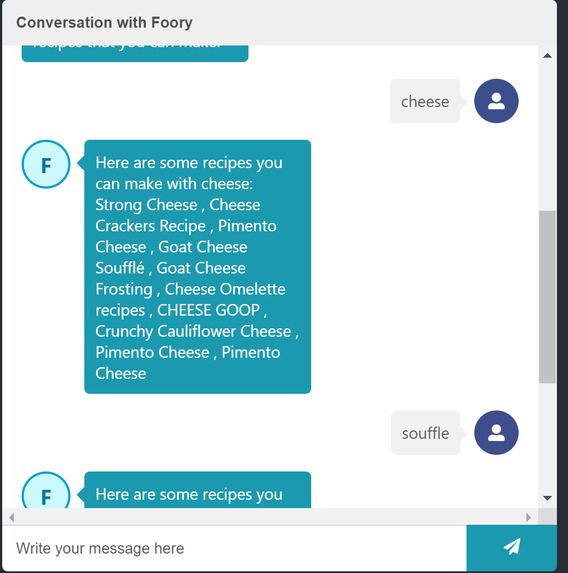
chatbot prototype
-
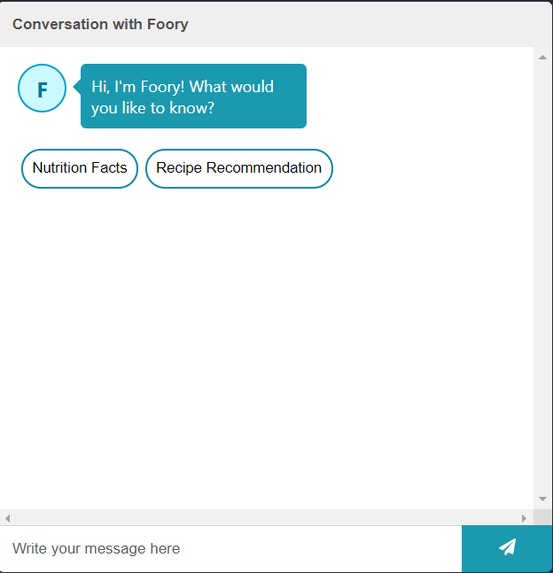
Bot's Welcome Message
-
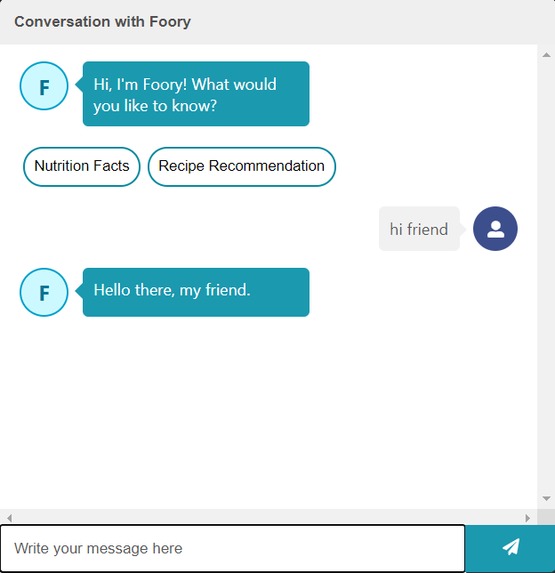
Interact with the bot
-
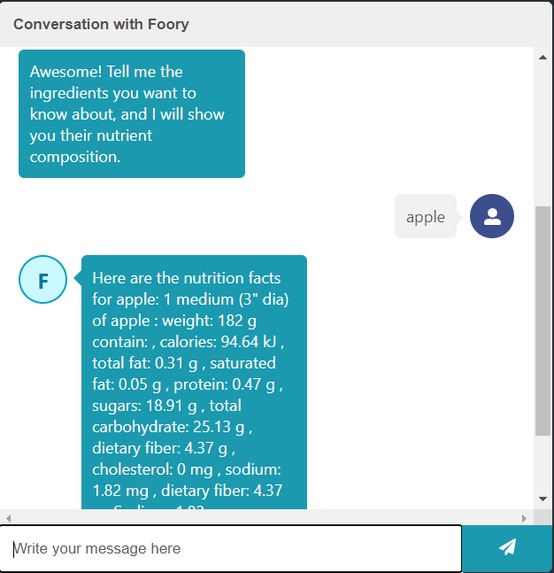
Nutrition Facts
-
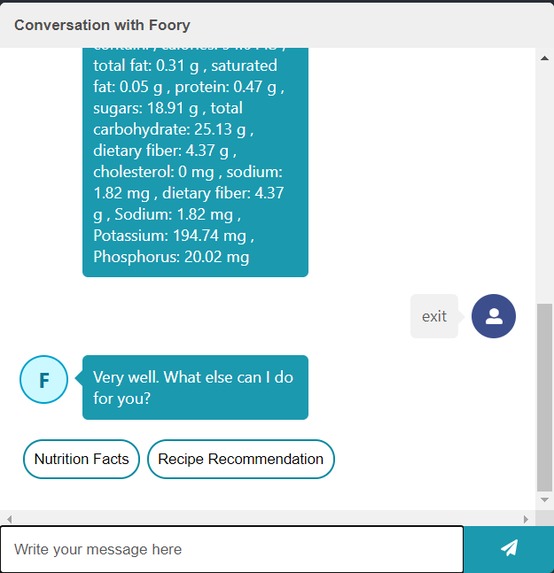
Change to another option (i.e. from Nutrition Facts to Recipe Recommendation, or vice versa)
-
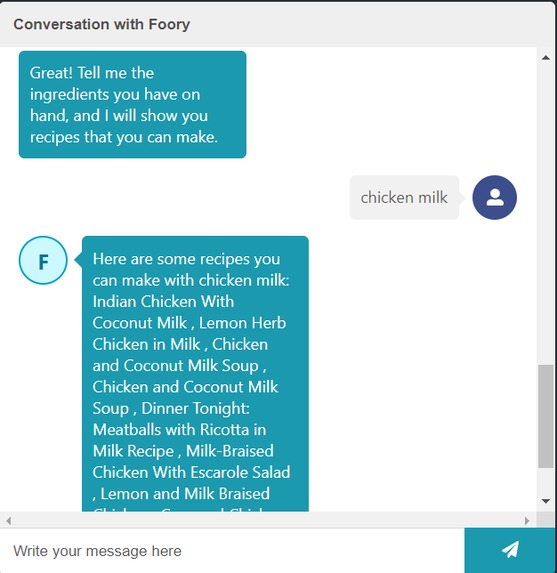
Recipe Recommendation
-
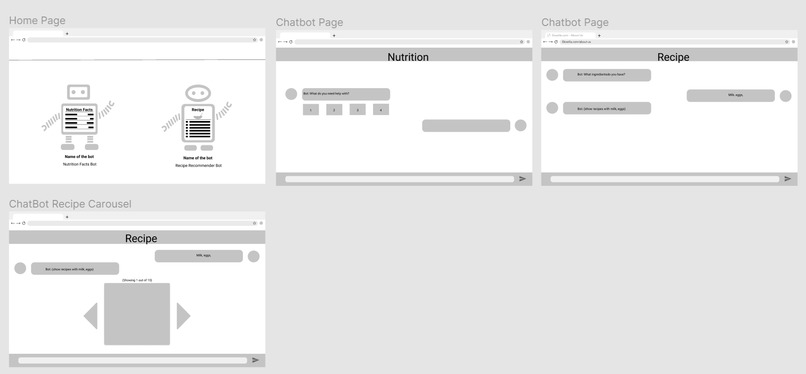
figma design
-
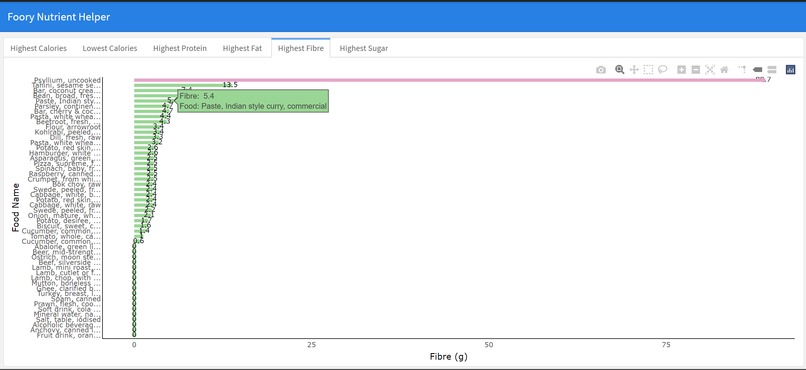
nutrient graph
-
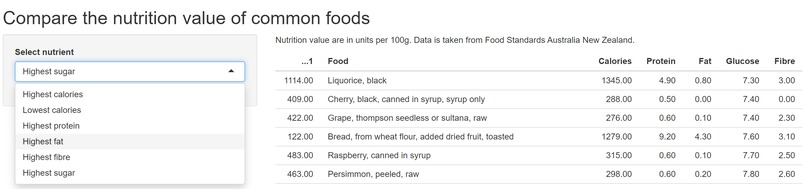
shiny attempt


CONFIRMATION: We are officially registered for Melbourne Hack 2021. Team member 1 Elizabeth Chan Team member 2 Jacqueline Ann Lim Team member 3 Vanessa Nguyen Team Member 4 Yongjie Shi
What it does
A food web chatbot helps people come up with informed recipe ideas that are healthy. Especially with uncertain COVID restrictions, we help people come up with recipes and food ideas to mix up their diet and how to use foods that will soon expire. Facilitating the daily chore of cooking and grocery shopping by gamifying the experience with a chatbot makes it less of a chore. Plots and tables allow our users to visualise how much of each nutrient there is and draw comparisons instead of just looking at numbers.
Use cases
someone environmentally but also health-conscious eg. vegetarian or vegan. They can use the recipe recommender to come up with recipes that are nutritious and input the food they have that will expire soon to use it up.
A parent who needs to plan meals weekly to feed the family. They can use recipe recommender to figure out what meals they can make using the food left in the fridge to prevent food and money wasting. Nutrition checking makes sure the ingredients they are using are healthy.
How we built it
We designed the UI with Figma. Jake, Vanessa and Jacqueline used React, Bootstrap CSS and NutritionixAPI to build the chatbot itself. I used R's web hosting capabilities to generate nutrition plots and tables.
Inspiration
- I was struggling with picking a McDonald's meal on the self-checkout machine. I noted that the UX was horrible, so my teammates suggested we would do something with Food.
- Vanessa suggested recipe recommender because her friend had a bunch of ingredients but didn't know what to make, so a recipe recommender would solve that issue.
- Jake suggested to use React because of MaterialUI - a code layout that we could use.
- Jacqueline and I learnt Microsoft Azure before which has an Azure Bot Service so we thought about matching an input food / recipe ingredient with a chatbot output instead of a search bar to make the UX more interesting.
- Woebot, a mental health chatbot that allows you to log your mood with a series of prompts.
Challenges we ran into
Debugging. Integrating different features. The first time we used React and Shiny.
Accomplishments that we're proud of
- Jake and Vanessa's first hackathon but we managed to do both backend and frontend. The chatbot feature can be deployed to the web as a finished product.
- We managed to build a web app that can have main features executed and it is scientifically reliable.
Food nutrition checking and recommending is something that can help people trying to be fit and come up with what to eat without misleading them. This further allows people to come up with recipe ideas for foods that will soon expire, adhering to MedTech and Sustainability streams.
What we learned
Making Shiny widgets. Making a chatbot with React. API integration.
What's next for Ask Foory: Your Food Diary Buddy
- Improve recipe recommender with collaborative filtering as well as non-personalised methods. At the moment we only have a database, but the ideal situation is to have the chatbot learn what the user likes, and so recommends recipes related to the input that would more likely suit their tastes. A non-personalised KMeans clustering algorithm could also be implemented to recommend new users popular items (ranked most bought items from Coles/Woolies).
- Show images with the recipes recommended
- Use image classification to show nutrients for a given food item eg. labelling a tomato and showing all the ingredients of a tomato
- Use barcodes to track expiry dates. Each store item would have a unique barcode so the expiry dates shown would be accurate.
- Measurements conversions to cater to different audiences (metric vs imperial unit users)
- Calorie calculator for recipes to help users have a better diet.

Log in or sign up for Devpost to join the conversation.