-
-
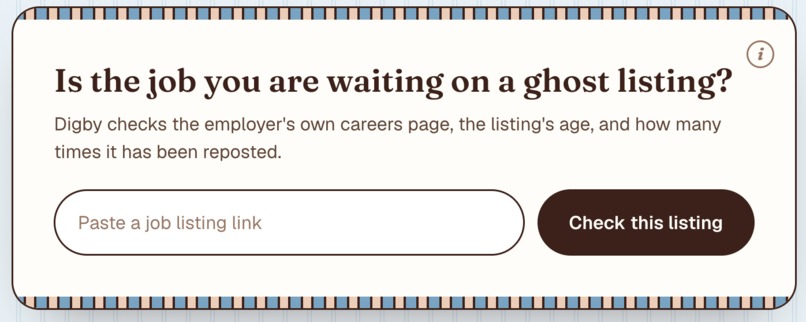
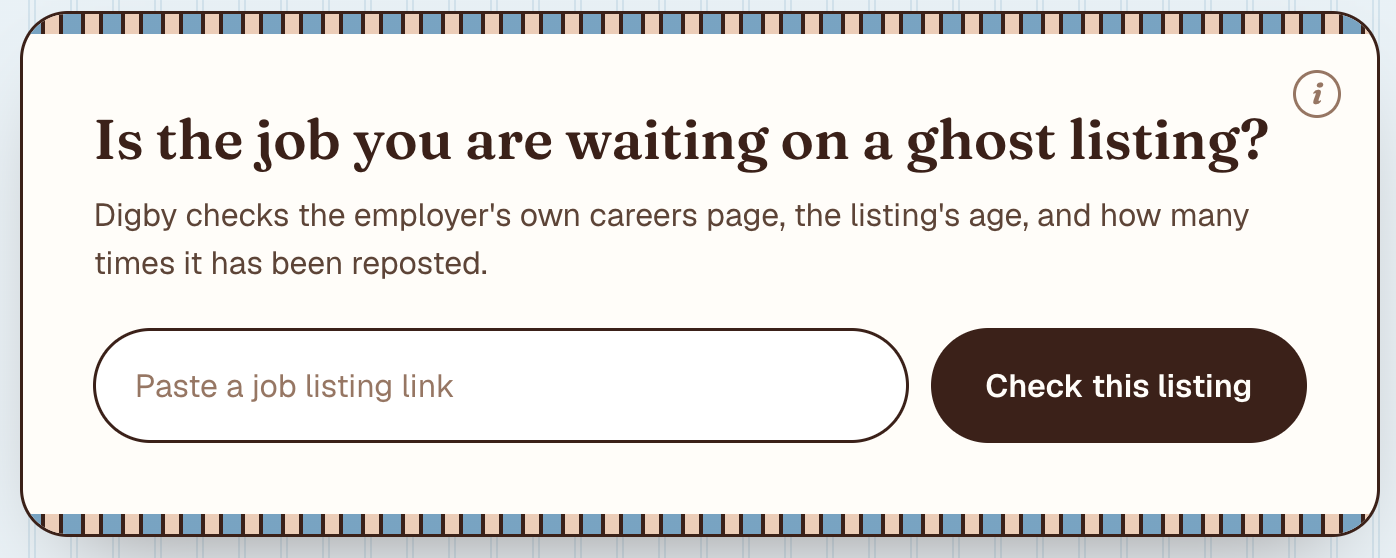
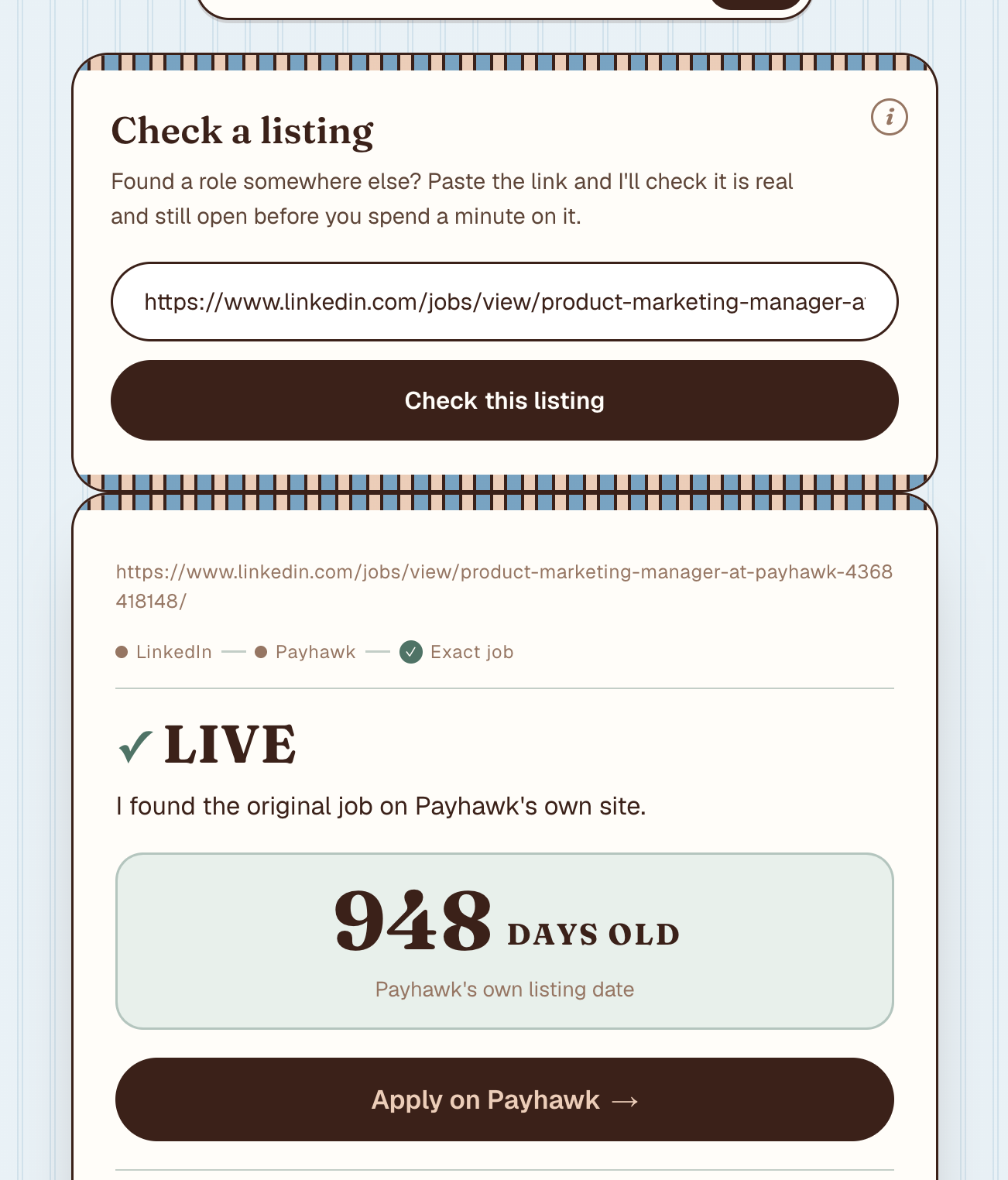
Paste any job into Digby for free and check the exact role at its source before spending time applying.
-
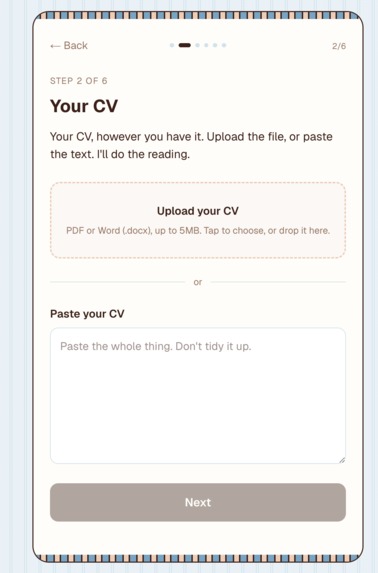
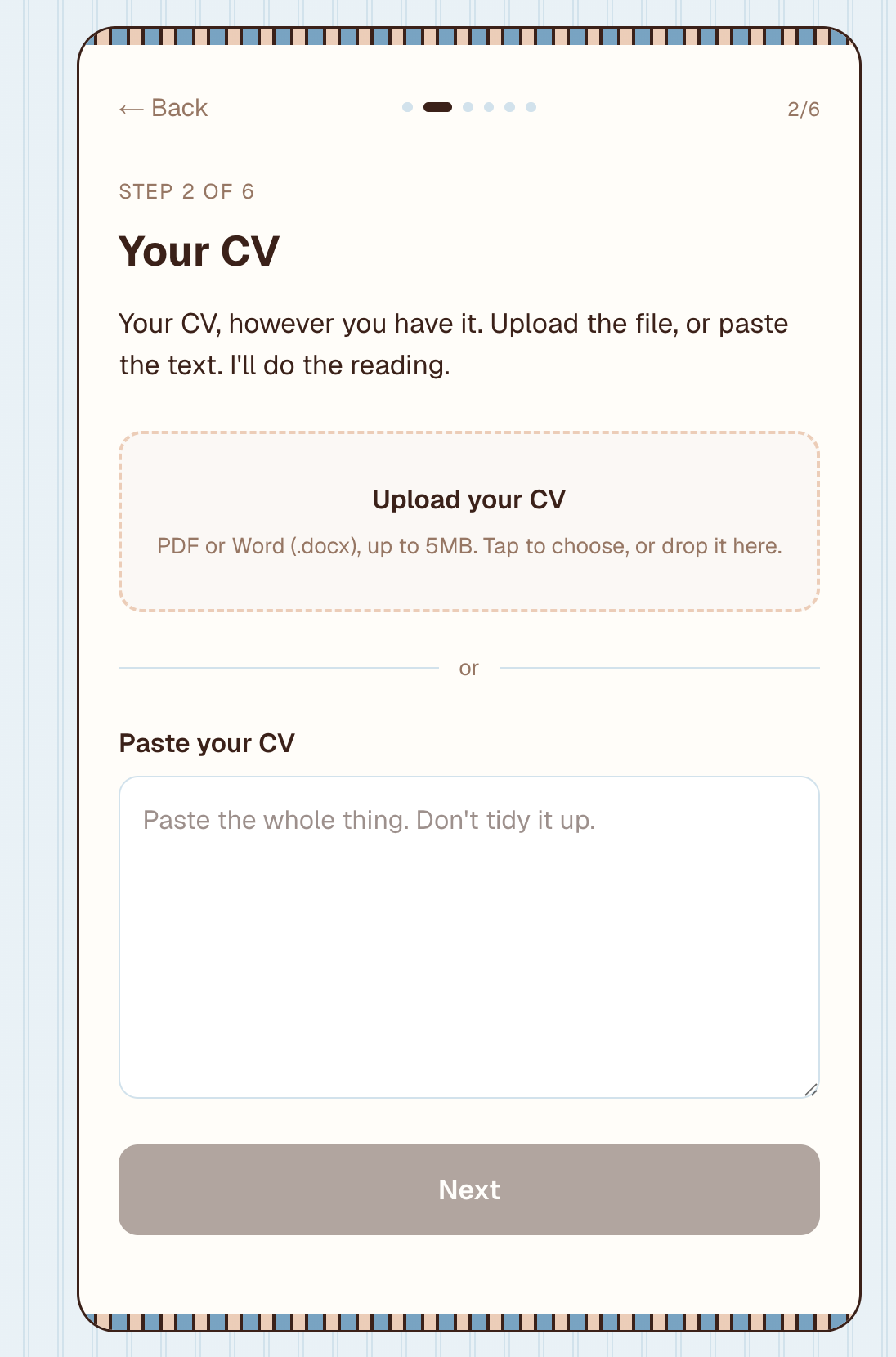
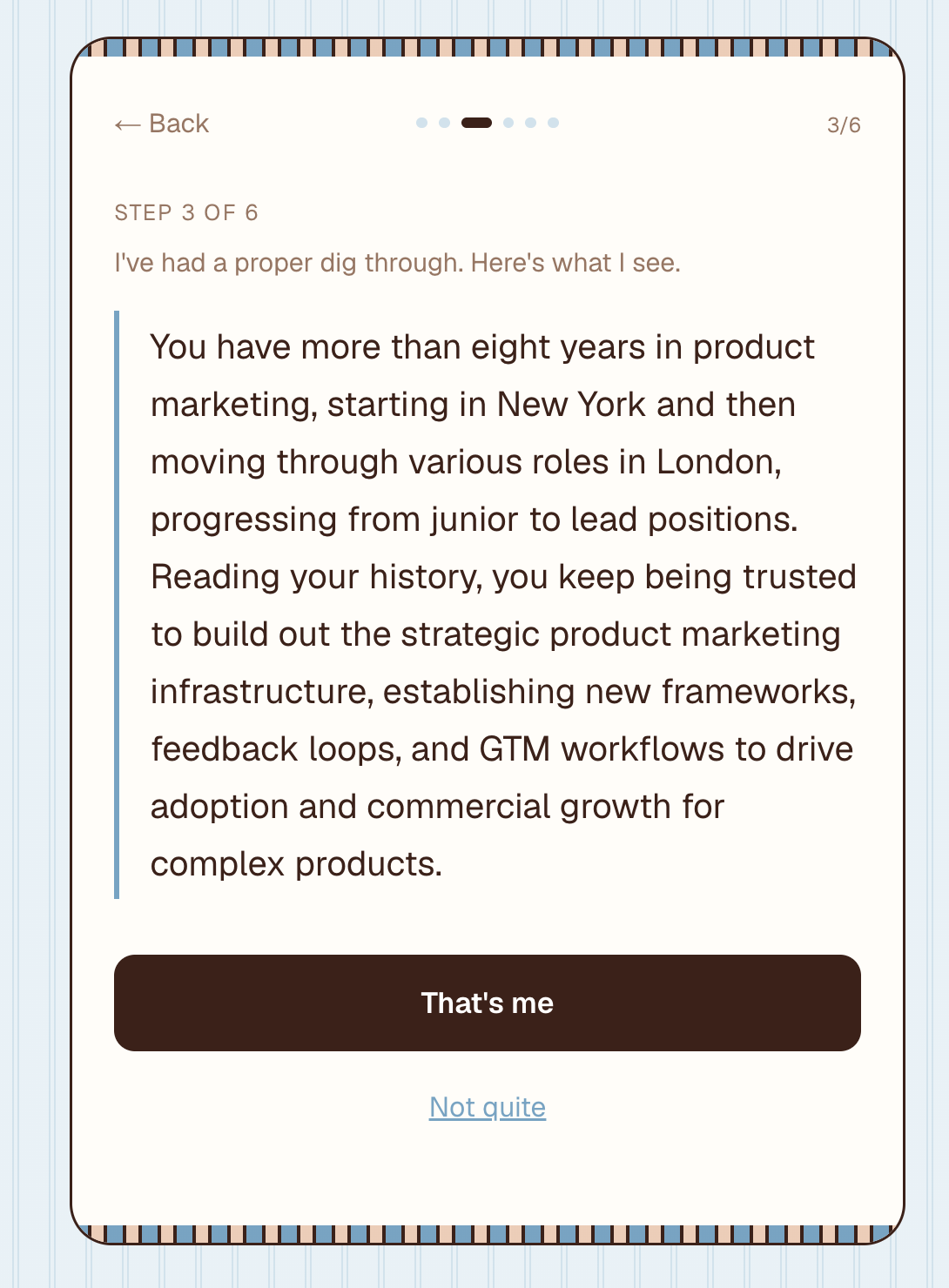
The Daily Dig starts with the person. Upload a CV once so Digby can understand their experience and career direction.
-
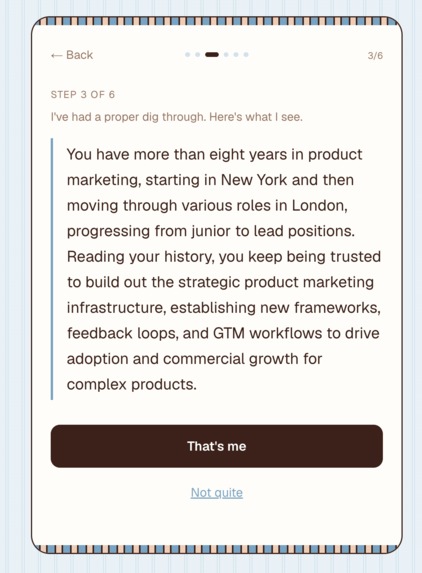
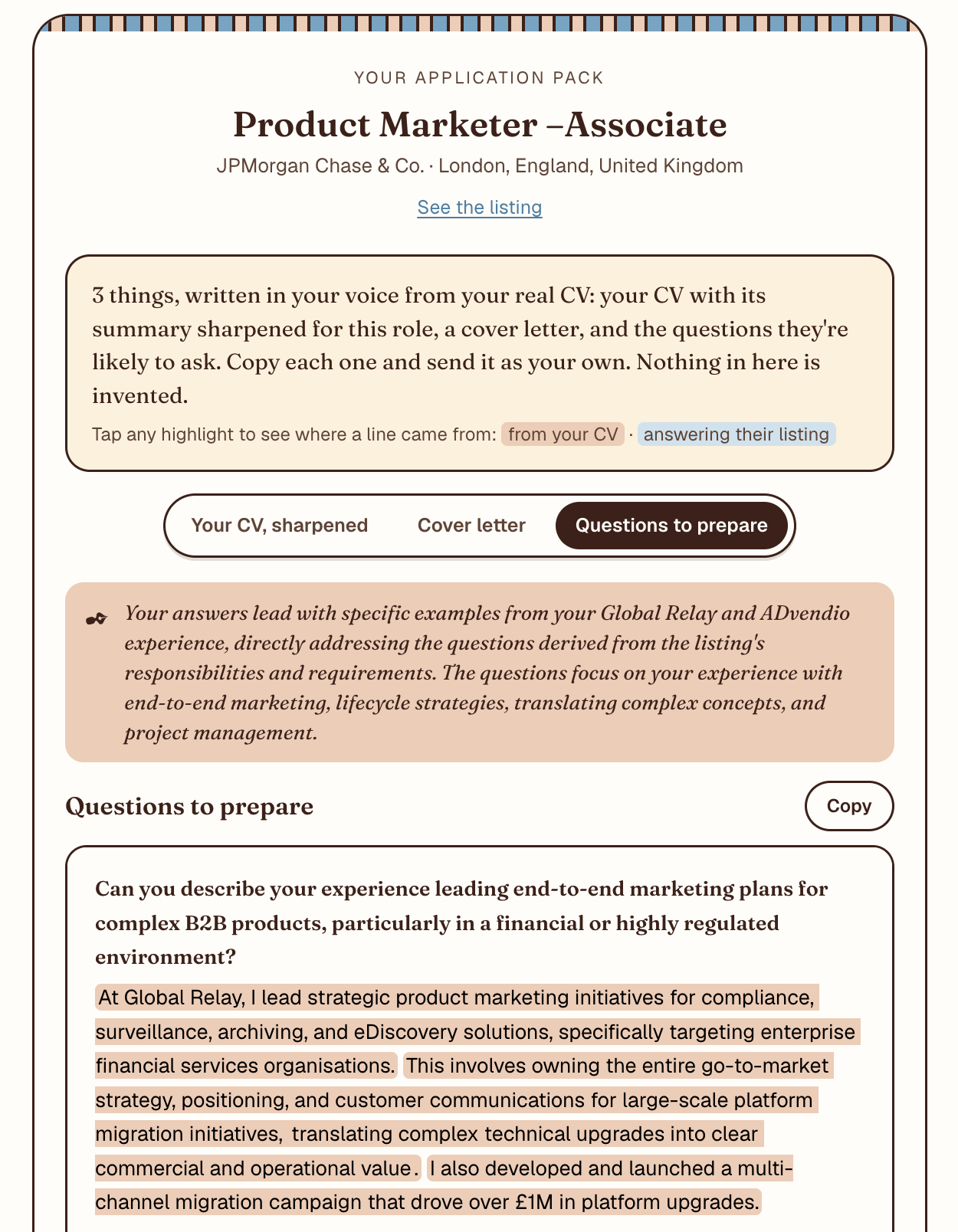
Gemini prepares likely screening questions using the real job listing and the seeker’s own experience, without inventing credentials.
-
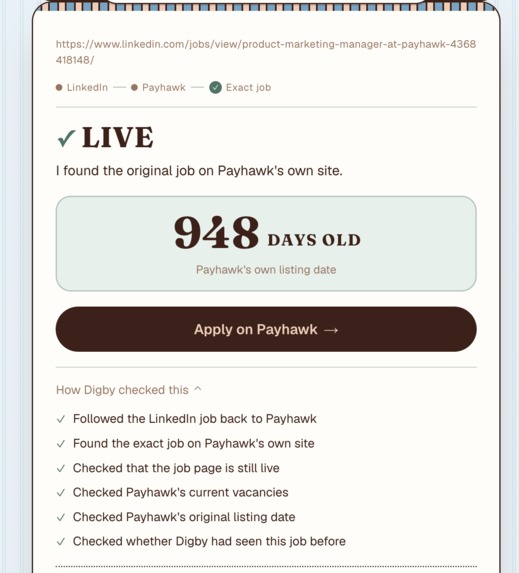
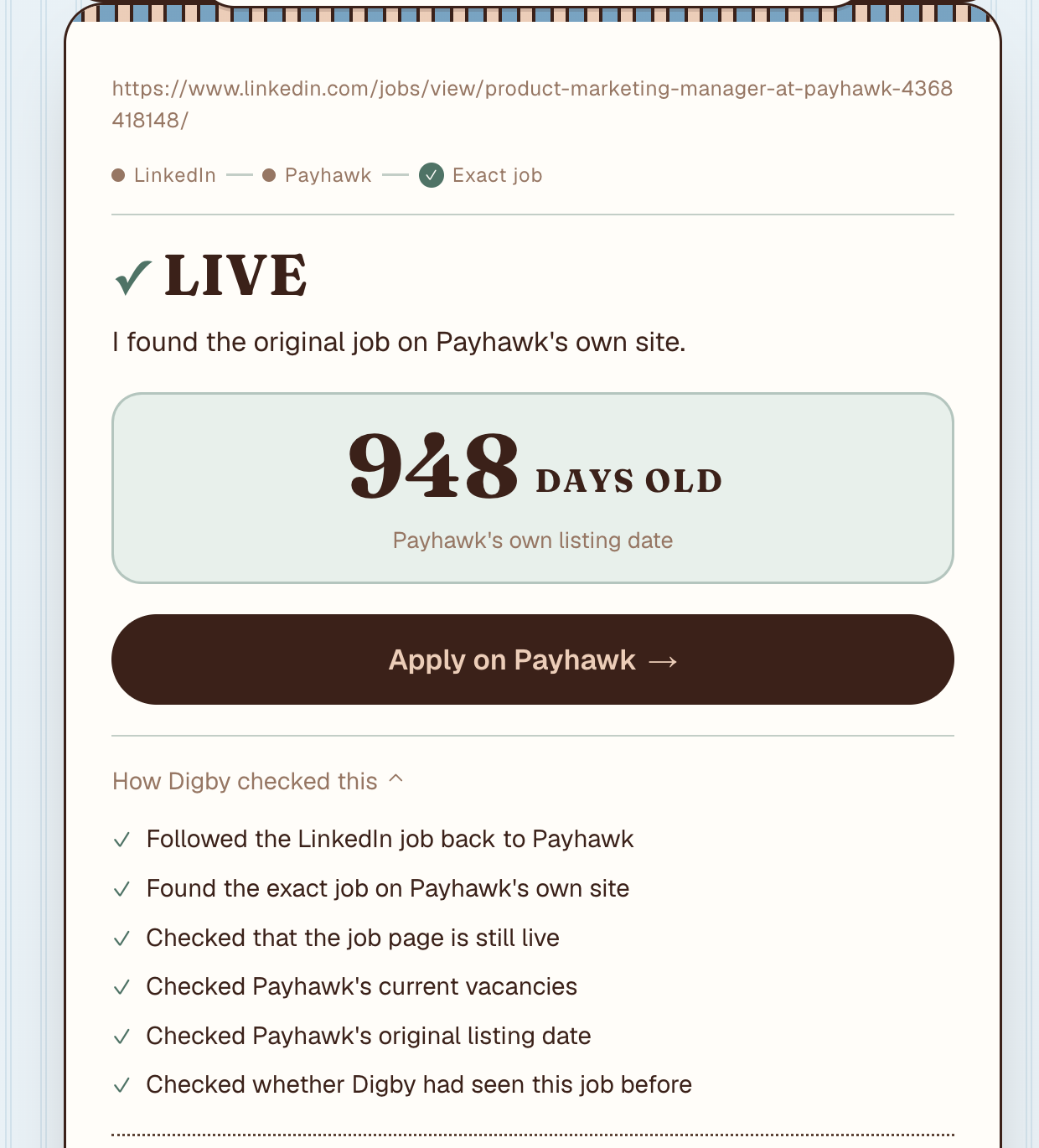
Digby shows its working, tracing the role to Payhawk, confirming the exact job, checking the page, vacancies and original listing date.
-
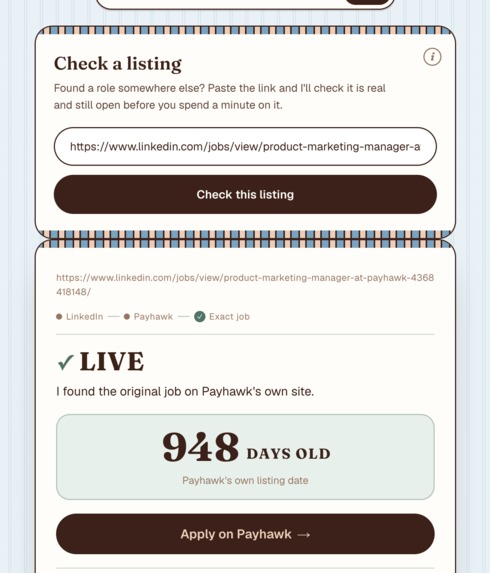
Digby traced this LinkedIn role to Payhawk’s own site and found it was still live, but 948 days old.
-
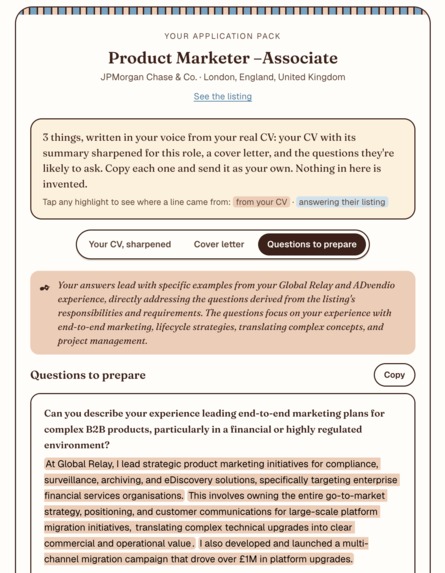
Gemini turns the real vacancy into likely interview questions, then grounds suggested answers in the seeker’s own CV and experience.
-
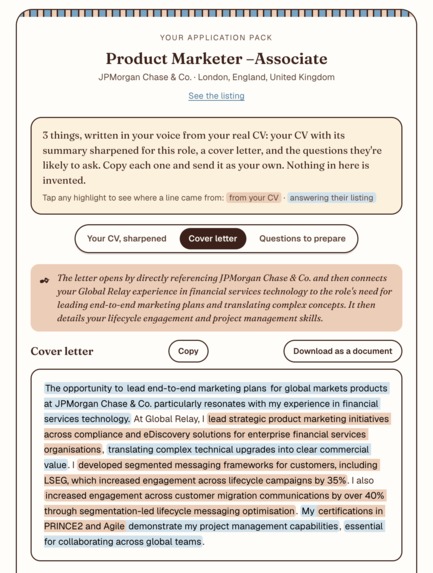
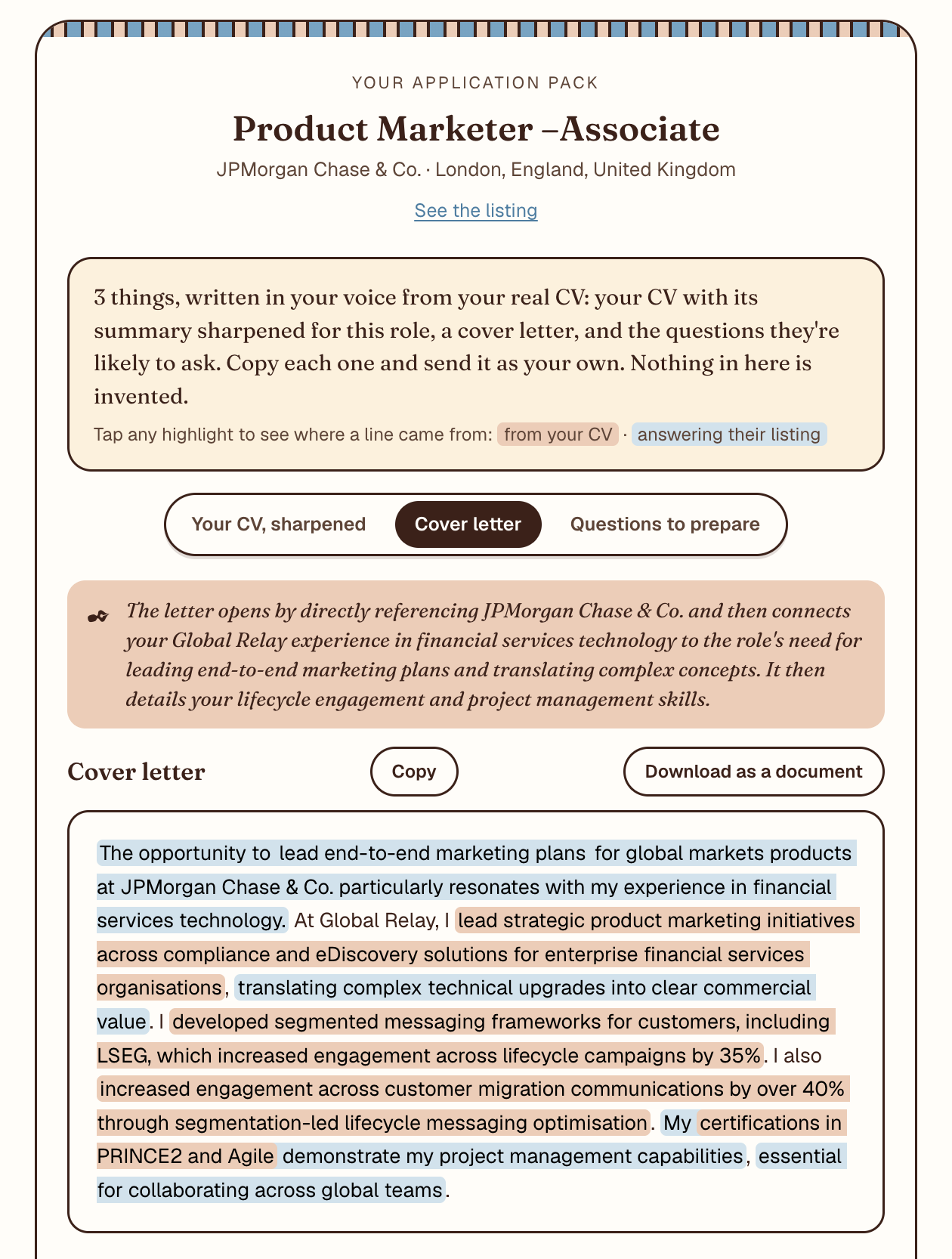
Gemini creates a tailored cover letter grounded in the real vacancy and evidence from the seeker’s own career history.
-
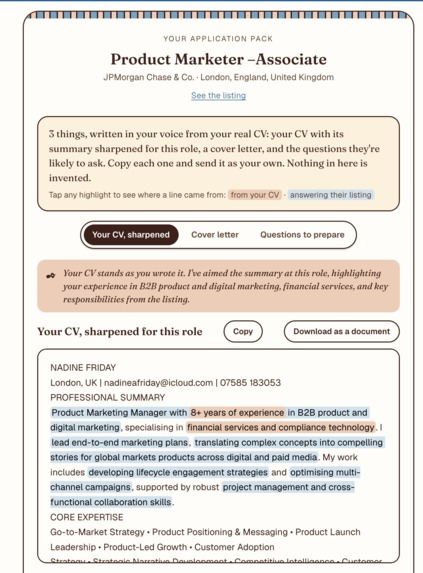
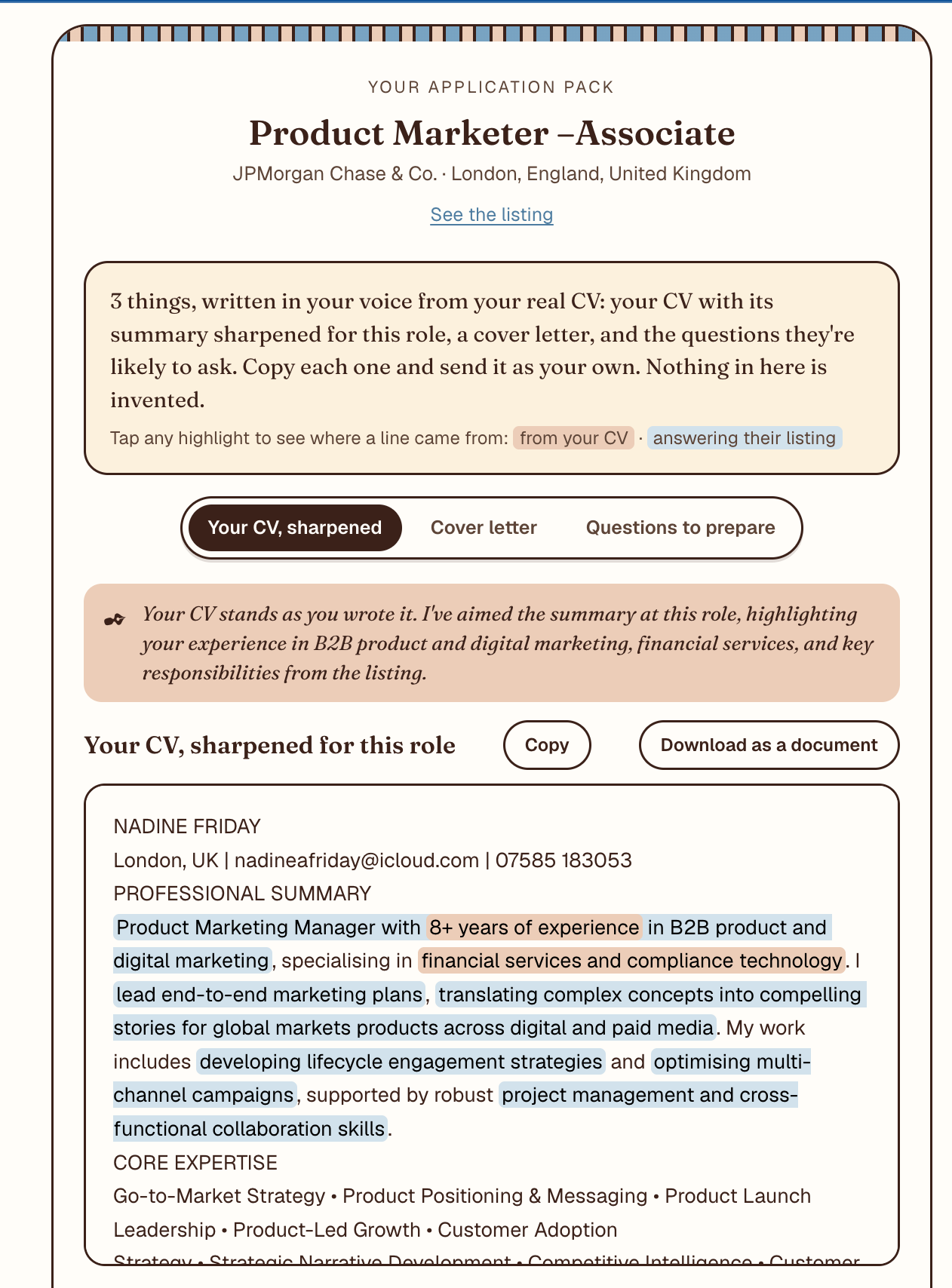
Digby sharpens the seeker’s existing CV for a specific role while showing exactly where every claim came from.
-
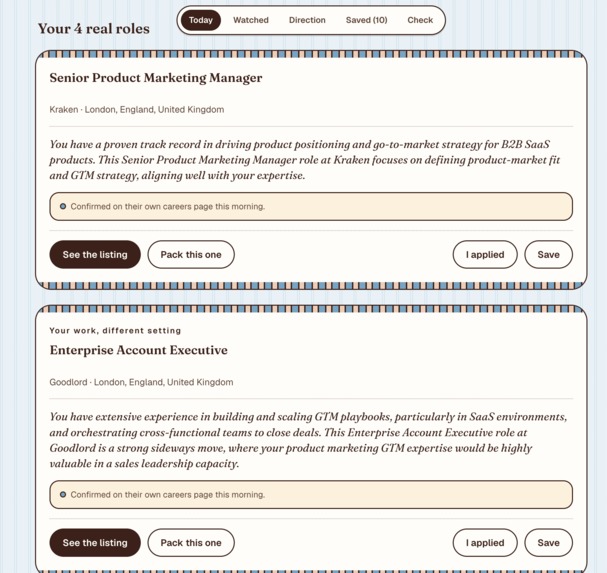
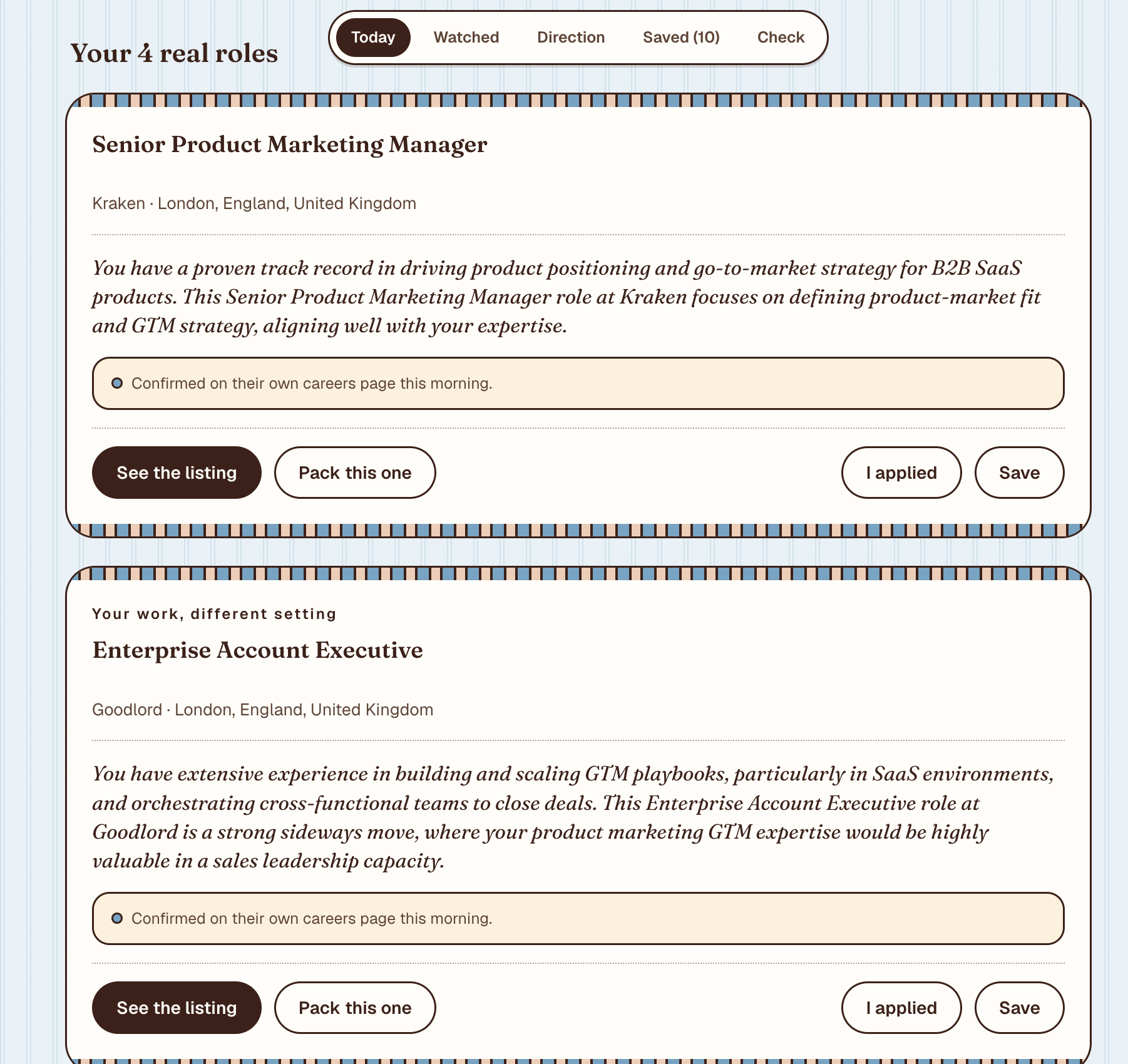
The Daily Dig autonomously finds, checks and prioritises live roles each morning, with Gemini explaining why each one fits.
-
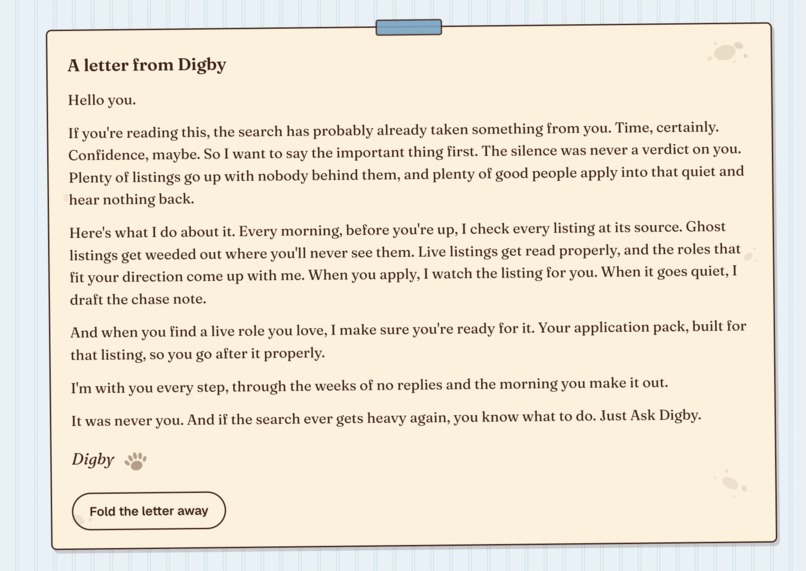
Digby gives a sophisticated AI service a warmer, more human face during one of the hardest parts of working life.
-
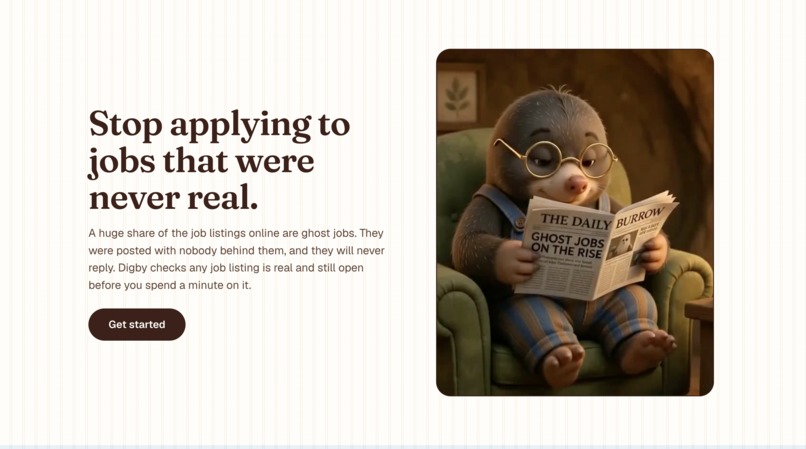
Digby was built to stop people wasting hours on jobs that look open but may not deserve their time.
-
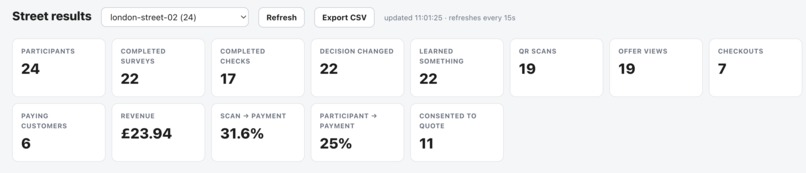
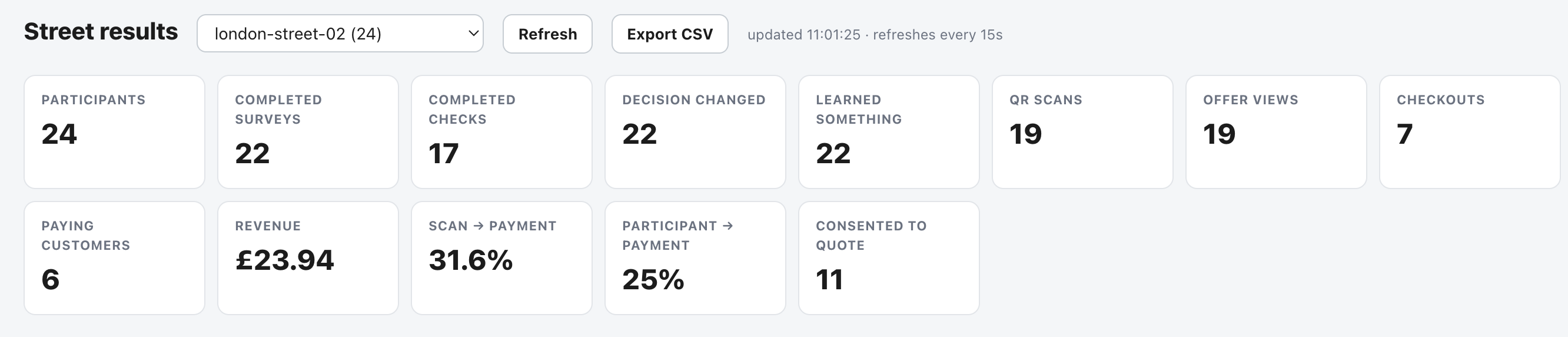
24 participants, 22 surveys, 17 live Checks, 22 decision changes recorded and 6 paying customers in our field study.
Inspiration
I turned 30 this year, and in June I lost my job after more than eight years in corporate marketing. I started applying for roles in the way most people are told to: finding jobs I was qualified for, tailoring my CV and spending hours trying to improve applications that went nowhere. Some ideal-fit applications were rejected almost immediately, while others disappeared into silence.
Eventually I started looking more closely at the jobs themselves. I realised how little information an applicant has before deciding whether to give a vacancy an hour or two of their life. A role can appear open without giving the person applying any simple way to know whether the exact vacancy is still present in the employer’s hiring system, how long it has really been there or whether the application destination still belongs to an active opportunity.
Employers have ATS platforms, recruitment teams, automation and hiring data supporting their decisions. The person on the other side often has a job description, an Apply button and their own judgement.
I kept coming back to one question: before someone gives another application hours of their life, shouldn’t they be able to know whether the opportunity deserves it?
That became Digby.
What it does
Ask Digby gives job seekers professional infrastructure of their own.
The free Check starts with a job the person already cares about. Digby investigates the exact opportunity using employer and ATS evidence, looking at signals such as exact-role identity, posting-date evidence, the employer’s underlying hiring infrastructure and application URL provenance. The person can see what is actually known about the opportunity before deciding whether to invest their time.
The Daily Dig turns that investigation into an ongoing service. A customer gives Digby their CV and career direction once. Every morning the autonomous system retrieves potentially relevant opportunities, checks the underlying evidence, and gives the verified candidate set to Gemini 2.5 Flash, which decides which roles deserve that particular person’s attention and why. Customers can receive up to 10 investigated opportunities without manually repeating the searching, checking and prioritisation themselves.
When they find one they want to pursue, the Application Pack uses Gemini and the person’s own experience to re-lead their CV for the opportunity, create a tailored cover letter and prepare likely screening or interview questions.
There is no recruiter behind the scenes choosing each customer’s jobs. Digby does the repetitive professional work, while the person keeps control of the career decisions that belong to them.
How we built it
I am completely non-technical and built Ask Digby solo. AI made it possible for me to turn the product judgement and customer understanding I already had into a working production system without an engineering team.
Gemini 2.5 Flash on Vertex AI interprets the seeker’s career context, reasons over candidate opportunities, prioritises which verified roles deserve attention and generates personalised application guidance. Gemini Embeddings power semantic retrieval, while Google Search grounding supports a bounded employer-discovery flow.
The production backend runs on Google Cloud Run. Google Cloud Scheduler starts the Daily Dig every morning, and Google Cloud Tasks handles asynchronous Application Pack generation. I also used Gemini Omni Flash to help bring Digby the mole to life through character motion and video.
The most important architectural decision was separating facts from judgement. Exact job identity, application destinations and authoritative live or dead evidence come from deterministic employer and ATS systems. Gemini then interprets that evidence for the individual and decides which verified opportunities matter most.
That gives AI meaningful authority without allowing it to manufacture the opportunity itself.
Challenges we ran into
The hardest technical challenge was discovering how inconsistent the job market looks underneath an ordinary listing.
Greenhouse, Lever, Workday and Ashby all behave differently. Employers embed ATS software inside their own domains, role identifiers appear in different places, and a page can continue loading successfully after the vacancy itself has disappeared. A generic careers page can look reassuring without proving that the exact role is still there.
Digby therefore needed a substantial verification layer underneath the AI, capable of reasoning about exact-role identity, structured job records, posting dates, redirects and application provenance while remaining comfortable saying when evidence is incomplete.
The second challenge was trust. Job searching is already stressful and impersonal, and I did not want to put another cold AI interface in front of someone and expect them to trust it because the technology was sophisticated.
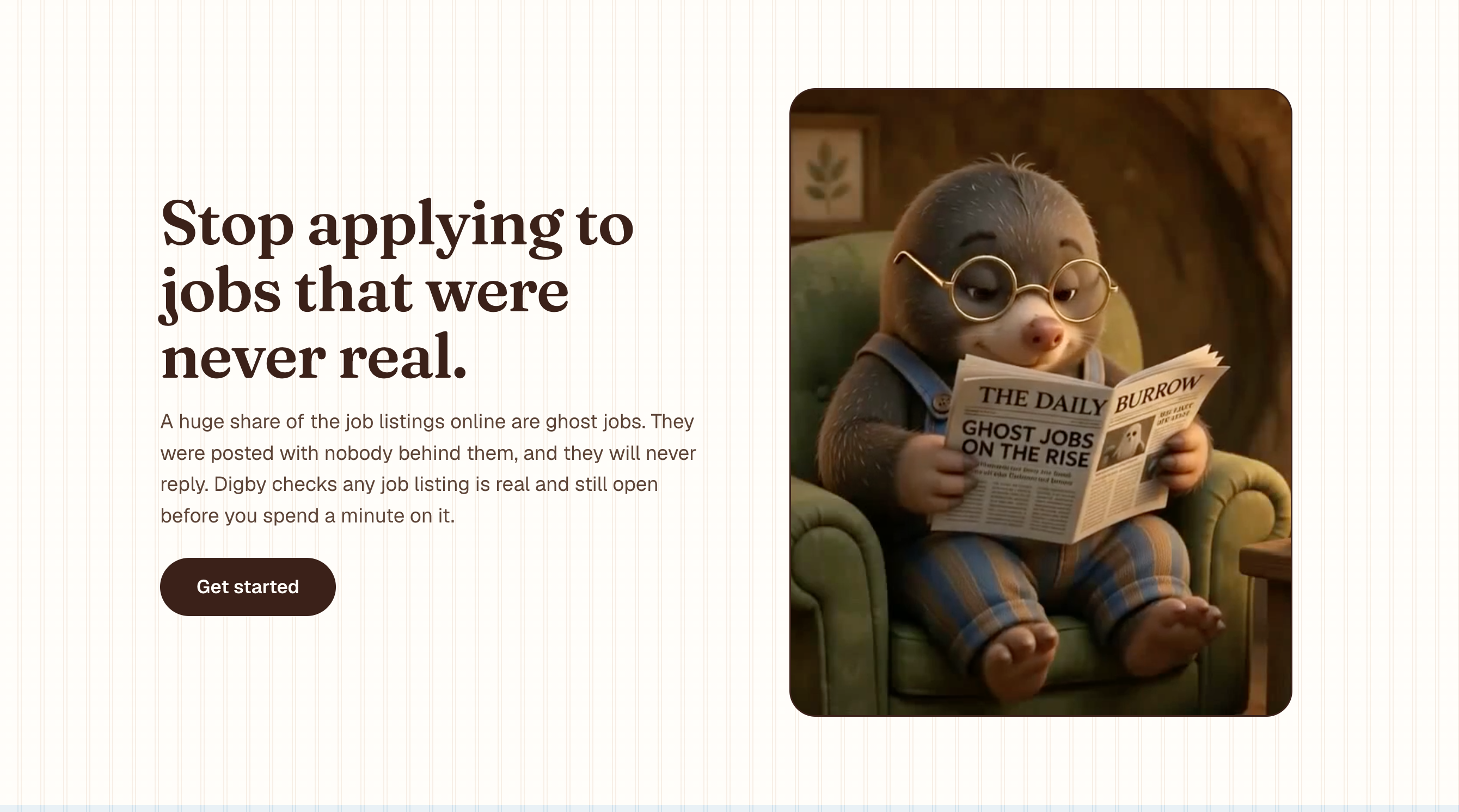
That is why Digby is a mole. He digs beneath the surface, investigates what is actually there and brings the useful opportunities back up. The character gives a technical professional service a warmer, more understandable face and creates a brand relationship that the underlying technology alone cannot.
Accomplishments that we're proud of
I am proudest that Digby became a real operating service during the hackathon. The Check is live, the Daily Dig runs autonomously in production, Gemini makes real prioritisation decisions and paying customers receive the resulting opportunities without someone manually assembling them.
I also tested the central idea in person. Participants first made a decision about a real vacancy before seeing Digby, then watched the same job go through the live Check and made the decision again. Among the 17 people who completed the intervention, 16 initially said they would apply and one said maybe. After seeing Digby’s evidence, all 17 changed their intended action: 16 would no longer apply and one would investigate further first. All 17 said Digby showed them something they did not know.
Six participants went on to become paying customers.
Digby has also begun producing the outcome that matters most. One early user had been applying for around a year without receiving a single interview invitation. Within two weeks of using Digby, he secured three interviews. Digby helped him concentrate on roles that could be verified as actively taking applicants and gave him professional tools to tailor his application around each real opportunity. He has agreed to share his experience publicly.
I started with no engineering background, no team and no existing audience. Within weeks, I had built an AI-native professional service, put it into production, converted strangers into paying customers and watched a user who had spent a year getting nowhere begin getting through the door to employers.
What we learned
The biggest lesson has been that job seekers do not simply need more vacancies. They need better information at the moment they decide which vacancies deserve their effort.
The Check works because the user brings something real with them. They already care about the opportunity and already have an opinion about it, so Digby does not need them to believe a marketing promise. They can compare their own judgement with the evidence the product finds.
The field study reinforced something else I care deeply about in AI-powered professional services. The technology should increase the person’s agency rather than replace it. Searching, checking, comparing, monitoring and prioritising can be done for someone. Their ambitions, compromises, risk tolerance and final career decisions still belong to them.
AI can make professional attention dramatically more accessible by doing the work underneath a good human decision.
What's next for Ask Digby
I want Digby to become professional infrastructure for the job seeker.
The Check gives someone intelligence about one opportunity. The Daily Dig provides that intelligence continuously for one person. The next layer is using what Digby learns from observing the market to create intelligence for everyone.
I am building The Ghost Job Index, a quarterly public measurement of how many UK job adverts exhibit behavioural signs associated with ghost jobs, with results broken down by sector and region, the methodology published openly and employers never named.
Much of the evidence available on ghost jobs today comes from surveys asking workers what they experienced or employers what they intended. Digby can measure the behaviour of the adverts themselves.
The corpus already contains roughly 15,000 employer-direct listings sourced from employers’ own applicant tracking systems. By repeatedly observing those vacancies over time, Digby can measure how long listings persist, when they disappear, whether they return and how those patterns vary across industries and regions. The public Check will never be used as the denominator because people naturally bring suspicious listings to it. The Index will be built from the continuously observed employer-direct corpus instead.
I will not publish a headline number until the observation period is long enough to make it defensible. The first edition is planned for around November 2026, after a full quarter of continuous sightings, and the Index will be free.
For an individual, that could mean understanding that months of silence were partly structural rather than automatically concluding that they were the problem. At a wider level, it can give journalists, policymakers and employers a baseline for a part of the labour market that currently has very little direct measurement.
One person can use Digby to understand one job. The Daily Dig can work continuously for that person. The Ghost Job Index can use what Digby learns from watching the market to give an entire country better visibility into how hiring actually behaves.
I want Digby to do the digging so people can spend more of their time deciding where they actually want to go.
Built With
- cloudrun
- cloudscheduler
- cloudtasks
- generativeai
- google-cloud
- google-gemini
- next.js
- node.js
- postgresql
- supabase
- vercel
- vertex-ai


Log in or sign up for Devpost to join the conversation.