-
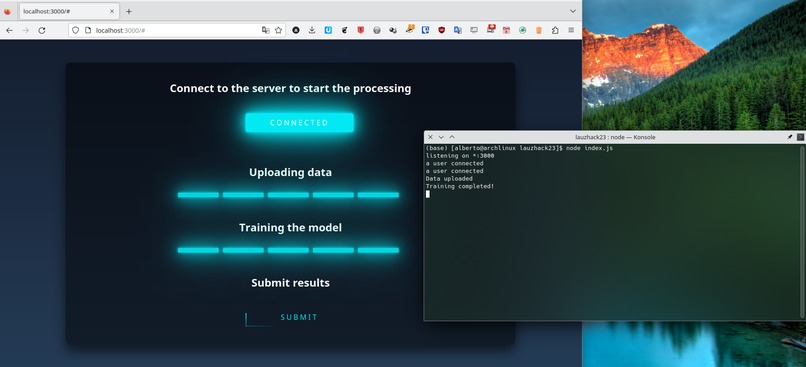
PoC

Inspiration
DISCO is a really interesting technology, but what if the model to train is too much for a normal person's hardware? Can it also be possible to reduce carbon emissions with such a solution? https://learn.microsoft.com/en-us/azure/machine-learning/v1/how-to-deploy-fpga-web-service
What it does
Development of custom ASIC/FPGA to increase performance in the training. The training can be done on the phone of the user.
How we built it
It is possible to turn a machine learning model into an ASIC. https://towardsdatascience.com/how-to-make-your-own-deep-learning-accelerator-chip-1ff69b78ece4
Challenges we ran into
Developing an ASIC/FPGA is really expensive and hard, but with technologies such as https://circt.llvm.org/, it should be much easier than developing a VHDL solution from scratch.
Another challenge is how to deliver the hardware:
- to the house of the person, but this will also require a return and is not eco-friendly
- the user will have to go to the closest research centre having such hardware available.
Accomplishments that we're proud of
- Communication from phone to PC to transfer data and train the model
What we learned
- ASIC can be used for machine learning
- Distributed Machine learning can improve privacy and help research
What's next for ASIC-powered Distributed Collaborative Machine Learning
- See if there's interest in the idea
- Partner with some Semiconductor Fabs in Europe to check the production costs

Log in or sign up for Devpost to join the conversation.