-
-
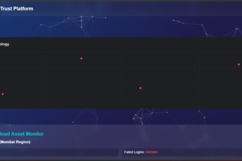
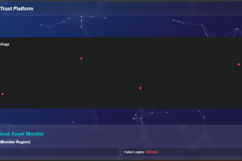
Live Network Topology Visualization
-
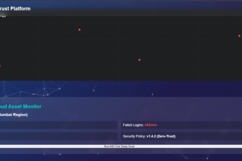
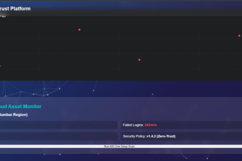
Enterprise Cloud Asset Telemetry
-
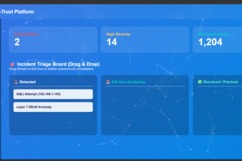
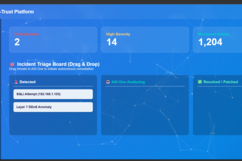
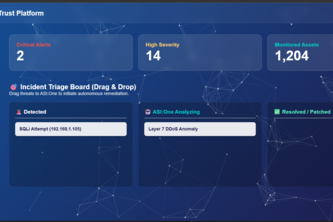
Global Threat Overview & ASI-1 Triage Board
-
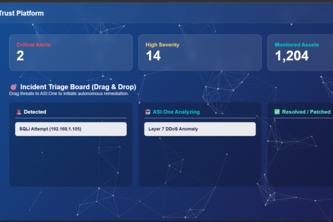
Live Network Topology Visualization
💡 Inspiration
Coming from an engineering background, I view complex systems through the lens of structural integrity, stress testing, and failure modes. Just as physical machines require rigorous fail-safes, modern enterprise cloud infrastructure requires a "zero-trust" architecture to survive cyber-physical and data-layer attacks. I was inspired to bridge this gap by leveraging Fetch.ai's ASI:One—not just as a chatbot, but as an autonomous, agentic security analyst capable of actively defending structural vulnerabilities in the cloud.
⚙️ What it does
The ASI:One Zero-Trust Platform is a full-stack cybersecurity command center designed to monitor, triage, and remediate enterprise threats.
- Live Network Topology: Visually tracks attack vectors across global API gateways in real-time.
- Agentic Threat Analysis: When an anomaly is detected (e.g., Layer 7 DDoS or SQLi), the ASI:One agent analyzes the logs and outputs actionable remediation protocols.
- Zero-Trust Incident Triage: A dynamic, drag-and-drop Kanban board allows security teams to seamlessly move threats from "Detected" to "ASI:One Analyzing" to "Resolved."
- Cloud Asset Monitor: Streams live telemetry (CPU load, connection spikes, failed logins) to monitor structural integrity.
🏗️ How we built it
We architected a production-ready, decoupled system:
- Frontend: Built with React.js, featuring a highly customized Glassmorphism UI. We integrated
react-tsparticlesfor the dynamic, layered constellation background and implemented complex state management for the Drag-and-Drop triage board. - Backend: Powered by FastAPI (Python) for lightning-fast, asynchronous API routing.
- AI Integration: The backend seamlessly communicates with the ASI:One API, using strict prompt engineering to force the model to return structured, actionable security intelligence.
- Database: Utilized MongoDB (with the
motorasync driver) to store and serve live telemetry and threat logs.
🚧 Challenges I ran into
Building a beautiful UI that didn't compromise on performance was tough. I had to resolve complex z-index rendering issues to layer the animated particle canvas between the CSS gradient background and the Glassmorphism React components. On the backend, managing asynchronous MongoDB URI connection strings while maintaining a stable connection to the ASI:One endpoints required deep debugging and architectural refactoring.
🏆 Accomplishments that I'm proud of
I am incredibly proud of engineering a platform that looks and feels like a premium, enterprise-grade SaaS product. Successfully translating vanilla JavaScript drag-and-drop logic into React's state-driven Virtual DOM was a major win. Furthermore, getting ASI:One to act as a structured, deterministic security agent rather than a conversational bot proved the immense potential of agentic AI.
📚 What I learned
This project deeply expanded my knowledge of full-stack orchestration. I learned how to build robust, asynchronous Python backends, manage complex React hooks (useState, useEffect), and effectively prompt-engineer state-of-the-art AI models to handle highly technical DevSecOps tasks.
🚀 What's next for ASI:One Zero-Trust Platform
The next evolution is full automation. I plan to deploy the infrastructure to AWS, integrate WebSocket streams for live log ingestion, and upgrade the ASI:One agent to not just suggest remediation steps, but to autonomously execute the generated bash scripts within a secure sandbox to instantly patch vulnerabilities.

Log in or sign up for Devpost to join the conversation.