-
-

-
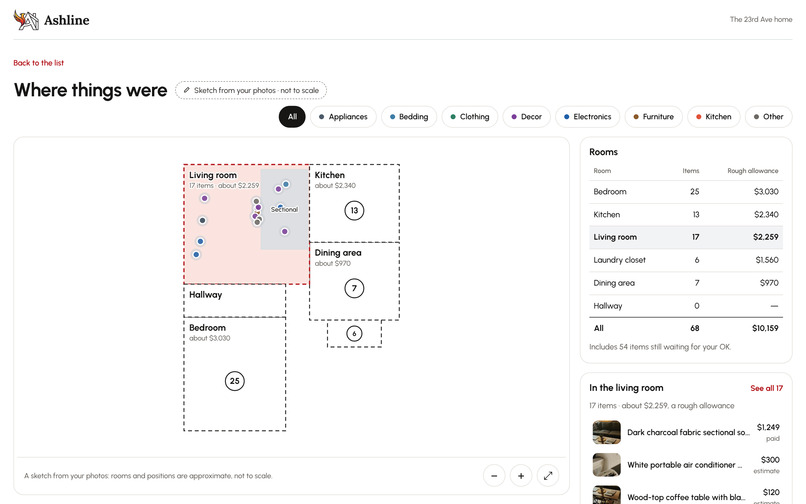
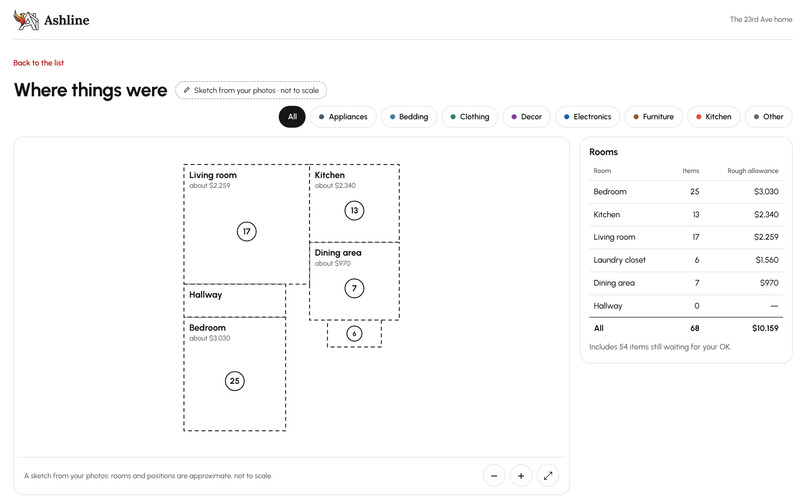
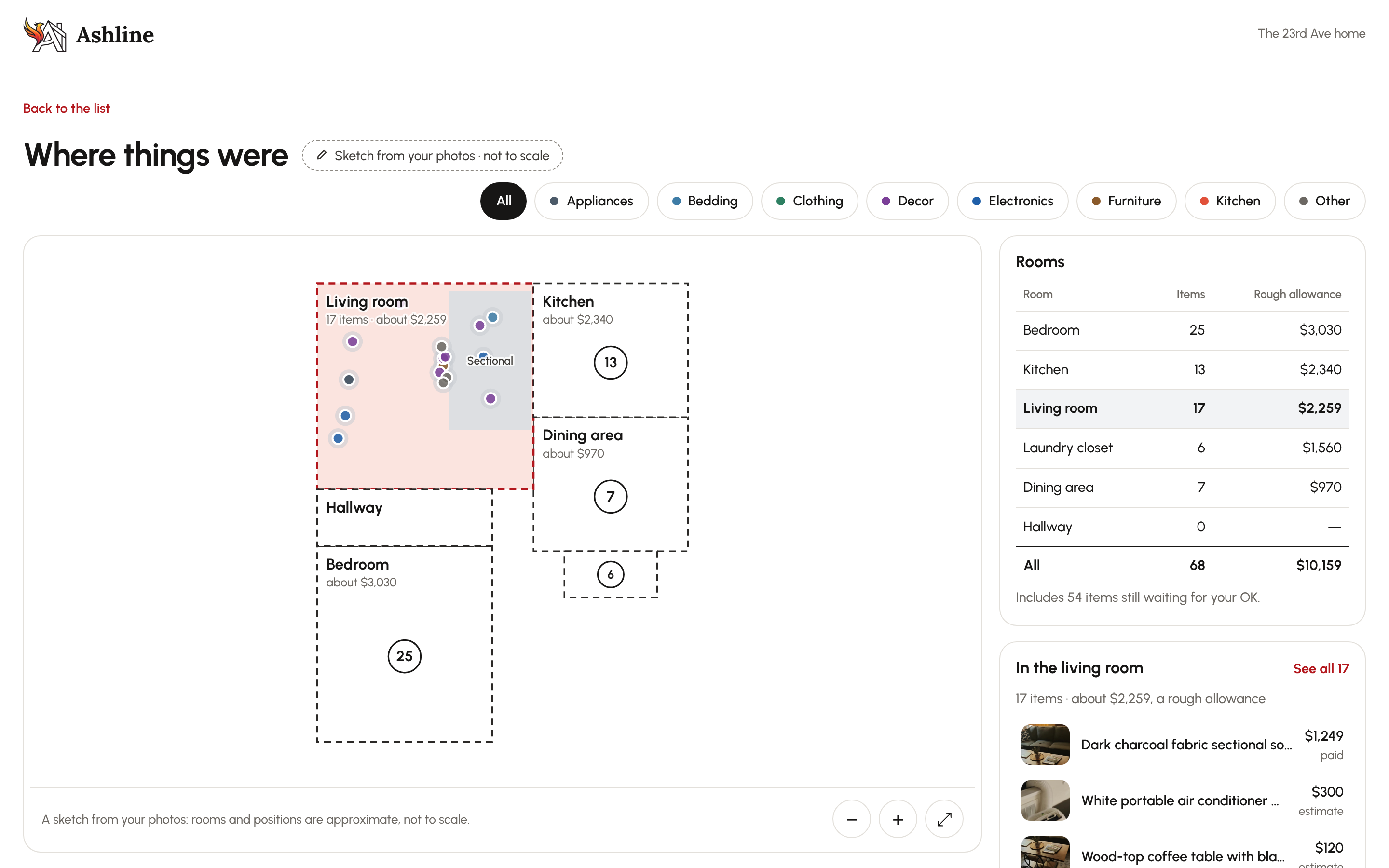
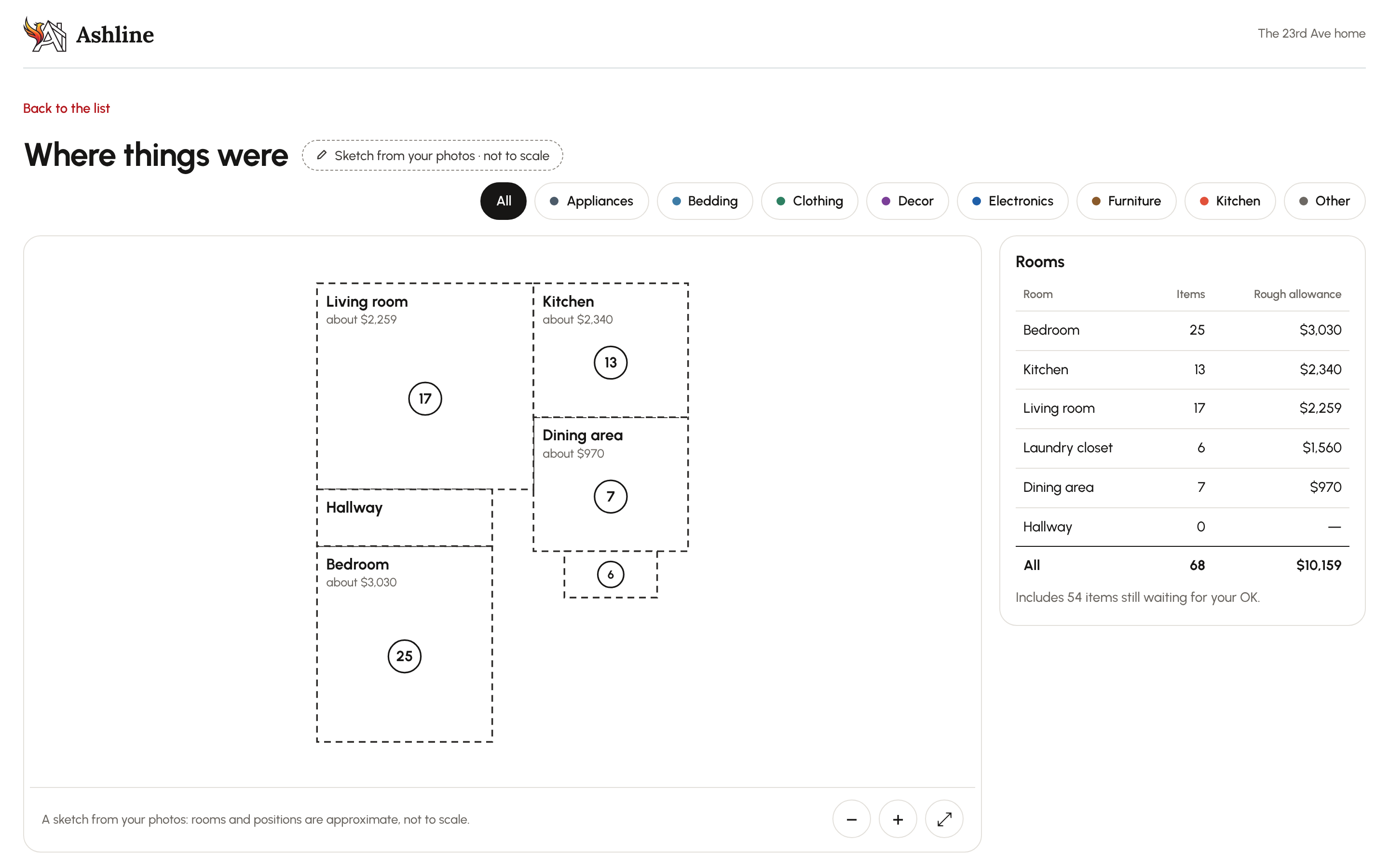
reconstructed layout of home as well as which items were where
-
-
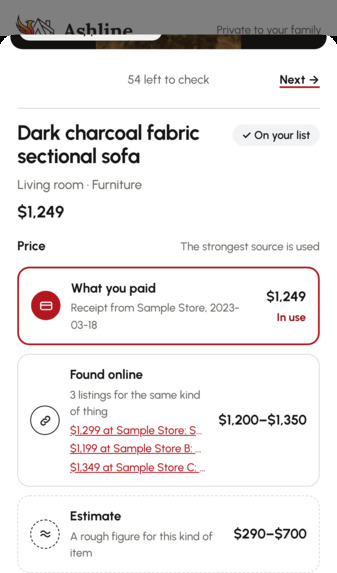
live data from bank accounts and receipt upload
-
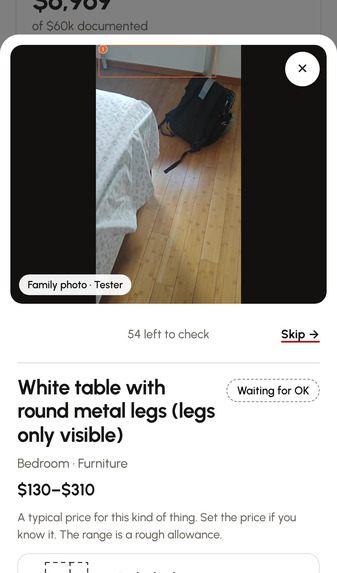
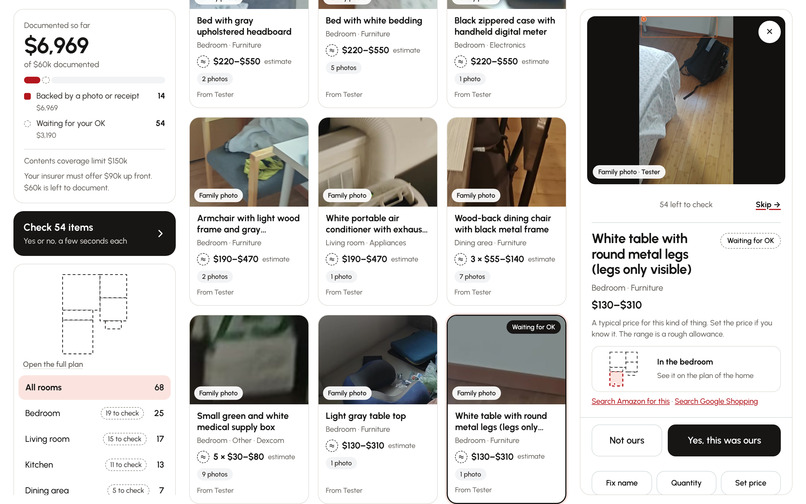
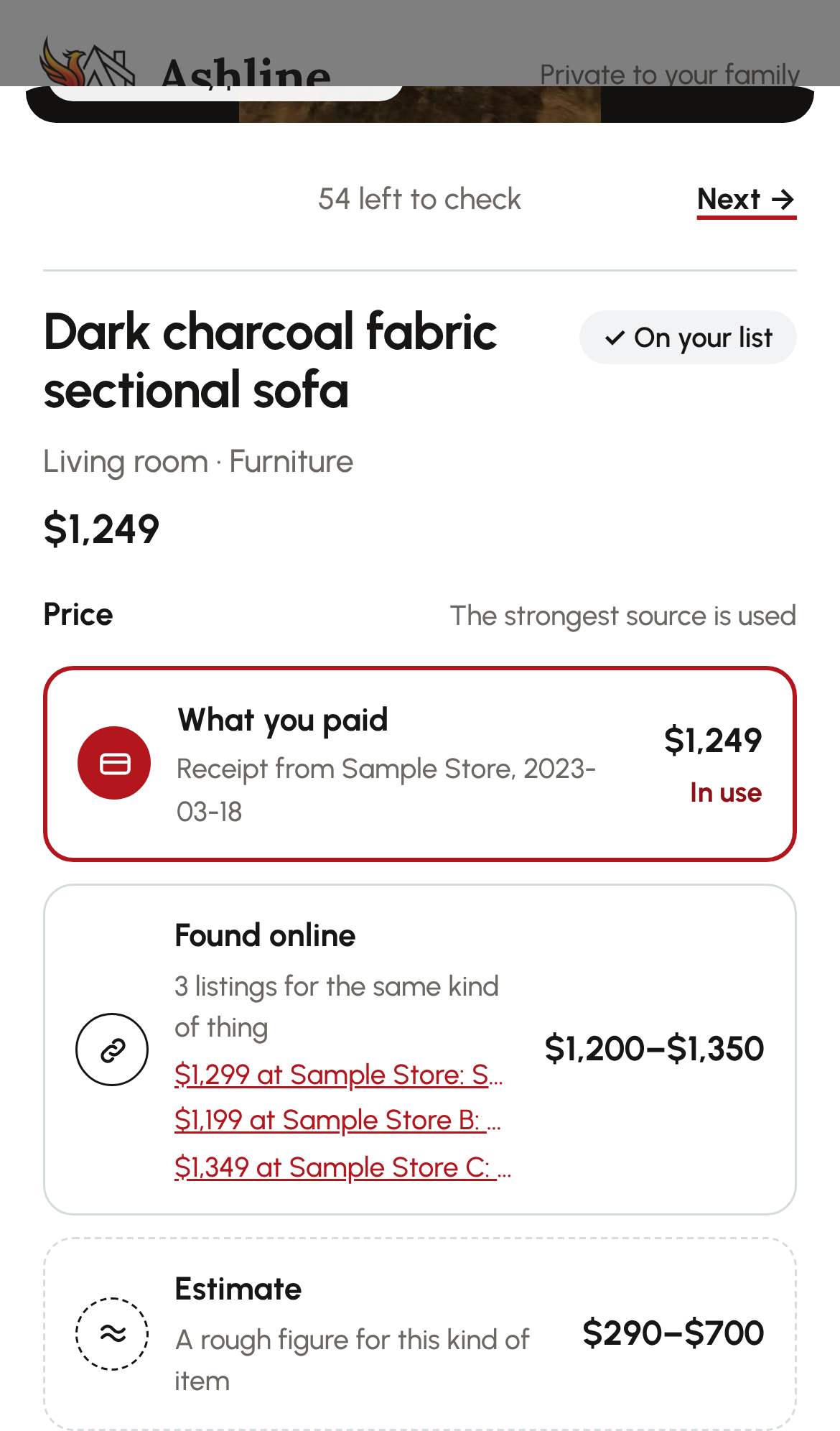
check data on phone
-
-
-
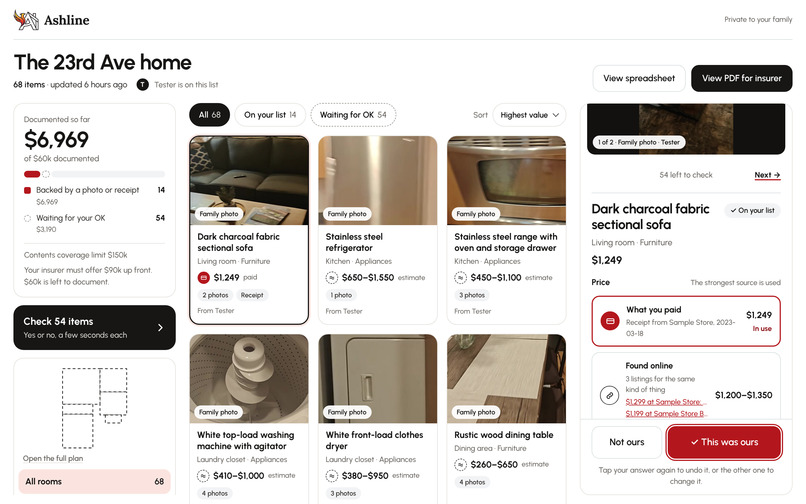
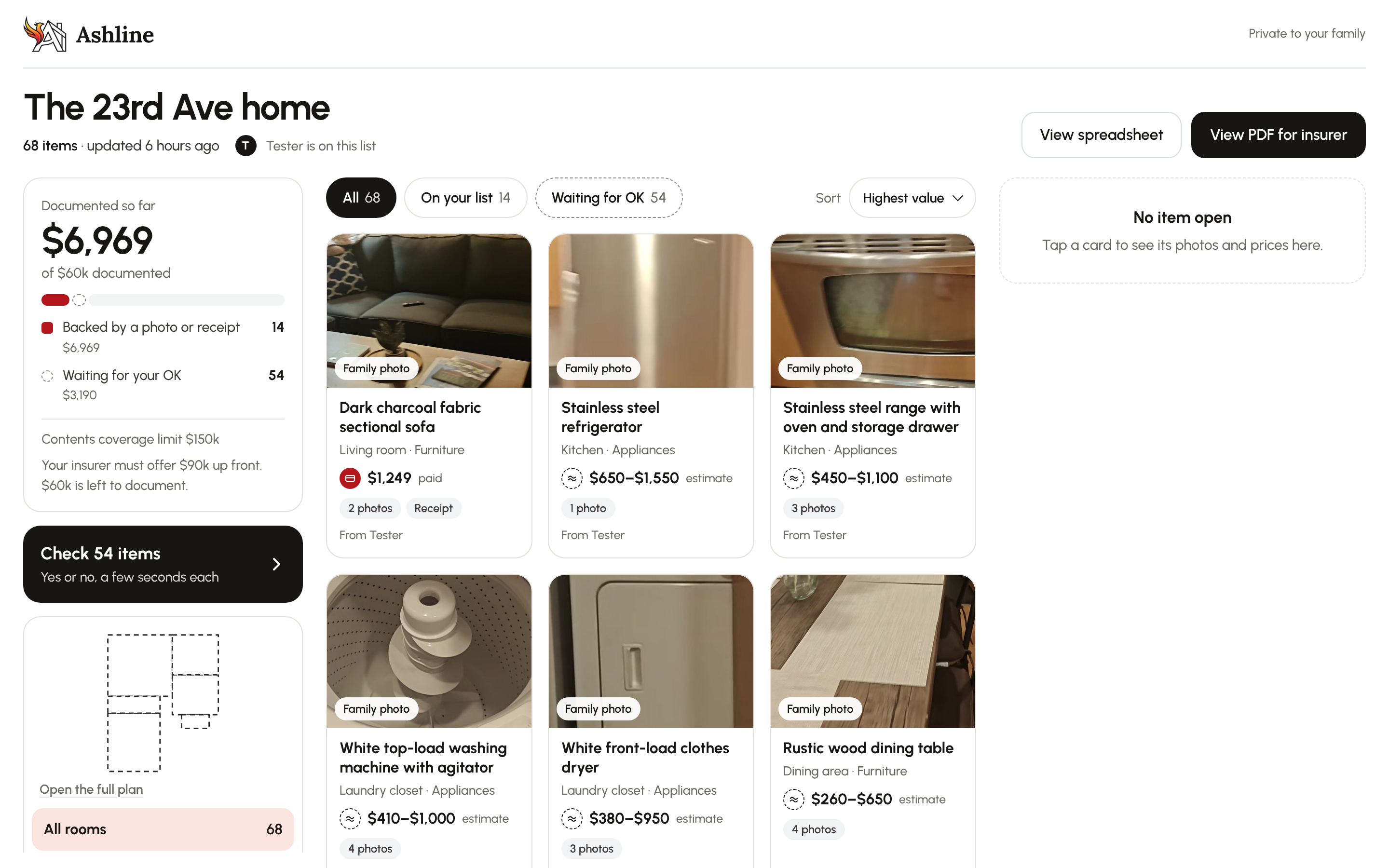
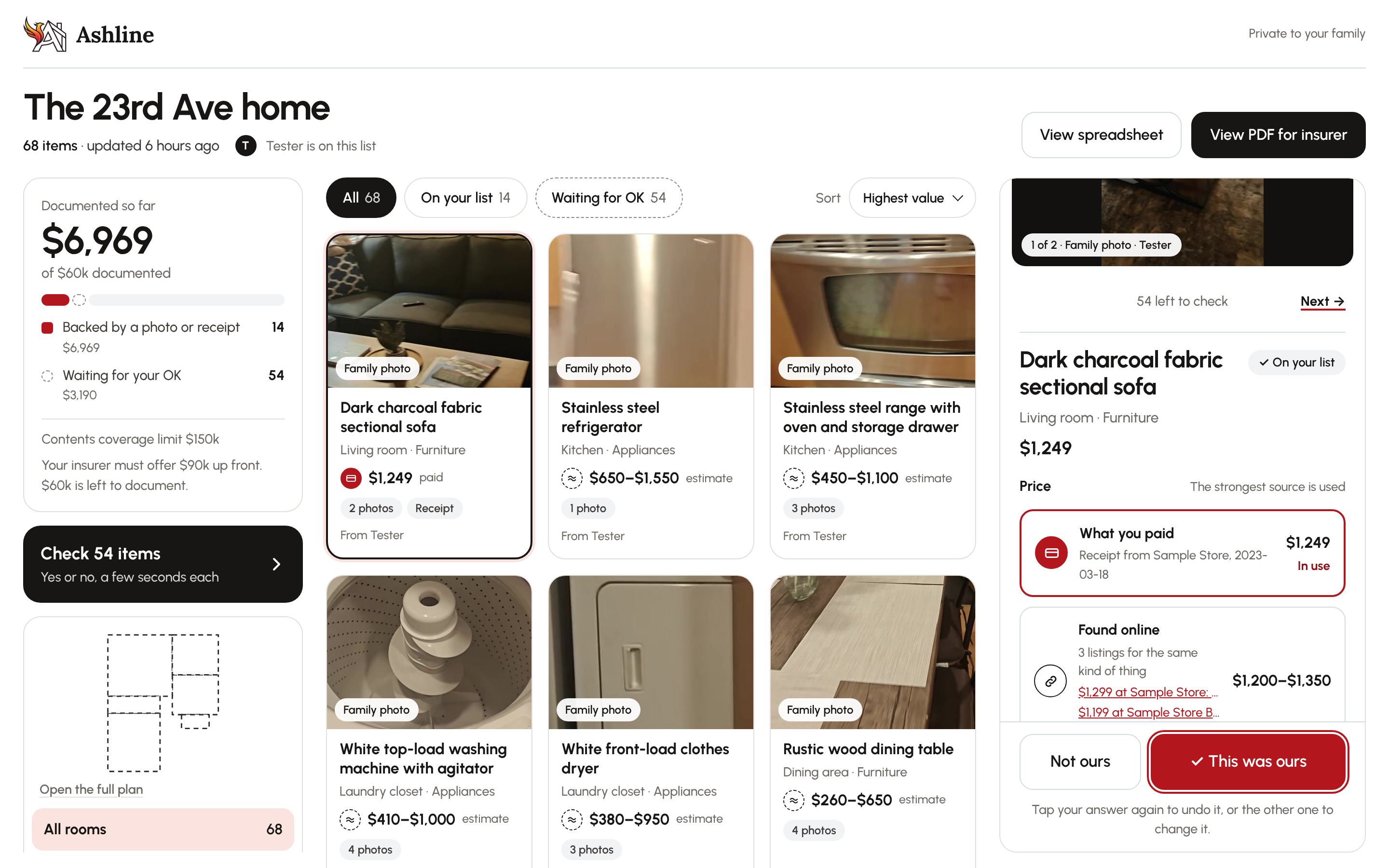
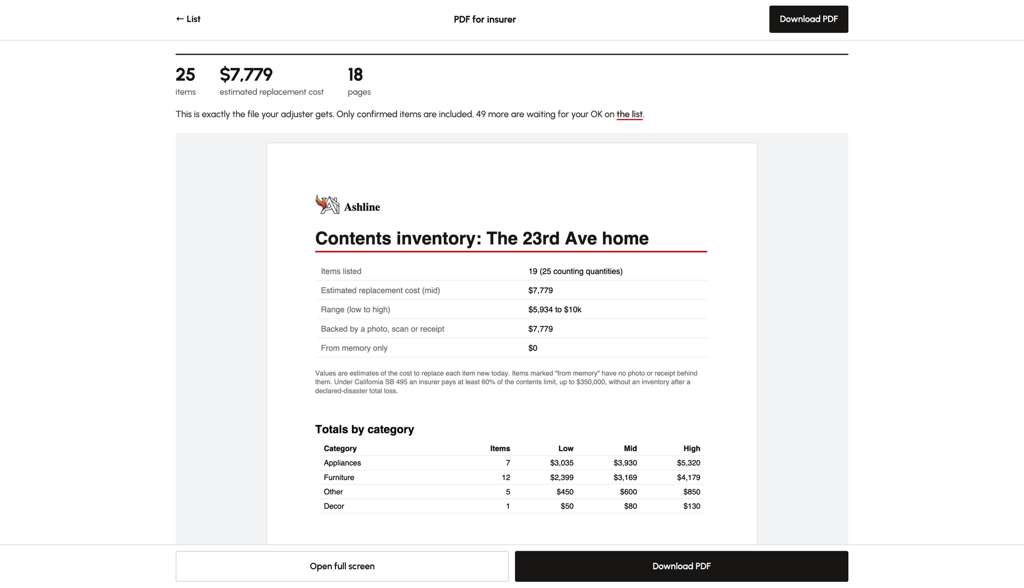
overview of all items recognized from uploaded pictures as well as links to similar online listings to infer price
-
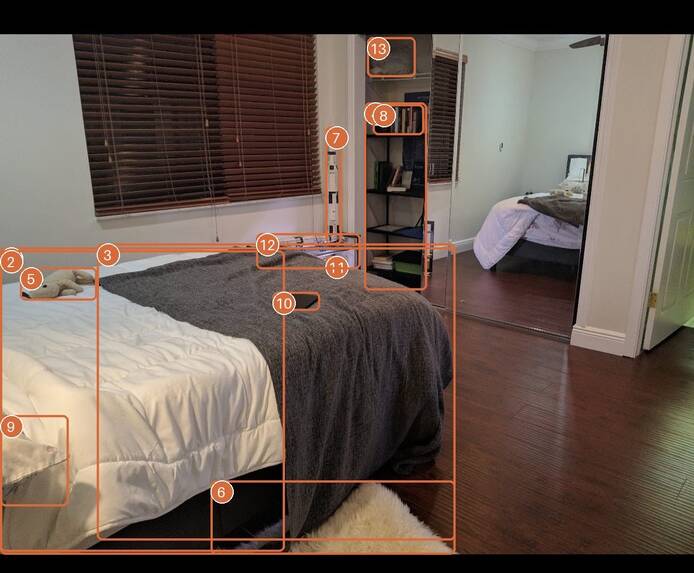
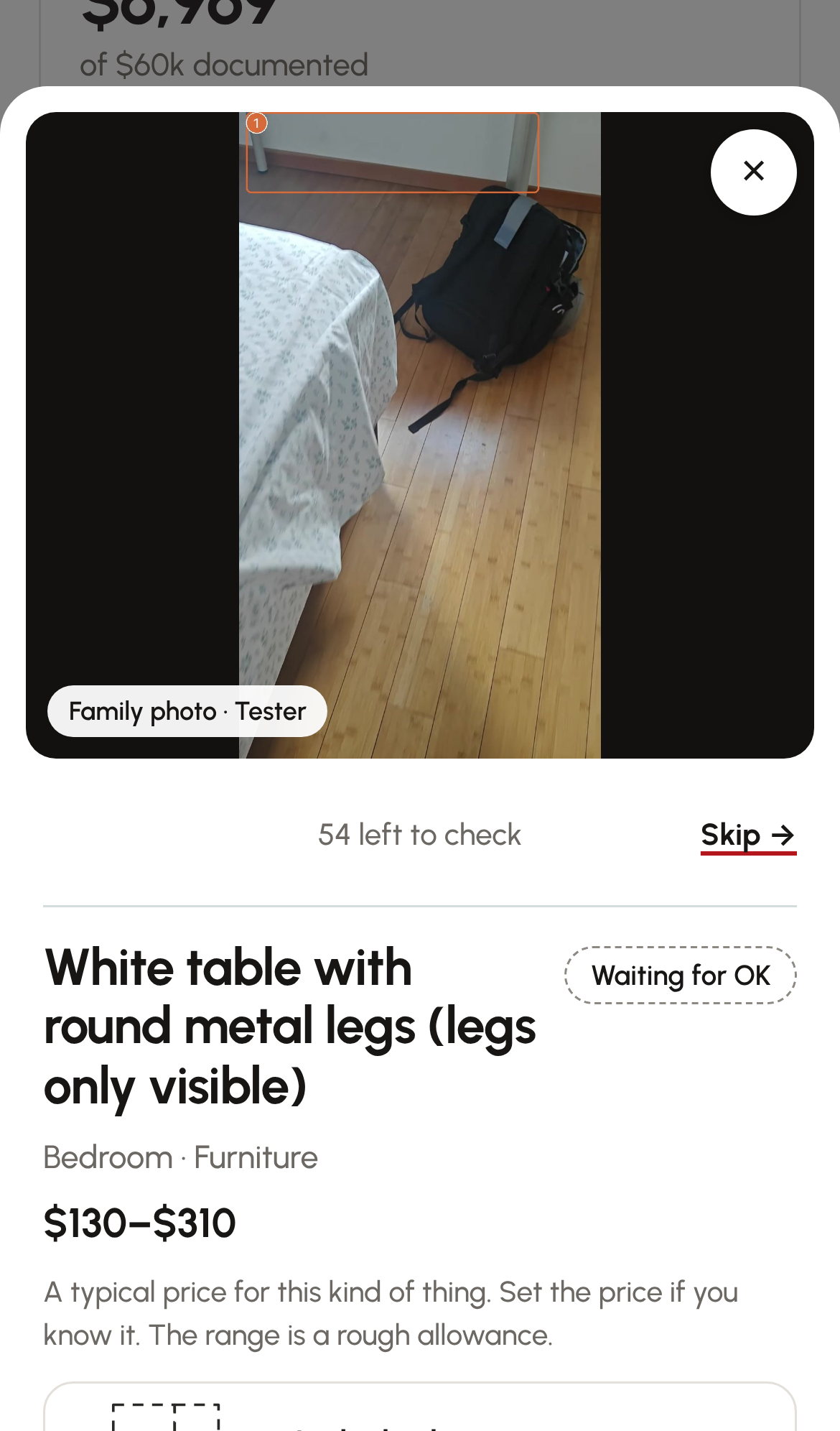
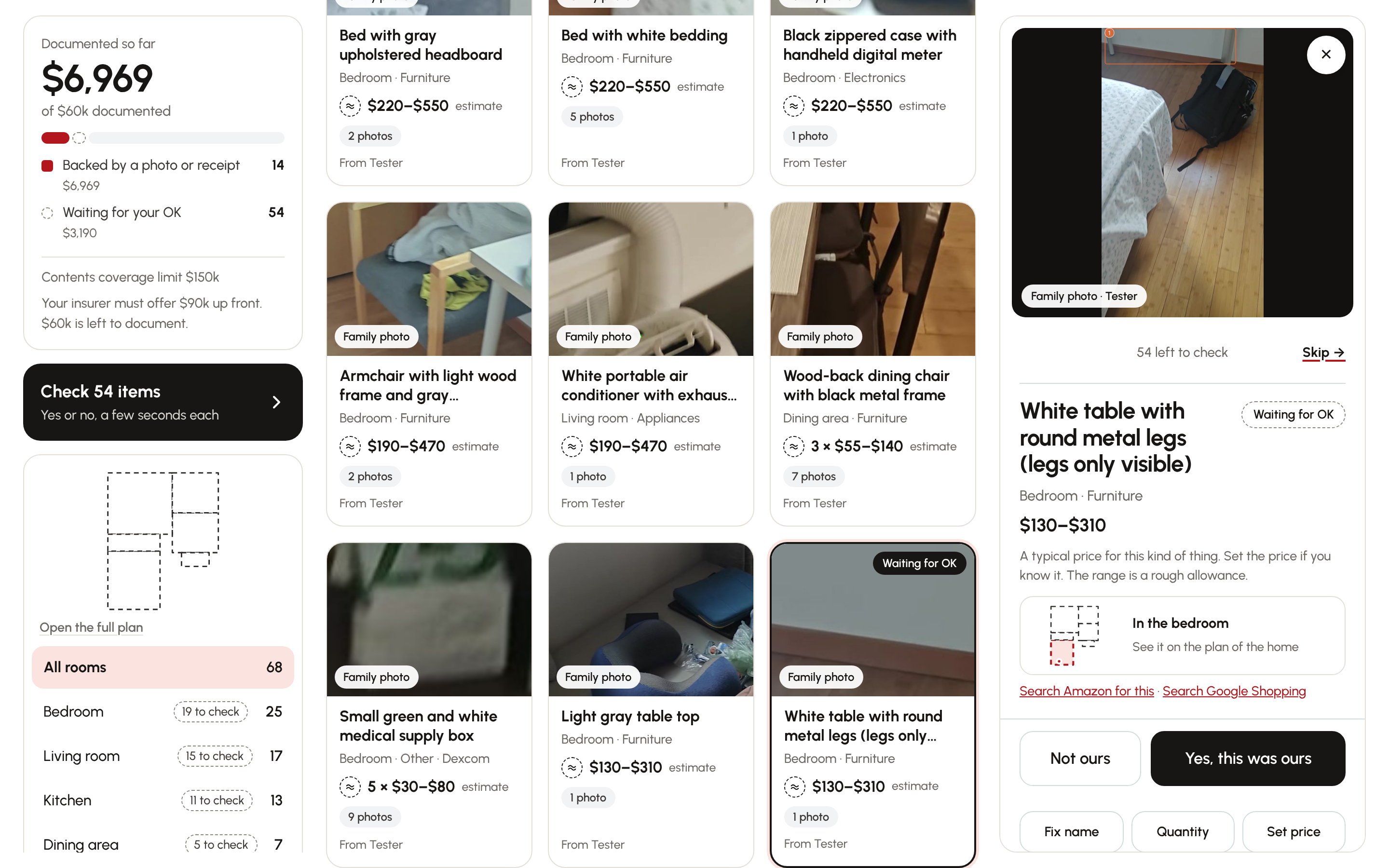
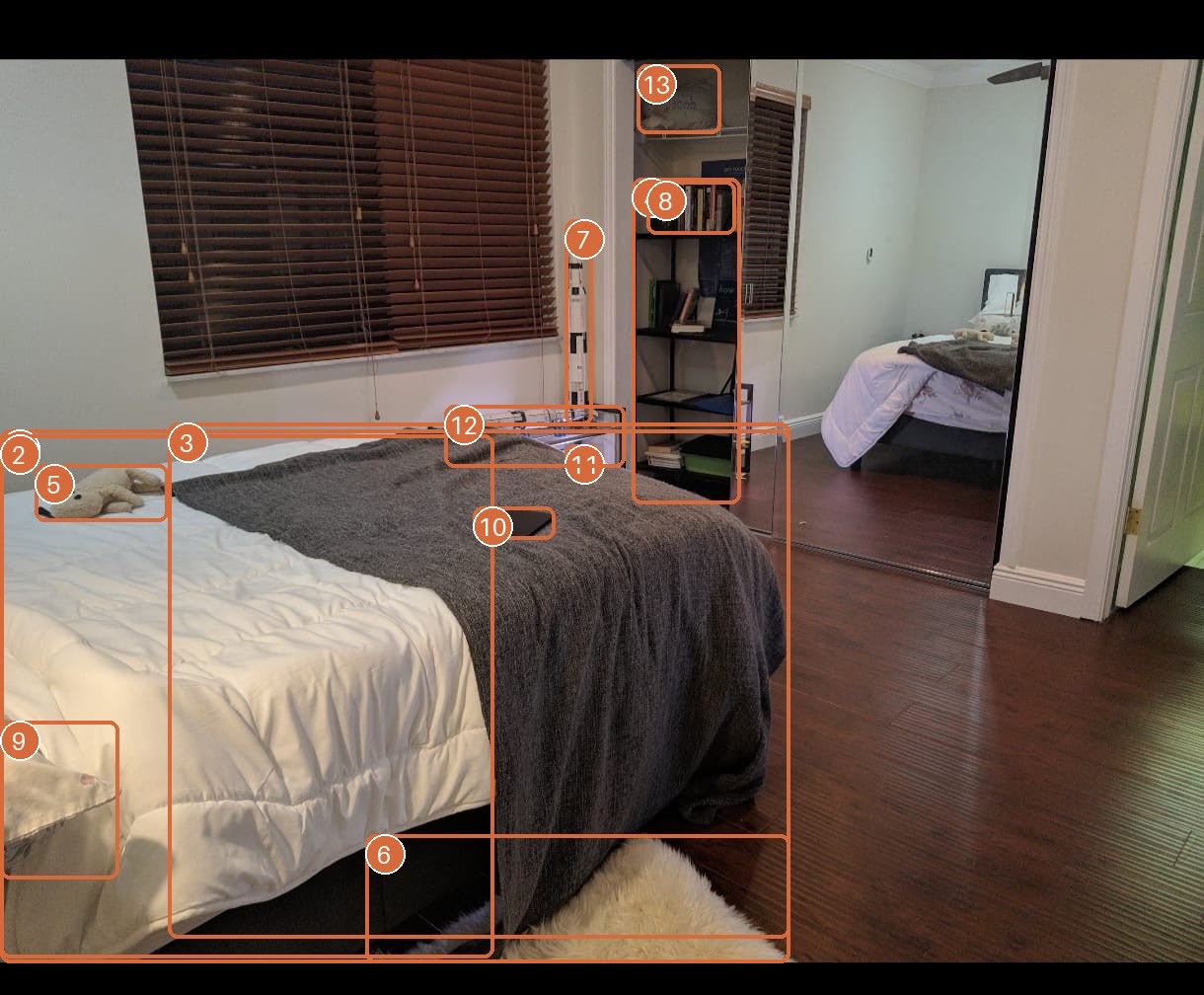
an example of our object detection model's output
-
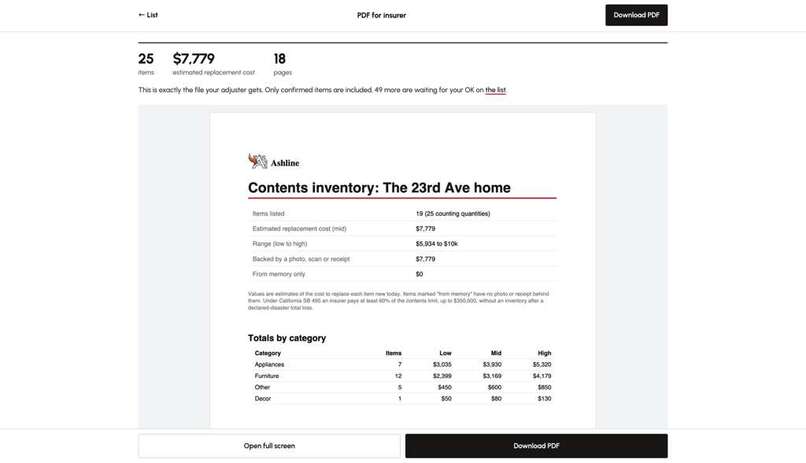
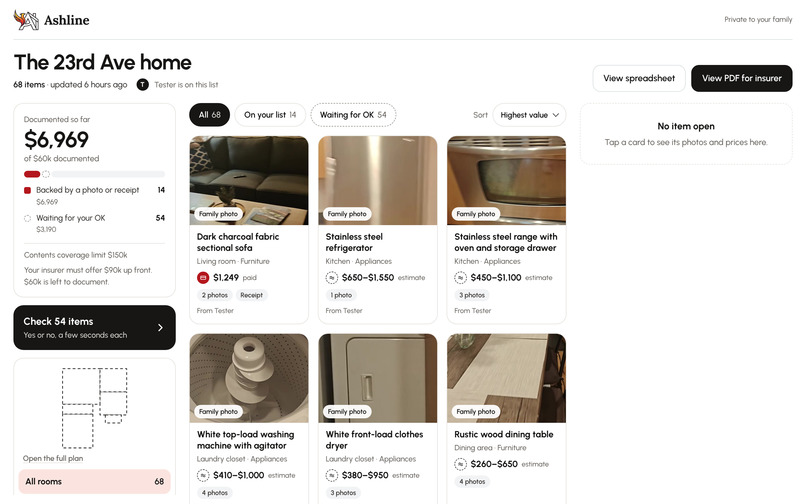
Spreadsheet overview of all items

Inspiration
Github; https://github.com/hydrol0x/ashline
Across North America, communities face wildfires, hurricanes, floods, tornadoes, and earthquakes. Although these events differ, survivors can face a common task afterward: reconstructing what was damaged or lost.
The Department of Angels’ January 2026 recovery report identified itemization lists as the most common insurance challenge among surveyed survivors. That finding helped inspire Ashline, but our goal extends beyond any singular event.
For the sustainability track, we focused on community resilience: our goal is to help people navigate the aftermath of disasters and take practical steps toward recovery. We wanted to explore how object recognition could make documenting personal belongings less overwhelming.
What it does
Ashline’s current prototype identifies objects and checks for duplicate entries, helping people reconstruct an inventory from photographs.
The same possession can appear in multiple images. A useful inventory needs to represent the belongings someone owned, rather than count every appearance of an object.
Our next step is a graph that maps the rooms of the home, helping people organize and review their belongings room by room.
We are starting with the recovery challenges faced by communities across North America, with a longer-term vision of supporting disaster-affected households around the world.
How we built it
We focused the prototype on two connected tasks: identifying objects and checking whether an identified object has already been represented in the inventory.
This puts inventory consistency at the center of the project. Identifying more objects is useful only if the resulting list remains accurate and understandable.
We also integrated some of CoStar's services like searching for existing 3D scans or aerial scans of a building that might help reconstruct it's layout and what was inside it. Our system can then automatically categorize what is sees.
One other important feature is accessibility. Our project doesn't require a specific app, instead, it can be used directly by just texting a number on iMessage or Telegram. This was made possible by Photon's technology, which lets us integrate agentic systems directly into a commonly used, day-to-day UI. That way, at any moment, you can easily access our system and get started on cataloguing, by sending one simple text.
Challenges we faced
A central technical challenge is distinguishing another view of the same object from a separate object that looks similar.
One chair appearing in several images should not become several inventory entries. But two matching chairs should not be collapsed into one. Duplicate prevention requires balancing the risk of overcounting against the risk of leaving real possessions out.
Another challenge is incomplete information. Photos taken before a disaster were often captured as memories, not documentation. Objects may be partially visible or difficult to identify.
Recognizing an object also does not automatically establish its ownership, condition, or replacement value. We need to preserve those uncertainties as we work toward a useful recovery tool.
What we learned
We learned that object recognition is only one part of reconstructing a useful inventory. Consistency, organization, and the ability to review mistakes matter just as much.
We also learned that different disasters can create similar documentation challenges. A tool inspired by wildfire recovery could be useful after floods, hurricanes, earthquakes, and other destructive events, although those use cases still need testing.
Working within the sustainability track broadened our understanding of resilience. Alongside prevention and preparedness, communities need accessible tools that support recovery after disruption. Ashline focuses on one practical part of that process: helping people reconstruct a record of their belongings.
What’s next for Ashline
Beyond technical testing, we want to learn from disaster survivors and recovery organizations across North America. Their feedback can help us understand how documentation needs differ between communities and disaster types.
Our long-term goal is to make personal-property reconstruction more accessible to disaster-affected households worldwide—reducing repetitive work so people can devote more attention to rebuilding their lives. We see Ashline adapting to multiple languages, legal systems, and becoming the accessible tool people need it to be.


