-
-
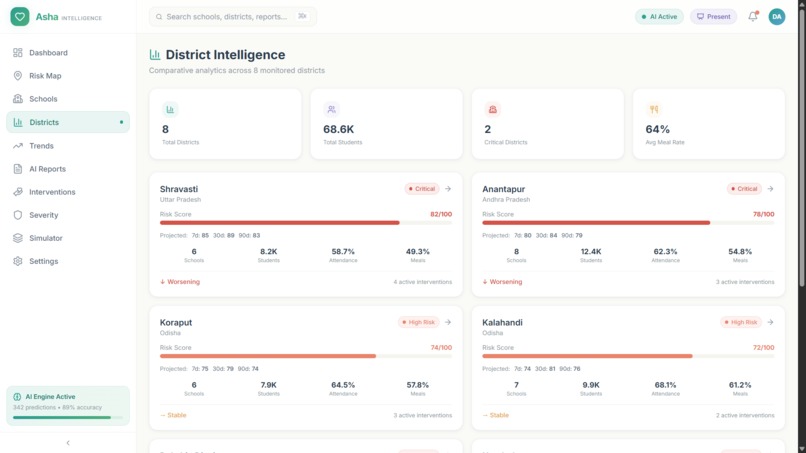
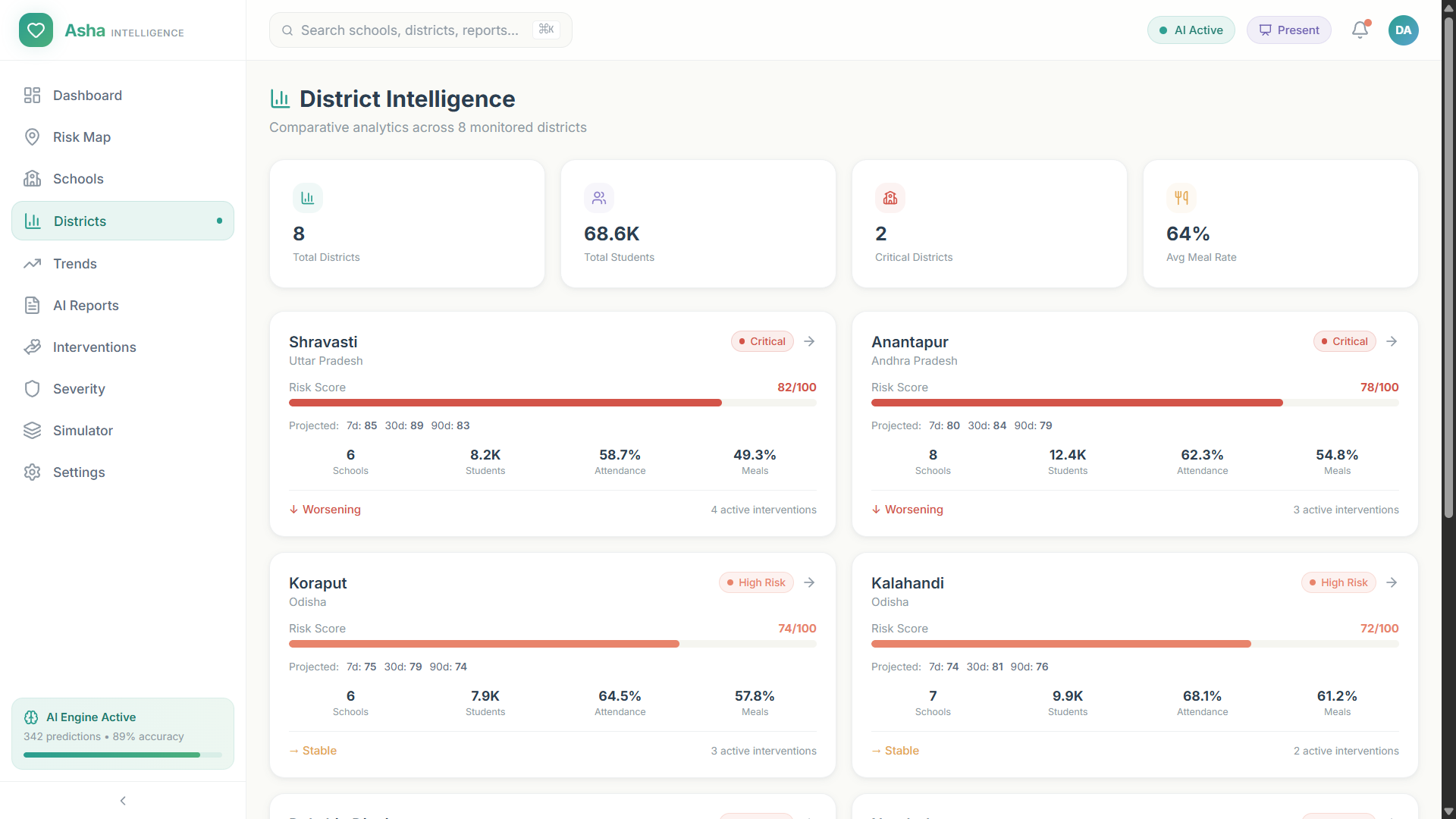
District intelligence monitoring with school-level nutrition risk analytics.
-
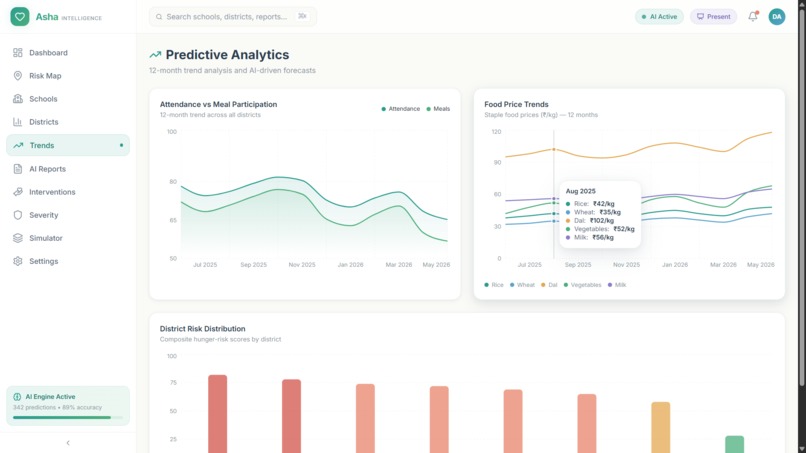
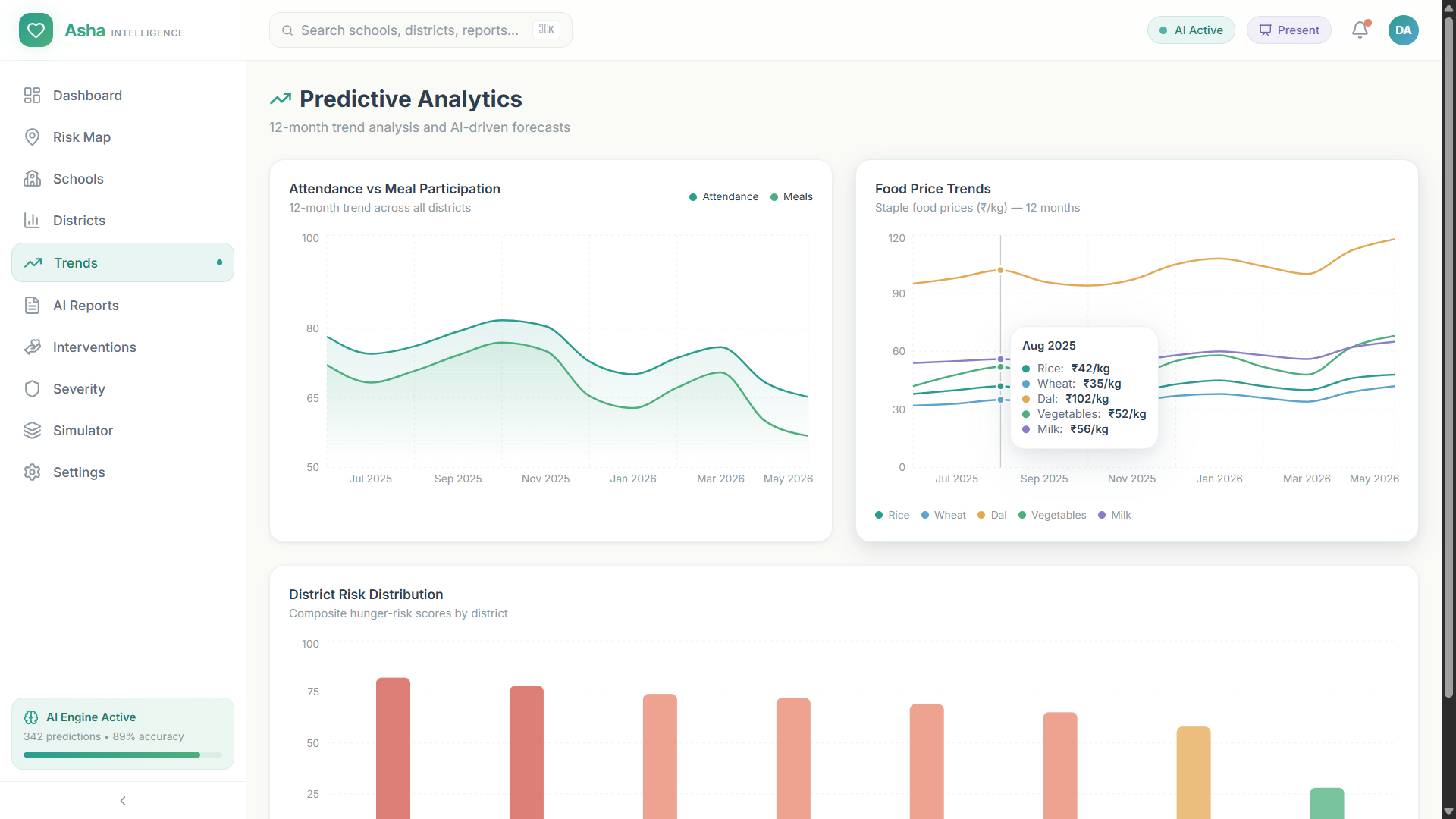
Predictive analytics system tracking attendance, food inflation, and risk escalation.
-
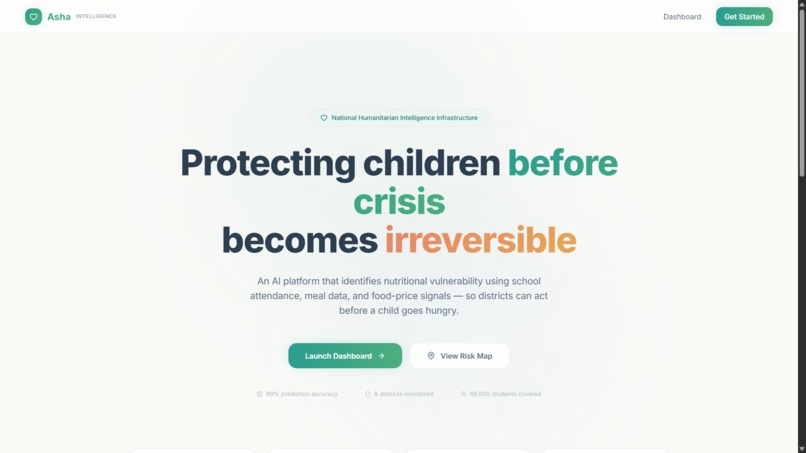
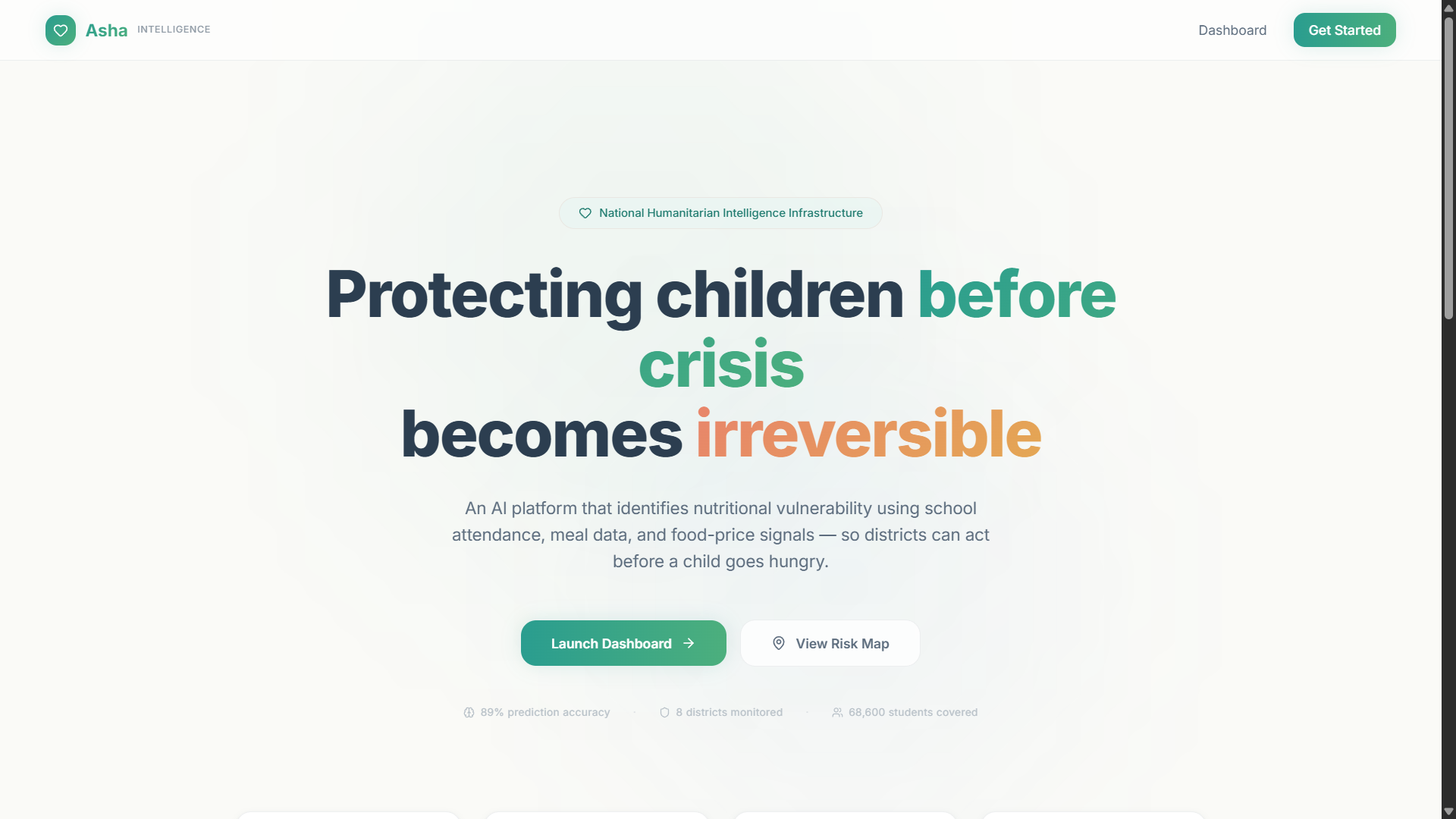
Humanitarian AI landing experience focused on early child hunger intervention.
-
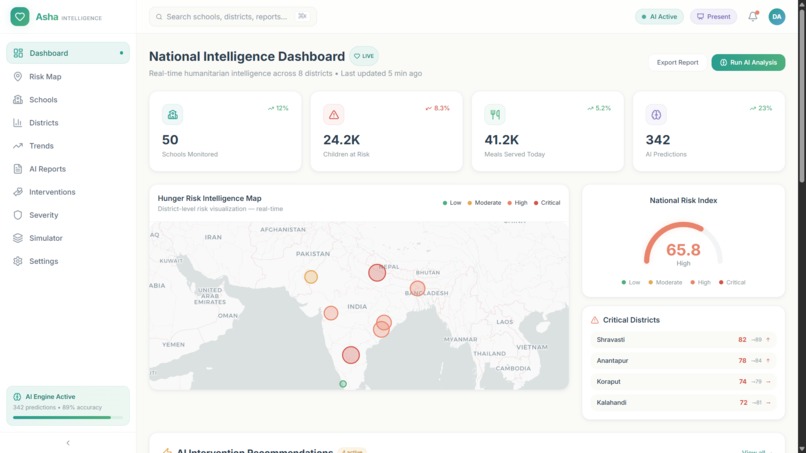
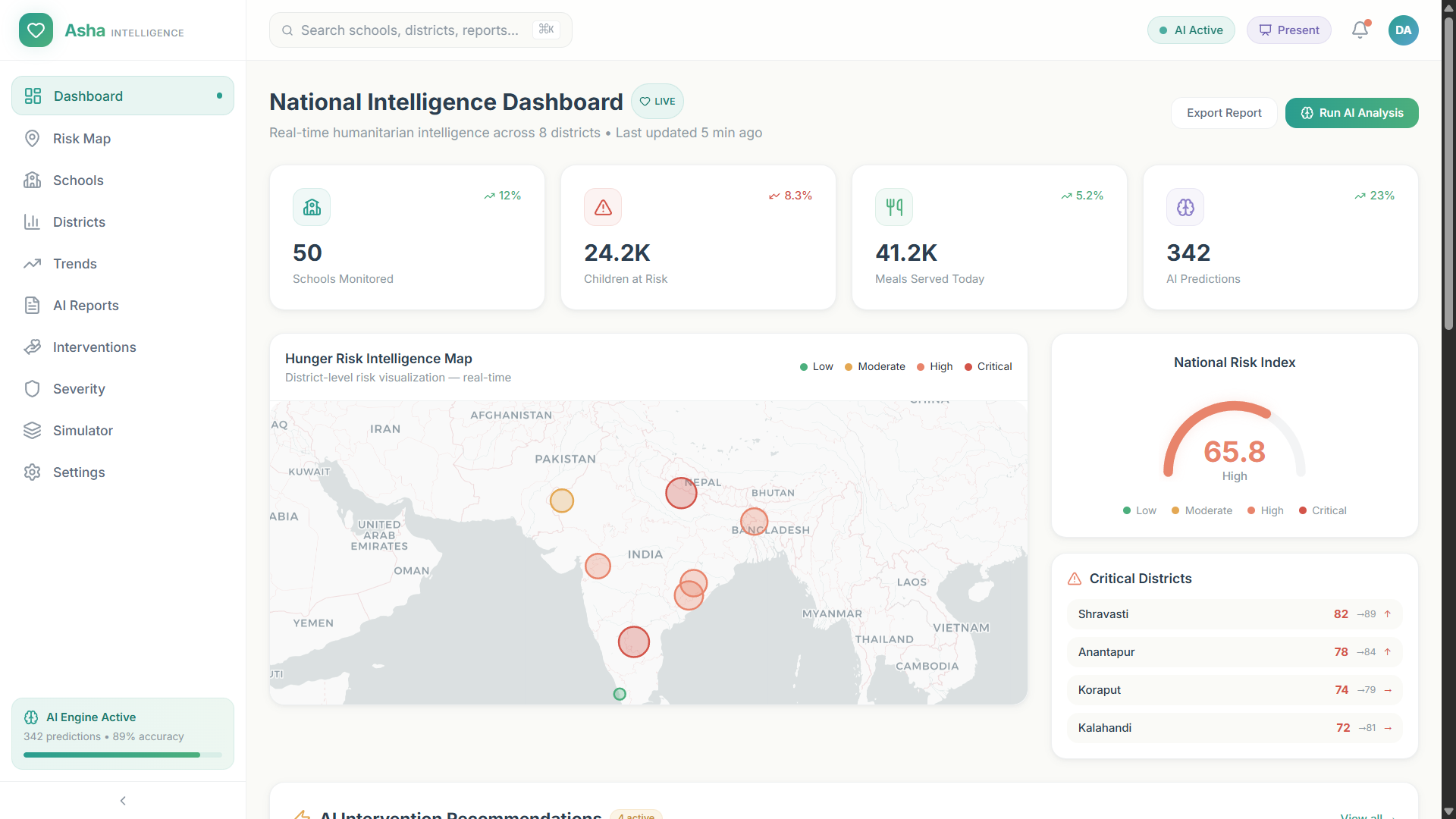
National intelligence dashboard with predictive risk mapping and AI insights.
Inspiration
Millions of children silently attend school while facing hunger, malnutrition, and educational instability. In many regions, intervention only begins after attendance drops, health conditions worsen, or children leave education entirely.
We wanted to explore how AI, predictive analytics, and humanitarian intelligence systems could help organizations identify hunger-risk patterns earlier and enable smarter intervention before crisis becomes irreversible.
That vision led us to build Asha Intelligence.
What it does
Asha Intelligence is an AI-powered humanitarian intelligence platform that predicts child hunger-risk zones using predictive analytics, geospatial intelligence, district-level trends, and AI-generated intervention systems.
The platform helps:
- schools monitor nutrition-risk patterns
- NGOs allocate resources more effectively
- district authorities identify high-risk regions
- organizations make earlier data-driven interventions
Core capabilities include:
- AI-powered hunger-risk prediction
- district severity intelligence system
- NGO resource allocation simulator
- predictive intervention recommendations
- humanitarian analytics dashboards
- AI-generated reports and insights
- interactive geospatial heatmaps
- executive presentation mode
How we built it
Asha Intelligence was designed as a scalable humanitarian intelligence infrastructure platform focused on real-world usability, analytics clarity, and presentation-quality execution.
Frontend
- Next.js
- TypeScript
- TailwindCSS
- Framer Motion
- Recharts
- React-Leaflet
Backend
- Node.js
- PostgreSQL
- Prisma ORM
Infrastructure & Deployment
- GitHub
- Vercel
We also created realistic synthetic datasets to simulate:
- district-level hunger risk
- attendance decline patterns
- nutrition instability
- inflation volatility
- intervention scenarios
- projected educational impact
Challenges we ran into
One of the biggest challenges was balancing:
- realistic infrastructure design
- solo development constraints
- hackathon execution speed
- meaningful social impact
- scalable analytics architecture
Another challenge was creating a platform that felt emotionally human and trustworthy instead of looking like a generic cyber-style analytics dashboard.
We focused heavily on:
- visual storytelling
- warm humanitarian design
- scalable dashboard systems
- presentation-quality UX
- realistic intervention workflows
Accomplishments that we're proud of
We are proud of building a platform that combines:
- AI-powered predictive analytics
- humanitarian intelligence systems
- large-scale dashboard infrastructure
- geospatial visualization
- intervention recommendation systems
- emotionally impactful UX
The NGO allocation simulator, district severity rankings, AI recommendation engine, and national intelligence dashboard became the strongest parts of the experience.
What we learned
During development we learned:
- how predictive analytics can support humanitarian systems
- how important visual storytelling is for data intelligence platforms
- how scalable dashboard architectures are structured
- how AI can transform fragmented social data into actionable intervention intelligence
We also learned that social-impact technology requires emotional clarity and usability as much as technical sophistication.
What's next for Asha Intelligence
Future plans include:
- real-time public dataset integration
- multilingual regional support
- live intervention tracking
- NGO collaboration systems
- mobile field-worker accessibility
- district/state deployment pilots
- advanced forecasting systems
- AI-assisted humanitarian decision support
Our long-term vision is to evolve Asha Intelligence into scalable humanitarian infrastructure capable of enabling earlier and smarter child hunger intervention across communities.
Built With
- framer-motion
- github
- next.js
- node.js
- postgresql
- prisma-orm
- react-leaflet
- recharts
- tailwindcss
- typescript
- vercel


Log in or sign up for Devpost to join the conversation.