-
-
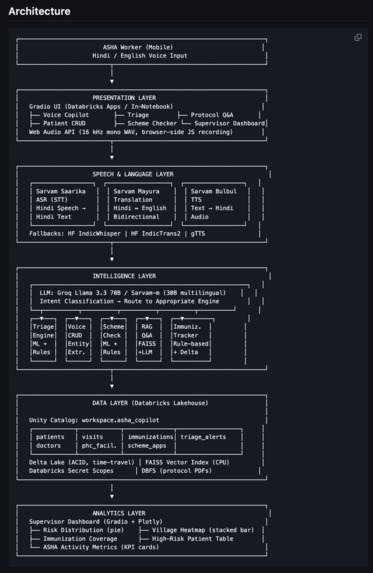
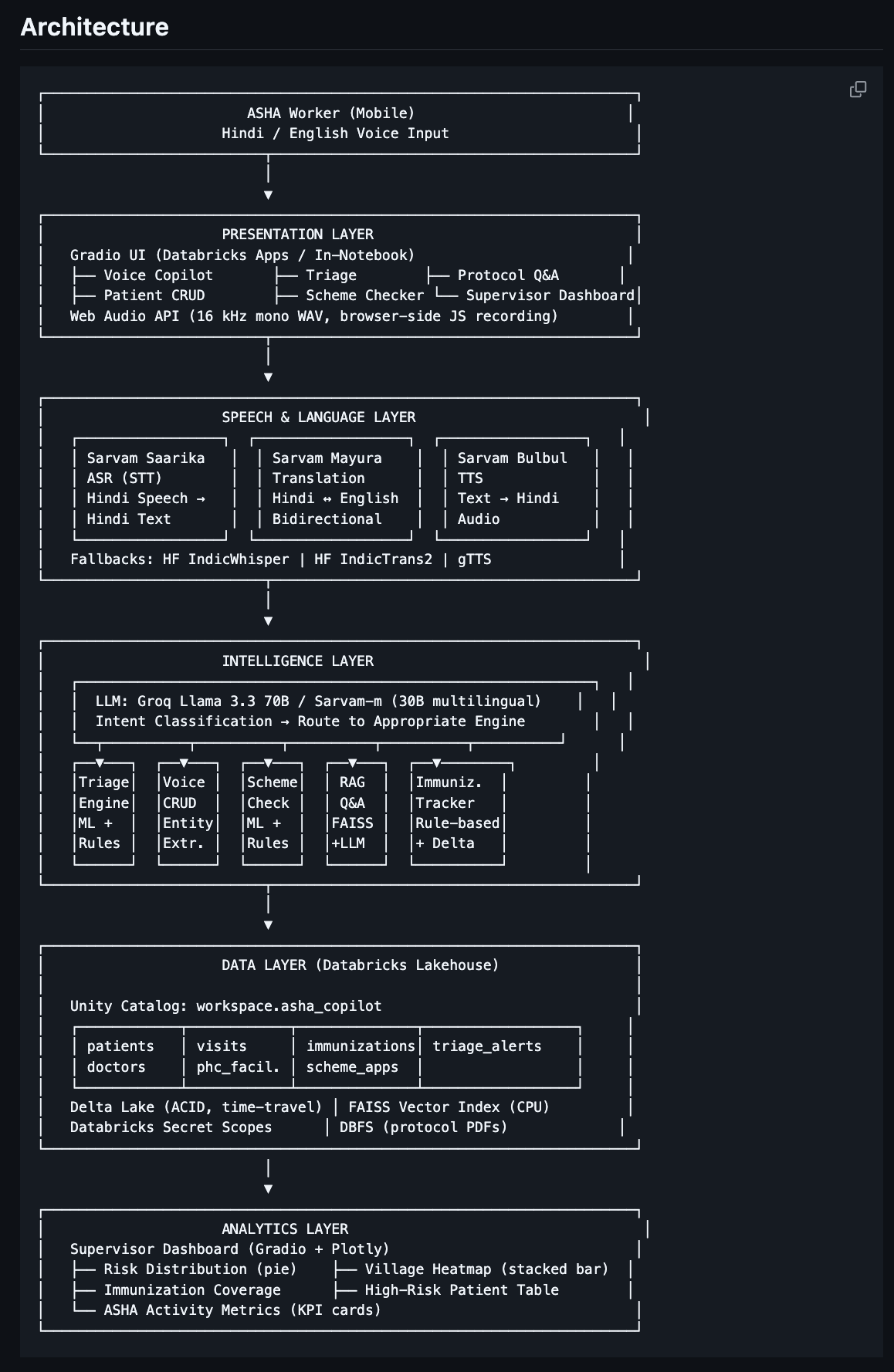
architecture
-
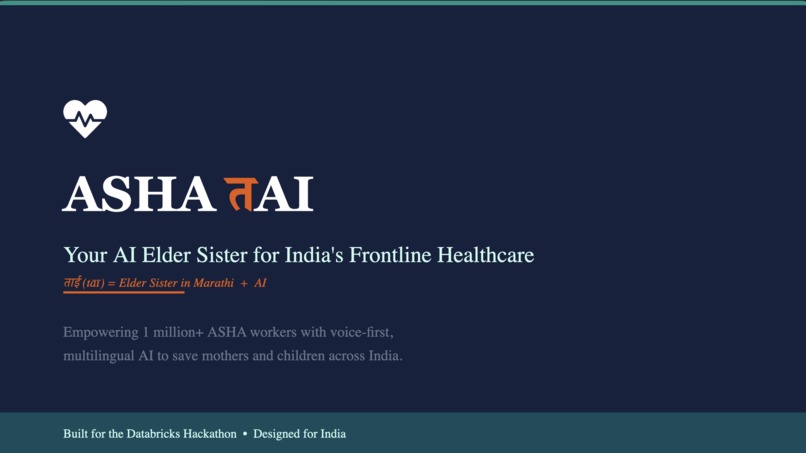
Intro to Product
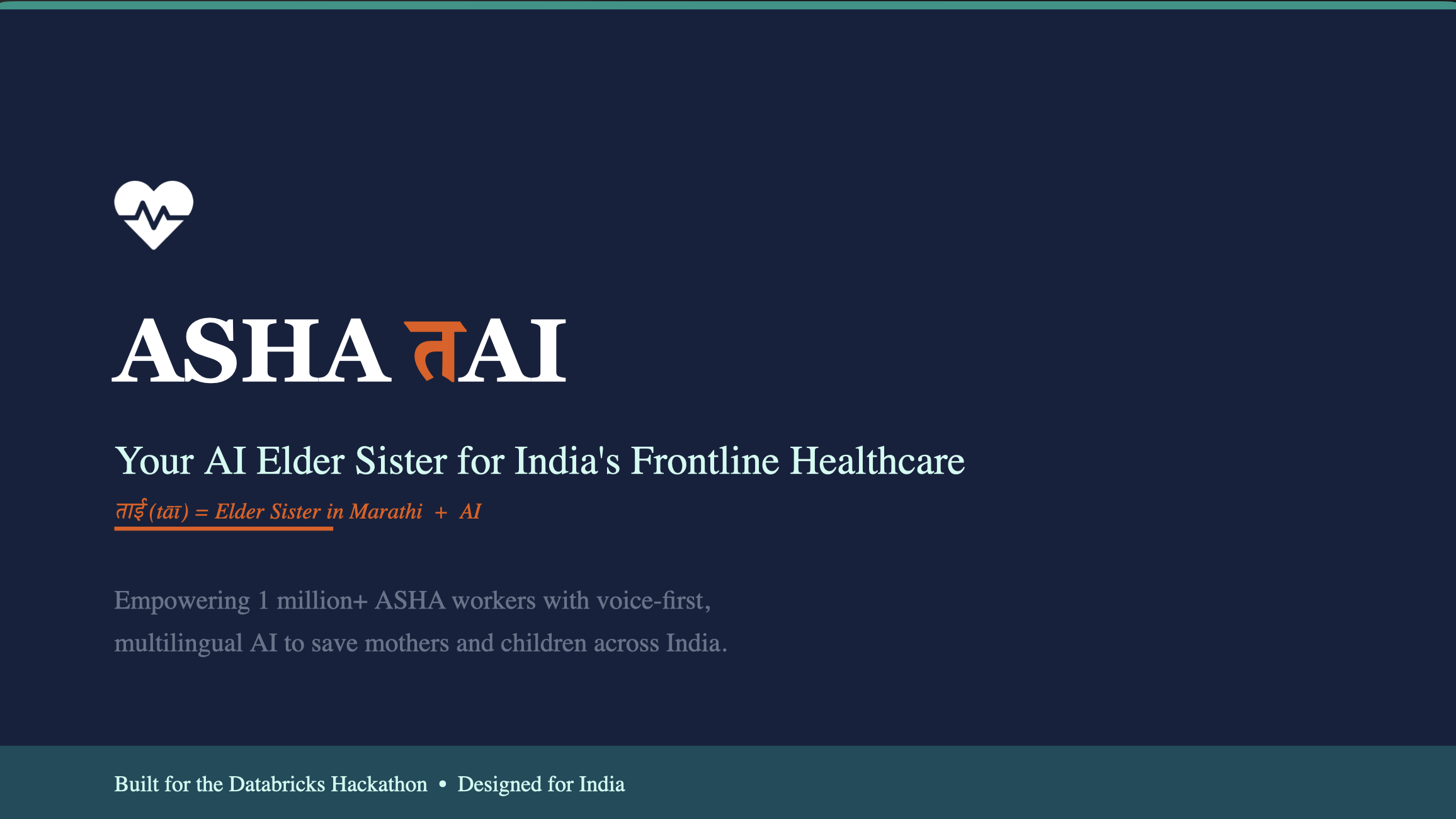
In India’s villages, an ASHA worker is often the only link between a mother in distress and the healthcare system. She walks long distances, manages hundreds of families on paper registers, and makes life-or-death decisions without clinical support. The problem is not lack of care or commitment — it is lack of tools, real-time guidance, and language access. In many places, protocols arrive in English while the worker is far more comfortable in Hindi or her local language, and a critical referral can be delayed because she cannot quickly find the right doctor or facility. ASHA तAI changes that reality. It gives every ASHA a voice-first, multilingual AI assistant she can speak to naturally in Hindi or English. She can ask about symptoms, register patients, update visits, check scheme eligibility, or get protocol-backed guidance without typing, reading dense documents, or relying on memory alone. The system listens, understands, triages risk, and responds with clear next steps — helping her act faster and with confidence. In effect, it turns one overburdened worker into a supported frontline health navigator for mothers and children. Multilingual support is what makes it truly usable at the last mile. When technology speaks the worker’s language, it removes fear, reduces errors, and makes medical guidance accessible in the field. That is how ASHA workers move from overwhelmed record-keepers to empowered care coordinators — with AI beside them, not above them.
Built With
- asr
- databricks
- gradio
- llm
- multilingual
- particle
- sbert
- tts


Log in or sign up for Devpost to join the conversation.