-
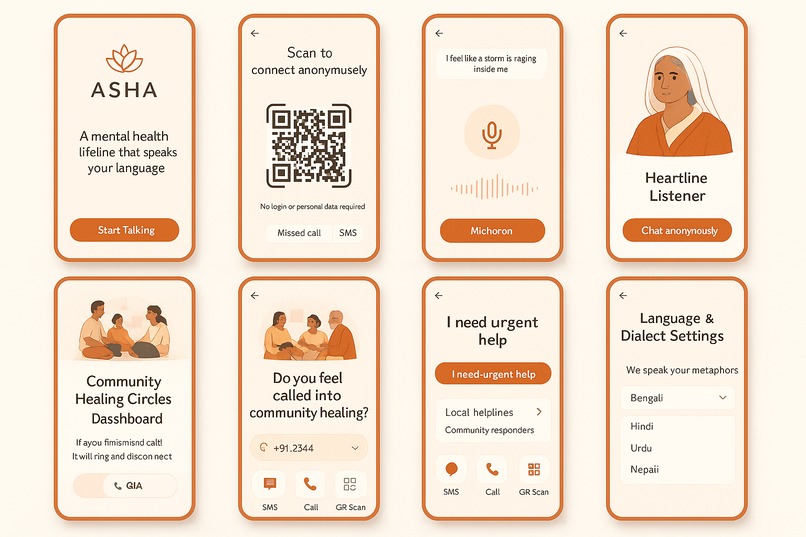
Interphase of the ASHA app
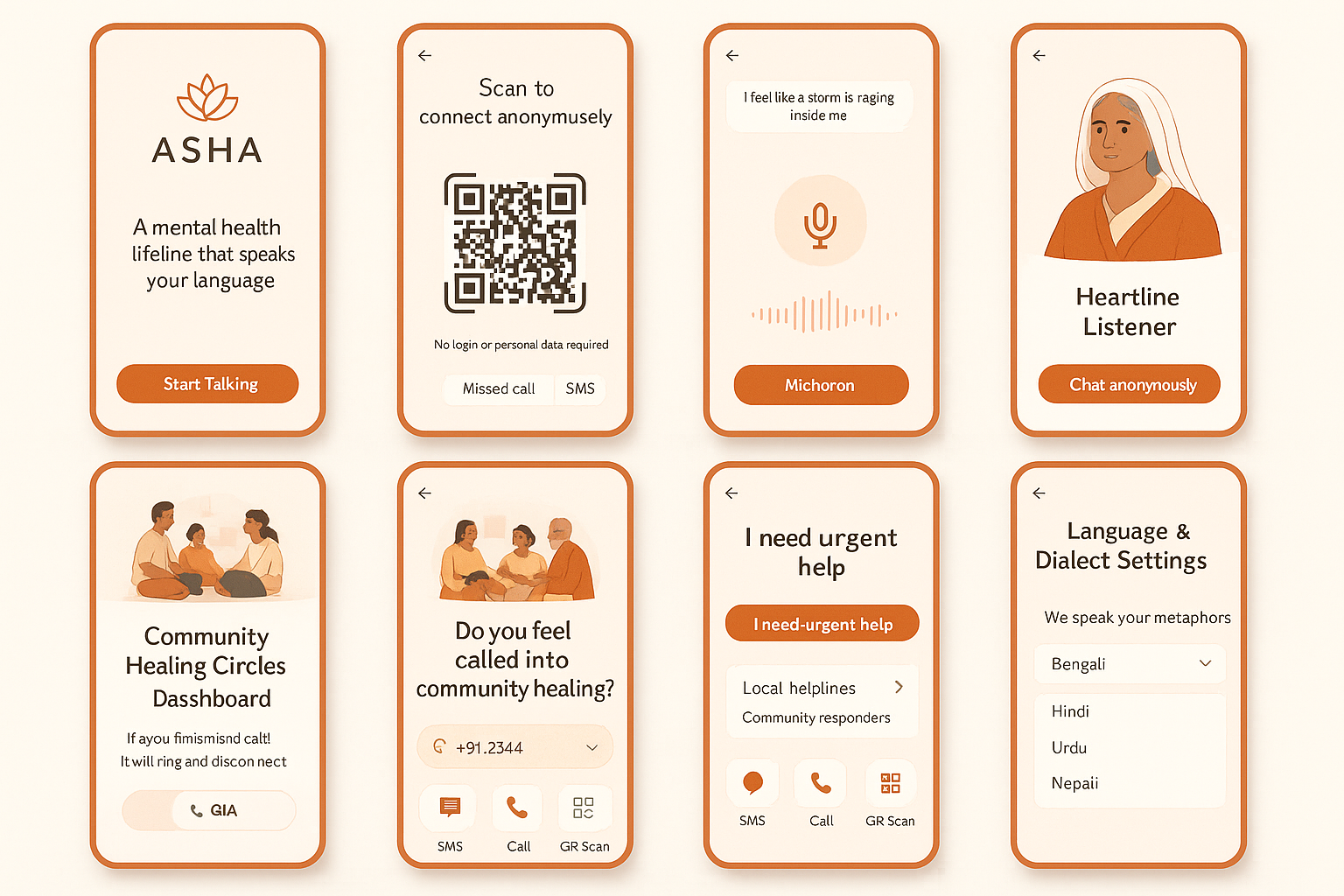
The inspiration for ASHA came from witnessing the silence surrounding mental health in South Asia, where stigma and cultural taboos often prevent people from seeking help. I saw how friends and communities expressed distress through metaphors—“my chest feels heavy,” “my soul is tired”—yet these voices were rarely understood by traditional systems. This motivated me to design a lifeline that honors culture while restoring dignity. Through the process, I learned that innovation is not only about advanced technology but about empathy, accessibility, and cultural sensitivity. I discovered how AI voice intelligence could decode metaphorical language, how QR codes and missed calls could provide anonymous, low-tech entry points, and how community healing circles could transform trauma into resilience. Building ASHA meant combining no-code tools like Twilio, Airtable, and Figma to simulate app flows, while structuring the three pillars of Connection, Intelligence, and Healing into a coherent model. The journey was not without challenges—limited technical resources, the difficulty of ensuring offline access, and the struggle to balance local nuance with global scalability. Yet these obstacles taught me persistence and creativity, proving that even student-led initiatives can create scalable solutions. ASHA is more than an app; it is a movement to turn silence into lifelines, bridging generations and empowering communities to heal together.
Built With
- airtable
- apis
- figma
- firebase
- google-cloud-speech-to-text-api
- html/css
- javascript
- openai/ai
- python
- twilio


Log in or sign up for Devpost to join the conversation.