-
-
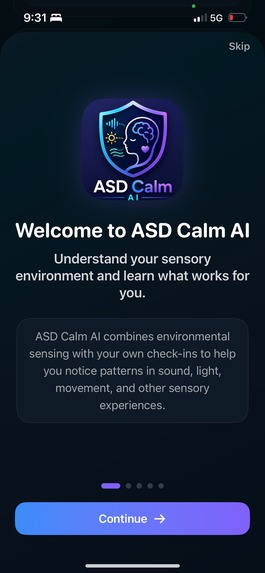
ASD Calm AI combines environmental sensing, personal check-ins, on-device AI, and calming activities.
-
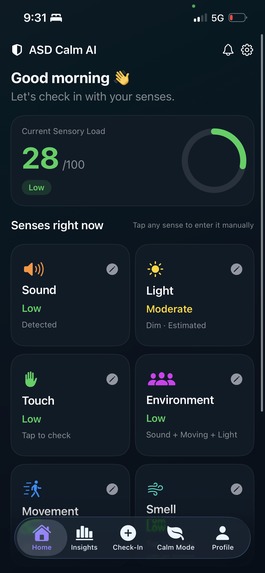
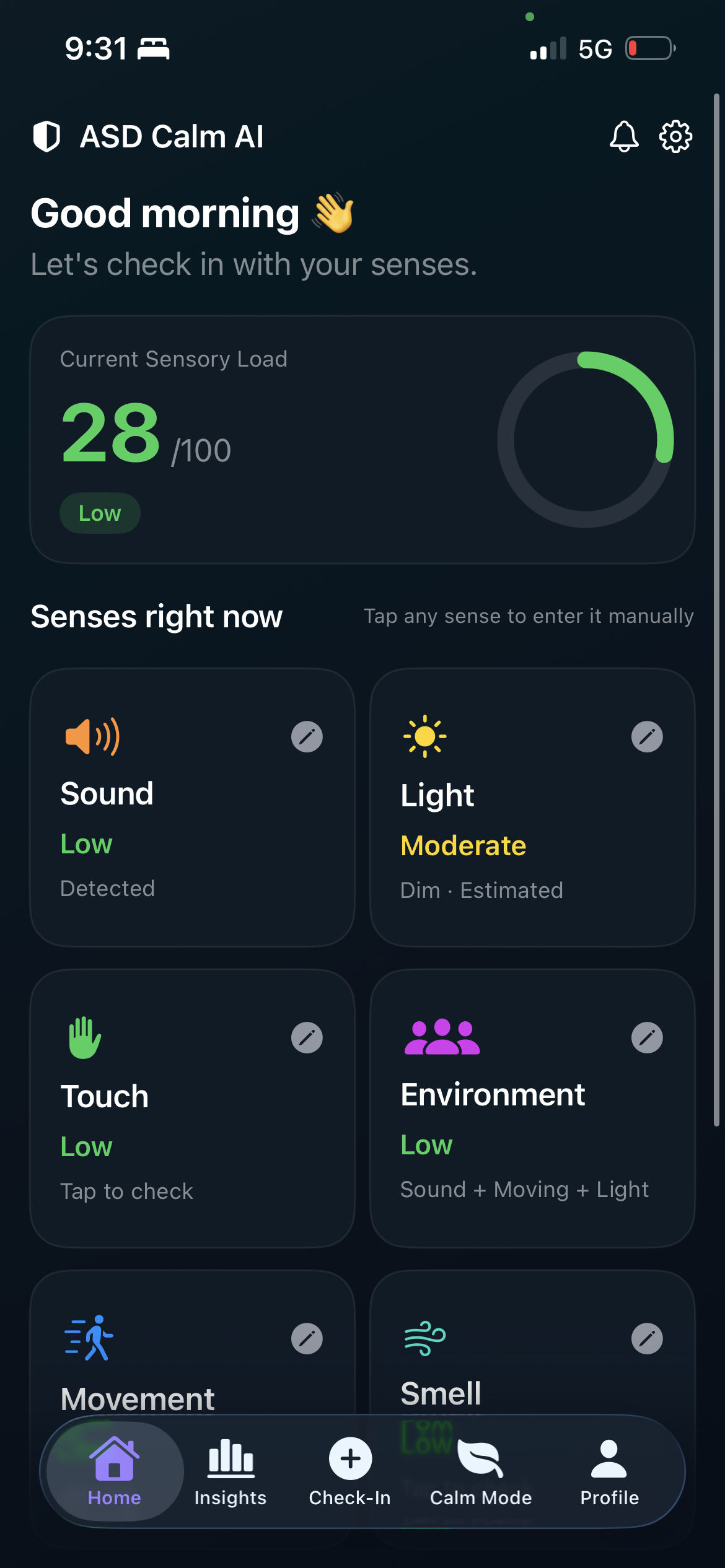
Real-time environmental sensing estimates sensory load while showing sound, light, movement, and other sensory factors.
-
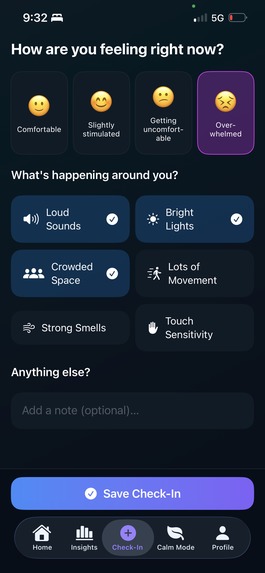
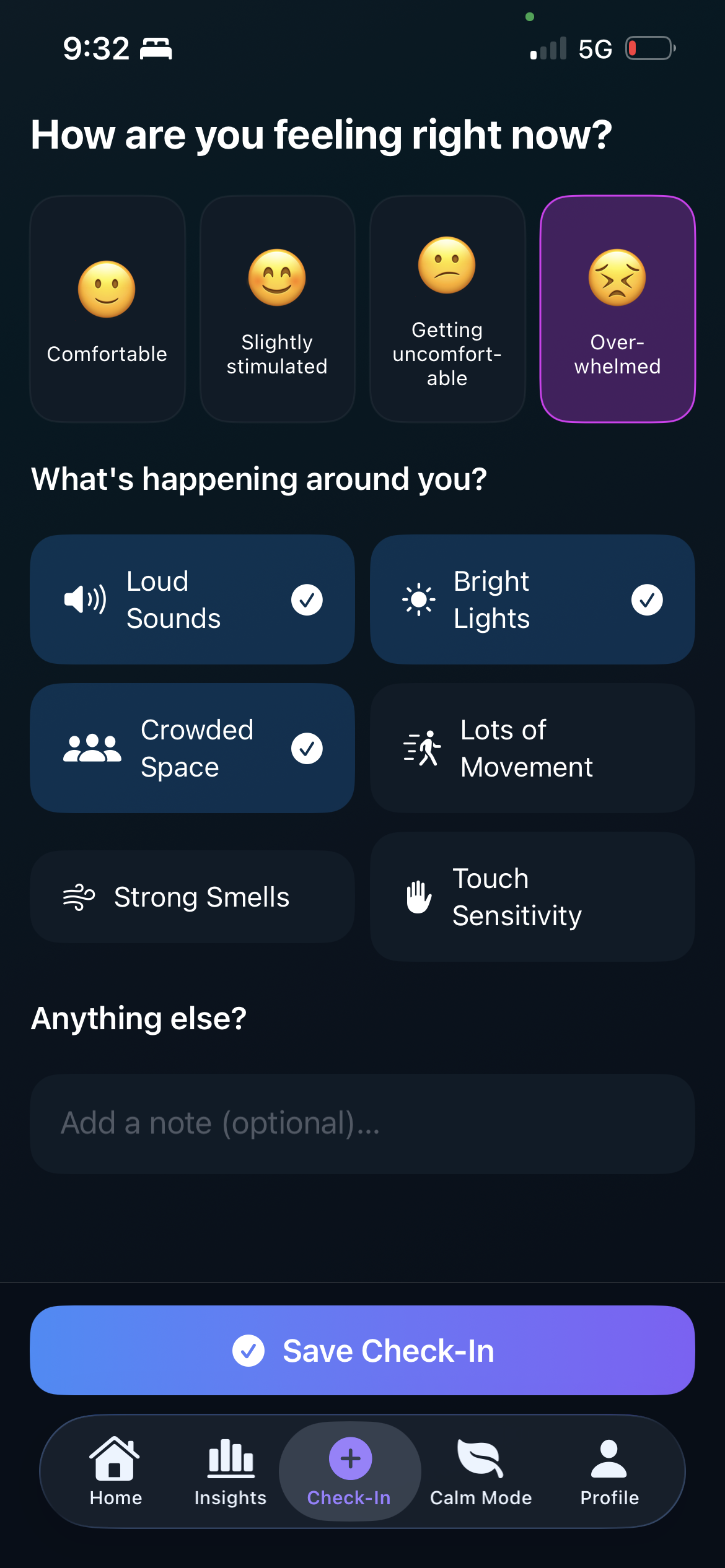
Users record how they feel and select sensory factors to help personalize future AI insights.
-
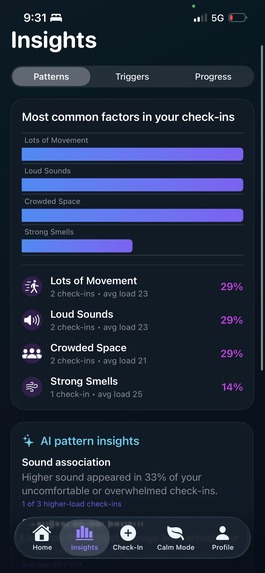
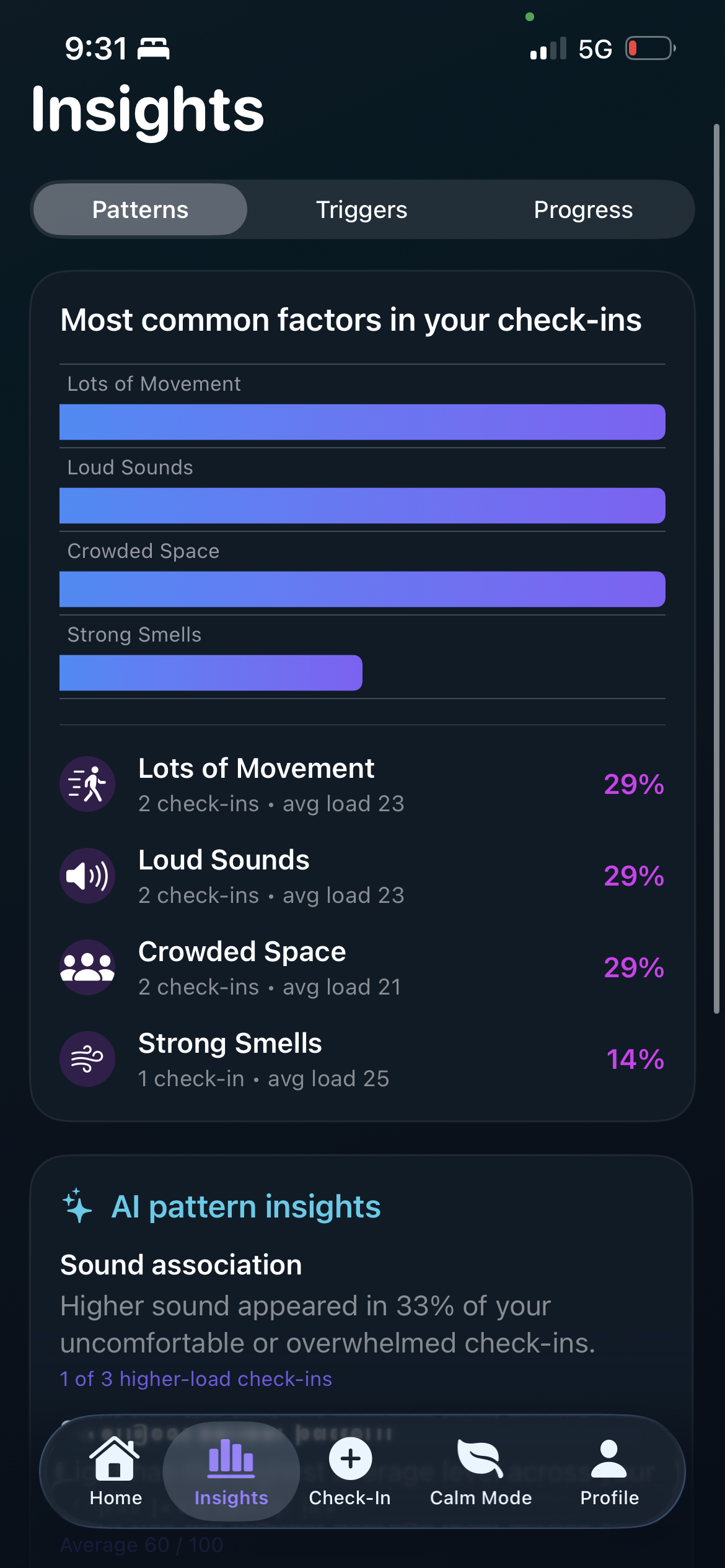
AI-powered insights reveal sensory patterns and changes in sensory load over time.
-
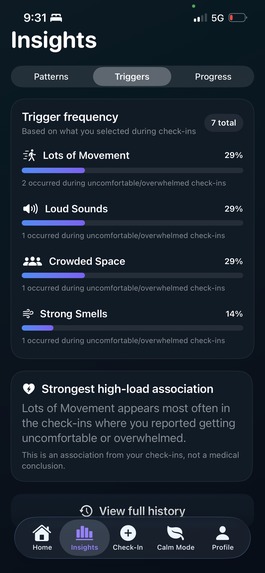
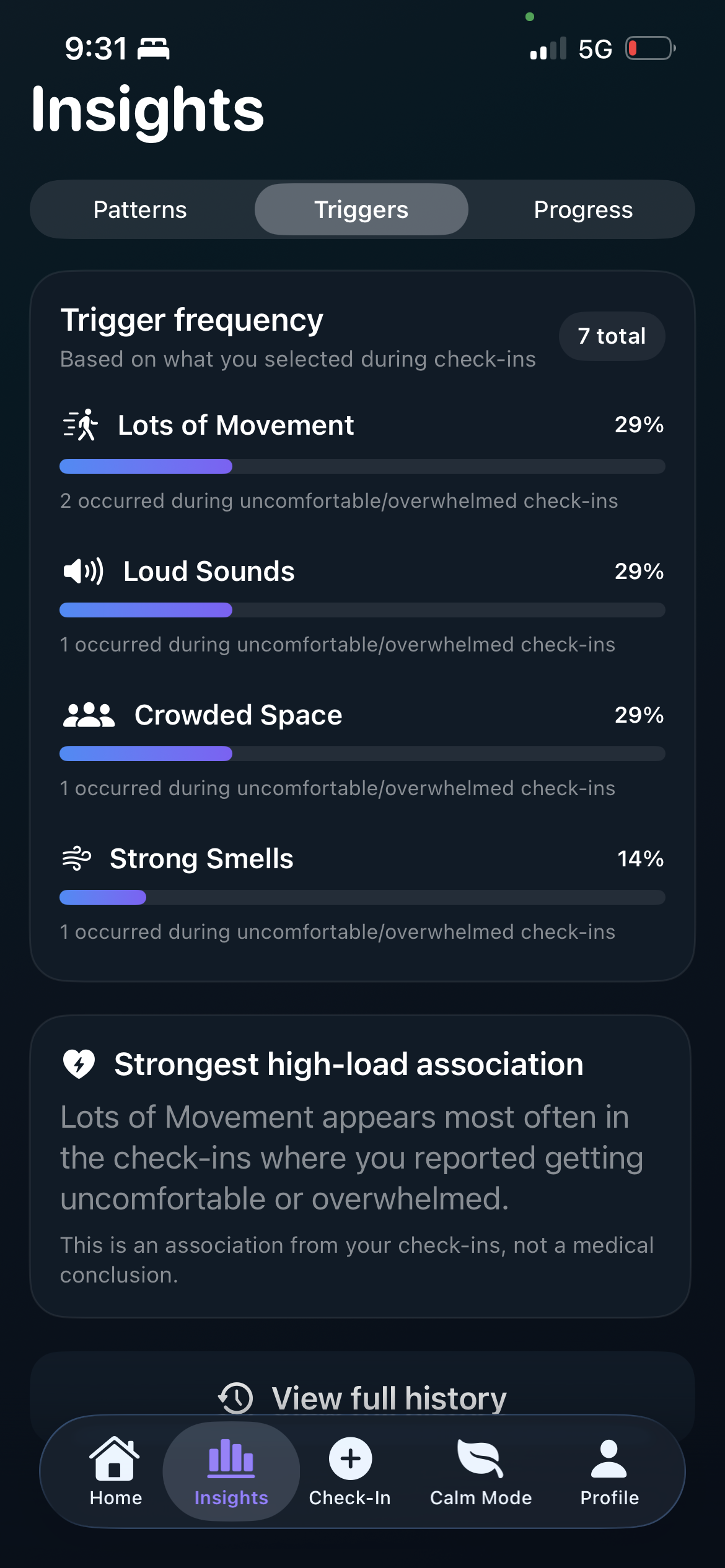
AI analyzes check-in history to show which sensory factors appear most often during uncomfortable or overwhelmed moments.
-
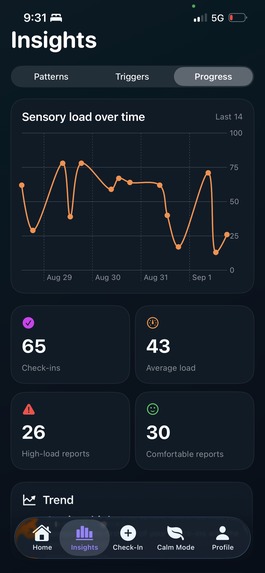
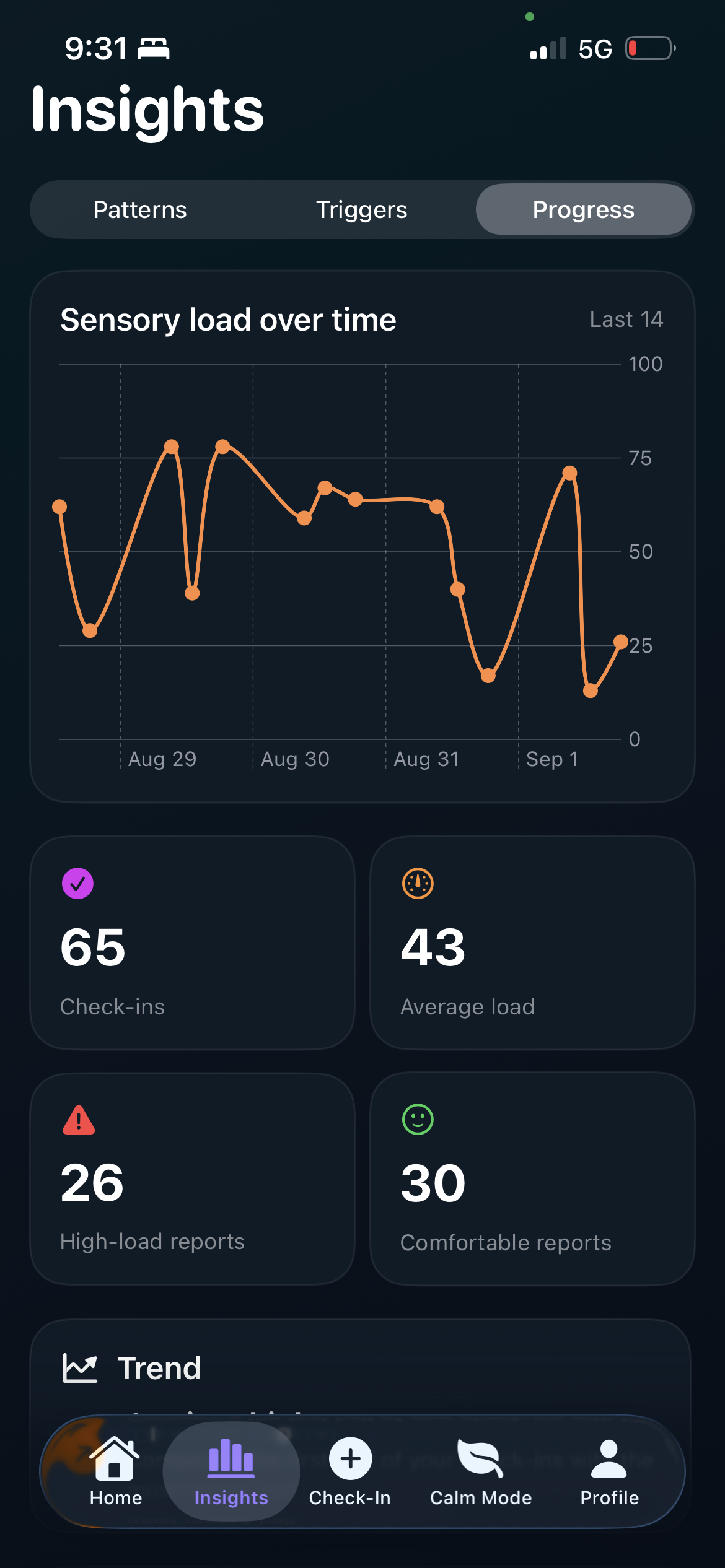
Progress tracking visualizes sensory load over time and shows how the personalized model is developing.
-
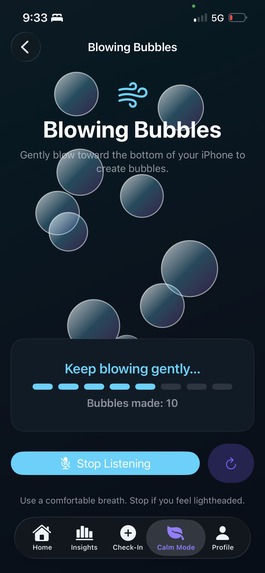
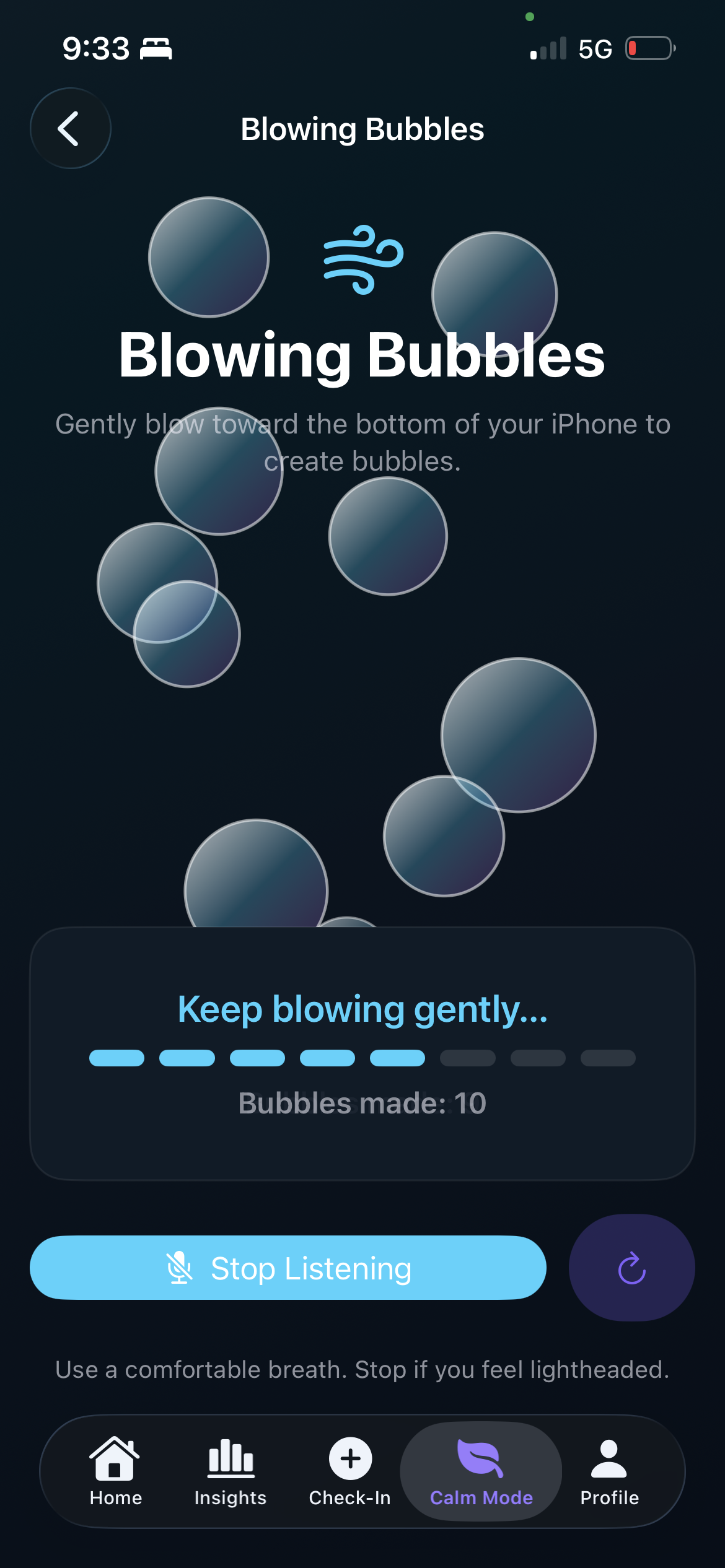
An interactive breathing activity uses virtual bubbles to encourage slower, controlled breathing.
-
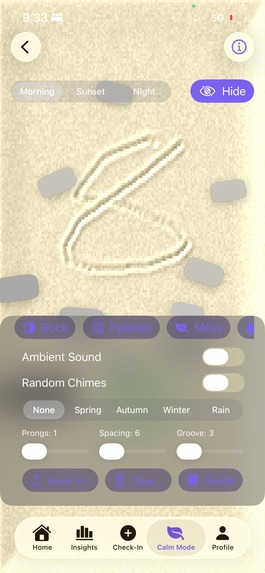
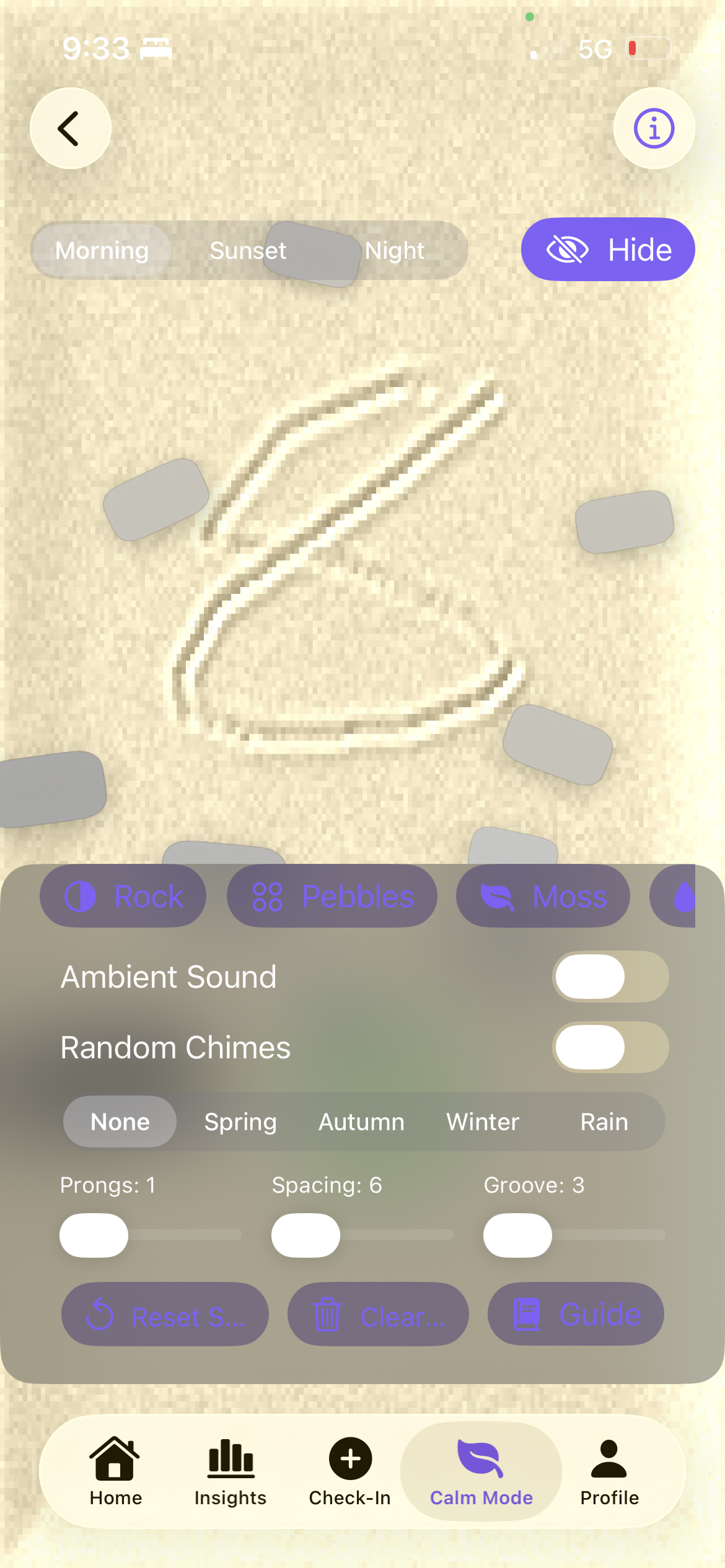
A calming interactive Zen Garden provides a simple, low-stimulation activity for relaxation.
-
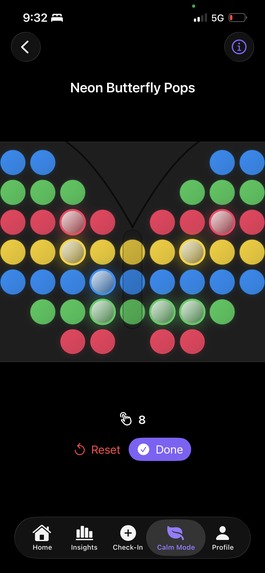
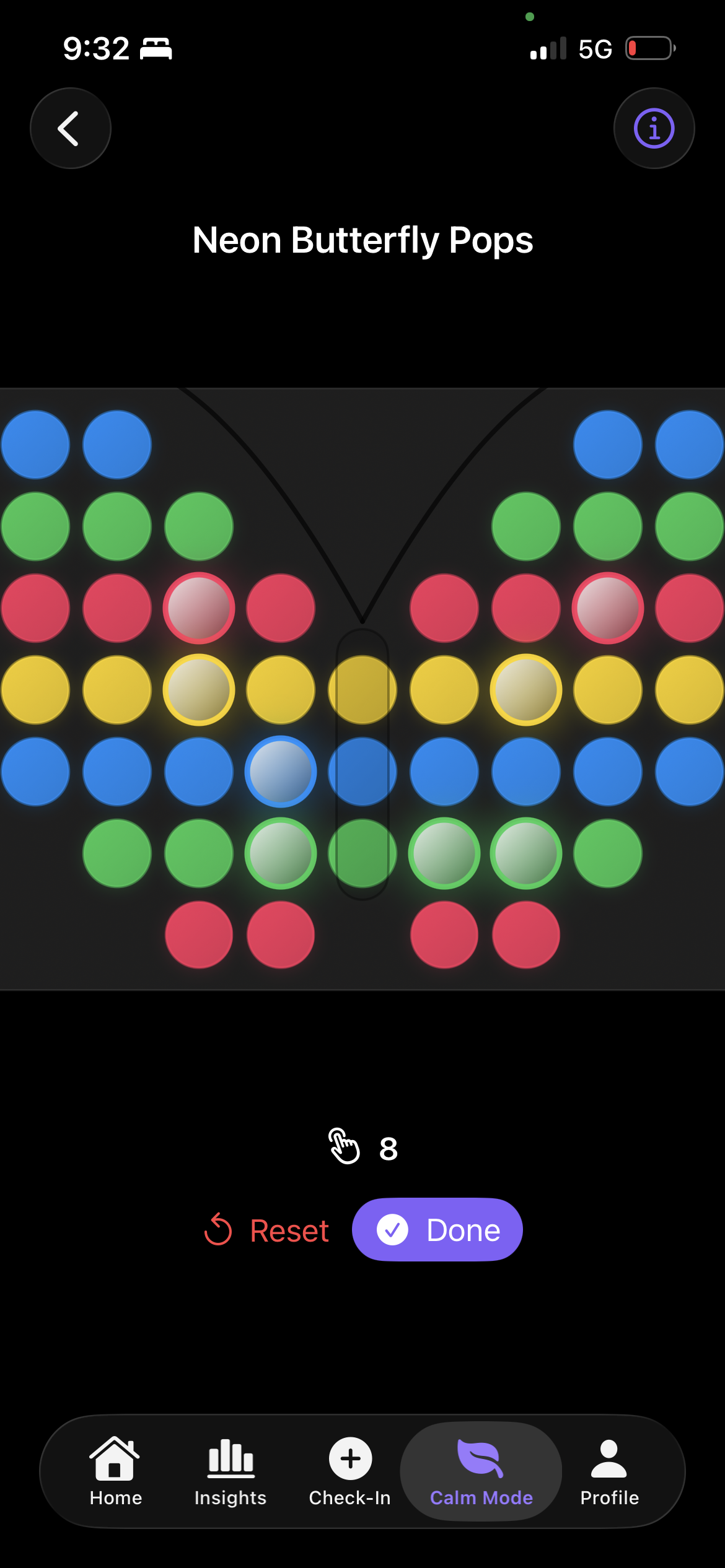
Bubble Pop provides a simple sensory-friendly activity for focusing attention and relaxing.
-
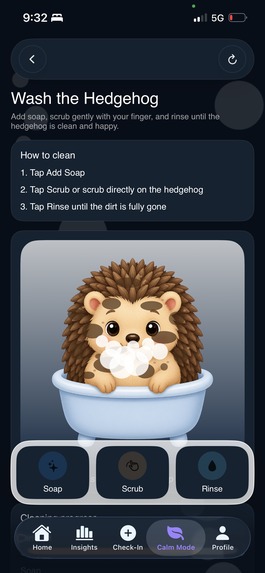
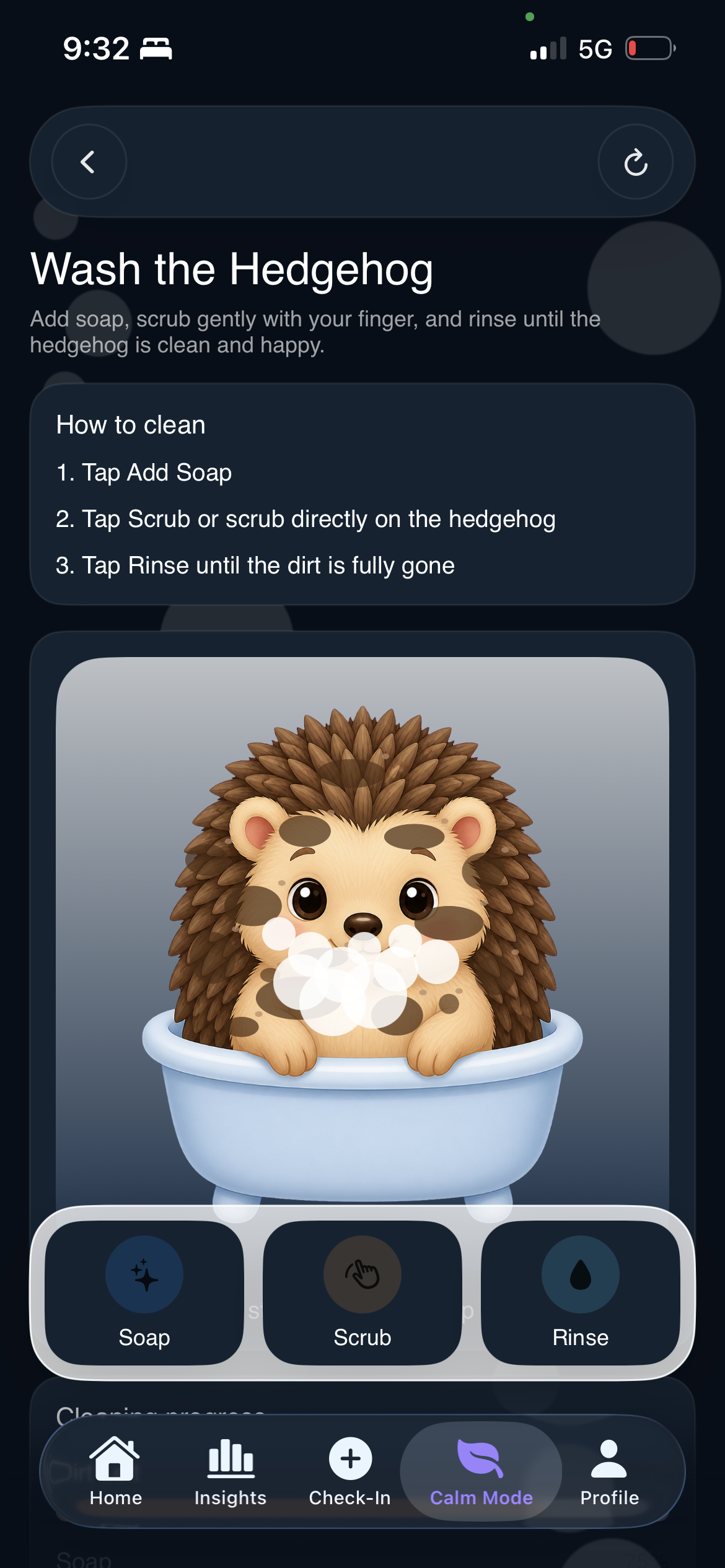
Wash the Hedgehog provides a playful, interactive activity for focusing attention and calming down.
-
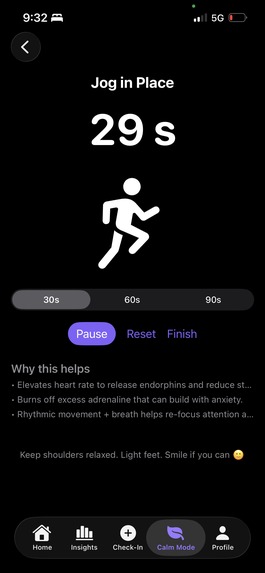
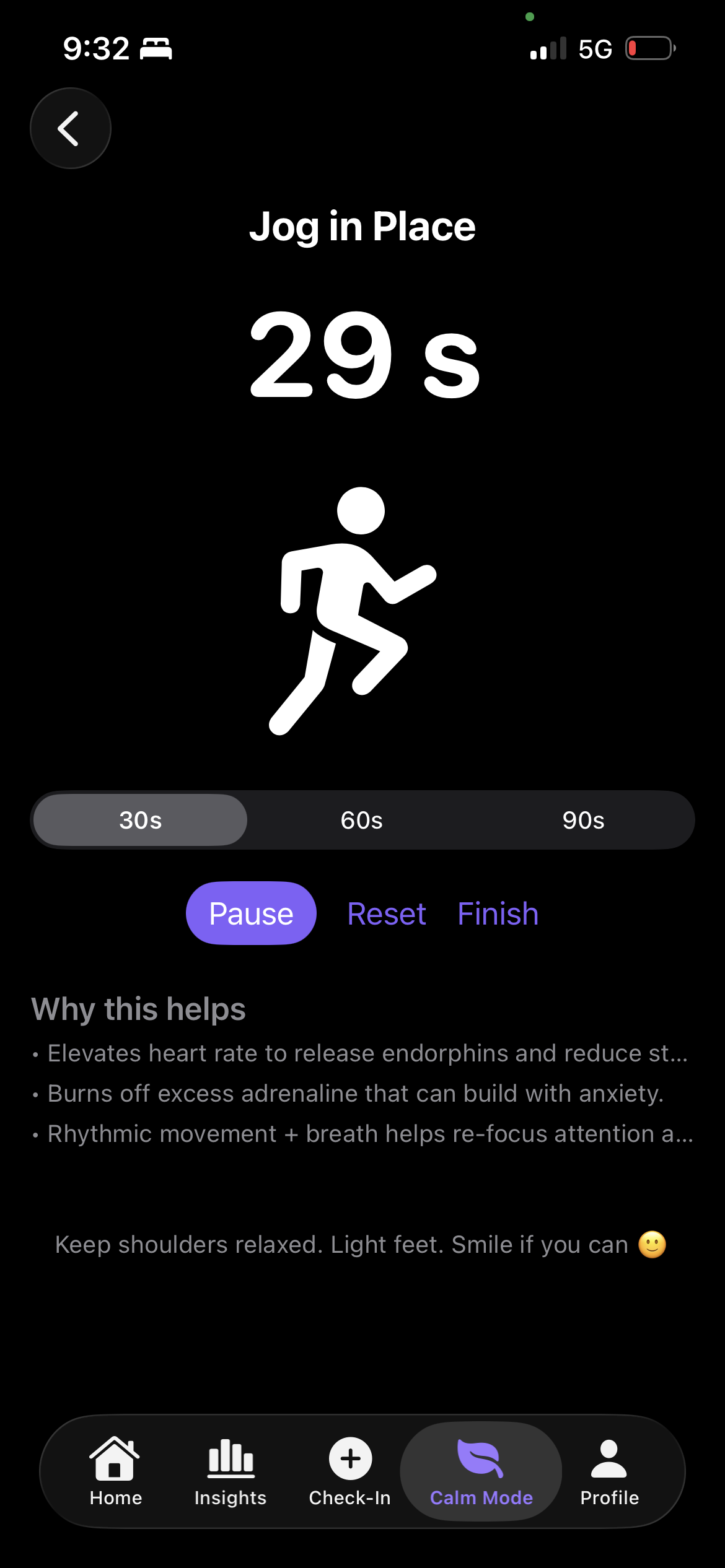
A guided movement activity gives users another option for releasing energy and resetting.
-
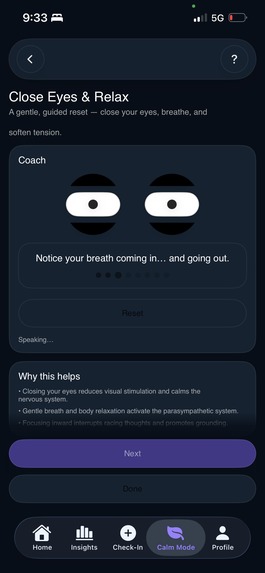
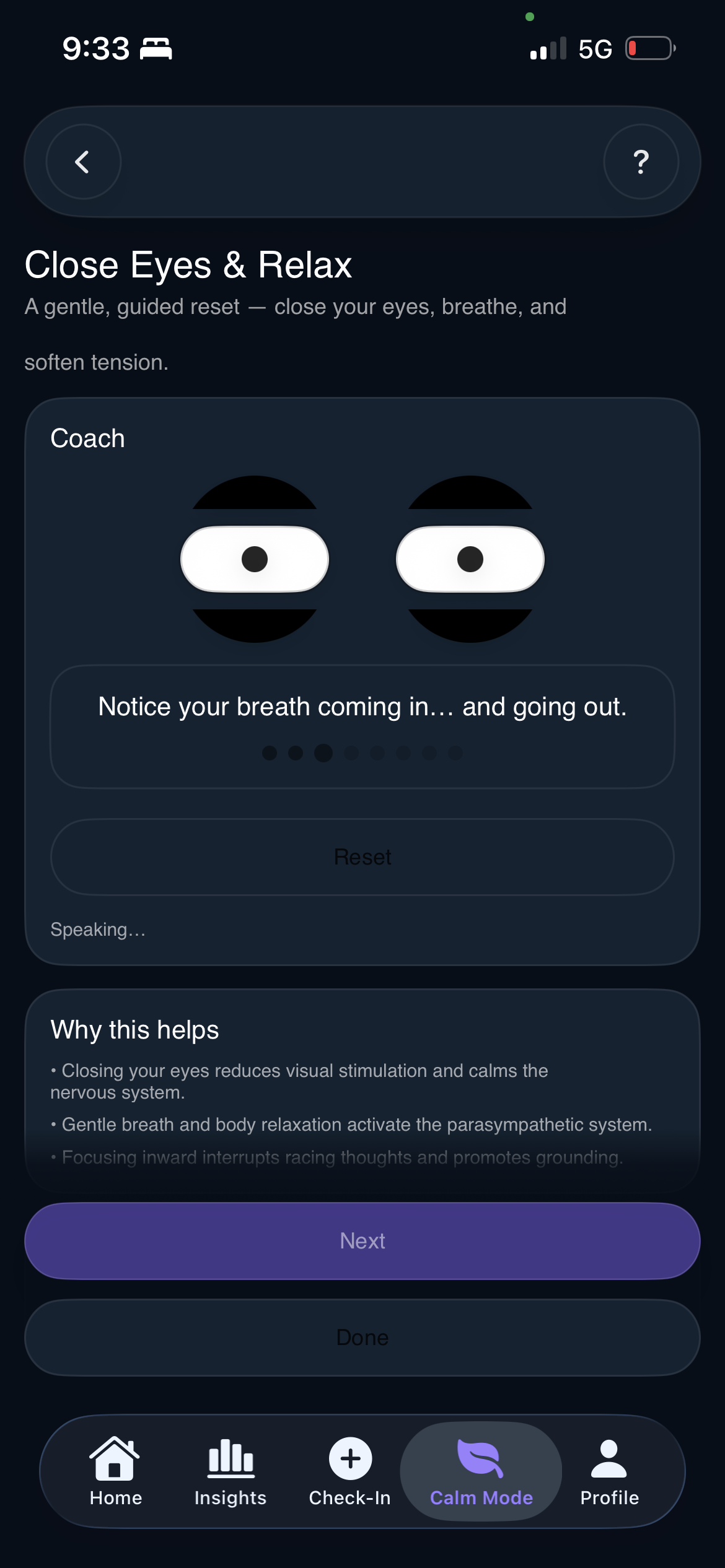
A simple guided relaxation activity designed to reduce stimulation and encourage a short reset.
-
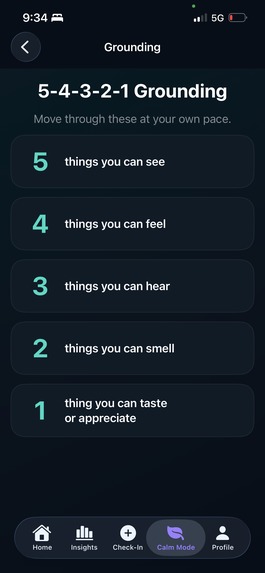
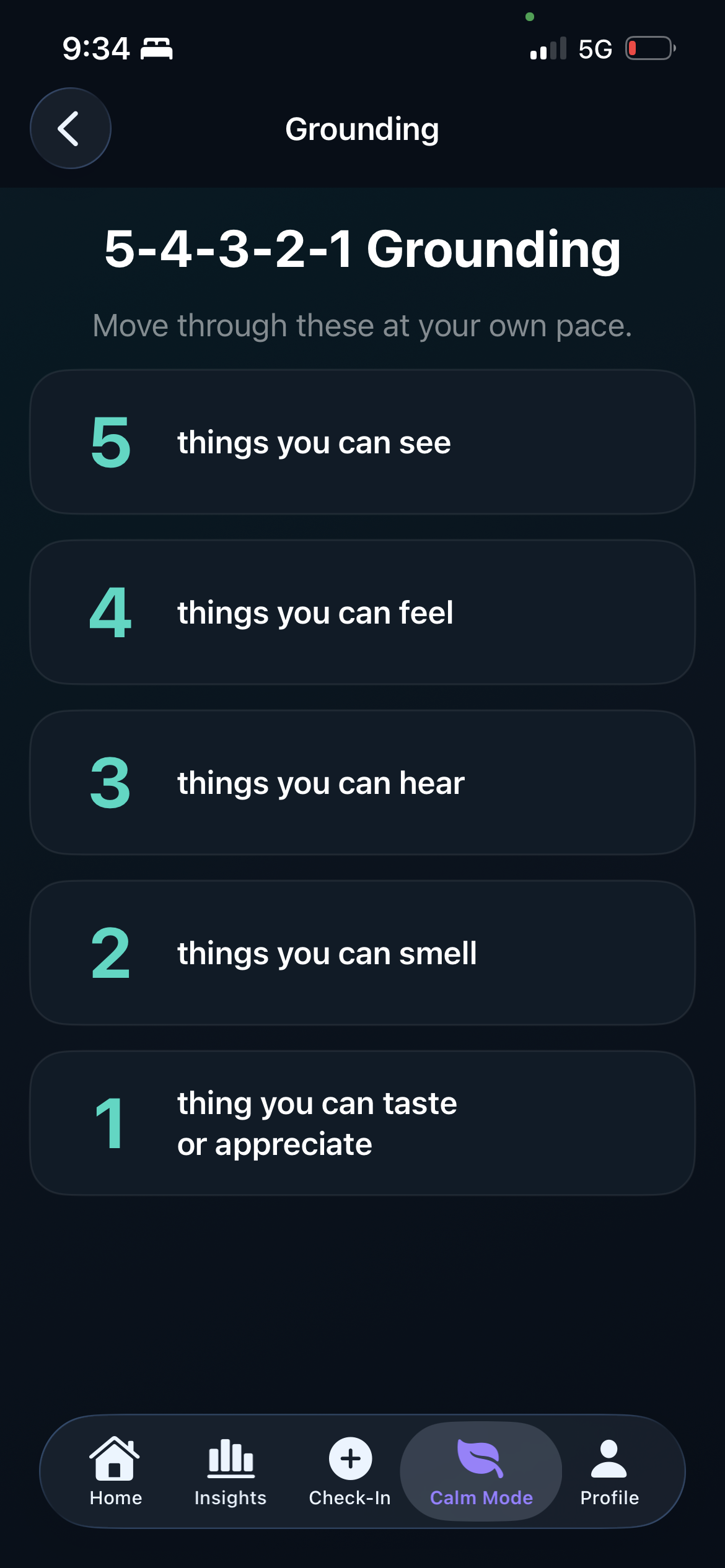
A guided 5-4-3-2-1 grounding exercise helps users reconnect with the present moment.
-
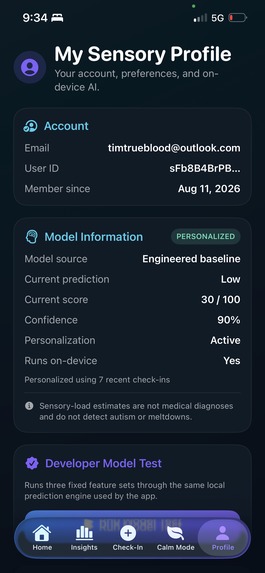
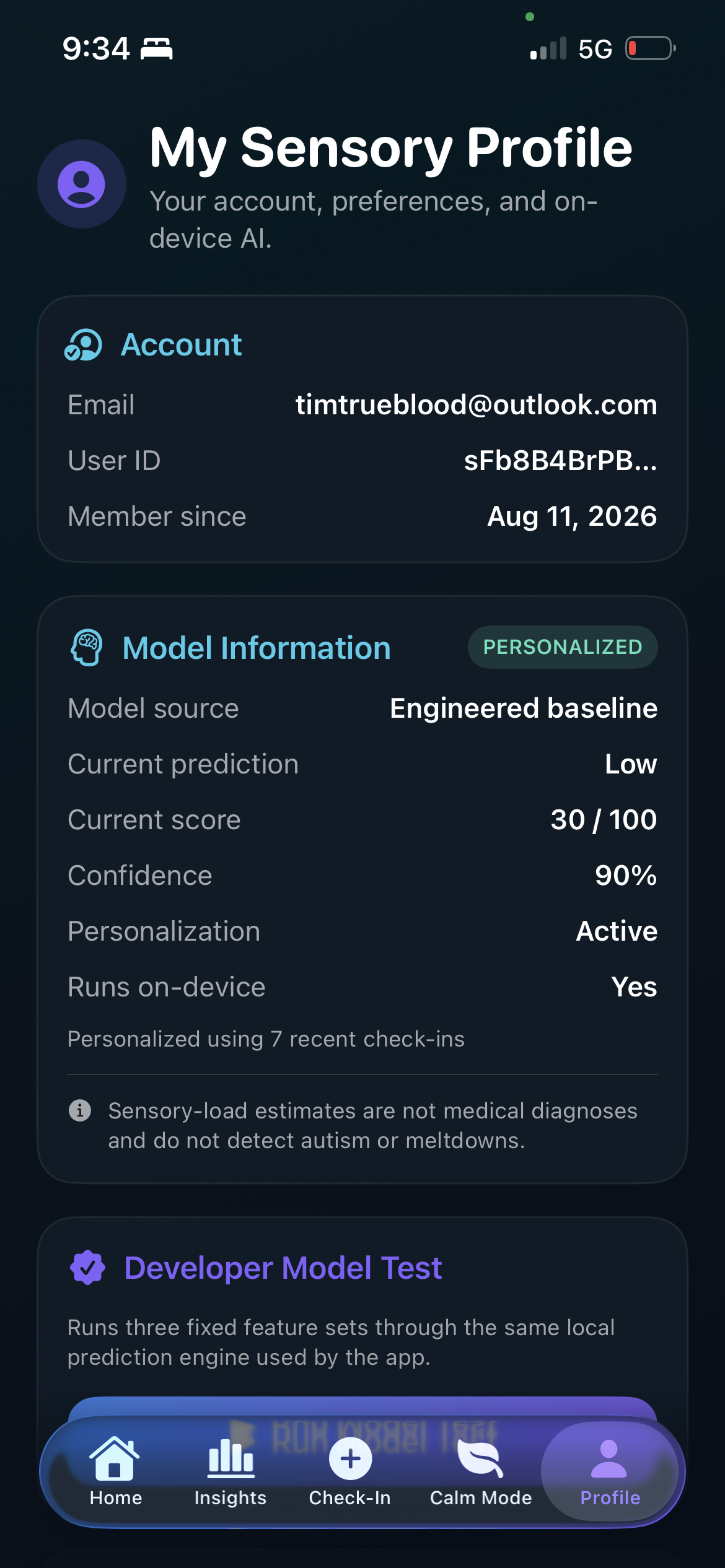
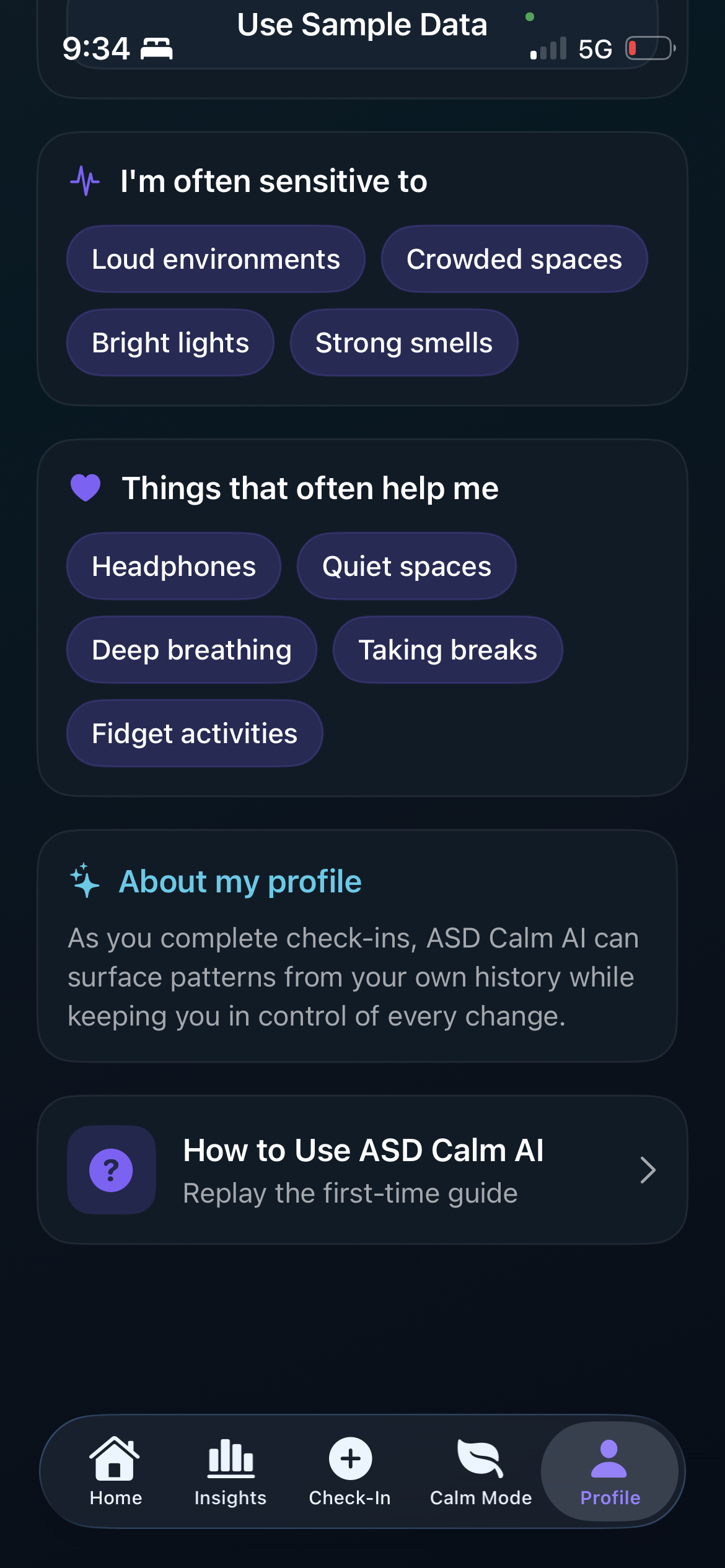
Your personal sensory profile tracks sensitivities, helpful strategies, and AI personalization.
-
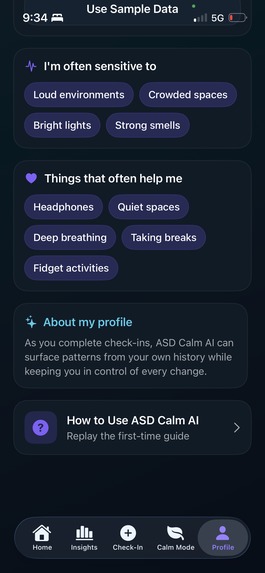
A personal sensory profile tracks common sensitivities and the strategies that often help the user feel more comfortable.
ASD Calm AI
Inspiration
Sensory overload can build up pretty quickly, and sometimes people don’t even realize what’s causing it.
Noise, bright lights, movement, crowded environments, touch, smells, and other sensory input can combine until someone becomes uncomfortable or overwhelmed. Afterward, it can be difficult to figure out which factors contributed to that experience.
I created ASD Calm AI to make those patterns easier to understand.
The idea was simple: instead of building another general mood tracker or AI chatbot, could I create something specifically focused on sensory awareness, personalization, and self-regulation?
ASD Calm AI is designed with autistic and sensory-sensitive people in mind, while still being useful for anyone who experiences sensory overload.
The goal isn't to diagnose autism or make medical decisions. Instead, the app helps users better understand their own sensory experiences, recognize patterns over time, and discover strategies that may help them feel more comfortable.
Privacy was also important from the beginning. I wanted AI to provide useful personalization without requiring a user's sensory history to constantly leave their device.
What it does
ASD Calm AI is an AI-powered sensory awareness and self-regulation app.
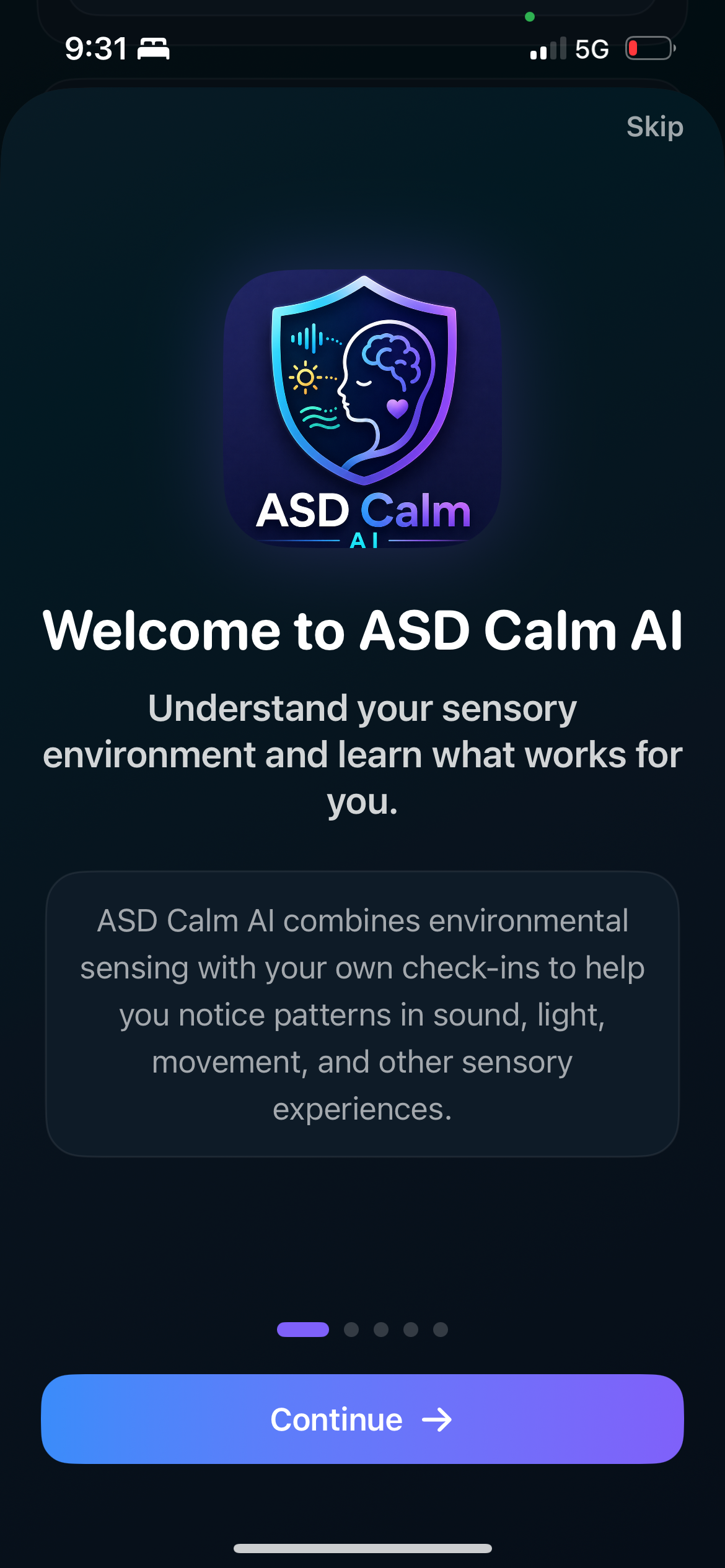
When the app first opens, users are introduced to how environmental sensing, manual input, personalized insights, and Calm Mode work.
The iPhone can help estimate environmental factors such as sound, light, and movement. Other experiences—including touch, smell, body signals, and environmental conditions—can be entered manually.
Most importantly, the user remains the source of truth. Sensor estimates can be changed or overridden based on what the person is actually experiencing.
Users can then complete quick sensory check-ins by choosing how they're feeling, from comfortable to overwhelmed, and selecting factors such as:
- Loud sounds
- Bright lights
- Crowded spaces
- Movement
- Strong smells
- Touch sensitivity
They can also add a note to provide additional context.
Each check-in contributes to the user's sensory history and helps personalize the AI.
The Insights section turns that history into understandable information.
Patterns shows which sensory factors appear most frequently and highlights relationships between them.
Triggers looks specifically at factors that occur during uncomfortable or overwhelmed check-ins.
Progress shows sensory load over time, average load, high-load reports, comfortable reports, and how the personalized model is developing.
Users can also view their full history so they can understand where those insights came from.
Instead of simply giving someone an unexplained prediction, ASD Calm AI can surface insights such as:
“Higher sound appeared in 100% of your uncomfortable or overwhelmed check-ins.”
or:
“Afternoon check-ins with both movement and higher sound have repeatedly coincided with discomfort.”
These are always presented as personal associations and patterns, not medical conclusions.
When someone needs support, Calm Mode provides a simplified area with activities such as breathing exercises, grounding, a Zen Garden, Bubble Pop, Blowing Bubbles, guided relaxation, Wash the Hedgehog, and movement-based activities.
Users can also build a sensory profile containing things they're frequently sensitive to and strategies that often help them.
How I built it
I built the iOS application using Swift and SwiftUI, with Firebase Authentication handling user accounts.
I intentionally designed the AI system to be different from a traditional generative-AI chatbot.
It has three main parts.
First, I built an engineered baseline model that estimates sensory load using environmental and sensory features.
Second, I added a personalization layer. As users complete more check-ins, their own experiences begin influencing how sensory-load estimates are interpreted.
Third, I built a pattern-recognition system that analyzes check-in history to identify relationships between environmental conditions, reported sensory load, and recurring combinations of sensory factors.
The model can run directly on the iPhone, allowing sensory history to remain locally on the device.
I also designed the system so that raw microphone recordings and camera images are not saved.
For testing and demonstration, I created 65 invented sample check-ins so I could demonstrate personalization, historical trends, trigger analysis, and AI-generated pattern insights without relying on someone's real sensory history.
I built the architecture around a simple principle:
AI should help recognize patterns, not diagnose people.
Challenges I ran into
One of the biggest challenges I faced was figuring out how AI could genuinely improve the experience instead of adding an AI chatbot simply because AI was available.
Sensory experiences are extremely individual.
A sound level that is comfortable for one person might be overwhelming for someone else. Even the same person may respond differently depending on the environment or situation.
That meant a single universal sensory threshold wasn't enough.
My solution was to combine a baseline model with personal calibration. The baseline provides an initial estimate, while check-ins gradually give the system information about the individual.
Environmental sensing created another challenge.
A phone can't perfectly understand someone's sensory experience. Sensor readings provide context, but they aren't absolute truth.
That's why I designed ASD Calm AI to allow users to manually enter or override sensory information.
The user's experience always matters more than a sensor estimate.
Another challenge was explainability.
I didn't want the app to simply display an AI score without showing where it came from. That's why I built the Insights section around Patterns, Triggers, Progress, history, confidence information, and explanations of personalization.
Finally, I had to think carefully about responsible AI because this project deals with autism, sensory experiences, and well-being.
I intentionally avoided designing the model to diagnose autism, detect meltdowns, predict medical conditions, or replace professional care.
Accomplishments that I'm proud of
I'm especially proud that AI is part of the underlying functionality instead of simply being a chat interface.
ASD Calm AI combines environmental sensing, manual sensory input, check-ins, baseline prediction, personal calibration, historical analysis, and pattern recognition into one experience.
I'm also proud of making the AI more understandable.
Users can see their sensory history, common factors, trigger associations, progress, model confidence, and how personalization is developing rather than simply receiving an unexplained prediction.
Privacy is another major part of the project that I'm proud of.
The AI can run directly on the iPhone, sensory history can remain locally on the device, and raw microphone recordings and camera images aren't saved.
I'm also particularly proud of Calm Mode.
The application doesn't stop at identifying patterns. When someone actually feels overwhelmed, they can immediately access several low-stimulation activities designed to help them reset.
Finally, I'm proud that I designed the app to keep the user in control. Automatic sensing can provide context, but the person using the app is always the final authority on what they're experiencing.
What I learned
The biggest thing I learned is that personalization matters more than prediction for this problem.
There isn't one universally “too loud,” “too bright,” or “too stimulating” environment.
Sensory experiences vary significantly between people and can even change for the same person depending on the situation.
That changed the question I was trying to answer.
Instead of asking:
“Can AI determine whether this environment is overwhelming?”
I started asking:
“Can AI help this person understand which environmental patterns are associated with their own experiences?”
That distinction shaped the entire application.
It led me to combine environmental sensing, manual input, baseline prediction, personal calibration, check-ins, historical analysis, and explainable pattern insights.
I also learned that the user needs to remain the source of truth.
Sensors can provide useful context, but they can't tell someone how they feel.
I also learned that responsible AI isn't something I could simply add at the end of the project. Decisions about what information is collected, where processing happens, what conclusions the AI is allowed to make, and how those conclusions are explained all needed to be considered while I was designing the system.
Most importantly, I learned that sometimes the most useful AI isn't the AI that talks the most.
It's the AI quietly helping someone discover patterns they might not have noticed before.
What's next for ASD Calm AI
My next goal is to continue improving the personalized sensory model as more check-in data becomes available.
I want ASD Calm AI to gradually create a more detailed personal sensory profile that helps users understand common triggers, environmental combinations, helpful strategies, and changes over time.
Future development could include improved on-device machine learning, wearable integration, additional environmental signals, better pattern visualization, optional check-in reminders, and more Calm Mode activities.
I also want to continue improving explainability so users can clearly understand why the application generated a particular prediction or insight.
Another area I'd like to explore is learning which Calm Mode strategies appear to work best for an individual based on their previous experiences.
Longer term, I'd like users to be able to optionally generate a simple sensory accommodations profile containing information such as:
“I'm frequently sensitive to loud environments and bright lighting.”
and:
“Quiet spaces, headphones, deep breathing, and short breaks often help me.”
The long-term vision for ASD Calm AI isn't to have AI tell people how they should feel.
It's to give people technology that helps them better understand their own sensory patterns, recognize potential overload earlier, and discover the strategies that work best for them.


Log in or sign up for Devpost to join the conversation.