-
-
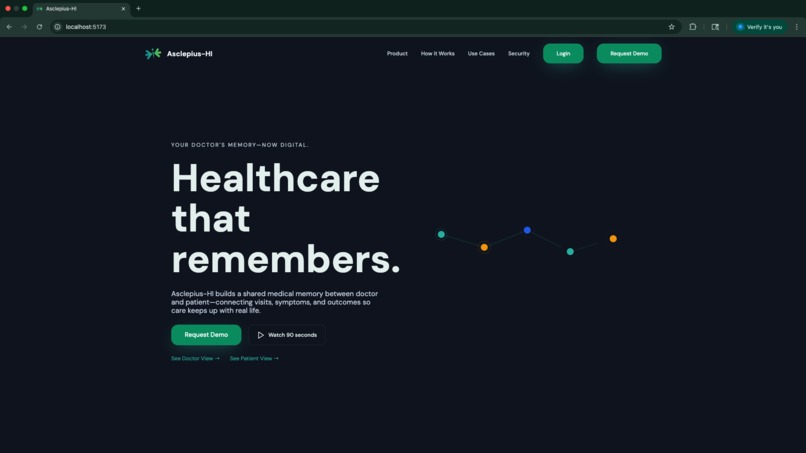
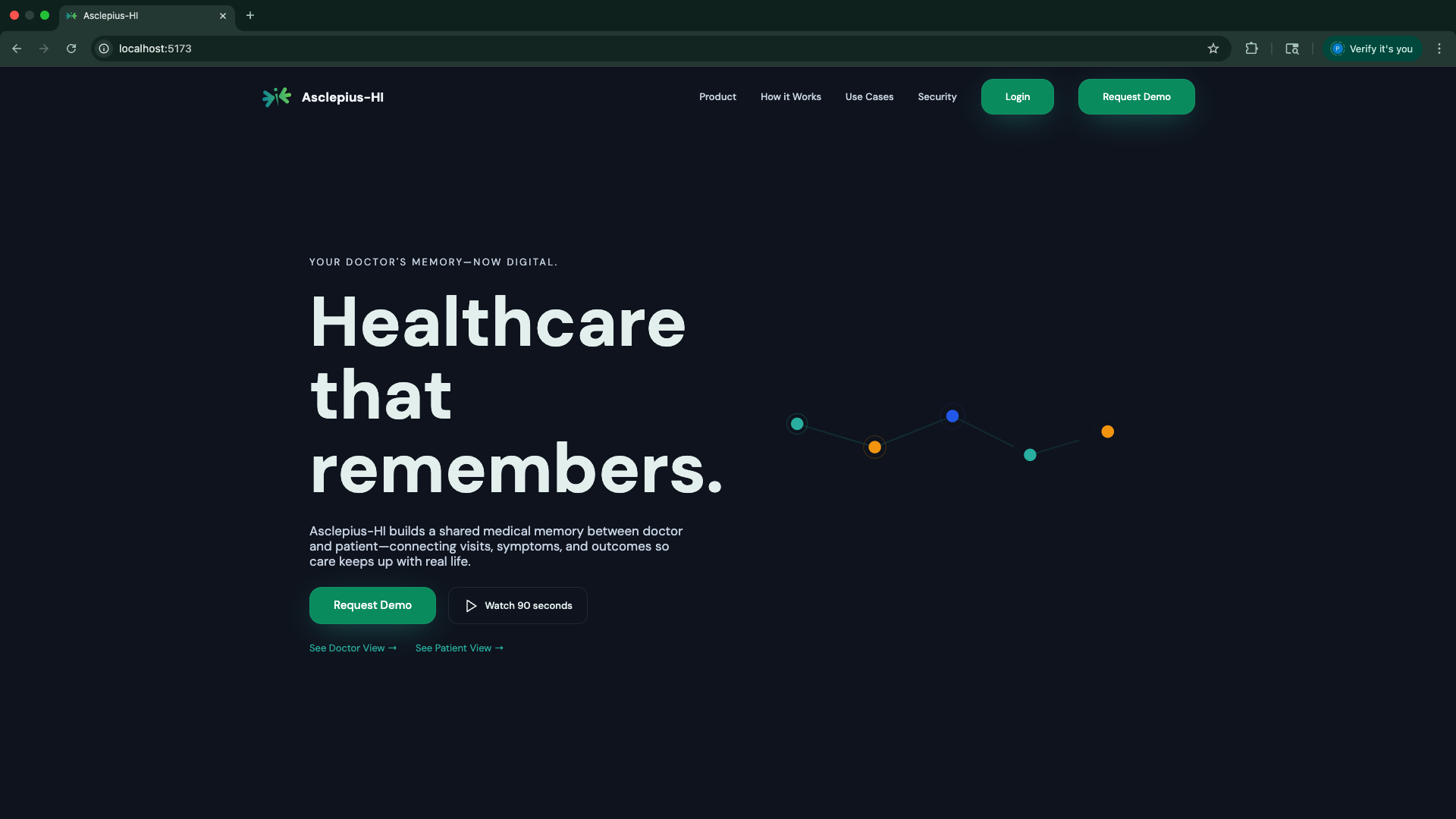
Landing page
-
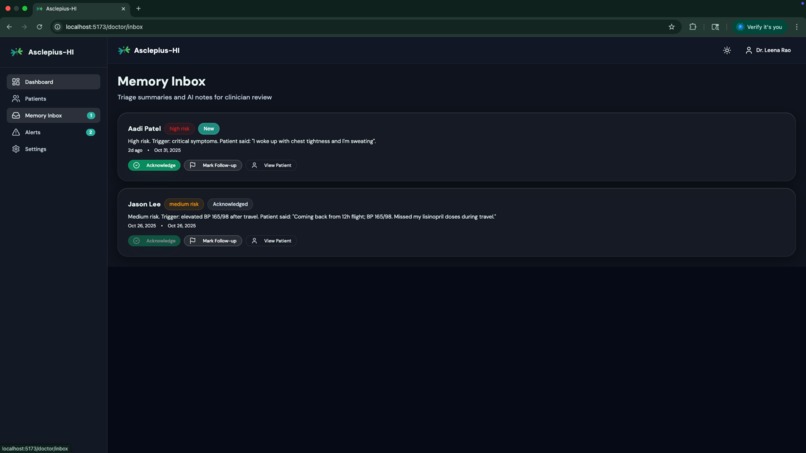
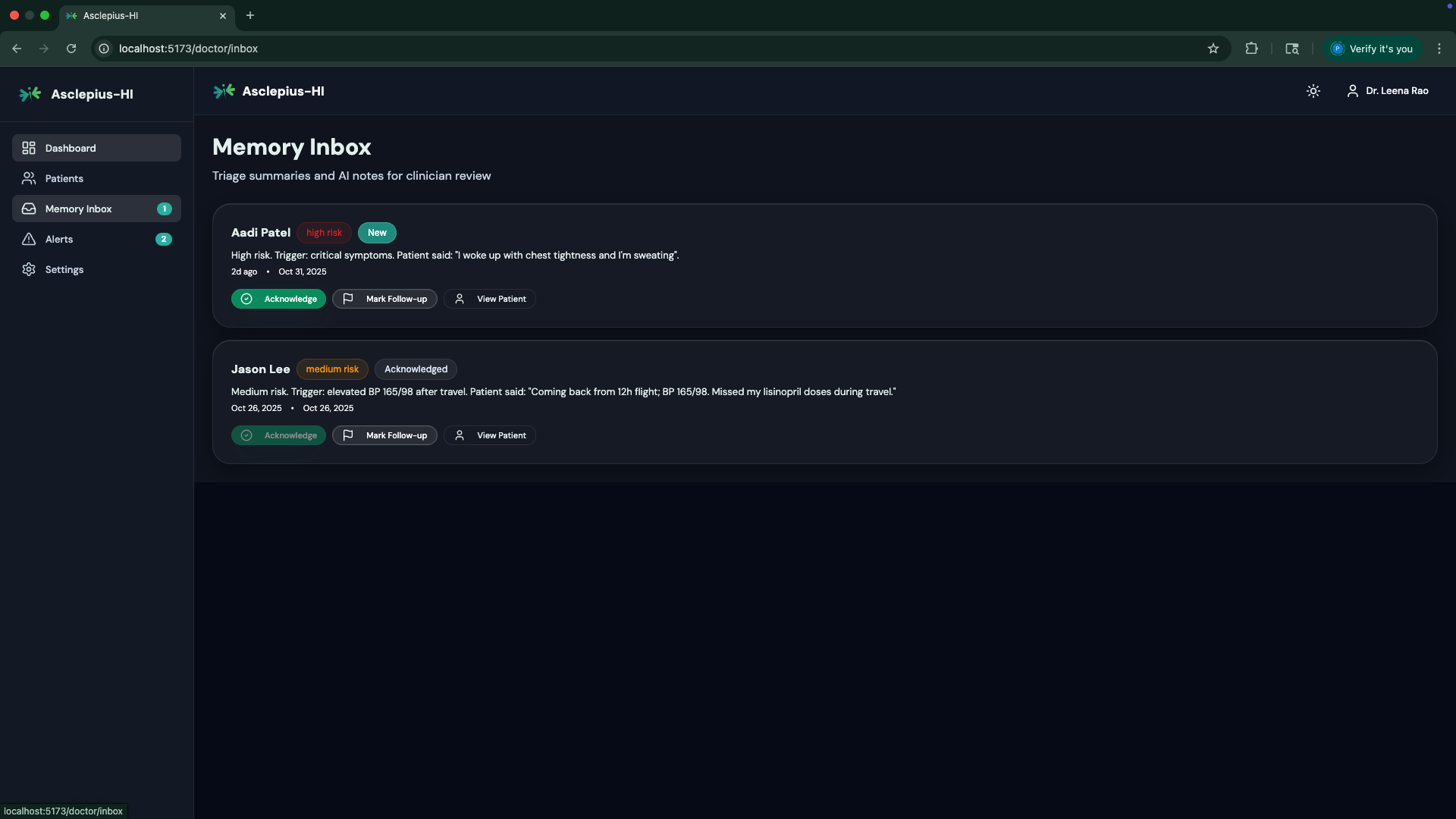
Doctor Memory Inbox
-
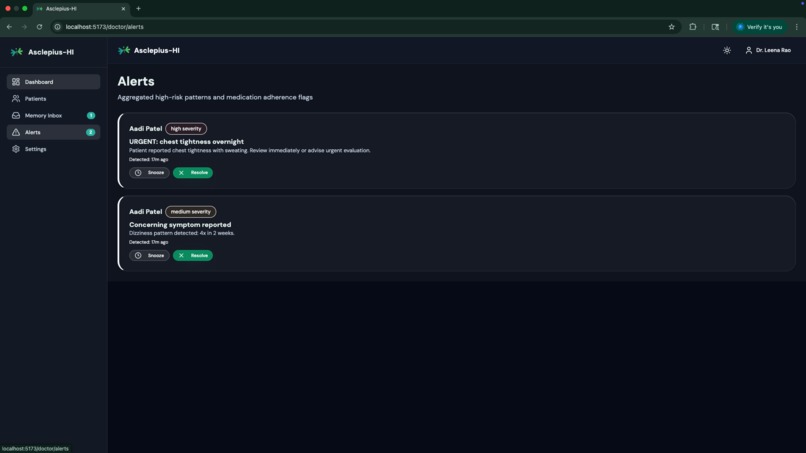
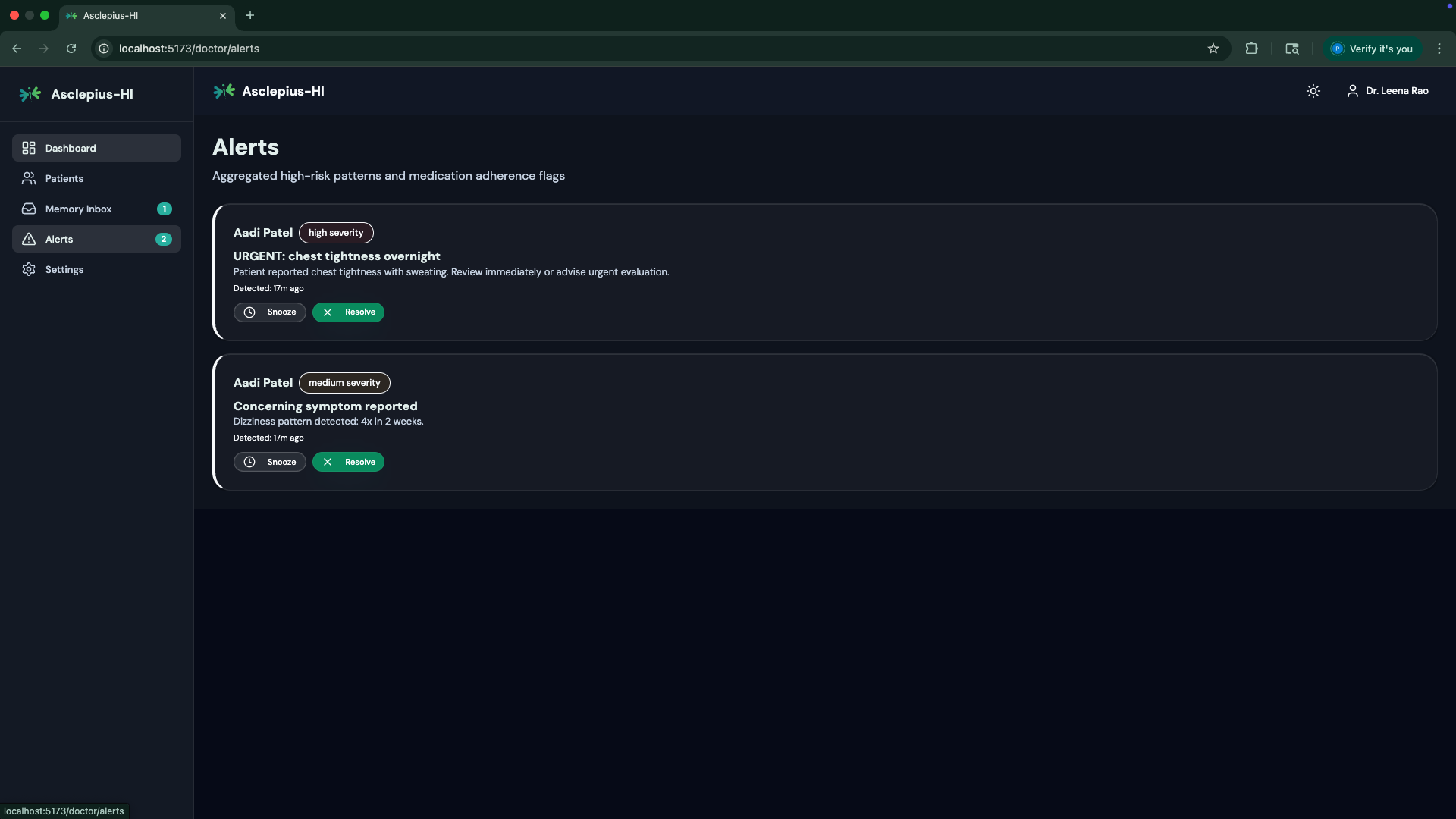
Doctor Alerts
-
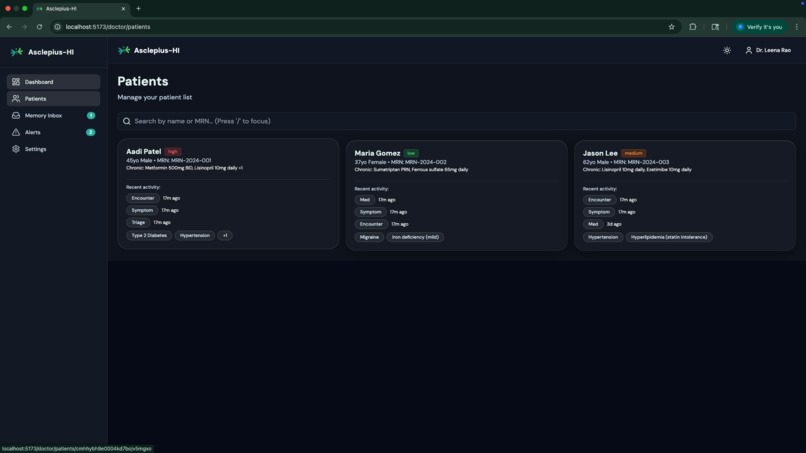
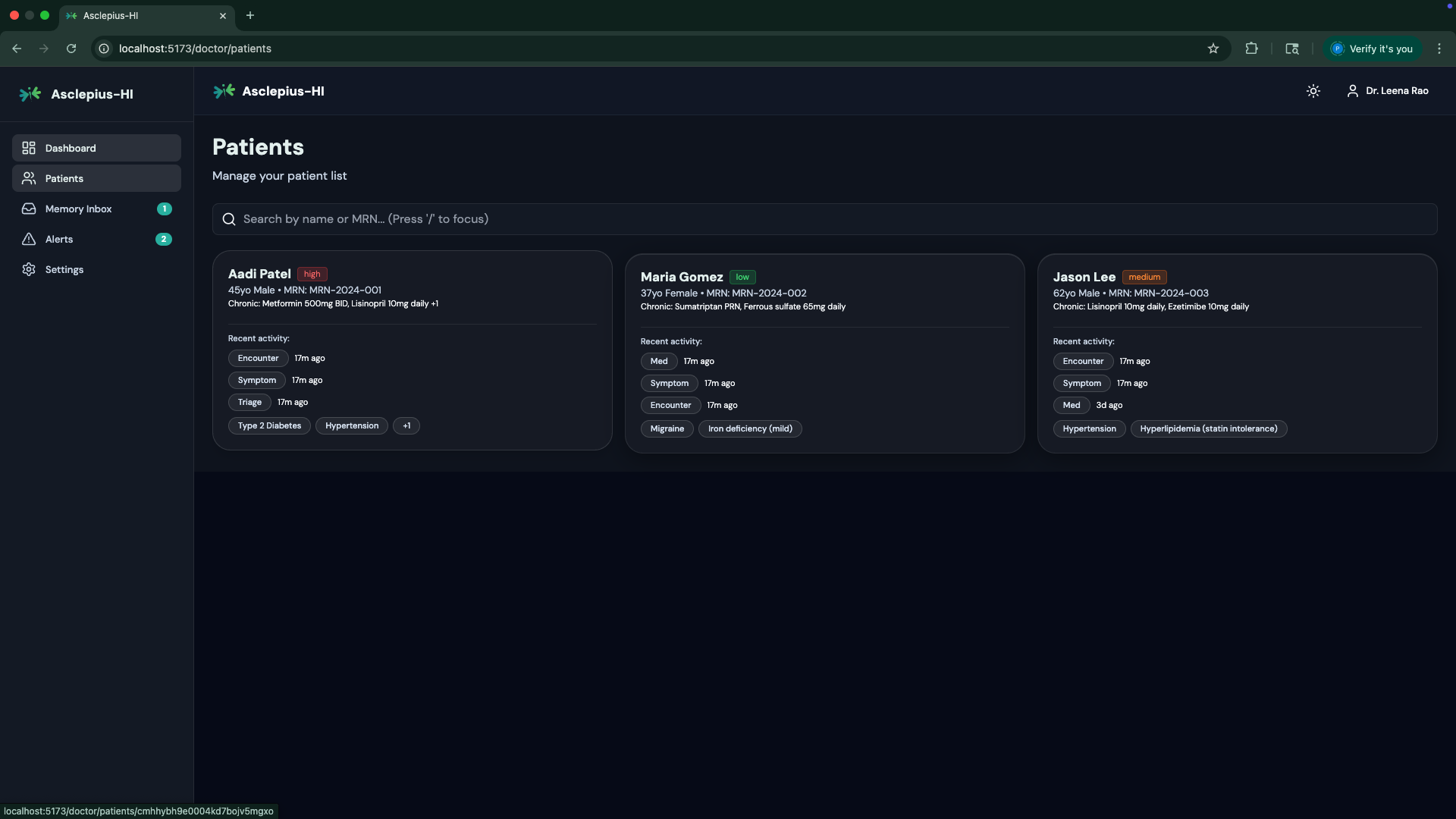
Doctor Patient list tab
-
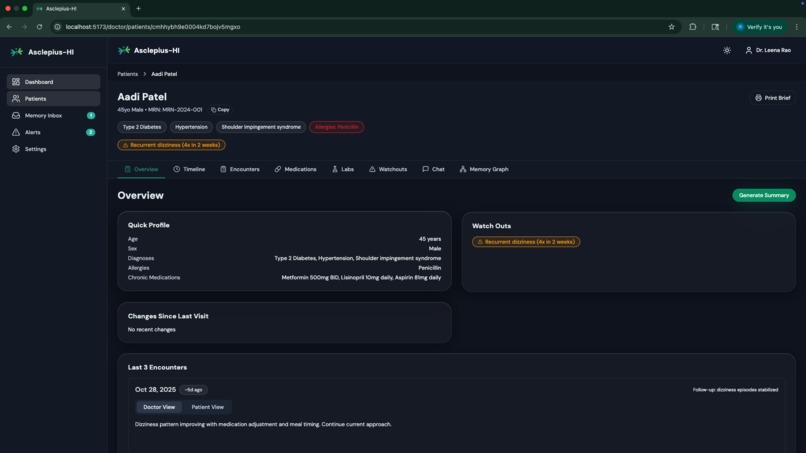
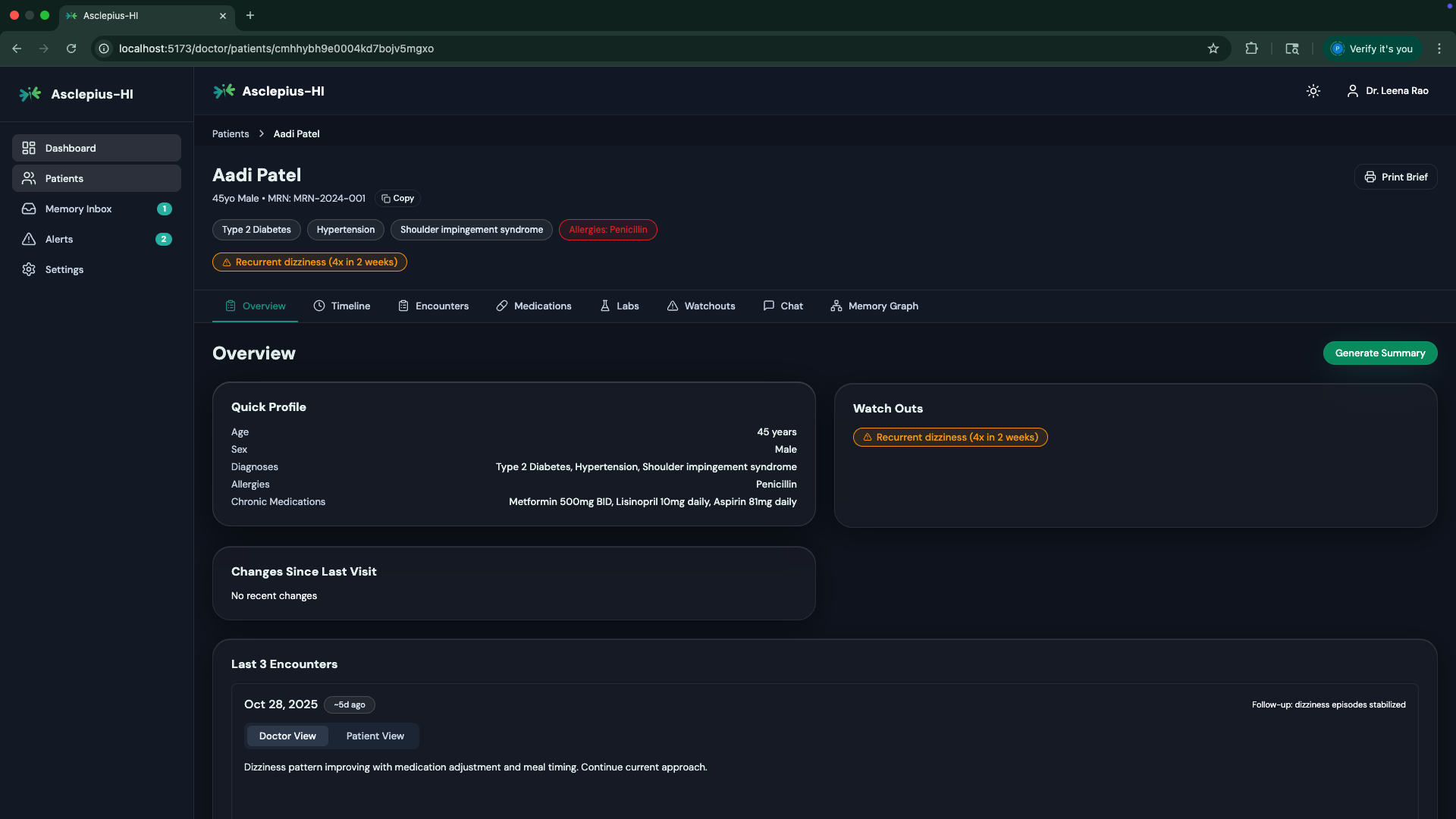
Patient profile in Doctor view
-
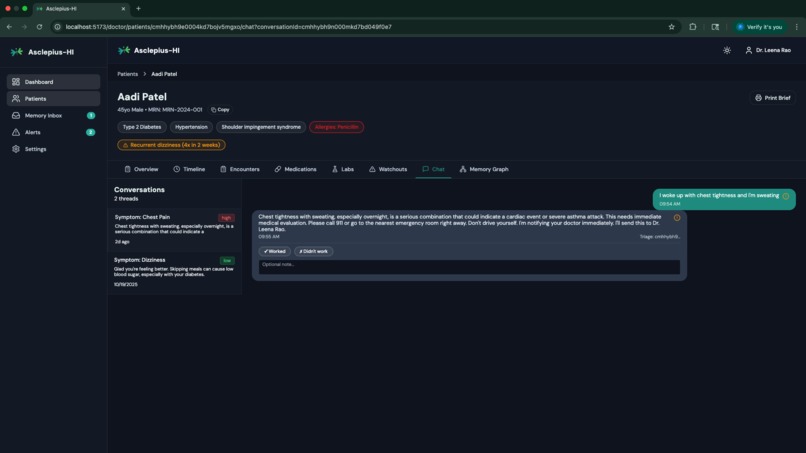
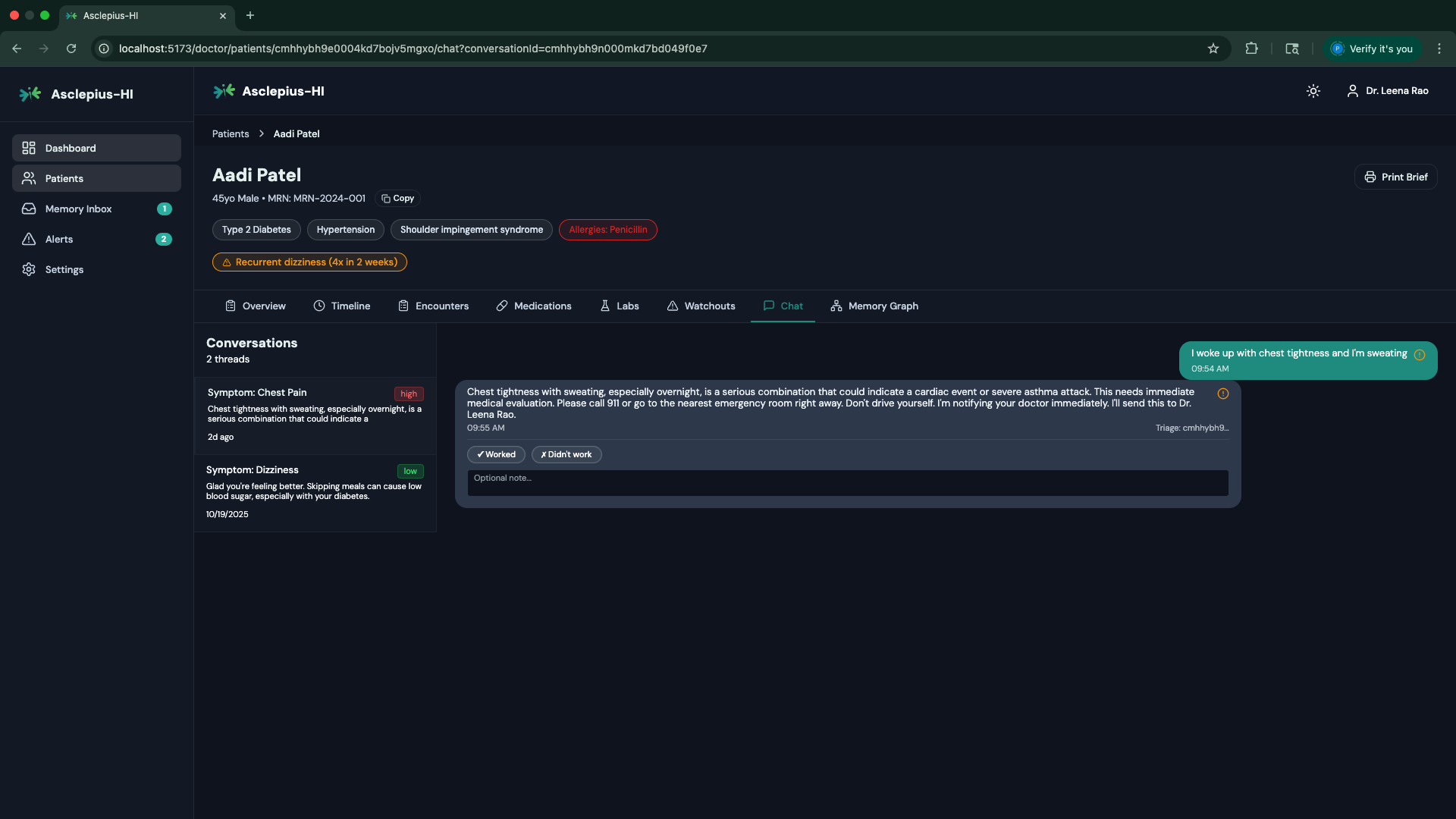
Chat Info for Doctor in Patient Profile for Supervision
-
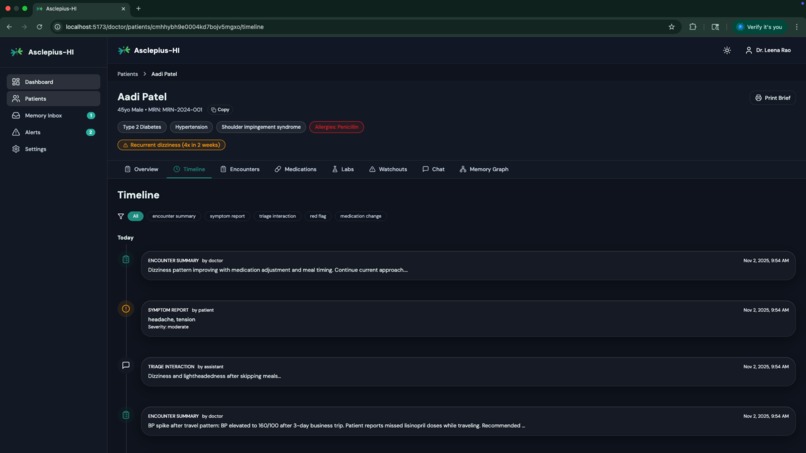
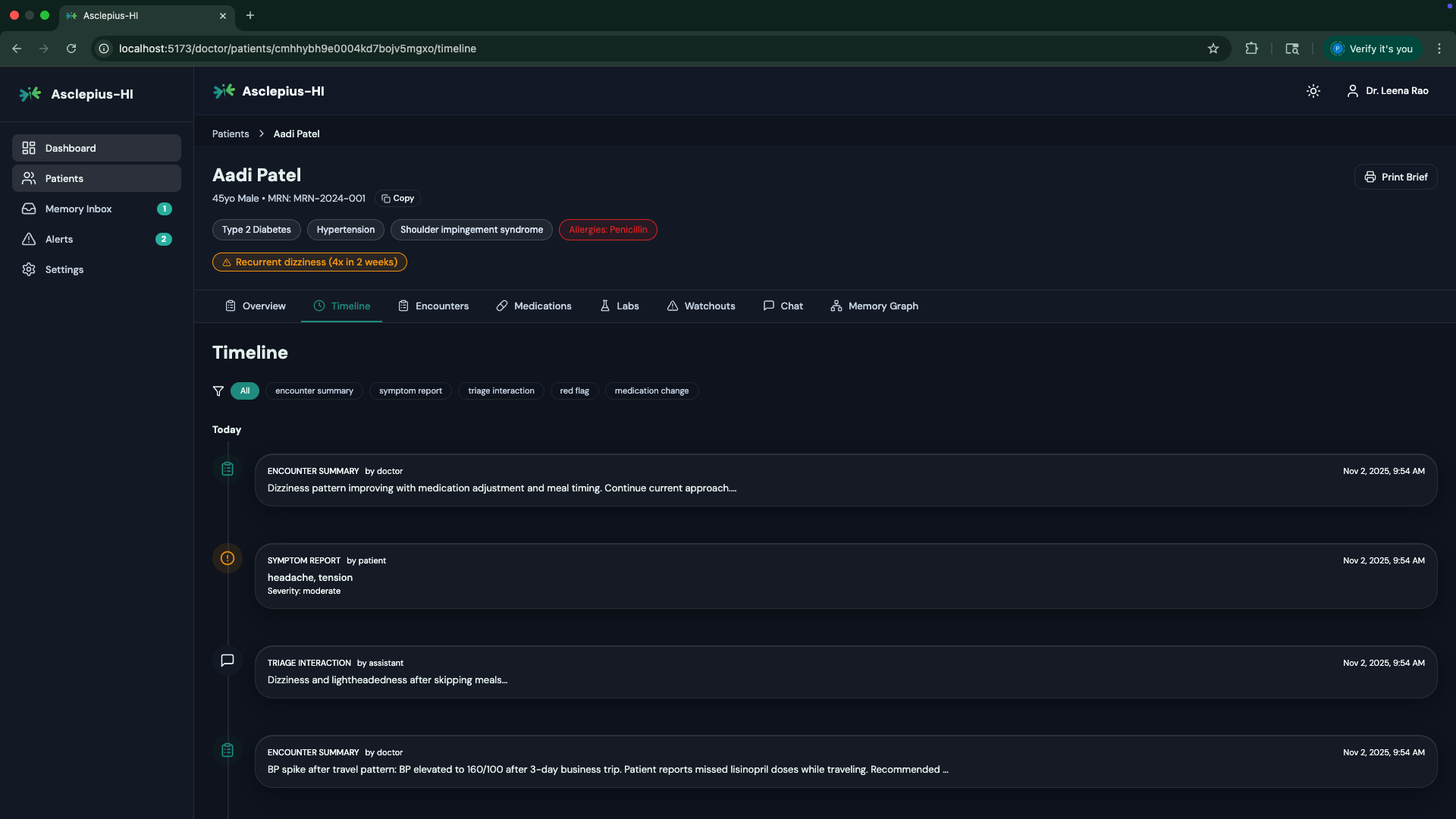
Timeline tab in Patient Profile in Doctor View
-
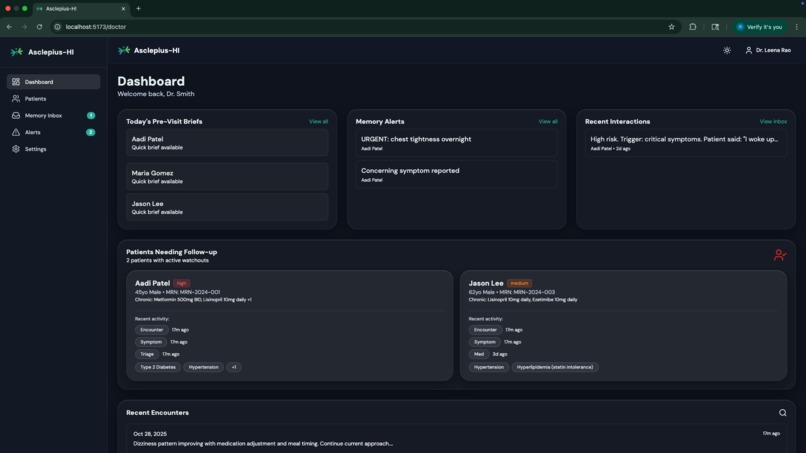
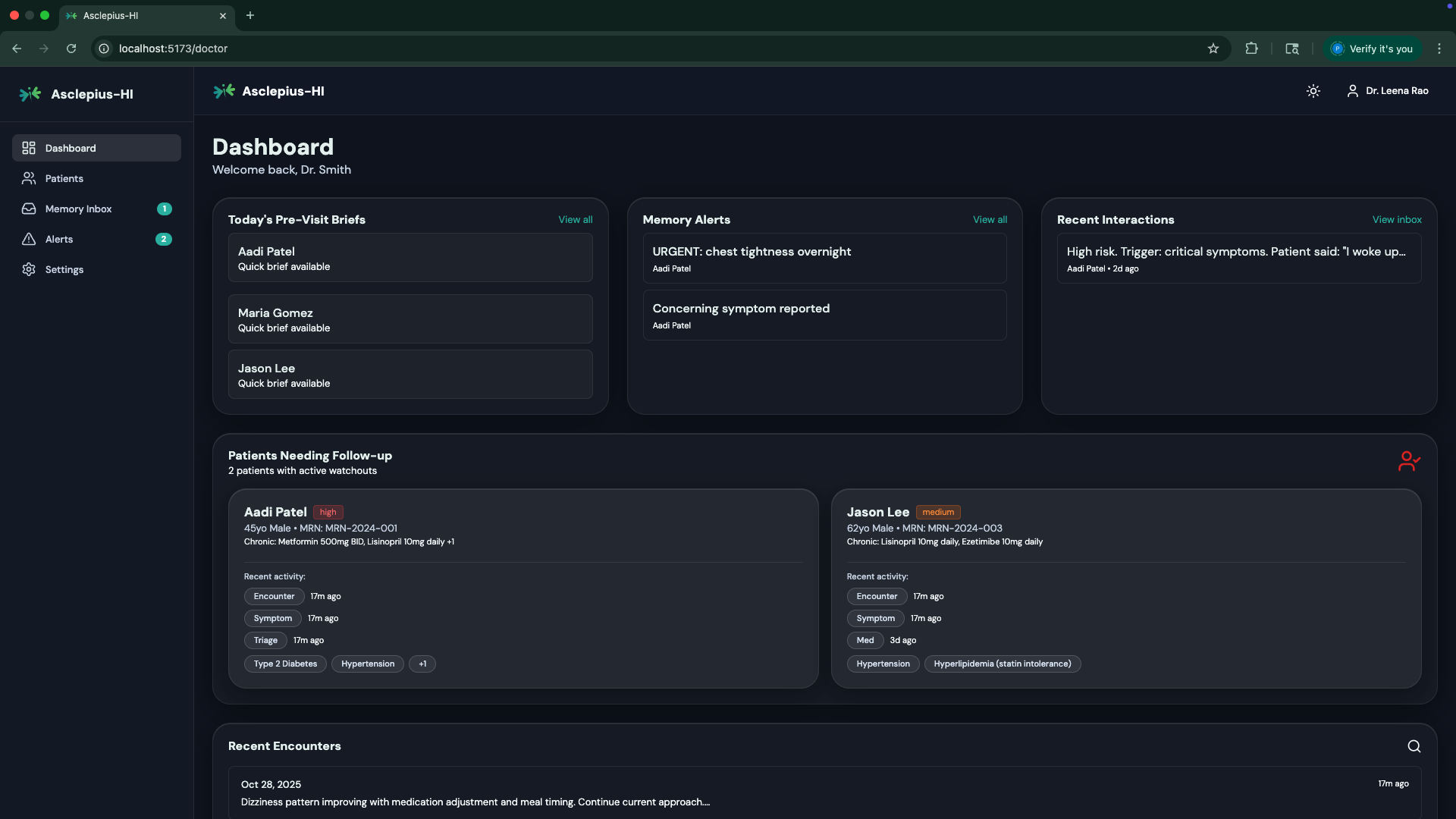
Doctor Dashboard
-
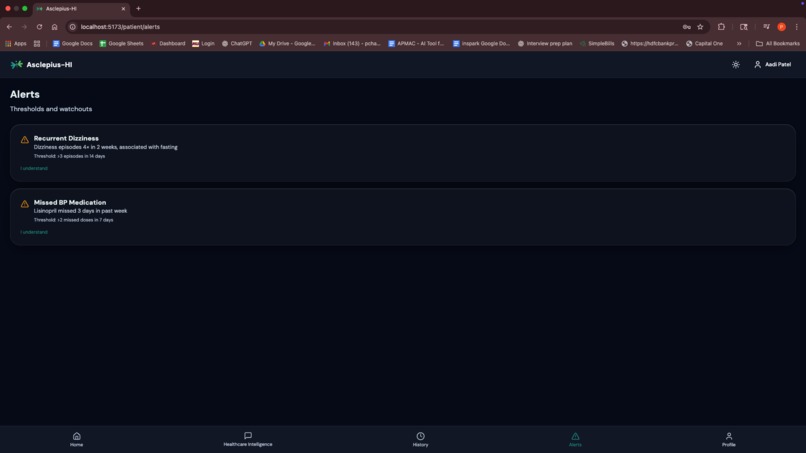
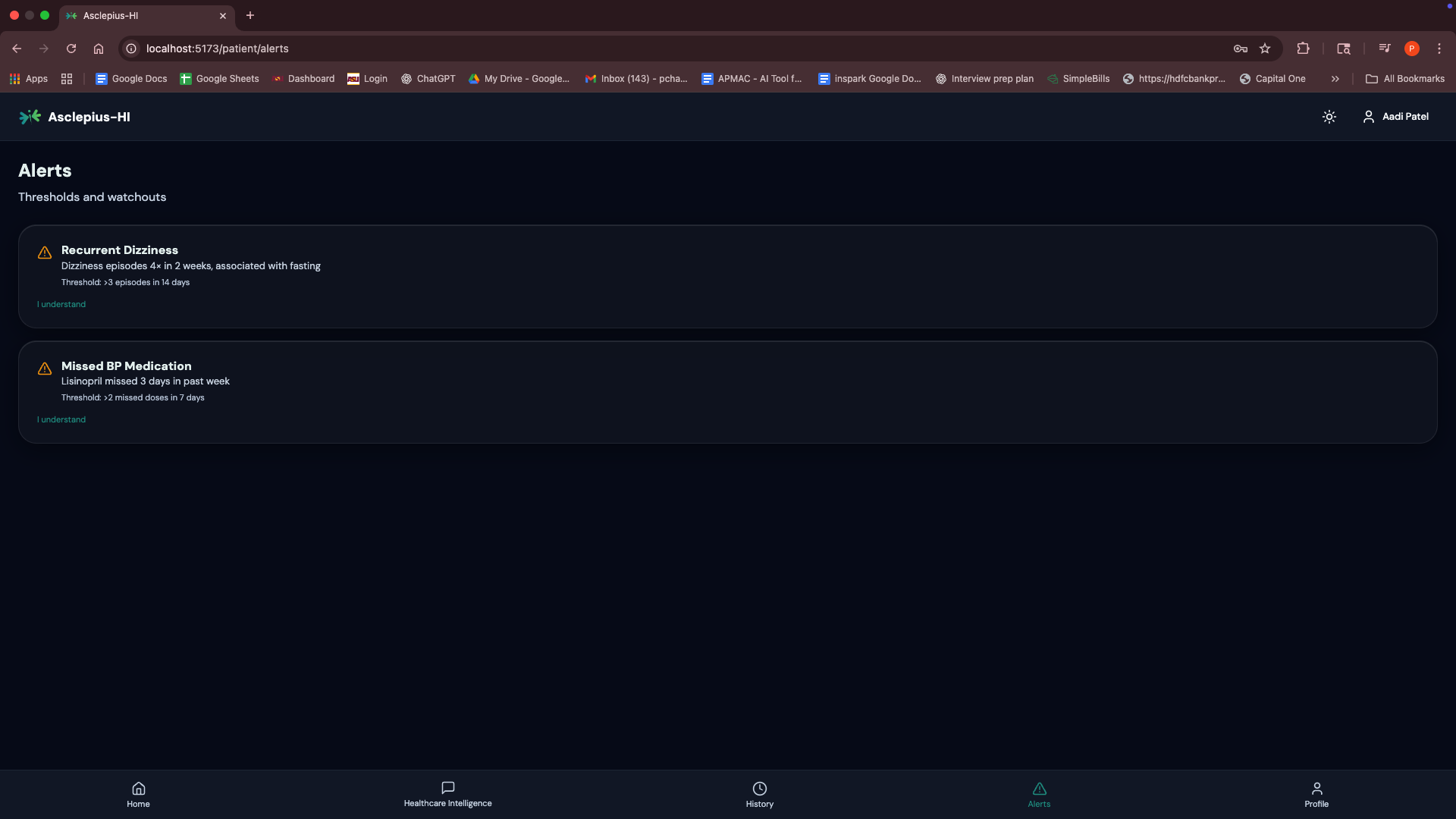
Patient View Alerts tab
-
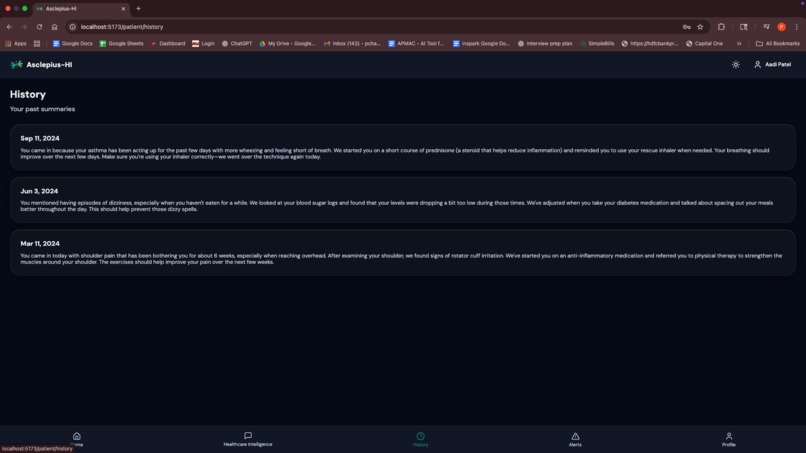
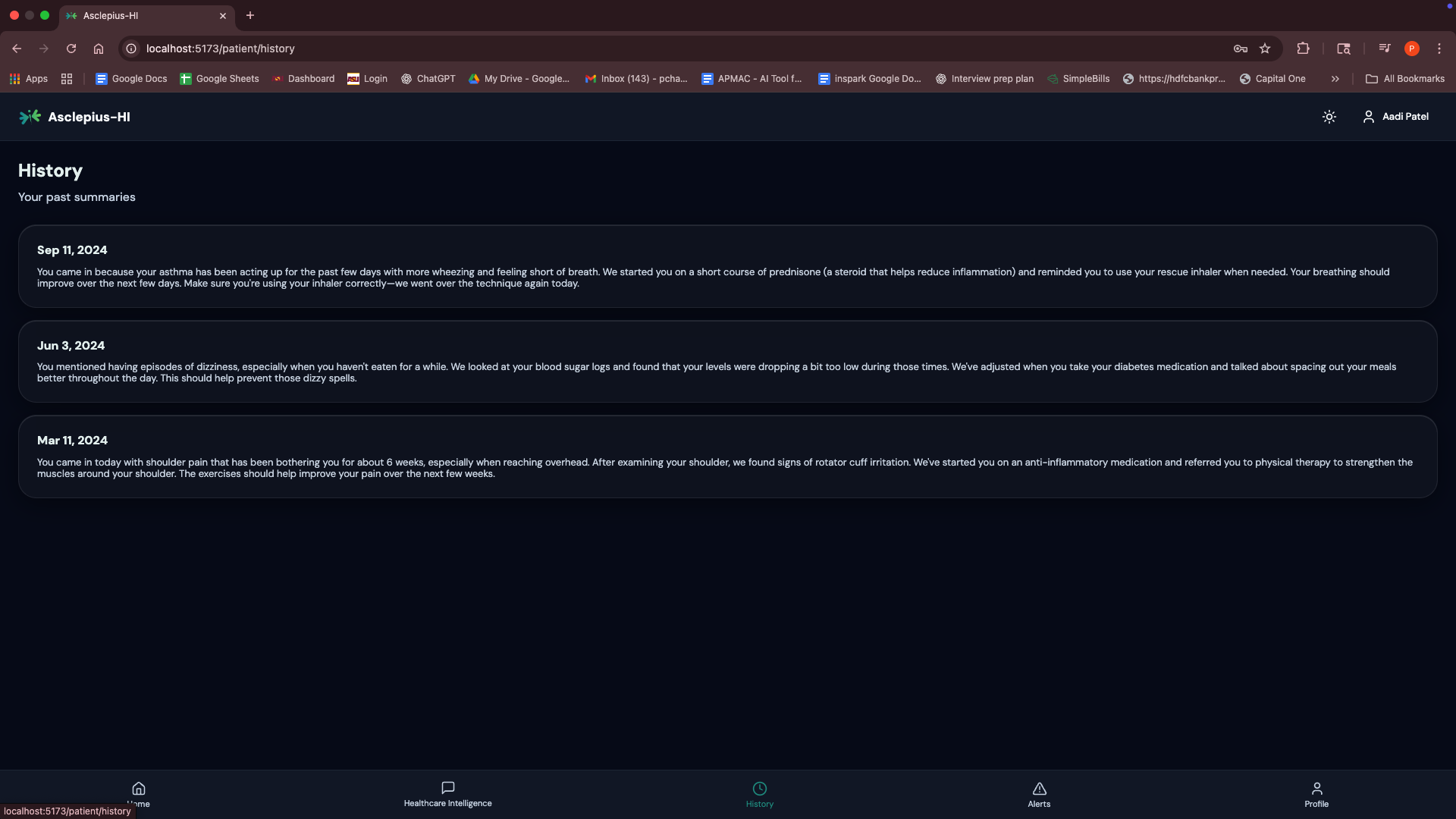
Patient View History tab
-
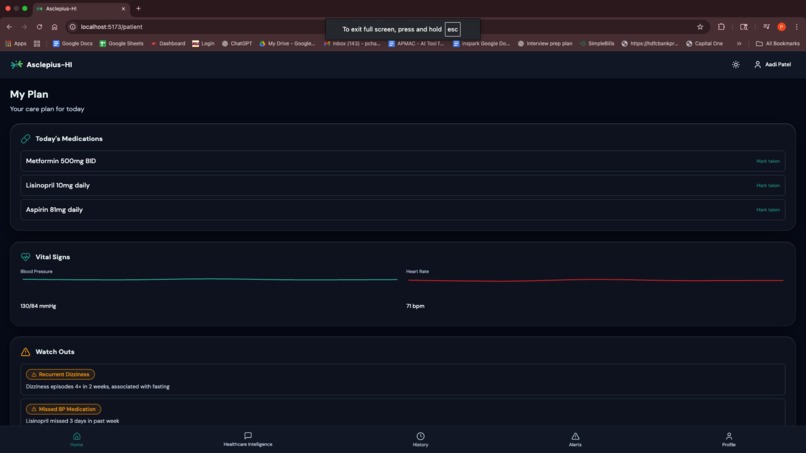
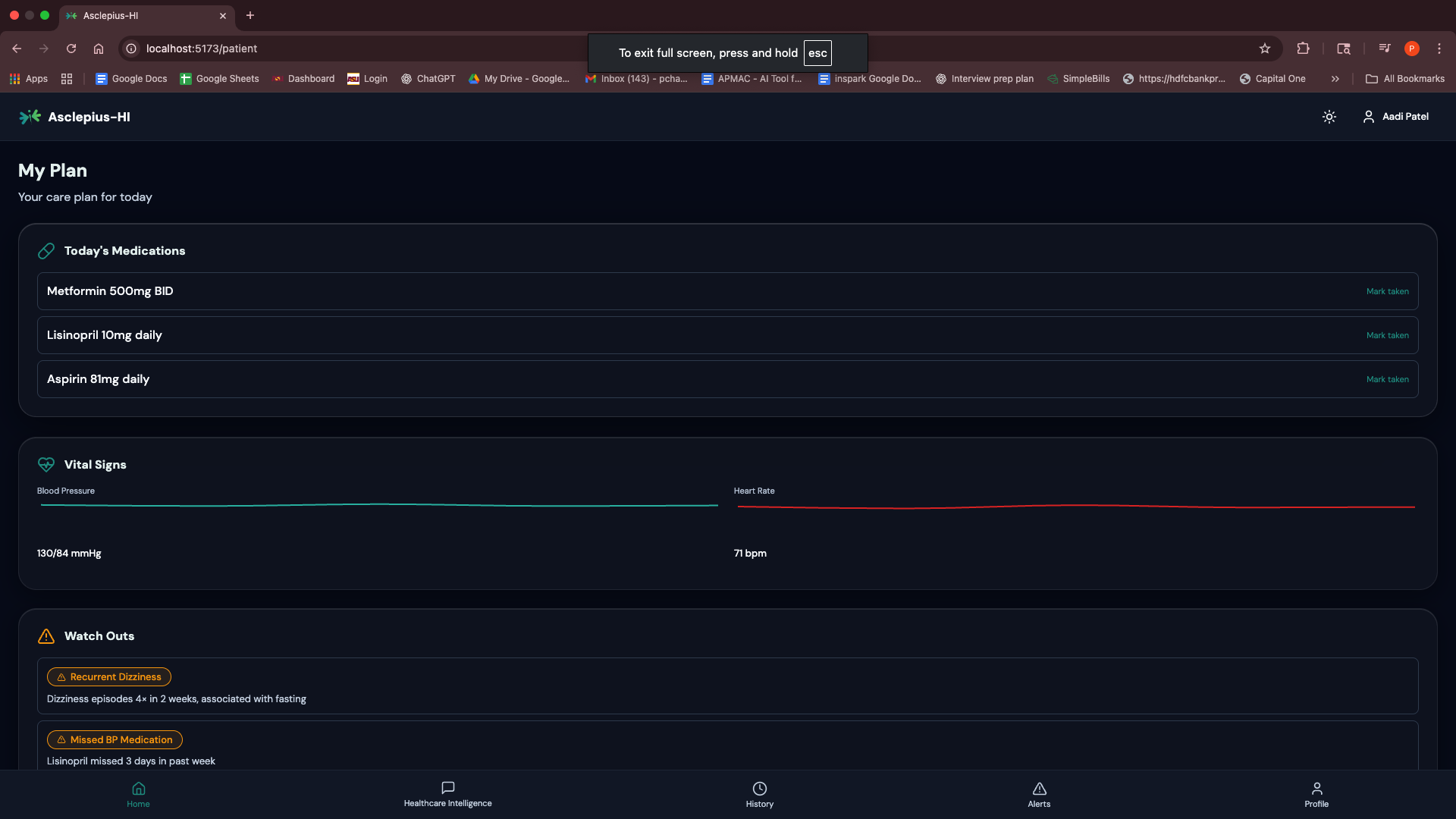
Patient View Home tab
-
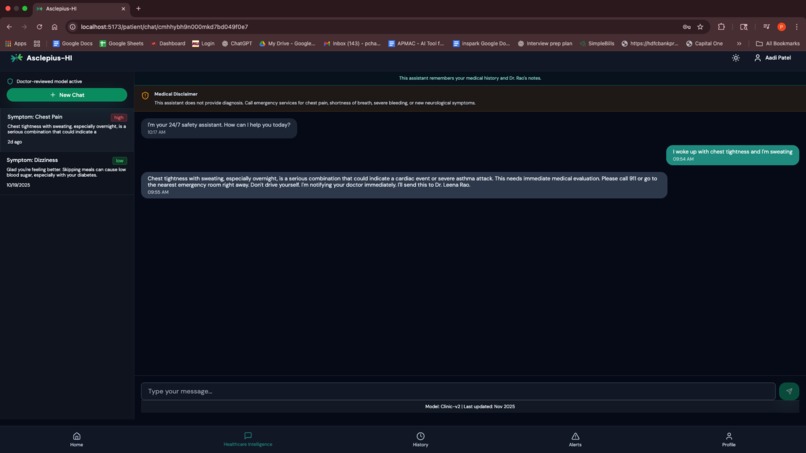
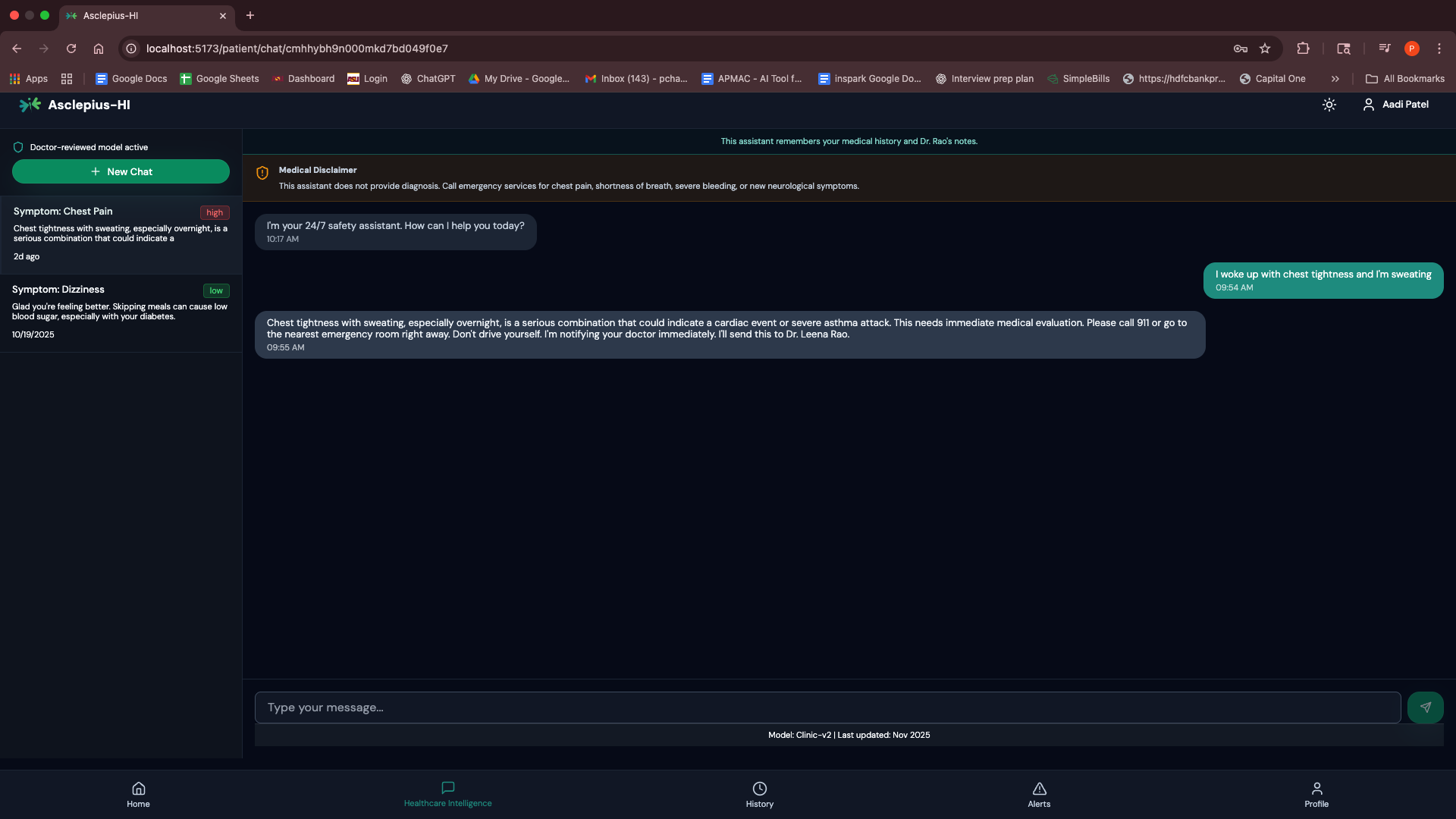
Patient View Healthcare Intelligence tab
Inspiration
I’ve been going to the gym for four years and lost over 60 pounds through self-experimentation. That experience taught me that every body reacts differently—what works for one person might fail for another. The same is true in healthcare: people turn to AI tools for medical advice, but these lack personal context and doctor oversight. Meanwhile, doctors see hundreds of patients and often repeat the same questions because they don’t have instant recall of patient history. We built Asclepius-HI to solve both problems — combining personalized AI memory with clinical supervision.
What it does
Asclepius-HI gives each doctor–patient pair a shared AI memory.
- Patients get a 24/7 safety assistant that remembers their full medical history and gives personalized, risk-aware guidance.
- Doctors get a live dashboard showing patient changes, outcomes, and AI-generated triage summaries. It bridges the gap between late-night symptoms and daytime care.
How we built it
- Backend: Node.js + Express + Prisma with JWT auth and REST APIs.
- AI: Integrated Supermemory for long-term patient context, OpenAI GPT-4 for supervised triage, and Mistral for low-latency replies.
- Frontend: React + Tailwind with real-time streaming chat, conversation history, memory graphs, and a doctor portal.
- Safety: Automatic escalation detection, structured triage summaries, and “doctor-reviewed” model supervision.
Challenges we ran into
- Designing safe LLM prompts that never cross into diagnosis.
- Managing latency between Supermemory retrieval and streaming AI replies.
- Handling session invalidation and data consistency after reseeding.
- Keeping conversations explainable while protecting privacy.
Accomplishments that we're proud of
- Built a fully working AI triage system with patient–doctor memory continuity.
- Integrated real-time streaming AI, escalation tracking, and rationale explainability.
- Implemented a feedback loop where doctors mark outcomes as “Worked / Didn’t Work,” letting the AI learn from results.
- Created a visual memory graph showing how each patient’s data evolves over time.
What we learned
- True healthcare AI needs memory + supervision, not just chat.
- Balancing safety, empathy, and efficiency requires precise tone control.
- Persistent longitudinal data enables far better reasoning than isolated prompts.
- Real-time UX polish (streaming, caching, few-shot optimization) drastically improves user trust.
What's next for Asclepius-HI
- Add email/SMS alerts for urgent cases.
- Expand memory visualization for full longitudinal insights.
- Pilot with small clinics to test doctor adoption.
- Integrate wearable and lab data for proactive health modeling.
- Build a predictive “Patient Twin” model that anticipates recurring issues like seasonal illness or medication side effects.
🛠️ Built With
- Frontend: React, TypeScript, Tailwind CSS, Zustand, Playwright (for E2E tests)
- Backend: Node.js, Express, Prisma ORM, JWT Authentication
- Database: SQLite (for demo), PostgreSQL-ready for production
AI & Memory:
- Supermemory API – long-term patient memory and contextual recall
- OpenAI GPT-4 – risk-aware triage and personalized replies
- Mistral Small – fast low-risk message handling
APIs & Integrations: REST API with streaming (SSE), CORS, Helmet, Rate-limiting
Dev Tools: Cursor, VS Code, GitHub Actions CI, Pino Logger, Playwright Test Suite
Built With
- built-with-frontend:-react
- cors
- docker-compose
- express.js
- github-actions-ci
- helmet
- jwt-authentication-database:-sqlite-(for-demo)
- nginx-apis-&-integrations:-rest-api-with-streaming-(sse)
- pino-logger
- playwright-(for-e2e-tests)-backend:-node.js
- playwright-test-suite-accessibility:-wai-aria-support
- postgresql-ready-for-production-ai-&-memory:-supermemory-api-?-long-term-patient-memory-and-contextual-recall-openai-gpt-4-?-risk-aware-triage-and-personalized-replies-mistral-small-?-fast-low-risk-message-handling-cloud-&-deployment:-docker
- prisma-orm
- rate-limiting-dev-tools:-cursor
- screen-reader-labels
- tailwind-css
- typescript
- vs-code
- zustand

Log in or sign up for Devpost to join the conversation.