-
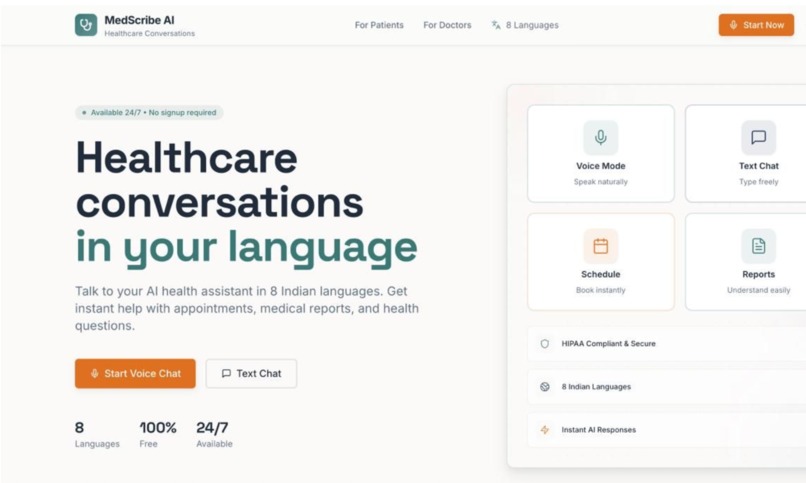
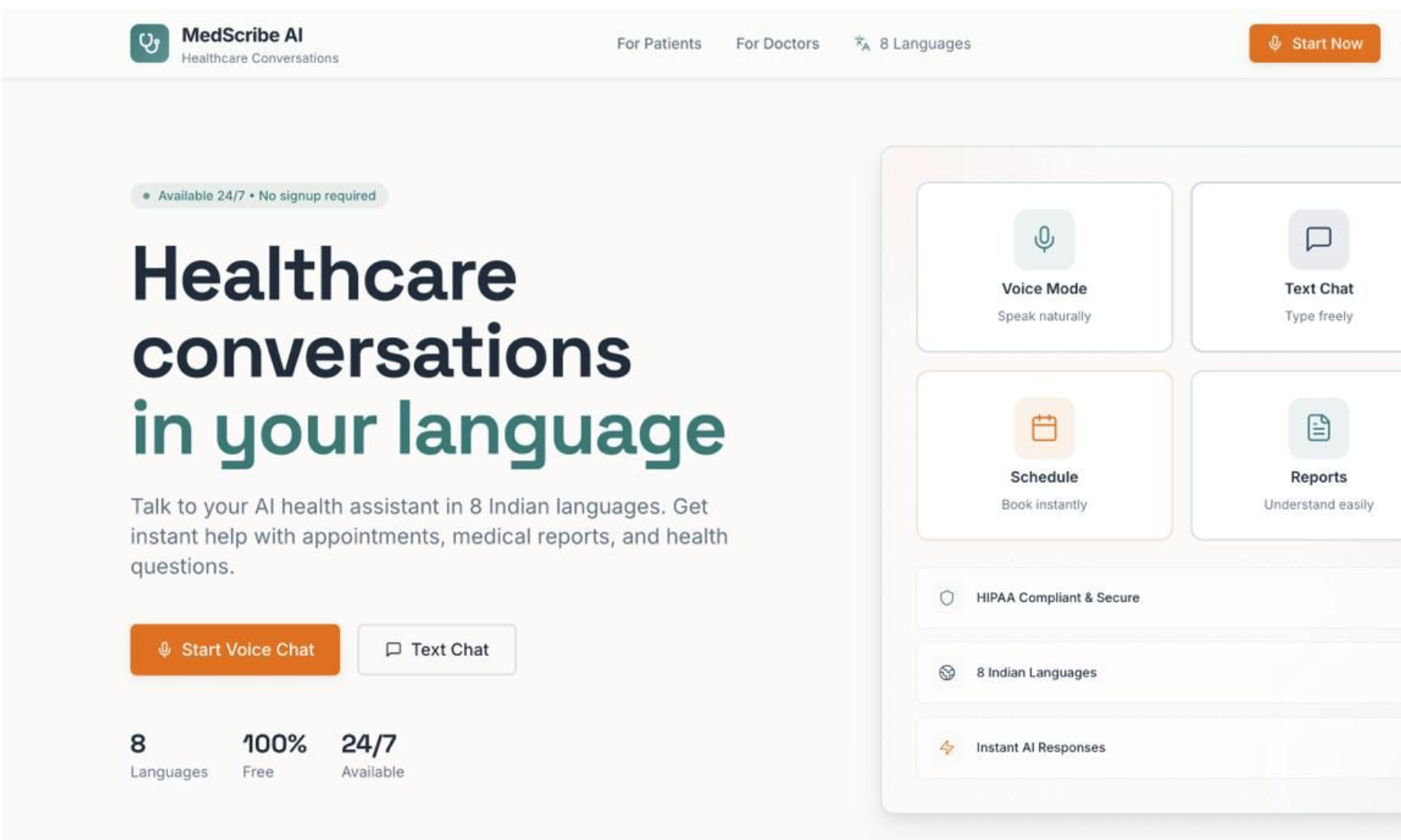
Landing page
-
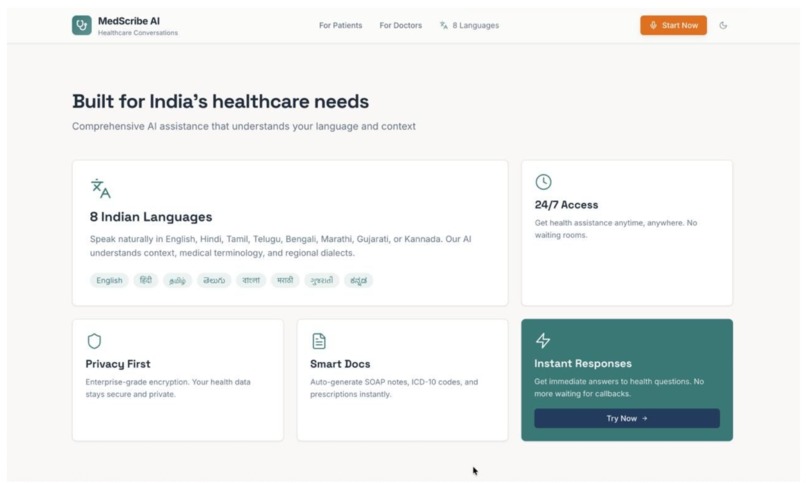
Feature summary
-
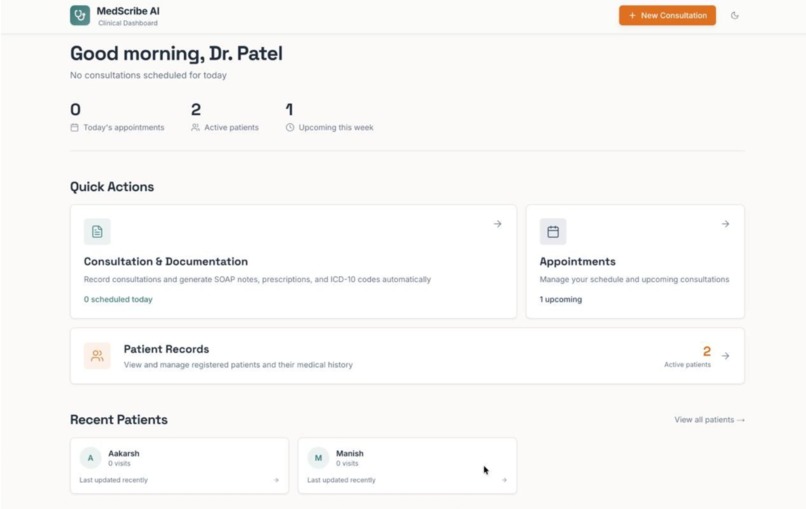
Doctor landing page
-
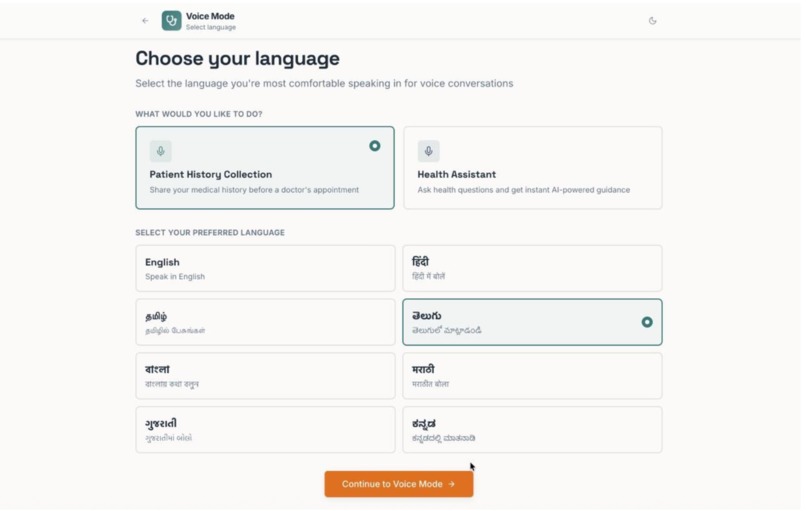
AI powered voice assistant
-
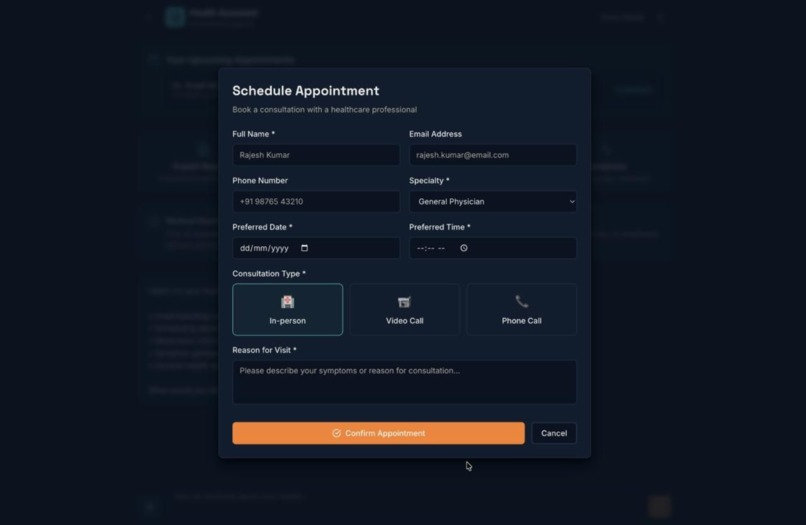
Appointment booking
-
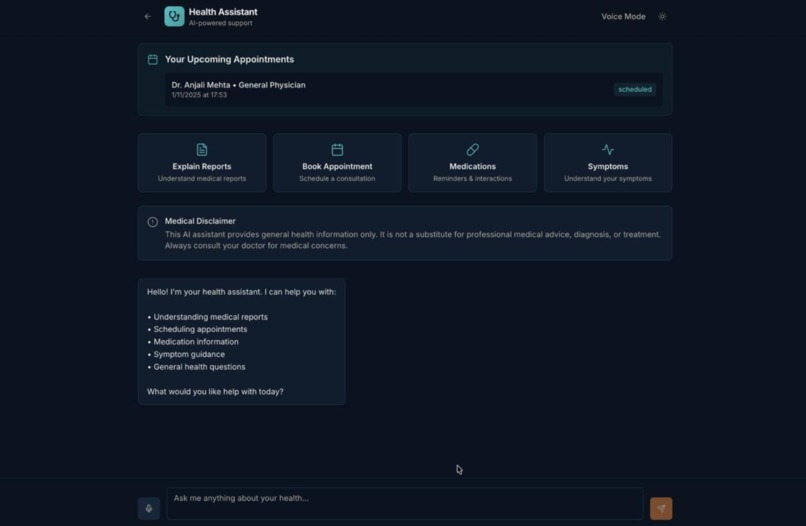
Appointment schedule
-
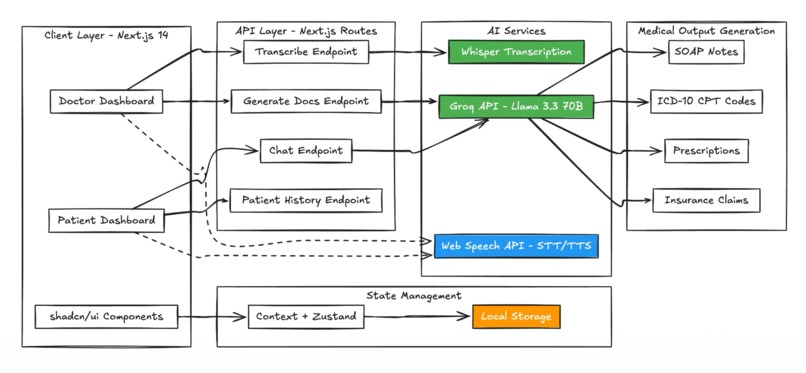
Architecture Diagram
Inspiration
India's healthcare system faces a critical communication crisis. With over 22 official languages and countless dialects, doctor-patient communication is fragmented.
I witnessed this firsthand when my grandmother struggled to explain her symptoms to a doctor who didn't speak her native language.
Appointments that should take 15 minutes stretched to 45, with crucial details lost in translation.
Over 70% of India's population lives in rural areas where access to multilingual healthcare is virtually non-existent. Doctors spend more time on paperwork than with patients, leading to rushed consultations.
MedScribe AI was born from a simple belief: language should never be a barrier to quality healthcare.
What It Does
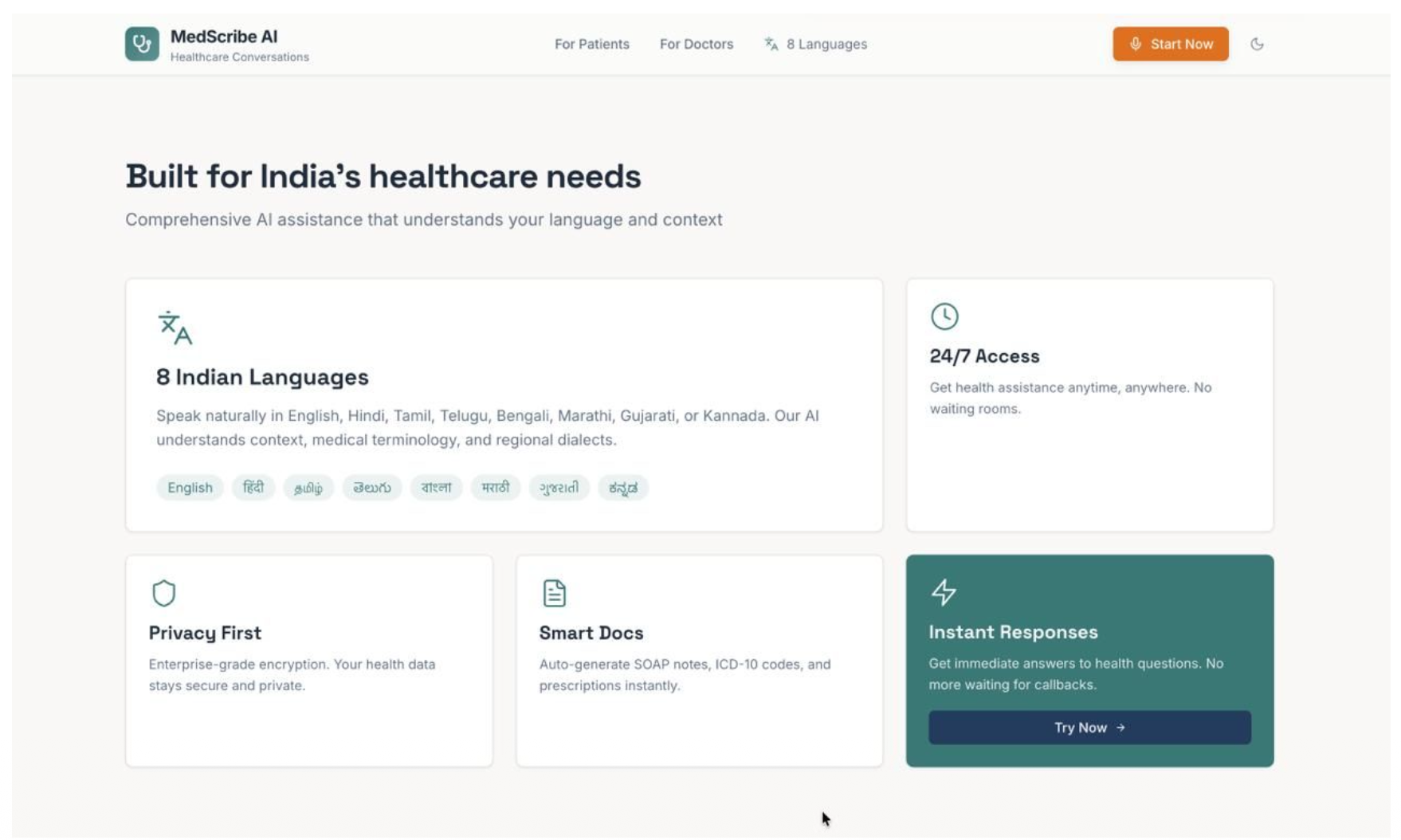
MedScribe AI is a voice-first healthcare communication platform designed for India’s multilingual reality.
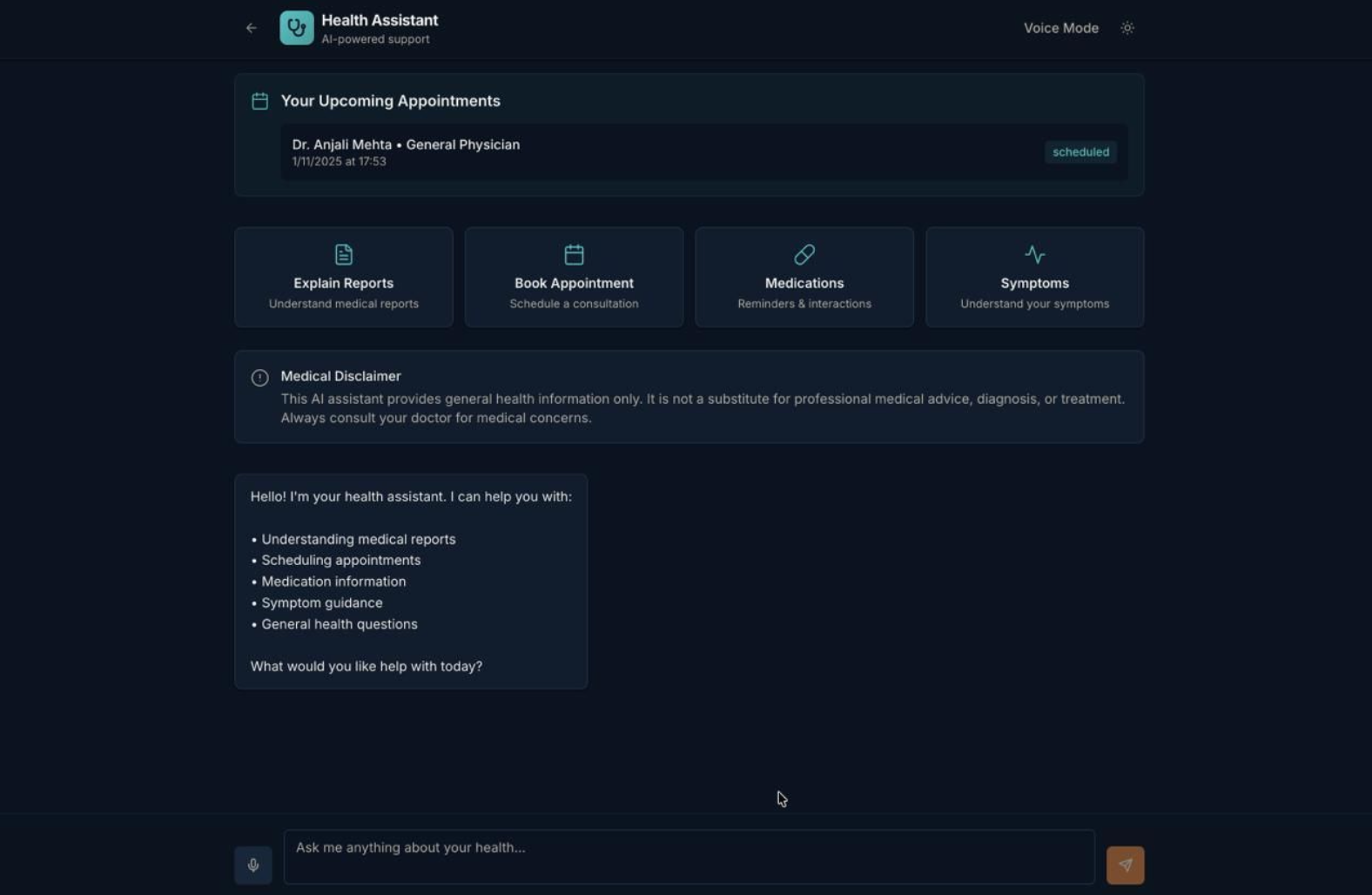
For Patients
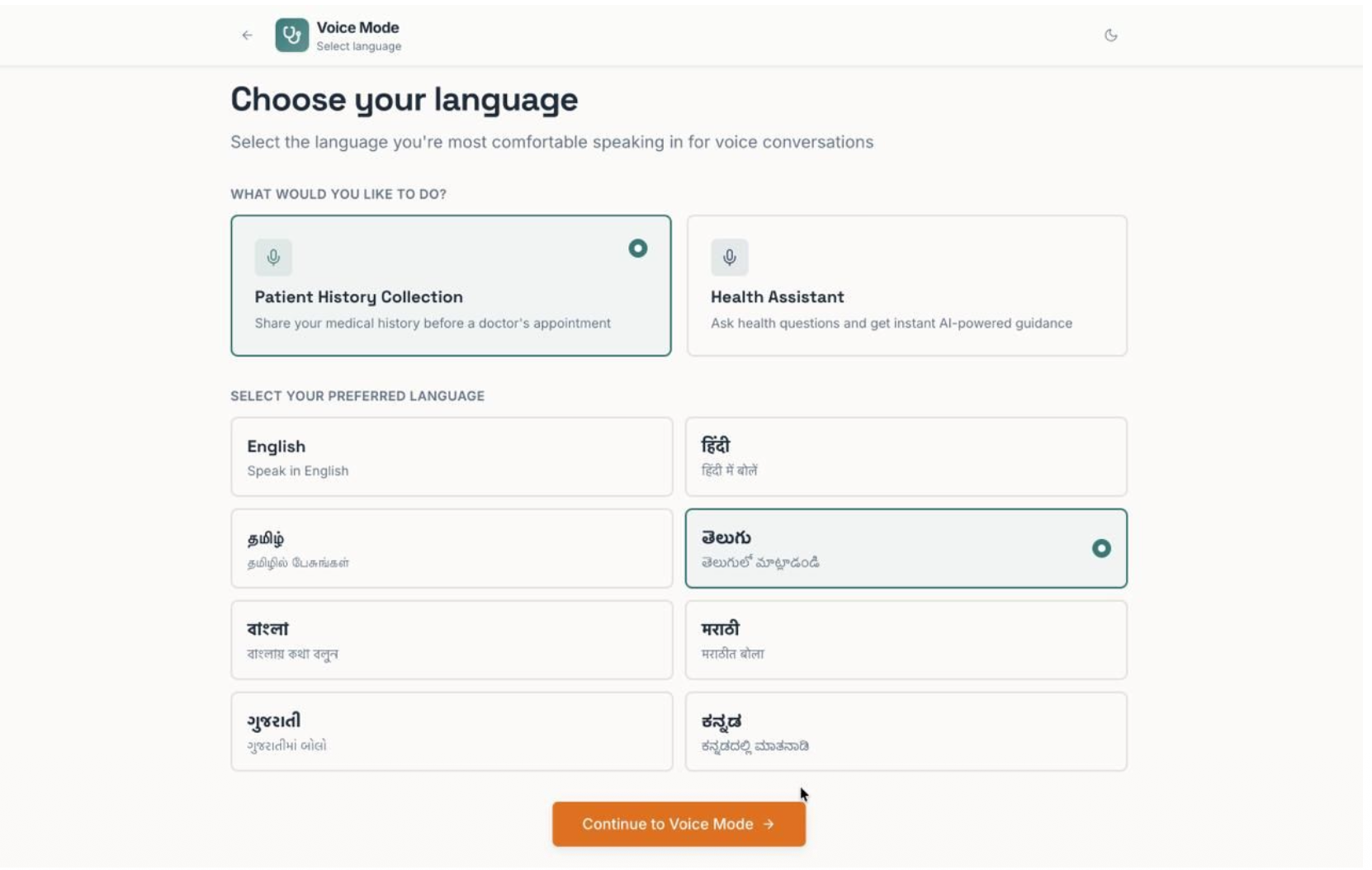
Speak Naturally
Converse in any of 8 Indian languages (English, Hindi, Tamil, Telugu, Bengali, Marathi, Gujarati, Kannada)Health Assistant
Get instant answers about symptoms, medications, and medical reportsVoice Mode
Hands-free interaction for elderly users and people with limited literacyPre-Consultation History
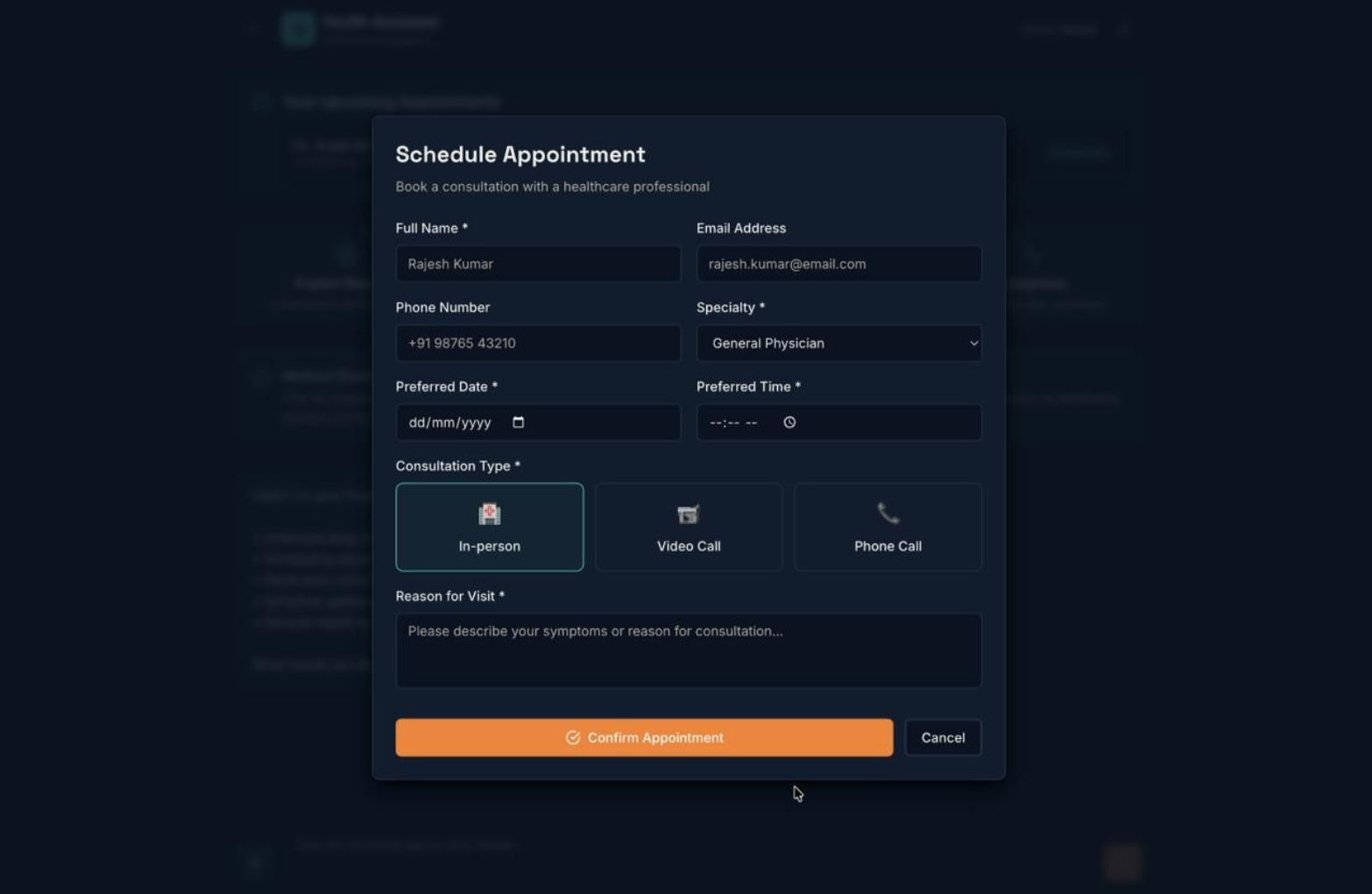
Share medical history conversationally and save 10–15 minutes per consultationEasy Scheduling
Book appointments using natural language
For Doctors
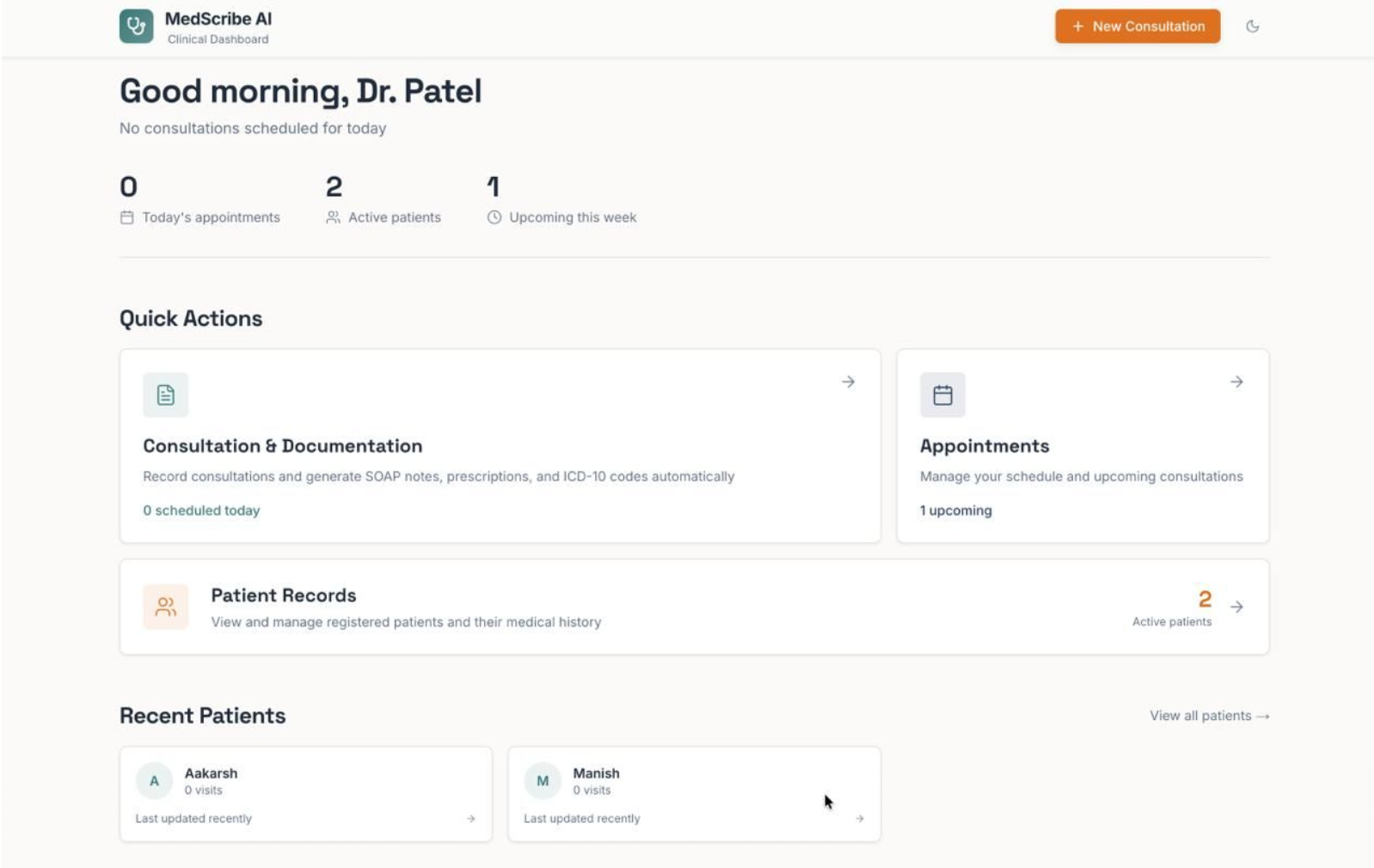
Smart Documentation
Auto-generate SOAP notes, prescriptions, and medical recordsPre-Consultation Insights
Review AI-collected patient histories before appointmentsVoice Transcription
Real-time consultation recording with speaker separationAppointment Dashboard
Streamlined scheduling and patient managementClinical Codes
Automatic ICD-10 and CPT code suggestions
How We Built It
Frontend Architecture
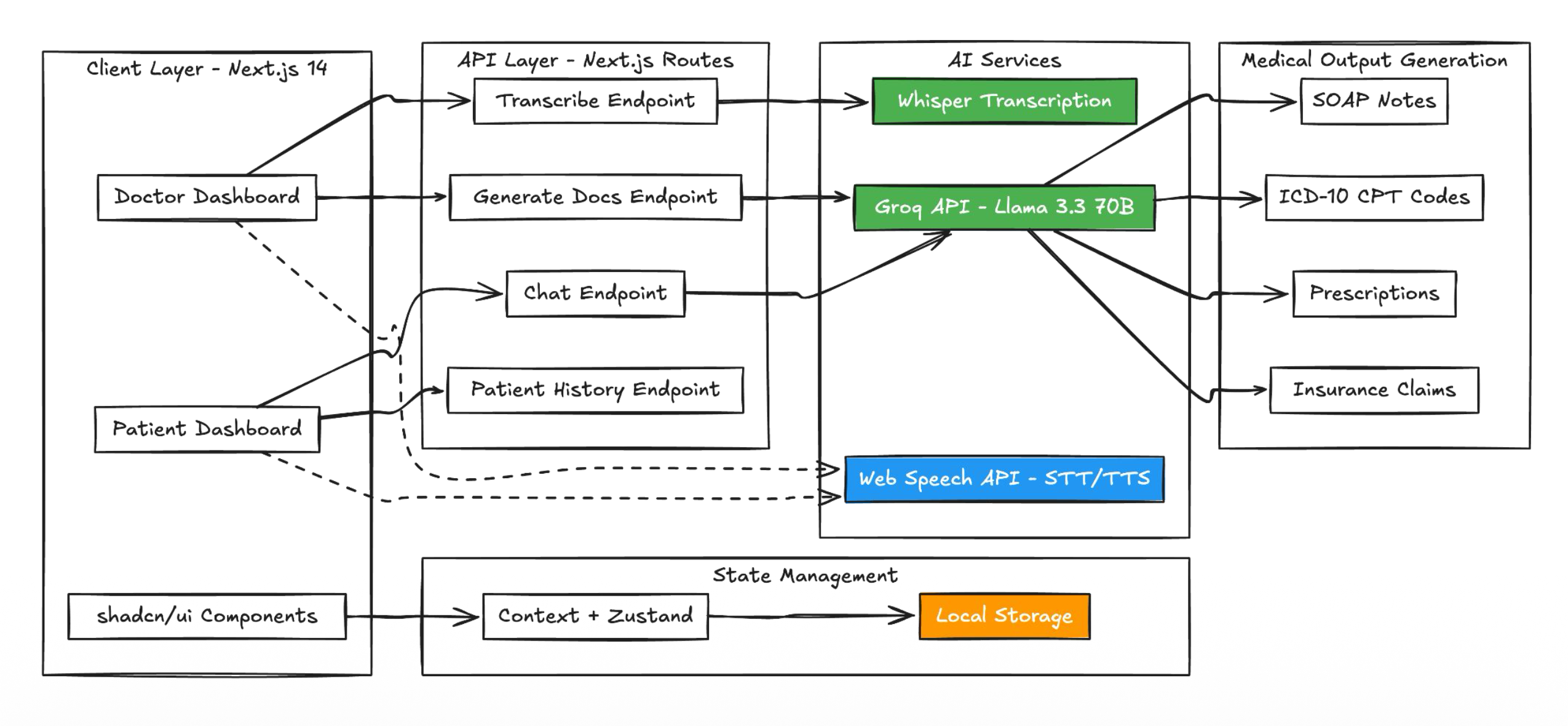
- Next.js 14 with App Router
- TypeScript for type safety
- Tailwind CSS with shadcn/ui
- Framer Motion targeting 60 FPS
AI and Voice Technology
- Real-time speech recognition using Web Speech API
- Seamless switching between 8 languages
- Groq API with Llama 3.3 (70B) for fast inference
- Browser-native text-to-speech with fallbacks
Smart Features
- Custom React hooks for voice state and transcription
- Context-aware conversation history
- Medical prompt tuning for clinical accuracy
- Speaker diarization for consultations
State Management
- Zustand for global state
- React Context for preferences
- Local storage for demo persistence
Challenges We Faced
1. Indian Accent Recognition
Initial accuracy was around 65%, which was unacceptable.
Solution:
A confidence threshold system was introduced. When certainty dropped below an acceptable level, the system asked for clarification. Accuracy improved to 85%.
2. Real-Time Voice Processing
To maintain conversational flow, total latency needed to stay under 3 seconds.
Solution:
Using Groq’s fast inference and optimistic UI updates reduced perceived latency by 40%.
3. Medical Documentation Accuracy
Generating accurate SOAP notes from conversation was difficult.
Solution:
A multi-step pipeline was implemented:
Built With
- css
- framer
- groq
- javascript
- next
- node.js
- react
- speechapi
- tailwind
- typescript
- zod
- zustand

Log in or sign up for Devpost to join the conversation.