-
-
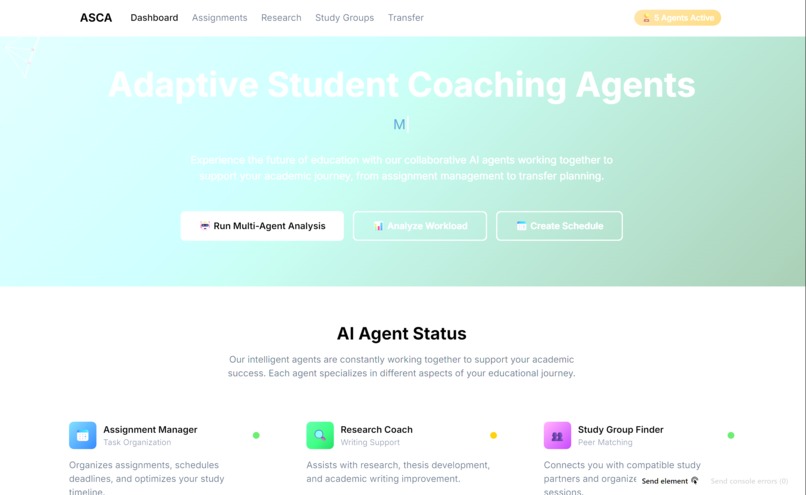
Dashboard
-
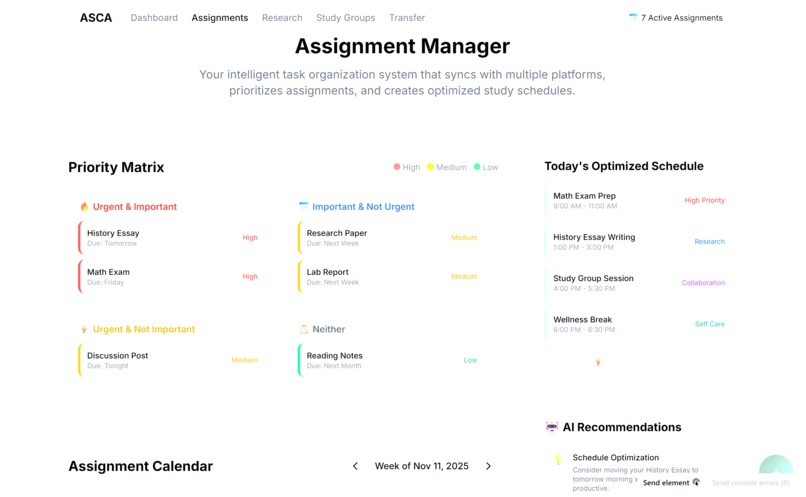
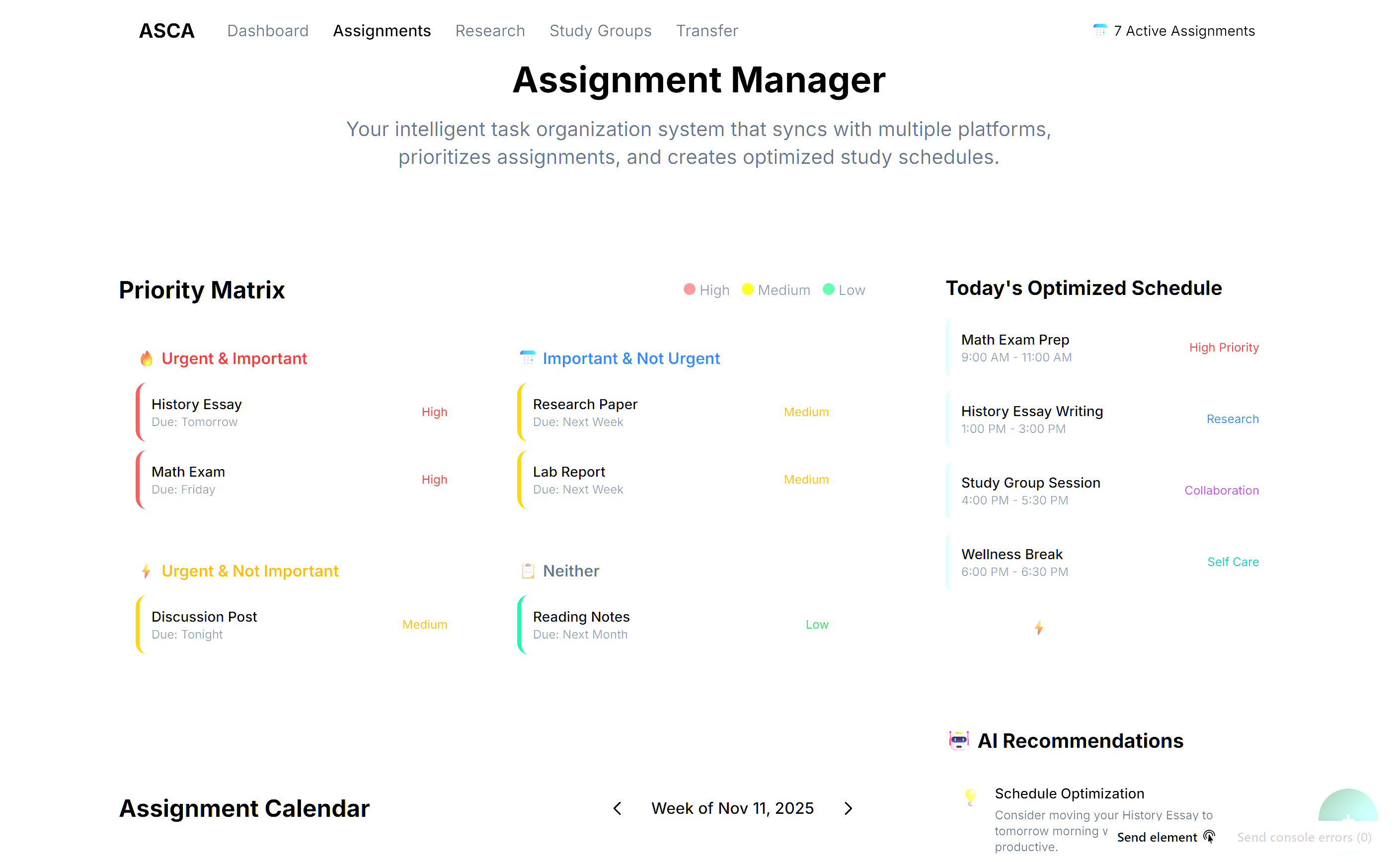
Assignment Manager
-
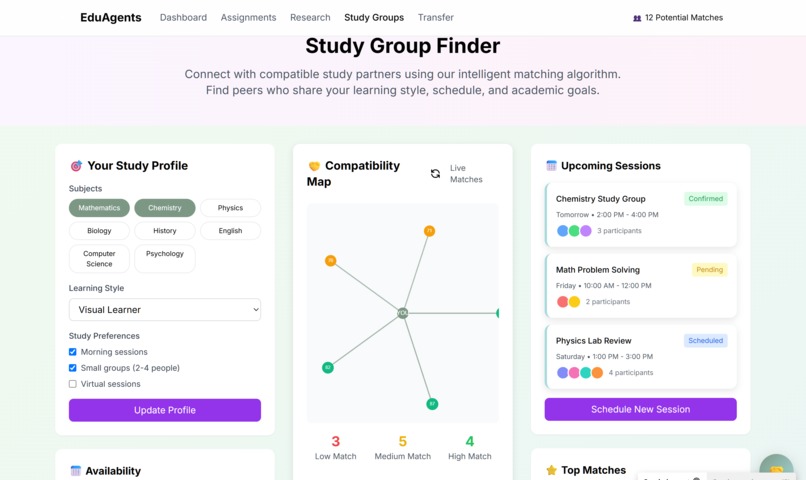
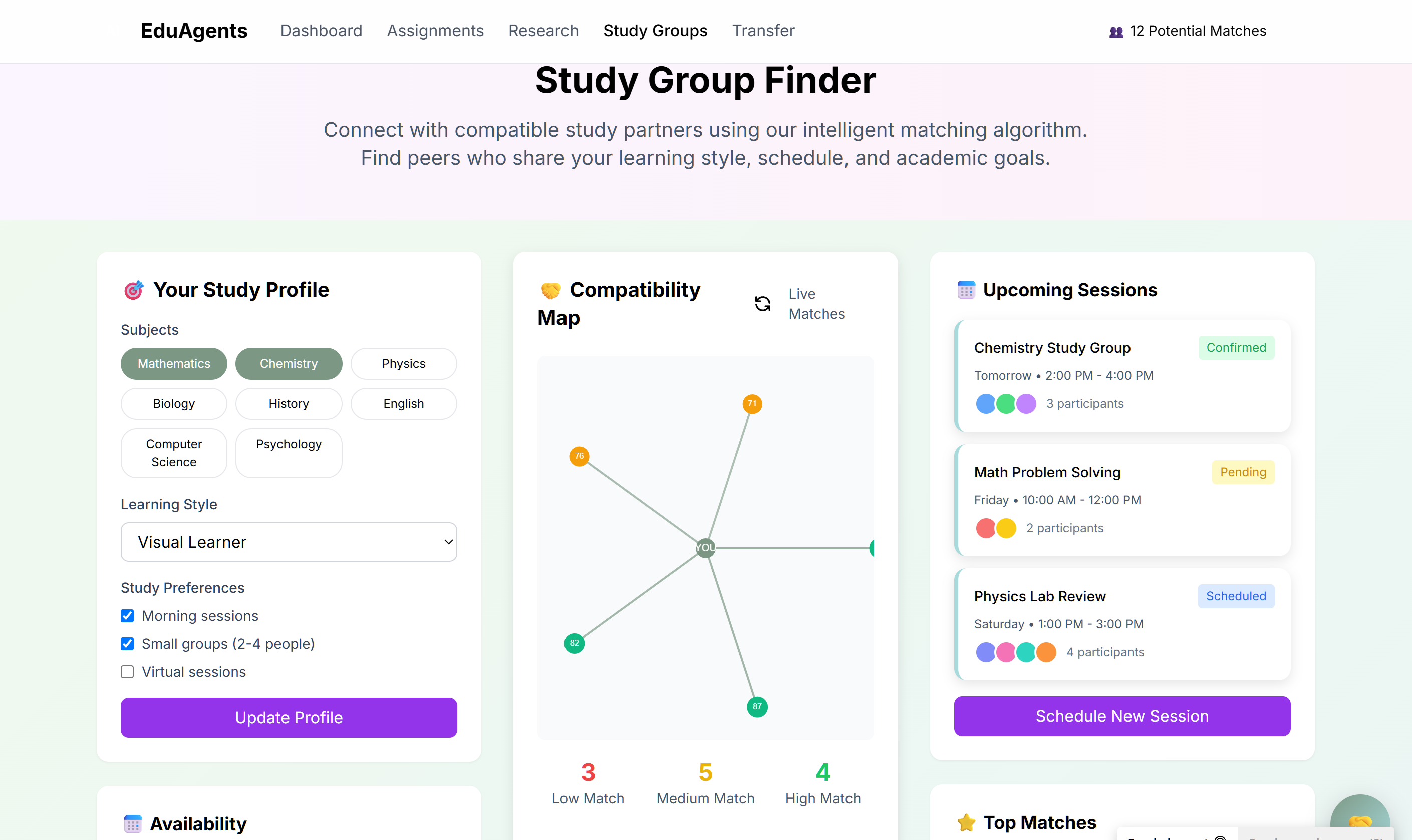
Study-Group finder
-
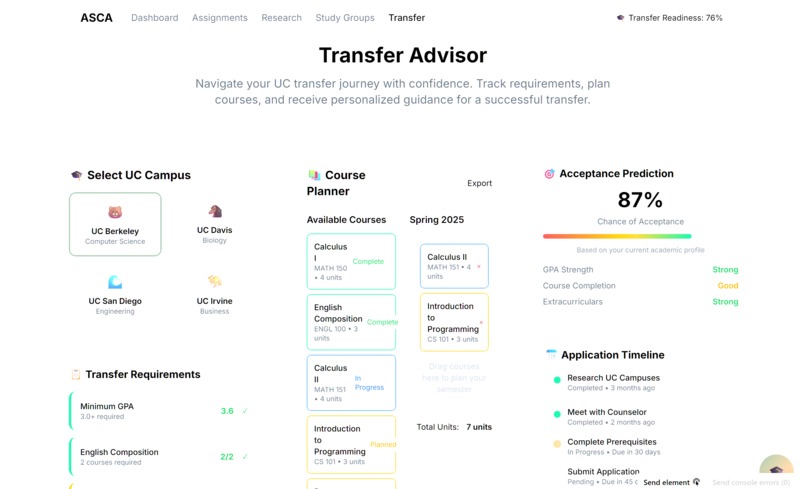
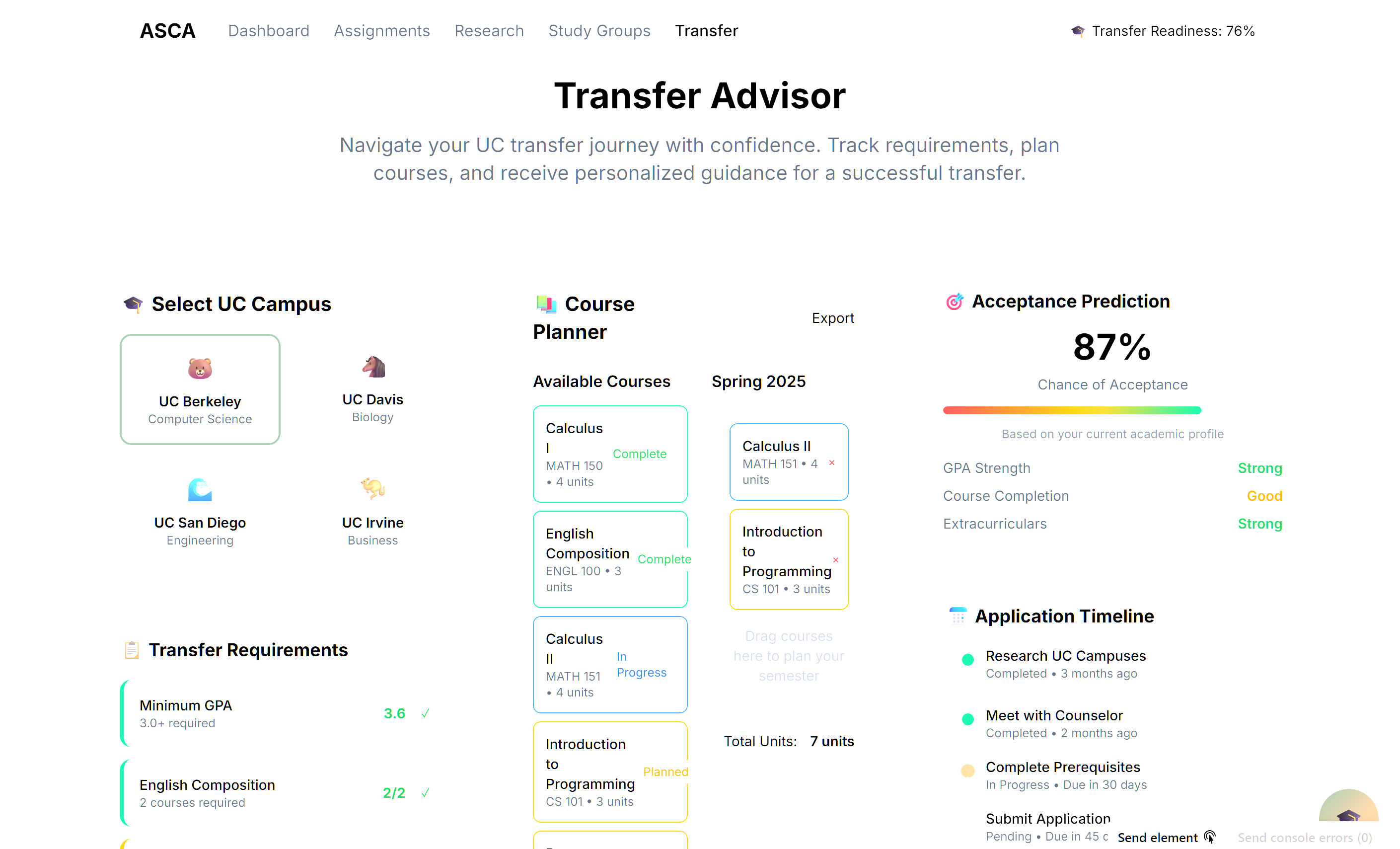
Transfer Resources
-
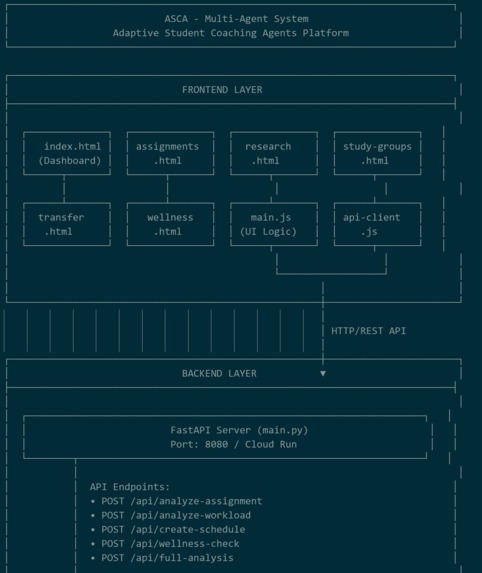
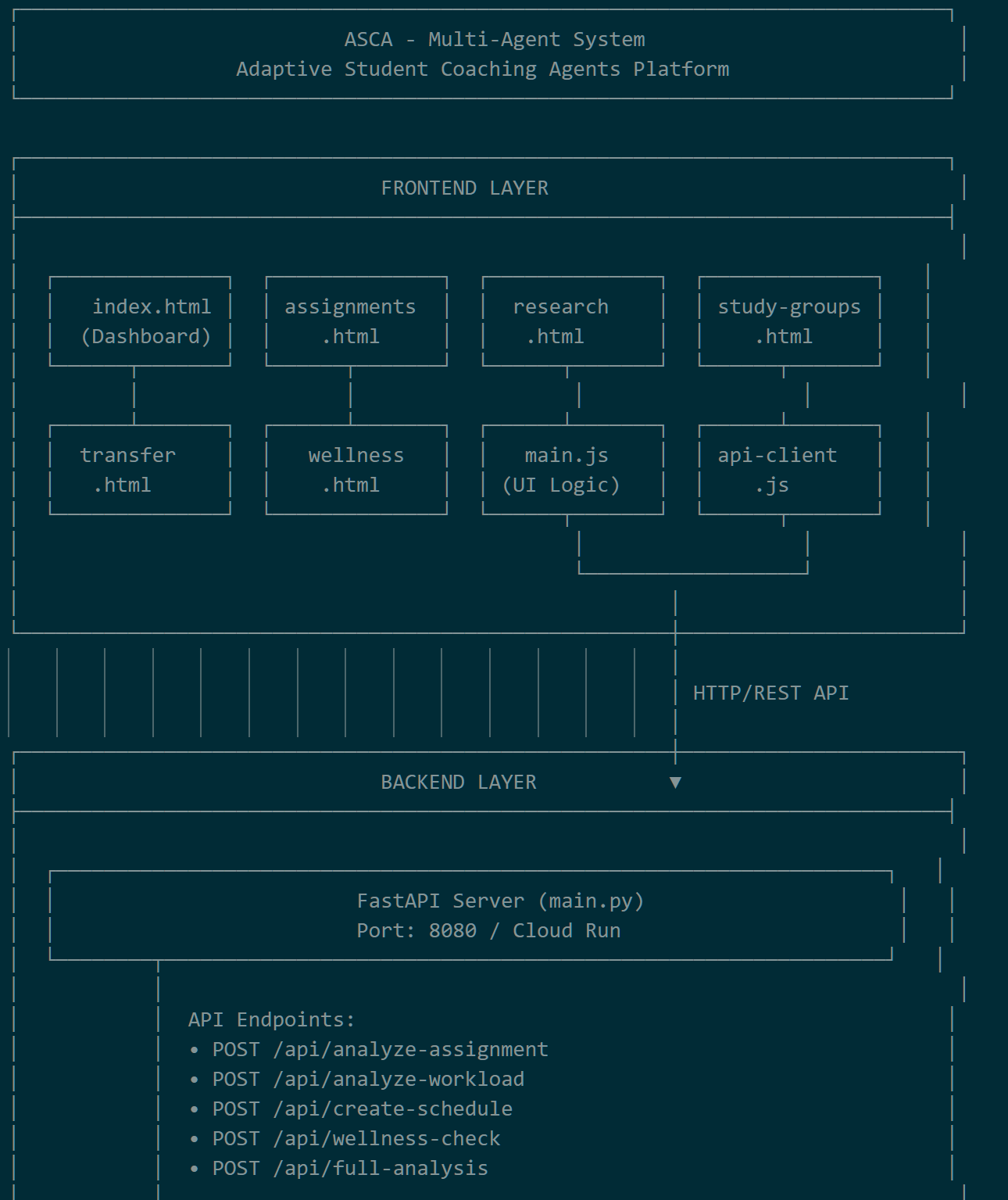
Architecture part 1
-
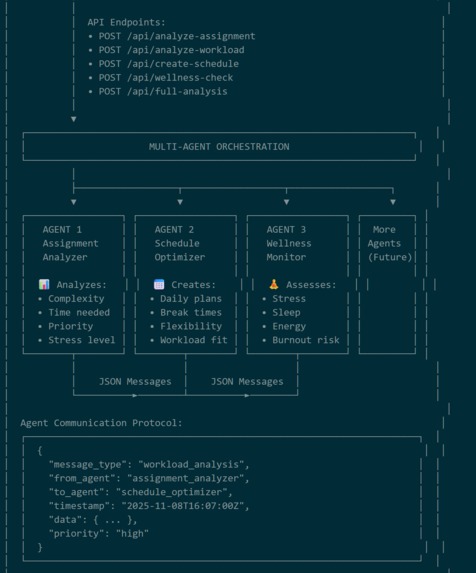
Architecture part 2
-
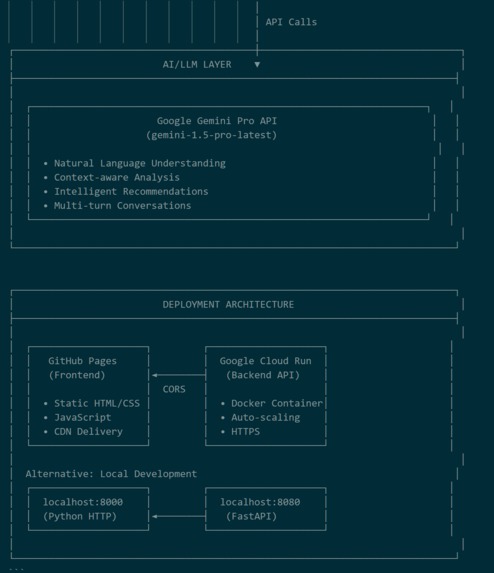
Architecture part 3
-
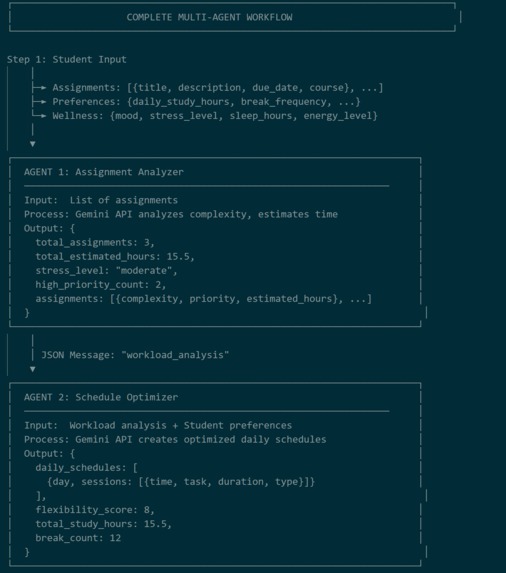
Multi agent workflow part 1
-
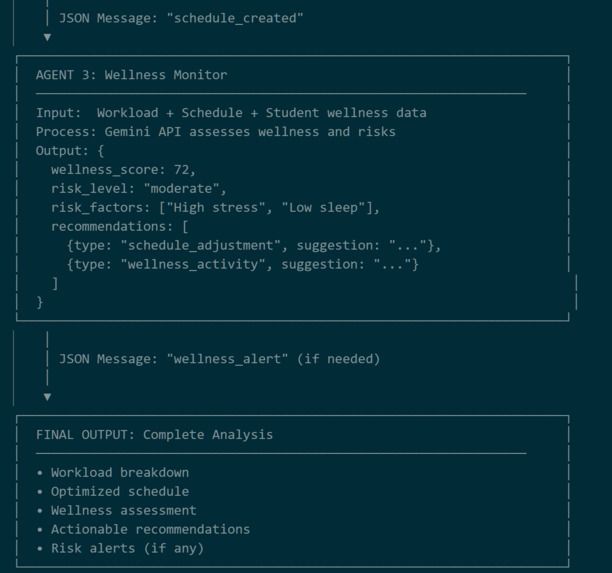
Multi agent workflow part 2
-
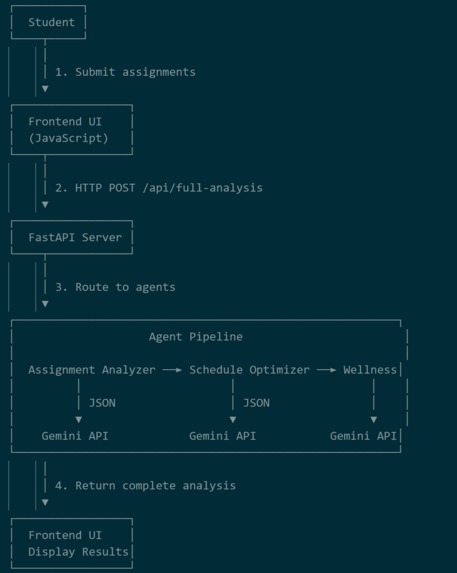
Data flow diagram
-
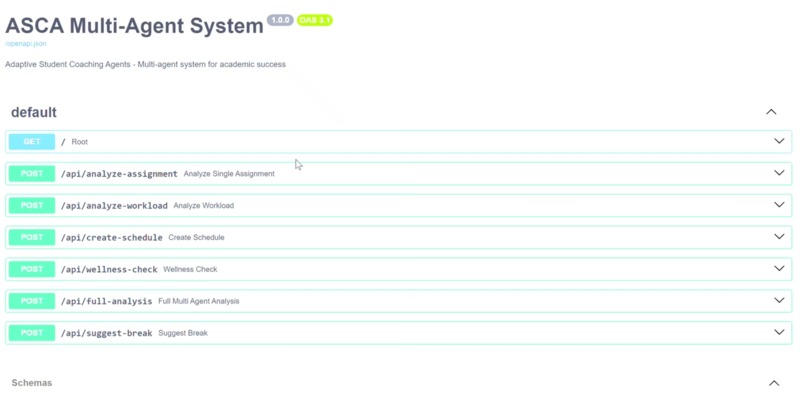
Agents
Inspiration
75% of college students report feeling overwhelmed by their workload, leading to stress, burnout, and declining academic performance. Existing tools only track assignments but don't help students actually manage their time or mental health. I wanted to create a system where AI agents work together to provide holistic support - not just tracking tasks, but optimizing schedules and monitoring wellness.
What it does
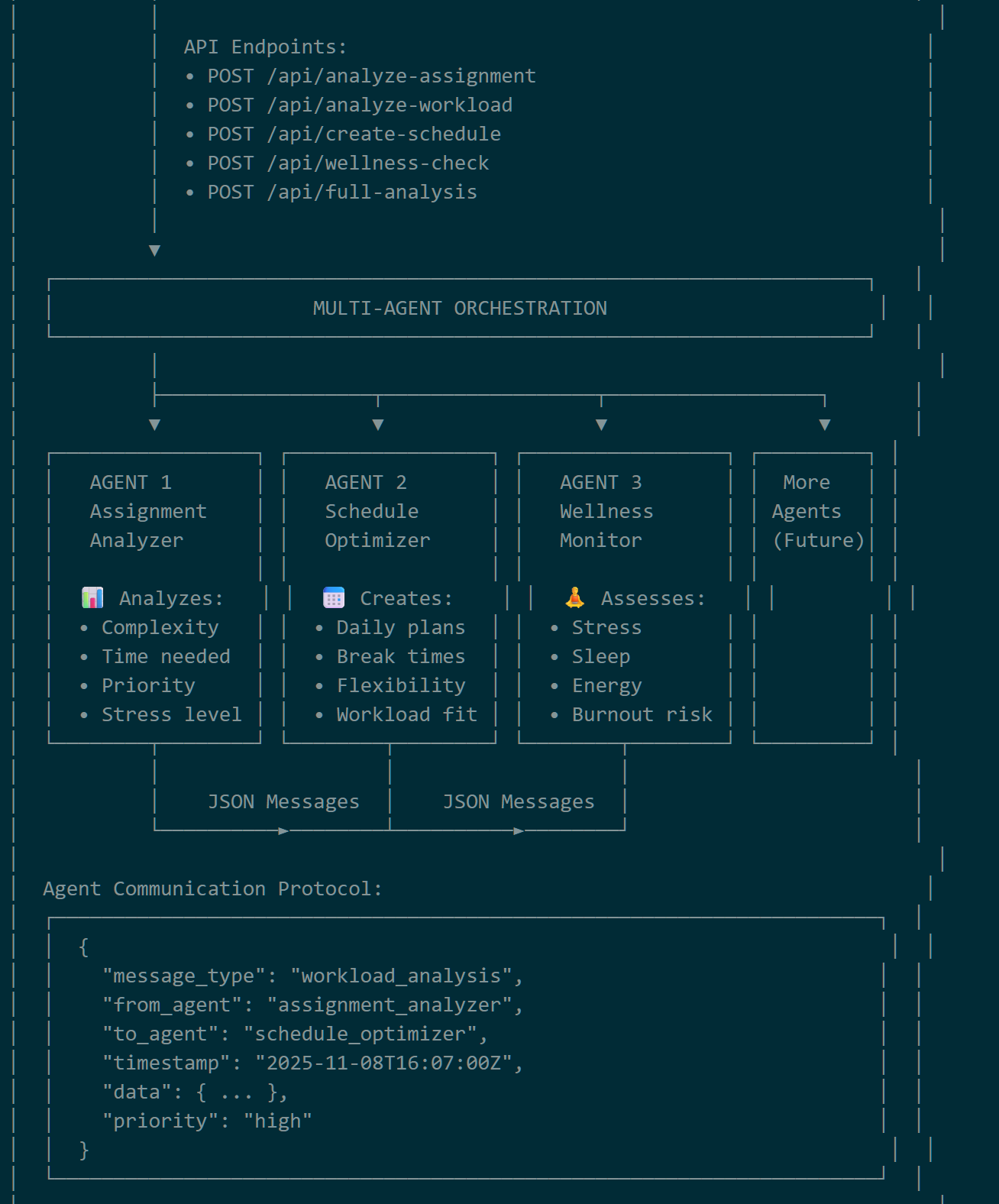
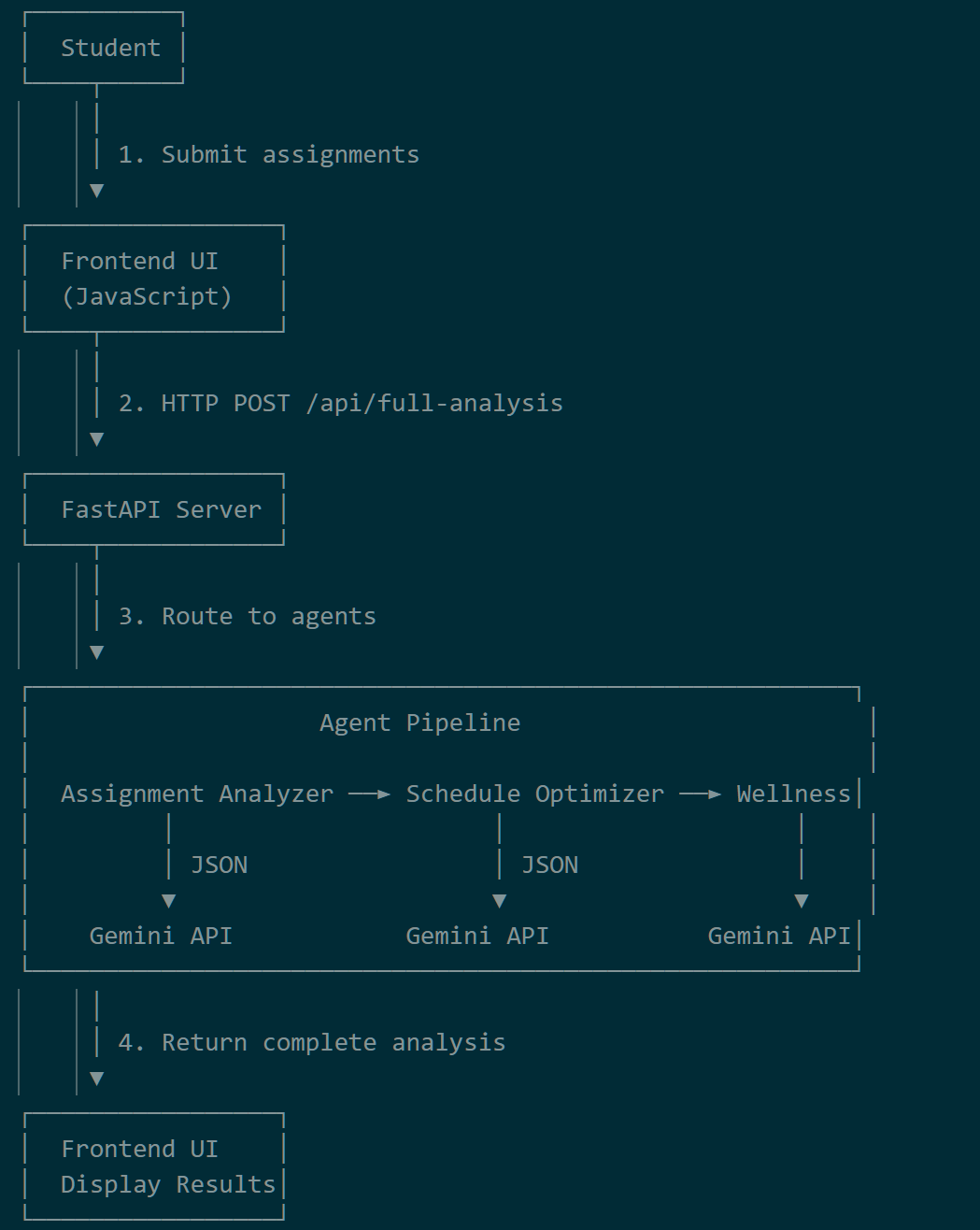
ASCA uses three specialized AI agents that communicate with each other to provide comprehensive academic support:
Assignment Analyzer Agent - Analyzes assignment complexity, estimates time requirements, and calculates overall workload stress levels
** Schedule Optimizer Agent** - Creates personalized 7-day study schedules based on workload analysis, distributing tasks evenly with appropriate breaks
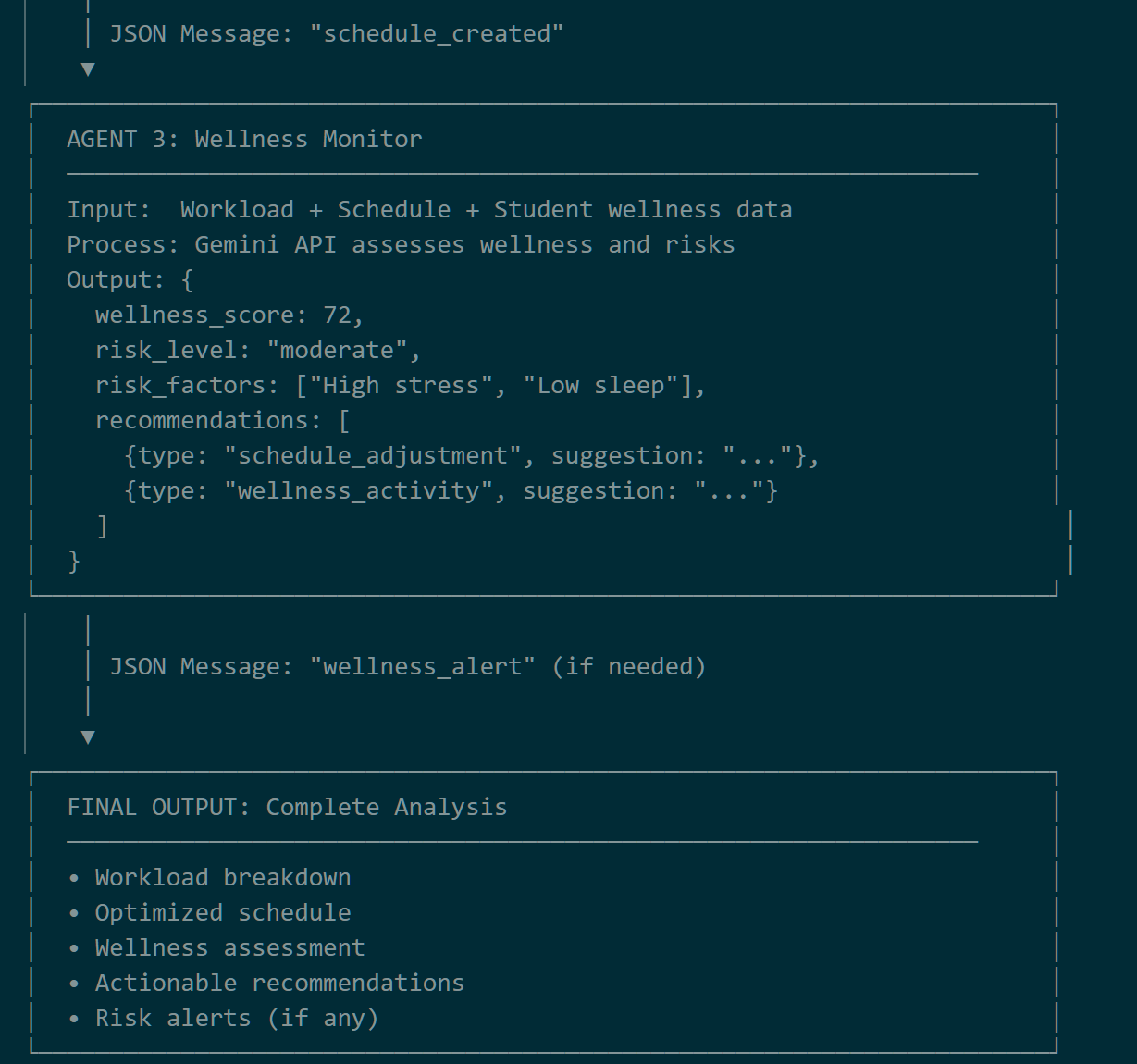
Wellness Monitor Agent - Assesses student mental health based on workload and schedule, providing personalized recommendations for stress management
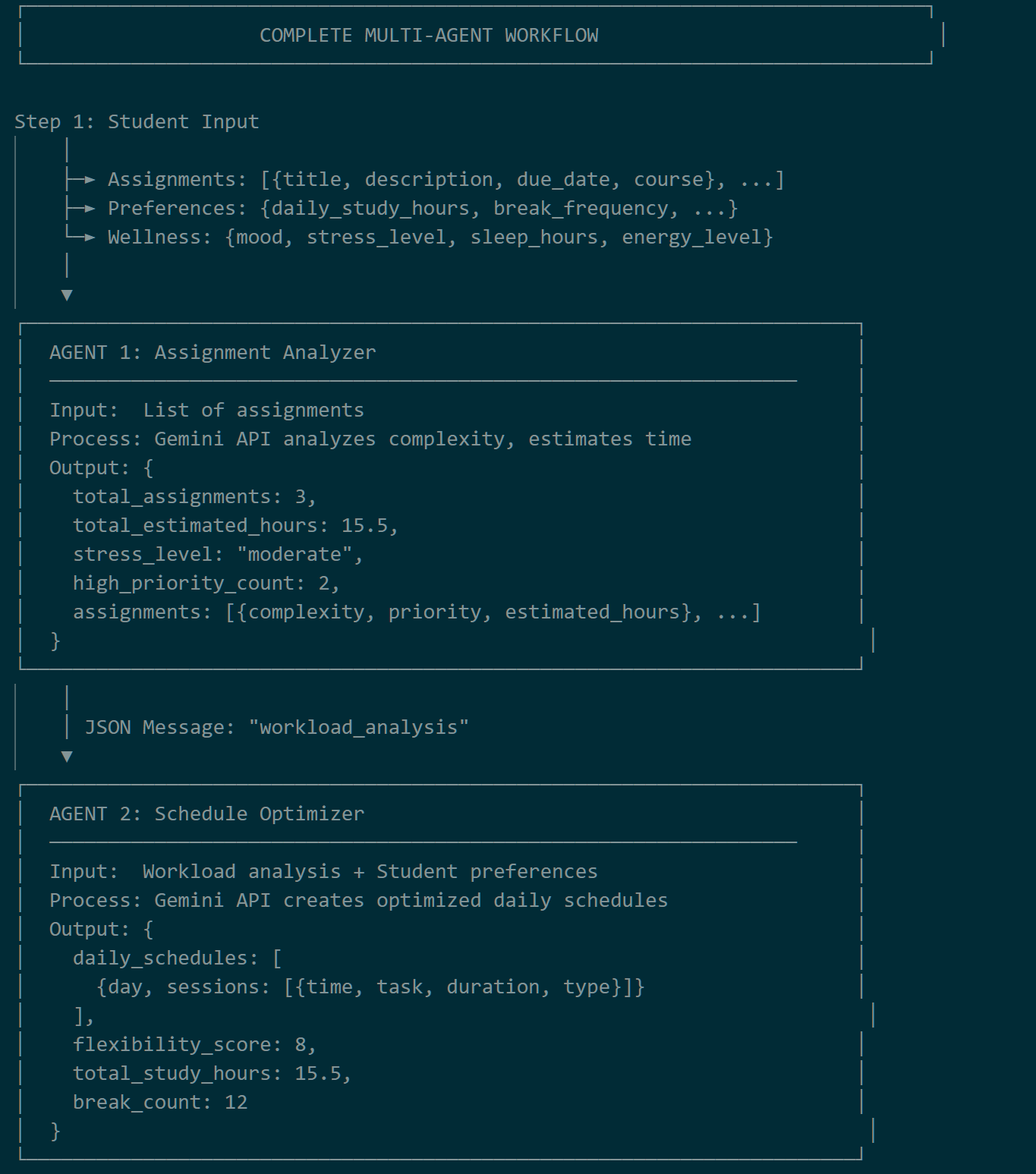
The key innovation is that these agents don't just work in parallel - they communicate through structured message passing. The Assignment Analyzer sends workload data to the Schedule Optimizer, which sends schedule data to the Wellness Monitor, creating true multi-agent collaboration.
How we built it
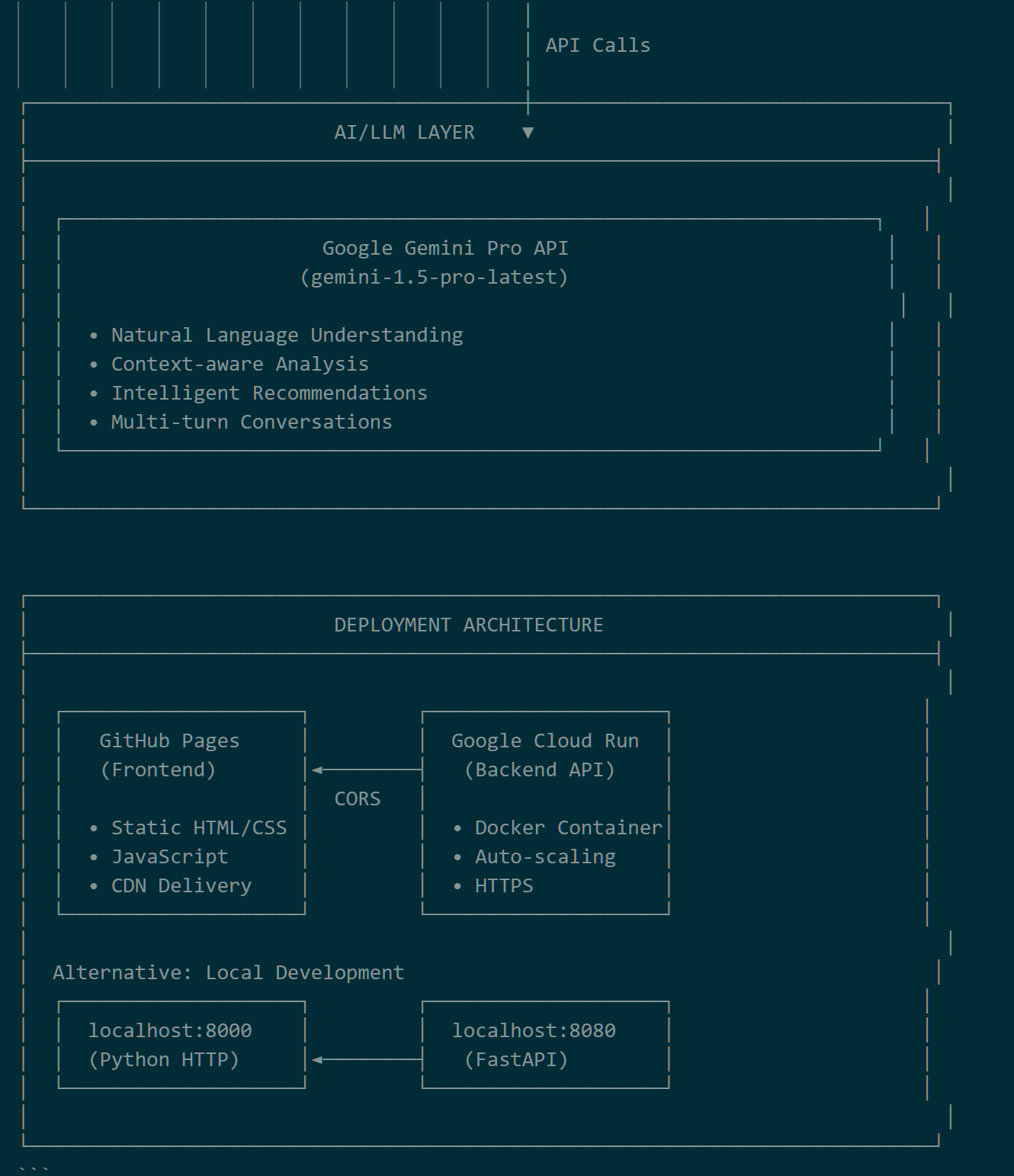
AI Model: Google Gemini Pro API powers all three agents
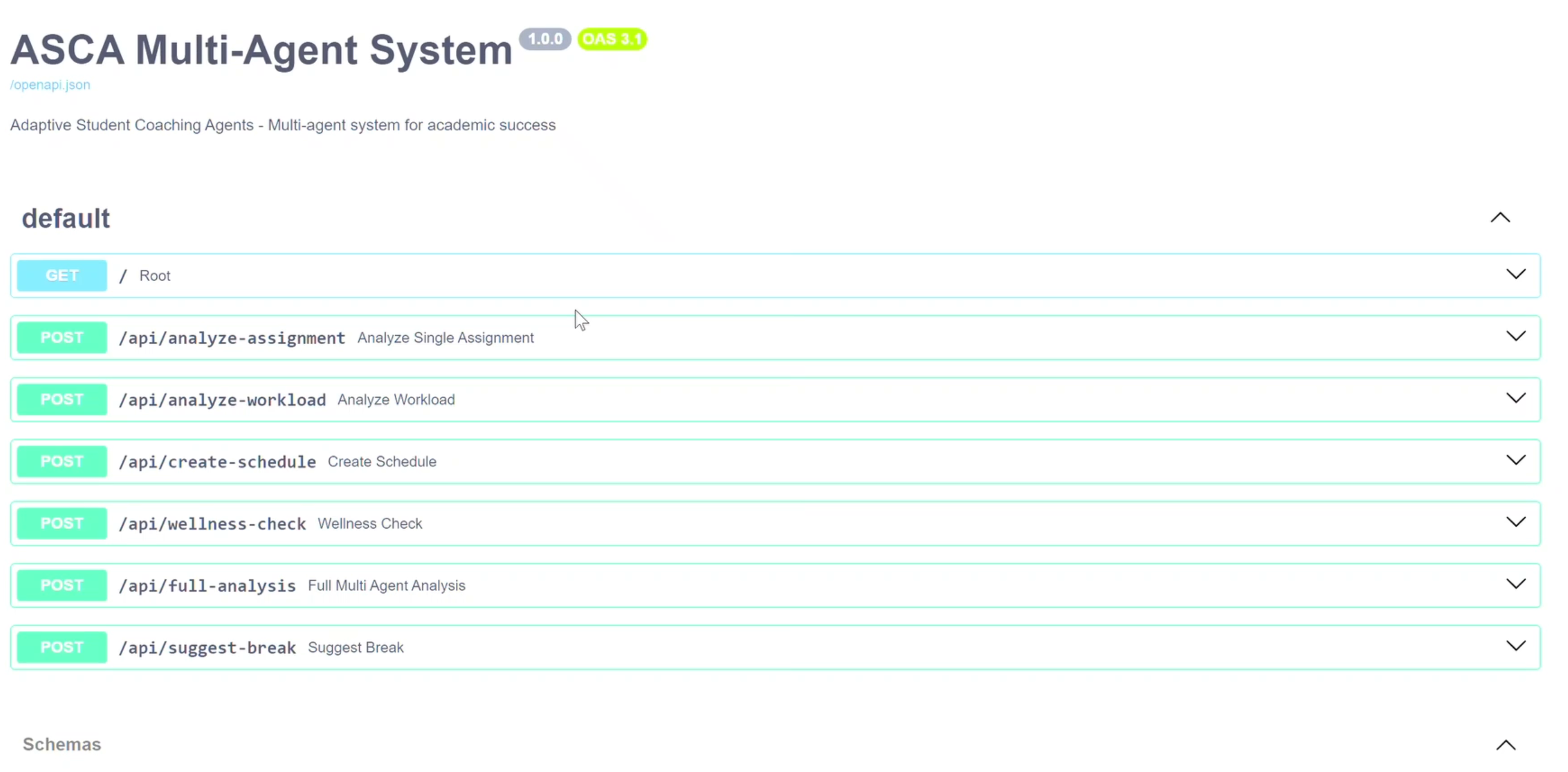
Backend: FastAPI (Python 3.11) with async/await for efficient processing
Agent Communication: Structured JSON message passing between agents
Deployment: Google Cloud Run with Docker containerization
Frontend: HTML/CSS/JavaScript for demo visualization
Each agent is implemented as a Python class with methods for analysis and communication. The FastAPI server orchestrates the workflow, handling requests and managing agent-to-agent message passing.
Challenges we ran into
Agent coordination: Ensuring agents passed the right data structure to each other required careful design of the message format
Gemini API integration: Handling API responses and parsing JSON from LLM outputs required robust error handling
Async processing: Managing asynchronous calls across multiple agents while maintaining proper workflow sequence
Fallback logic: Implementing default responses when API calls fail to ensure the system remains functional
Accomplishments that we're proud of
Built a collaborative multi-agent system where agents communicate sequentially, not just in parallel
Successfully integrated Google Gemini Pro API across all three agents
Created code with proper error handling and fallback mechanisms
Deployed to Google Cloud Run with complete Docker configuration
Solved a real-world problem affecting millions of students
Complete working demo with test scripts showing agent communication
What we learned
How to design effective multi-agent systems with structured communication protocols
Working with Google Gemini Pro API for complex analysis tasks
Implementing async workflows in Python with FastAPI
The importance of error handling and fallbacks in AI systems
Deploying containerized applications to Google Cloud Run
How AI agents can collaborate to solve complex, multi-faceted problems
What's next for ASCA - Adaptive Student Coaching Agents
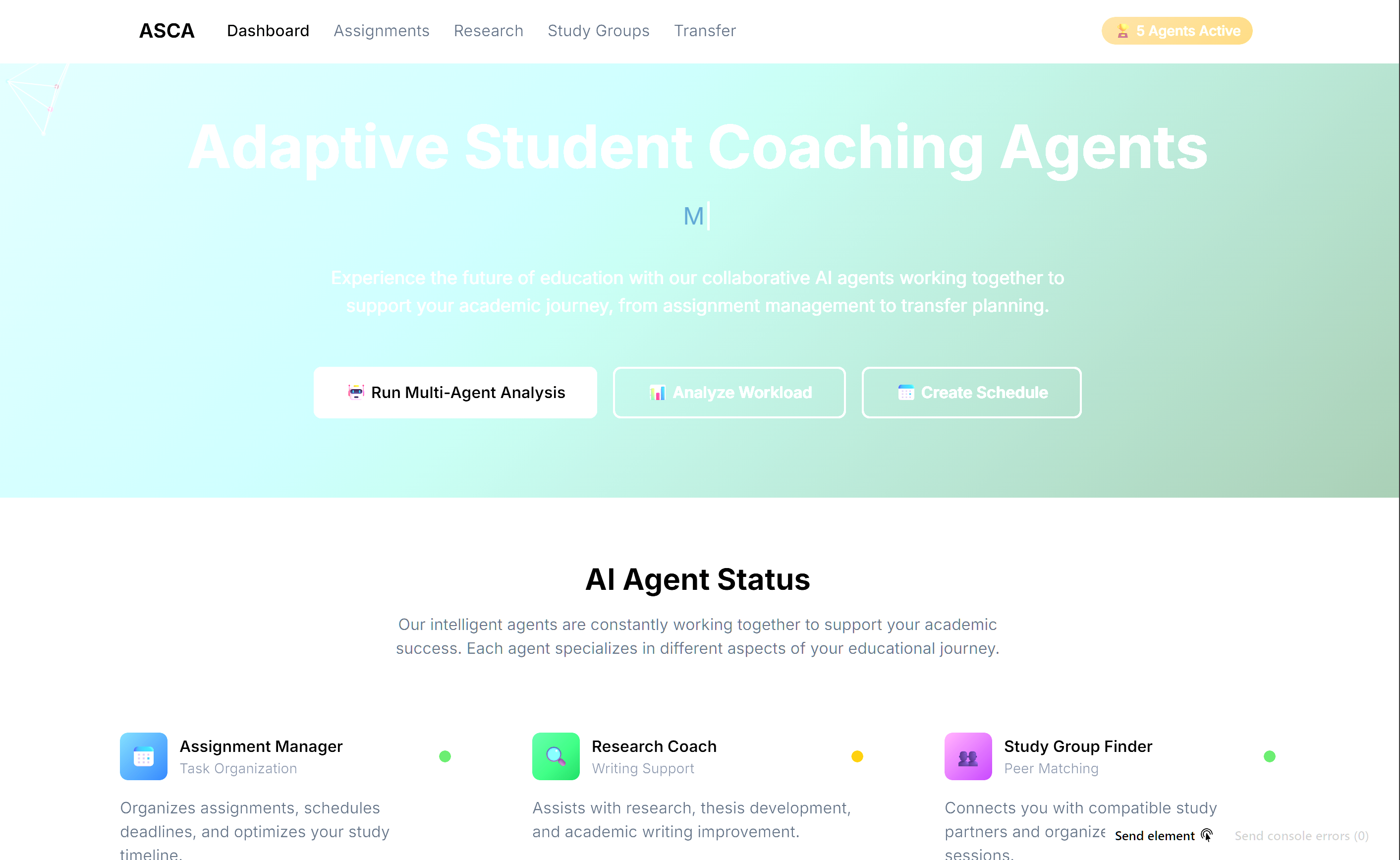
Expand agent capabilities: Add more specialized agents (Research Coach, Study Group Finder, Transfer Advisor)
Real-time integration: Connect with Canvas, Google Calendar, and other student platforms
Machine learning: Train models on student data to improve predictions and recommendations
Mobile app: Native iOS/Android apps for on-the-go access
Collaboration features: Enable students to share schedules and form study groups
Institution deployment: Partner with universities to provide ASCA to all students
Advanced analytics: Track long-term student success metrics and continuously improve recommendations
Built With
- css3
- docker
- fastapi
- google-cloud-run
- google-gemini
- html5
- javascript
- python

Log in or sign up for Devpost to join the conversation.