Inspiration
About 7.5 million U.S. students receive special education services, and roughly one in five of them has a speech or language impairment. For kids ages 8 to 12 who communicate with pictures instead of sentences, the hardest part of school isn't always the work. It's the playground, where nearly every way of making a friend assumes fast, fluent speech.
These children don't lack the desire to connect. They lack a way in. Existing AAC apps help a child ask an adult for water. None so far have helped two children talk to each other. We wanted to build that missing room.
What It Does
LittleHello is a parent-approved friendship app for children who use picture symbols.
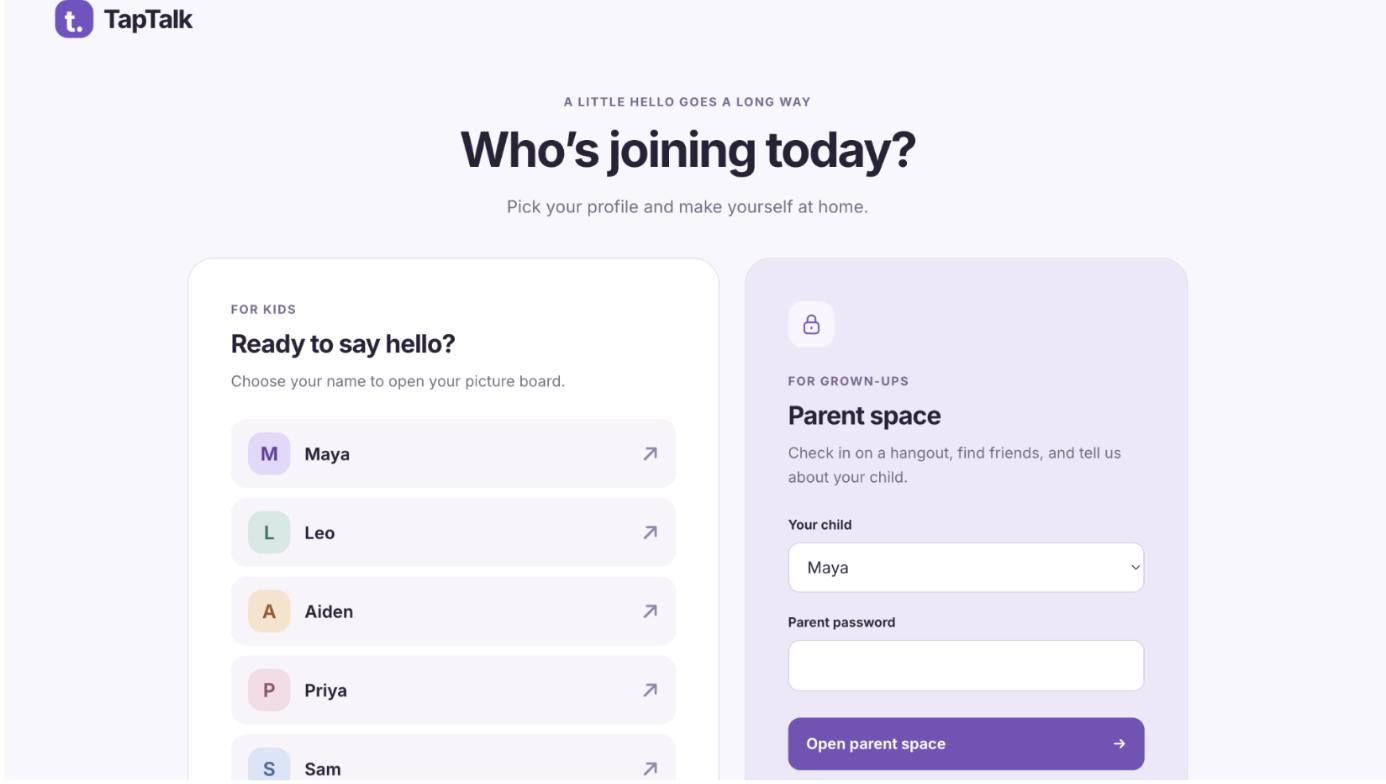
- A parent describes their child in a short chat. Claude turns it into a profile covering interests, communication style, and sensory needs. It never asks for a surname, school, or address.
- Claude finds a compatible friend, weighing communication and sensory fit above shared hobbies, and explains each match in plain language. Both parents must approve before a room opens.
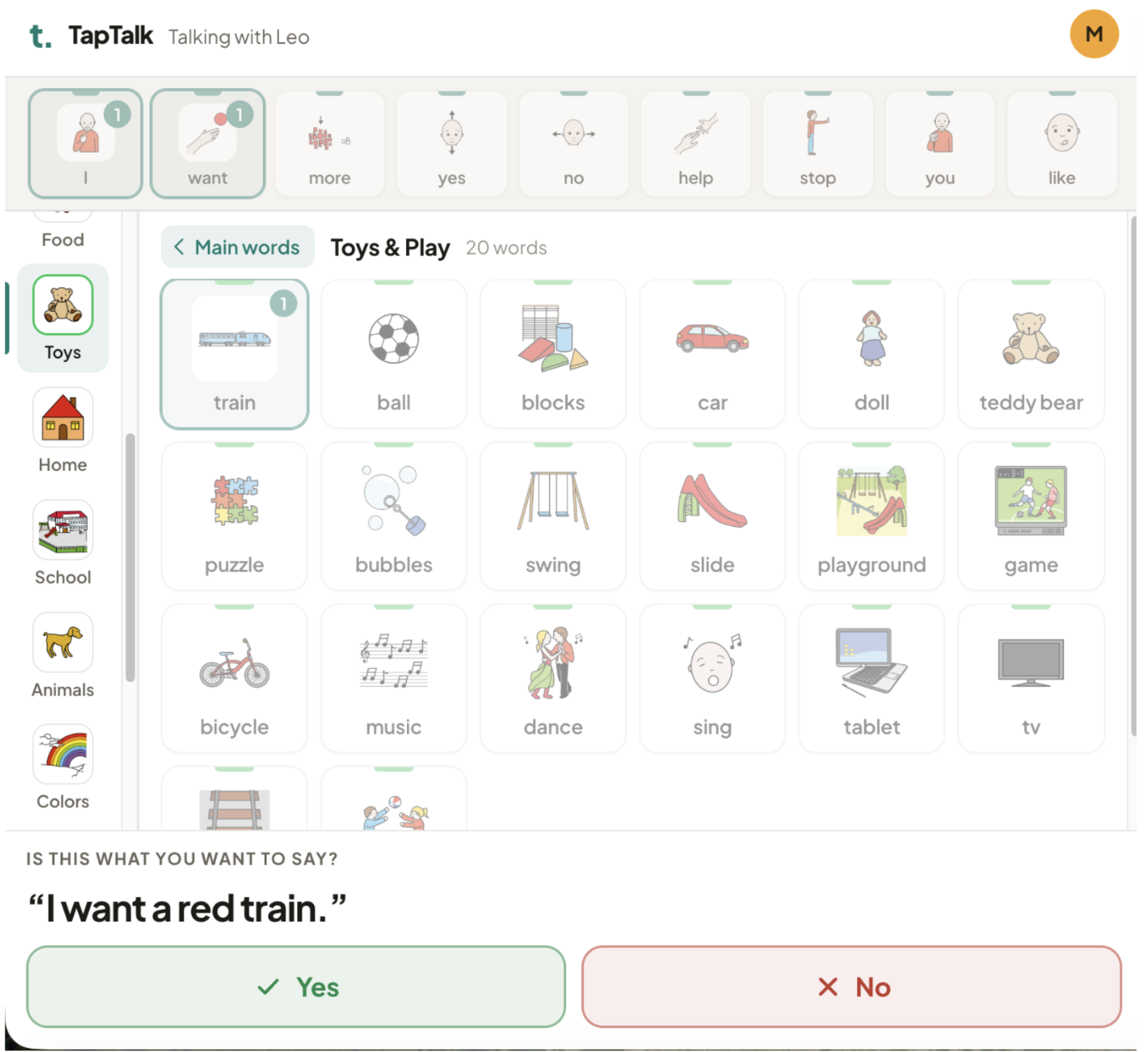
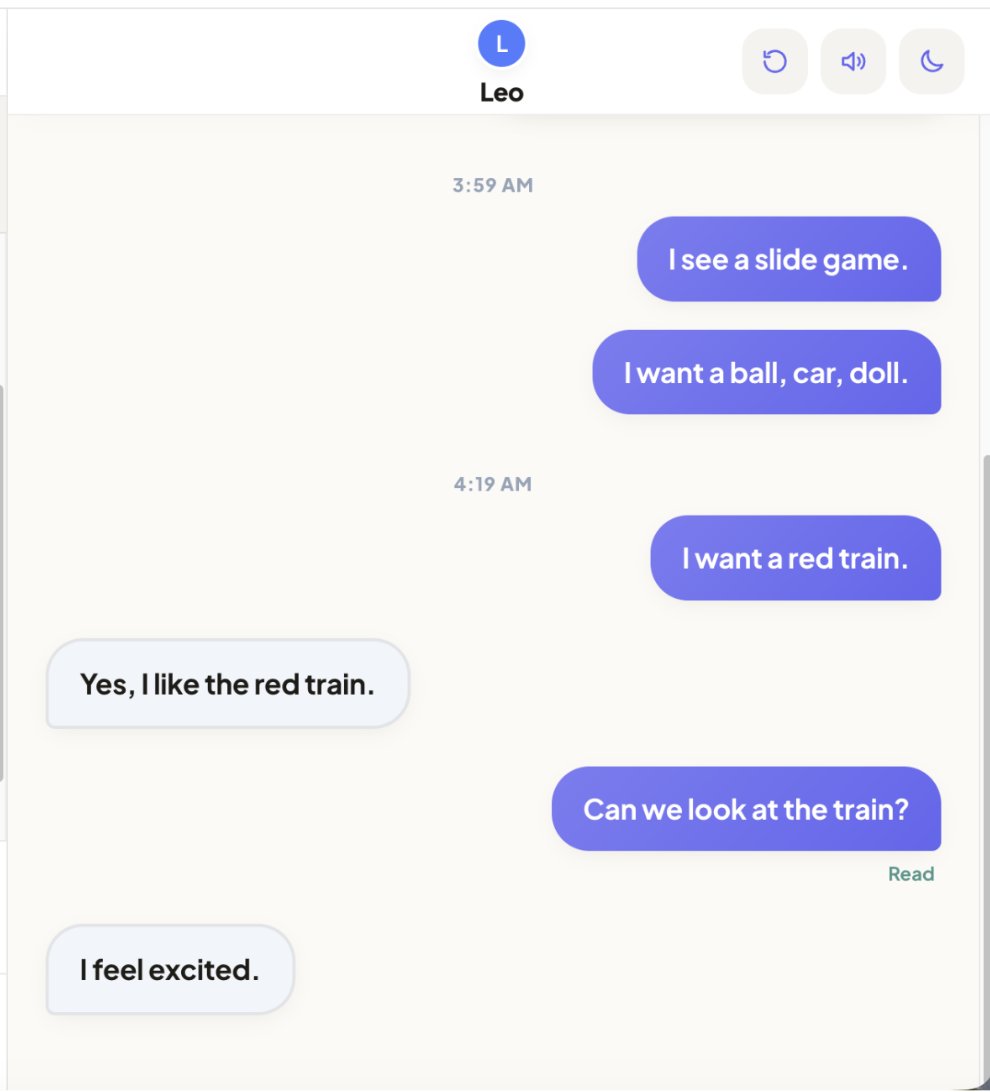
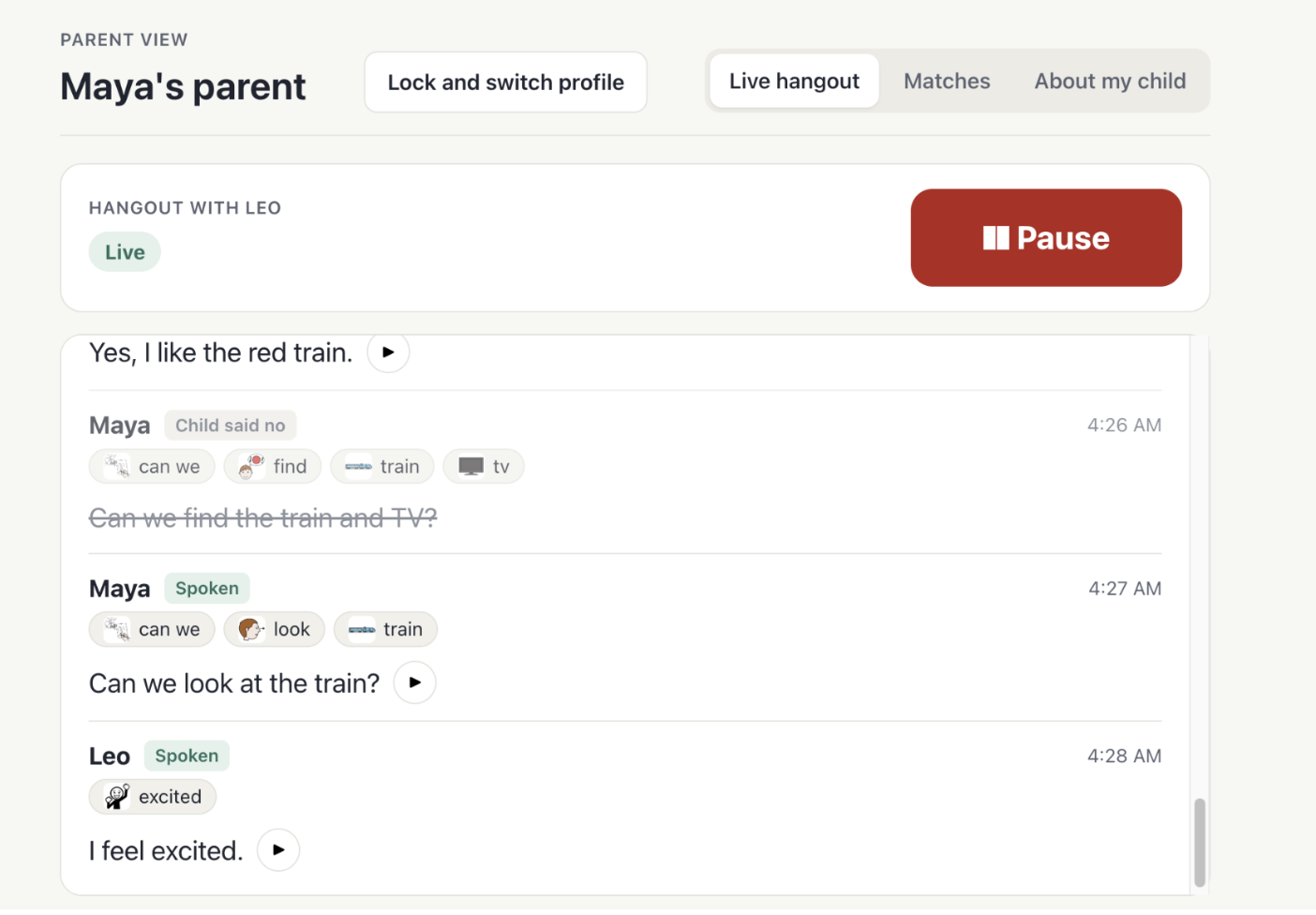
- The kids meet in a shared room. A child taps pictures from a board of 250 symbols. Cartesia turns the taps into one short, literal sentence. The child checks it and taps ✓ or ✗, which are purposefully the same size so saying no is always easy. Only then, after a safety check, does Cartesia speak it aloud on the friend's tablet in that child's own consistent voice.
- Parents stay in control. They follow a live transcript with pictures and can pause the room with one tap. Both children's screens go quiet instantly.
How We Built It
- Claude (Anthropic) powers the parent involvement, child pairings, and explanations. A fast model handles the in-room steps, and a stronger one handles matching.
- Cartesia focuses on symbol-to-sentence writing and safety moderation, turning each confirmed sentence into speech. Each child gets a stock voice for a consistent identity so we never have to clone a real child's voice.
- Convex is the backend. Live queries keep both kids' screens and the parent dashboard in sync, actions are the only place that call Claude and Cartesia, file storage holds the audio, and transactions guarantee a room can't open without both parents' approval.
- Frontend: React, TypeScript, and Vite, with Framer Motion. We designed the kid screen as a familiar messenger: a picture board on one side and a text chat on the other.
- Symbols: 250 pictograms from ARASAAC, with a permanent core-word row that never moves, so a child's hands learn where words live.
- Deployment: Deployed on Vercel and tested with Vitest.
Challenges We Ran Into
- Keeping the AI literal. AAC input is a handful of taps, and a model may flakily try to “improve” it. The same two taps, “red” and “train,” gave “I see a red train” while a child may have meant “I like red trains.” We configured the system and made the child's confirmation a hard gate.
- Safety that fails closed. If the safety check is down, the message is stopped and never voiced. We also wrote an evaluation set of threats to automatically block requests for private details and other unsafe or potentially dangerous messages.
- Scaling the vocabulary. We grew from 12 words to 250. That meant changing the backend rule so a child can send any valid word while keeping a personal quick-access list, and making IDs identical across the UI, the backend, and the database.
- Design. We went through several redesigns to get a conversation that feels like a real messaging app rather than a dashboard.
Accomplishments We're Proud Of
- Two kids can hold a real, spoken, two-way conversation without either one speaking a sentence.
- The child always has the final word, and parents always have the off switch.
- A genuinely large, organized vocabulary with consistent pictograms.
What We Learned
For this audience, restraint is a feature. The best things we built were the ones the AI doesn't do: it never speaks without a tap, never adds meaning, and never opens a room on its own.
We also learned how much work sits between “the model works” and “a child can use it”: fonts, tap sizes, audio unlocks, and tone.
What's Next
Everything in the demo is synthetic, with no real children's data. Our next step is validating LittleHello with speech-language pathologists and families who use AAC, adding a clinician view, and testing matching and sentence-building with real users before anything reaches a child.
Built With
- anthropic
- cartesia
- convex
- react
- typescript
- vitle

Log in or sign up for Devpost to join the conversation.