Inspiration
What it does
How we built it
Challenges we ran into
Accomplishments that we're proud of
What we learned
What's next for Asasanta Verify
Inspiration
Many businesses, especially fintechs, lenders, marketplaces, and digital service providers, struggle with customer verification, fraud prevention, and compliance. Manual verification processes are slow, expensive, and difficult to scale.
I wanted to build a solution that combines Artificial Intelligence with production-grade cloud databases to help organizations make faster and more reliable trust decisions. The goal was to create a platform that can automatically analyze customer information, generate trust scores, assess risk levels, and maintain compliance-ready records.
What It Does
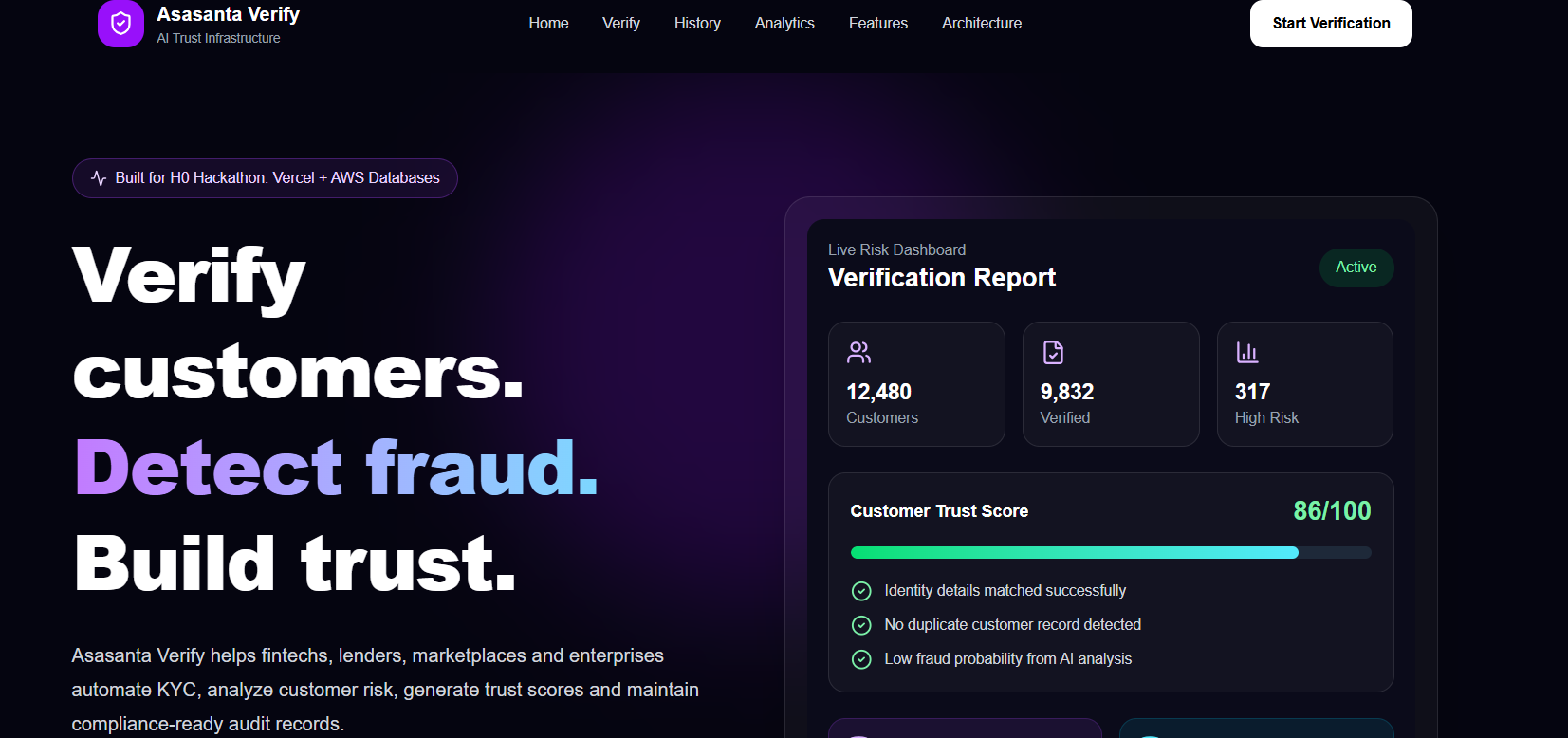
Asasanta Verify is an AI-powered trust infrastructure platform that automates customer verification and risk assessment.
The platform:
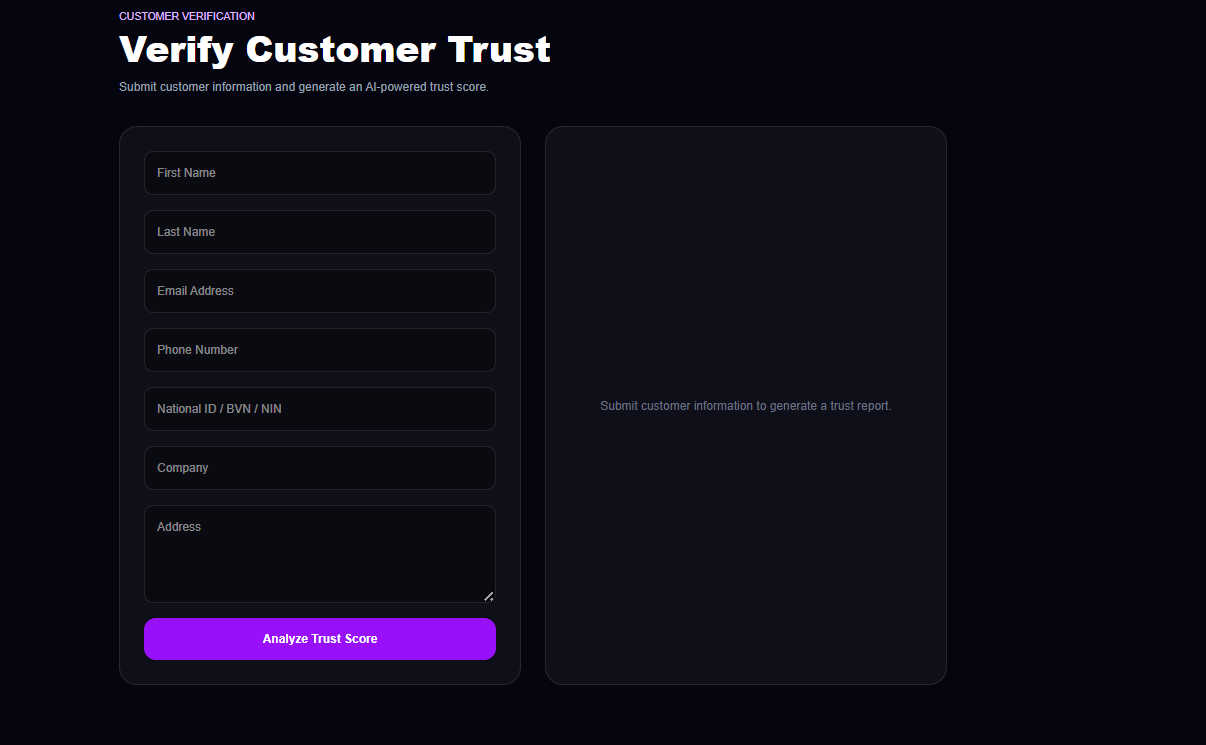
- Collects customer verification information
- Uses Gemini AI to analyze customer risk
- Generates trust scores and recommendations
- Stores customer profiles in AWS Aurora PostgreSQL
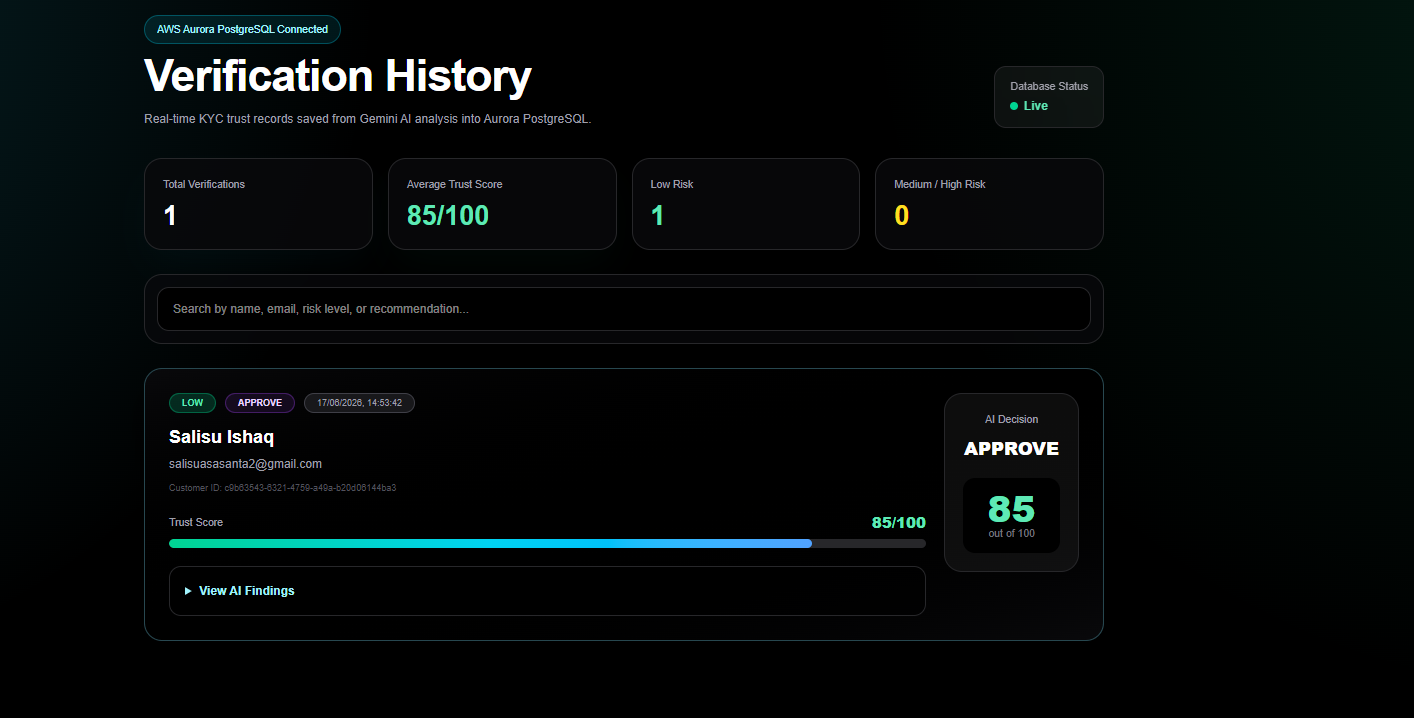
- Maintains verification history for compliance purposes
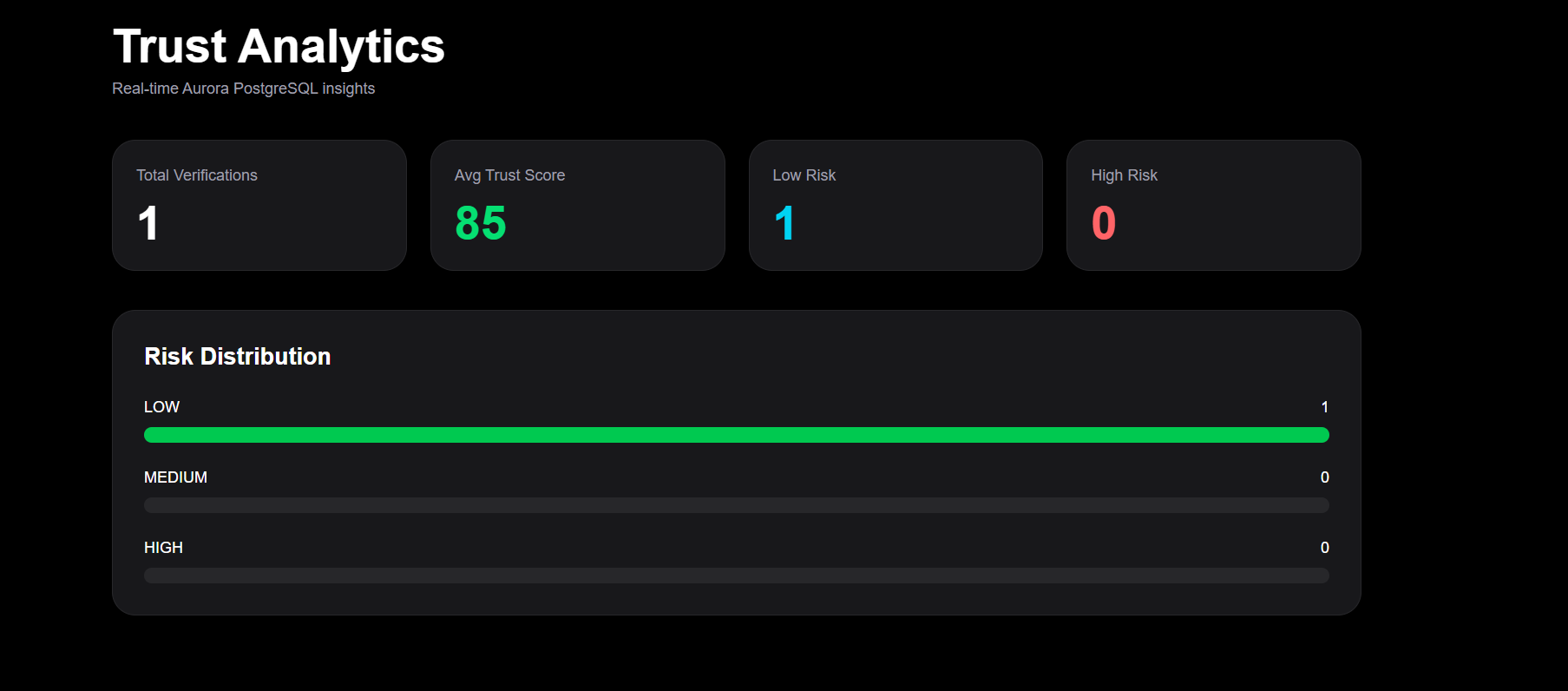
- Provides analytics and reporting dashboards
- Creates an auditable verification workflow for businesses
How We Built It
The application was built using:
- Next.js 16
- TypeScript
- Tailwind CSS
- Gemini 2.5 Flash
- AWS Aurora PostgreSQL
- AWS DynamoDB
- Vercel
The workflow is:
- Customer submits verification information.
- The verification API sends the profile to Gemini AI.
- Gemini AI evaluates risk indicators and generates a trust score.
- Customer records and verification history are stored in AWS Aurora PostgreSQL.
- Audit and event data are stored using DynamoDB.
- History and Analytics dashboards retrieve and visualize verification data.
AWS Database Architecture
AWS databases were intentionally chosen for different responsibilities.
Aurora PostgreSQL
Used for:
- Customer profiles
- Verification history
- Compliance records
- Structured reporting
DynamoDB
Used for:
- Audit logs
- Trust events
- Fast lookups
- Future high-volume activity tracking
This separation allows the platform to support both transactional workloads and scalable event-driven workloads.
Challenges We Faced
One of the main challenges was designing a practical architecture that demonstrates real-world usage of AWS databases rather than simply connecting a database to a demo application.
Additional challenges included:
- Designing the Aurora PostgreSQL schema
- Managing database connectivity and networking
- Integrating AI-generated verification results
- Building dashboards around live verification data
- Creating a scalable architecture suitable for production use
What We Learned
This project provided valuable experience in:
- Full-stack application development with Next.js
- Production database architecture using AWS Aurora PostgreSQL
- Combining AI workflows with persistent data systems
- Building scalable verification and compliance solutions
- Designing applications that can evolve from prototype to production
Future Roadmap
Future versions of Asasanta Verify will include:
- Multi-factor identity verification
- Document verification and OCR
- Continuous risk monitoring
- Blockchain-based verification proofs
- Enterprise workflow automation
- Advanced fraud intelligence models
Conclusion
Asasanta Verify demonstrates how AI-powered verification systems can be combined with AWS Aurora PostgreSQL, DynamoDB, and Vercel to create scalable trust infrastructure for modern businesses.
The result is a production-oriented platform that helps organizations verify customers faster, reduce fraud, improve compliance, and make data-driven trust decisions.
Built With
- 2.5
- ai
- amazon
- amazon-web-services
- api
- aurora
- css
- dynamodb
- flash
- gemini
- next.js
- node.js
- postgresql
- rds
- react
- rest
- tailwind
- typescript
- vercel


Log in or sign up for Devpost to join the conversation.