-
-
-
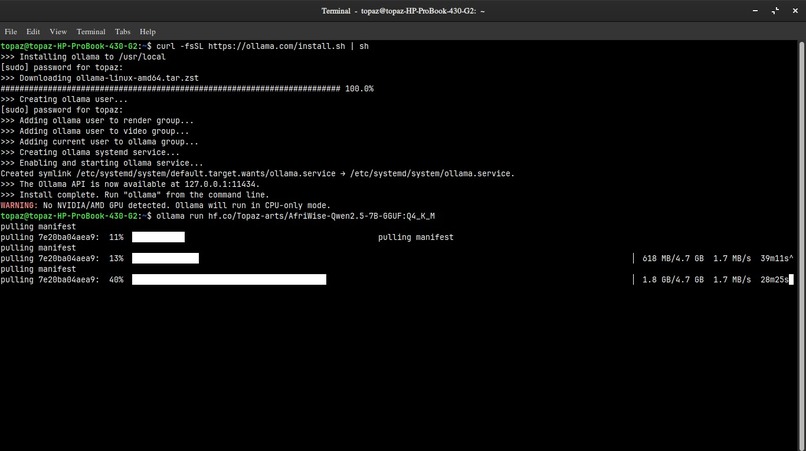
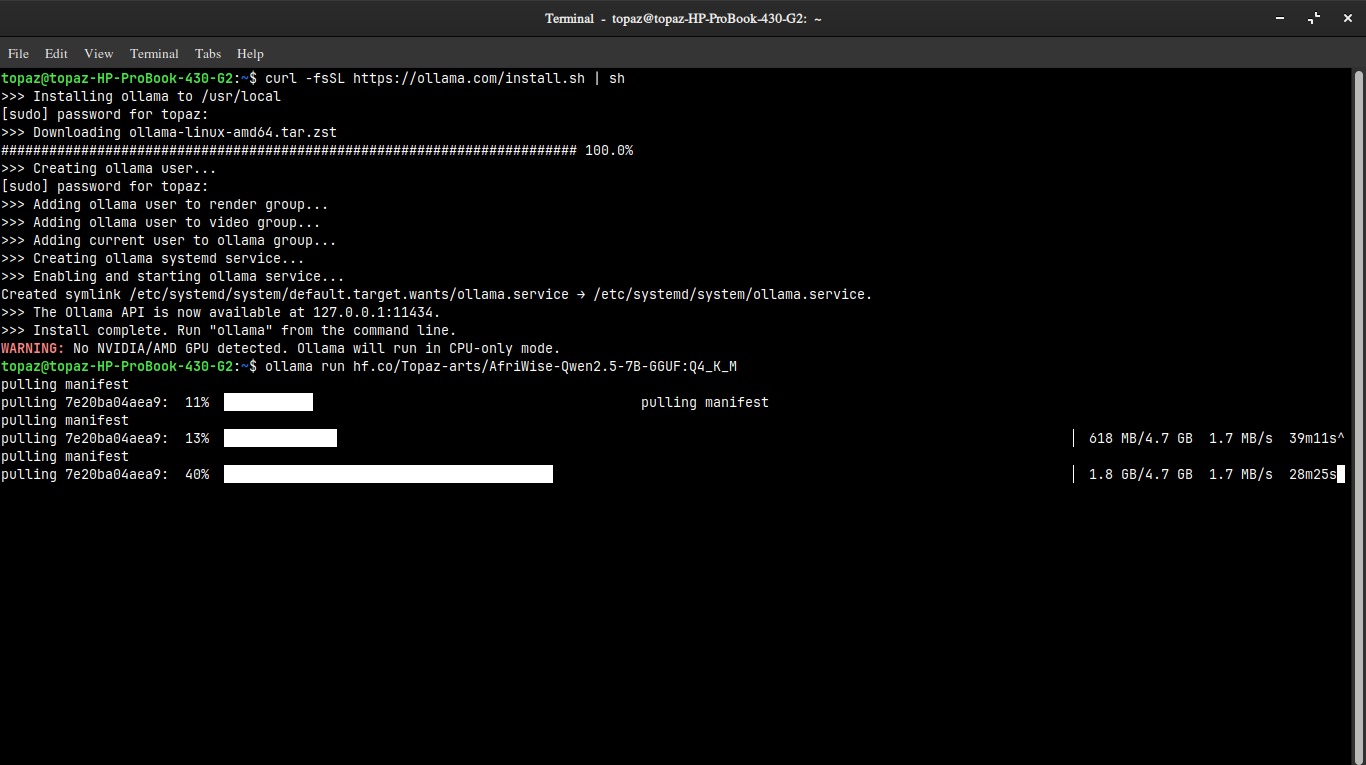
Pulling the model without the modelfile from huggingface
-

-
-

Inspiration
My grandmother died before I could speak Gbagyi well enough to have a real conversation with her.
I could see it in her eyes. She was dying to talk to me, her only grandson on my dad’s side. She wanted to tell me things, to just talk the way grandmothers do. But I barely spoke the language, and by the time I cared enough to try, it was too late.
That stayed with me.
I also started noticing adults around me struggling to relearn their own native languages as adults, feeling embarrassed that they had lost something that should have been theirs by birth. And then it hit me: AI is a good teacher. So I thought, why not let my own tribe teach me back?
What It Does
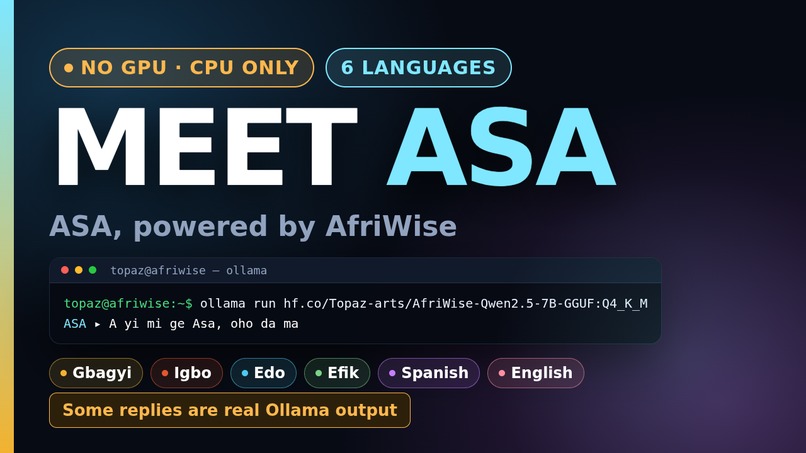
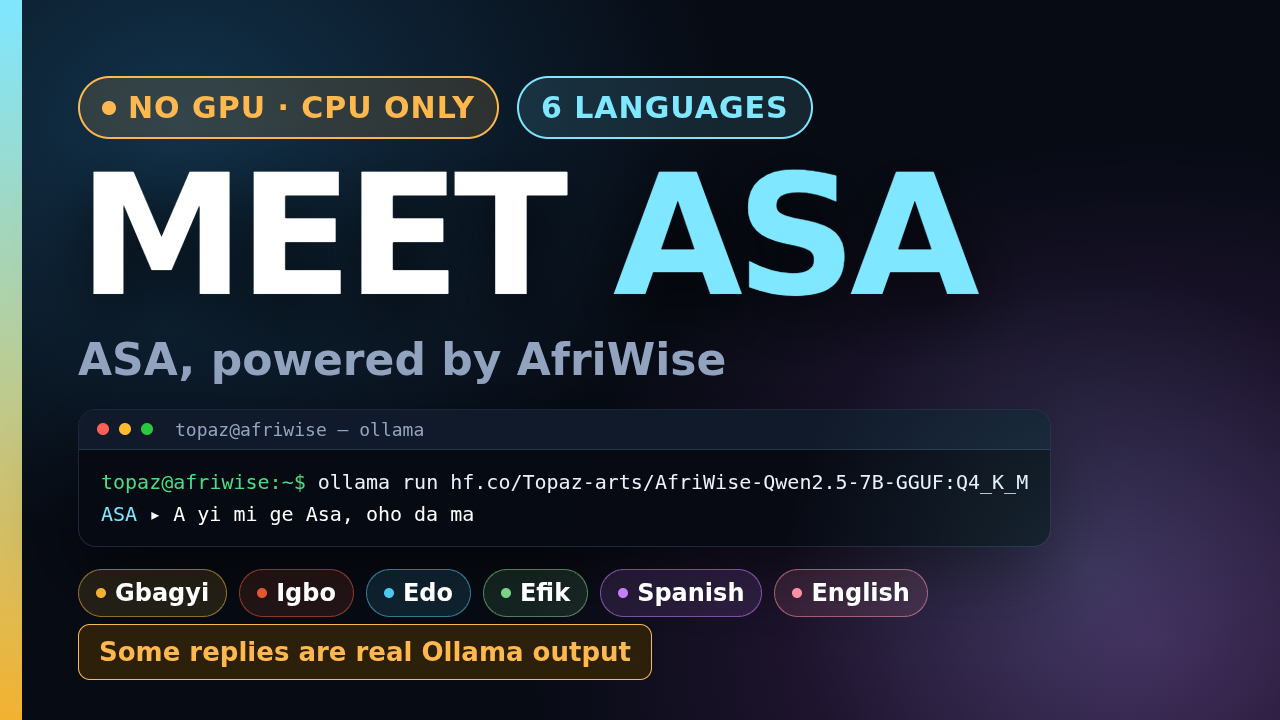
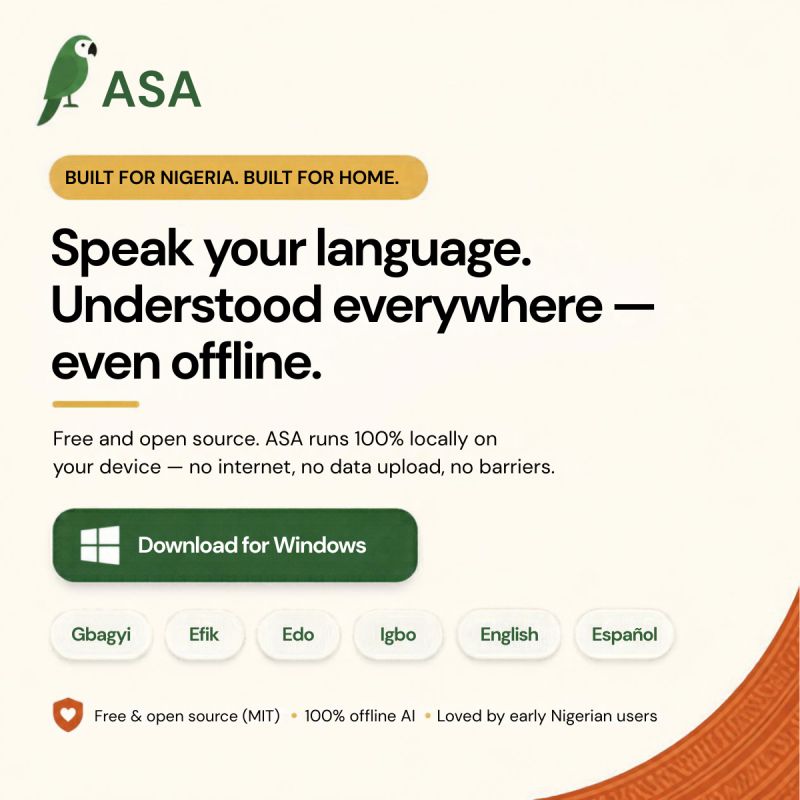
Like any other frontier model, ASA is built on Qwen 7B. It is designed for interaction, communication, lessons, translation, and even storytelling.
How We Built It
I used LoRA and Unsloth, imported the model from Hugging Face, and searched for resources literally everywhere I could: GitHub, Google Scholar, websites, web archives, books, native speakers, and even Hugging Face itself.
Challenges We Ran Into
The data was far from enough. I couldn’t get native speakers from Edo to confirm or assist with the training, so I had to use an Edo translation tool to translate hundreds of sentences and words in order to reduce the AI’s hallucinations.
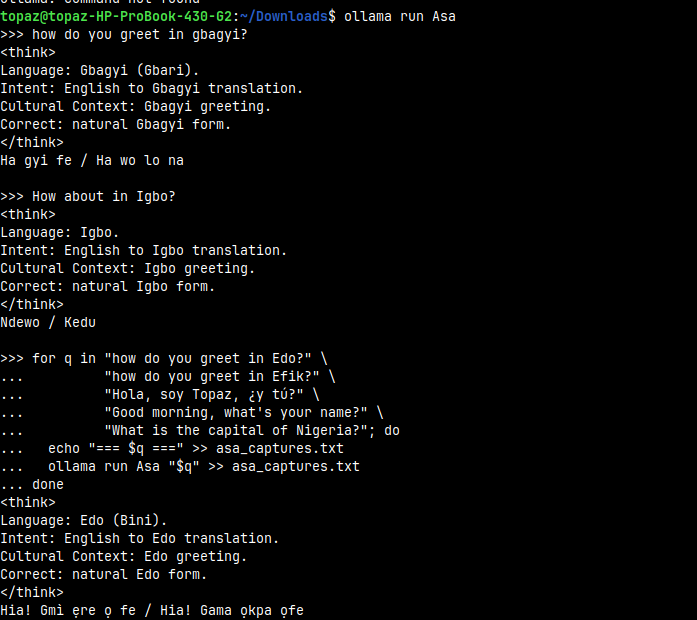
Some of the available language materials were mixed with Gbari, and the two are completely different languages. This made it difficult for the model to distinguish between them, causing it to hallucinate random words. Because of that, I added a strict system prompt instructing it not to invent new words.
Edo and Igbo also seemed similar in some areas, so the AI would sometimes mistake Igbo words for Edo words. That made issues like this even more difficult to solve.
I also lost my entire codebase when my computer crashed. I needed a lot of GPU power, but my laptop only had 128 MB. I still wanted to complete the project, though, so I discovered Kaggle and Google Colab and used their cloud storage and computing resources. I couldn’t afford much, so I had to improvise a lot.
I faced many more challenges than I can remember, but there were a lot of them.
Accomplishments We’re Proud Of
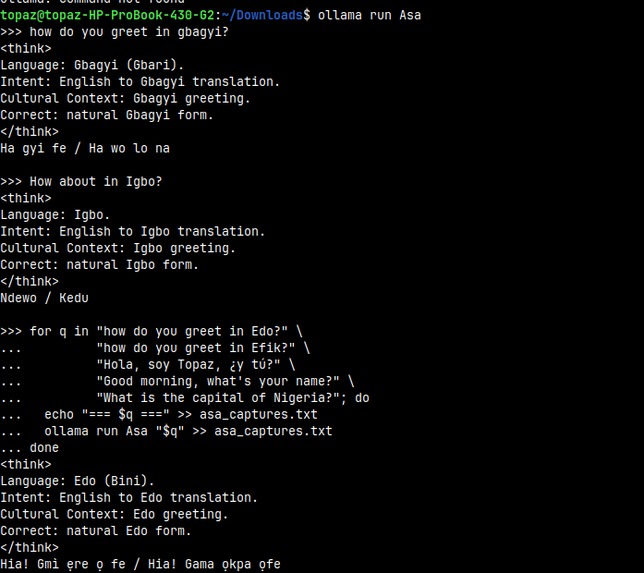
ASA worked out. I had it speaking my language, and I was so glad. I also had it speaking and understanding Igbo.
When I asked it questions about physics, it responded clearly in the language I used: “I don’t know the words to explain this concept. Please contact a native speaker with knowledge in this area.”
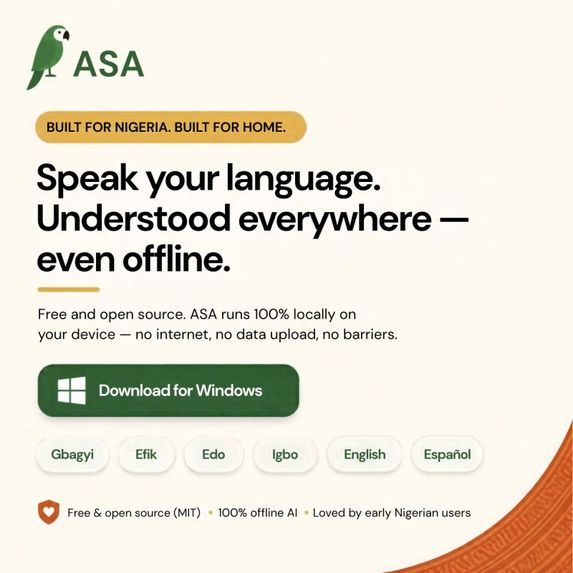
It also understood English and even Spanish. Most importantly, it runs well on my potato laptop, offline, without a GPU.
What We Learned
Kaggle is better than Colab.
No matter what, don’t give up on your dreams, no matter how big or impossible they seem. Training an AI can take a week, but it’s worth it.
Sometimes, you may not need to spend money on everything. Other times, though, money can limit what you’re able to do. You just have to keep improvising.
Do things for others. Solve problems that matter. Take your dreams further, but don’t lose track of the original goal.
What’s Next for ASA
I’ll be adding six more Nigerian languages, including Yoruba, Hausa, Igala, and Fulfulde.
Because… why not?
No one else is doing it.
Built With
- jupyter
- kaggle
- lora
- python
- qwen
- unsloth

Log in or sign up for Devpost to join the conversation.