-
-
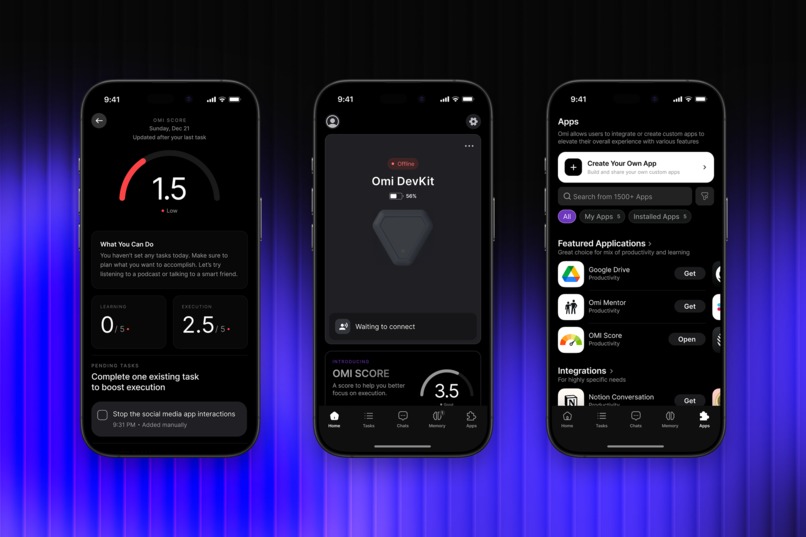
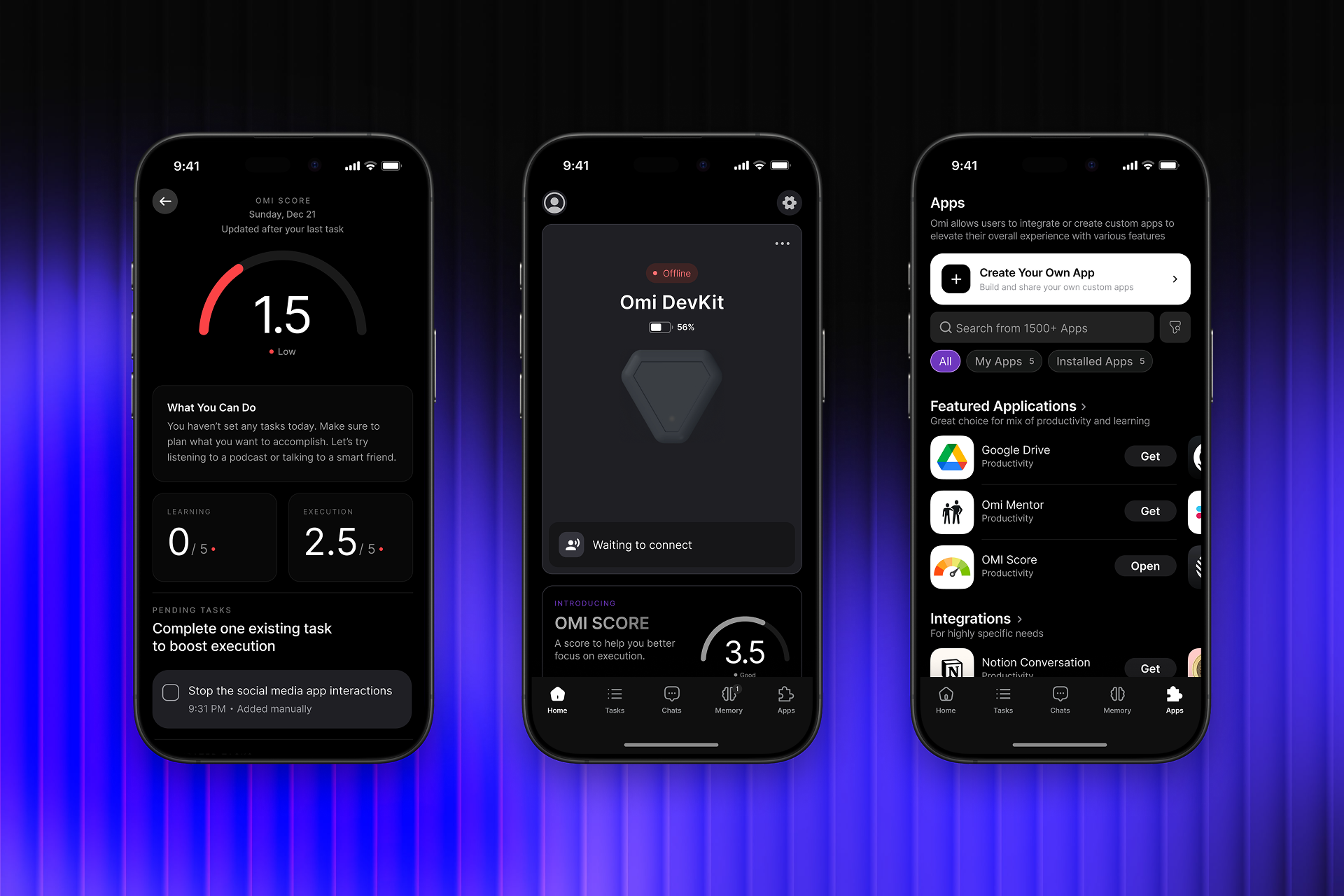
Product Mockups (from left to right: OMI SCORE, Home Page, Marketplace UI)
-
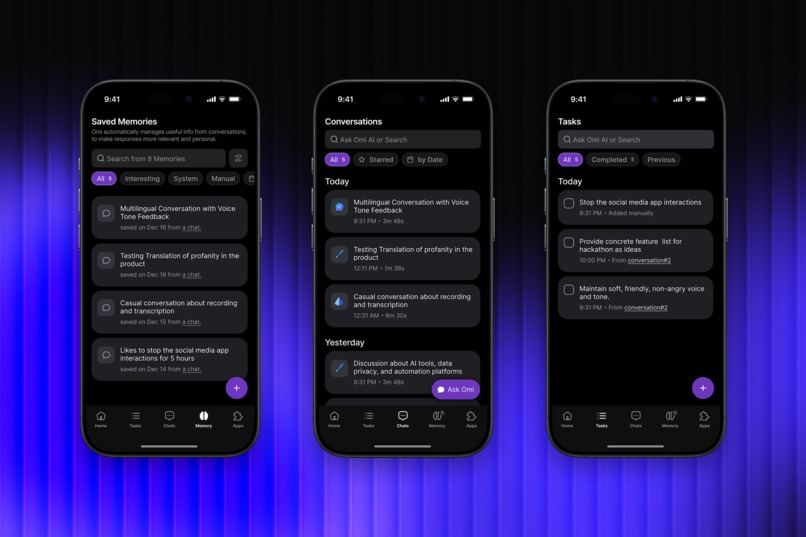
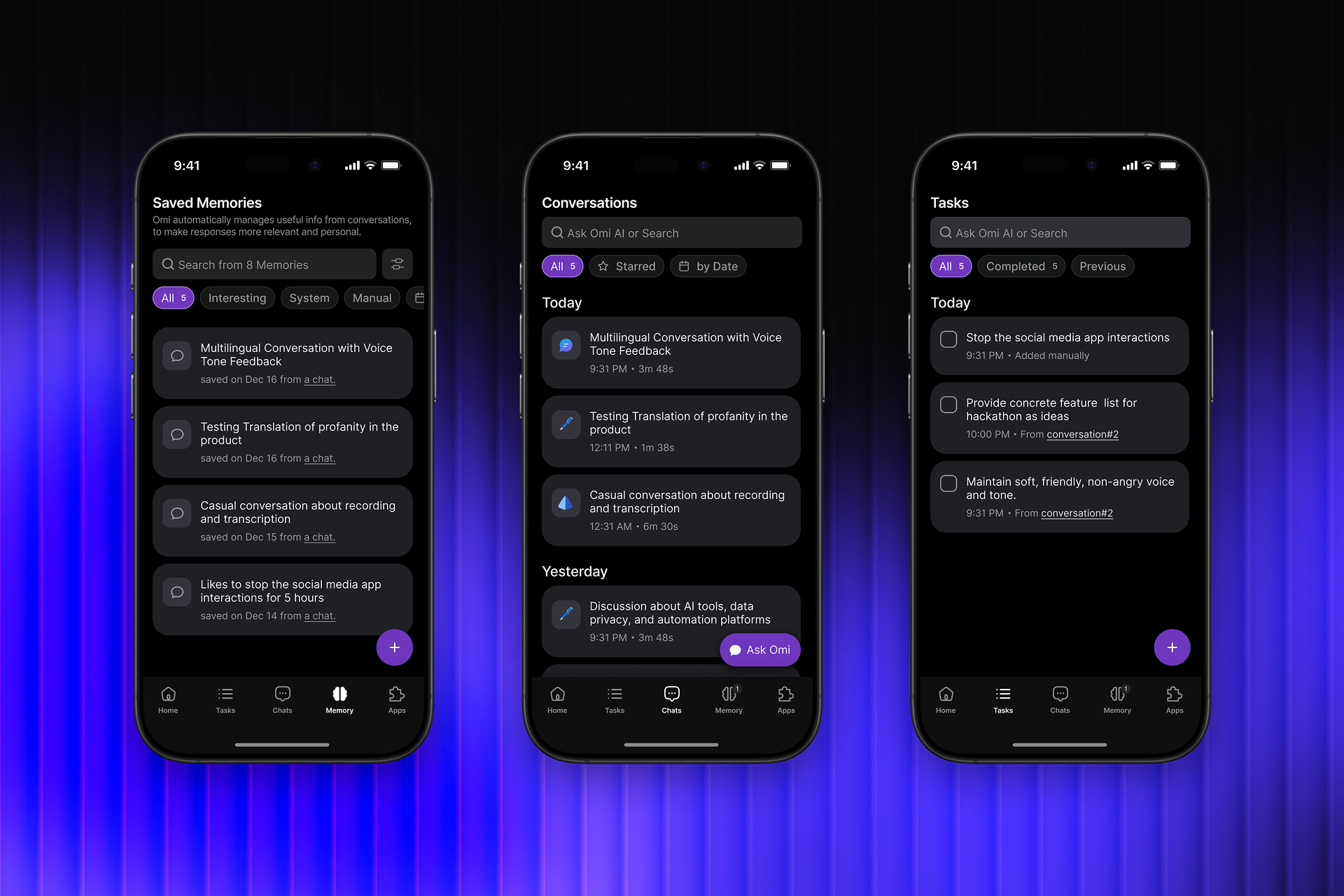
Product Mockups (from left to right: Memories page, Conversations page, Tasks page)
Inspiration
Omi is a powerful product, but during my conversations with the founder, one thing became clear: For consumers, this app without guidance feels overwhelming.
The app today does a lot extremely well: recording, transcription, task extraction, scoring, mentoring. But these capabilities were fragmented across the experience, making Omi feel more like a technical system than a daily companion.
This project started with a single question: How might Omi feel intuitive, guided, and habit-forming for everyday consumers..... without losing its technical depth?
The Track Challenges my product addresses:
- https://github.com/BasedHardware/omi/pull/3790
- https://github.com/BasedHardware/omi/issues/3121
- https://github.com/BasedHardware/omi/issues/3577
What it does
This project reframes Omi’s core experience around clarity, execution, and guidance by:
- Reducing onboarding to 3 high-intent steps to minimize drop-off
- Reframing the home experience to clearly communicate system state and next actions
- Elevating OMI Score from a secondary feature into a core, visible driver of behavior
- Aligning tasks, conversations, and scoring into one coherent execution loop
The goal was to make existing strengths feel obvious and useful (but for non-technical consumers as well)
How I built it
This was a design-led sprint, focused on product thinking rather than production output.
My approach:
- Founder conversations to understand 2-year product vision
- Heuristic analysis focused on cognitive load and consumer usability
- Rapid iteration on onboarding, home, and tasks experiences
- Focusing on behavioral framing
- Design decisions grounded in habit-formation and execution psychology
Challenges I ran into
- Balancing technical power vs consumer simplicity
- Avoiding feature bloat while still respecting Omi’s depth
- Making OMI Score feel motivating
- Creating guidance without making the product feel restrictive
Accomplishments that I'm proud of
- Reduced onboarding friction while increasing clarity
- Successfully repositioned OMI Score as a core product pillar
- Improved visibility into tasks, execution, and system state
- Created a more consumer-friendly mental model of Omi
- Aligned closely with founder vision rather than personal preferences
Most importantly, my work did not redesign Omi... it simply clarified it.
What I learned
- Execution is the clearest behavior-change promoter
- Guidance builds trust faster than flexibility
- Small structural changes can unlock large perception shifts
What’s next for us
If this were taken further, the next steps would be:
- Validate design decisions with real user behavior
- Measure task completion rates and daily engagement
- Also focus on Mentor Mode to a personalized, adaptive layer with OMI Score
- Explore habit-forming nudges tied to OMI Score trends
Built With
- figma

Log in or sign up for Devpost to join the conversation.