-
-
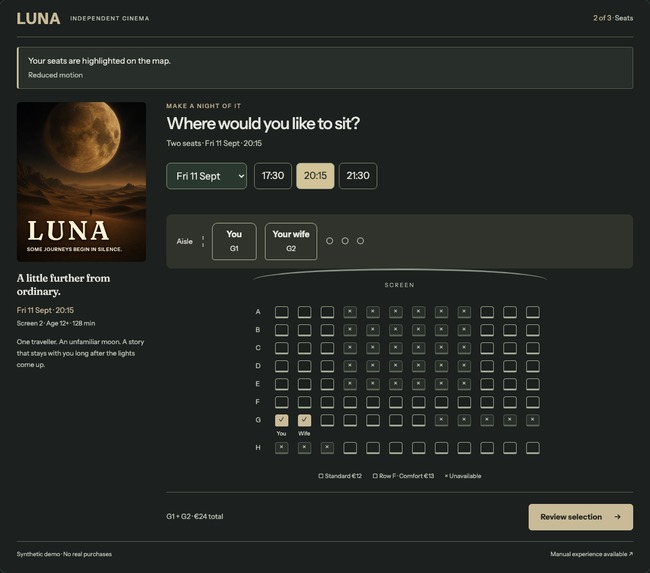
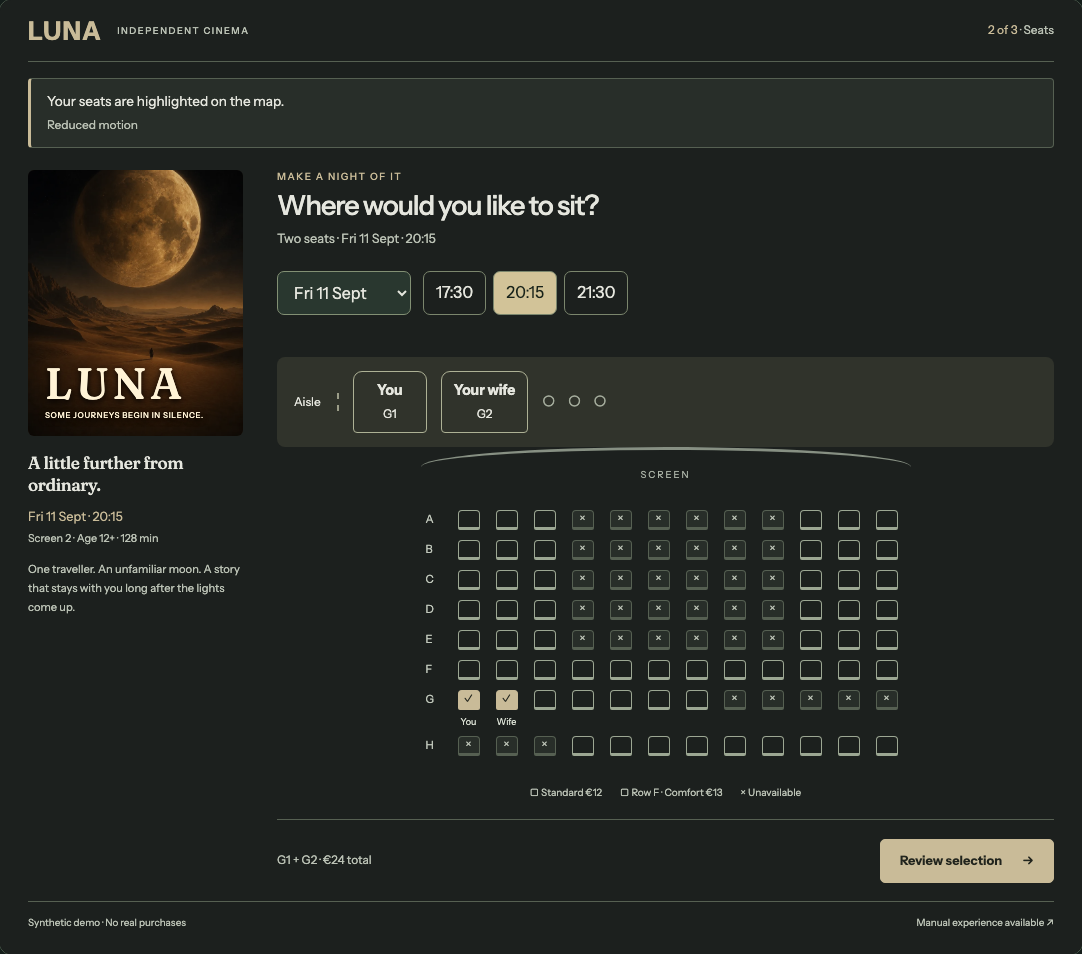
A calm cinema view. Two seats together, with Alex at the aisle. The person can change and confirm the choice.
-
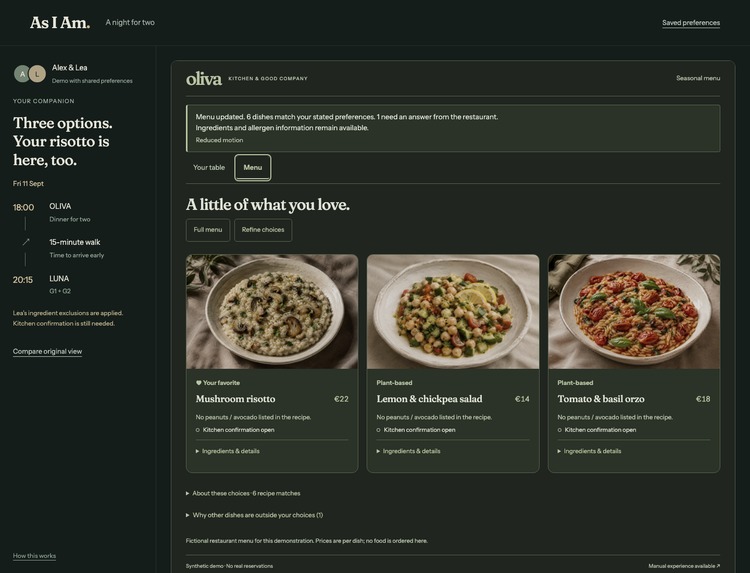
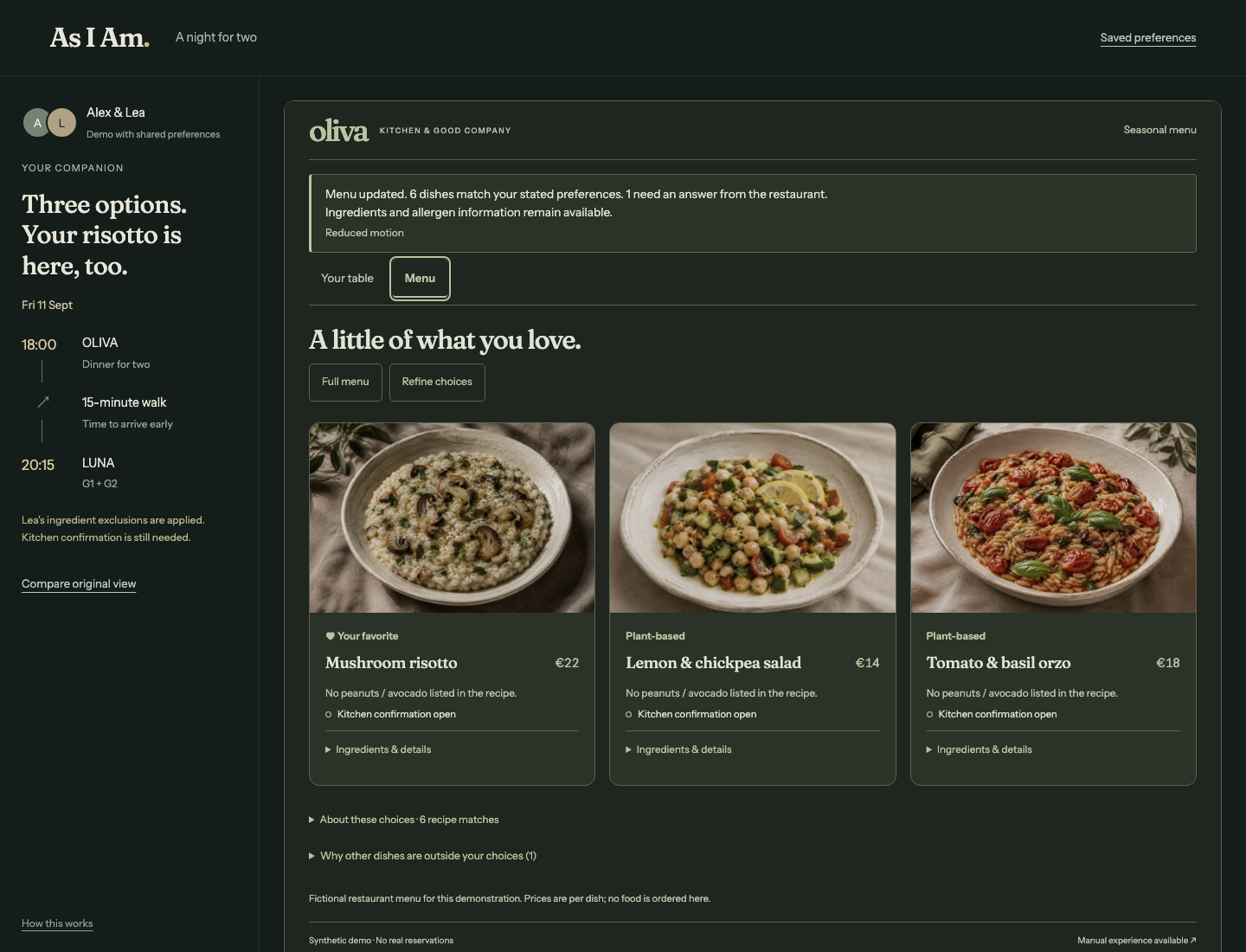
Dinner before the film: three pictured dishes, including a favorite. Ingredient exclusions and kitchen questions stay visible.
Inspiration
“Plan a movie night for us next week. Dinner first would be lovely.”
It is a small request, but the websites involved can ask a lot of someone: bright screens, moving content, crowded controls, a seat map to navigate and a menu to check. Having to explain your access needs again at each step adds more work.
I wanted to show a different kind of assistance. An agent should be able to use preferences you have chosen to share, make the page easier for you to use and stay alongside you when you make a decision.
What it does
The demo follows Alex and Lea, a fictional couple with shared example preferences. Alex has a migraine today and wants his familiar calm view. He prefers an aisle seat beside Lea. She has explicitly shared peanut and avocado allergies.
The cinema switches to dark, low-glare, still visuals. The agent finds a 20:15 showing next Friday and two seats with Alex at the aisle. Alex asks to move one row back; the pair moves together, keeping that arrangement. He reviews and confirms the demo tickets himself.
Dinner comes next. An 18:00 table leaves time for a 90-minute meal, a short walk and arrival before the film. Three pictured dishes replace a long list, including Alex’s favorite mushroom risotto. Ingredient exclusions remain visible, and uncertain kitchen information stays a question. Alex can inspect the full menu, change the proposal and confirm the table.
Why WebMCP
Personal context becomes useful when an agent can act on the page. WebMCP exposes what each site supports: display changes, rendered measurements, available seats, dinner calculations and menu information. The agent can also ask the restaurant to show a smaller selection in its own interface.
Each site owns its design and booking rules. The agent makes supported requests; the person sees the result. A display receipt carries only functional preferences between the venues. Names, diagnoses, allergies and booking details are kept out of that receipt. Final booking confirmation stays with the person.
How I built it
React, TypeScript and Vite power two participating venues. Their tools use
document.modelContext.registerTool, with validated inputs and shared handlers
for the visible interface and agent calls. The hosted version has separate cinema
and restaurant pages on one HTTPS origin.
The home experience is a labelled preset walkthrough. A real external agent can read the supplied example context and call the native tools directly. Both paths have been tested on the deployed site; the repository includes reproducible inputs and results.
What I learned
The most useful moment is a small correction: “one row further back.” Assistance should preserve what matters while making that change easy. I also learned to separate a supported preference from a promise: calm visuals are not a treatment, and matching recipe ingredients is not an allergy-safety guarantee.
This is a working prototype for participating sites, with synthetic bookings and no production memory service. Validation with disabled participants is still ahead. The next step is learning which adaptations help people complete their own tasks.
Built during the challenge
The adaptive contract, participating websites, native tools, tests and demo were built during the submission period. The repository began on September 1, 2026. Existing building blocks include React, TypeScript, Vite, Fontsource, Vitest, Playwright and axe-core. Code and generated demo artwork are MIT licensed; fonts retain their own license notices.
Built With
- axe-core
- css
- playwright
- react
- typescript
- vite
- vitest
- webmcp

Log in or sign up for Devpost to join the conversation.