Inspiration
Understanding a lecture in a foreign language can be challenging. Students have to listen, translate, and take notes all at the same time. I plan to study in China next year myself, so I am well aware of the potential language barriers.
What it does
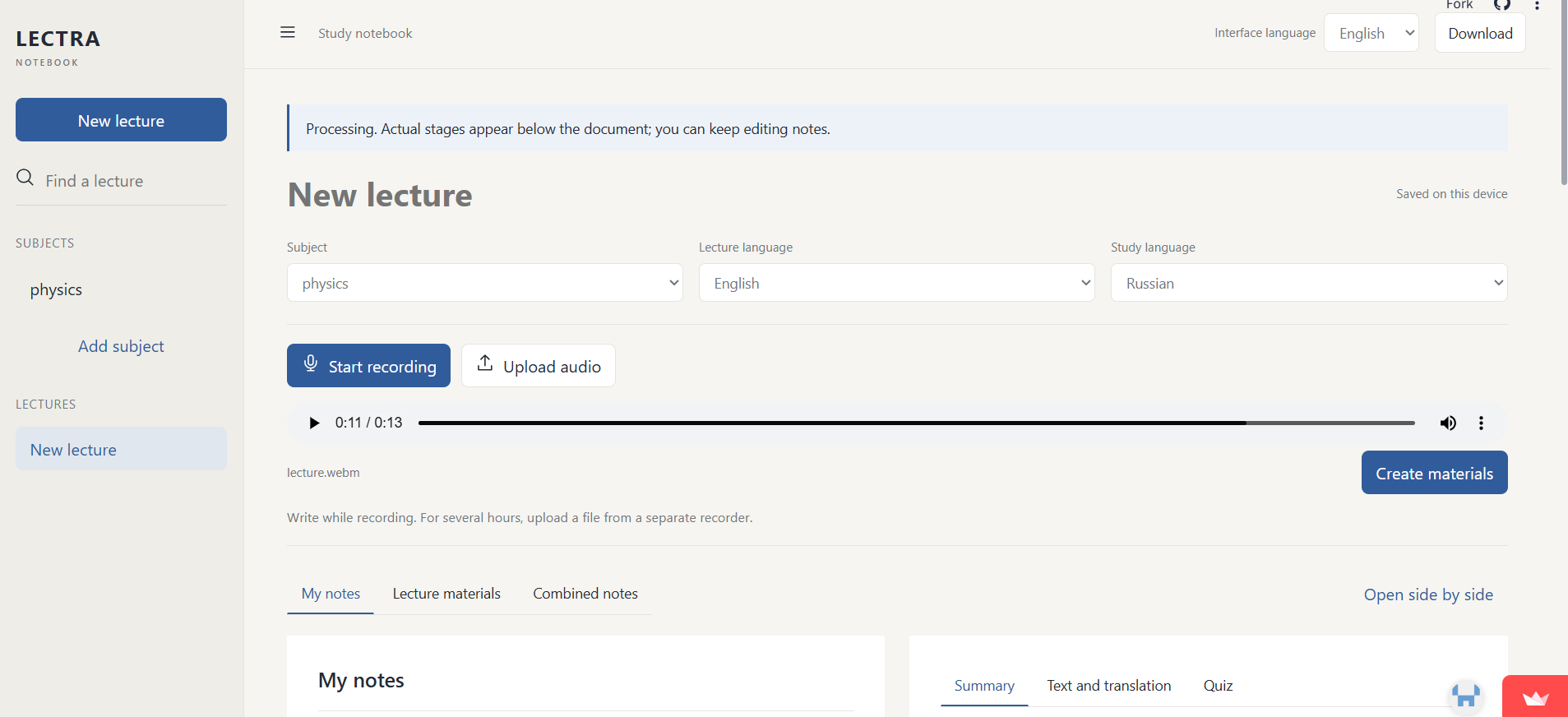
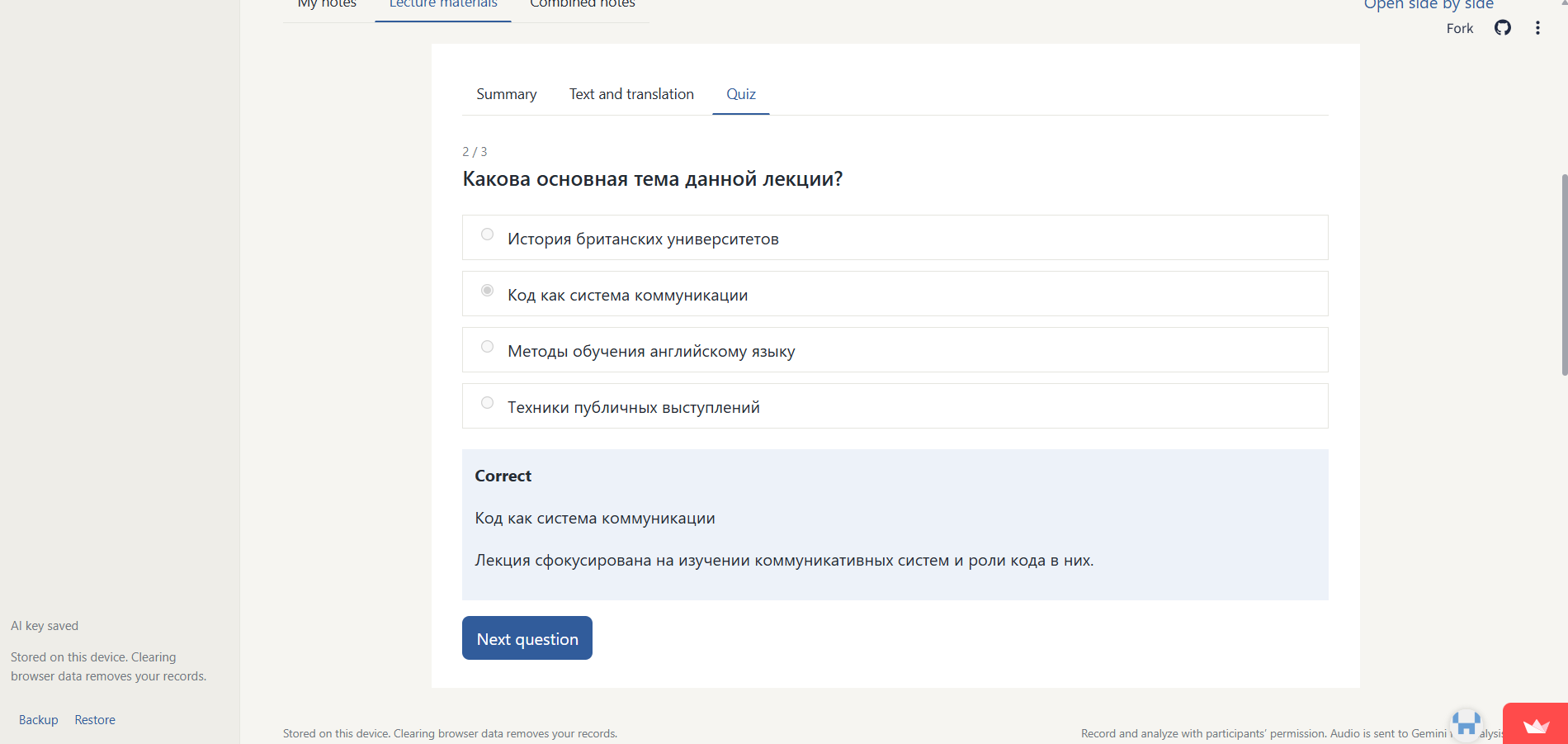
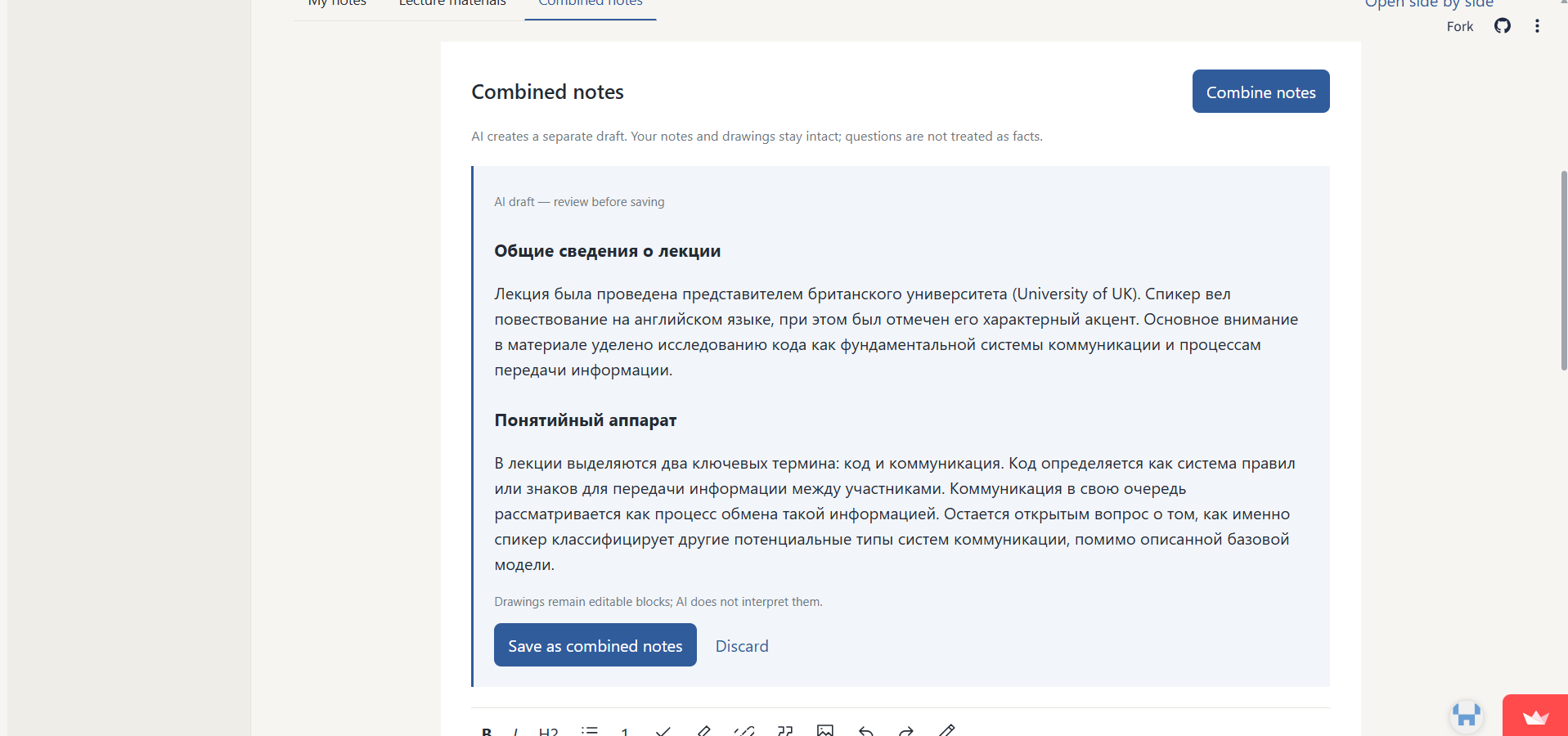
LECTRA AI was created to help students study lectures delivered in English, Chinese, and Russian. LECTRA AI transforms recorded lectures into study materials. Users can record or upload audio, select a language, and generate a transcript complete with translations, summaries, key definitions, presentation slides, and a short quiz. It also suggests related topics and search queries for further reading and video viewing.
How we built it
The application is built using Python and Streamlit, while Google Gemini handles audio transcription, translation, and the generation of study materials. FFmpeg prepares the audio and splits long recordings into smaller segments. Presentations are exported using python-pptx. The code is hosted on GitHub, and the app is deployed on Streamlit Community Cloud.
Challenges we ran into
Key challenges included processing long recordings, managing API limitations, and other technical hurdles.
Accomplishments that we're proud of
We are proud that it can help students to make their studies morwe convenient
What we learned
This project helped me learn about structured AI responses and multilingual interfaces, as well as the importance of clear error messages and thorough testing.
What's next for LECTRA AI
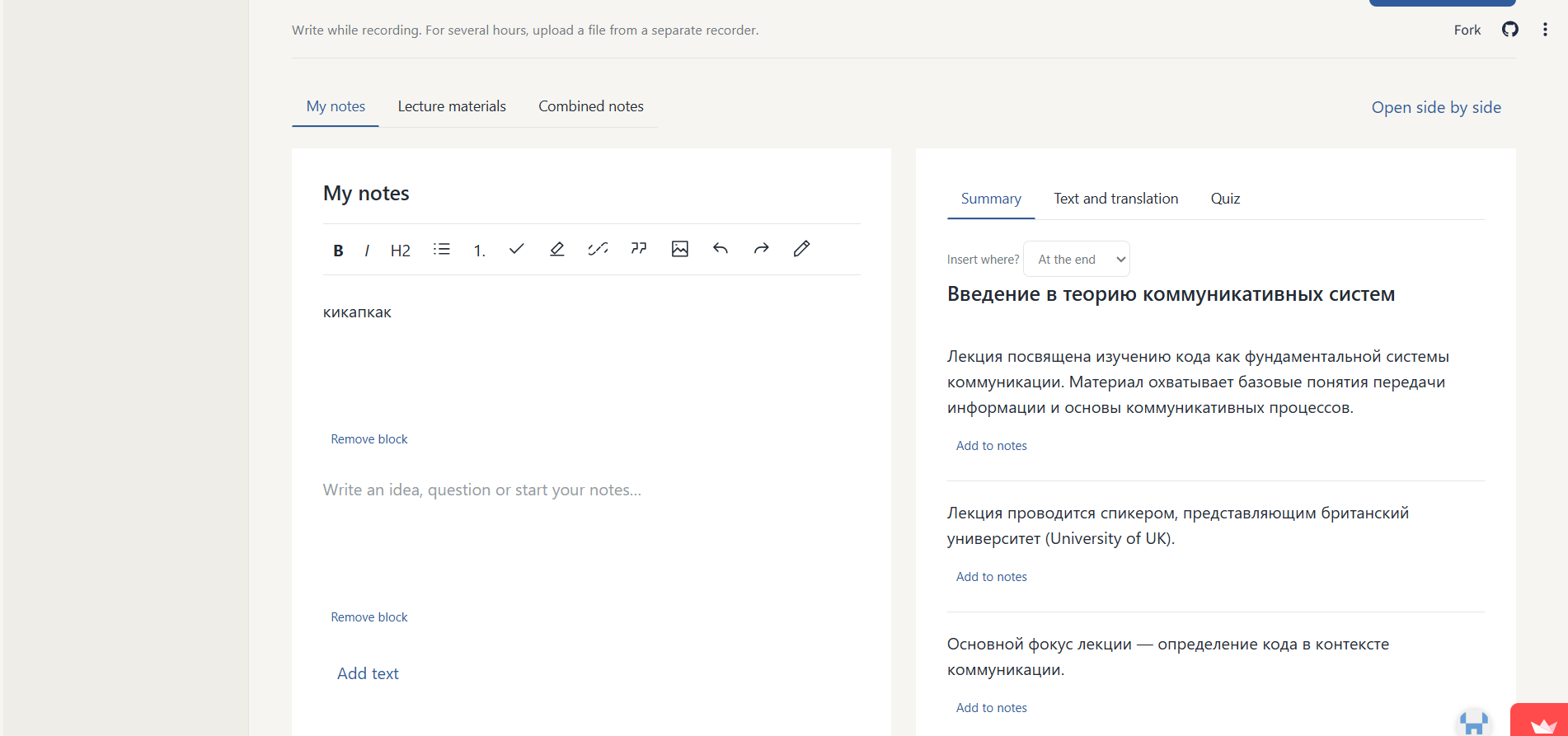
In the next version, I plan to introduce a notebook-style workspace featuring editable personal notes, drawings, audio timestamps, and an interface available in Russian, English, and Chinese. Future work will focus on testing long recording sessions and improving presentation visualizations.

Log in or sign up for Devpost to join the conversation.