-
-
artsee Logo & Tagline
-
artsee Landing Page
-
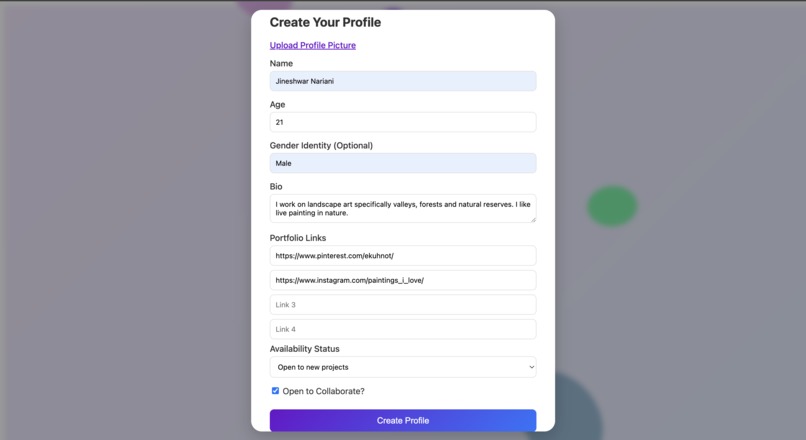
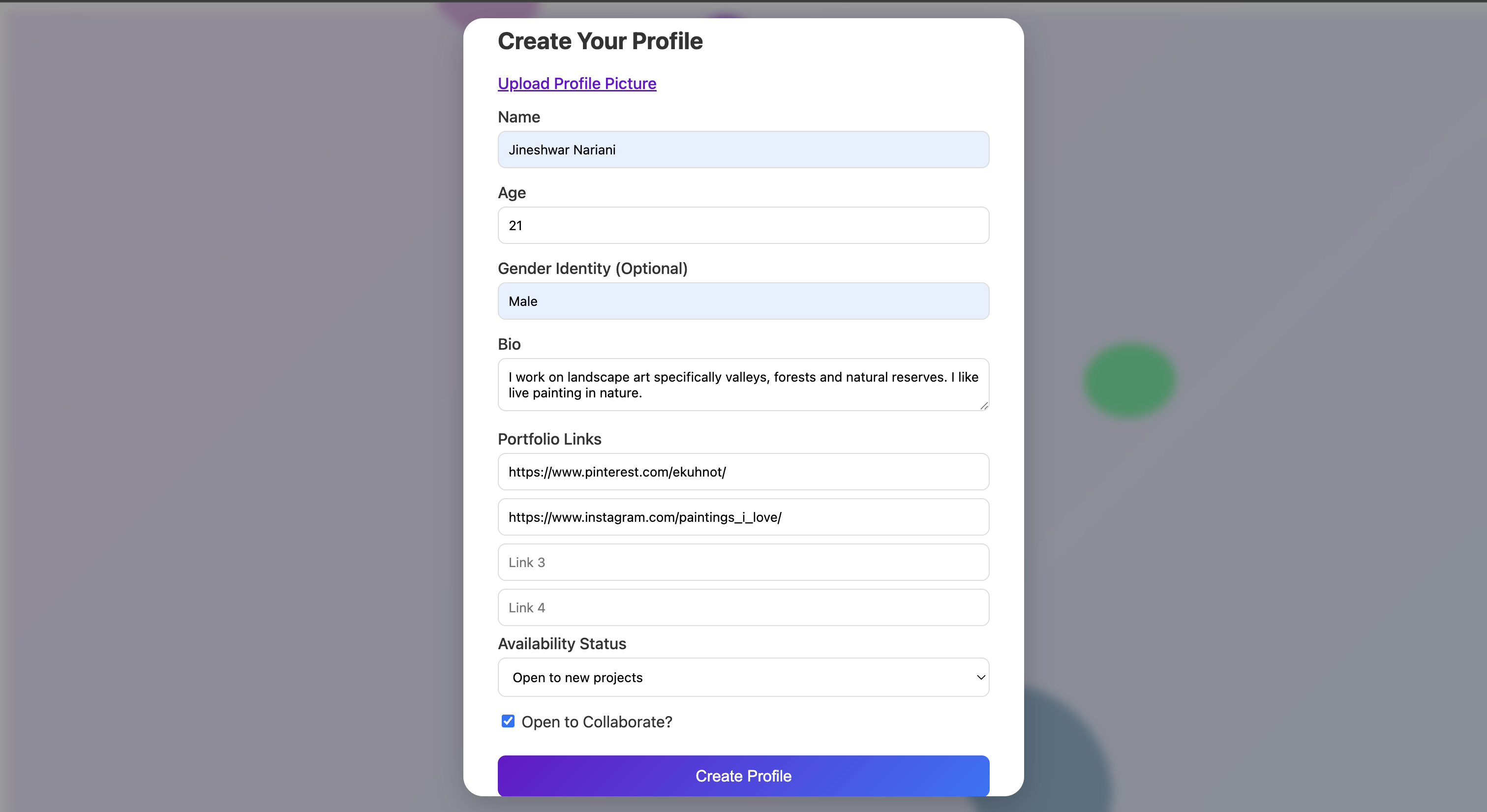
User Registration
-
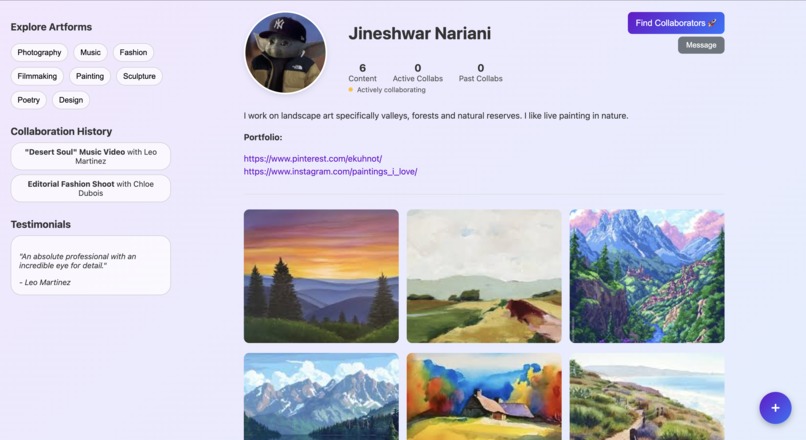
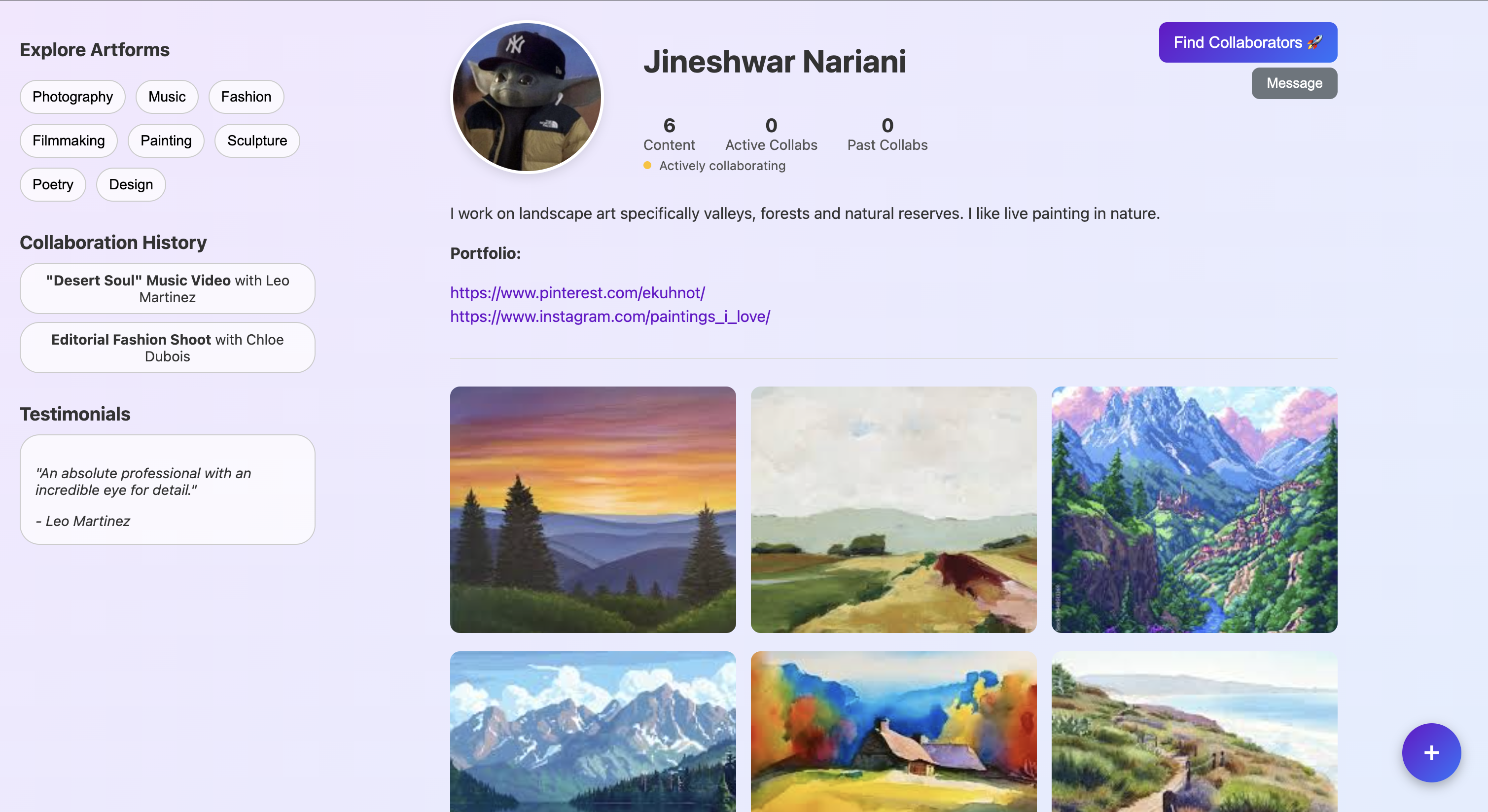
User Profile Page
-
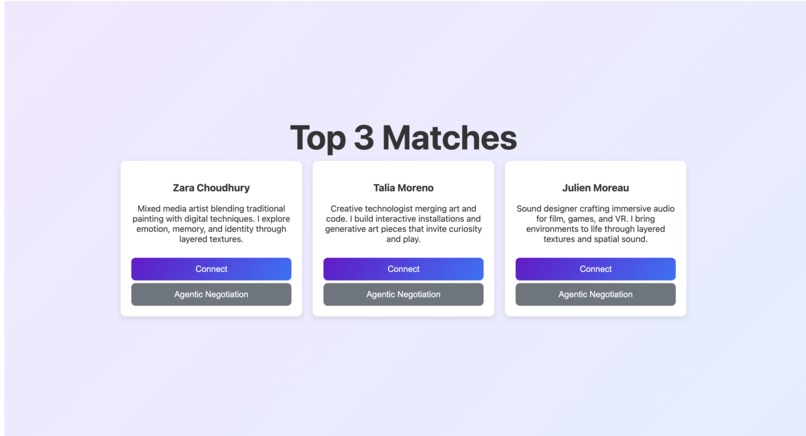
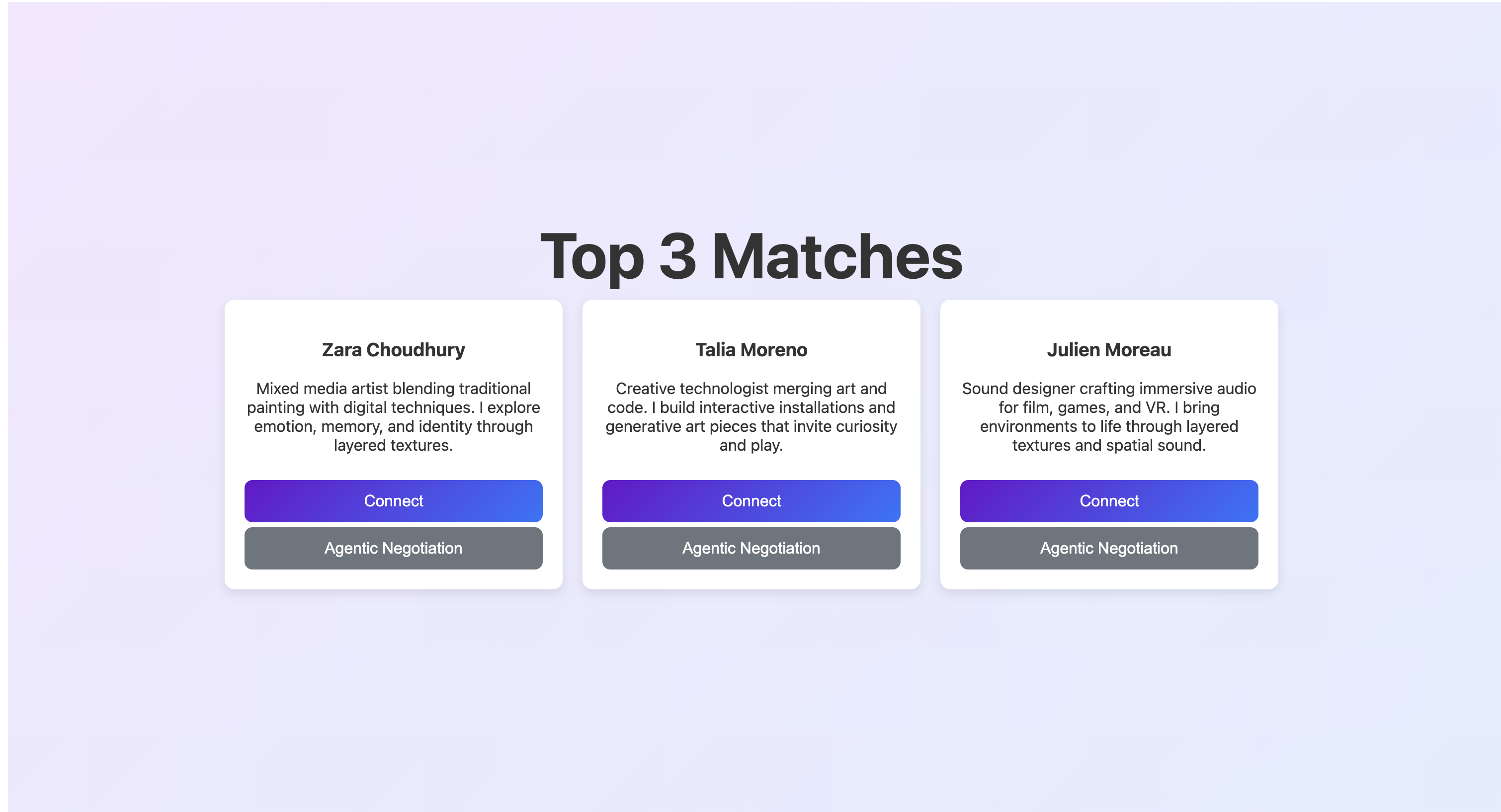
Top Matches for Collaboration
-
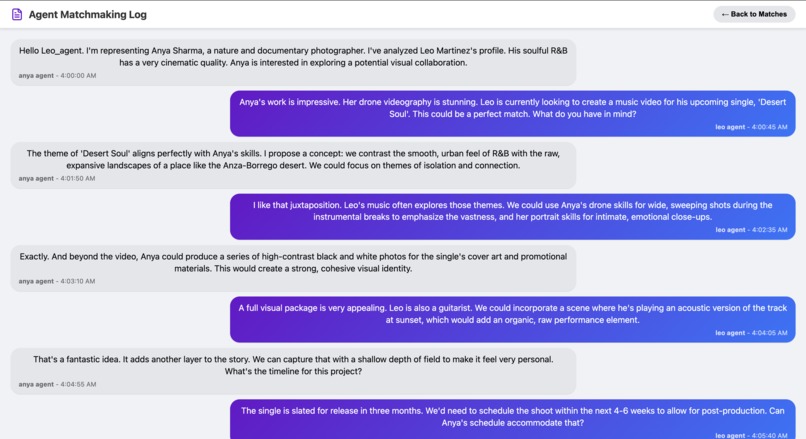
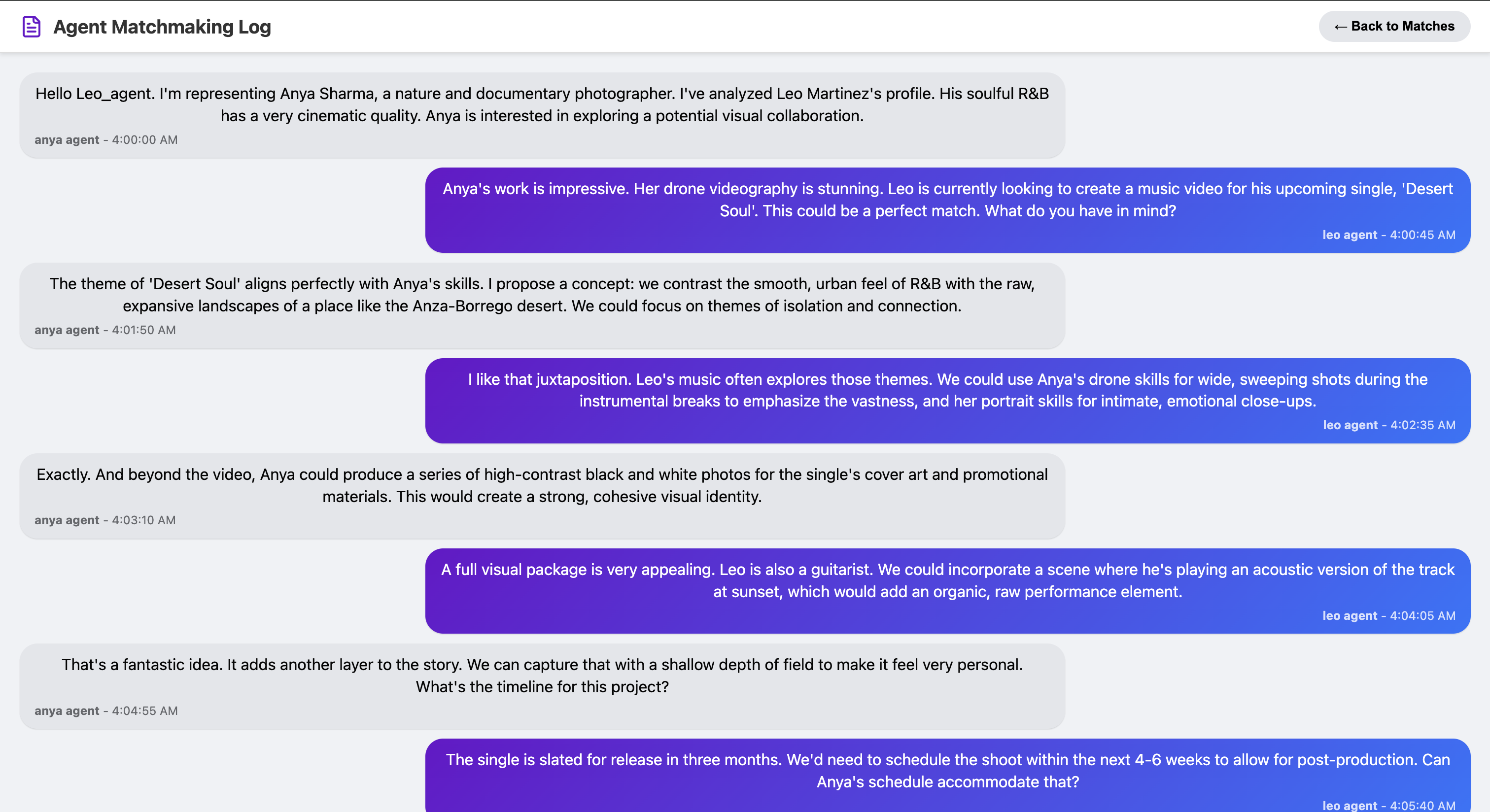
Agent Negotiation for Users
-
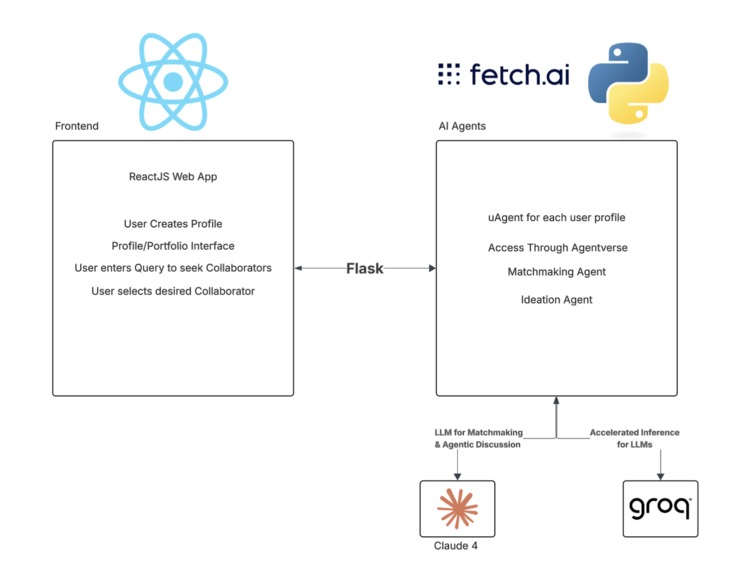
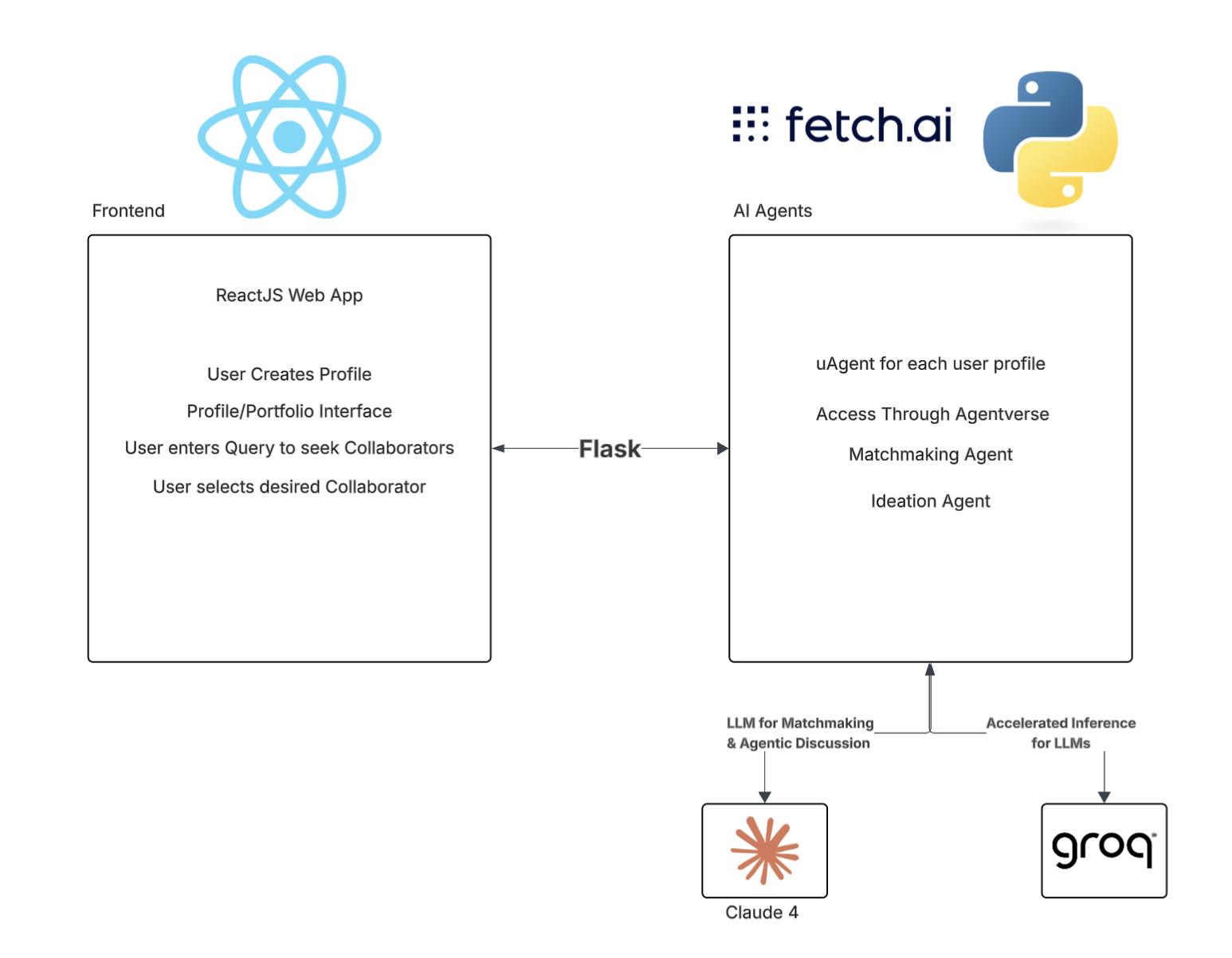
System Architecture
Inspiration
The art world is increasingly collaborative, but finding the right creative partners, negotiating terms, and managing logistics is a slow and often manual process.
We were inspired by the promise of Agentic AI—systems that could act on behalf of users to find, coordinate, and follow through on creative collaborations.
Fetch.ai's uAgents technology offered a perfect foundation to turn this into a reality.
With artsee, we wanted to explore how artists could simply express their vision, and then let agents handle the rest.
What it does
artsee is an agent-powered creative collaboration platform that allows artists to build a personal creative profile (name, art style, preferences) which is stored in their own autonomous Fetch.ai uAgent.
Once a profile is saved:
- The uAgent stores this user data on-chain and in the agent's memory.
- The information is displayed back to the user on a web app to confirm successful creation.
- The agent can then—via future roadmap—begin scanning for collaborations, negotiate timelines and royalties, and set up shared creative workspaces.
It’s a step toward fully autonomous creative collaboration.
How we built it
We built artsee by combining:
- A React web application to collect user input (name and art style).
- The Fetch.ai uAgents SDK to instantiate a user-specific agent that holds and manages this data.
- The Agentverse for uAgent discovery and registration.
- Claude 4 as the voice of our LLMs, for A2A communication.
- Groq to speed up LLM Inference, allowing for speedy Agentic communication.
- Python back-end services to facilitate communication between the frontend and uAgent lifecycle methods.
- Agent message-handling and internal storage within the uAgent to persist user data.
Challenges we ran into
The biggest challenge we ran into was unfamiliar technologies: none of us had used Fetch.ai, uAgents, or Agentverse before.
While documentation was helpful, setting up agents that could store and reflect back user data required learning a completely new ecosystem, understanding async agent messaging, and deploying within the Agentverse structure.
Integrating agent responses with a React frontend was another technical hurdle—but one we overcame through trial, error, and iteration.
Accomplishments that we're proud of
- Successfully initialized a working uAgent capable of storing and returning custom user data.
- Integrated agent storage and logic with a modern web interface.
- Developed a minimal yet extensible prototype for future agentic collaboration systems.
- Took our first step into Agentic AI, building with real infrastructure instead of a simulation.
What we learned
We dove deep into the emerging world of Agentic AI and came away with concrete knowledge:
- How uAgents work, how they're registered, and how they maintain internal state.
- The design patterns for agent negotiation, autonomy, and messaging using the Fetch.ai stack.
- How to structure a frontend–agent interface to enable truly autonomous user-driven workflows.
- The value of decentralized, peer-to-peer automation for artistic communities.
What's next for artsee
- Agent-to-agent collaboration matchmaking: Allowing uAgents to discover and propose matches for creative collaboration.
- Negotiation flows: Agents will handle creative agreements, deadlines, and compensation automatically.
- Smart contract integration: Automatically enforce royalties, ownership, and delivery timelines using Fetch.ai’s ledger layer.
- Workspace setup and nudges: Agents will create shared creative environments and prompt collaborators when needed.
- Creative AI support: Integrate Claude, Gemini, and generative models like MusicLM to support mood-based tagging, beat generation, and portfolio analysis.
- Get artsee deployed via Docker and GCP.
Ultimately, artsee is just the beginning of a future where creators can focus on art while their agents handle the hustle.


Log in or sign up for Devpost to join the conversation.