-
-
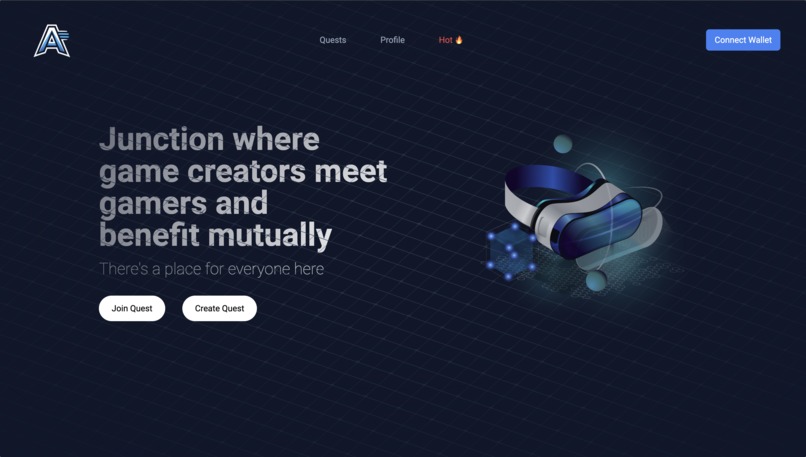
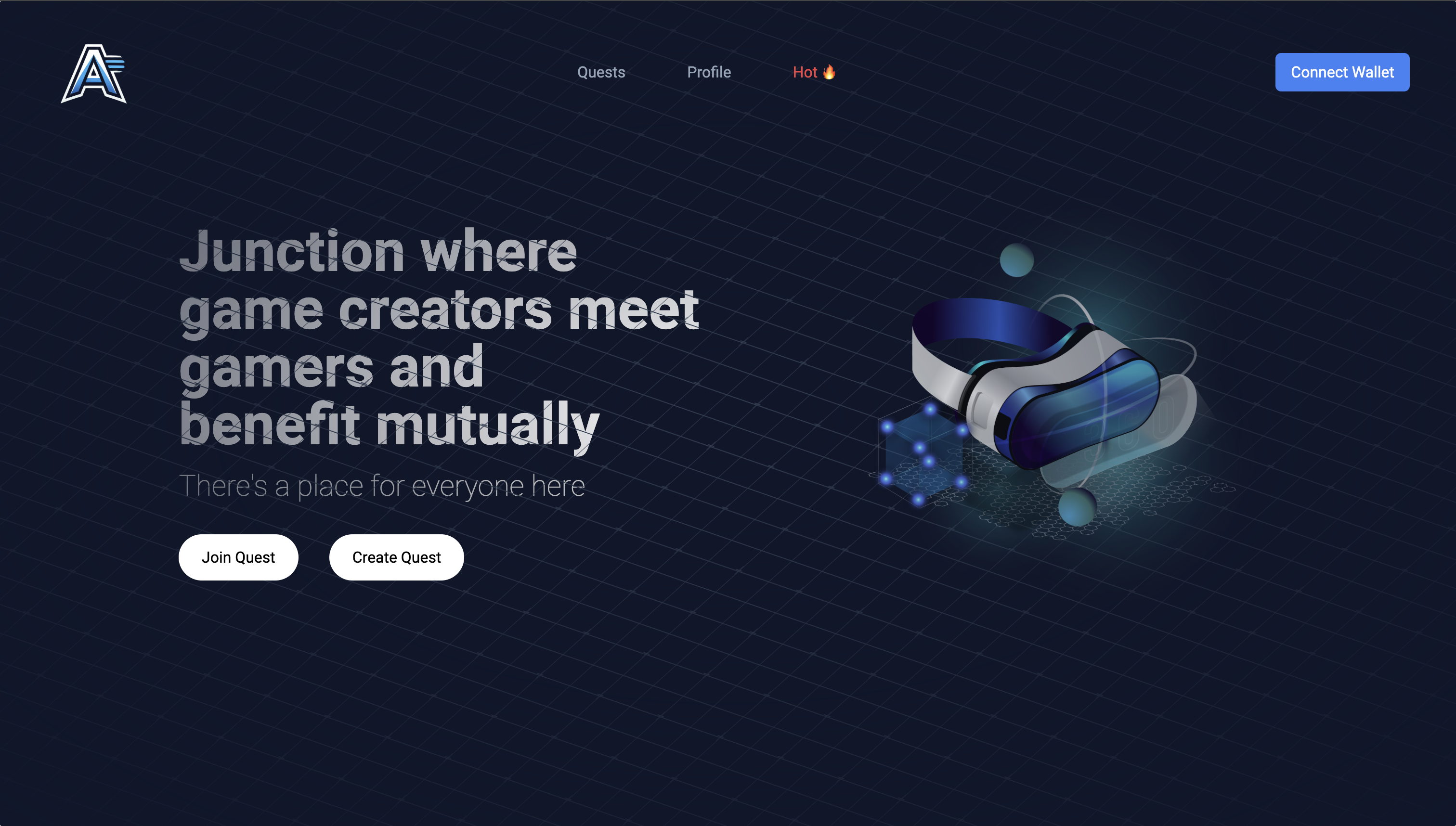
welcomepage
-
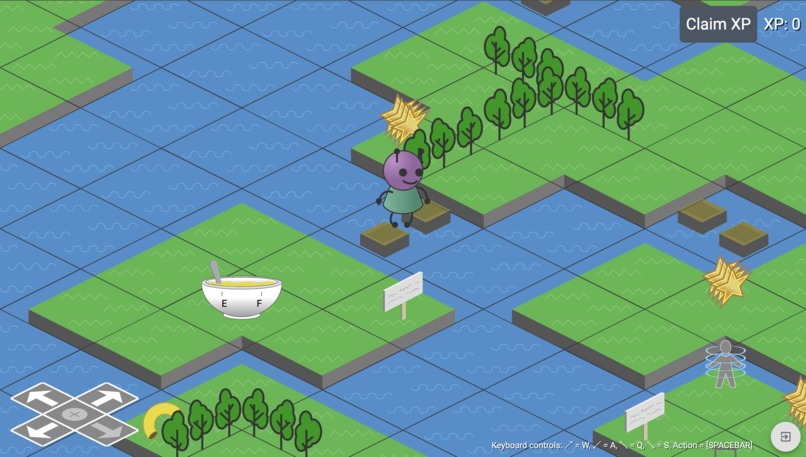
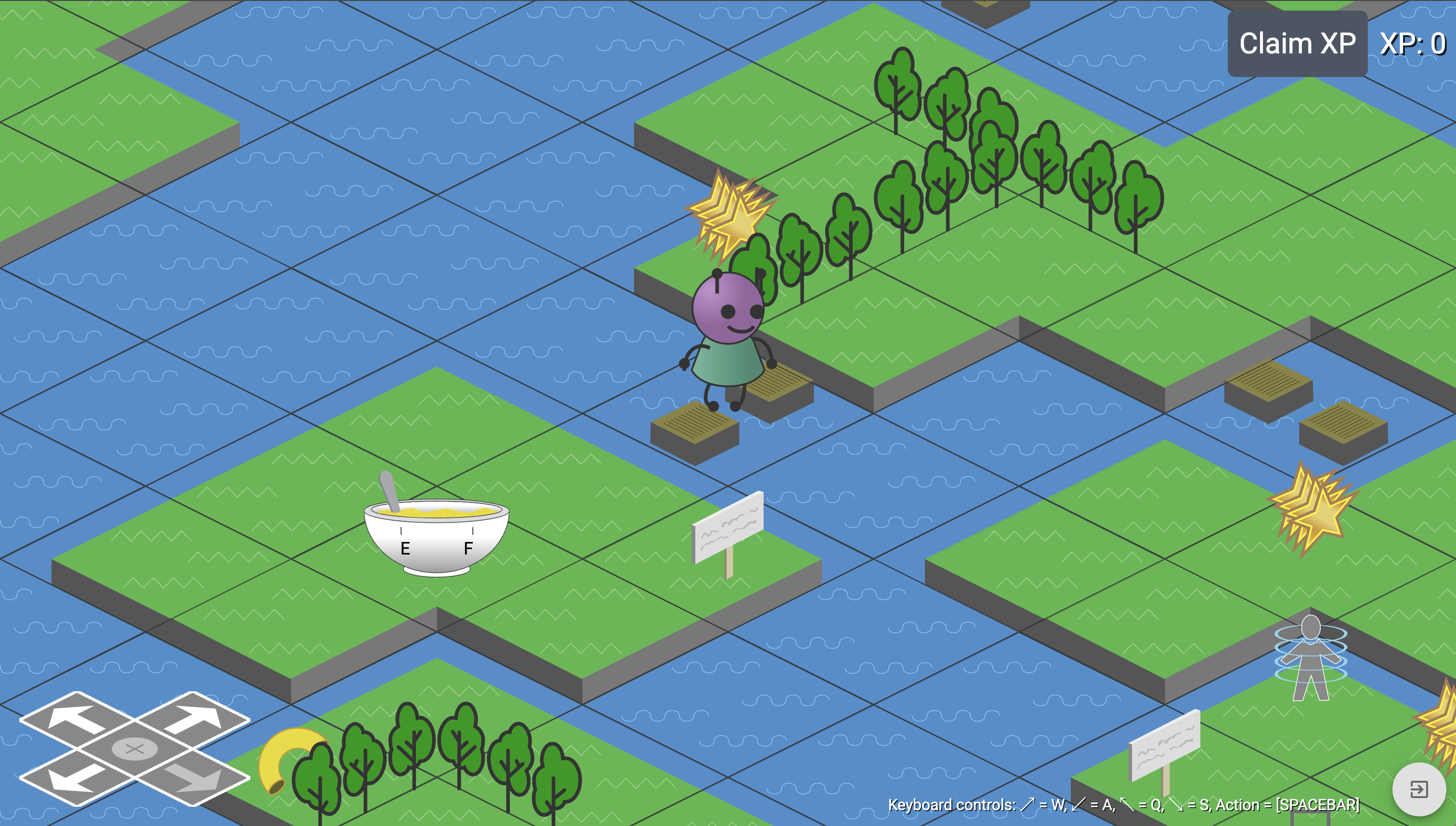
noodlegame
-
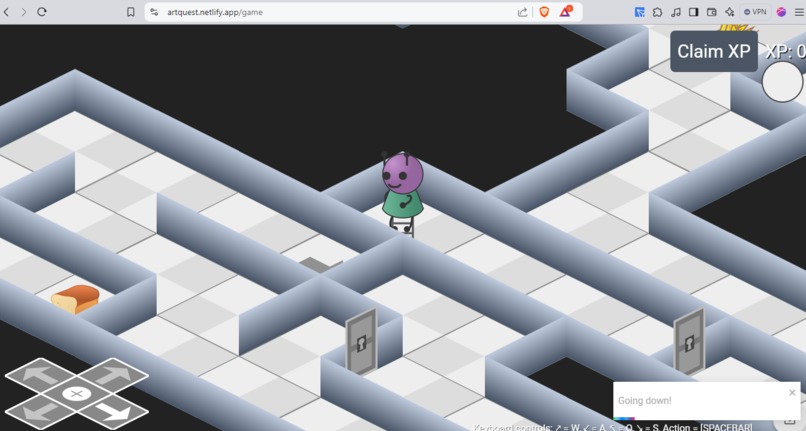
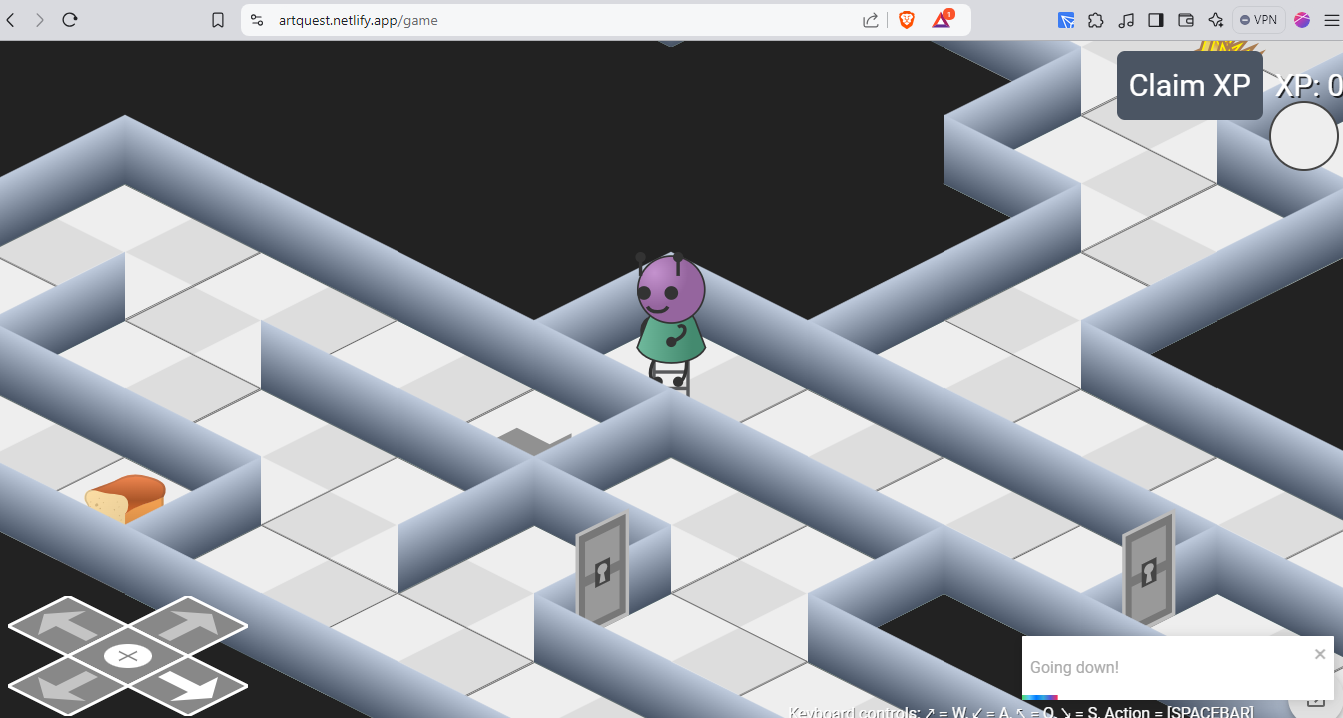
rare level
-
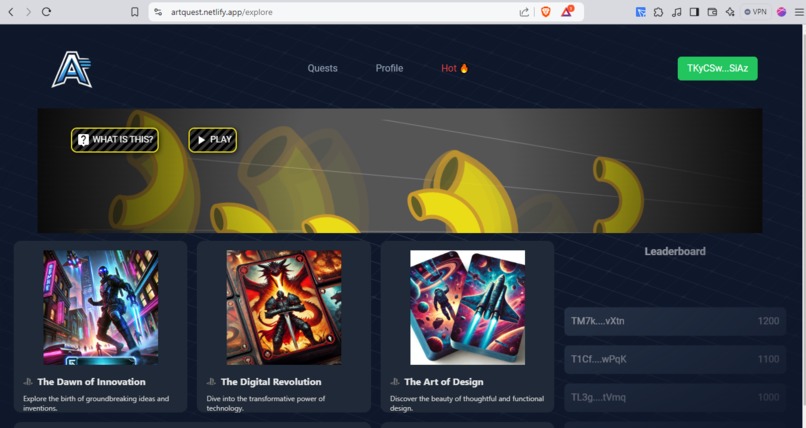
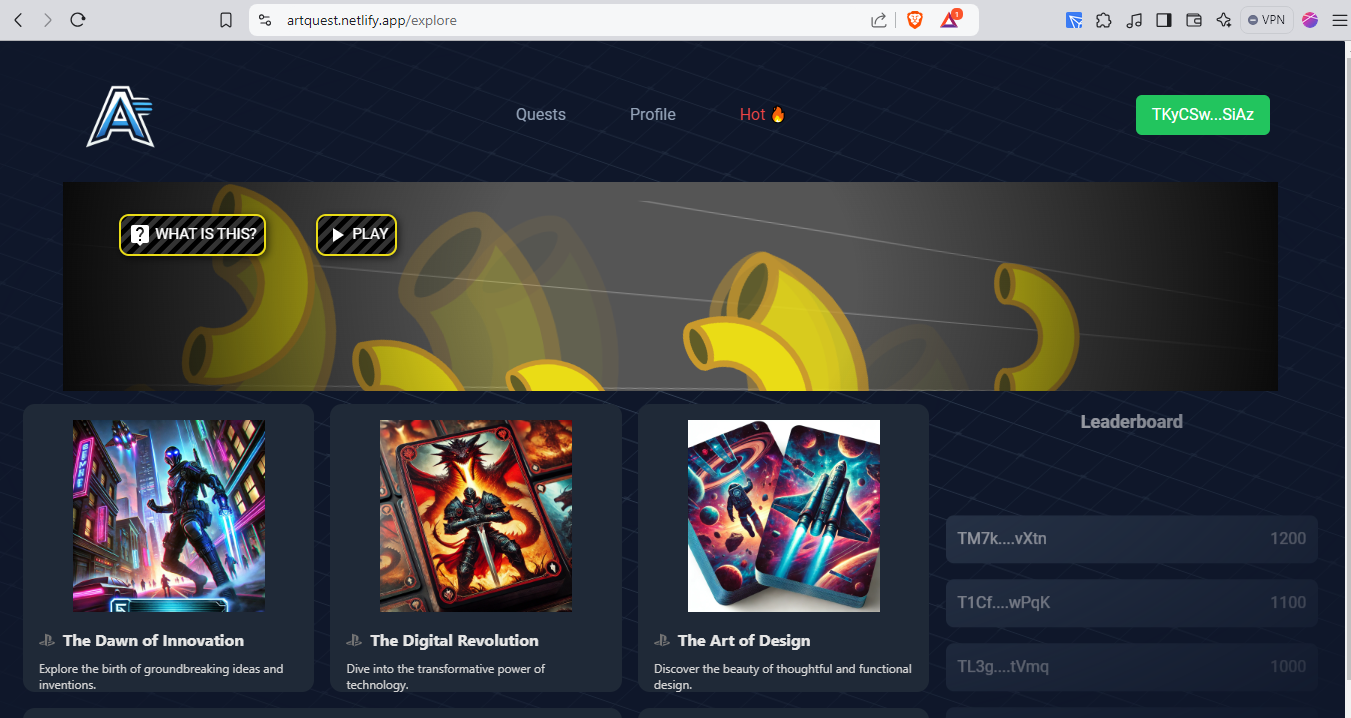
explore page
ArtQuest: Revolutionizing Gaming with Decentralization and NFTs
What Inspired Me
The inspiration behind ArtQuest came from my fascination with blockchain technology and its potential to disrupt the gaming industry. Traditional gaming platforms often focus on monetizing user engagement through centralized methods, where players don’t have ownership of their in-game assets or data. I wanted to build something that leverages the power of decentralization and blockchain to empower players, enabling them to truly own their achievements, in-game assets, and rewards.
While gaming has been a long-time passion, the advent of NFTs and play-to-earn models sparked my interest in how gaming could integrate with blockchain to create new value. The combination of these factors led to the idea for ArtQuest: a decentralized gaming platform that rewards players with NFTs and tokens on the Tron blockchain for completing quests and contributing to the community.
Additionally, the idea of including gaming organizations was born from the desire to allow developers and gaming companies to directly interact with their community. Gaming organizations can create accounts, add links to their games, set quests, and allow users to earn rewards by completing those quests. This creates an ecosystem where both players and game developers thrive, engaging in a symbiotic relationship.
What I Learned
Blockchain Integration
Building ArtQuest on the Tron blockchain was an educational journey in itself. I learned how to deploy smart contracts on a public blockchain, ensuring the transparency and decentralization of the platform. With TRX (Tron’s native token) acting as the primary currency, I integrated it to reward players for quest completions and other in-game activities.
Smart Contracts
I developed several smart contracts to handle the following functionalities:
- Quest creation: A smart contract that allows players to create and set up quests with customizable rewards.
- Reward distribution: After quest completion, a contract distributes rewards in TRX and NFTs based on performance.
- XP management: I implemented a system where users gain experience points (XP) by participating in games and quests, which could be spent to unlock new features and create quests.
Through this, I gained a deeper understanding of Solidity (for smart contracts) and Tron’s Solidity implementation, particularly with its energy system for transaction fees.
NFTs & Tokenization
I explored the intricacies of NFT minting and how to reward users with unique digital assets. These NFTs are not only a badge of honor for quest completion but also have utility within the ecosystem, allowing players to trade them, display them on their profiles, or use them in future quests.
User Experience and Frontend Development
The front-end development was one of the most challenging aspects. I used React.js combined with Web3.js to connect the user interface to the blockchain. Handling wallet connections (with TronLink wallet) and integrating decentralized elements like NFT display and token transfer were essential parts of the development process.
The challenge was ensuring a smooth experience where users wouldn’t face blockchain transaction delays, especially when interacting with smart contracts or minting NFTs. I also focused on building a user-friendly interface where creating quests, playing games, and earning rewards is intuitive.
How I Built My Project
Step 1: Defining Core Features
The main functionality of ArtQuest revolves around quests, XP, NFTs, and the ability for gaming organizations to contribute to the ecosystem:
- User Profiles: Each user can create a profile, which stores their earned XP, NFT collection, and their progress on quests.
- Quest Creation & Joining: Players can create quests with customizable rewards and objectives, or join quests created by others.
- XP System: Players earn XP by completing quests and games, which they can spend to unlock special features or create their own quests.
- NFT Rewards: Players receive NFTs as rewards for top performance in quests.
- Gaming Organization Accounts: Gaming organizations can create accounts, add links to their games, and set quests for users to participate in, rewarding them with XP and NFTs upon completion.
Step 2: Smart Contracts Development
Using Solidity, I wrote several smart contracts to power the following:
- Quest smart contract: Allows the creation, joining, and tracking of quests. Rewards are automatically distributed upon quest completion.
- XP management contract: Tracks and manages the XP a player has earned and how it’s spent.
- NFT minting contract: Mints unique NFTs as rewards for top performers in quests.
- Gaming Organization Contract: Allows organizations to set up their games, assign quests, and offer rewards for players engaging with their games and quests.
These smart contracts were deployed on the Tron blockchain using TronLink wallet for interacting with the contracts and TronGrid for handling decentralized file storage for NFTs.
Step 3: Frontend Development
The frontend of ArtQuest was built using React.js for its component-based architecture and Web3.js for blockchain interactions. The main components included:
- Profile Page: Displays user’s XP, completed quests, and earned NFTs.
- Quest Dashboard: Shows available quests, their rewards, and progress.
- NFT Showcase: Displays the user’s earned NFTs.
- Noodle Game: A fun game that allows players to earn XP, which can be used to create or join quests.
- Gaming Organization Pages: Pages for gaming organizations to manage their game links, quests, and track user participation and rewards.
For handling blockchain transactions, I integrated TronLink Wallet, which allowed users to securely sign transactions and interact with the decentralized platform without leaving the app.
Step 4: Testing and Security
I rigorously tested the smart contracts using the Tron testnet before deploying on the mainnet to ensure they were secure and functional. I also ran security audits to check for common vulnerabilities like reentrancy attacks and gas optimization.
Step 5: Launch & User Feedback
After deployment, I launched ArtQuest and actively collected user feedback. This helped me identify usability issues and areas for improvement. I made improvements based on their suggestions, especially regarding the user interface and transaction speed.
Challenges Faced
Blockchain Transaction Delays
One of the major challenges I faced was transaction delays when interacting with smart contracts. Even though the Tron blockchain is known for its speed, congestion can still occur at times, especially when minting NFTs or transferring rewards. I mitigated this by implementing a transaction queue system on the frontend, allowing users to view pending transactions and ensuring they don’t experience confusion or frustration.
Smart Contract Development
Smart contracts on the Tron blockchain differ from those on Ethereum, especially in areas like gas fees and how they handle transactions. Learning these nuances took time, as I had to rework some of my initial implementations to accommodate the specific requirements of the Tron network. The energy model in Tron, which governs how much computation a transaction can use based on the amount of TRX staked, was particularly challenging.
User Experience (UX) Challenges
Given that ArtQuest is a decentralized platform, ensuring a seamless UX for blockchain transactions was tricky. I had to make sure users understood the transaction process and didn’t get frustrated by delays or failed transactions. To overcome this, I provided clear transaction status indicators and error messages to guide the user.
Balancing Fun with Economics
One of the key challenges was balancing the economics of the game with the rewards system. I needed to ensure that the rewards for completing quests were not only motivating but also sustainable within the platform. This required careful management of the TRX rewards and the distribution of NFTs, so that it didn't lead to either excessive inflation or lack of incentives.
Conclusion
Building ArtQuest was a complex yet rewarding project that blended my passion for gaming with the power of blockchain and NFTs. It gave me hands-on experience with smart contracts, decentralized finance, and how to integrate these technologies into an engaging gaming experience.
By allowing gaming organizations to create accounts, set quests, and engage with the community, ArtQuest has become more than just a platform for players—it's an ecosystem where developers and players coexist, creating a sustainable, decentralized gaming environment.
The journey was filled with learning, challenges, and growth, but ArtQuest is now ready to redefine the future of gaming by allowing players to create, compete, and earn in a decentralized world. I’m excited to continue evolving the platform and introducing more features for players and organizations to enjoy.


Log in or sign up for Devpost to join the conversation.