Inspiration
The inspiration for ArtPoint came from a video I watched about an artist whose work was downloaded without authorization and used to win an online competition. The artist expressed deep disappointment and frustration, as they were powerless while waiting for the competition authorities to investigate. Further investigation revealed that this issue is widespread, with many artists struggling to provide strong evidence when their intellectual property is stolen. Existing methods to collect evidence are often cumbersome or lack trustworthiness due to potential third-party tampering. This motivated me to develop a solution leveraging blockchain’s decentralized features to maintain data integrity and protect artists' intellectual property.
What it does
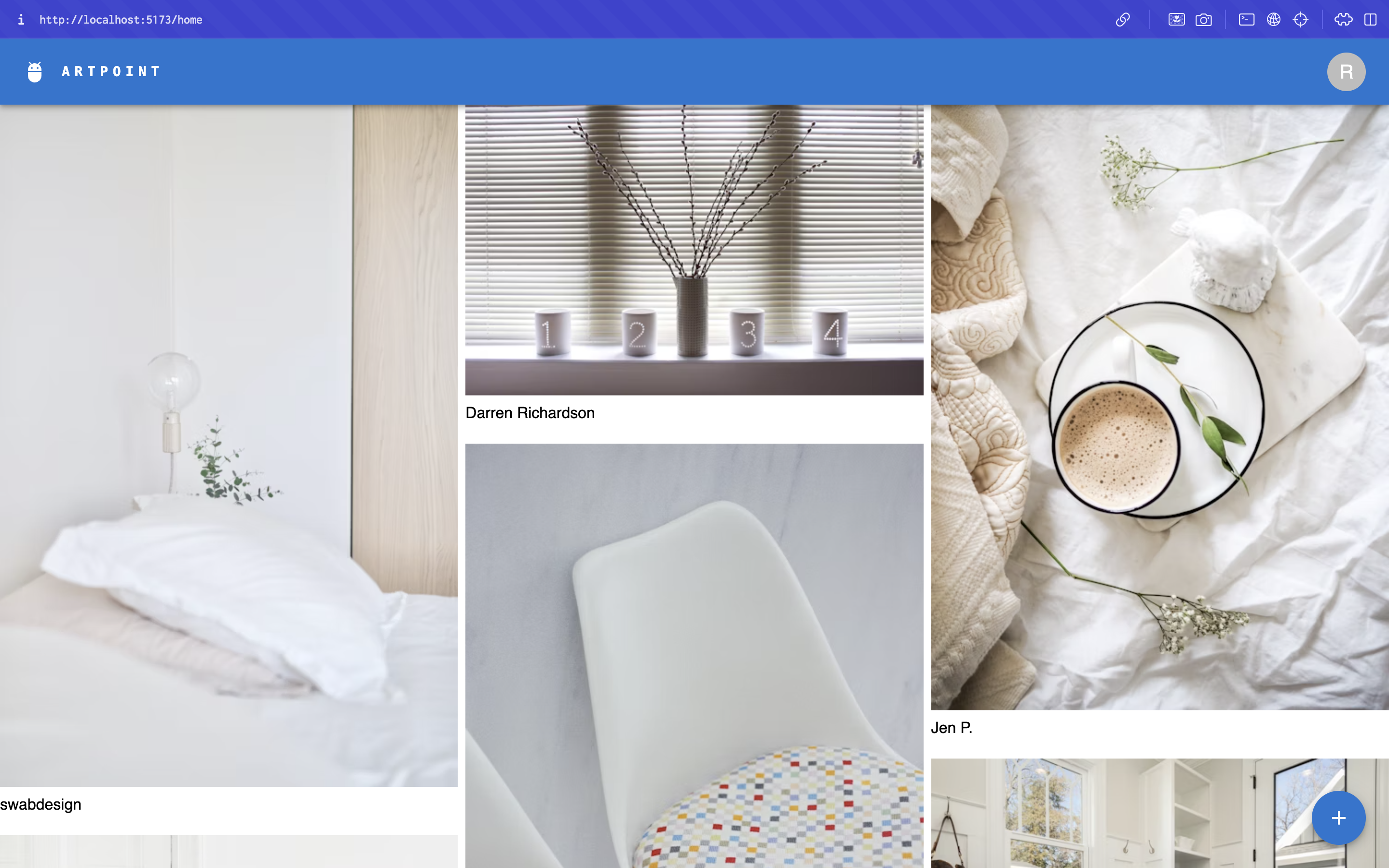
ArtPoint is an online project gallery that leverages blockchain smart contracts to prevent unauthorized use of artists' work. Every image uploaded by an author is minted to create a unique ID along with the date and time of upload. Each time a user downloads the image, a record is made on the smart contract, allowing the author to know exactly who has downloaded their image. This immutable record can serve as reliable evidence to prove ownership and protect the artist’s intellectual property.
One notable design choice is that ArtPoint does not prevent the download function. This is intentional, as some artists may be willing to allow others to download their images. The primary purpose of this platform is not to restrict access but to provide artists with a strong proof of ownership. This way, artists have the flexibility to share their work while still maintaining the ability to prove their rights to their intellectual property.
How I built it
I built ArtPoint using a combination of modern web technologies and blockchain. The frontend of the web application was developed using React, providing a responsive and user-friendly interface. The backend was implemented using Express, which handles the web socket setup for real-time updates and metadata storage. Firebase was used to store the metadata of the images. For the blockchain component, I deployed smart contracts on the Theta network using Solidity. These smart contracts handle the minting of images and recording of download transactions. To connect the frontend with the blockchain, I used the Web3.js library, enabling seamless interaction with the smart contracts.
Challenges I ran into
One of the main challenges I faced was ensuring the security and integrity of the data stored on the blockchain. Implementing the smart contracts in a way that prevented unauthorized modifications was crucial. Additionally, integrating the blockchain functionality with the web application required careful coordination between the frontend and backend components. Ensuring a smooth user experience while maintaining the robustness of the blockchain interactions was a delicate balance.
Doing everything by myself was particularly challenging. Not only did I have to take care of every detail, but I also had no prior DApp development experience. Balancing the learning curve of new technologies with the need to build a functional and reliable application was a significant hurdle.
Accomplishments that I'm proud of
I am proud of creating a solution that addresses a real and pressing problem for artists. By leveraging blockchain technology, I have developed a platform that provides artists with a reliable and trustworthy way to protect their intellectual property. The successful integration of smart contracts with my web application is a significant technical achievement, demonstrating the potential of blockchain to solve practical issues. Completing this project single-handedly, despite the steep learning curve, is an accomplishment in itself.
What I learned
Through this project, I learned a great deal about blockchain technology and its applications in real-world scenarios. I gained experience in writing and deploying smart contracts, as well as integrating blockchain with web applications. I also deepened my understanding of the challenges artists face in protecting their work and the importance of providing secure and trustworthy solutions. Additionally, I learned to manage a complex project independently, honing my problem-solving and time management skills.
What's next for ArtPoint
Looking ahead, I plan to expand ArtPoint by adding more features to enhance the user experience and provide additional protections for artists. I aim to implement more advanced analytics to help artists track the usage of their work more effectively. Additionally, I am exploring partnerships with art communities and online galleries to broaden the reach of my platform. Ultimately, my goal is to create a comprehensive solution that empowers artists to safeguard their intellectual property in the digital age.
This updated version should give a comprehensive and accurate overview of your project based on the information provided.


Log in or sign up for Devpost to join the conversation.