-
-
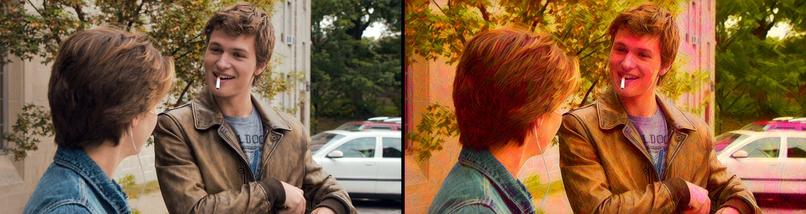
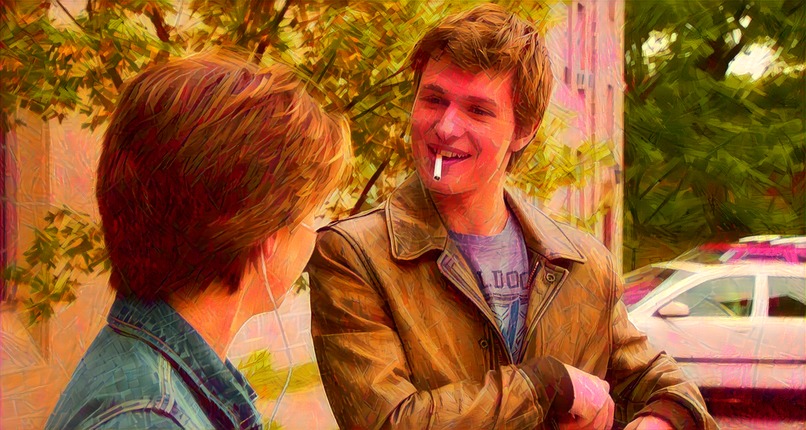
The Fault in our stars image stylized with abstract flaming style art
-
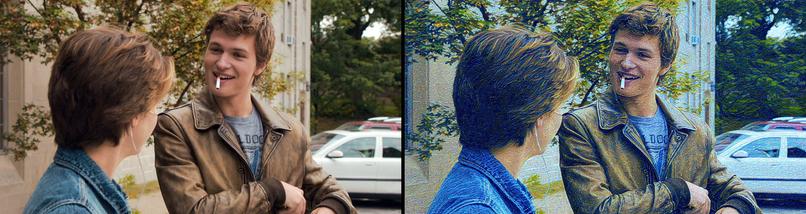
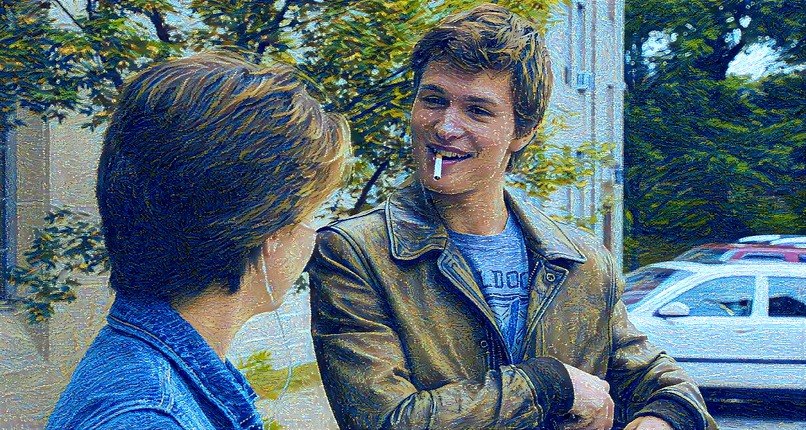
The Fault in our stars stylized with Vincent Van Gogh Style art
-
-


Inspiration
As an avid photographer with a passion for capturing moments and immortalizing them through my lens, I've always been intrigued by the art of image editing. I believe that editing not only enhances the beauty of a photograph but also allows me to express my creativity and evoke specific emotions in the viewer.
However, traditional photo editing techniques often feel limited in their ability to truly transform an image into a unique work of art. That's when I stumbled upon the captivating world of deep learning and neural style transfer.
With the idea of revolutionizing the way we edit photos, I embarked on a journey to combine my love for photography with the power of machine learning. Thus, the project "Artistic Fusion: DeepStyle" was born.
The goal of this project is to leverage advanced neural style transfer algorithms using PyTorch, a popular deep learning framework, to provide a seamless and intuitive way of infusing artistic styles into our photographs. I envision a future where photographers, amateurs, and professionals alike can effortlessly transform their images into breathtaking artistic masterpieces, surpassing the limitations of conventional editing techniques.
By utilizing deep learning techniques, I aim to create a system that understands the unique style of famous artworks and seamlessly applies those styles to our own photographs. With this approach, we can blend the content of our images with the textures, colors, and brushstrokes of renowned painters, creating stunning visual representations that are both visually striking and emotionally captivating.
Imagine the possibilities: transforming a landscape photograph into a Van Gogh-inspired masterpiece, adding a touch of Monet's watercolour magic to a portrait, or infusing a street photograph with the vibrant energy of graffiti art. Artistic Fusion: DeepStyle aims to unleash our artistic potential, offering a new level of creativity and individuality in the realm of photo editing.
Through this project, I aspire to push the boundaries of what is possible in the world of photography, encouraging fellow enthusiasts to explore the realm of machine learning, deep learning, and artistic expression. Let us embark on this exciting journey together and redefine the way we edit and appreciate photographs.
What it does
Neural style transfer utilizes a pre-trained convolutional neural network (CNN) to extract features from both the style image and the content image. By minimizing the difference between the extracted features of the content image and the generated image, while also matching the style features of the style image, we can create a visually appealing image that combines the style and content. This project provides a Python implementation of neural style transfer using the popular deep learning library, Pytorch.
How we built it
To build the "Artistic Fusion: DeepStyle" project, we followed these steps:
Dataset Preparation:
- Collect a diverse dataset of style images and content images. The style images should represent various artistic styles, while the content images can be photographs taken by you or obtained from public datasets.
- Preprocess the images by resizing them to a consistent size and normalizing the pixel values to a suitable range.
Pretrained CNN Model:
- Choose a pre-trained convolutional neural network (CNN) model as the backbone for feature extraction. Popular choices include VGGNet, ResNet, or Inception.
- Load the pre-trained model weights using PyTorch and modify it by removing the classification layers. We only need the feature extraction part of the network.
Feature Extraction:
- Define functions to extract features from the intermediate layers of the CNN model.
- Given a style image and a content image, pass them through the network, extract the features from the desired layers, and store them for later use.
Loss Functions:
- Define the loss functions required for neural style transfer.
- The content loss measures the difference between the content features of the generated image and the content image.
- The style loss calculates the difference between the style features of the generated image and the style image.
- Incorporate both losses into a combined loss function with appropriate weighting factors.
Optimization:
- Initialize a generated image, which will be optimized to minimize the defined loss function.
- Use gradient descent optimization to iteratively update the generated image based on the computed gradients of the loss function with respect to the image pixels.
- Adjust hyperparameters such as learning rate, number of iterations, and regularization to achieve the desired results.
Training Loop:
- Create a training loop to iteratively optimize the generated image.
- In each iteration, compute the loss, backpropagate the gradients, and update the generated image.
- Monitor the progress of the generated image and visualize intermediate results to understand the evolution of the style transfer.
Post-processing:
- Once the optimization process is complete, apply post-processing techniques such as denoising or color adjustments to refine the final generated image.
- Save the output image in a desired format, preserving the artistic fusion achieved through the neural style transfer.
Throughout the development process, leverage the power of PyTorch's tensor computations and GPU acceleration to ensure efficient training and inference. Test the project using a variety of content and style images to evaluate its performance and make any necessary adjustments.
By following these steps and continuously iterating on the implementation, "Artistic Fusion: DeepStyle" can provide a compelling and user-friendly solution for photographers and artists to explore the exciting world of neural style transfer and redefine the way we edit and appreciate photographs.
Challenges we ran into
During the development of "Artistic Fusion: DeepStyle," I encountered several challenges that tested my problem-solving skills and required me to delve deeper into the world of deep learning and image processing.
Understanding Neural Style Transfer: Initially, grasping the concepts behind neural style transfer was a significant challenge. The combination of content and style images, the role of pre-trained CNN models, and the intricacies of defining loss functions required a thorough understanding. I had to spend considerable time studying research papers, tutorials, and practical examples to gain a solid foundation.
Preprocessing and Dataset Management: Preparing the dataset of style images and content images posed some difficulties. Ensuring a diverse collection of artistic styles and curating a relevant set of content images took time and effort. Additionally, handling image preprocessing tasks such as resizing and normalization required careful attention to avoid introducing artifacts or distorting the artistic styles.
Selection of Pretrained CNN Model: Choosing an appropriate pre-trained CNN model was crucial for accurate feature extraction. However, the vast number of available models and their varying architectures made it challenging to determine the best fit for my project. It required experimenting with different models, understanding their limitations, and balancing computational resources for efficient training.
Balancing Content and Style: Striking the right balance between preserving the content of the original image and incorporating the style of the artistic reference was a constant challenge. Fine-tuning the weighting factors in the loss function and optimizing hyperparameters proved to be an iterative process. Achieving visually appealing results that retained the essence of the content while incorporating the desired style required continuous experimentation and adjustments.
Optimization and Computational Resources: Implementing the optimization process efficiently was a significant challenge. Running the optimization loop for a sufficient number of iterations to converge on a visually pleasing result without excessive computational time was a delicate balance. Utilizing GPU acceleration and optimizing the code for performance became crucial to handle the computational demands of the project effectively.
Generalization and Robustness: Ensuring that the neural style transfer algorithm could generalize well to a wide range of content and style images presented a challenge. Different artistic styles and diverse content images required fine-tuning and parameter adjustments to achieve consistent and aesthetically pleasing results. Handling edge cases, such as images with low contrast or complex textures, required careful consideration and potential modifications to the algorithm.
Accomplishments that we're proud of
I take great pride in the fact that I managed to extend the implementation of "Artistic Fusion: DeepStyle" to include video processing to a certain extent. While there is ample documentation available for extracting data from images, working with videos presented an entirely different set of challenges that proved to be a major hurdle to overcome. Therefore, being able to tackle these challenges and achieve even the slightest positive outcomes is an accomplishment that I am genuinely proud of.
What we learned
Throughout the development of "Artistic Fusion: DeepStyle" and the extension to video processing, I learned several valuable lessons:
Adaptation to New Domains: Working with videos introduced a whole new realm of challenges compared to image processing. I gained insights into the unique considerations and complexities involved in processing video frames, such as temporal coherence and efficient handling of large amounts of data.
Problem-Solving and Persistence: Overcoming the hurdles and limitations inherent in video processing required a tenacious approach to problem-solving. I learned to persevere through setbacks, explore alternative solutions, and experiment with different techniques to achieve the desired outcomes.
Practical Application of Deep Learning: Implementing neural style transfer in a real-world scenario reinforced my understanding of deep learning concepts. It allowed me to witness firsthand how neural networks can be applied to create artistic transformations and expand the possibilities of image and video editing
What's next for Artistic Fusion: DeepStyle
My next goal is to refine the video style transfer functionality of the project and create a user interface, possibly using Flask, to make it accessible to a wider audience. I aim to perfect the video processing capabilities, ensuring seamless and visually appealing style transfers across video frames. Additionally, I plan to design an intuitive and user-friendly interface that will allow users to upload their videos, select desired artistic styles, and preview the transformed output in real-time. Once the project is complete, my objective is to deploy it so that everyone can utilize this powerful tool for video style transfer.


Log in or sign up for Devpost to join the conversation.