Inspiration
As a homeowner, I grew frustrated with hidden fees and unvetted tradespeople—so I built a platform centered on trust, transparency, and local connection. I wanted to make it easy for neighbors to find reliable artisans without the hassle of logins or upfront costs, mirroring the "word-of-mouth" trust we value in local communities.
What it does
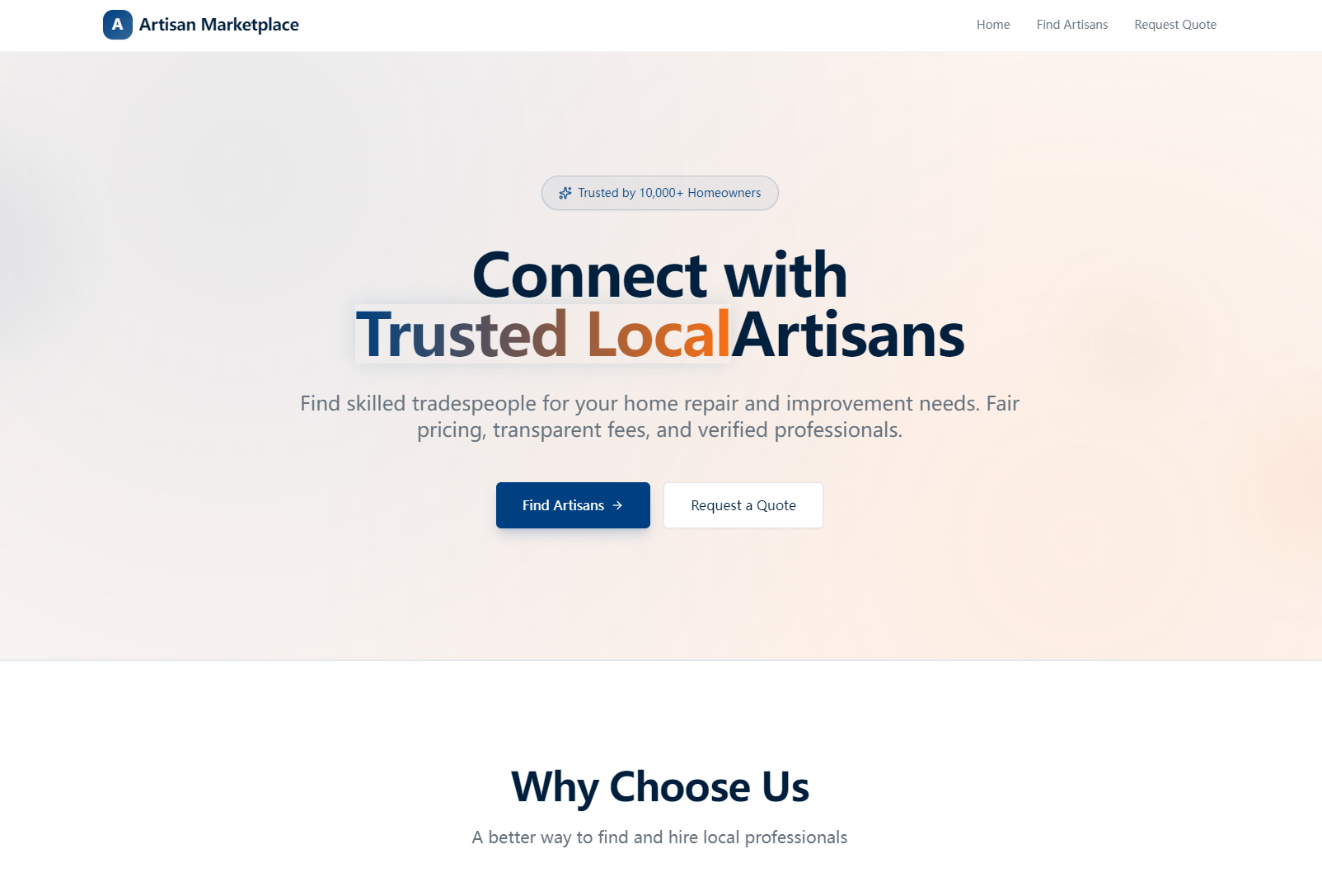
Artisan Marketplace connects residential customers with local skilled tradespeople (plumbers, electricians, carpenters, etc.). Users browse geo-targeted artisan profiles, submit service requests, and receive competitive quotes—all with clear payment protection and a transparent 10% commission structure for artisans.
How we built it
We started with wireframing core user flows (homepage, directory, quote workflow) in Figma, prioritizing minimalist UI and high readability. We built the front end with React and TailwindCSS for responsive design, integrated Google Maps API for location-based filtering, and used Node.js/Express for backend logic to generate quotes and display artisan data. Firebase handled lightweight data storage, and we tested rigorously to ensure error handling for edge cases (e.g., invalid locations, no available artisans).
Challenges we ran into
The biggest hurdle was balancing geo-accuracy with load speed—we optimized the Google Maps API calls to avoid lag while keeping listings precise. We also struggled with standardizing quote data to ensure consistency across different trade types, ultimately creating a flexible template that adapts to each service category.
Accomplishments that we're proud of
We delivered a seamless, no-login user experience that puts transparency first—every artisan’s verification badges (insured, certified, background-checked) and the 10% commission structure are front-and-center. The platform also handles edge cases gracefully, like empty service type results, with clear, user-friendly messaging.
What we learned
We learned the importance of prioritizing user trust over feature bloat—omitting logins (out of scope for v1) simplified onboarding and boosted engagement. We also gained hands-on experience with geo-targeting APIs and form validation, and how to translate business rules (e.g., verified reviews only for paid jobs) into functional, intuitive UI/UX.
What's next for this project
Next, we plan to add real-time availability for artisans, integrate in-app messaging to connect customers and pros directly, and build a mobile-responsive version for on-the-go requests. We also want to expand advanced filters (price range, years of experience) and explore payment processing integration to streamline the post-job payment workflow.

Log in or sign up for Devpost to join the conversation.