-
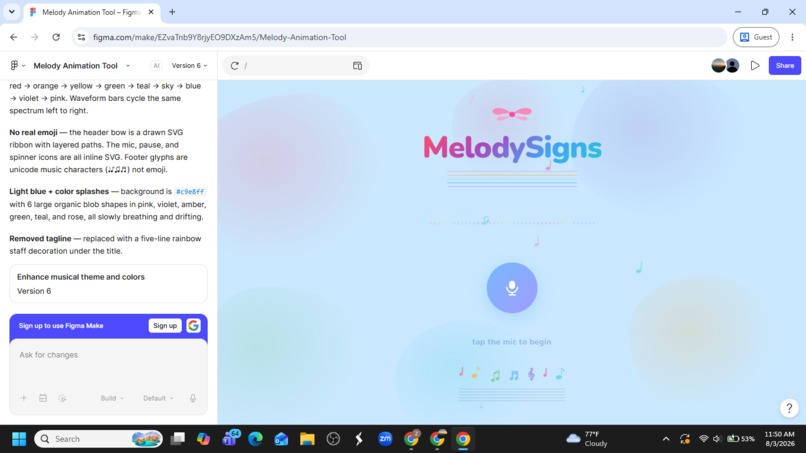
Explore our Figma prototype to see Artify's user interface and music visualization concept in action:
-
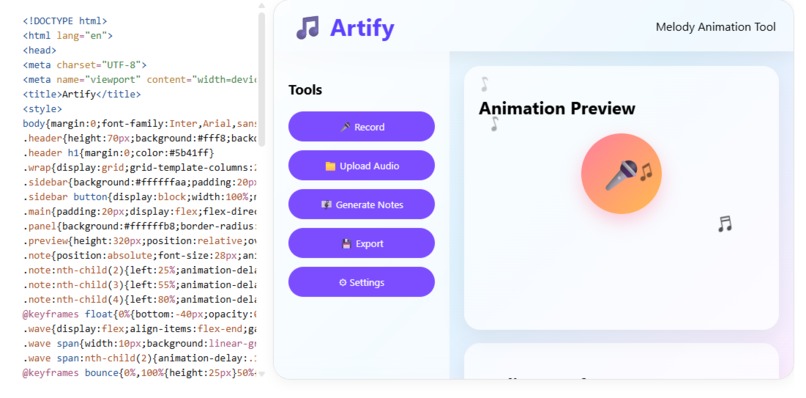
Behind the scenes of Artify — our HTML code powering the interface and animation preview bringing the user experience to life.
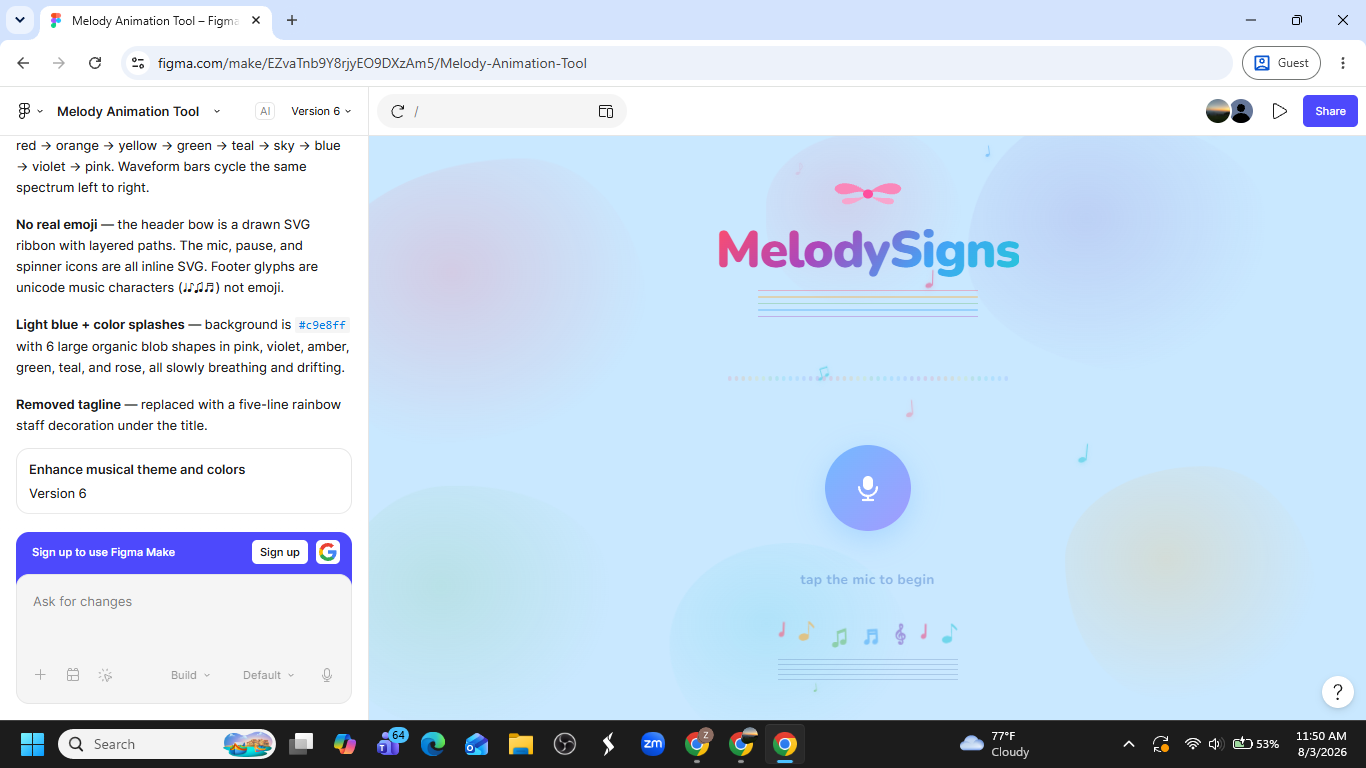
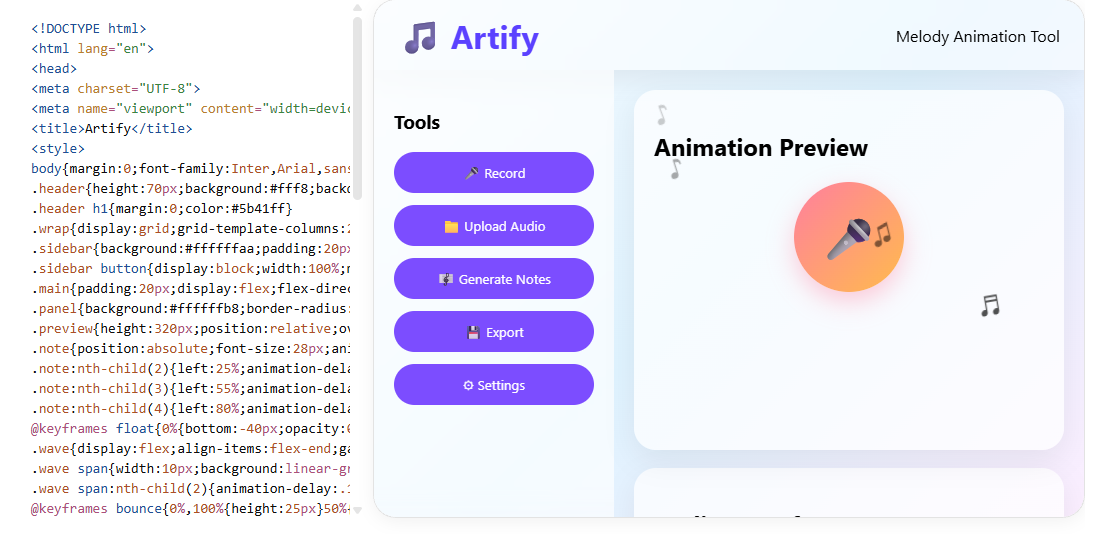
Music is often described as a universal language, but not everyone understands how melodies are represented in musical notation. We wanted to create a project that bridges the gap between hearing music and seeing it visually. Our goal was to transform audio beats into melody-inspired visual signs, making music more interactive and engaging while combining creativity with technolonology Artify analyzes music beats and converts them into visual melody signs. As music plays, the application detects the rhythm and represents it with corresponding musical-inspired visuals, allowing users to experience songs in a new way through both sound and imagery. We built Artify using React for the frontend interface, HTML and CSS for the user interface and styling, and Node.js for the backend. We collaborated through GitHub to develop features, organize our code, and integrate each team member's contributions into a working application. One of our biggest challenges was accurately processing music beats and translating them into meaningful visual representations. We also had to coordinate our work efficiently as a team, merge code without conflicts, and ensure that the frontend and backend communicated smoothly. Throughout this project, we strengthened our skills in React, Node.js, HTML, and CSS while improving our understanding of teamwork, GitHub collaboration, and problem-solving under pressure. We also learned how to turn a creative concept into a working prototype by balancing technical implementation with user experience. In the future, we'd like to improve beat detection accuracy, support additional audio formats, create more dynamic visualizations, and allow users to customize how melodies are displayed. We also hope to expand accessibility features and make Artify an educational tool for anyone interested in learning about music through interactive visuals.


Log in or sign up for Devpost to join the conversation.