Inspiration
What it does
How we built it
Challenges we ran into
Accomplishments that we're proud of
What we learned
What's next for Artifacthub.io
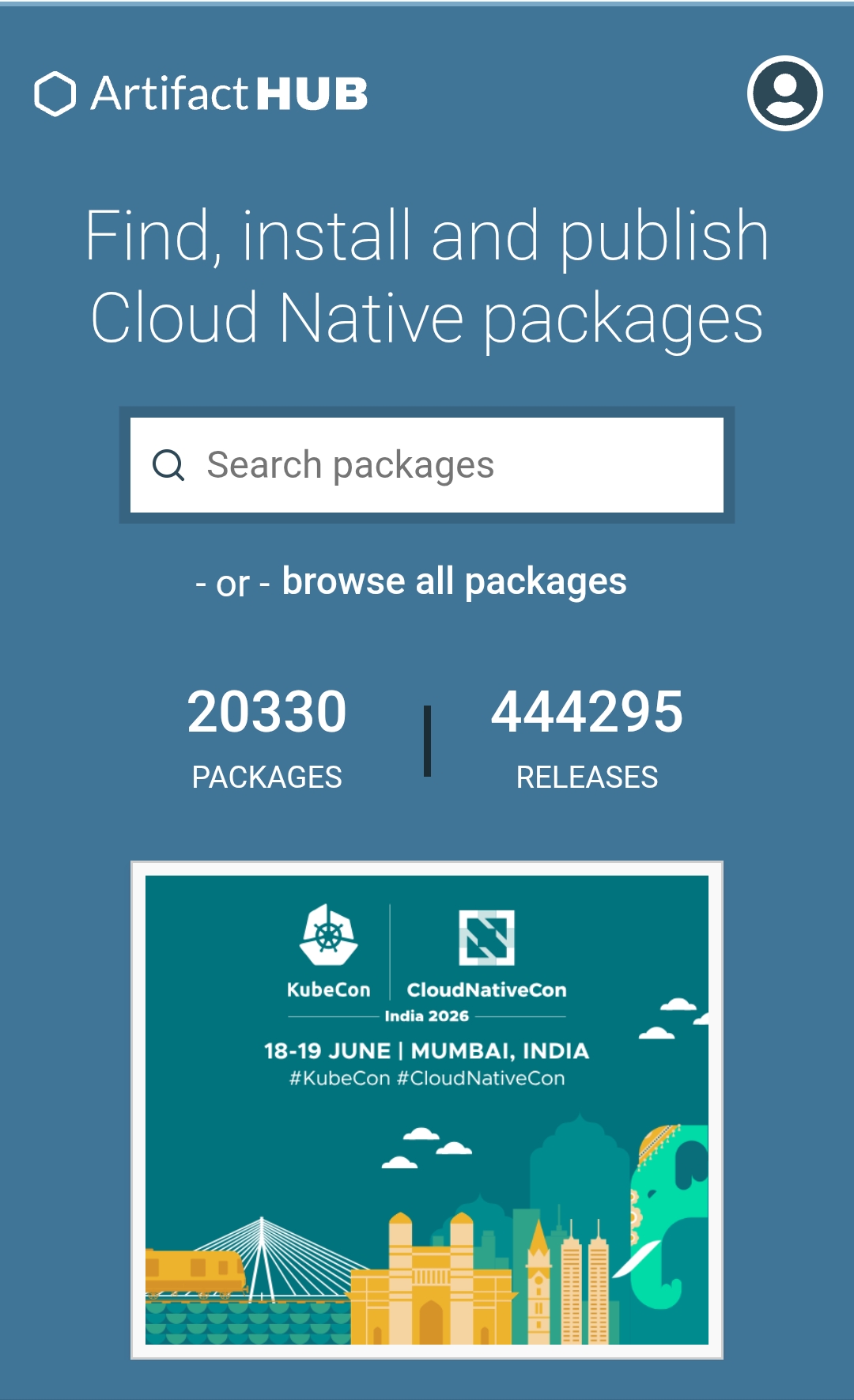
Artifact Hub is an open-source, web-based repository (and a CNCF Sandbox project) designed to help developers and DevOps engineers find, install, and publish Cloud Native packages.
Think of it as a "Search Engine for Kubernetes," similar to how Docker Hub is for container images or npm is for JavaScript libraries.
1. What does it actually host?
Unlike a standard file system, Artifact Hub doesn't usually store the binary files themselves. Instead, it acts as a centralized index for distributed repositories. It tracks:
- Helm Charts: The most popular way to package Kubernetes applications.
- OLM Operators: For managing complex stateful applications.
- Falco Rules: For runtime security and threat detection.
- Tekton Tasks: For CI/CD pipelines.
- OPA Policies: For "Policy as Code" (Open Policy Agent).
- CoreDNS Plugins and Knative Templates.
2. Key Features and User Benefits
As of 2026, Artifact Hub has become the industry standard for verifying the "health" of a cloud-native package.
- Verified Publishers: It distinguishes between official maintainers (like Bitnami or Google) and community contributors using a "Verified" badge.
- Security Scanning: It integrates with security tools to show vulnerability reports (CVEs) directly on the package page.
- Version History: You can easily compare changes between version
1.2.0and1.3.0of a Helm chart. - One-Click Install: It provides the exact
helm installcommands or YAML snippets needed to deploy the package to your cluster.
3. Technical Design: How it Works
The architecture of Artifact Hub is built for discovery and automation.
| Component | Function |
|---|---|
| Tracker | A background process that "crawls" registered repositories (like GitHub or ChartMuseum) to look for updates. |
| Hub | The frontend/API that serves the metadata and allows users to search. |
| Database | Stores the indexed metadata, readme files, and maintainer info. |
4. Why Use Artifact Hub for your Projects?
If you are working on a large-scale project—like the €20,000M Bluefin infrastructure or APSRTC's digital backend—Artifact Hub is vital for Standardization:
- Security Compliance: Before deploying a database or a gateway, you can check its "Security Score" on the Hub to ensure it meets PCI-DSS or HIPAA standards.
- Avoid "Shadow IT": It ensures your team is using the official, audited versions of software rather than random scripts found on the internet.
- Governance: You can set up notifications (Webhooks) to alert your team whenever a new version of a critical package is released.
5. Implementation Example (The Search Flow)
If you were looking for a PostgreSQL database to support a Java application:
- Search "Postgres" on Artifact Hub.
- Filter by Verified Publisher (e.g., Bitnami).
- Check the Artifact Hub Annotations in the
Chart.yamlto see if it supports your Kubernetes version. - Copy the repository URL and add it to your automation scripts.
Are you looking to publish your own Helm charts to Artifact Hub, or are you trying to integrate their API into your private developer portal?

Log in or sign up for Devpost to join the conversation.