Inspiration
We think the heist experience can be improved and digitalized to help determine which artifacts would be worth the risk in stealing.
What it does
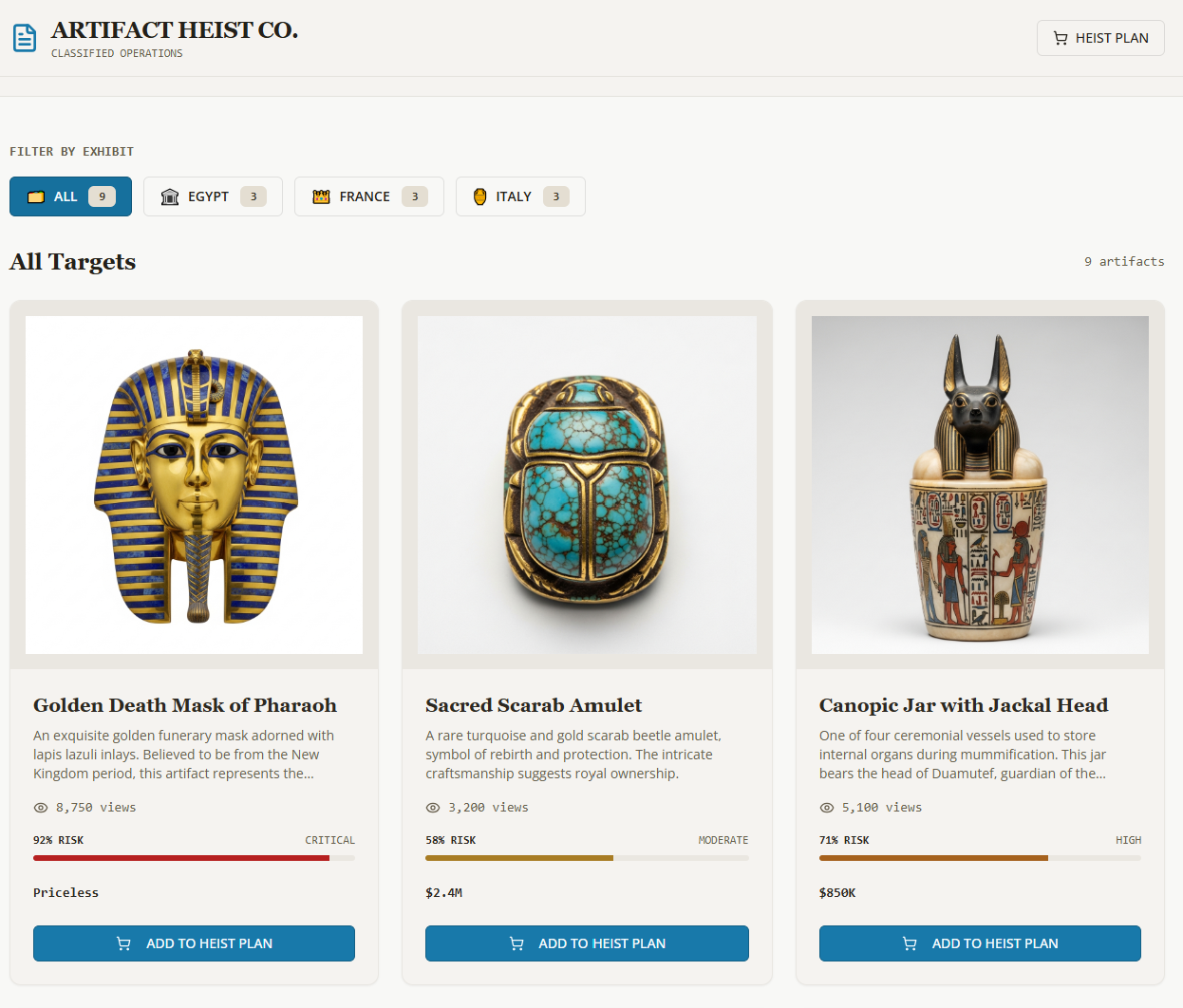
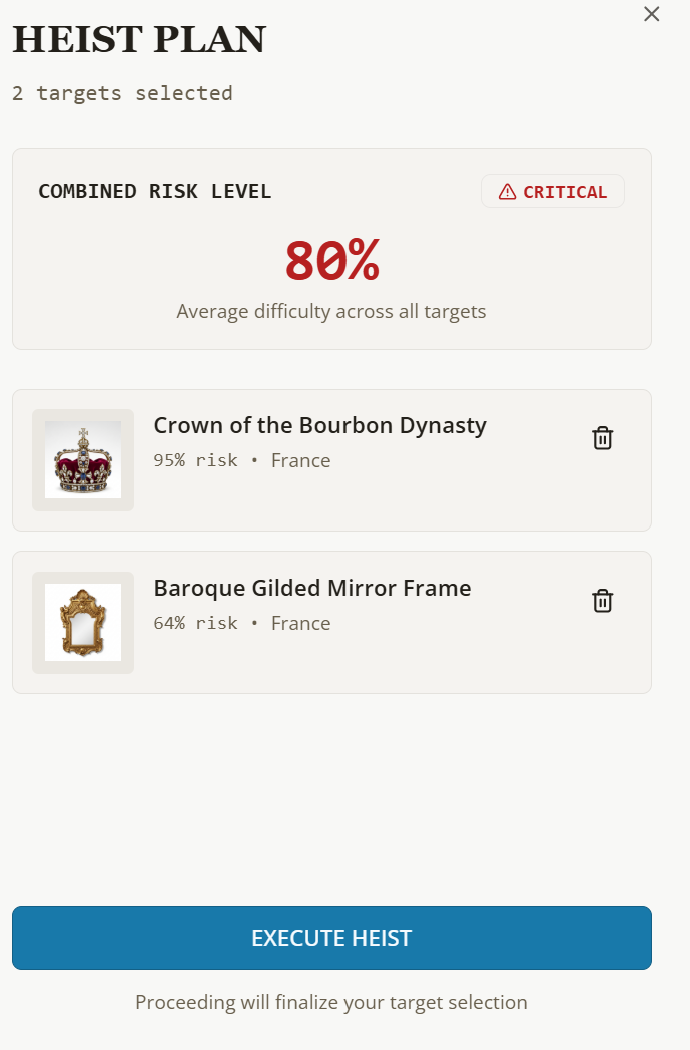
Using real engagement data from three exhibits: Egypt, France, and Italy, visitors can filter through artifacts and collections. Each item comes with a ‘risk percentage’ calculated from live visitor engagement metrics, the more popular the exhibit, the higher the ‘risk’ of getting caught.
How we built it
The architecture follows a TypeScript-centric, component-driven approach for consistency and scalability across the stack.
Frontend Framework: Built using React (TypeScript), ensuring type safety, modularity, and improved developer tooling.
Styling Layer: Designed with Tailwind CSS, leveraging utility-first principles for rapid prototyping and responsive UI composition without excessive context switching.
Build System: Configured through Vite, providing lightning-fast hot module replacement and optimized bundling for both development and production environments.
Dataset Integration: anonymized visitor engagement data sourced from a museum foot-traffic dataset (containing dwell times, interaction counts, and region-specific visitor volumes) was used to drive our risk model and exhibits.
What's next for Artifact Heist Co.
Integrate a machine learning model to refine the risk percentage calculation, making it responsive to new visitor trends and predictive of engagement peaks. Add data visualizations (heatmaps, time-series charts) to display exhibit popularity patterns. Expand to include more museums.
Made by: Jasmine Nguyen and Meryem

Log in or sign up for Devpost to join the conversation.