-
-
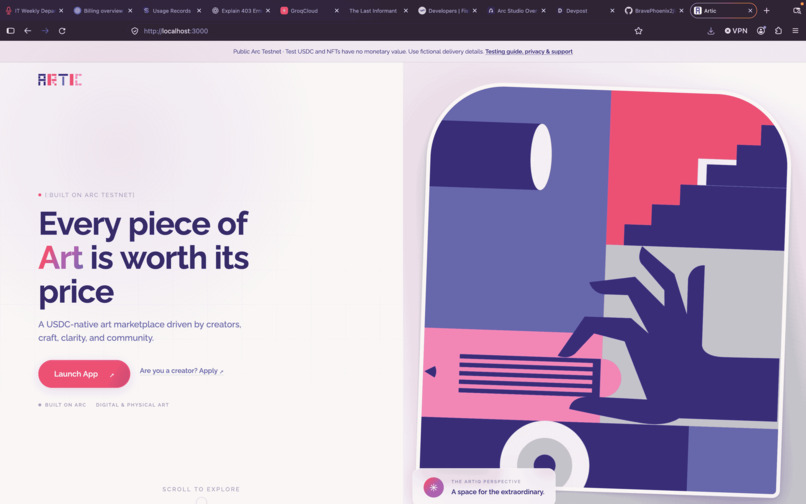
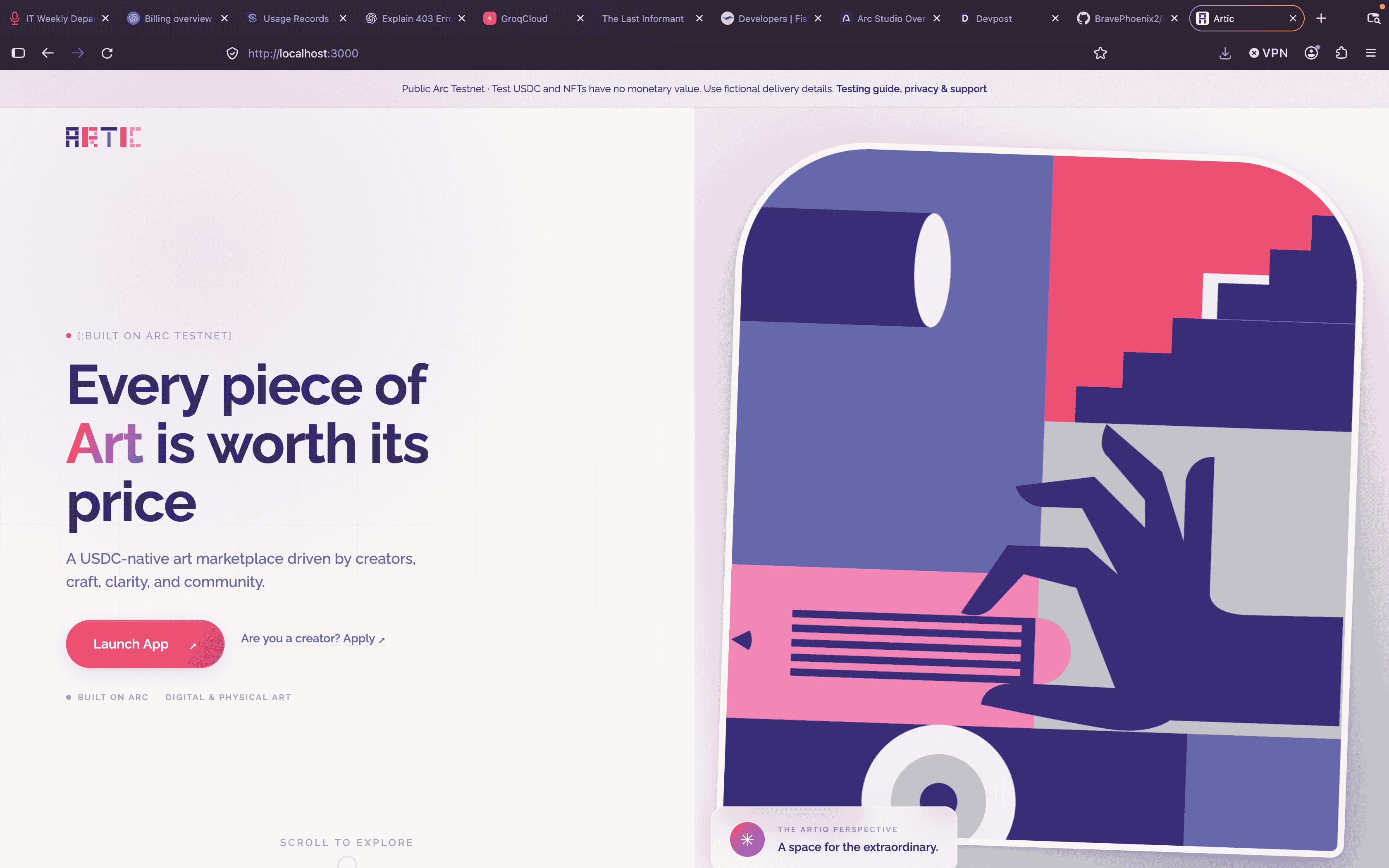
LANDING PAGE
-
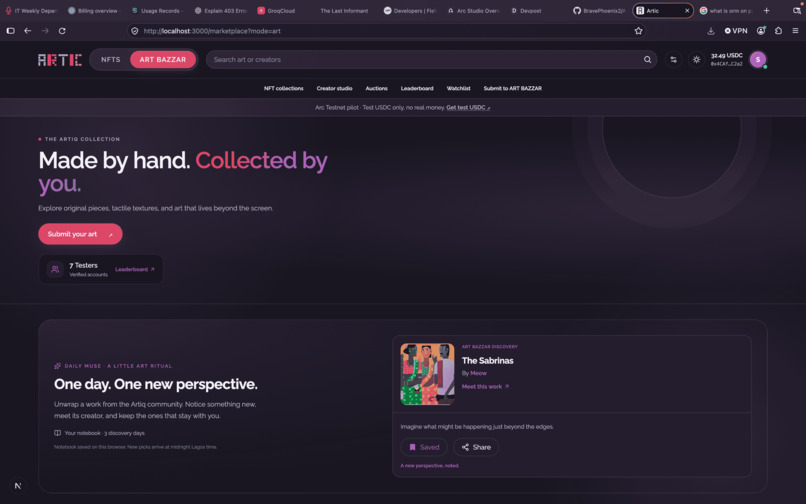
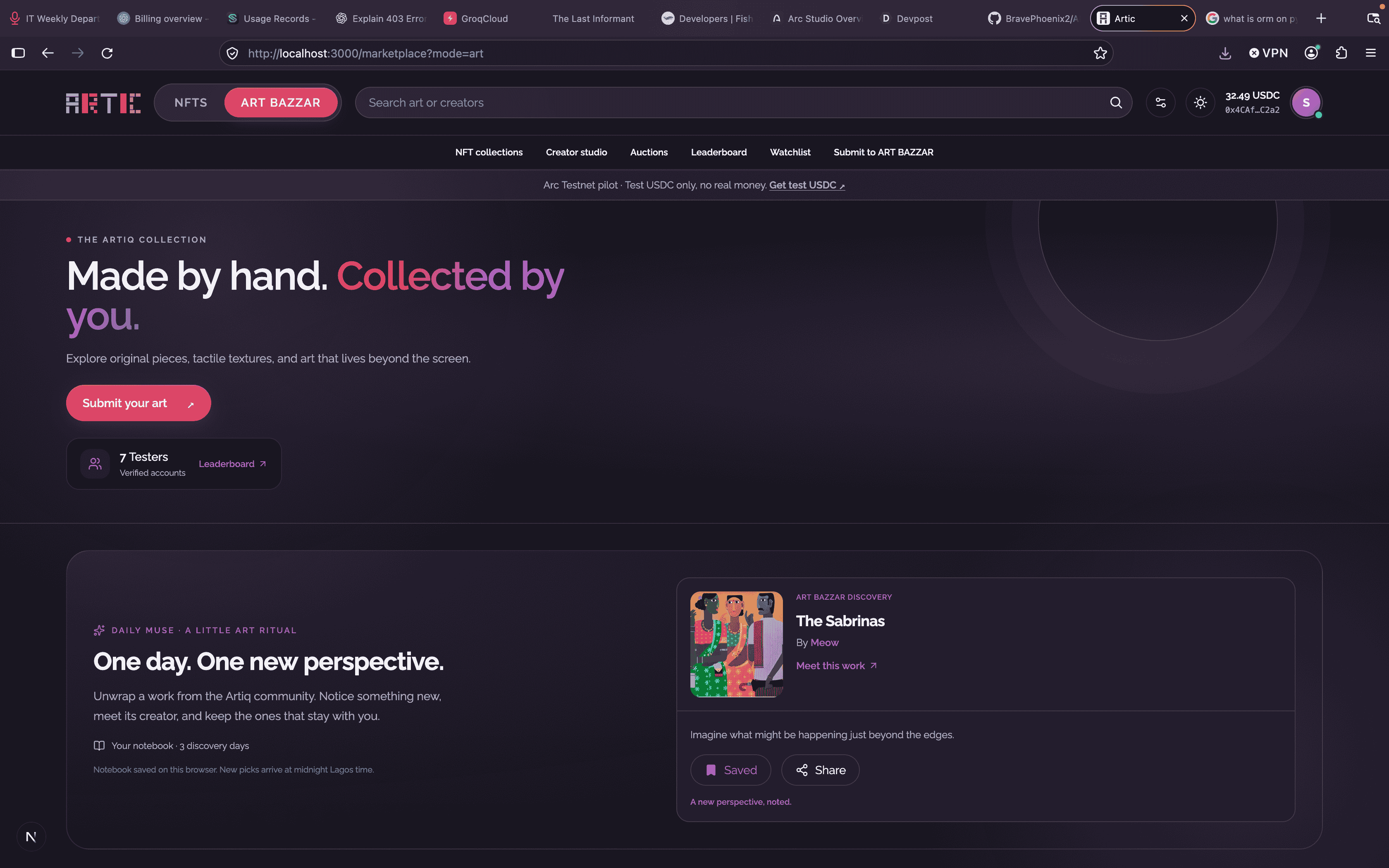
ART BAZZAR
-
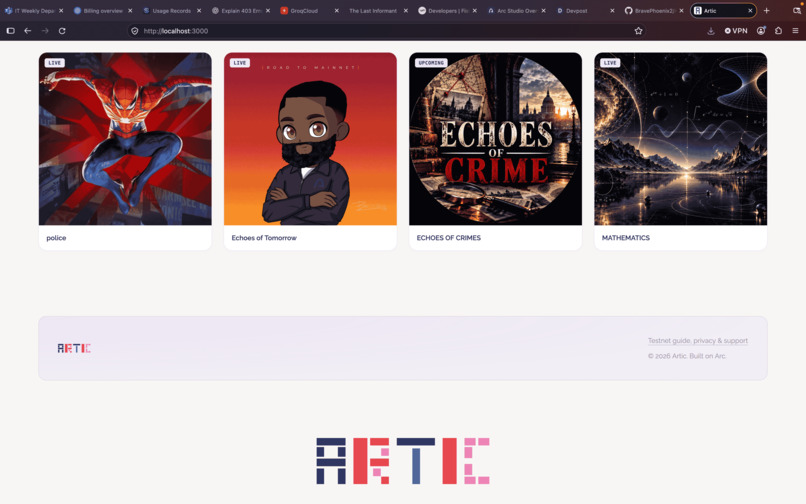
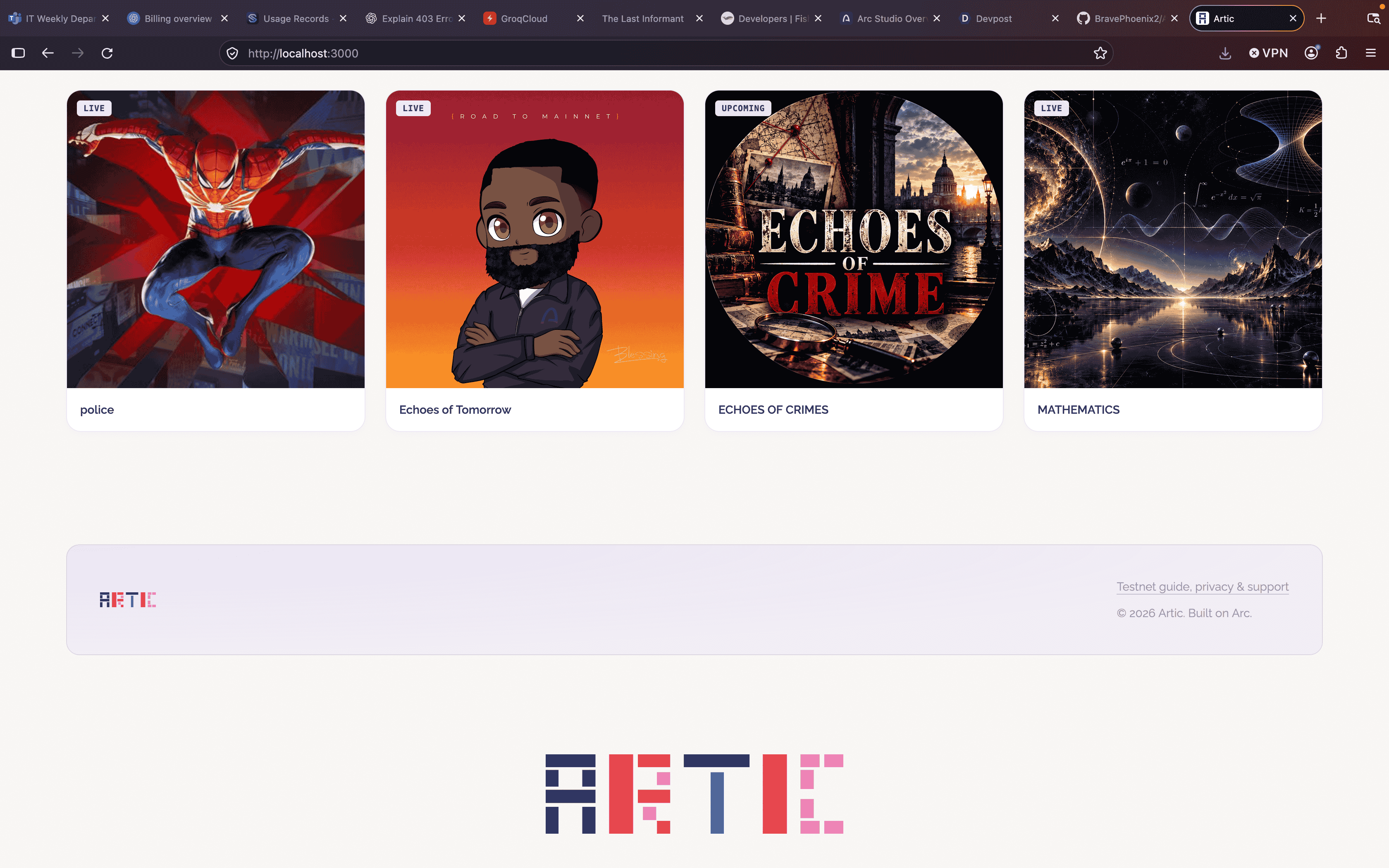
FOOTER
-
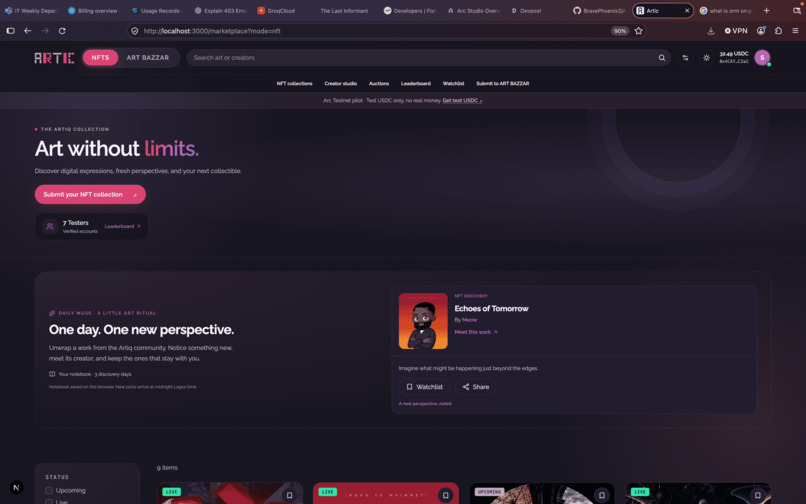
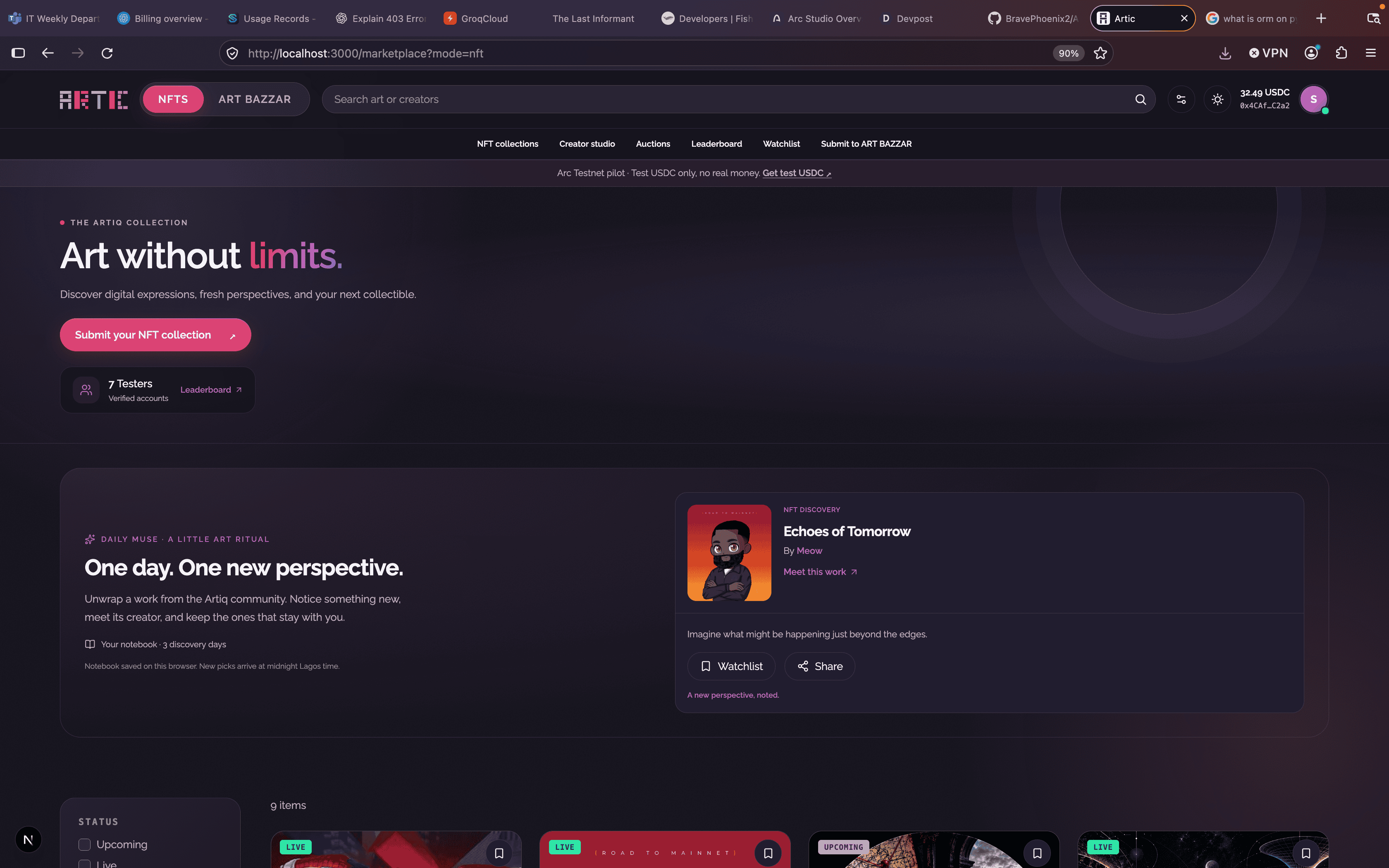
NFT DASHBOARD
-
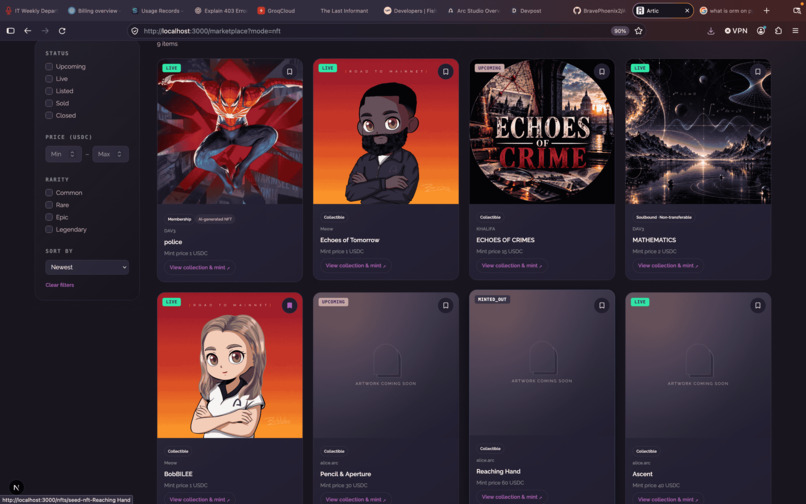
COLLECTIONS DASHBOARD
-
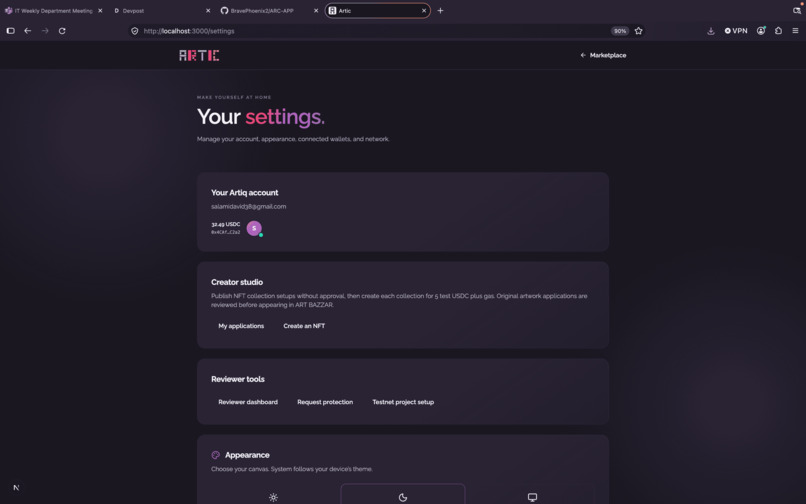
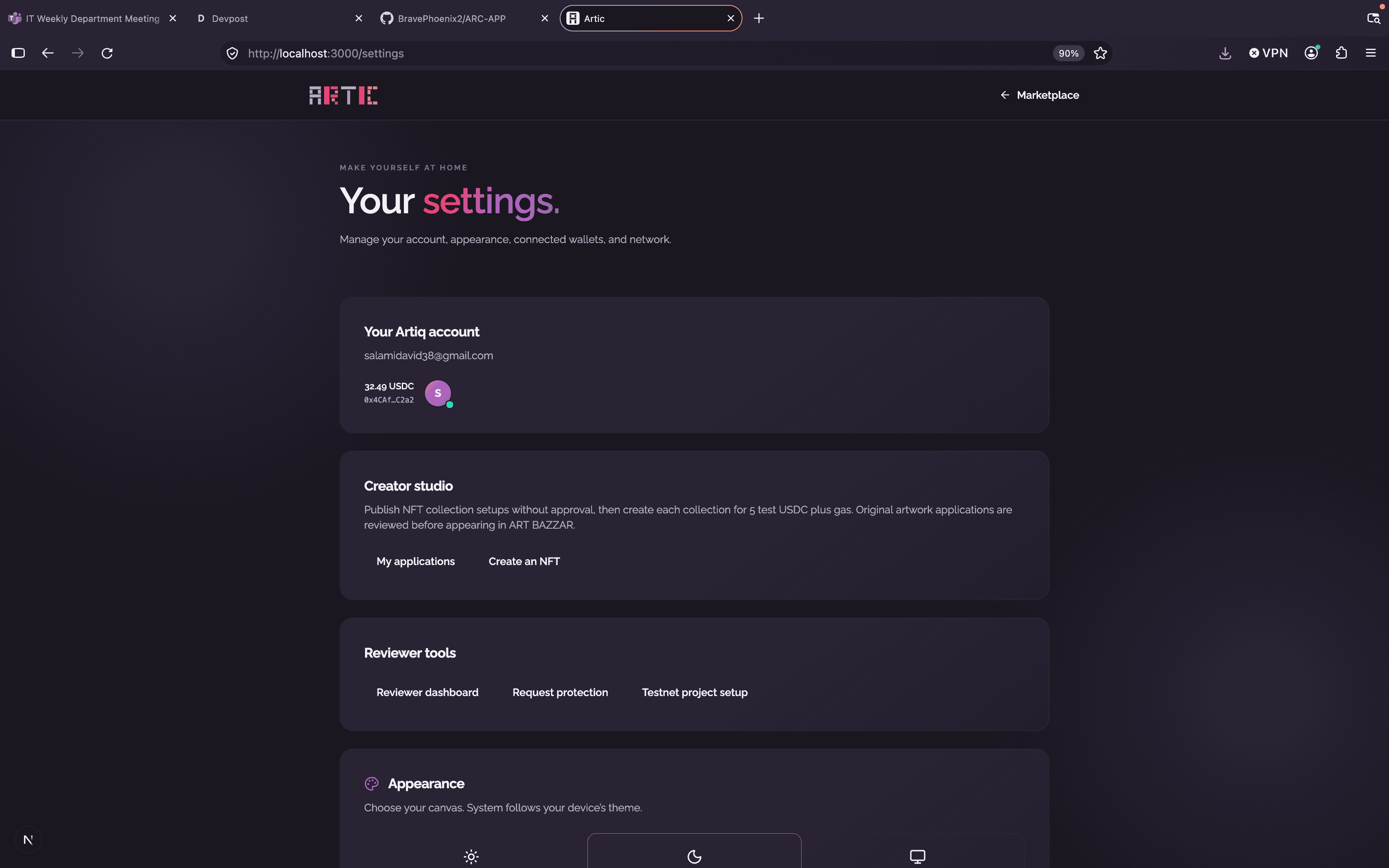
USERS SETTINGS
-
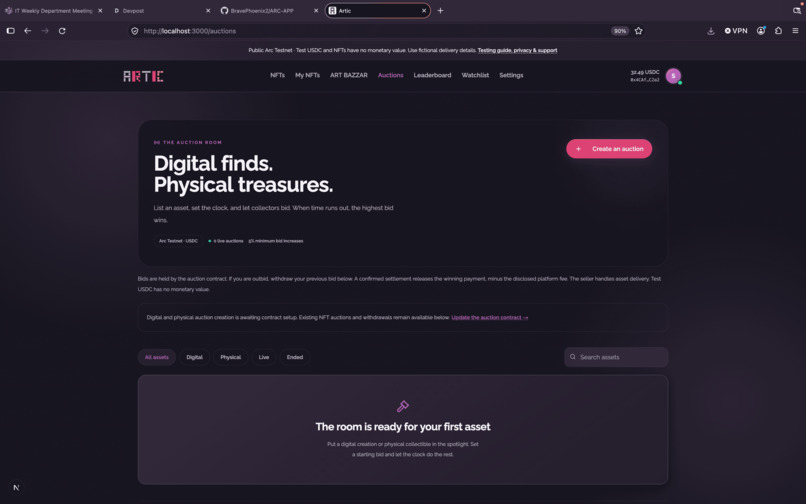
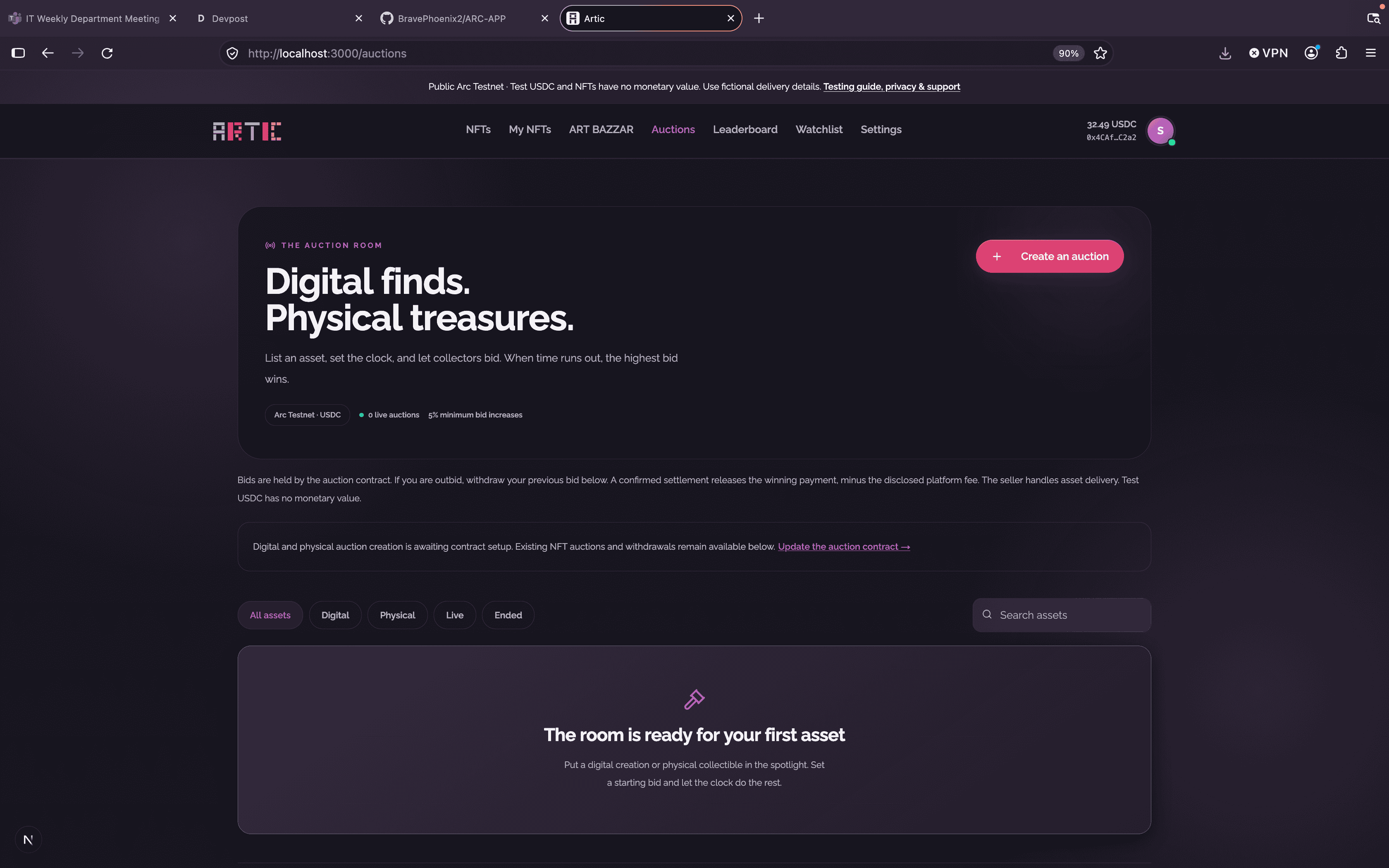
AUCTION
-
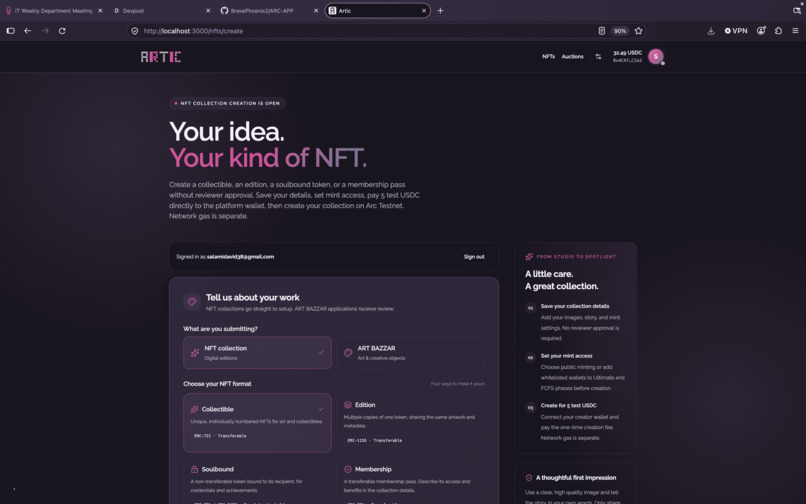
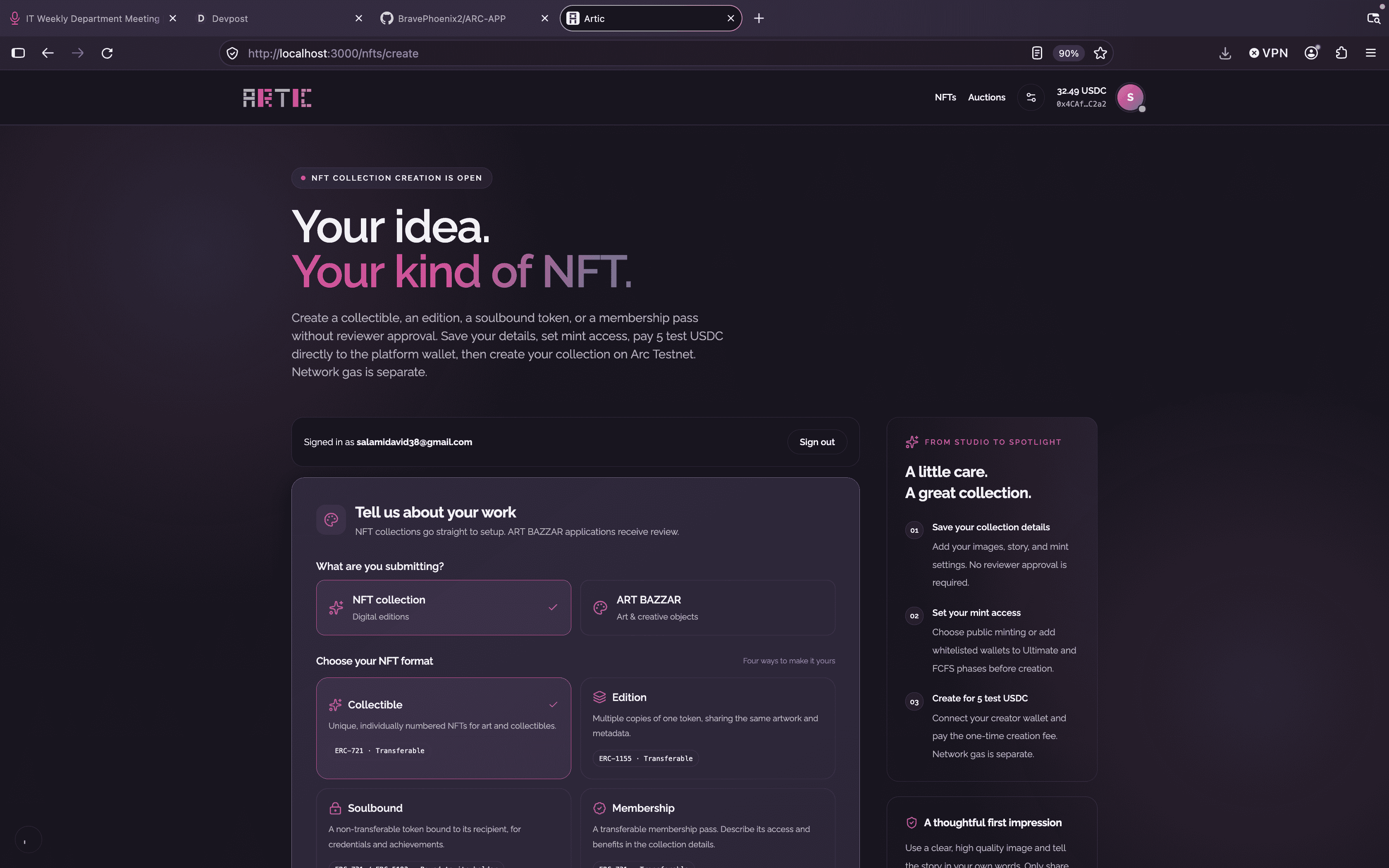
CREATOR STUDIO
Inspiration
ARTIC started with a simple belief: every piece of art is worth its price.
We wanted to make selling and collecting art more approachable. Complicated wallet flows, unfamiliar currencies, and unclear fees can distract from the artwork itself. By building on Arc and using USDC for prices, payments, and gas, we could create an experience centered on creators, craft, clarity, and community.
What it does
ARTIC connects creators and collectors through a marketplace for NFTs, digital creations, and physical art.
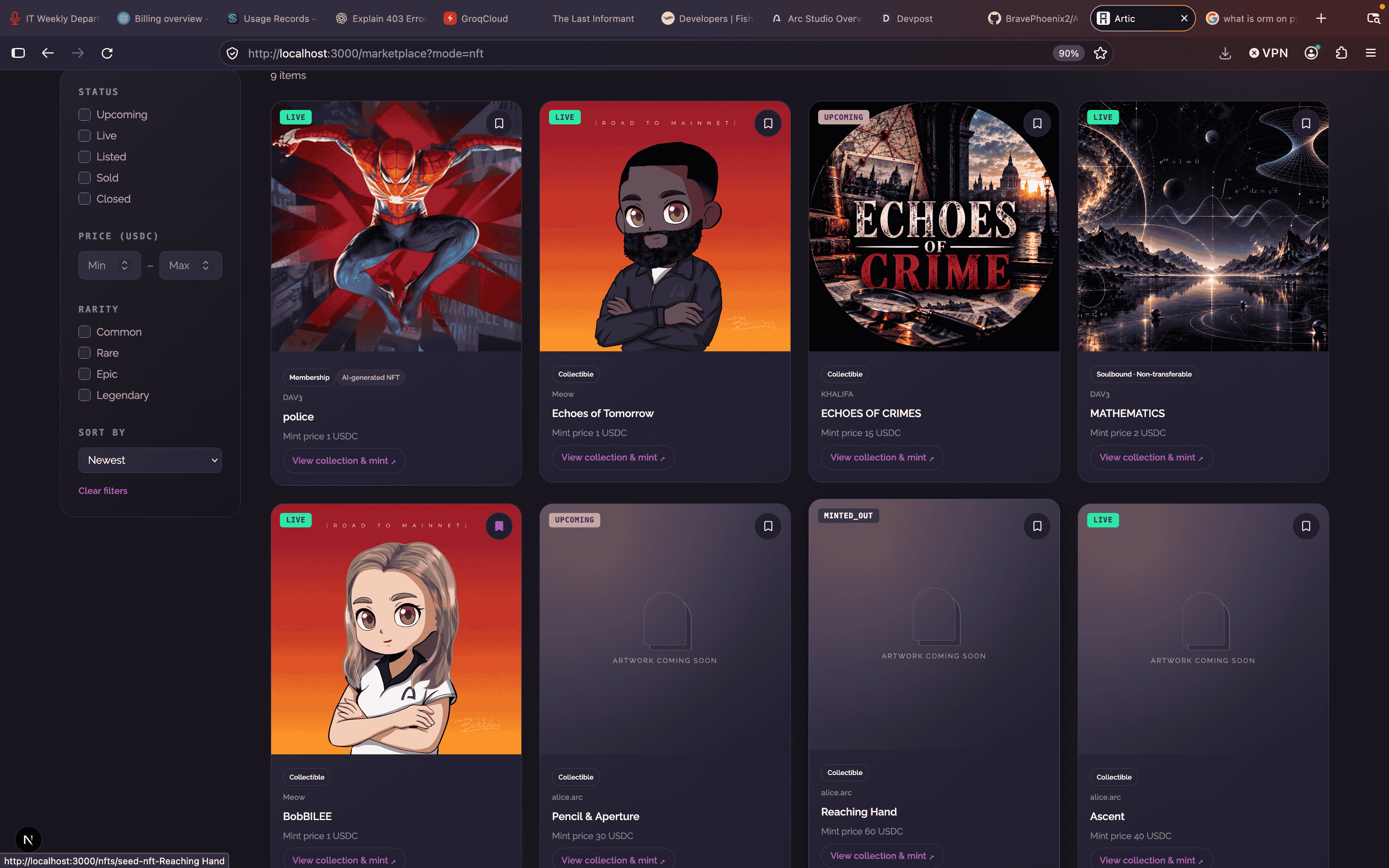
Creators can launch NFT collections, upload image series, configure mint schedules and allowlists, and offer collectibles, editions, memberships, or soulbound tokens. ART BAZZAR provides a reviewed space for human-made original artwork.
Collectors can discover creators, save work to watchlists, mint NFTs, and participate in auctions. The platform also includes original-art checkout, NFT ownership views, and independently funded community rewards.
The current project operates on Arc Testnet, using test USDC with no monetary value. Physical delivery flows are simulations during this phase.
How we built it
We built the interface with Next.js, React, TypeScript, and Tailwind CSS, using Prisma with PostgreSQL for hosted deployment and SQLite for local development.
Our Solidity smart contracts, built with OpenZeppelin, handle collection deployment, minting, payments, auctions, and rewards. We used Hardhat for contract development and testing, and wagmi, viem, and ethers to connect the application to blockchain activity.
Privy supports email sign-in, embedded wallets, and external wallet connections, giving users several ways to get started.
Challenges we ran into
The biggest challenge was coordinating blockchain transactions with application records. A transaction can succeed even when the next API request fails. We added receipt verification, saved transaction hashes, and recovery flows so users can register completed actions without paying or deploying again.
We also worked through wallet switching, authentication timeouts, phased mint rules, and protecting private uploads, allowlists, and delivery details.
Original-art review required careful judgment. Screening signals cannot establish human authorship by themselves, so we combined them with creator declarations, creation-process details, and documented human review.
Accomplishments that we're proud of
We brought collection creation, discovery, minting, auctions, and art checkout into one connected testnet experience.
We are especially proud of the transaction recovery flows, transparent fee breakdowns, and support for several NFT formats. Application and contract tests helped us check payment rules, access controls, and failure cases as the project grew.
What we learned
We learned that a useful blockchain marketplace needs clear explanations and reliable behavior throughout the experience.
Successful transactions are only part of that work. Users also need understandable prices, accurate ownership records, private account data, and a way to recover when something goes wrong. We also learned to distinguish what blockchain settlement verifies from what still requires human judgment, such as authorship and physical delivery.
What's next for ARTIC
We plan to expand testing with artists and collectors, simplify creator onboarding, and improve discovery and collection management.
We also want to refine the original-art review process, strengthen operational reliability, and validate payment and fulfillment workflows as we prepare for a future production release.
Built With
- arc
- ethers.js
- framer-motion
- hardhat
- next.js
- node.js
- openzeppelin
- postgresql
- prisma
- privy
- react
- solidity
- sqlite
- tailwind-css
- tanstack-query
- typescript
- usdc
- viem
- wagmi

