-
-
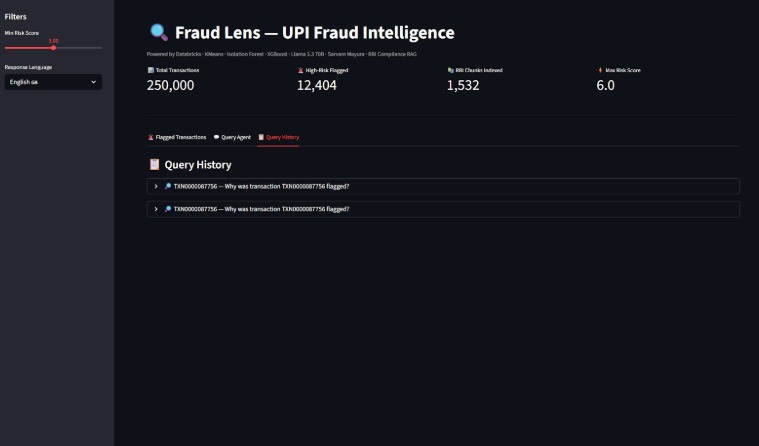
Dashboard
-
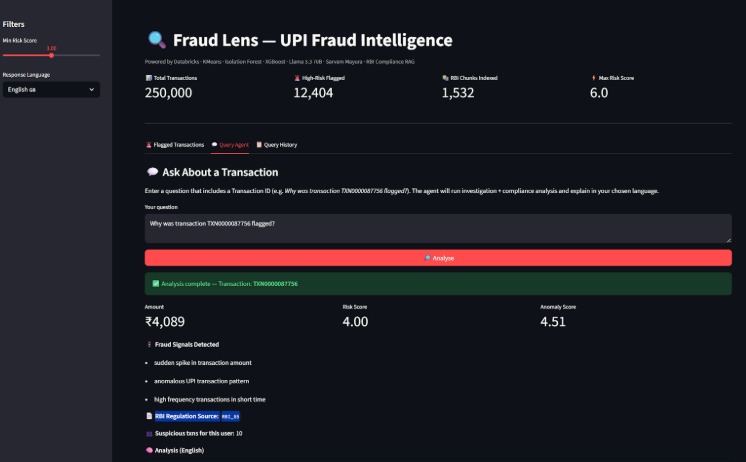
Dashboard
-
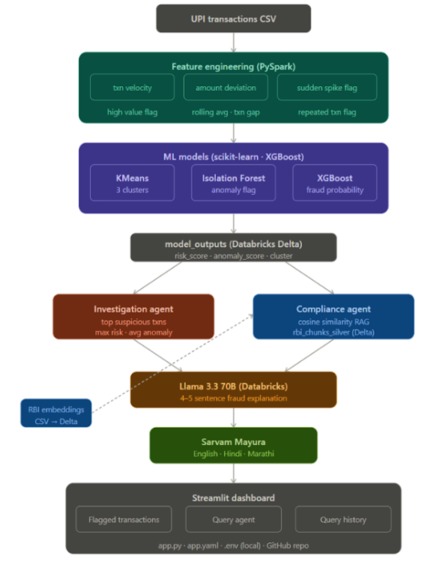
Workflow
-
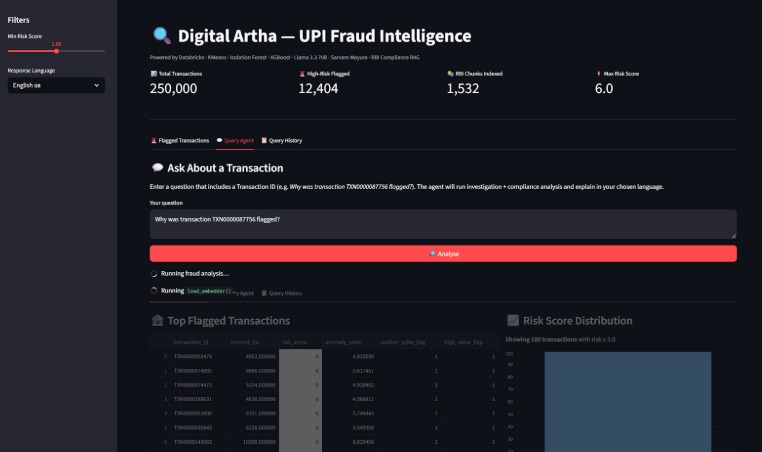
Dashboard
-
Dashboard
Inspiration
Digital payments in India have grown rapidly, especially with UPI, but so have fraud cases. Many users lose money because they don’t understand why a transaction is risky. We wanted to build a system that not only detects fraud but also explains it clearly and aligns with RBI regulations, making financial systems more trustworthy and accessible.
What it does
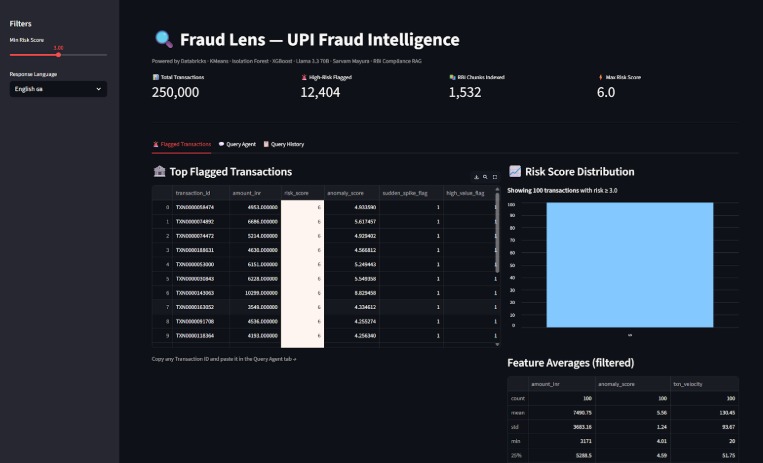
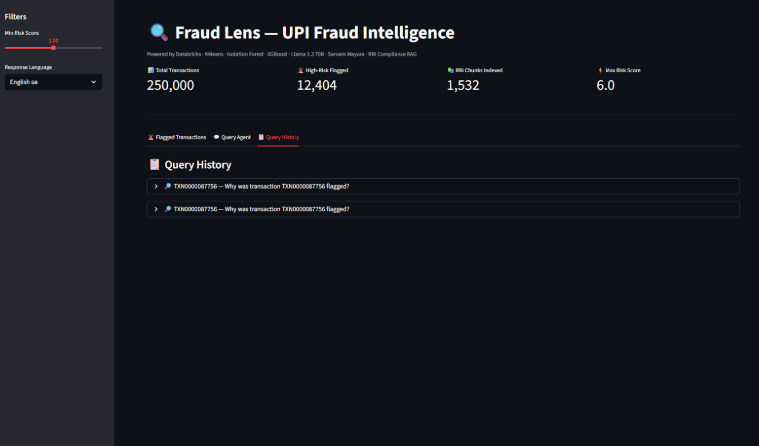
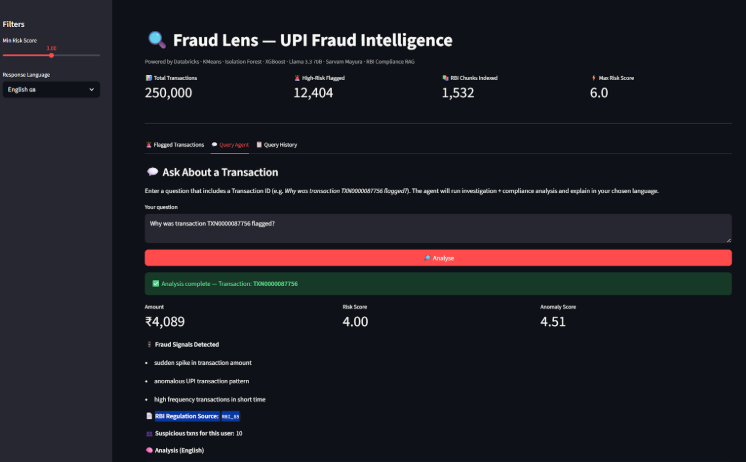
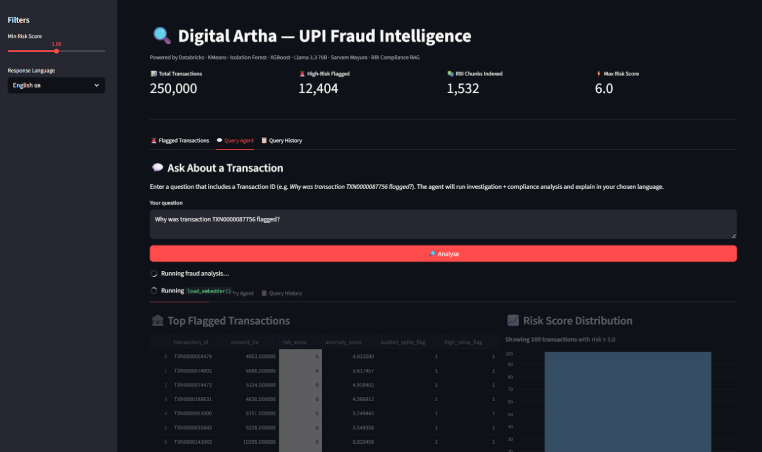
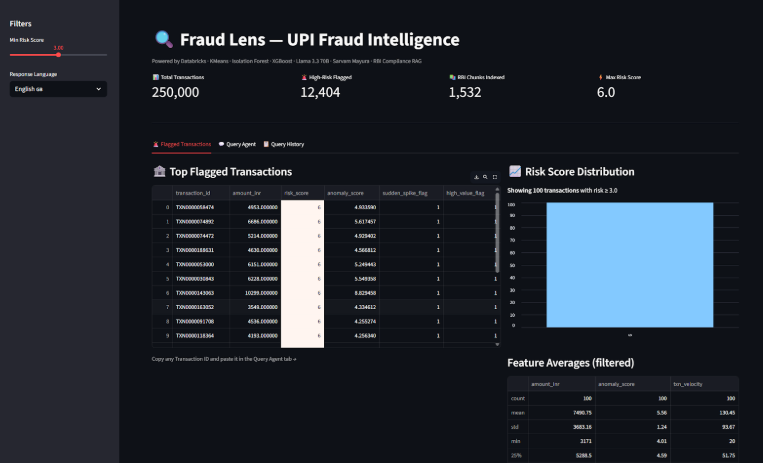
FraudLens is a multi-agent system that detects suspicious financial transactions in real time. It investigates why a transaction is risky, checks whether it violates RBI rules, and provides clear, simple explanations to users. It helps improve trust, transparency, and financial safety.
How we built it
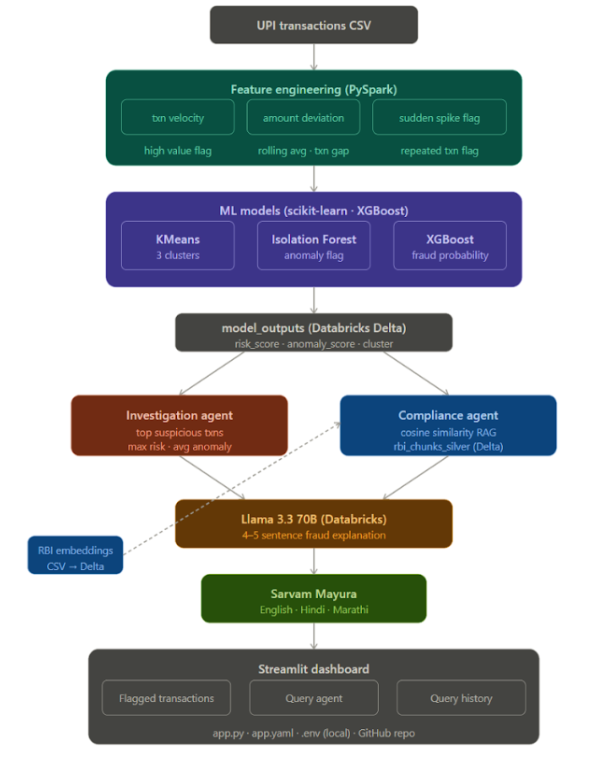
We built FraudLens using a combination of machine learning and agent-based architecture on Databricks.
- A detection model (Isolation Forest) identifies anomalies in transaction data.
- An investigation agent analyzes user behavior, transaction patterns, and risk factors.
- A compliance agent uses RAG to retrieve relevant RBI rules and check violations.
- An explanation agent converts system outputs into simple, user-friendly language. We used Delta Lake for data storage, Spark for processing, MLflow for model tracking, and Vector Search for document retrieval.
Challenges we ran into
One major challenge was generating realistic fraud scenarios instead of using random labels. We also had to balance accuracy and explainability, ensuring the system remained interpretable. Integrating multiple agents into a smooth pipeline and mapping RBI rules into structured logic was also challenging.
Accomplishments that we're proud of
We successfully built a complete multi-agent system instead of a basic model. The system not only detects fraud but explains decisions and ensures compliance with regulations. Integrating Databricks tools effectively and creating a scalable architecture was a key achievement.
What we learned
We learned how to design agent-based systems, combine traditional ML with LLM-based reasoning, and work with real-world financial data challenges. We also gained experience in using Databricks tools like Spark, MLflow, and Vector Search for building scalable AI systems.
What's next for FraudLens
We plan to improve real-time performance, add voice-based explanations for rural users, and integrate more advanced fraud detection techniques like graph-based analysis. We also aim to expand language support and deploy FraudLens as a real-world financial safety tool.


Log in or sign up for Devpost to join the conversation.