-
-
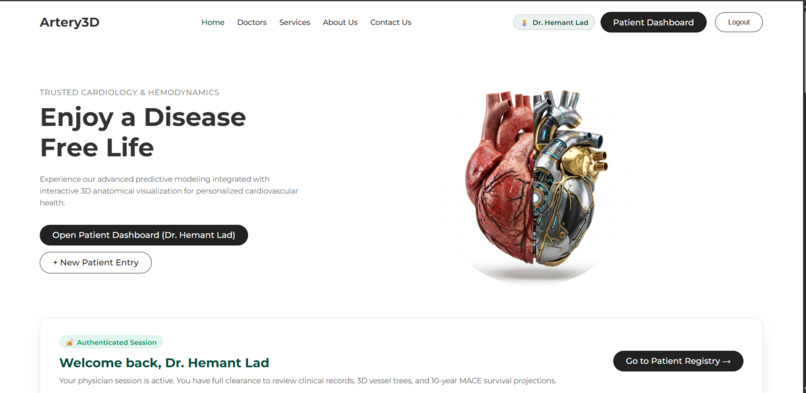
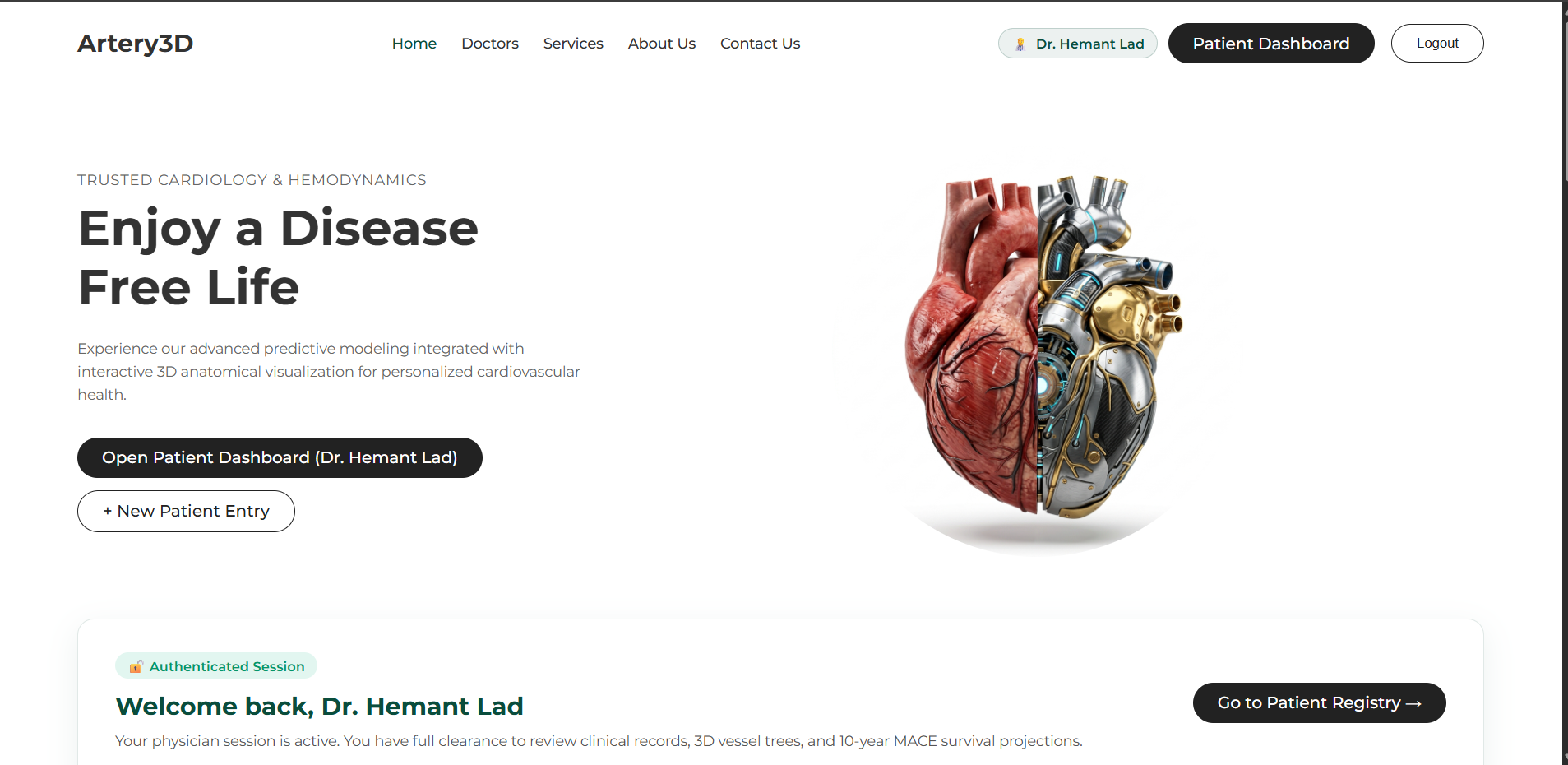
Homepage
-
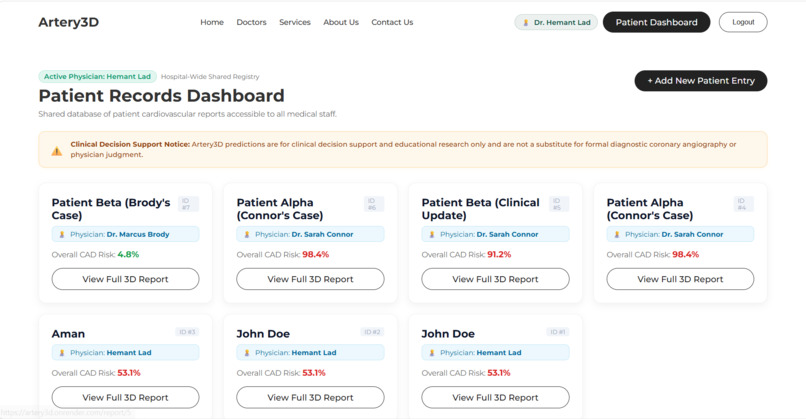
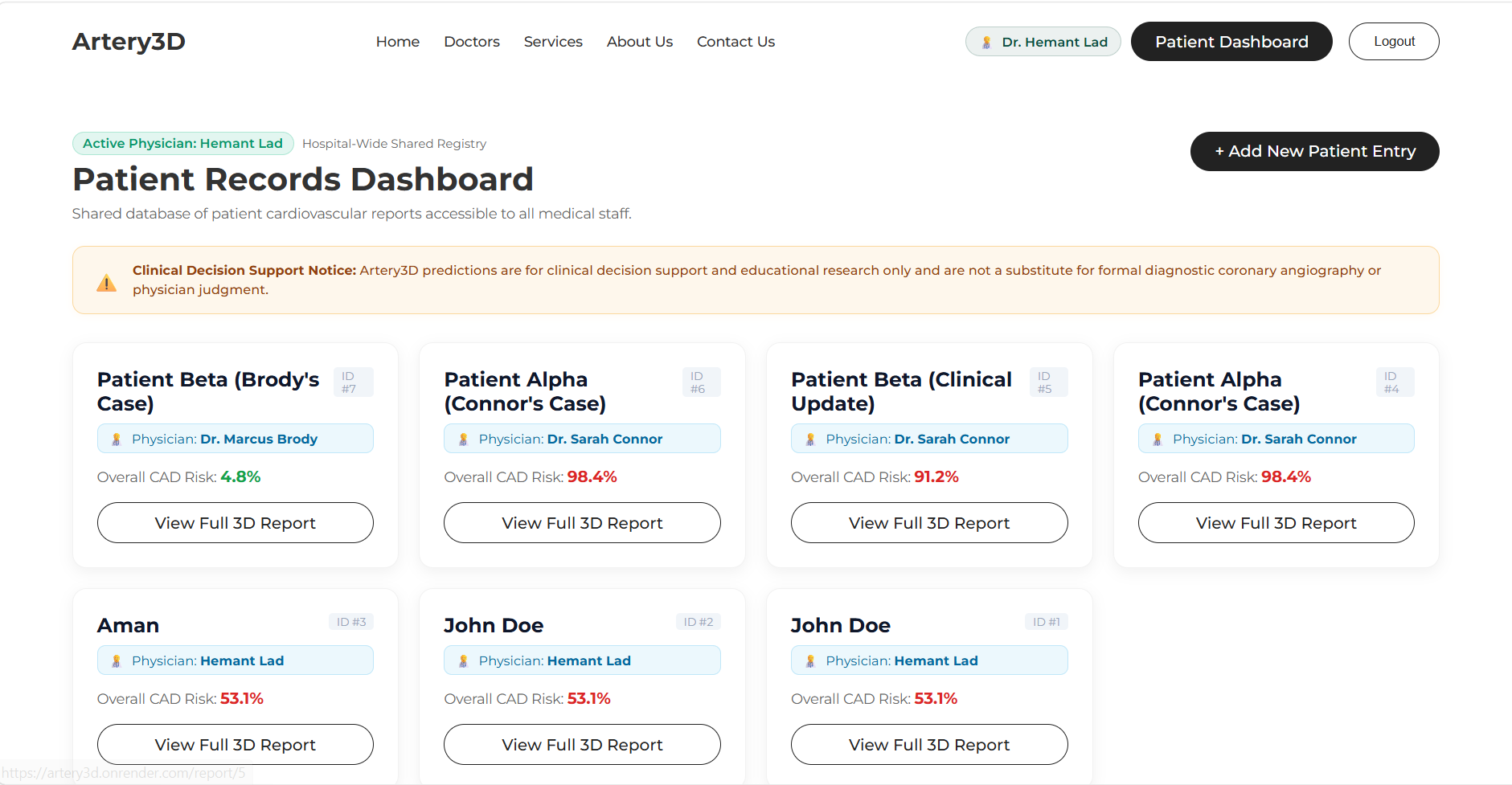
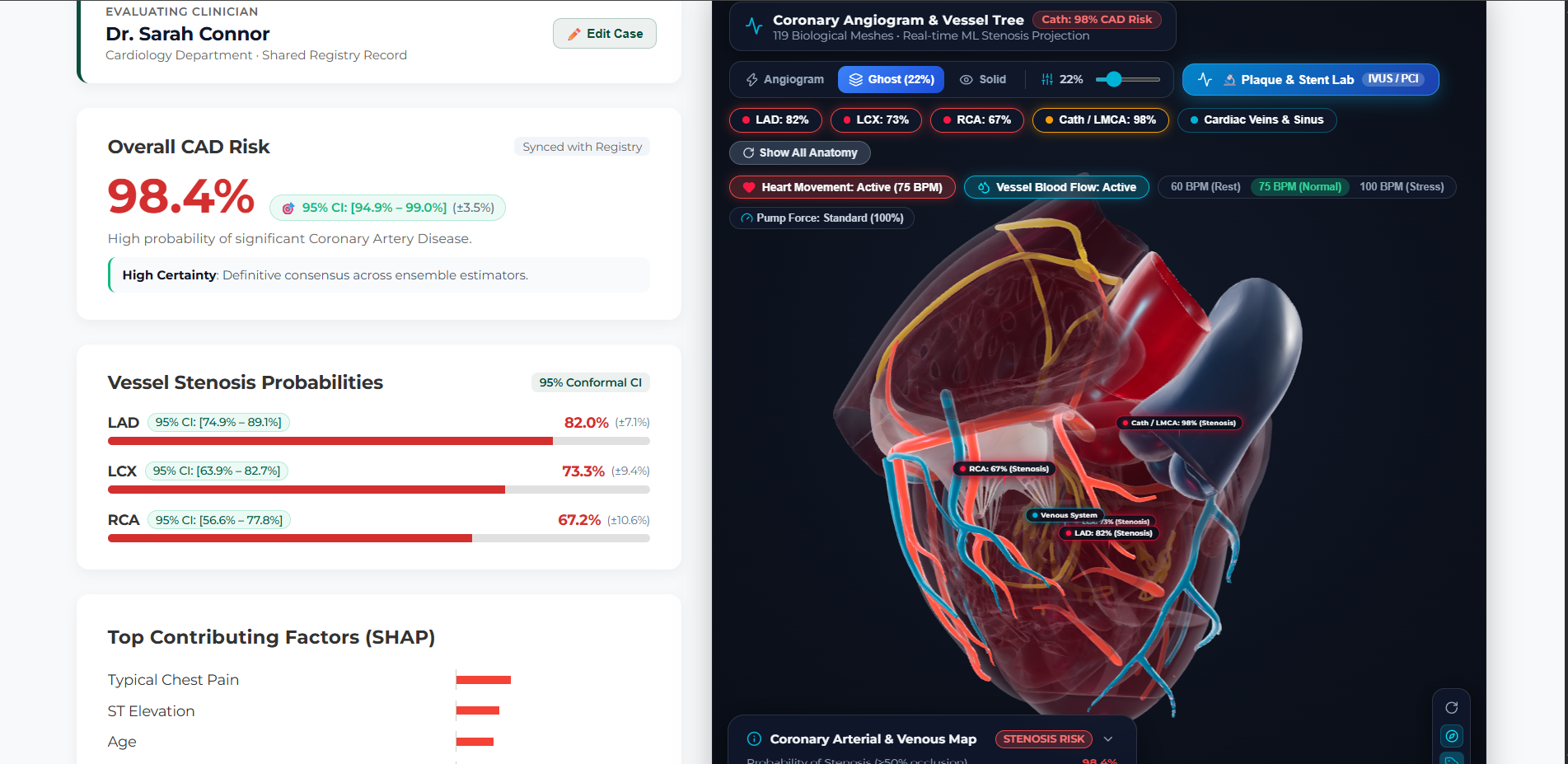
Patient Dashboard
-
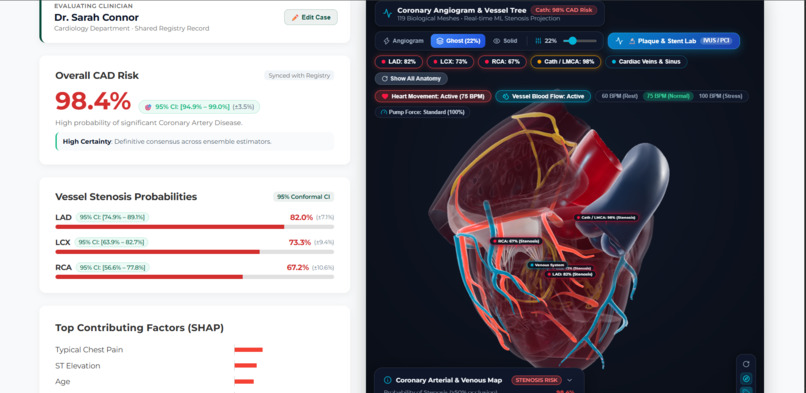
Patient report
-
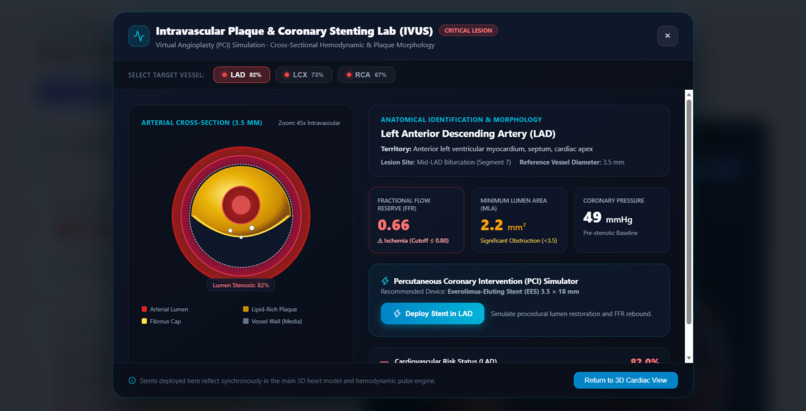
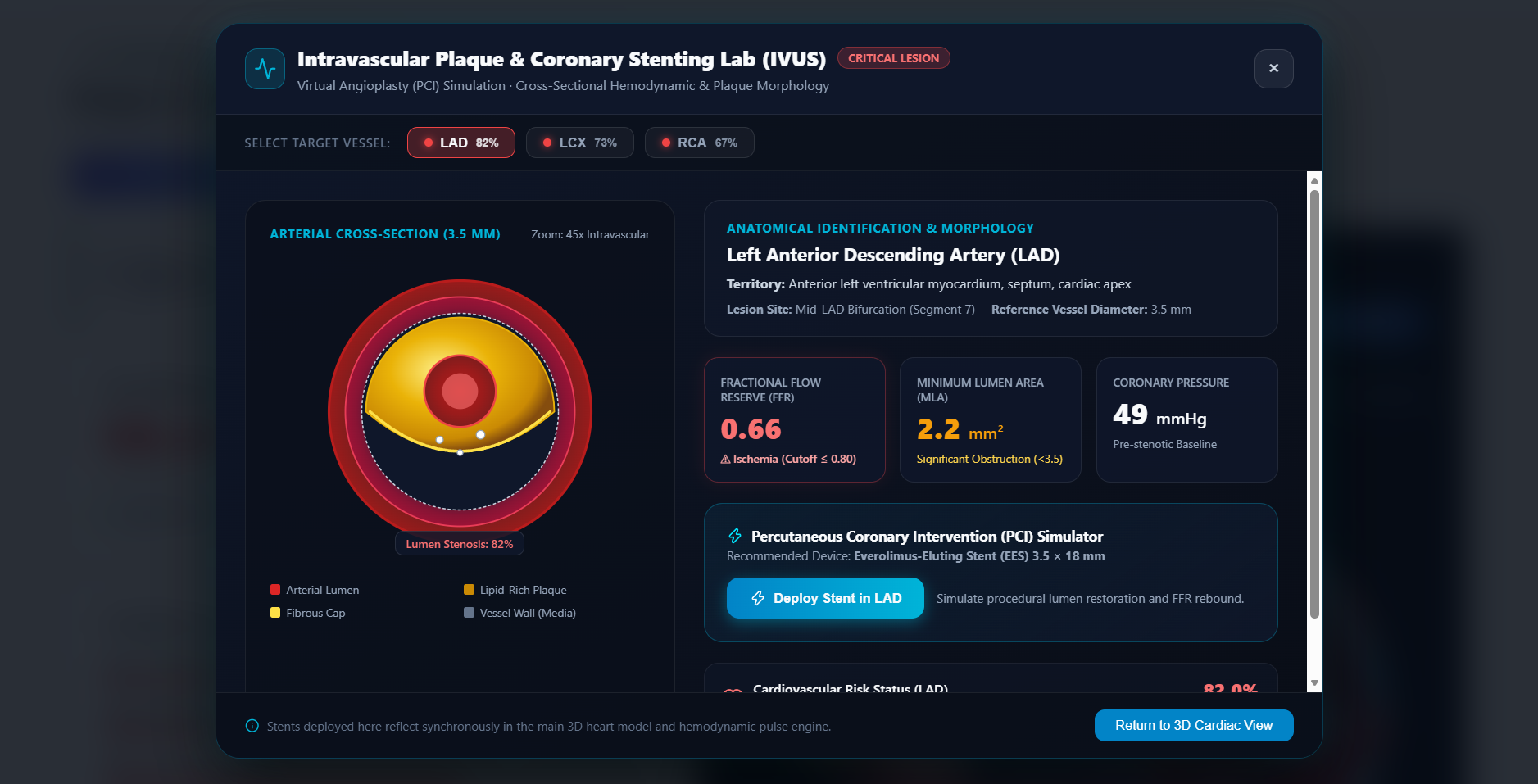
Treatment Simulation
-
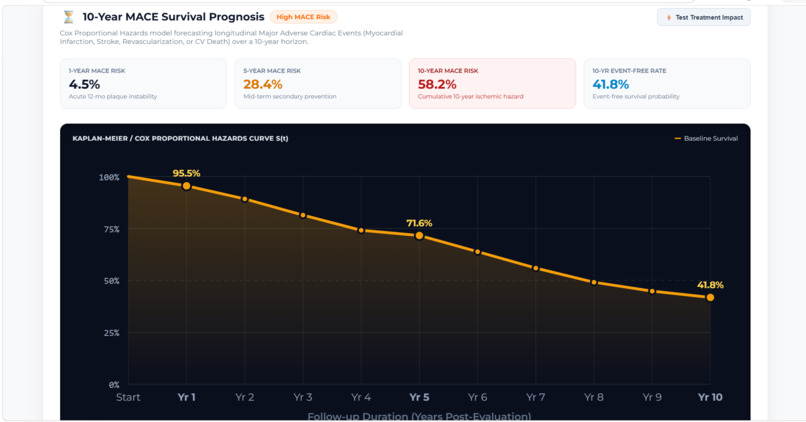
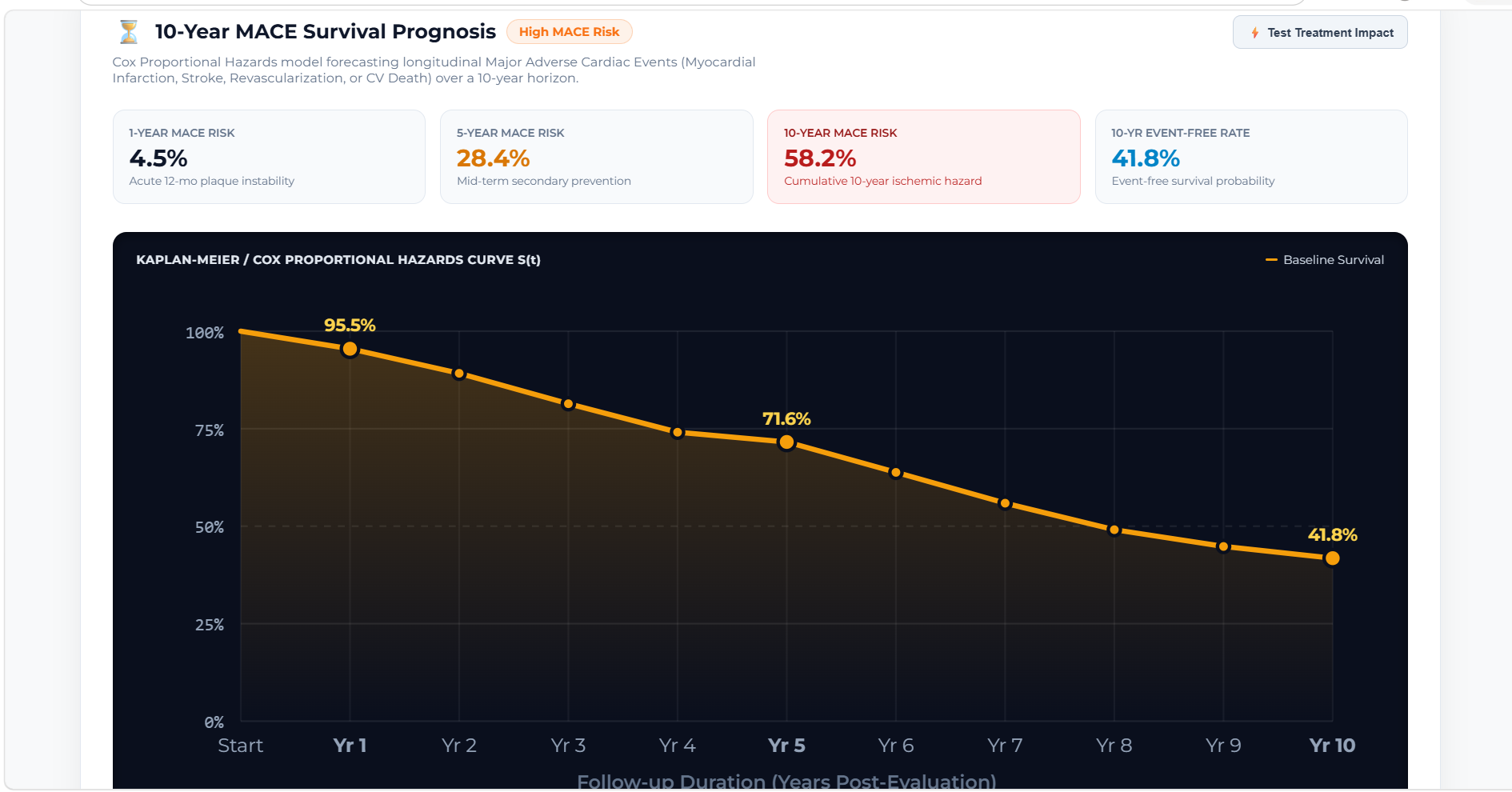
10 yr survival pragnosis
-
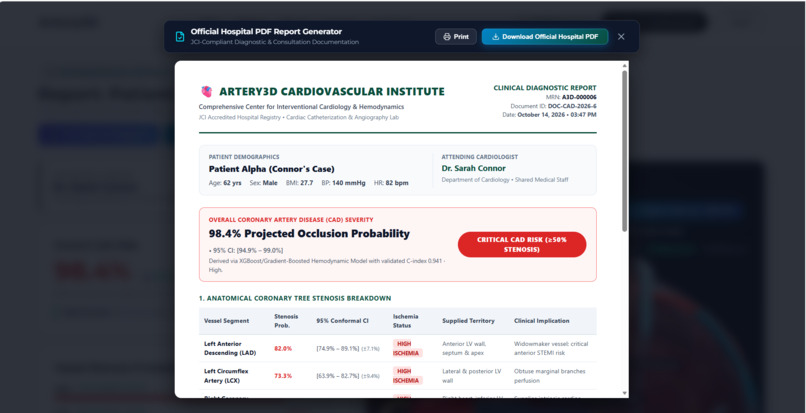
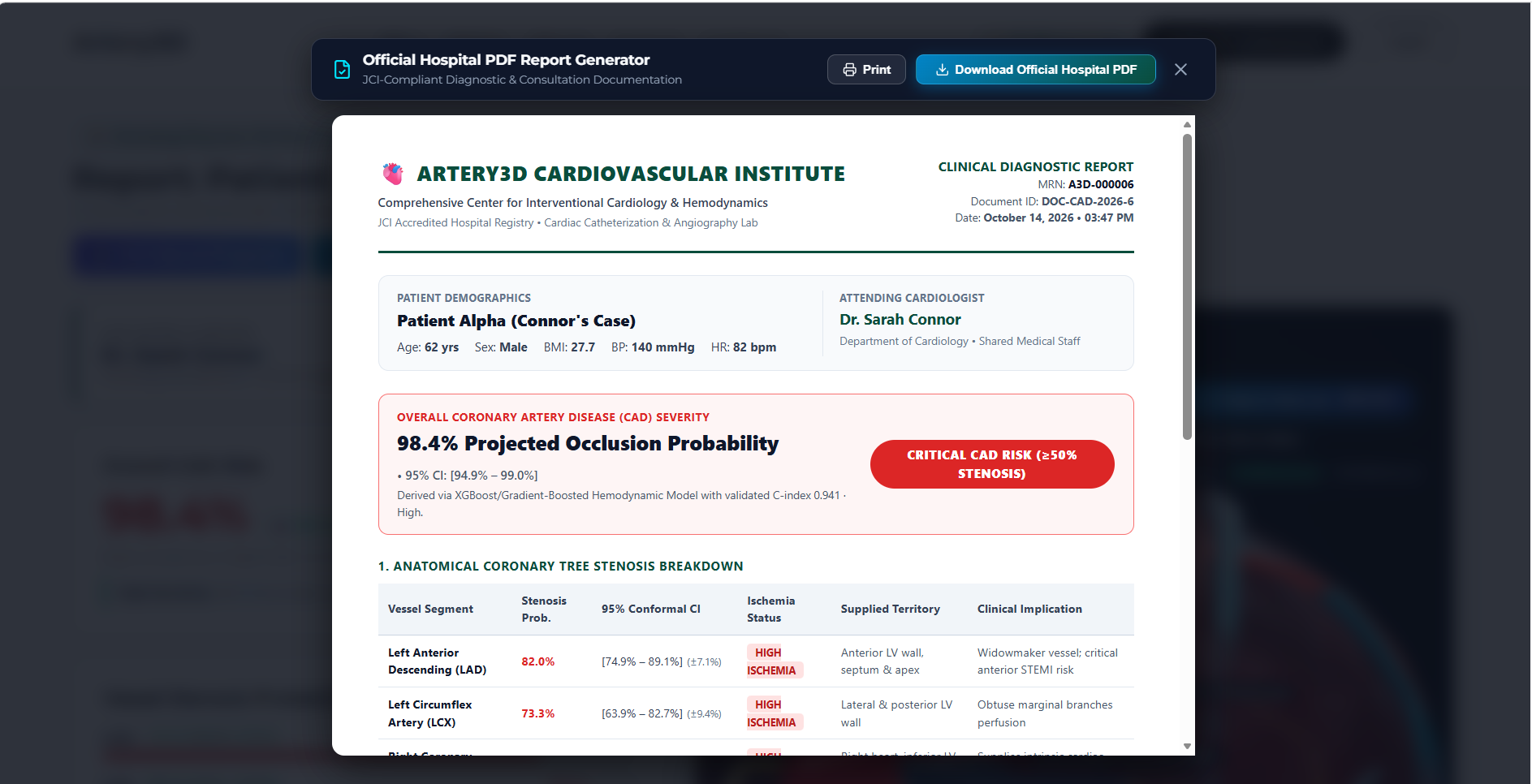
report pdf
Inspiration
Coronary Artery Disease (CAD) is the leading cause of death worldwide. While invasive angiography is the diagnostic gold standard, it is costly, invasive, and carries procedural risks. Non-invasive clinical metrics such as ECG, echocardiography, and blood biometrics are routinely collected, yet physicians lack intuitive spatial tools that localize disease to specific coronary branches. We built Artery3D to transform standard tabular patient records into an interactive 3D anatomical Digital Twin with localized stenosis detection and 10-year survival forecasting.
What It Does
Artery3D is a multimodal clinical AI platform that bridges predictive medicine with real-time spatial visualization:
- 3D Coronary Digital Twin: Renders an interactive Three.js coronary mesh dynamically color-coded by stenosis risk (Green for Normal, Amber for Moderate, Crimson for Severe above 70 percent).
- Vessel-Specific Stenosis Localization: Simultaneously predicts 4 distinct anatomical targets: Overall CAD, Left Anterior Descending (LAD), Left Circumflex (LCX), and Right Coronary Artery (RCA).
- 10-Year MACE Survival Prediction: Implements Cox Proportional Hazards regression to calculate longitudinal survival curves and hazard rates over a 10-year horizon.
- Explainable AI (TreeSHAP): Deconstructs individual predictions into transparent biometric feature attributions (such as Ejection Fraction, Blood Sugar, and Wall Motion Abnormalities).
- Counterfactual Intervention Simulator: Allows clinicians to simulate physiological lifestyle and pharmacological interventions (such as lowering blood pressure or LDL) and observe instantaneous risk reduction on the 3D heart.
- Hospital PDF Reports: Exports standardized, consultation-ready clinical evaluation summaries with physician sign-off sections.
How We Built It
- Machine Learning: Trained on the 54-feature Z-Alizadeh Sani clinical coronary dataset using Python, Scikit-Learn, CatBoost, XGBoost, and Lifelines. Enforced strict zero-leakage target quarantine, achieving 93.44 percent Accuracy (0.9935 ROC-AUC) on LAD stenosis and 86.89 percent on Overall CAD.
- Backend: High-performance asynchronous FastAPI service with JWT physician authentication and dynamic inference pipelines.
- Frontend and 3D WebGL: Built with React 18, Three.js, Lucide icons, and Tailwind CSS.
- Deployment: Fully containerized with Docker and deployed live on cloud web services.
Challenges We Ran Into
- Multi-Target Leakage: Isolating vessel-specific targets during feature engineering to eliminate target contamination across clinically correlated arteries.
- Survival Model Serialization: Dynamically serializing semi-parametric Cox hazard baseline matrices for instant sub-second REST API response times.
- WebGL Dynamic Shaders: Binding real-time ML risk probabilities smoothly to Three.js anatomical mesh coordinates at 60 FPS.
Accomplishments We Are Proud Of
- Delivered 93.44 percent diagnostic accuracy on the critical LAD artery without target leakage.
- Created an end-to-end cloud platform accessible on web and mobile with zero black-box predictions.
What We Learned
Spatial 3D visualization bridges the communication gap between clinicians and patients, while longitudinal survival analysis offers greater therapeutic value than isolated binary risk scores.
What Next for Artery3D
- Direct DICOM and CT-FFR imaging multimodal fusion.
- Hospital EHR integration via SMART on FHIR.
- WebXR and AR bedside mode for pre-operative clinical planning.

