Artemis+: Integrative Habitat Planning Tool for Sustainable Lunar Missions
Summary
Artemis+ is an interactive lunar-habitat simulator and design toolkit that lets users configure missions, place modular habitat components, and validate habitability against NASA baselines.
The platform integrates life-support, power, and ISRU tradeoffs in real time — featuring staggered greenhouse cycles (half in “day,” half in “night”) for continuous O₂ with CO₂ scrubbers, south-pole PV and battery management for power stability, and 3D-printed regolith vaults for underground radiation shielding.
Deliverables include the simulator, downloadable datasets, and the AI Comparison Model.
Artemis+ enables verifiable, engineering-grade habitat design, turning theoretical concepts into practical simulations.
📽️ Project Demonstration: YouTube Video
💻 GitHub Repository: Artemis+ Source Code
📘 Documentation: View on Google Docs
🎞️ Video Presentation: 25-Sylhet-teamCodeCrackers - YouTube
Simulation Overview
(Enable Mouse Movement using “Alt”)
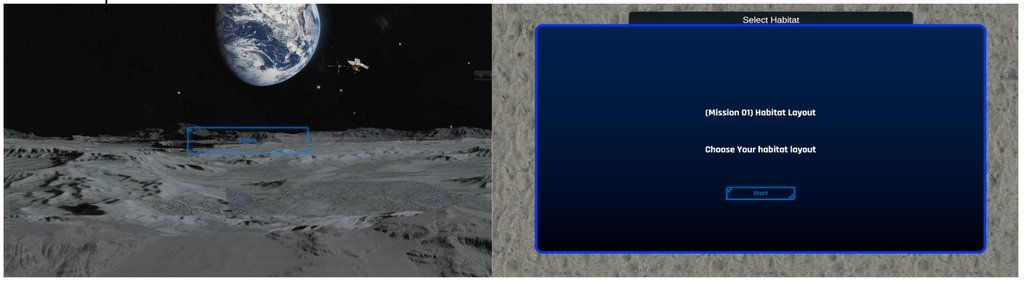
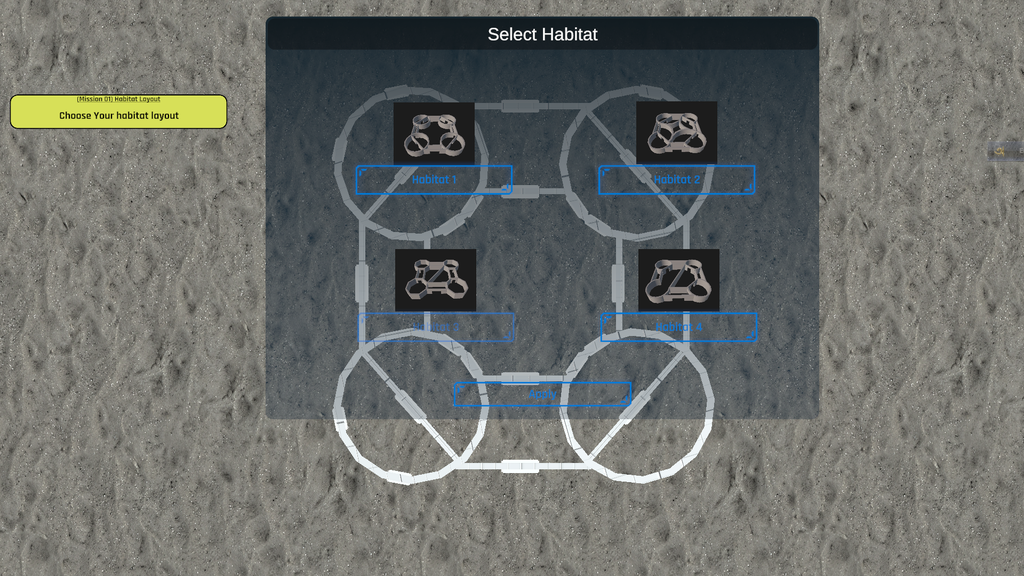
Mission 1 – Layout Selection
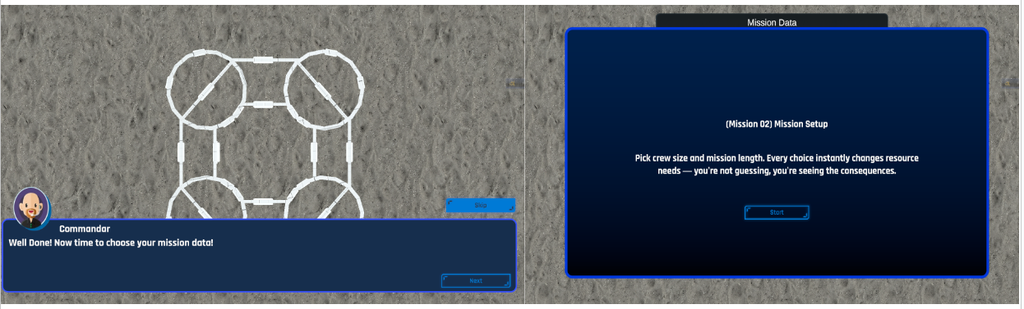
Users start by exploring 4 habitat layout options, each optimized for lunar environmental sustainability using In-situ Resource Utilization (ISRU).
Each cylindrical habitat module includes common space, O₂ ventilation, and strong structural bases.
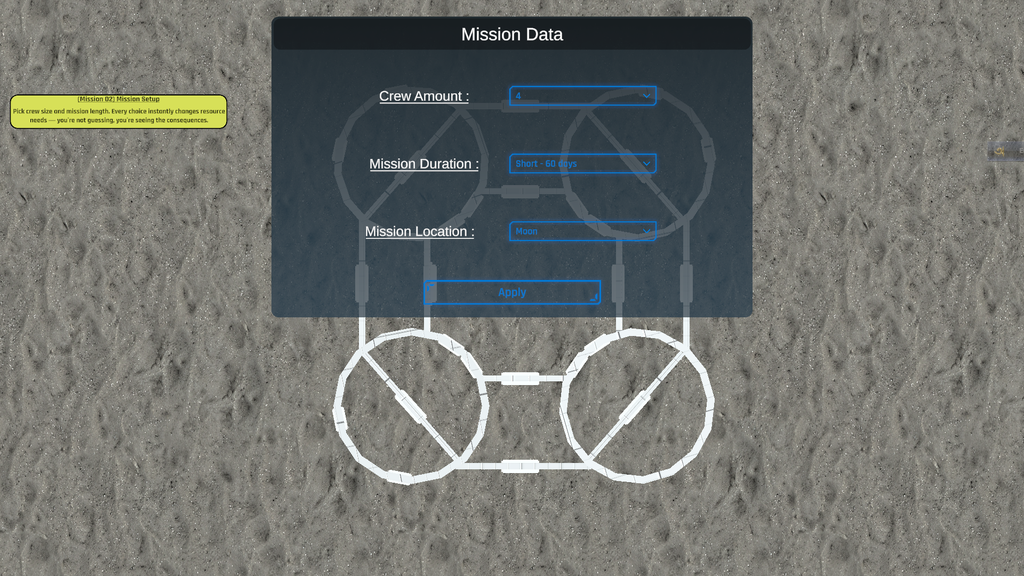
Mission 2 – Parameter Configuration
Users select:
- Crew Size
- Mission Length
- Destination (Lunar South Pole)
Example:
- 4 Crew per habitat → 125 m² per habitat
- 4 habitats → 16 total crew
Available crew options: 4 / 6 / 8 per habitat.
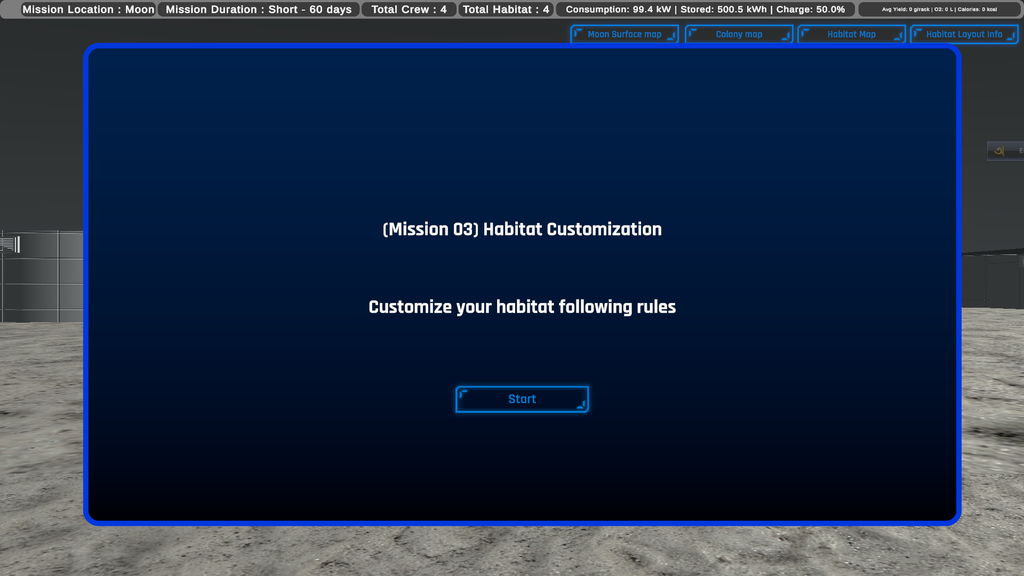
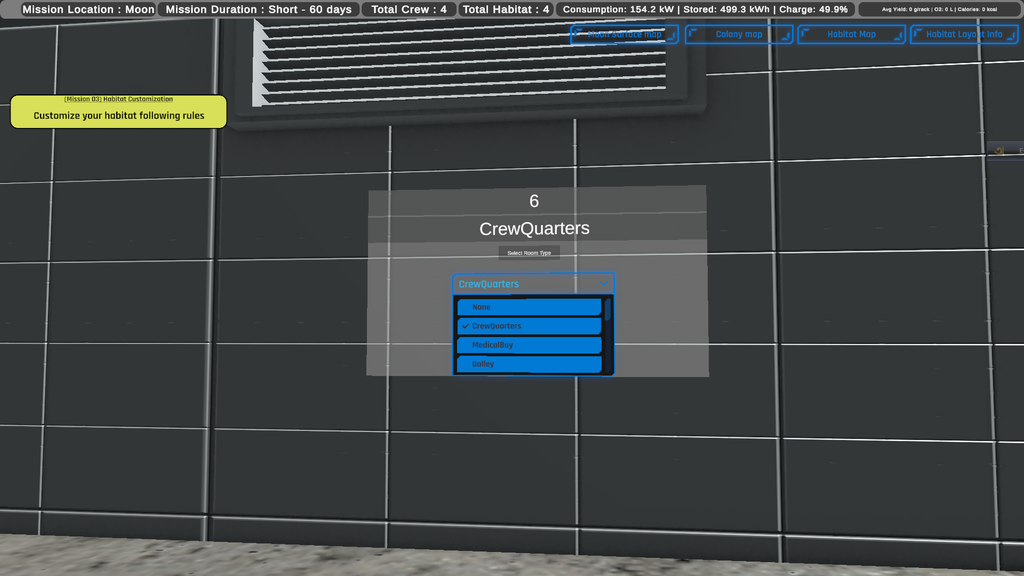
Mission 3 – Habitat Customization
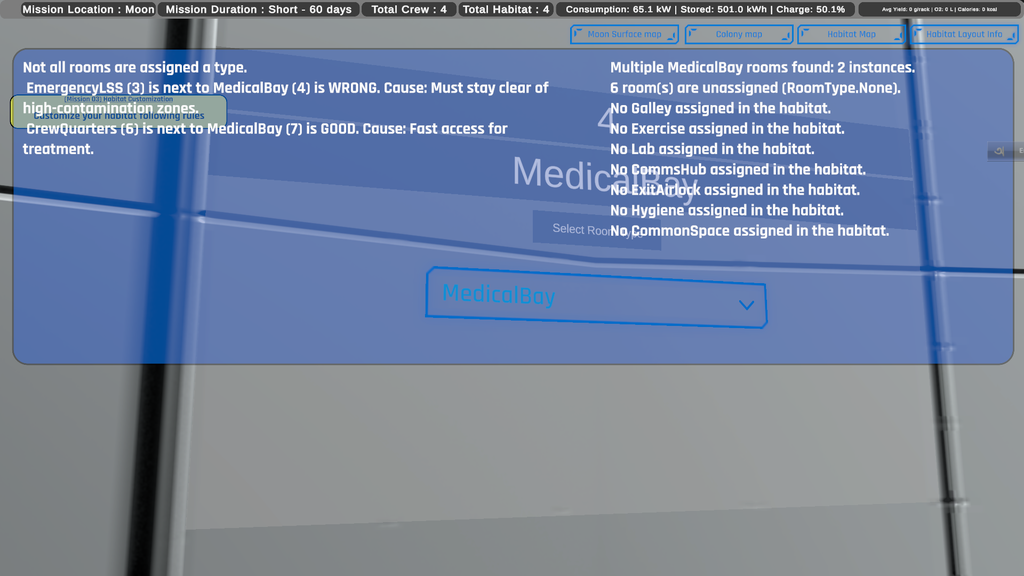
Users customize 11 compartments per habitat with real-time NASA Habitability Rule validation.
Warnings appear for incorrect sequences, ensuring logical and safe configurations.
The Habitat Map assists users in visualizing chosen compartments and correcting mistakes.
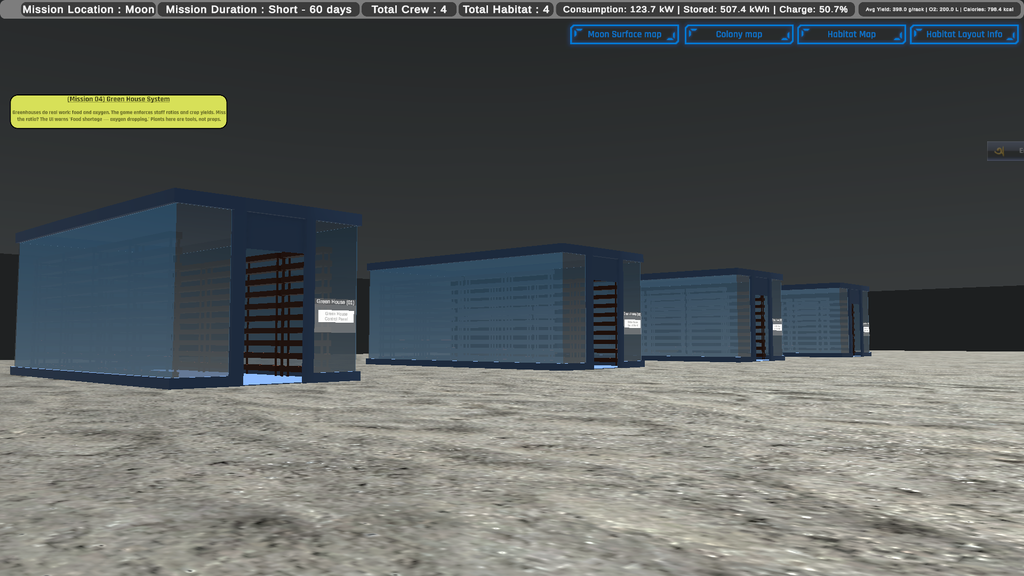
Mission 4 – Food & Oxygen System
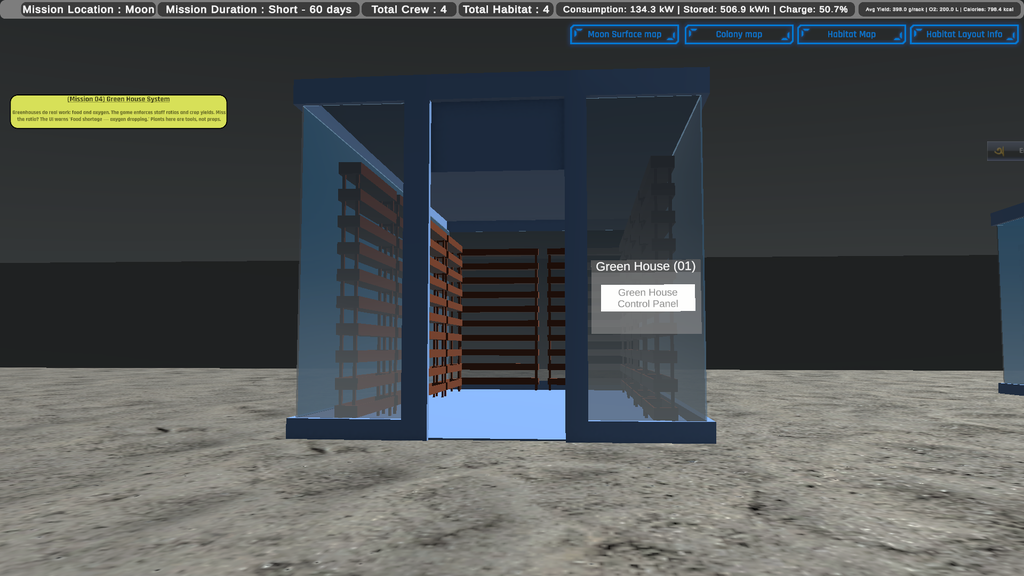
Two types of Vertical Greenhouses:
- Foldable Earth-based modules (for short missions)
- Regolith-based ISRU modules (for long-term missions)
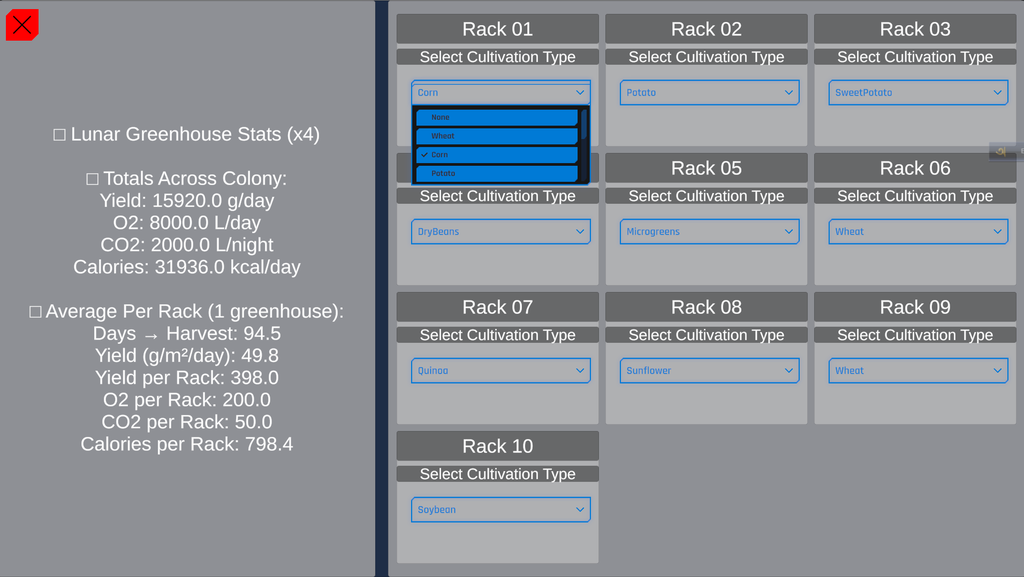
Each greenhouse has 10 racks × 10 trays = 100 trays total, using aeroponic cultivation with LED day/night cycles.
Half operate in Day Mode (producing O₂), half in Night Mode (absorbing CO₂).
Users must maintain the Crew-to-Calorie ratio — imbalance can cause system collapse due to O₂ and CO₂ instability.
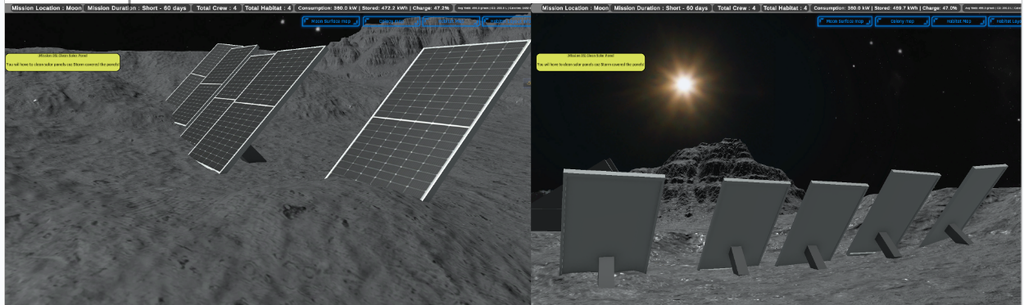
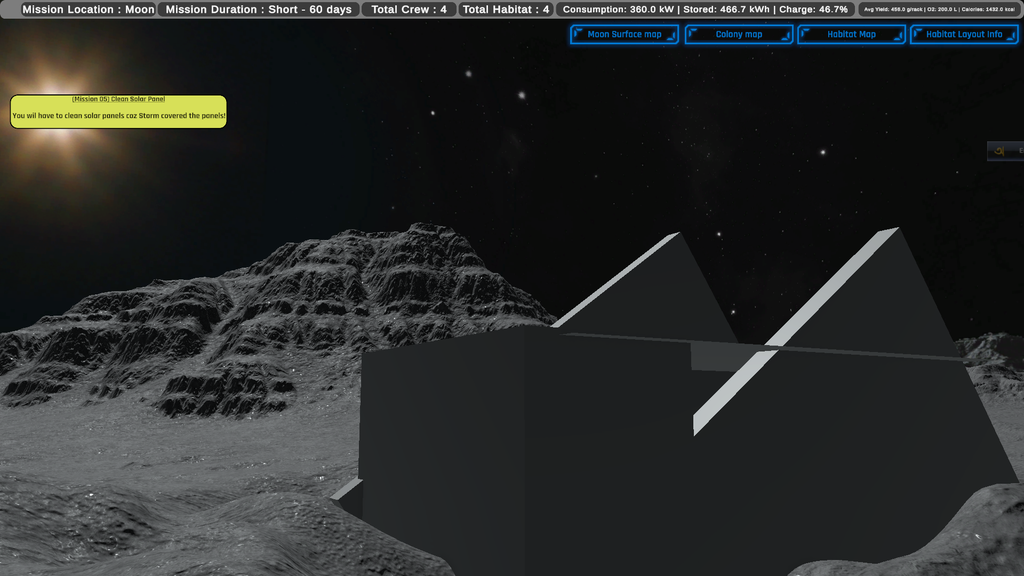
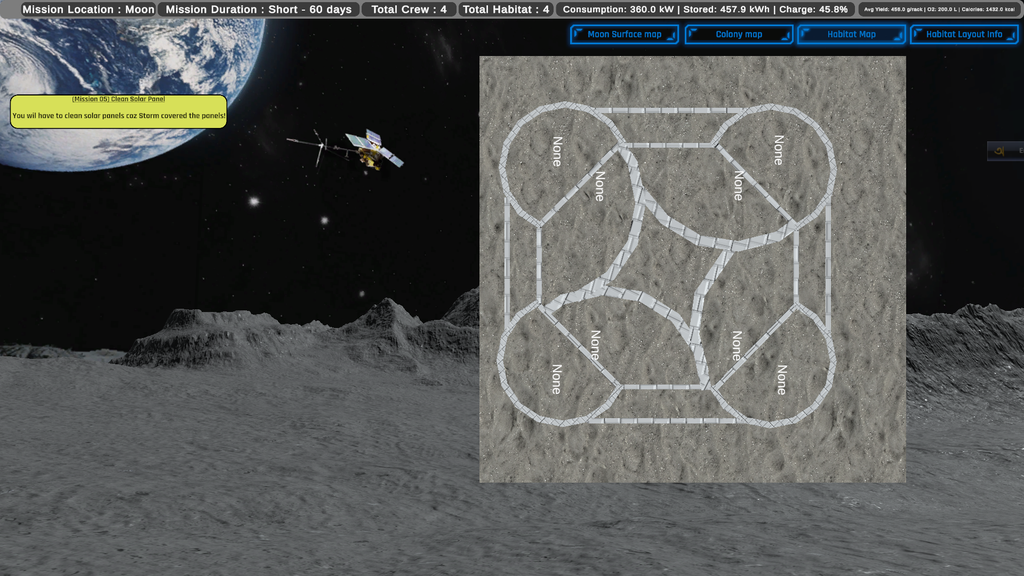
Mission 5 – Power Management & Dust Control
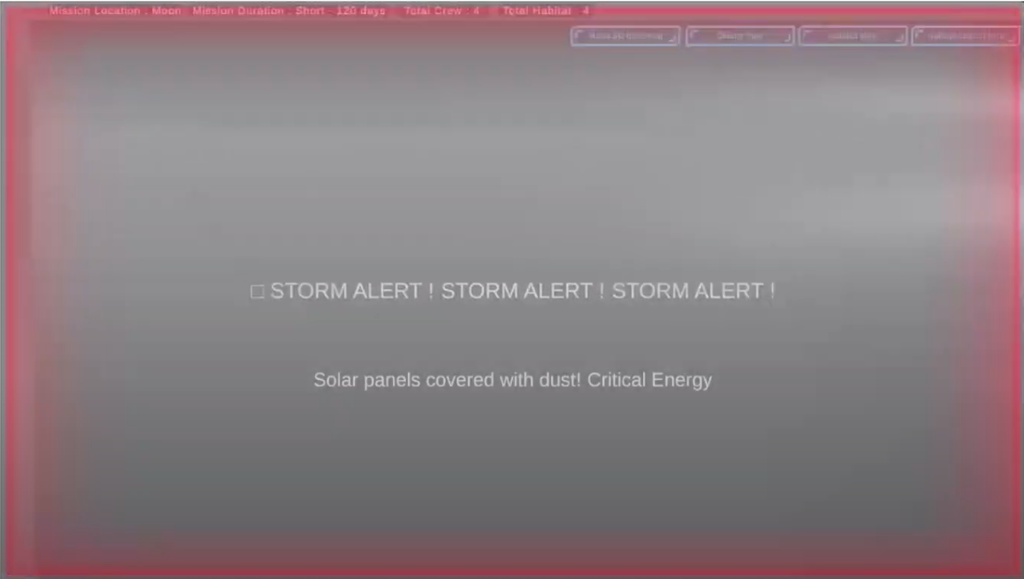
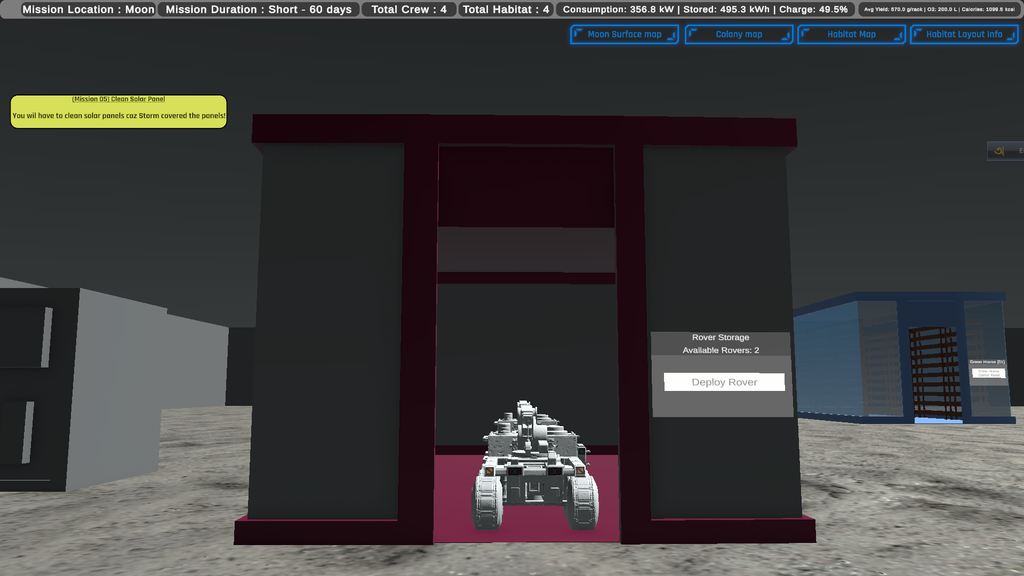
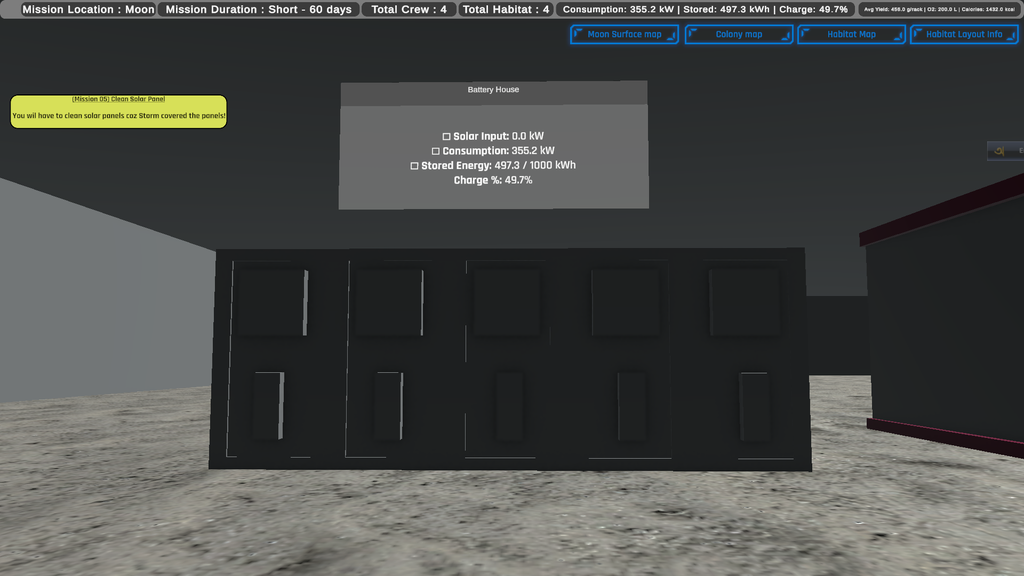
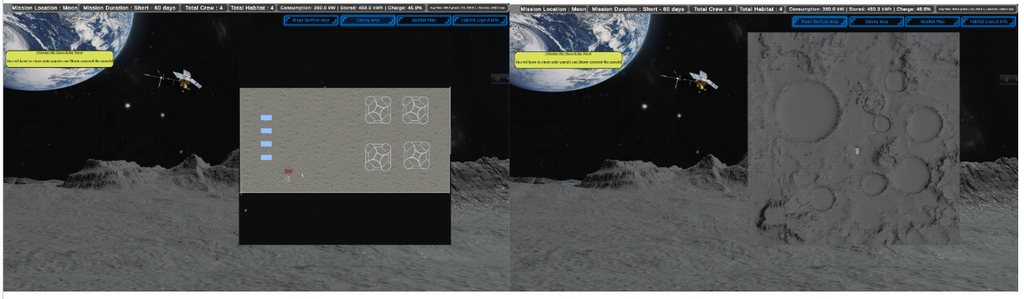
Charged lunar dust reduces solar efficiency.
Users deploy cleaning rovers during storms to maintain solar panel output.
They must also store extra battery modules to survive the 14.75-day lunar night without sunlight.
Mission 6 – Closed-Loop Recycling (Updating)
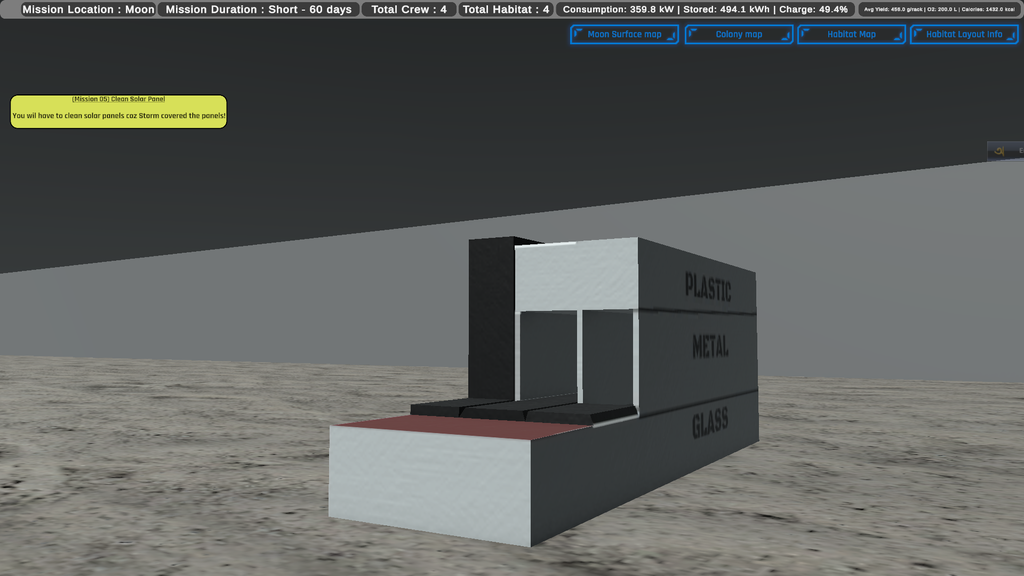
The Recycling Machine sorts and processes plastic, metal, and glass waste.
These materials are then used for 3D printing components like panels, radiation shelter sheets, or daily essentials.
Project Purpose and Science Research Concepts
Artemis+ is a digital ecosystem for designing, testing, and validating self-sustaining lunar habitats.
Users can configure systems, set crew size and mission duration, and immediately see how choices affect:
- Oxygen production
- Water recovery ratio (WRR)
- Energy balance
- Caloric output
By treating the habitat as a system of systems, Artemis+ promotes systems thinking and open-science collaboration.
System Architecture and Innovations
Air & Life Support (ECLSS)
- Removes CO₂, controls humidity, recycles O₂.
- Uses greenhouses in staggered day/night cycles to stabilize O₂ and CO₂.
- Backup scrubbers for contingencies.
Food Production: Aeroponic Vertical Greenhouses
- Four modules (two day, two night)
- Grows leafy greens and staples without soil
- Provides ≈ 2,100 kCal per person per day
- Reduces peak power demand
Regolith to Brick Manufacturing
- 1 m³ regolith ≈ 1500 kg
- 1 brick ≈ 6.75 kg
- 5 wt% binder per brick
- Energy ≈ 7.5–15 kWh per m³
Energy Generation and Storage
- Solar panels: 2.5–3.5 kW average
- Battery packs: 150–300 kWh capacity
- Ensures 48–72 hours of autonomy
Closed Loop Recycling Station
- Shreds and melts plastics, metals, glass
- Converts into 3D printing filament and components
- Implements circular economy principles
Mission Operations
- Hygiene Unit with water recycling and composting
- Medical Facilities with telemedicine and isolation
- Exercise Modules with resistive and VR systems
- EVA Systems with battery and consumable tracking
- Built-in failure modes and quick-fix protocols
Technologies & Data Sources
- Python, JavaScript, React, Three.js, D3.js
- NASA open engineering databases, ISS life-support data, lunar models
- Open-source and modular for community contribution
Development Priorities
- Sustainability and Closed-Loop Design
- Scalability and Flexibility
- User Accessibility and Education
- Reliability and Redundancy
- Open Science Alignment
AI Comparison Model:
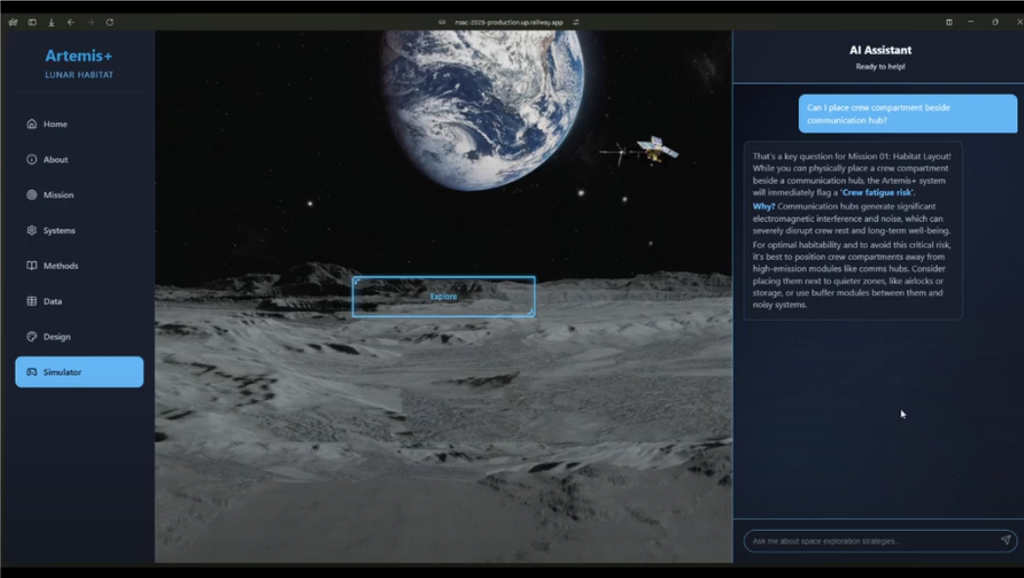
Trained on all Artemis+ data. Users can compare layouts, get NASA rule-based feedback, and receive explanations.
Why Artemis+?
Artemis+ is not just a conceptual tool — it’s a decision-support and educational platform for sustainable lunar habitation.
By integrating life support, food production, power, waste recycling, and mission logistics into one interactive environment, it empowers the next generation to design realistic lunar bases.
WE ARE NOT JUST DRAGGING AND DROPPING MODULES — WE ARE TURNING NASA’S RESEARCH INTO REALISTIC MODELS.
MISTAKES CAN HAPPEN HERE, BUT NOT IN REAL MISSIONS.
AND THAT IS OUR VISION.
What it does
Artemis+ is an interactive lunar-habitat simulator and design platform that allows users to plan, visualize, and validate sustainable lunar bases following NASA Artemis standards.
It integrates life-support, power, and ISRU systems to simulate realistic lunar environments.
Users can design modular bases, test sustainability factors, and ensure compliance with NASA habitability rules.
Key features include:
- Custom modular habitat builder
- AI habitability validation
- Dual-cycle greenhouse system for O₂–CO₂ balance
- Dust and solar management module
- 3D regolith vault modeling for radiation shielding
How we built it
We built Artemis+ by combining simulation, AI, and real-world data modeling.
- Unity & WebGL were used to create the 3D interactive simulation.
- Python & TensorFlow handled AI-based validation and data analysis.
- NASA open datasets supported environmental accuracy.
- Regolith-based modeling simulated ISRU construction.
- Google Cloud hosted real-time datasets and updates.
The simulator dynamically updates oxygen, CO₂, food, and power levels according to mission parameters such as crew size, mission duration, and location.
Challenges we ran into
- Balancing oxygen and CO₂ cycles between crew and plants.
- Maintaining power stability during the 14.75-day lunar night.
- Simulating lunar dust accumulation that reduces solar efficiency.
- Building AI logic to ensure valid, NASA-compliant habitat configurations.
Accomplishments that we’re proud of
- Built a functional, validated lunar base simulator.
- Integrated AI-driven habitability checks based on NASA data.
- Developed dual-cycle greenhouse oxygen management.
- Simulated dust behavior, power storage, and radiation protection.
- Achieved self-sustaining habitat design using ISRU and renewable energy.
What we learned
- How life-support systems interact within closed lunar environments.
- How AI and simulation can enhance space mission planning.
- How ISRU and renewable systems can achieve long-term sustainability.
- The value of teamwork, modularity, and system integration in engineering design.
What’s next for Artemis+
- Expanding into a complete lunar mission planning tool with EVA path simulation.
- Integrating VR/AR training modules for astronauts and students.
- Adapting the system for Martian habitats and low-gravity research.
- Publishing open datasets and APIs for researchers and educational platforms.
Built With
- ai
- game
- javascript
- llm
- node.jg
- python
- railway.app
- react
- typescript
- unity
- webgl

Log in or sign up for Devpost to join the conversation.