-
AI Art Translation
-
AI Art Translation
🎨 Inspiration
Art is often interpreted subjectively, and most viewers miss the cultural, symbolic, and historical meaning behind visual works. I wanted to build a system that bridges this gap by using AI to translate artwork into structured interpretations that include cultural perspectives, emotional tone, and symbolic meaning. The goal was to make art more accessible and educational for everyone, not just experts.
🧠 What it does
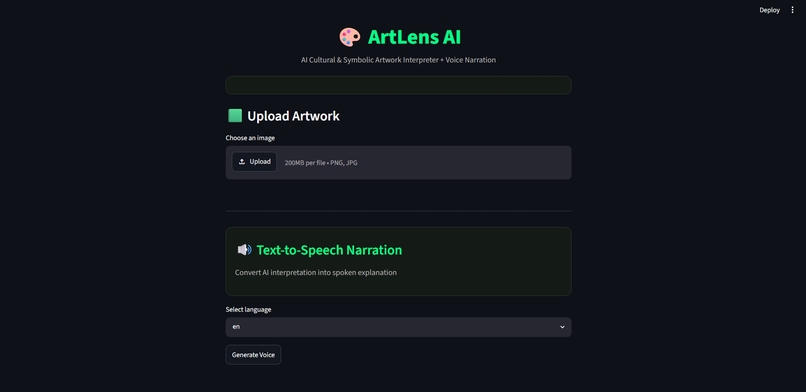
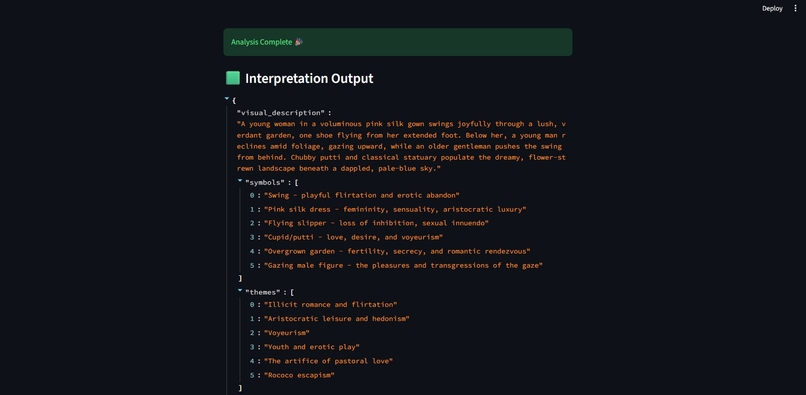
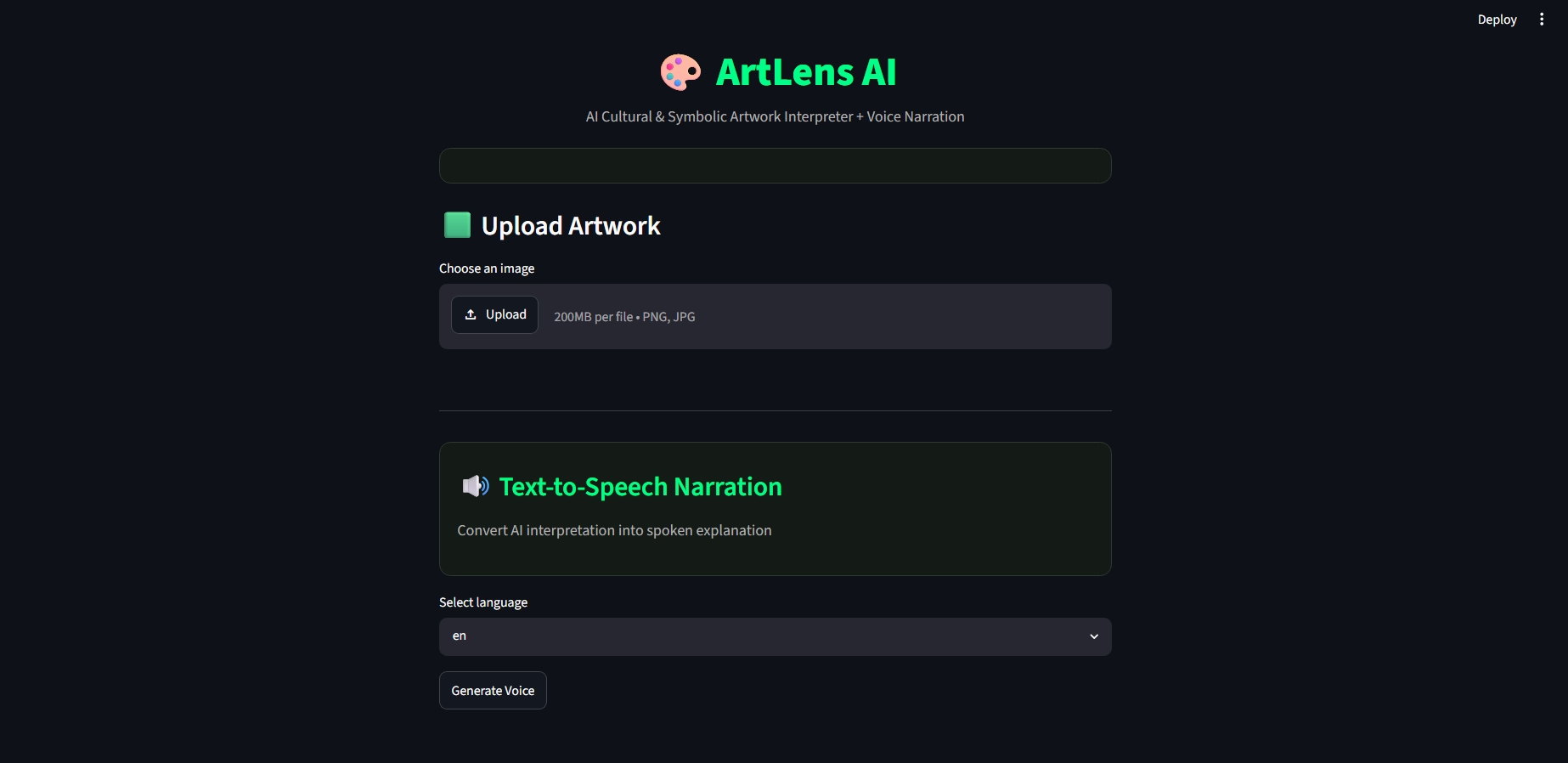
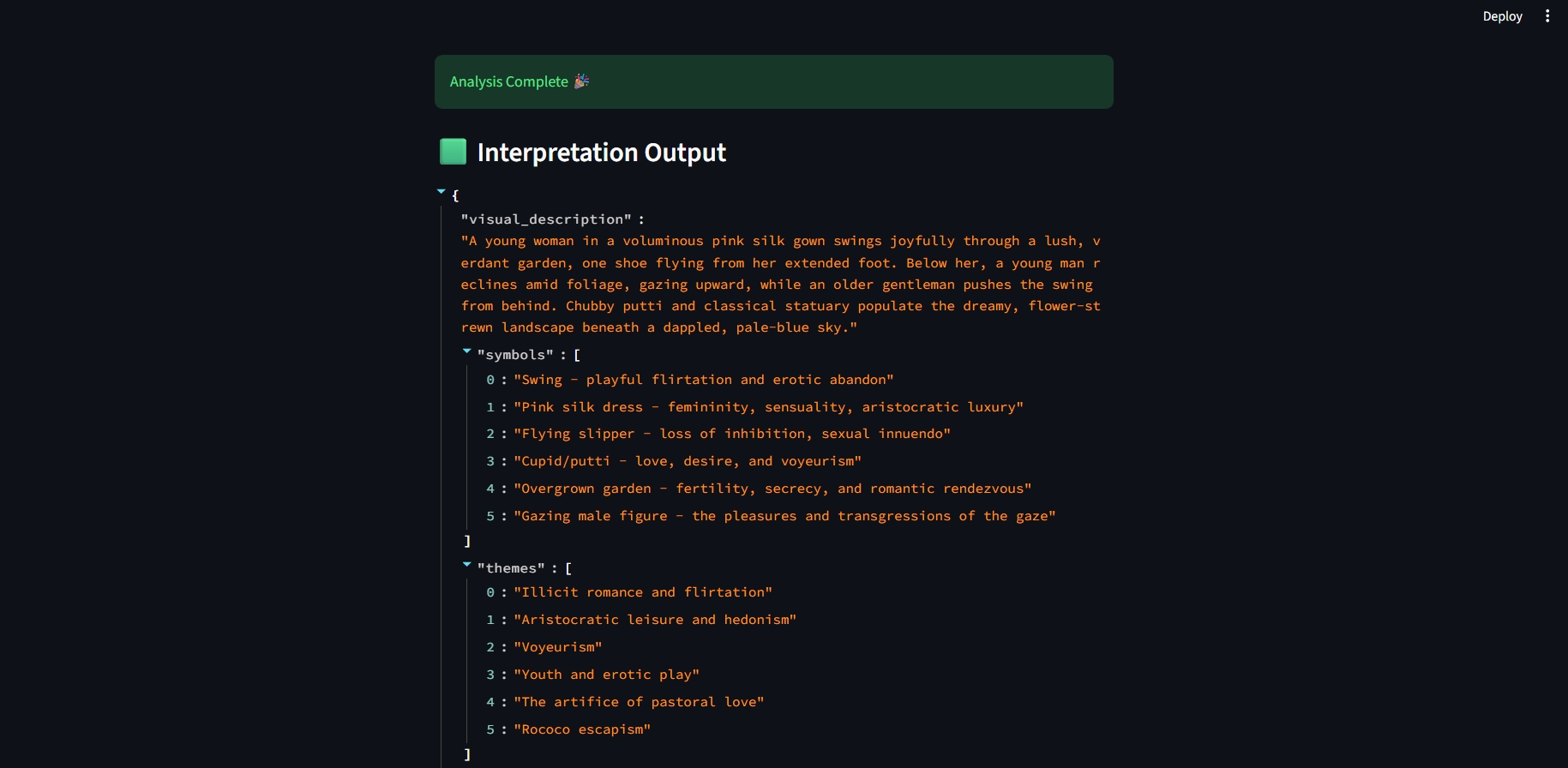
AI Art Translation is a multimodal system that analyzes uploaded artwork and generates structured interpretations. It identifies visual elements such as symbols, themes, and emotional tone, and then produces cultural interpretations from multiple perspectives (e.g., Western, East Asian, Indigenous). The system also converts the analysis into audio narration using text-to-speech, making the output more accessible and engaging.
⚙️ How we built it
I built the system using Streamlit for the frontend interface and Python for backend logic. The core intelligence is powered by the Kimi-K2.7 multimodal model through Featherless API, which processes both text prompts and image inputs.
⚠️ Challenges we ran into
One major challenge was ensuring the model consistently returned valid JSON instead of unstructured text. We solved this by strictly constraining the prompt format.
Another challenge was integrating multimodal image input correctly through the API.
I also faced issues connecting different parts of the system (frontend, API calls, and audio generation) into a smooth pipeline under tight time constraints.
🏆 Accomplishments that I am proud of
I successfully built a full end-to-end multimodal AI system within a short time frame. The system not only interprets visual artwork but also provides multi-perspective cultural analysis, which adds depth beyond standard image captioning models.
📚 What i learned
I learned how powerful multimodal models are when combining vision and language tasks. I also gained experience in prompt engineering. How exactly to include ai to connect with my code and work.
Additionally, I learned how important system design is compared to model complexity—clean pipelines and good prompting had more impact than complex algorithms.
🚀 What’s next for AI Art Translation
Next, Maybe it be to expand the system into a full educational platform for museums and art institutions. Future improvements include:
A larger cultural knowledge base for more accurate interpretations Region-specific interpretation models Interactive “museum guide mode” for exhibitions Comparative analysis between multiple artworks Real-time AR interpretation of physical artworks
Ultimately, the goal is to turn AI Art Translation into a global tool for art education and cultural understanding.
Built With
- ai
- kimi.k2.7
- python
- streamlit
- vs

Log in or sign up for Devpost to join the conversation.