-
-
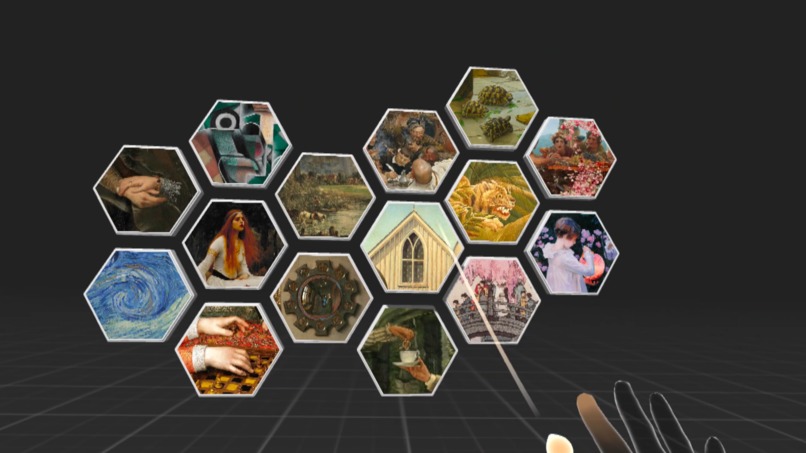
Puzzle Select
-
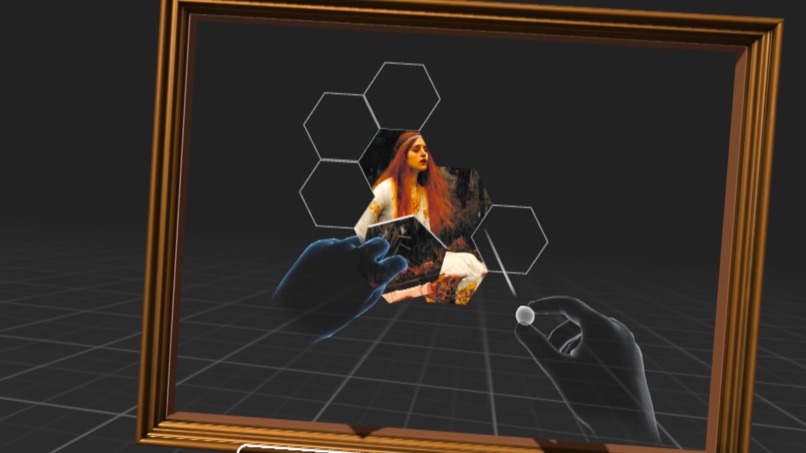
Puzzle Solving
-
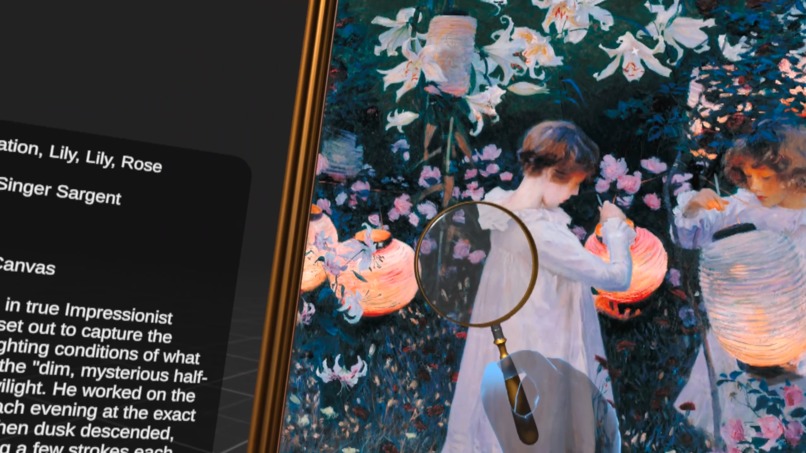
Puzzle Discovery
Inspiration
With our original Art’s Tiles mobile game, we explored how reassembling paintings could make art history feel playful and approachable. This VR version asks a new question: what if that same engagement with art could gain the depth, presence, and embodied feel of virtual reality? What if you could literally take them apart and rebuild them with your hands?
Research suggests jigsaw-style puzzling supports cognition, while engaging with art improves mental health, empathy, and critical thinking. Art’s Tiles VR is our attempt to braid those threads together and bring depth to our core game loop.
What it does
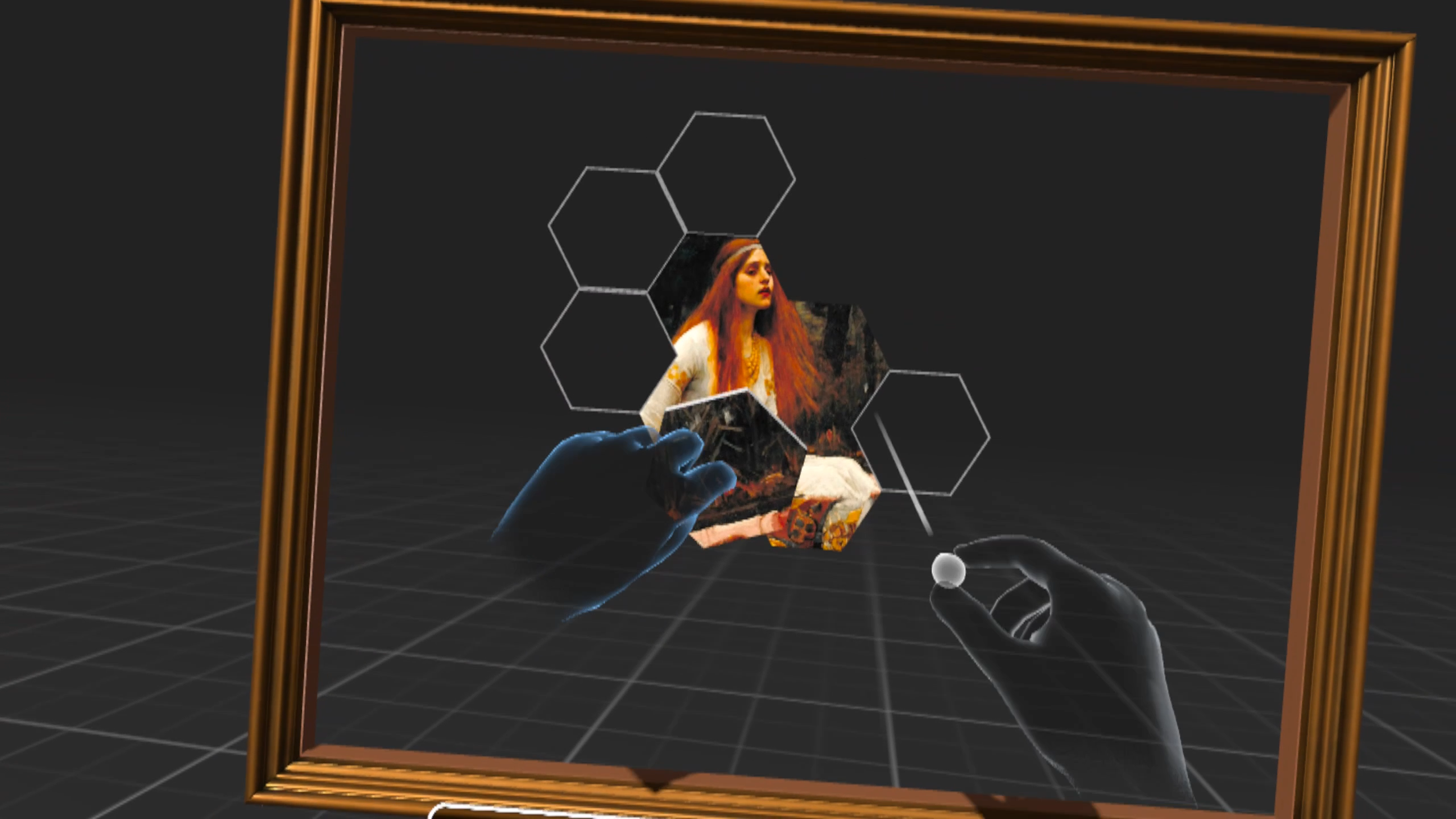
Players use hand tracking to pick up puzzle tiles, rotate them, and place them onto a board where they snap into position. New tiles and positions on the board are revealed as you play, allowing the composition to emerge at your pace.
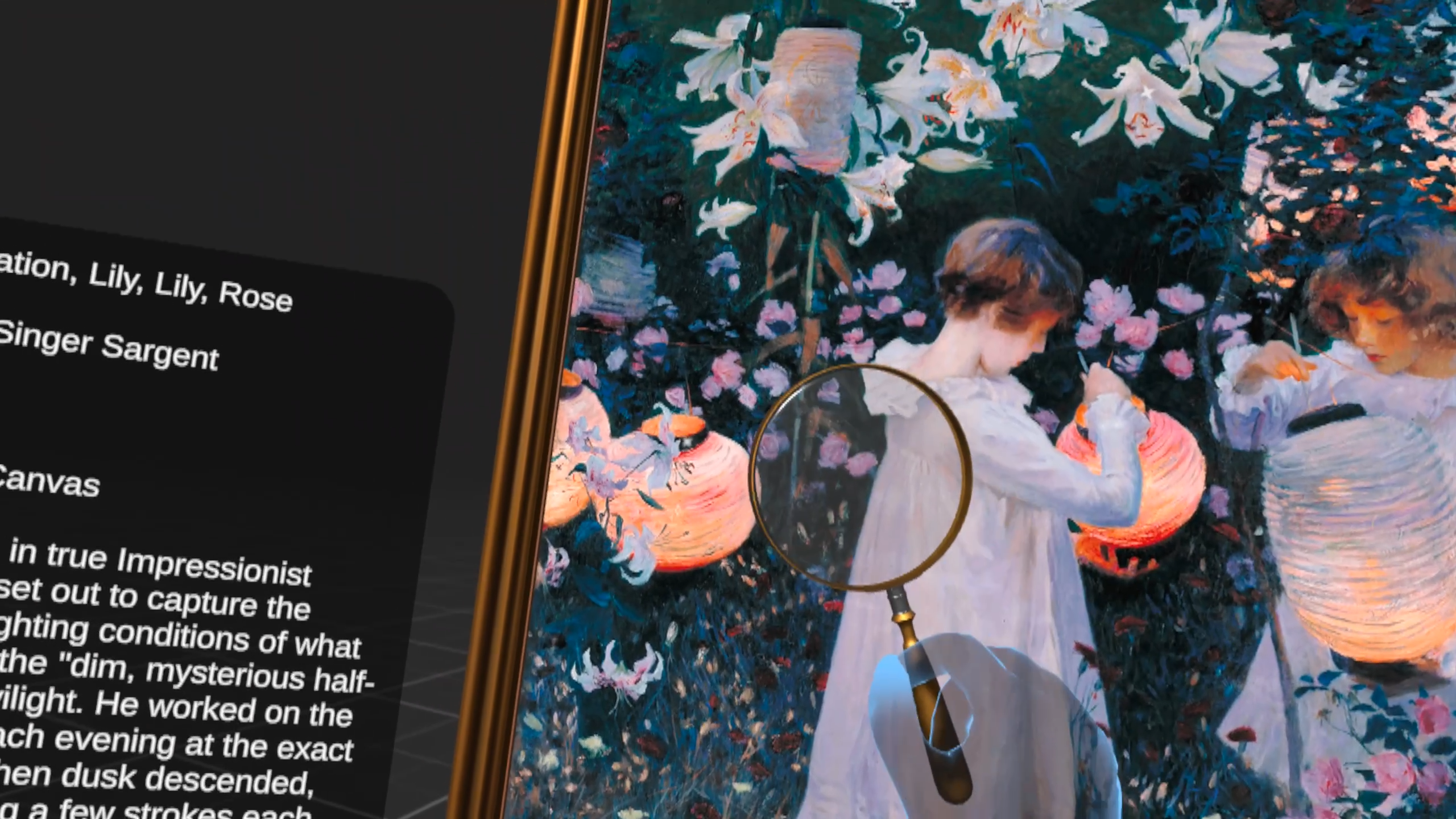
Once the final tile is placed, players can use a magnifying glass and move it across the surface of the image, activating hidden hotspots that surface short, focused insights. This interaction turns close looking into learning.
How we built it
The project started by taking the core game loop from Art’s Tiles on mobile and redesigning it for VR. Tile size and count, grab thresholds, rotation sensitivity, snap behavior, font sizes, and the appearance of insights were all adjusted around keeping that loop intuitive and satisfying in three dimensions.
We process public domain artworks into textures, then segment them using custom tools. Artworks are chosen with considerations around cultural and historical significance. For the magnifying glass, each painting is annotated with hotspots linked to short crafted contextual insights.
Challenges we ran into
Designing a tile-based puzzle specifically for VR surfaced challenges that never appeared on mobile. Finding the right balance between precision and ease required many iterations on tile dimensions, grab distances, snapping rules, puzzle sizes, artwork complexity, and the density of insights.
As art history lovers, we also had to wrestle with our temptation to over-explain. Tuning the number and placement of hotspots, the length of insights, and their timing took careful testing.
Accomplishments that we're proud of
We are proud of the way the magnifying glass connects embodied interaction with learning. Instead of separating “gameplay” and “education” into different modes or screens like in Art's Tiles on mobile, the information emerges through the same gesture players are already making—moving their hand to look more closely.
We’re pleased with how the two phases of the experience reinforce one another in VR. The puzzle phase trains players to notice structure, composition, and color relationships while the insight phase then layers context on top of what they have just assembled.
What we learned
Building Art’s Tiles VR, on top of our experience with Art’s Tiles for mobile, reinforced the value of a very clear and minimal interaction loop. By committing to just two core actions, we could polish each step until it felt comfortable and repeatable.
On a more technical level, the project deepened our understanding of text presentation and information design in VR. We learned how much content players can absorb in a single sitting without breaking immersion or making the experience feel like reading a textbook.
What's next for Art's Tiles VR
We plan to expand both the catalog of artworks and the insights attached to them, building on what resonated in the mobile version. One direction is to curate themed series of puzzles that explore a movement, artist, or theme. Each series would offer a slightly different lens on art history.
We have a vision for a cozy library VR environment for players to solve puzzles in and display their favorite completed pieces on a gallery style wall.
We are also exploring new capabilities for the magnifying glass. Future versions might allow for optional interpretive “modes” that highlight formal analysis, historical context, or emotional and psychological readings. The aim is to deepen the experience without complicating the core interaction that began with Art’s Tiles on mobile and now lives in VR.


Log in or sign up for Devpost to join the conversation.