Inspiration
We do not know why, but zombies keep returning in our dreams. They feel less like ordinary movie monsters and more like an unstoppable pressure: something approaching while we try to protect a place, organize limited resources, and decide what must be sacrificed.
That recurring obsession became the starting point for Arsenal Z. We wanted to transform the tension of those dreams into a strategy game where survival depends on preparation, adaptation, and difficult tactical decisions—not simply clicking faster.
What it does
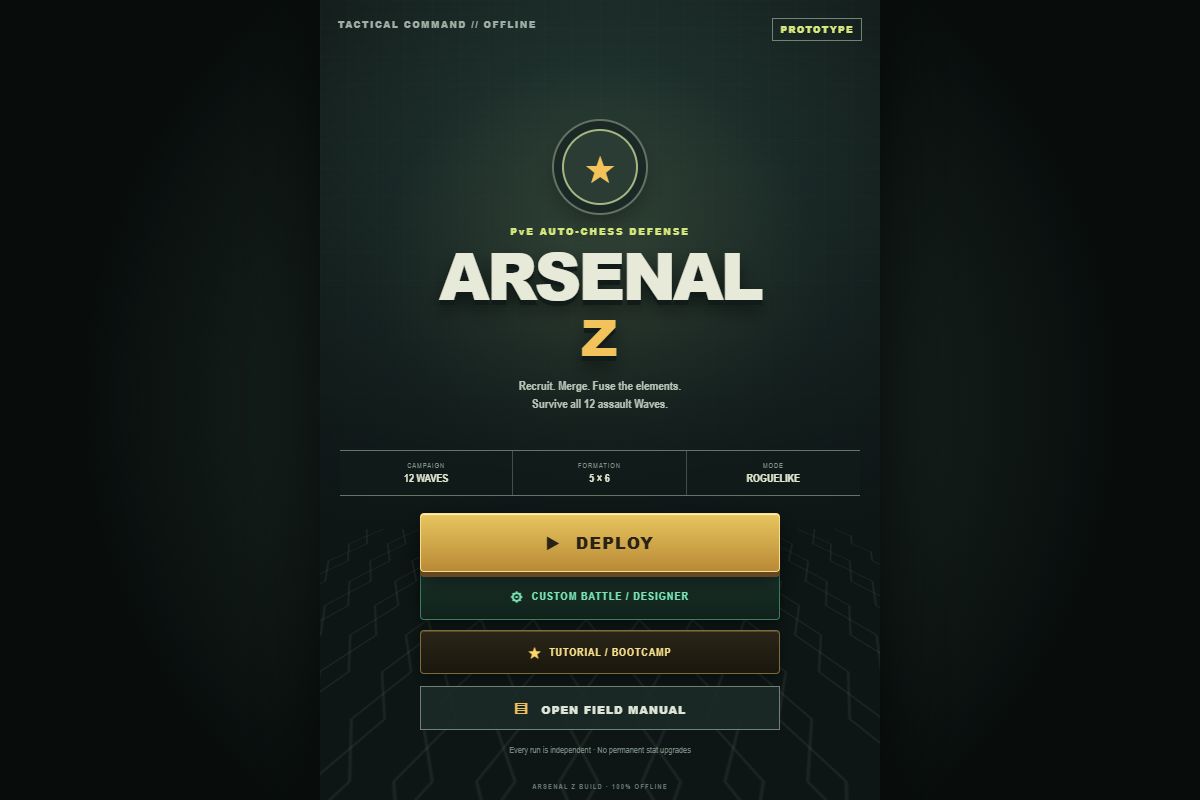
Arsenal Z is a portrait-first, single-player roguelike auto-battler and tower-defense game.
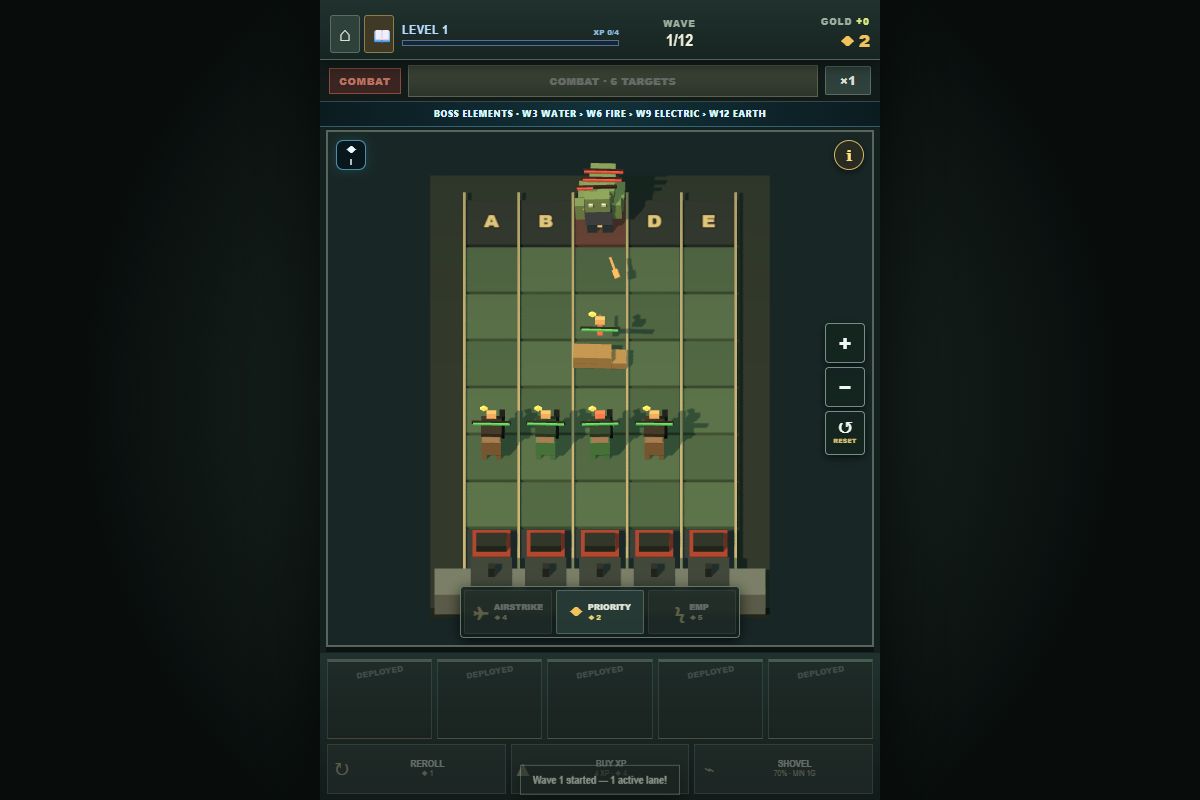
Players recruit military units, deploy them across a five-lane battlefield, merge matching units, manage Gold, and survive twelve escalating zombie Waves. Combat is automatic, but the decisions that determine its outcome remain in the player's hands.
Players can:
- Build and reposition their formation.
- Merge matching units into stronger versions.
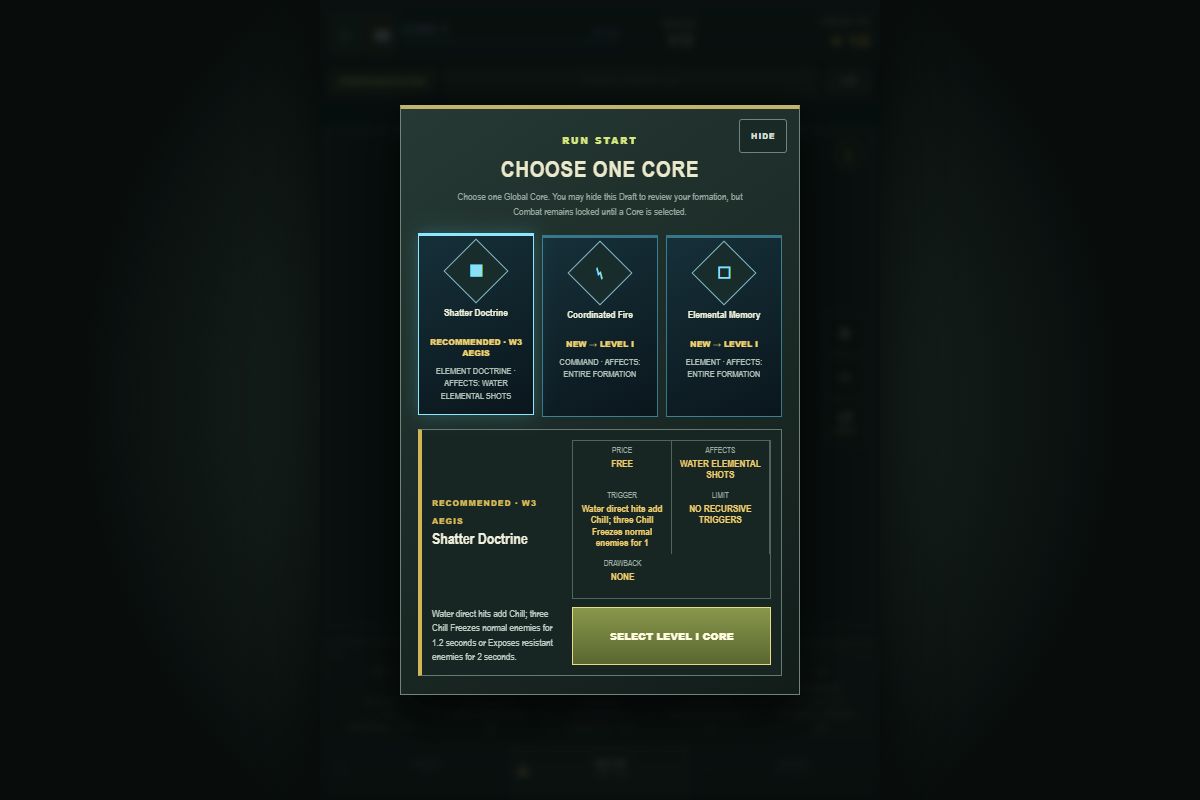
- Choose Global Cores that reshape the entire run.
- Combine Fire, Water, Earth, and Electric attacks.
- Counter shielded, airborne, burrowing, and Boss enemies.
- Activate limited tactical support abilities during Combat.
- Accept risky Black Market offers with permanent drawbacks.
Boss elemental weaknesses are disclosed before the run, allowing players to prepare instead of relying entirely on luck. Every run is independent, so progression comes from learning the systems and discovering stronger combinations.
How we built it
We built Arsenal Z using Three.js, JavaScript, HTML, and CSS. The development version is divided into focused modules for combat, units, enemies, Waves, targeting, economy, UI, tutorials, visual effects, and simulation.
The design changed through many iterations. It began as a simple three-Wave lane-defense prototype, expanded into a twenty-Wave survival game, and eventually became a more focused twelve-Wave roguelike campaign.
Each revision addressed a specific design problem:
- Gradual lane activation made the opening easier to understand.
- Distinct unit roles introduced armor, shields, aircraft, blockers, and counter-units.
- Individual Core attachments evolved into run-defining Global Cores.
- The Elemental Arsenal system gave each run a clear strategic direction.
- Three-star transformations created meaningful late-game power spikes.
- The Black Market introduced powerful offers with serious risks.
- A passive tutorial was replaced with a contextual Bootcamp requiring real gameplay actions.
- The campaign was reduced from twenty Waves to twelve for stronger pacing and a more approachable judging experience.
We also created a headless deterministic simulation system to test economy, Wave progression, targeting, merging, Boss behavior, and tactical scenarios without manually replaying every run.
The final submission is completely offline. Its readable game code and CSS are consolidated into a root index.html, while Three.js is included locally.
Challenges we ran into
Our greatest challenge was controlling complexity. Every new mechanic added strategic depth, but also increased the amount of information a new player needed to understand.
We repeatedly simplified the interface, reduced unnecessary text, disclosed important Boss information earlier, and moved detailed explanations into an optional Field Manual.
Designing for a narrow portrait screen was another major challenge. The 3D battlefield, shop, live unit information, Wave controls, and support abilities all compete for limited space. We adjusted camera framing, safe areas, touch targets, overlay positions, and tutorial cards through several iterations.
Combat targeting also became unexpectedly complicated. Ground units must not target aircraft, area attacks need strict boundaries, shields require special bypass rules, and multi-lane attacks must avoid recursive effects.
Balancing the economy presented a different problem. Early versions encouraged excessive Gold hoarding or left newly opened lanes undefended. Automated simulations helped us revise starting resources, shop behavior, upgrade timing, Wave pressure, and recovery opportunities.
Accomplishments that we're proud of
We are proud that Arsenal Z grew from a small prototype into a complete start-to-finish tactical run while remaining playable in a mobile portrait layout.
Some accomplishments we are especially proud of include:
- A complete twelve-Wave campaign with escalating threats and Boss encounters.
- Fifteen Global Cores that support different strategic approaches.
- Four interacting Elements with visible Boss weaknesses and Aegis defenses.
- Unit merging, three-star transformations, and unique Apex abilities.
- Ground, airborne, shielded, burrowing, and lane-specific enemy behaviors.
- A contextual tutorial that teaches players through real actions.
- A Custom Battle mode for testing formations, enemies, Cores, and Waves.
- A deterministic test suite with more than 10,000 gameplay assertions.
- A fully offline submission build with no external network dependencies.
We are also proud that the final version preserves strategic depth while allowing a new player to understand the basic loop within the first few minutes.
What we learned
We learned that adding depth is easier than communicating it. A mechanic is only valuable when players can understand its consequences soon enough to make a meaningful decision.
We also learned that interface design is part of the game system, not decoration added afterward. Camera position, button size, information hierarchy, and feedback timing directly affect strategic play—especially on mobile devices.
Automated simulation taught us that a system can work correctly and still produce undesirable player behavior. Economy rules, shop probabilities, and upgrade incentives must be evaluated as part of the complete run rather than in isolation.
Most importantly, we learned not to protect every early idea. Arsenal Z became stronger when we reduced the campaign length, removed outdated mechanics, and concentrated on the clearest decisions: recruit, position, merge, counter, and survive.
What's next for Arsenal Z
Our next goal is to expand Arsenal Z without losing the clarity achieved in the prototype.
We would like to add:
- More enemy factions and Boss mechanics.
- Additional Global Cores and elemental combinations.
- New battlefields with different lane structures.
- More three-star Apex transformations.
- Improved 3D models, animations, sound, and combat feedback.
- Additional accessibility and mobile-device options.
- Seeded challenge runs and competitive score comparisons.
- More balance testing with real players.
We also want to continue improving onboarding so new players can quickly understand the fundamentals while experienced players still have enough interacting systems to explore across many runs.
