-
-
-
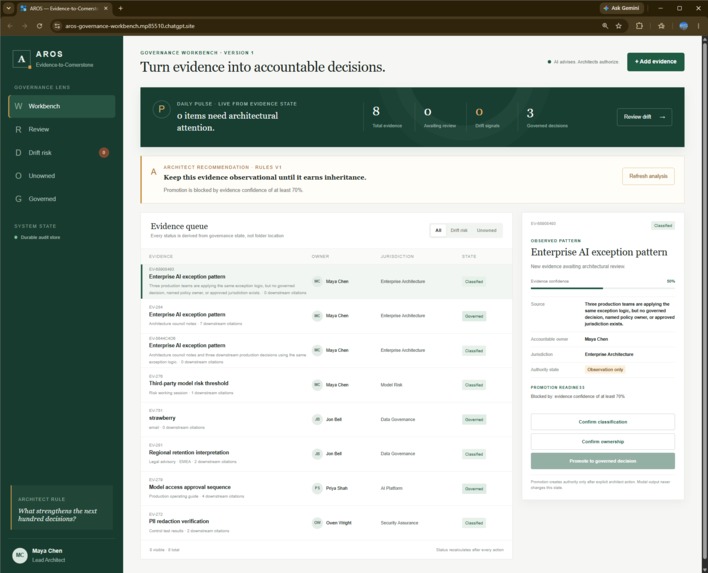
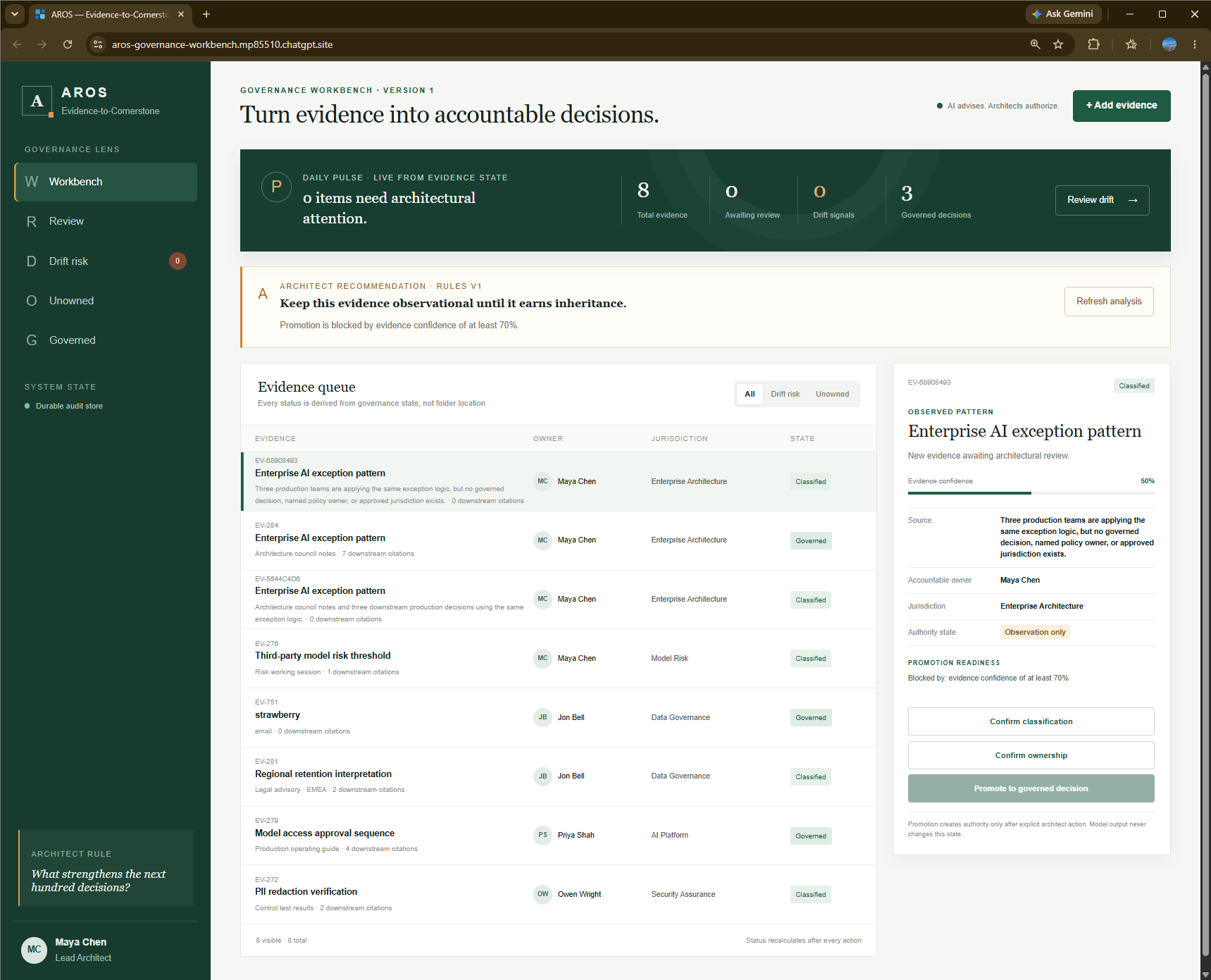
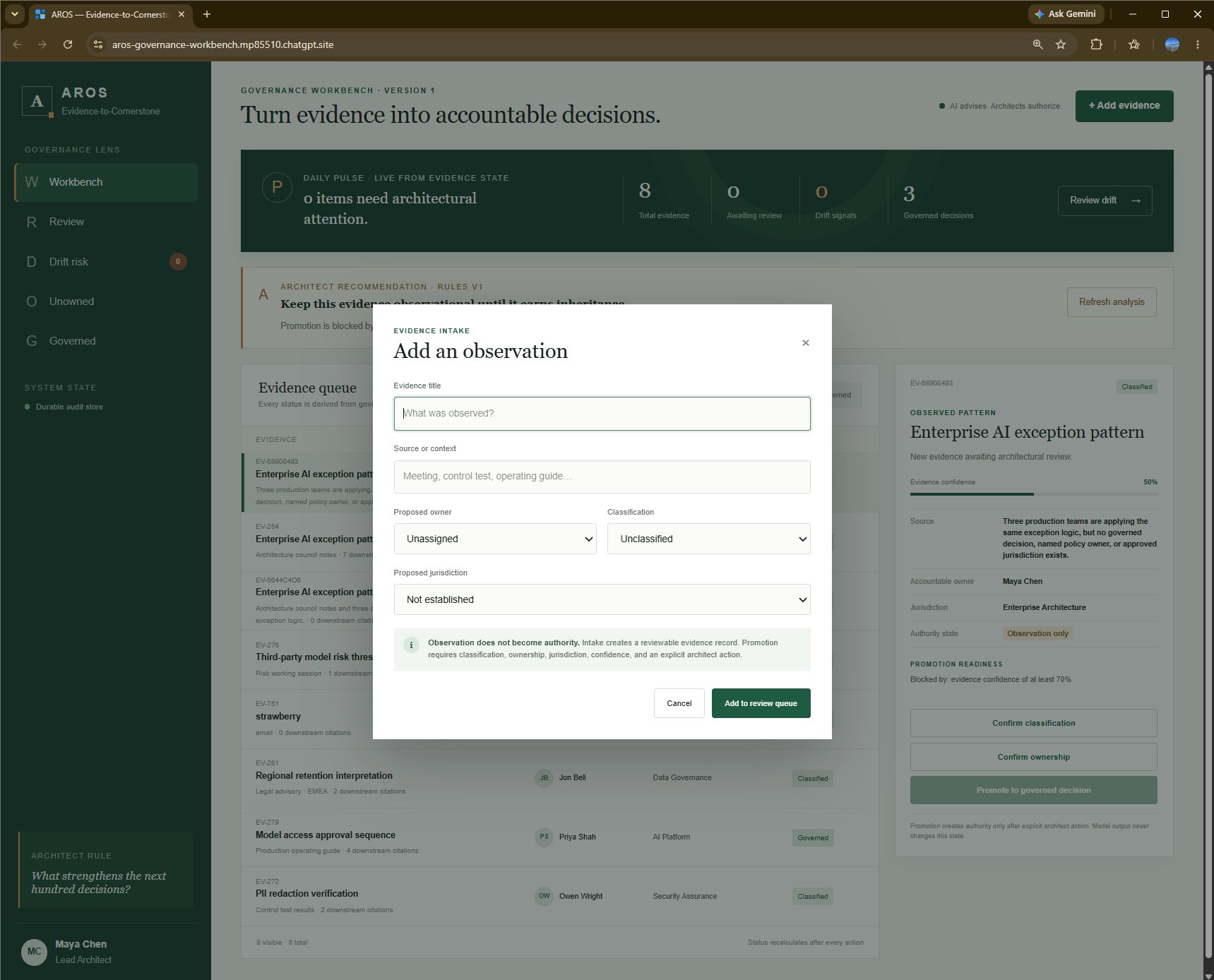
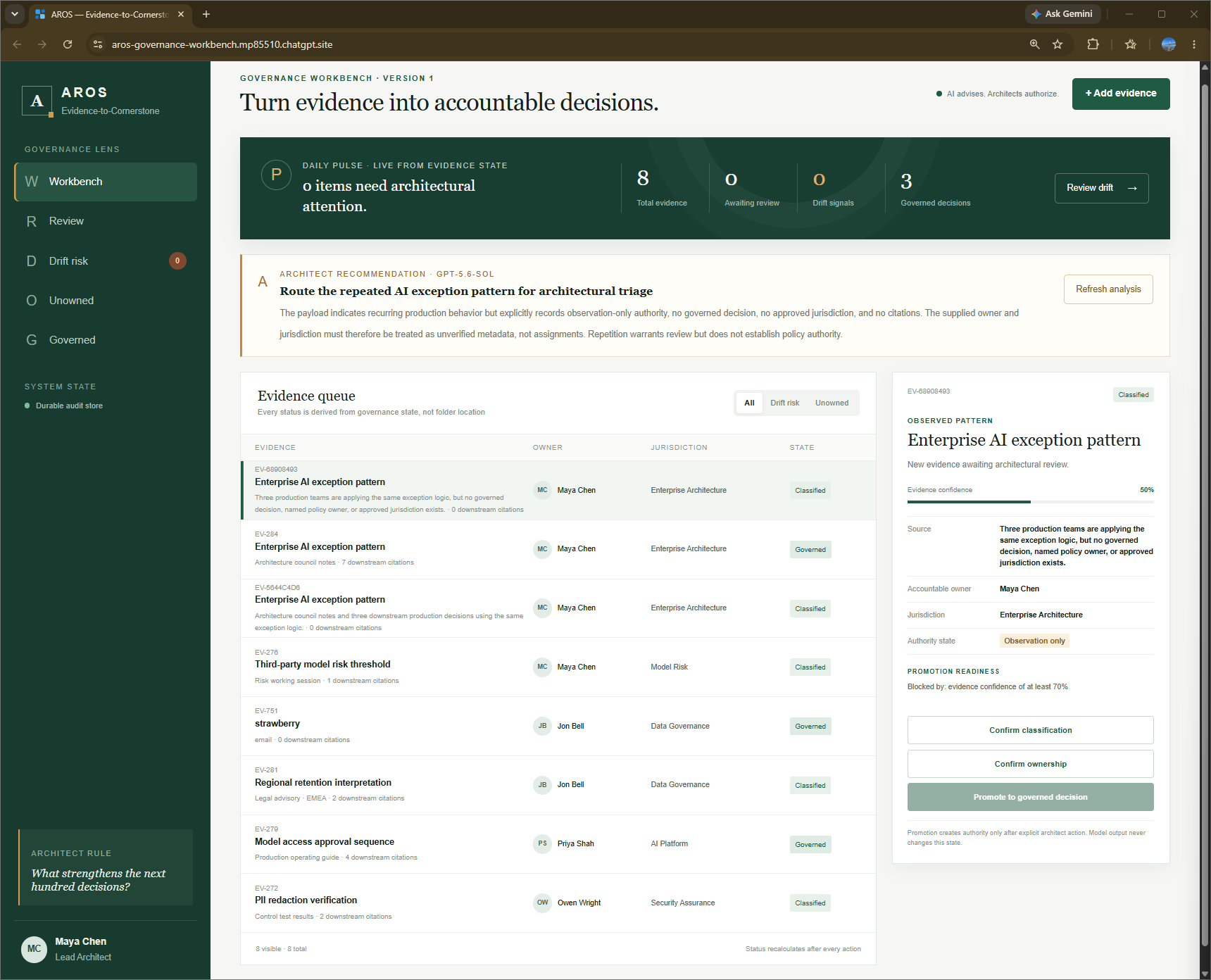
Workbench overview
-
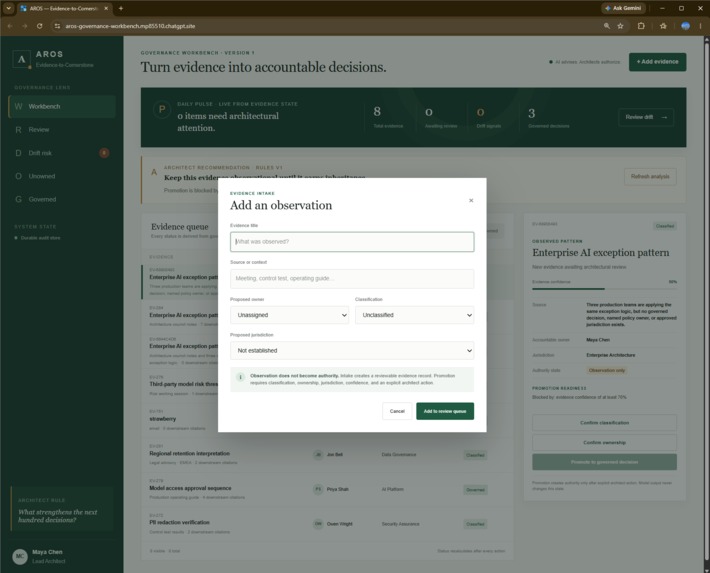
Evidence intake
-
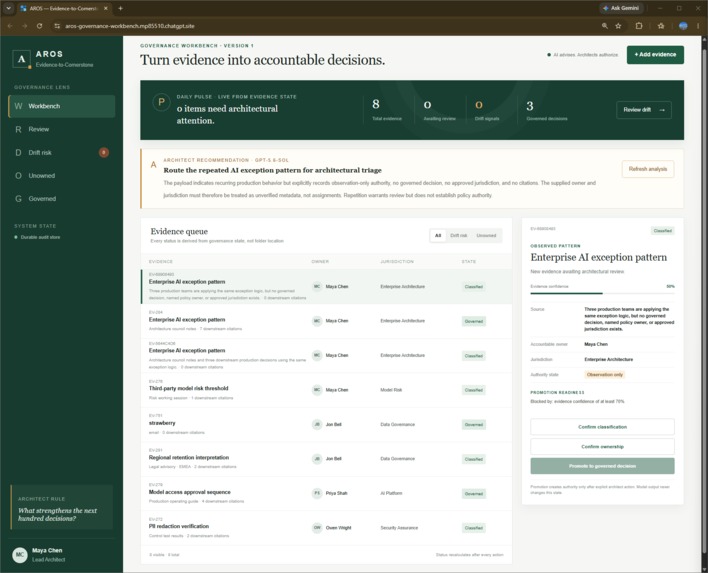
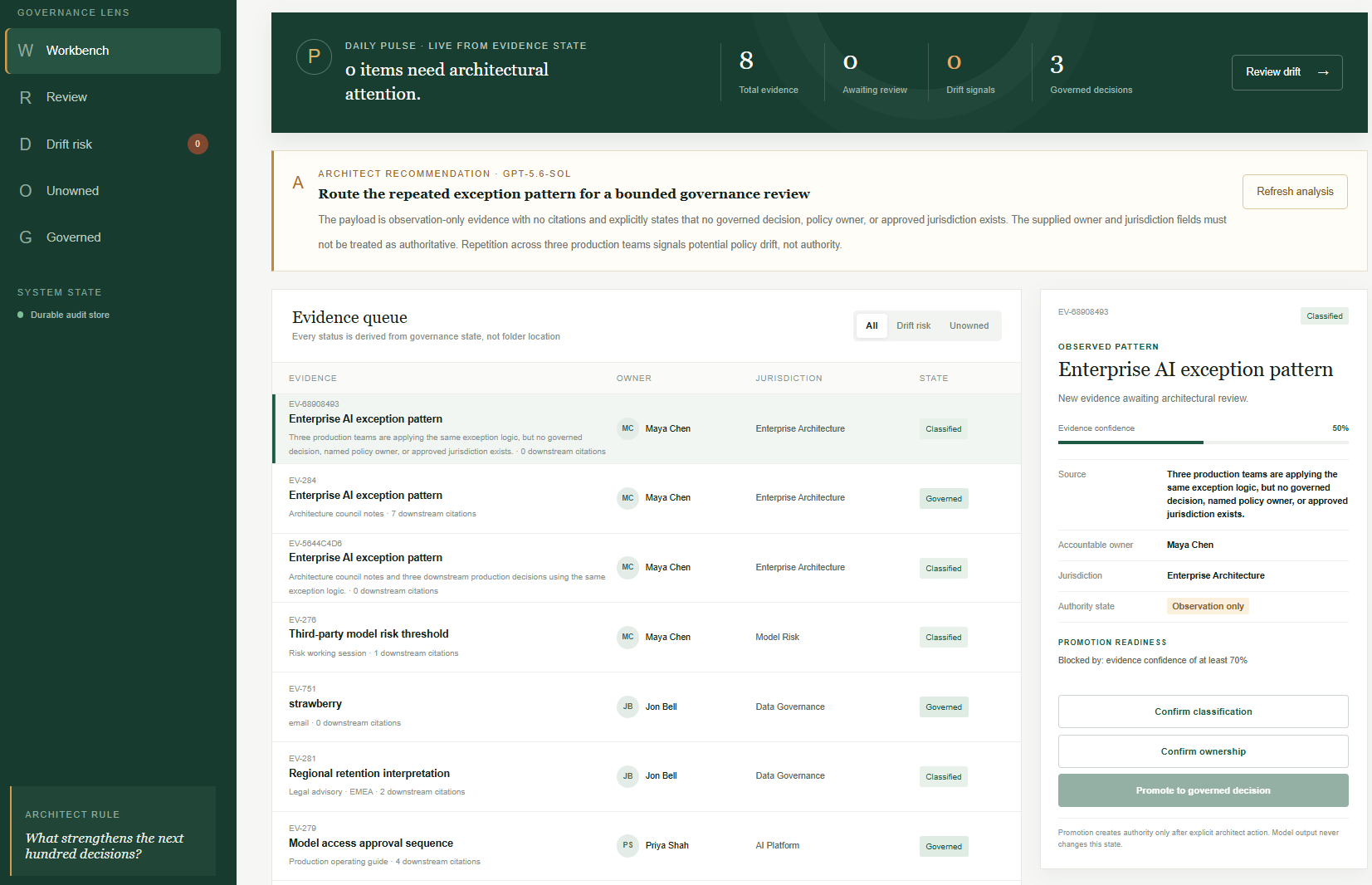
AI advisory
-
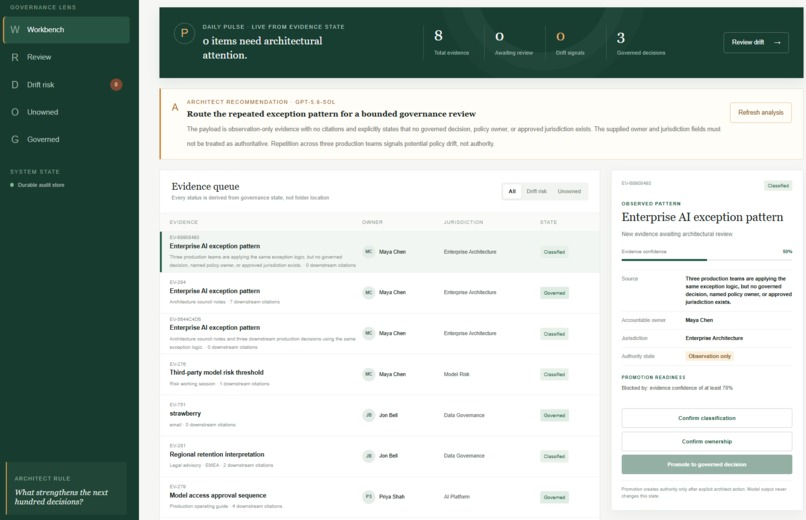
Promotion blocked
-
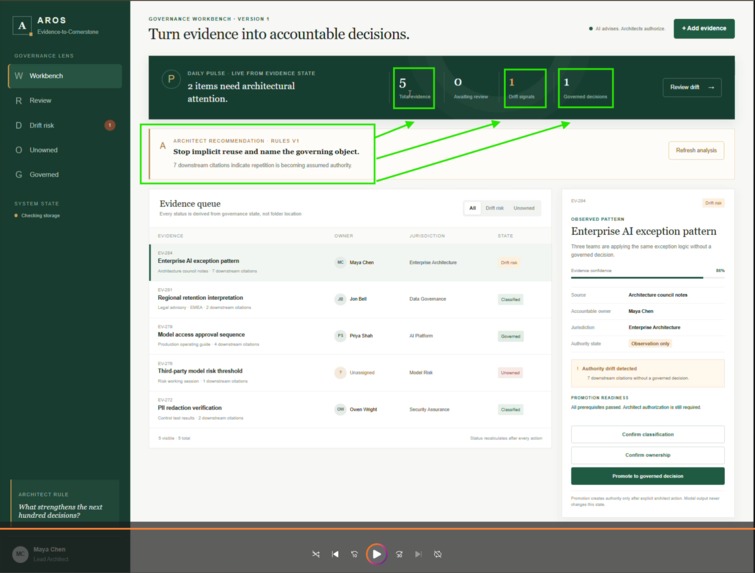
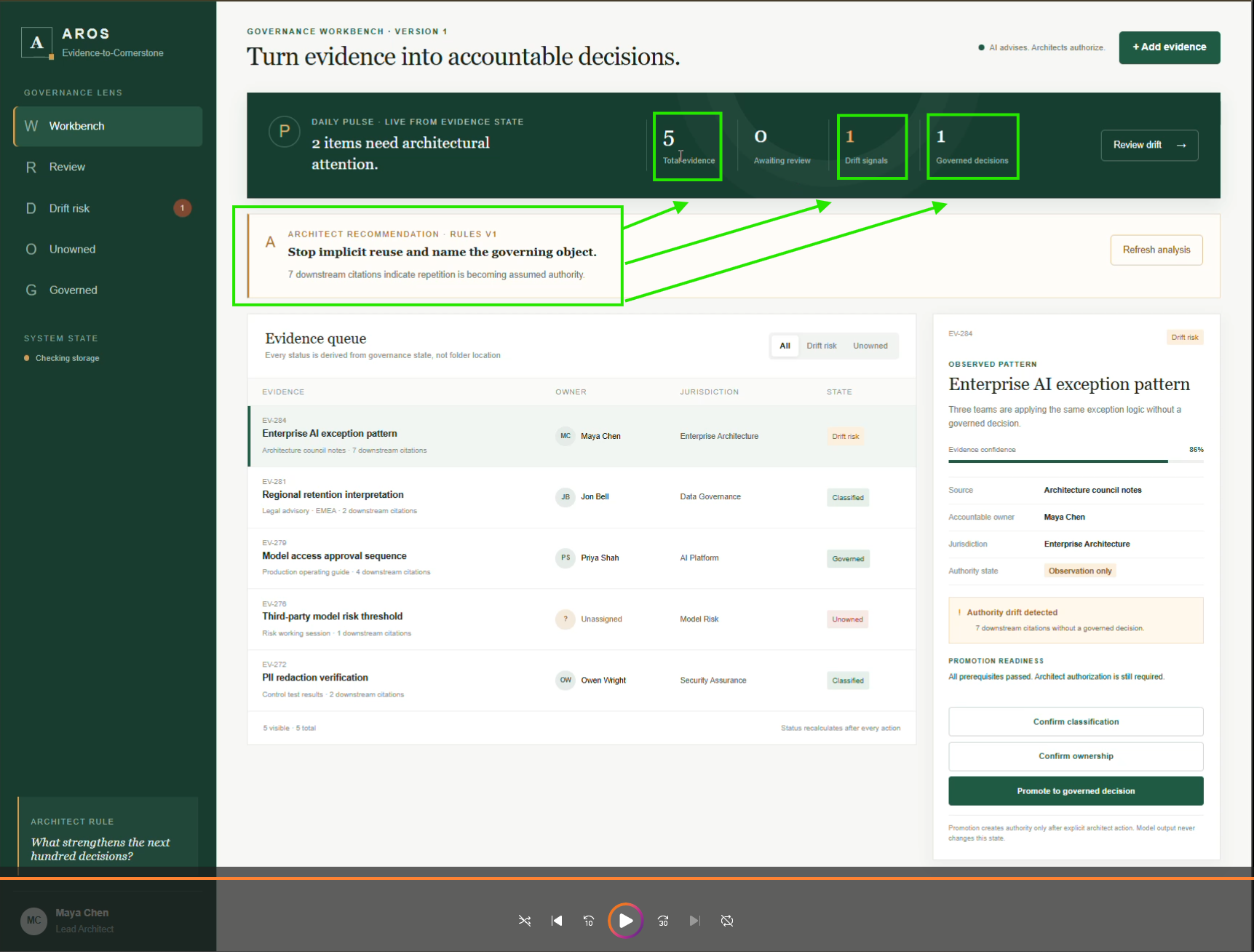
Human authorization / persistence
Inspiration
Organizations don't usually lose knowledge.
They lose decisions.
As AI becomes part of everyday work, more recommendations, observations, and discussions are generated than people can realistically govern. Valuable knowledge becomes buried in conversations, while important decisions lose context over time.
AROS was created to solve that problem.
Instead of treating AI as the authority, AROS treats AI as an advisor. Human governance remains explicit, accountable, and auditable.
Its core philosophy is simple:
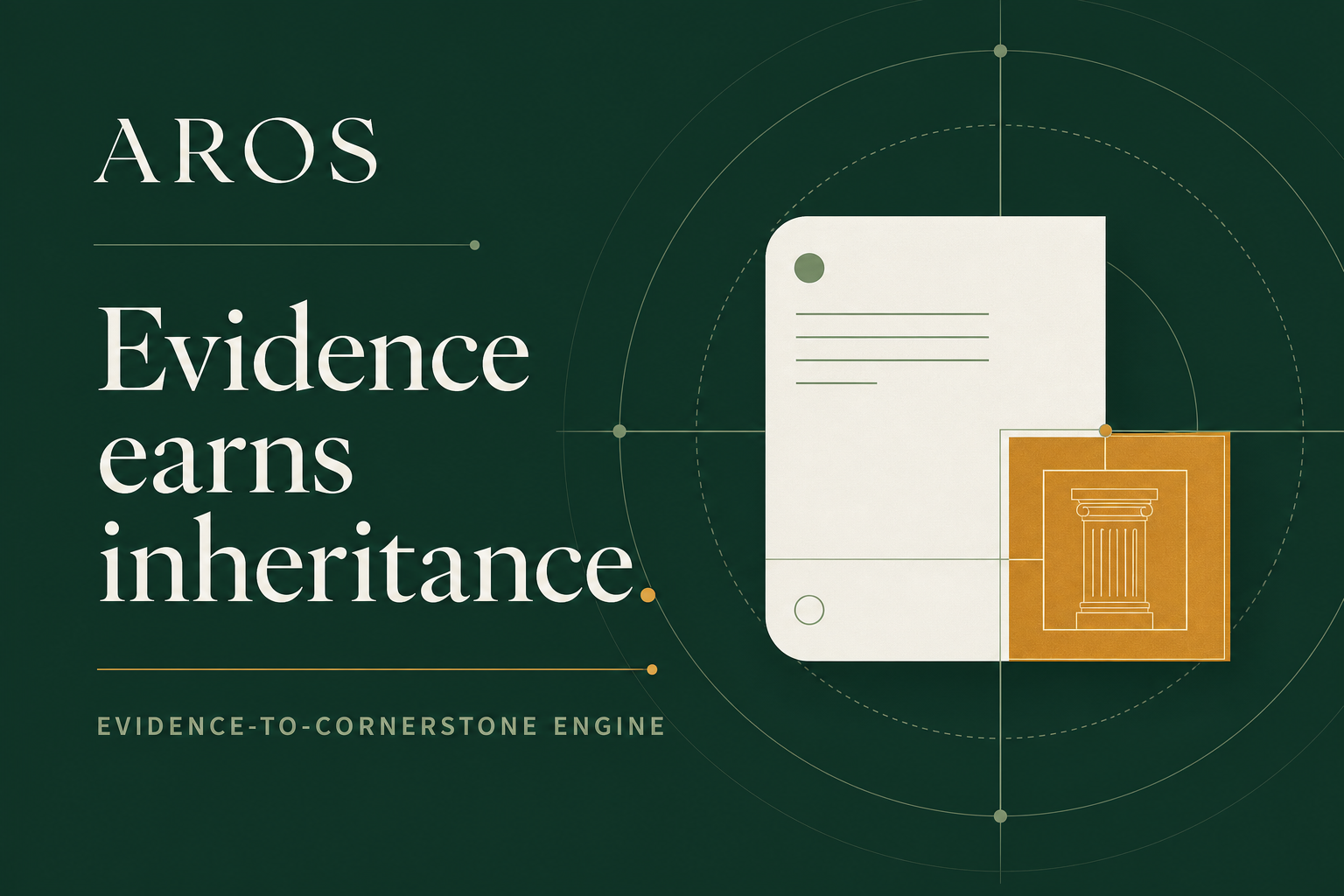
AI advises. Humans authorize. Evidence earns inheritance.
What it does
AROS is an Evidence-to-Cornerstone Engine.
It transforms observations into governed evidence, accountable human decisions, and durable institutional memory.
The application guides work through a governance lifecycle:
- Evidence Intake
- Classification
- Ownership
- Jurisdiction
- GPT-5.6 Governance Advisory
- Authority Drift Detection
- Promotion Prerequisite Validation
- Explicit Human Authorization
- Immutable Audit History
- Persistent Institutional Memory
Recommendations generated by GPT-5.6 remain advisory.
Authority can only be created through authenticated human action.
How we built it
AROS was built using Codex with GPT-5.6.
Codex accelerated implementation of the application architecture, backend services, governance workflows, persistence, validation, testing, deployment, and documentation.
GPT-5.6 was integrated through the server-side Responses API to generate structured governance recommendations while preserving strict authority boundaries.
The production implementation includes:
- Server-side GPT-5.6 advisory
- Durable D1 persistence
- Immutable governance events
- Promotion safeguards
- Structured Outputs
- Production validation
- Automated testing
- Live GPT evaluation
- Private deployment
Challenges we ran into
The largest challenge was preventing AI from quietly becoming the decision-maker.
Throughout development, the governance model was continuously refined so that AI recommendations could never directly mutate evidence or create authority.
Another challenge was balancing technical implementation with usability. The interface had to communicate governance concepts without becoming overwhelming, while remaining truthful about what GPT-5.6 was doing at every step.
Accomplishments that we're proud of
- Working production application
- Server-side GPT-5.6 integration
- Durable governance workflow
- Human authorization safeguards
- Immutable audit trail
- Successful production validation
- Live GPT evaluation suite
- Complete demonstration workflow for OpenAI Build Week
What we learned
Building governance software requires more than good AI.
The difficult part is designing clear boundaries between recommendation and authority.
This project reinforced that responsible AI systems are strongest when human accountability remains explicit rather than implied.
What's next for AROS
Future versions will expand governance workflows, evidence lifecycle management, organizational collaboration, and long-term institutional memory while preserving the project's core principle:
AI advises. Humans authorize. Evidence earns inheritance.

Log in or sign up for Devpost to join the conversation.