-
-
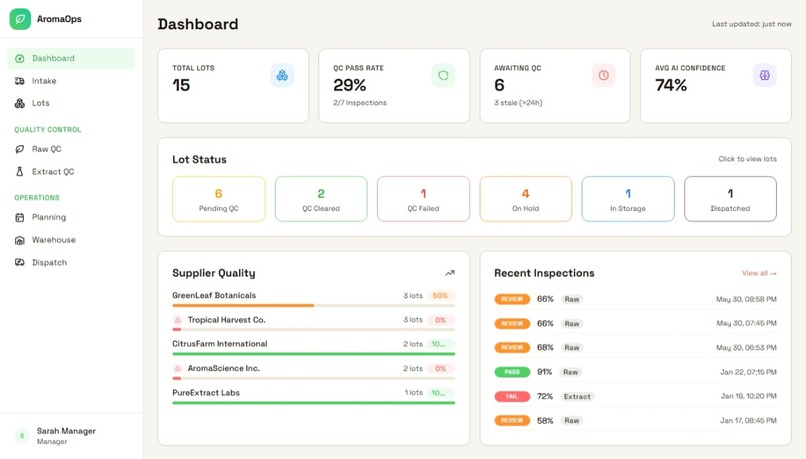
Dashboard
-
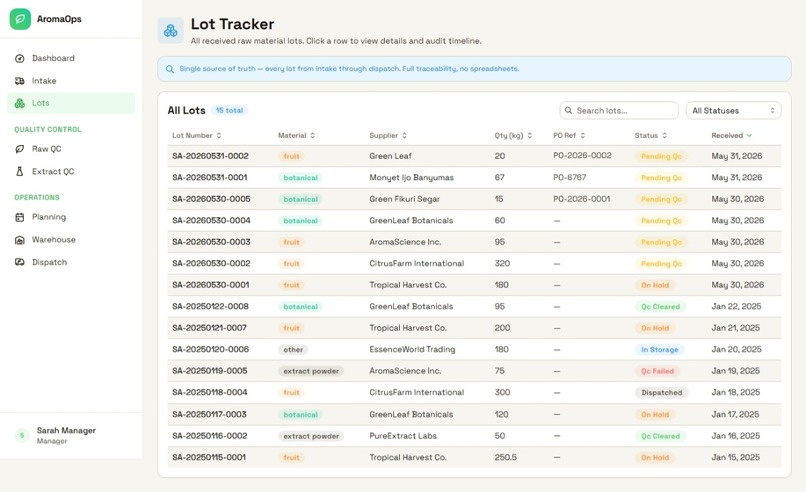
Timeline
What inspired us
Quality control in many manufacturing environments is still surprisingly manual. Inspectors visually examine raw materials, record results on paper forms or spreadsheets, and make pass/fail decisions based on experience. While this process has worked for years, it creates several challenges: inspections are time-consuming, results can vary between inspectors, and tracing decisions later can be difficult.
We wanted to explore how AI and modern workflow automation could improve this process. Instead of treating quality control as an isolated task, we envisioned a connected platform where every stage—from receiving materials to quality inspection and management oversight—would be part of a single digital workflow.
What it does
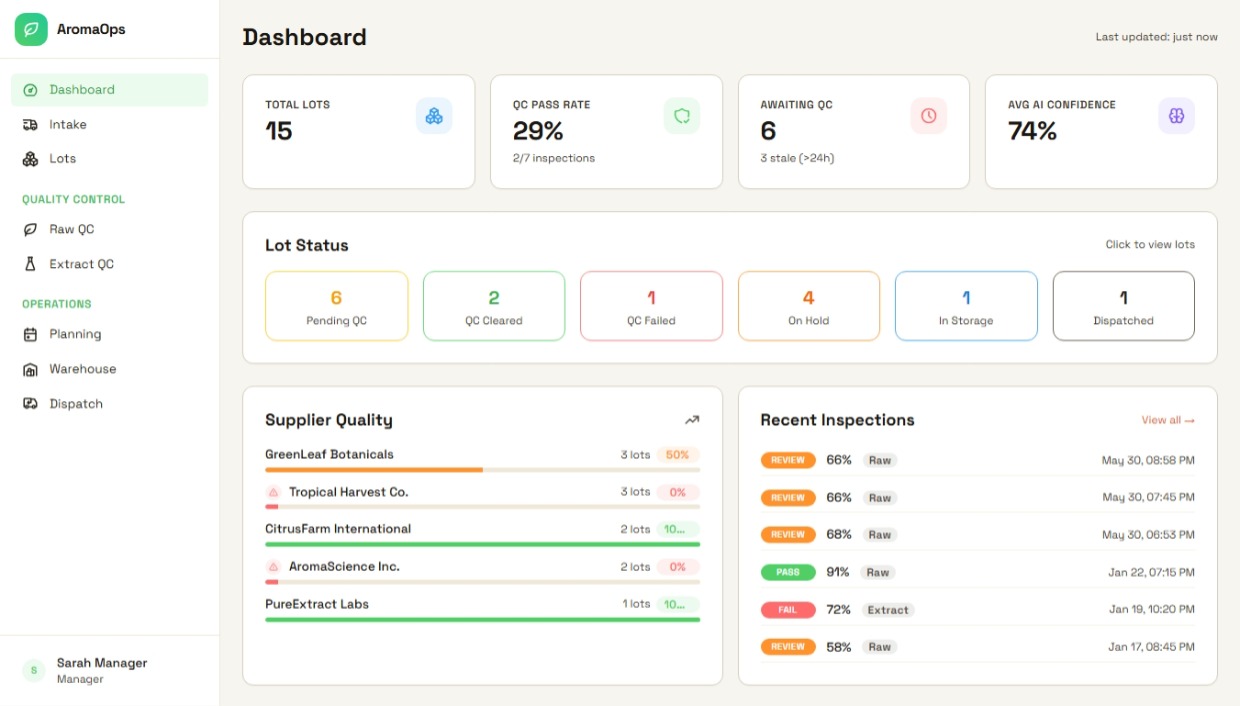
AromaOps is an AI-powered quality control and operations platform designed for aromatic ingredient manufacturers.
The platform digitizes the workflow from material intake through quality inspection and management review.
Key capabilities include:
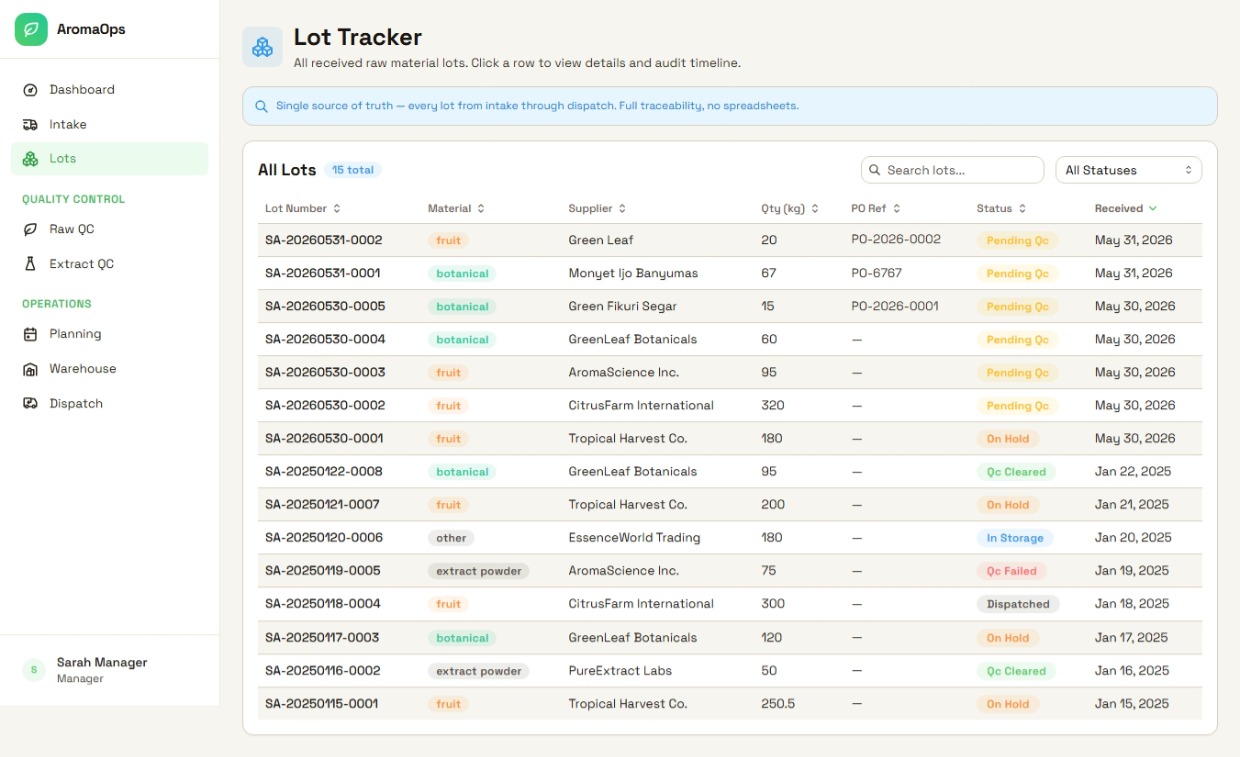
- Digital lot creation and intake management
- AI-powered visual inspection using computer vision
- Automated pass/fail recommendations with confidence scoring
- Real-time workflow updates across teams
- Role-based access control for different factory functions
- Complete audit trails and traceability for every lot
Instead of spending up to 30 minutes performing and documenting a manual inspection, operators can receive AI-assisted assessments in seconds.
How we built it
We built AromaOps as a full-stack web application.
The system uses:
- React and TypeScript for the frontend
- Modern component libraries for responsive user interfaces
- Role-based access control to support multiple operational roles
- Real-time workflow management for lot tracking
- Computer vision capabilities for raw material assessment
- Audit logging and traceability mechanisms for compliance and accountability
The application was designed around actual operational workflows rather than isolated features. Each role—from intake coordinator to quality control worker and manager—interacts with the system through interfaces tailored to their responsibilities.
Challenges we ran into
One of the biggest challenges was balancing technical complexity with usability.
Computer vision outputs are often difficult for non-technical users to trust. We addressed this by presenting inspection results through intuitive scoring systems, confidence indicators, and visual feedback rather than exposing raw model outputs.
Another challenge was designing workflows that accurately reflected real operational processes. It was important that actions performed by one role immediately impacted what other users could see and do, creating a seamless end-to-end experience.
We also had to ensure that traceability and auditability were built into the platform from the start rather than added later as an afterthought.
What we learned
Building AromaOps taught us that successful AI products are not just about the model itself.
The real value comes from integrating AI into existing workflows in a way that improves decision-making without disrupting operations. We learned the importance of designing for trust, transparency, and usability alongside technical performance.
We also gained experience building role-based enterprise applications, implementing end-to-end workflow systems, and creating user experiences that make advanced AI capabilities accessible to operational teams.
What's next for AromaOps
Future improvements could include:
- Expanded computer vision models for additional raw material types
- Historical quality trend analysis
- Supplier performance analytics
- Predictive quality risk monitoring
- ERP and warehouse management system integrations
- Mobile-first inspection workflows
Our goal is to continue transforming quality control from a manual, paper-based process into a fast, consistent, and fully traceable digital experience.
Built With
- amplify
- aws-amplify
- buildpad-daas
- canvas-api
- css
- framer-motion
- gemini-2.0-flash
- google-gemini-ai
- mantine
- next.js
- postgresql
- react
- supabase
- typescript


Log in or sign up for Devpost to join the conversation.