Inspiration
Most of us have seen a family member leave a doctor's room and realise they forgot to ask half their questions. Consultations are often only 5 minutes long. Reports get lost, prescriptions are hard to read, and appointments are missed. In smaller cities and towns, many patients also struggle with language and with using complicated apps.
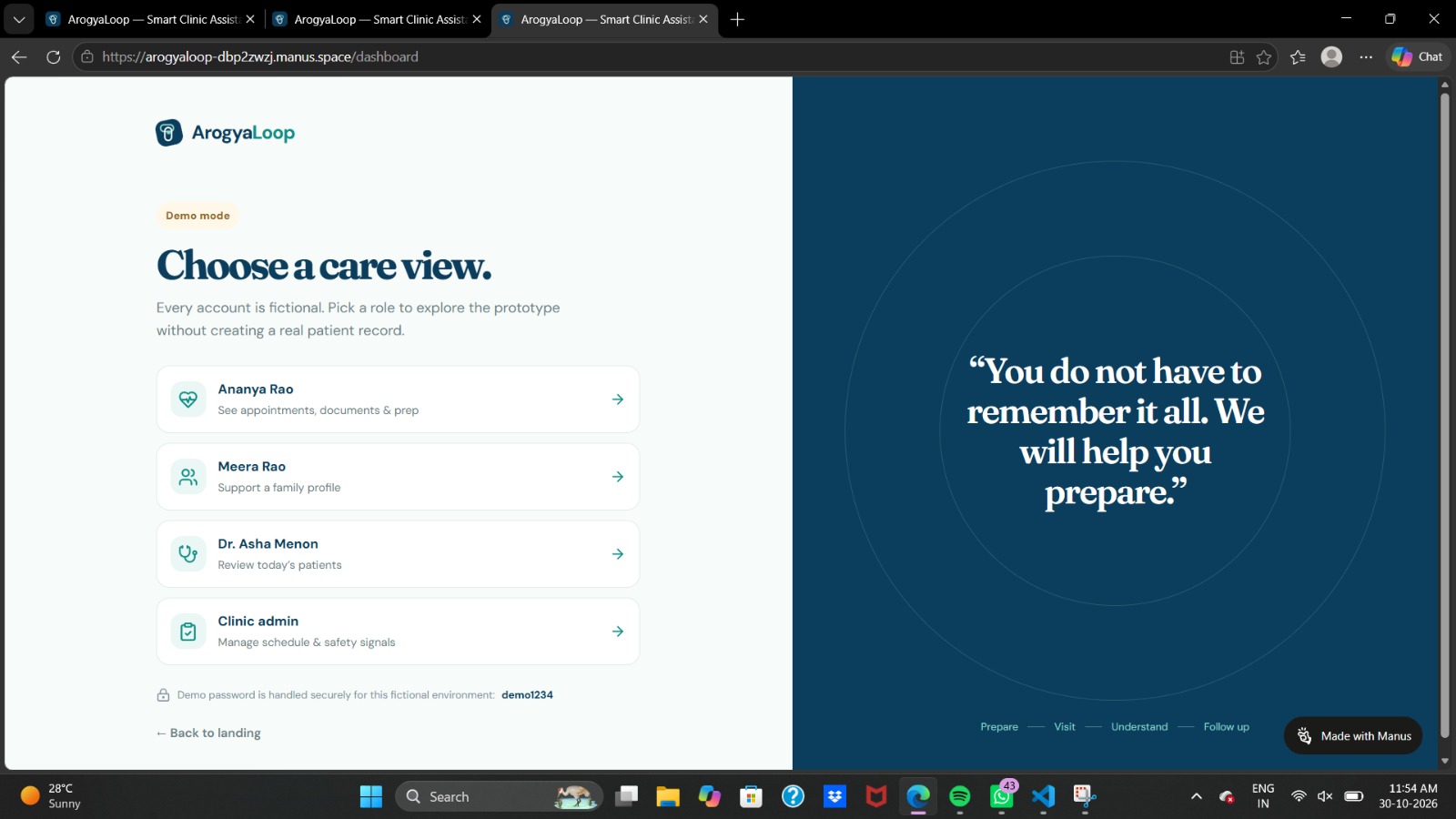
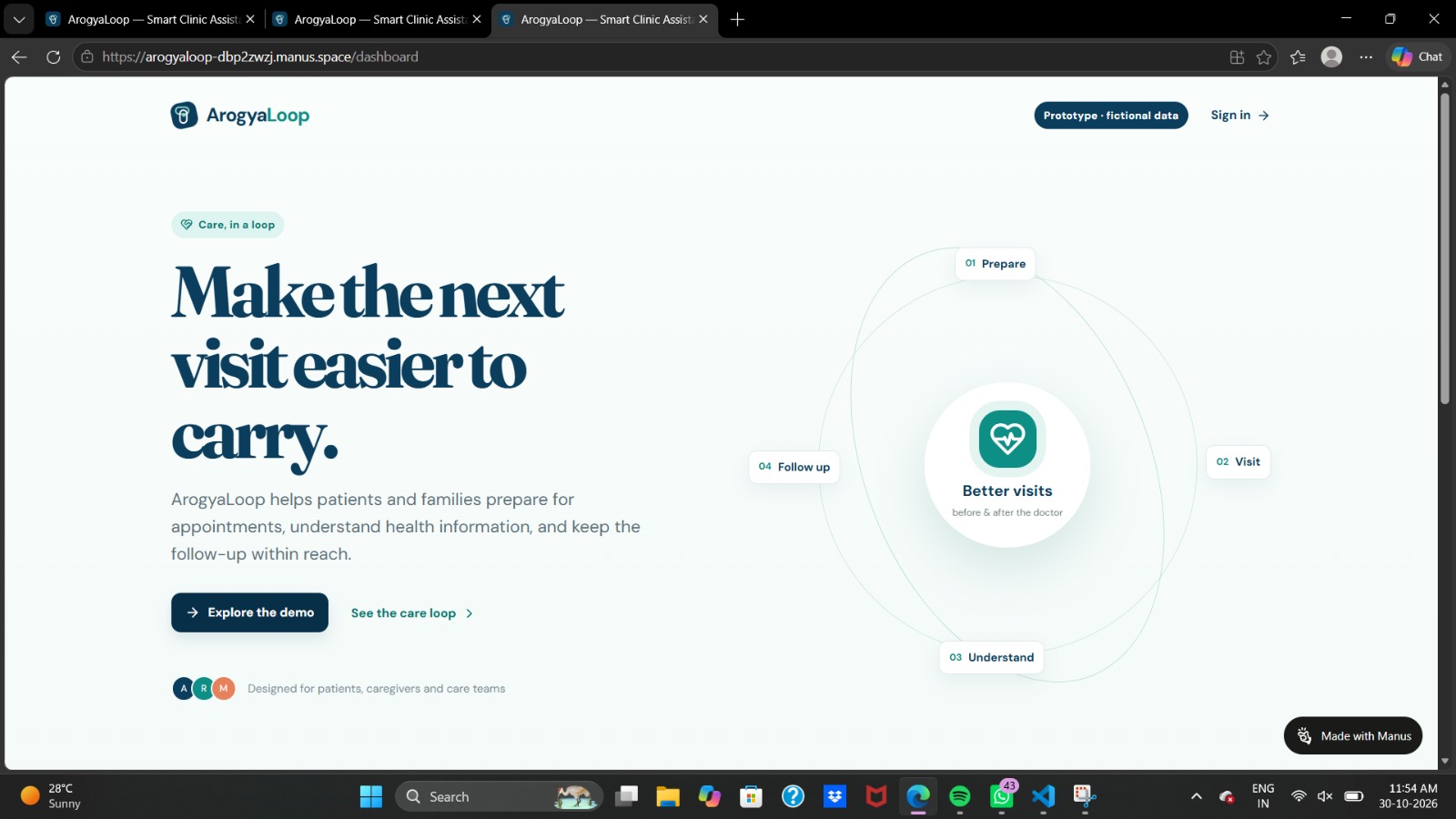
Most clinic apps stop at booking. I wanted to build around the gap before and after the consultation, which is where patients actually get confused. That led to ArogyaLoop, a care loop of Prepare → Visit → Understand → Follow up.
What it does
ArogyaLoop is a Smart Clinic Assistant that:
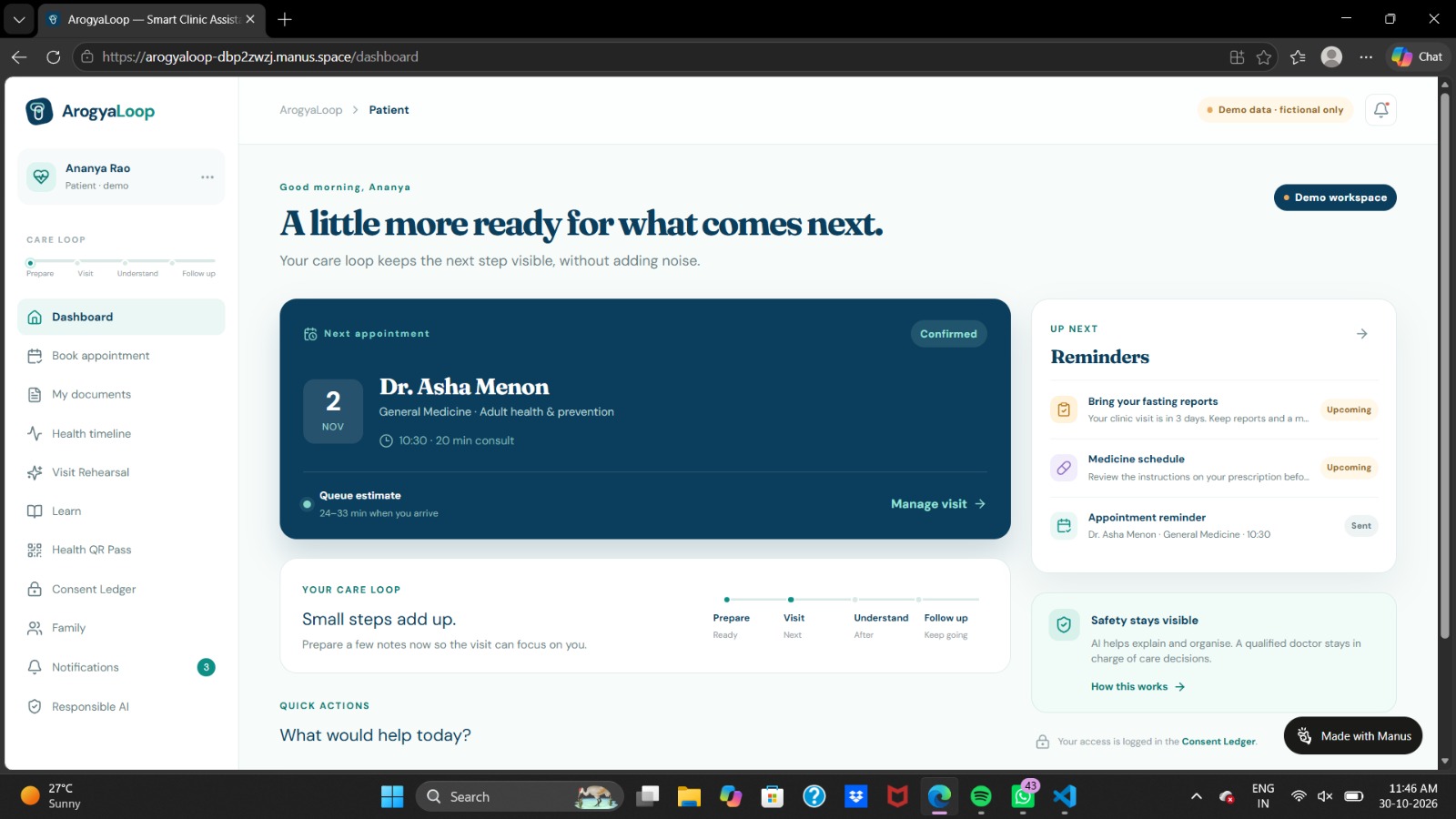
- Books appointments with doctor and department filters, rescheduling, and waitlist filling
- Sends reminders for appointments, follow-ups, medicines, and prep tasks like "bring fasting reports"
- Organizes medical documents with auto-tagging and a health timeline
- Prepares patients for visits with a one-page summary and suggested questions for the doctor
- Explains reports and prescriptions in simple language (Kannada and English), without diagnosing
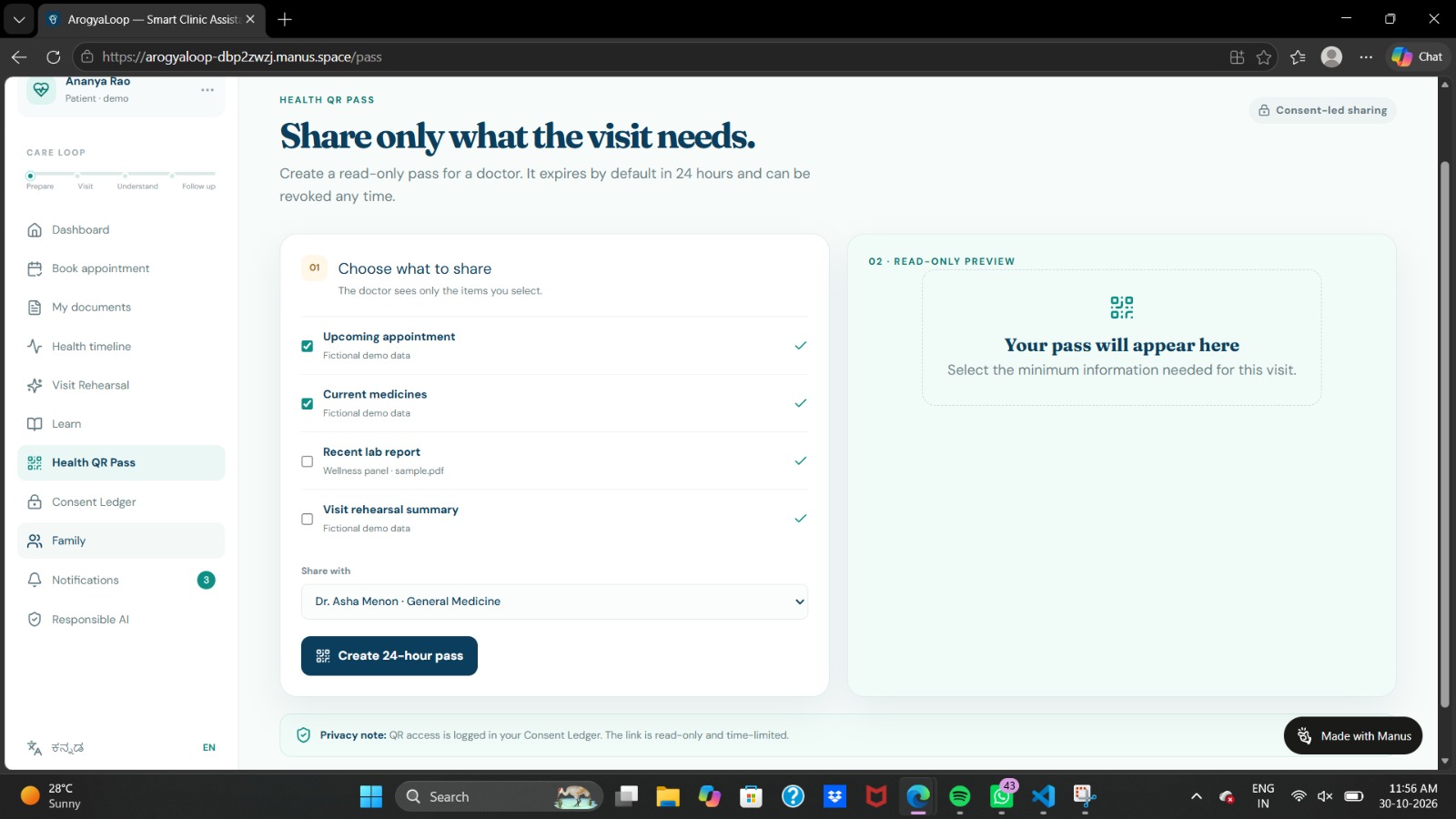
- Shares records safely through an expiring QR pass and a consent ledger showing who accessed what
- Supports family caregivers who manage a parent's care remotely, with consent
It never diagnoses or prescribes. It shows trusted sources, and for serious symptoms it shows an emergency warning instead of chatting.
How I plan to build it
- Frontend: React (or Flutter) with a simple, bilingual interface
- Backend: Java Spring Boot with REST APIs
- Database: PostgreSQL or MySQL, with encrypted file storage for documents
- Reminders: a scheduler with SMS and email APIs
- AI layer: OCR for reports plus an LLM with retrieval from trusted sources such as WHO, NHS, and ICMR, with strict safety rules
- Security: encryption, role-based access, consent-based sharing, and a delete-my-data option, designed with India's DPDP Act, 2023 in mind
A simple no-show risk score can help decide who gets a smarter reminder:
$$ \text{risk} = w_1 \cdot \text{missed visits} + w_2 \cdot \text{reschedules} + w_3 \cdot \text{lead time} $$
Challenges I expect
- Protecting sensitive data: medical records are highly personal, so privacy has to be part of the design from the start.
- Keeping AI safe: the assistant must explain and organize without ever acting like a doctor.
- Messy documents: reports and prescriptions come in many formats, and handwriting is hard for OCR.
- Language and accessibility: supporting Kannada and low-end phones takes extra design and testing.
- Trust: doctors and patients will only use it if it is accurate and clearly states its limits.
What I'm learning
Application development, data management, reminder systems, and responsible AI, especially how to build useful tools that stay safe and honest about what they can't do.
What's next
Telemedicine integration, wearable data for chronic care, voice-first mode for elderly users, and hospital system integration.

Log in or sign up for Devpost to join the conversation.