-
-
MediFly:Delivering health. Saving lives. Anywhere, anytime.
Inspiration
Every year during the monsoon season, devastating floods isolate hundreds of villages in our home state of Odisha. For most, this is a hardship. For someone like Sarita, a 68-year-old grandmother who relies on daily insulin, it's a life-threatening crisis. When roads vanish, the medical supply chain breaks. This critical gap, where a natural disaster becomes a healthcare disaster, was our core inspiration. We saw a real, urgent problem that could be solved with technology, leading us to create the concept for MediFly.
What it does
MediFly is a concept for a humanitarian drone logistics network designed to deliver critical medicines to the last mile when all other options have failed. Our system works through a simple, robust, 3-step workflow:
- ORDER: A registered pharmacist or health worker in a flood-affected area places an urgent medicine order through a user-friendly mobile app.
- DISPATCH: A drone operator at a centralized district hub securely packs the medicine in a temperature-controlled payload and launches an autonomous, all-weather drone.
- RECEIVE: The drone navigates to a pre-designated, safe drop-zone (like a school field). A local, trusted ASHA health worker is notified of its arrival and confirms the delivery by scanning a unique QR code.
In essence, it creates a life-saving bridge over the floodwaters, ensuring that the most vulnerable are never cut off from the care they need.
How we built it
As an Ideathon project, our build process was centered on deep research, human-centered design, and creating a tangible vision for our solution.
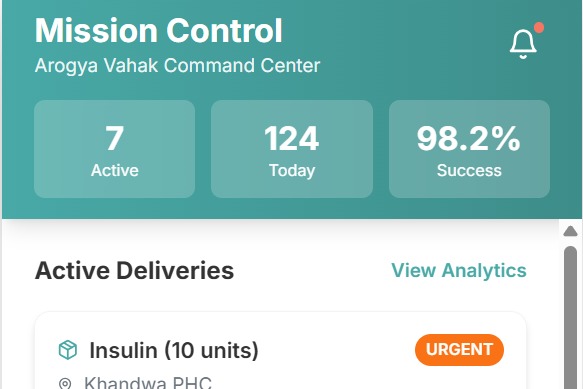
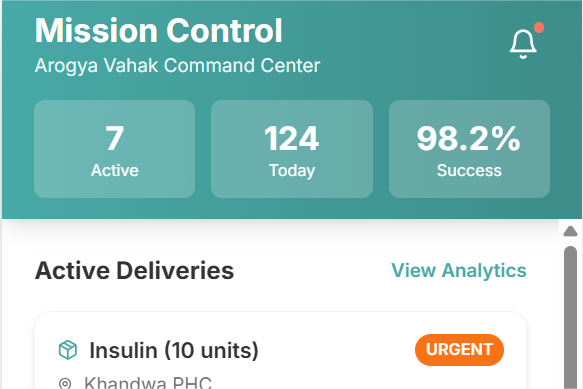
- Design Tools: We used Figma to design a complete, high-fidelity interactive prototype of the mobile application. This allowed us to map out the entire user journey and create a clean, intuitive UI/UX for our target users.
- Visualization: To bring our hardware concept to life, we used AI image generation tools to create professional, photorealistic 3D renders of the proposed "MediFly" drone.
- Methodology: Our entire process was guided by research. We created detailed user personas for the pharmacist and the village health worker, and we studied existing disaster relief protocols to ensure our proposed workflow was both feasible and effective.
Challenges we ran into
Our primary challenge was making a complex hardware and logistics system feel real, credible, and feasible without writing a single line of code. We overcame this by focusing on hyper-realistic visuals from the app mockups to the drone renders and by developing a detailed conceptual framework for the technology, safety protocols, and operational workflow. We also spent significant time thinking through real-world edge cases, like ensuring medicine integrity and gaining community trust.
Accomplishments that we're proud of
We are incredibly proud of designing a complete, end-to-end conceptual solution that is not only technologically innovative but also deeply empathetic. We successfully created a full set of professional, high-fidelity mockups and a compelling visual identity for "MediFly" that makes the project feel tangible and ready for development. Most importantly, we are proud to have developed an idea that has a clear potential to save lives.
What we learned
Throughout this hackathon, we learned the immense power of a well-told story backed by thorough design. By starting with the personal story of "Sarita," we were able to anchor our entire design process in empathy. We also learned how modern design and visualization tools can rapidly transform a complex idea into a powerful and persuasive concept, allowing for quick validation and effective communication of a grand vision.
What's next for MediFly
Our vision for MediFly is to move it from concept to reality. The immediate next steps are:
- Seek Partnerships: Engage with the Odisha State Disaster Management Authority (OSDMA) and local NGOs to validate and refine our operational model.
- Develop a Prototype: Build a physical drone prototype and develop the beta version of the mobile application.
- Pilot Program: Launch a small-scale pilot program in a flood-prone district to test and prove the system's effectiveness.
Built With
- css
- lucide
- react
- react.js
- tailwind
- typescript
- v18.3)
- vite


Log in or sign up for Devpost to join the conversation.