-
-
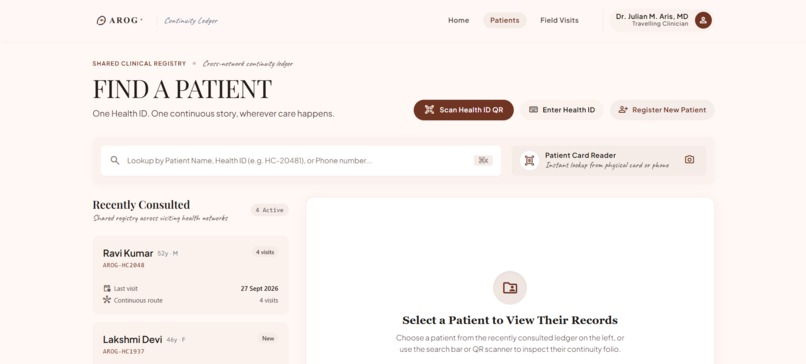
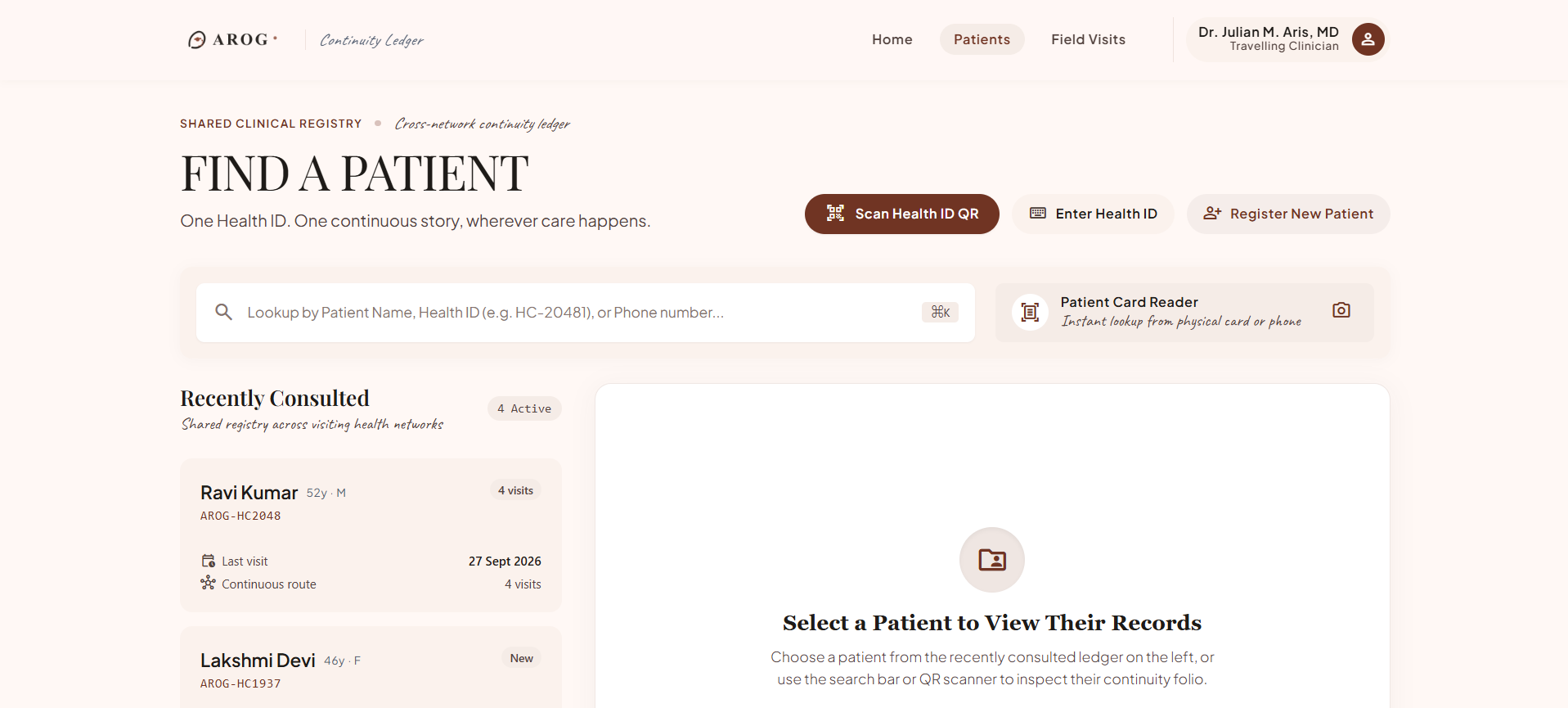
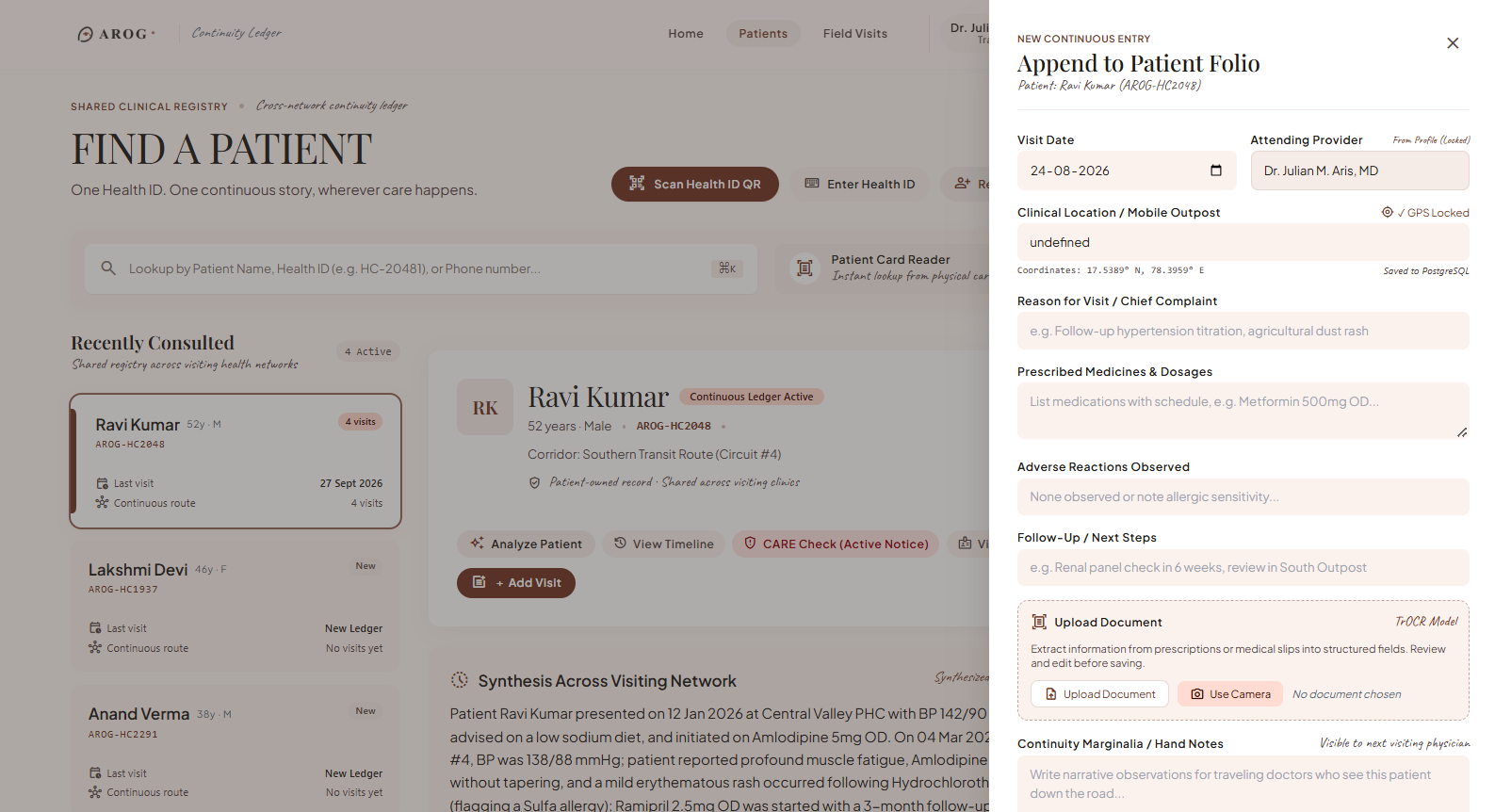
patients page
-
-
-
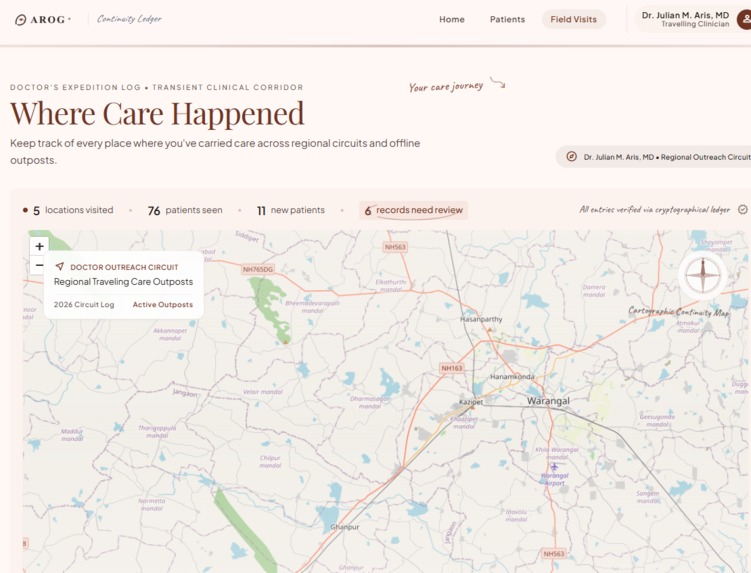
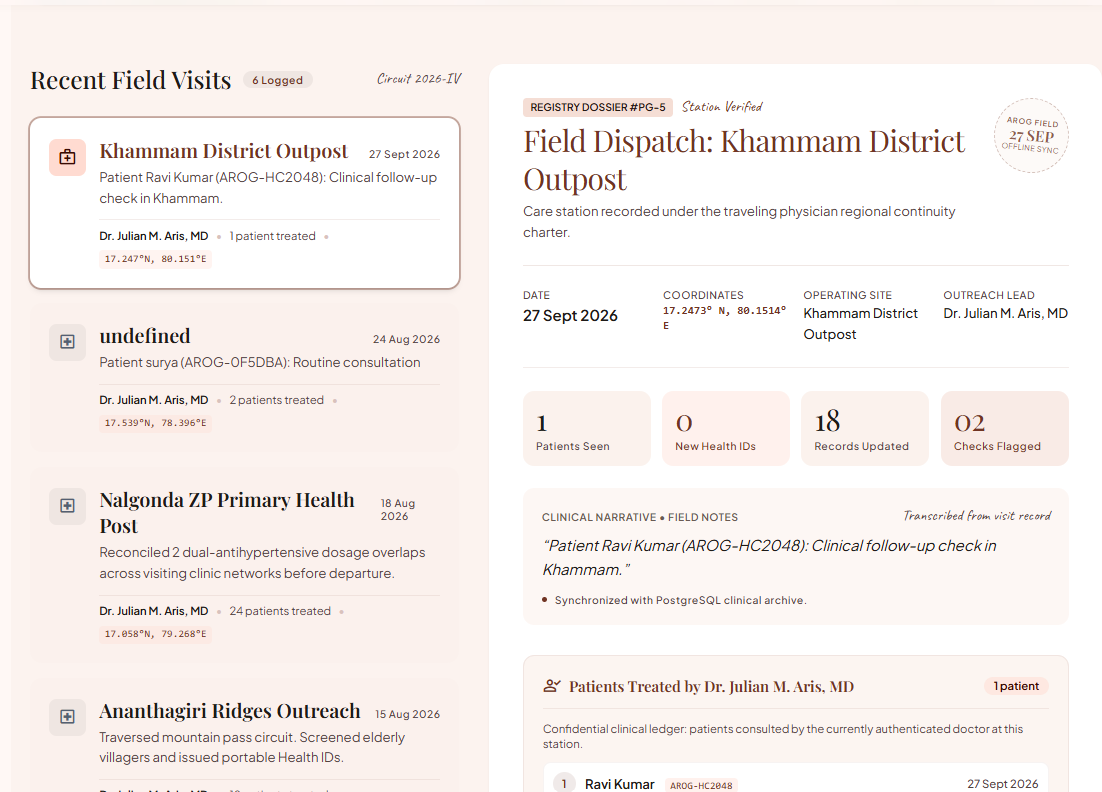
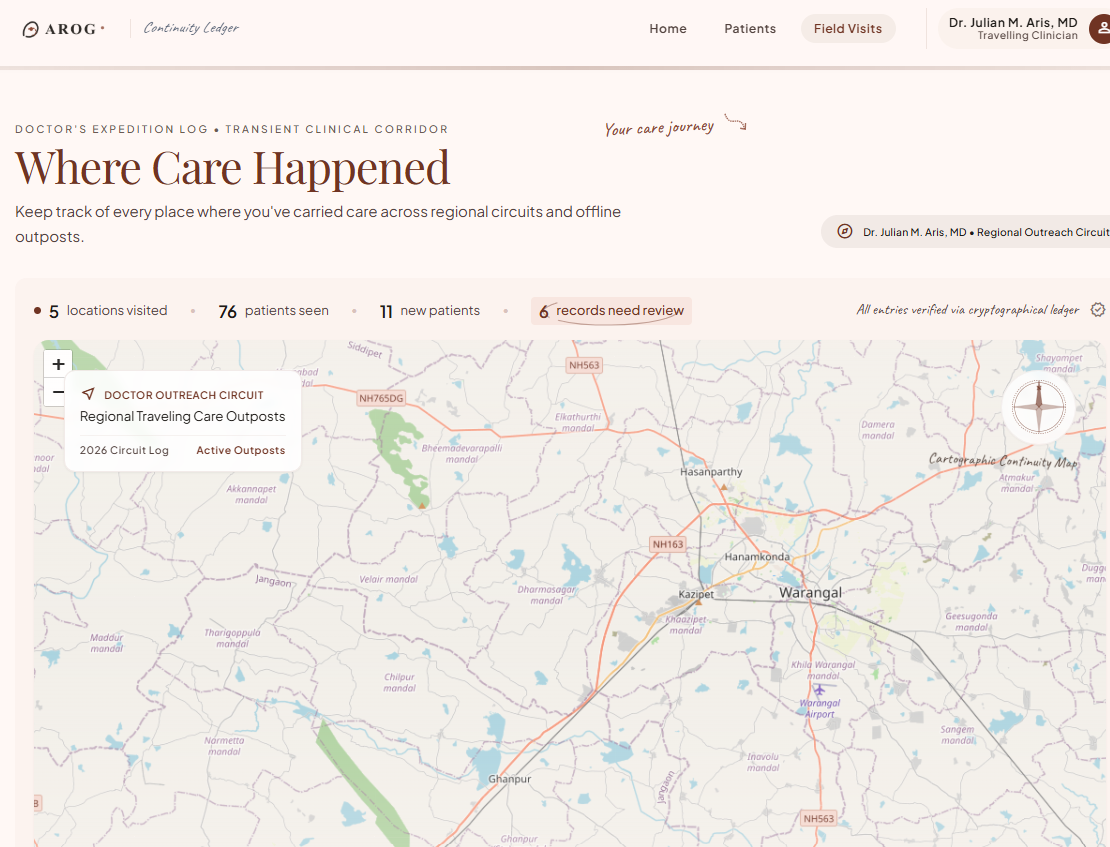
Field Visits
-
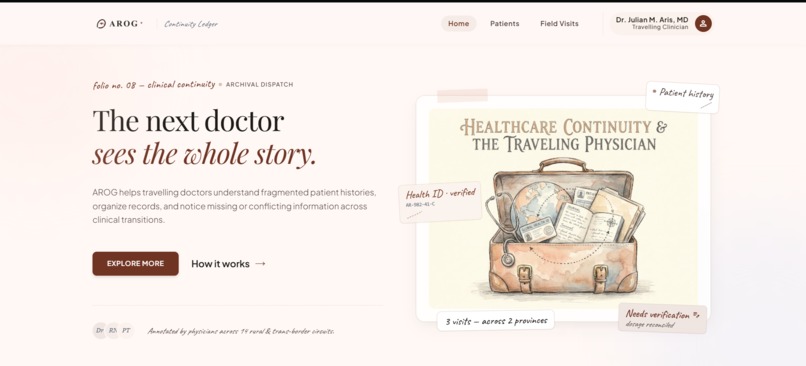
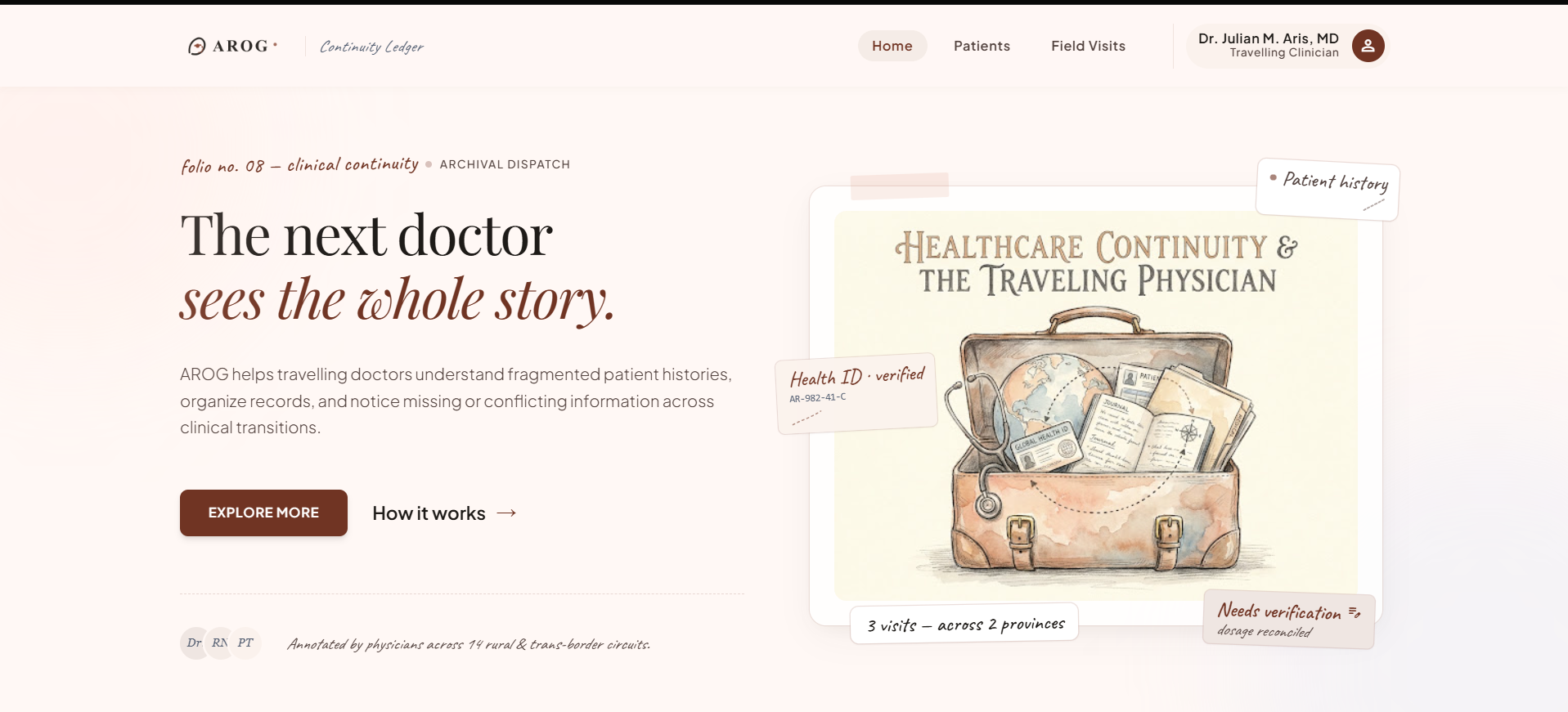
home page
-
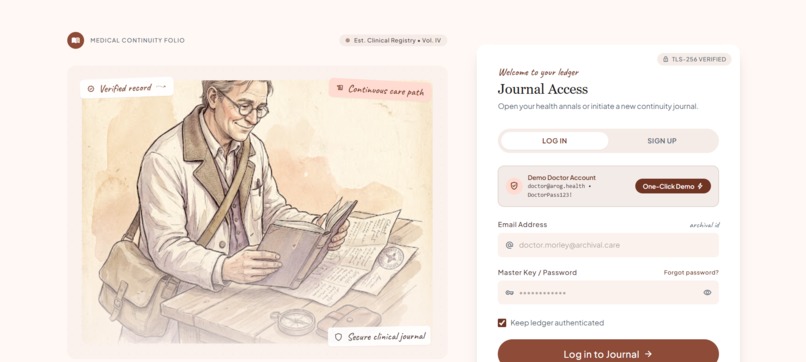
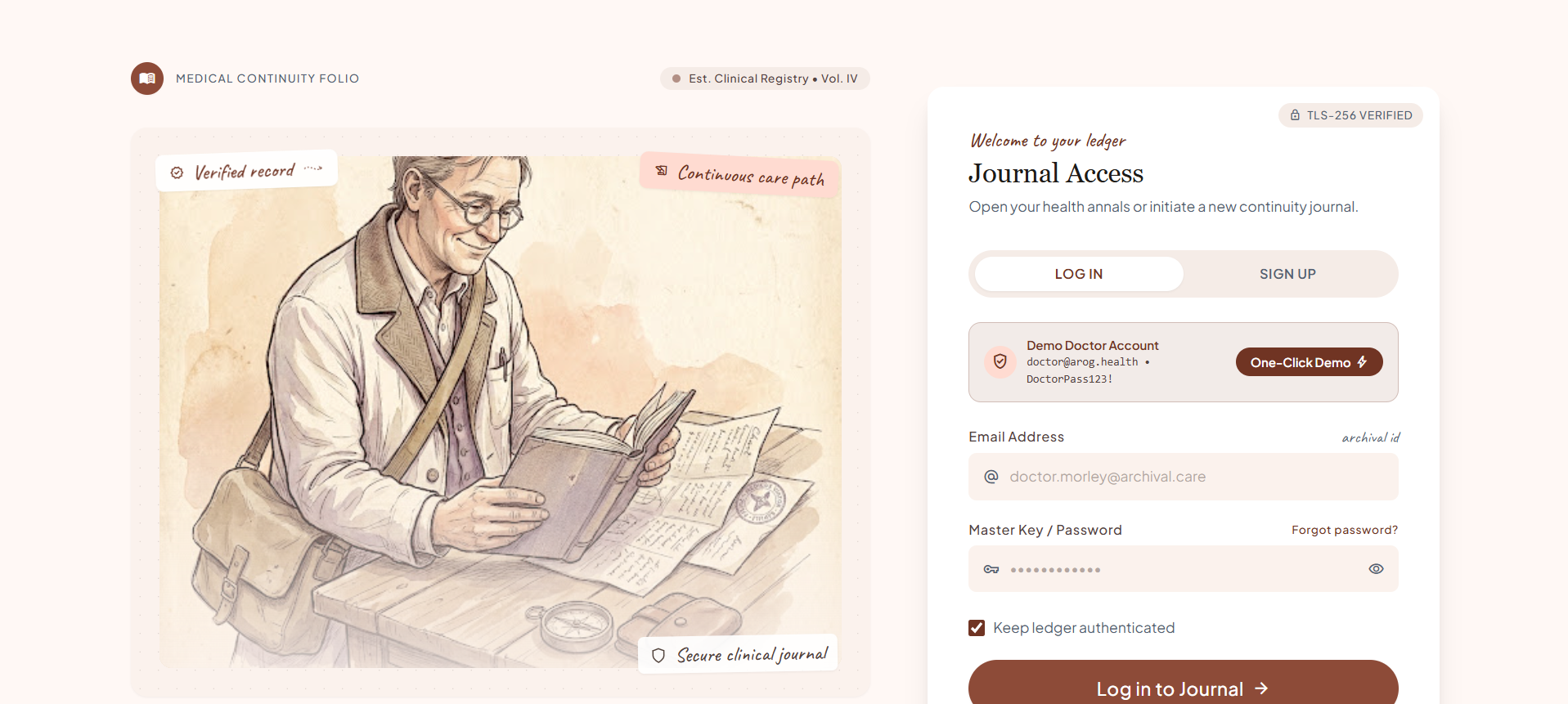
login page
AROG — AI-Powered Continuity of Care
Inspiration
In rural and underserved communities, travelling doctors may see the same patients only occasionally. Previous medical records can be handwritten, scattered across different visits, incomplete, or difficult to interpret.
When another doctor sees the patient later, important information can easily be missed.
This inspired us to build AROG, an AI-powered continuity-of-care platform that helps travelling doctors access, understand, and verify a patient's medical history wherever care happens.
Our goal is simple:
Turn fragmented patient records into a clear, connected, and trustworthy health history.
What We Built
AROG gives every patient a Digital Health ID that can be accessed through a QR code. Authenticated travelling doctors can use the Health ID to find a patient and access their previous medical records.
The platform combines patient history with AI-powered analysis to help doctors understand what has happened across previous visits.
Key Features
- Digital Health ID & QR — Quickly identify and access a patient's record.
- Patient History — View previous visits, treatments, medicines, and recorded reactions.
- AI Patient Summary — Converts scattered visit records into a concise patient history.
- AI Missing Information & Contradiction Detection — Identifies gaps and inconsistencies across records for the doctor to verify.
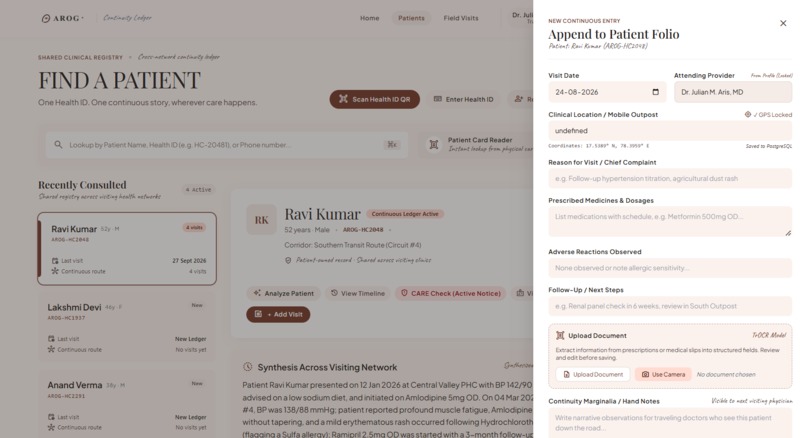
- OCR Medical Record Extraction — Extracts information from uploaded medical documents and helps populate visit records.
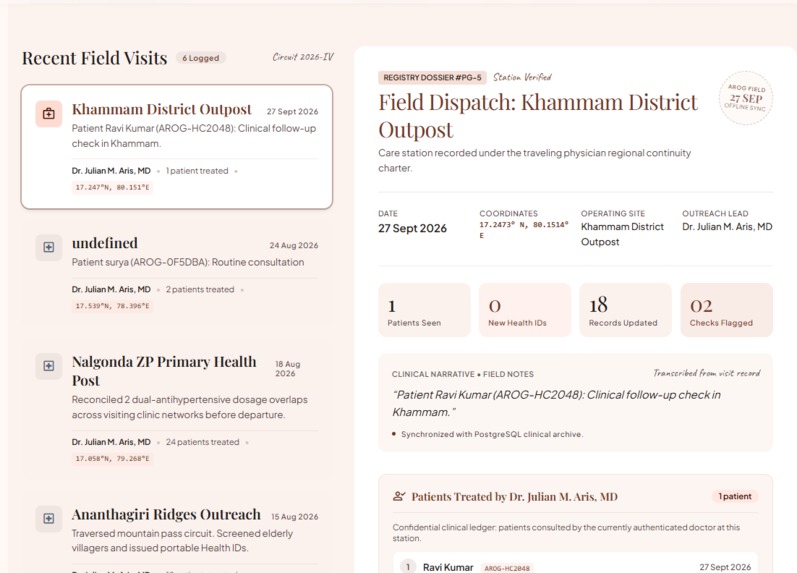
- Field Visit Tracking — Records where travelling doctors provided care and visualizes their visits on a map.
- Doctor-Specific Archives — Allows doctors to access records associated with their own visits and field activity.
Our Standout Feature — AI Medical History Checker
Our key innovation is the AI Missing Medical History & Contradiction Detector.
Medical records are not always complete or consistent. A medicine may be stopped without a documented reason, or different visits may contain conflicting information.
AROG analyzes the patient's longitudinal records and flags issues such as:
- A medicine being stopped without a documented reason
- Conflicting allergy information between visits
- Missing dosage or treatment information
- Important follow-ups that are not recorded
- Inconsistencies between different records
For example:
"Penicillin allergy is not recorded in an earlier visit, but is mentioned in a later visit. Please verify the allergy history."
Or:
"Medicine A was marked as stopped, but the reason for stopping is not documented."
The system does not decide which information is correct. Instead, it flags the issue for the doctor to verify, after which the doctor can confirm or correct the record.
This makes AROG more than a medical-record viewer. It helps doctors identify what may be missing or inconsistent in a patient's history.
How We Built It
AROG is built using:
- HTML & CSS — Frontend interface
- FastAPI — Backend API
- PostgreSQL — Persistent data storage
- Gemini API — Patient-history summarization and record analysis
- TrOCR — Medical document and handwritten-text extraction
- Google Maps API — Field-visit location visualization
- QR Technology — Digital Health ID access
Core Workflow
Digital Health ID ↓ Patient Records ↓ Visit History ↓ AI Analysis ↓ Missing Information / Contradictions ↓ Doctor Verification ↓ Updated Patient History
AI With Boundaries
AROG is intentionally designed so that AI does not diagnose or prescribe.
The AI only:
- Organizes information
- Summarizes recorded history
- Identifies missing information
- Highlights contradictions
- Extracts information from medical documents
If a record does not contain the reason why a medicine was stopped, AROG reports:
"Reason for stopping is not documented."
It does not attempt to guess the reason.
The doctor remains responsible for all medical decisions.
Challenges We Faced
1. Designing for Travelling Doctors
One of our biggest challenges was designing the platform for travelling doctors rather than a single fixed clinic.
A patient may be treated by different doctors at different locations. We therefore needed to maintain a shared patient identity while tracking which doctor performed each visit and where that care occurred.
2. Connecting Patient and Doctor Data
We needed to ensure that patients, doctors, visits, and field locations were correctly connected.
A patient has a persistent Health ID, while every visit contains information about:
- The patient
- The authenticated doctor
- Date and time
- Treatment information
- Visit location
This allowed us to build doctor-specific field visits without losing the patient's overall medical history.
3. Working With Messy Medical Documents
Medical documents are often handwritten, scanned, or poorly formatted.
OCR can extract information from these documents, but extracted information may contain errors. We therefore designed the workflow so that extracted information is reviewed and confirmed by the doctor before being permanently stored.
4. Making AI Useful Without Overstepping
Another challenge was deciding how AI should be used in a healthcare environment.
Instead of allowing the AI to diagnose patients or make treatment decisions, we focused it on organizing information, summarizing history, and identifying missing or conflicting records.
If something is not documented, the system reports that it is missing rather than attempting to guess the answer.
5. Keeping the System Focused
There are many possible features that could be added to a healthcare platform. We focused on building a clear workflow around the most important problem: continuity of patient information between visits and doctors.
This helped us prioritize features that directly support the travelling-doctor workflow instead of building features that would make the prototype unnecessarily complex.
What We Learned
Building AROG taught us that solving a real-world problem is not simply about adding more AI features.
The most important part is designing the right workflow around the people who will actually use the system.
We learned how authentication, database relationships, OCR, QR-based identification, geolocation, mapping, and LLM-based analysis can work together as one healthcare workflow.
We also learned that AI systems working with sensitive information need clear boundaries. The AI should make information easier to understand without presenting assumptions as facts.
Most importantly, we learned that in healthcare, trust and transparency are just as important as intelligence.
What's Next
AROG is designed to grow beyond the current prototype.
Future versions could include:
- More robust offline synchronization
- Voice-to-record for doctors
- Multilingual patient communication
- SMS and IVR support for patients without smartphones
- Improved handwritten medical-record extraction
- Secure synchronization across healthcare workers
- Integration with existing healthcare systems
These features would further improve accessibility and continuity of care, particularly in areas with limited connectivity and healthcare infrastructure.
Our Vision
A patient's medical history should not become fragmented simply because their doctor, location, or connectivity changes.
AROG aims to create a continuous, trustworthy thread of patient information across every visit and every travelling doctor.
AROG — Transforming fragmented patient records into clear, connected, and trustworthy continuity of care.
Sustainable Development Goals (SDG) Alignment
SDG 3 — Good Health and Well-Being
AROG directly aligns with United Nations Sustainable Development Goal 3: Good Health and Well-Being.
The platform addresses continuity-of-care challenges by helping travelling doctors access and understand a patient's documented medical history across different visits and locations.
AROG contributes to this goal through:
- Digital Health Records — Keeps important patient information organized and accessible.
- Continuity of Care — Allows different travelling doctors to understand previous visits and treatments.
- AI-Assisted Medical History Analysis — Summarizes documented patient history and highlights missing or conflicting information.
- Medical Record OCR — Helps digitize information from existing paper-based records.
- Field Visit Tracking — Connects patient care with the locations and visits where healthcare was provided.
- Medical History Verification — Helps doctors identify contradictions and missing information before relying on incomplete records.
AROG does not diagnose or prescribe. Its purpose is to help healthcare workers access and understand existing information so that medical decisions can be made with better context.
SDG 10 — Reduced Inequalities
AROG also aligns with United Nations Sustainable Development Goal 10: Reduced Inequalities.
Healthcare access and continuity can be particularly challenging in rural and underserved communities where travelling doctors may provide care across different locations and patients may not have a consistent healthcare provider.
AROG addresses this challenge by making a patient's health history more portable and accessible across healthcare visits.
The platform contributes to this goal through:
- Portable Digital Health IDs — A patient's identity and medical history can be accessed through a Health ID and QR code.
- Travelling-Doctor Support — Designed specifically for healthcare workers who move between different communities and locations.
- Field Visit Tracking — Helps connect patient care with different locations.
- Digitalization of Paper Records — OCR helps convert existing physical records into structured digital information.
- Shared Patient History — Helps reduce information gaps when a patient is seen by a different doctor.
- Future Offline-First Expansion — Designed to support environments where reliable internet connectivity is limited.
The goal is to reduce the information gap between patients, locations, and healthcare workers rather than allowing fragmented records to become a barrier to continuity of care.
Why These SDGs Matter to AROG
AROG focuses on a simple idea:
A patient's access to their medical history should not depend on where they live, which travelling doctor they meet, or where their previous records were created.
By improving the continuity and accessibility of documented health information, AROG connects SDG 3 — Good Health and Well-Being with SDG 10 — Reduced Inequalities.
Primary SDGs
| SDG | Goal | AROG's Contribution |
|---|---|---|
| SDG 3 | Good Health and Well-Being | Improves continuity of care and access to organized patient history |
| SDG 10 | Reduced Inequalities | Addresses healthcare information gaps affecting rural and underserved communities |
Built With
- api
- css
- fastapi
- gemini
- html
- javascript
- maps
- postgresql
- python
- qr
- trocr


Log in or sign up for Devpost to join the conversation.