-
-
-
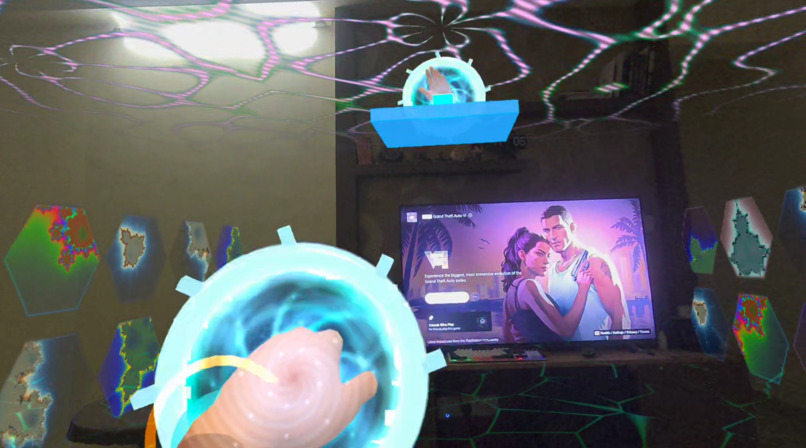
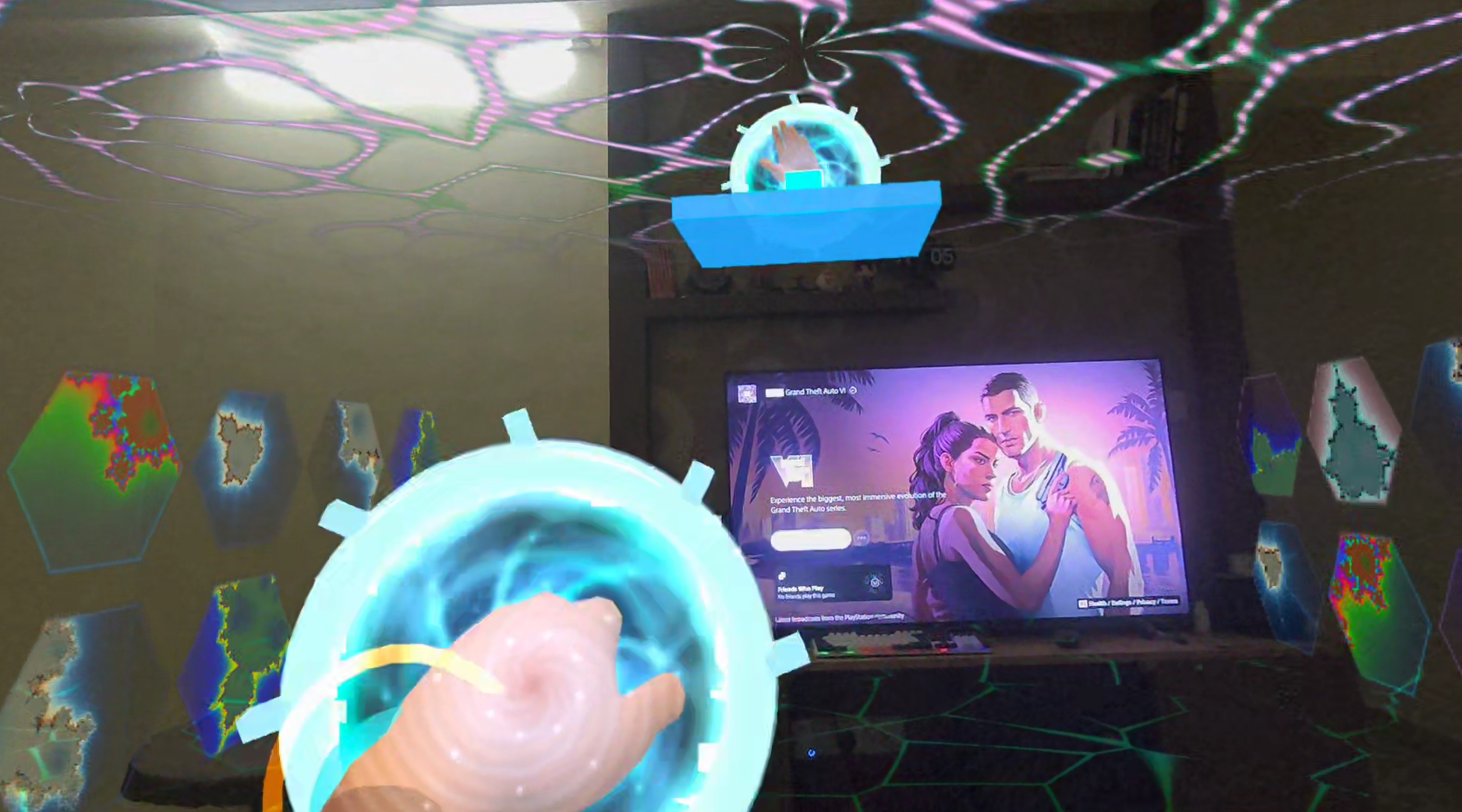
hands through portals
-
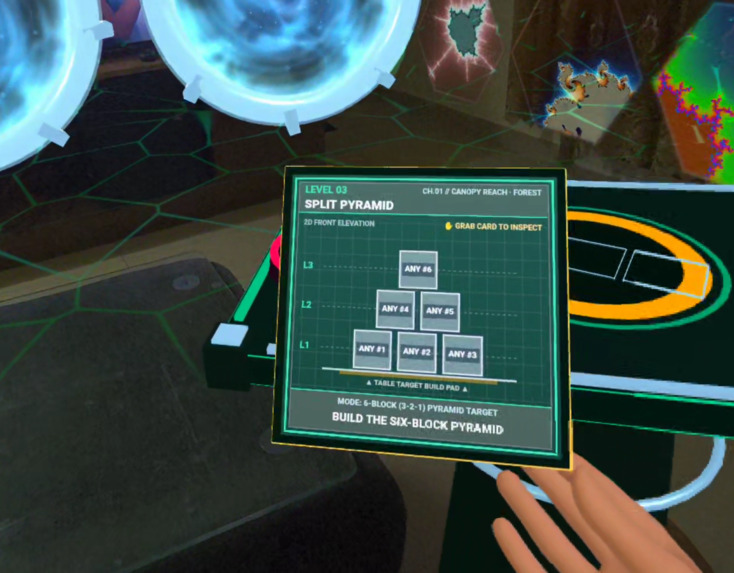
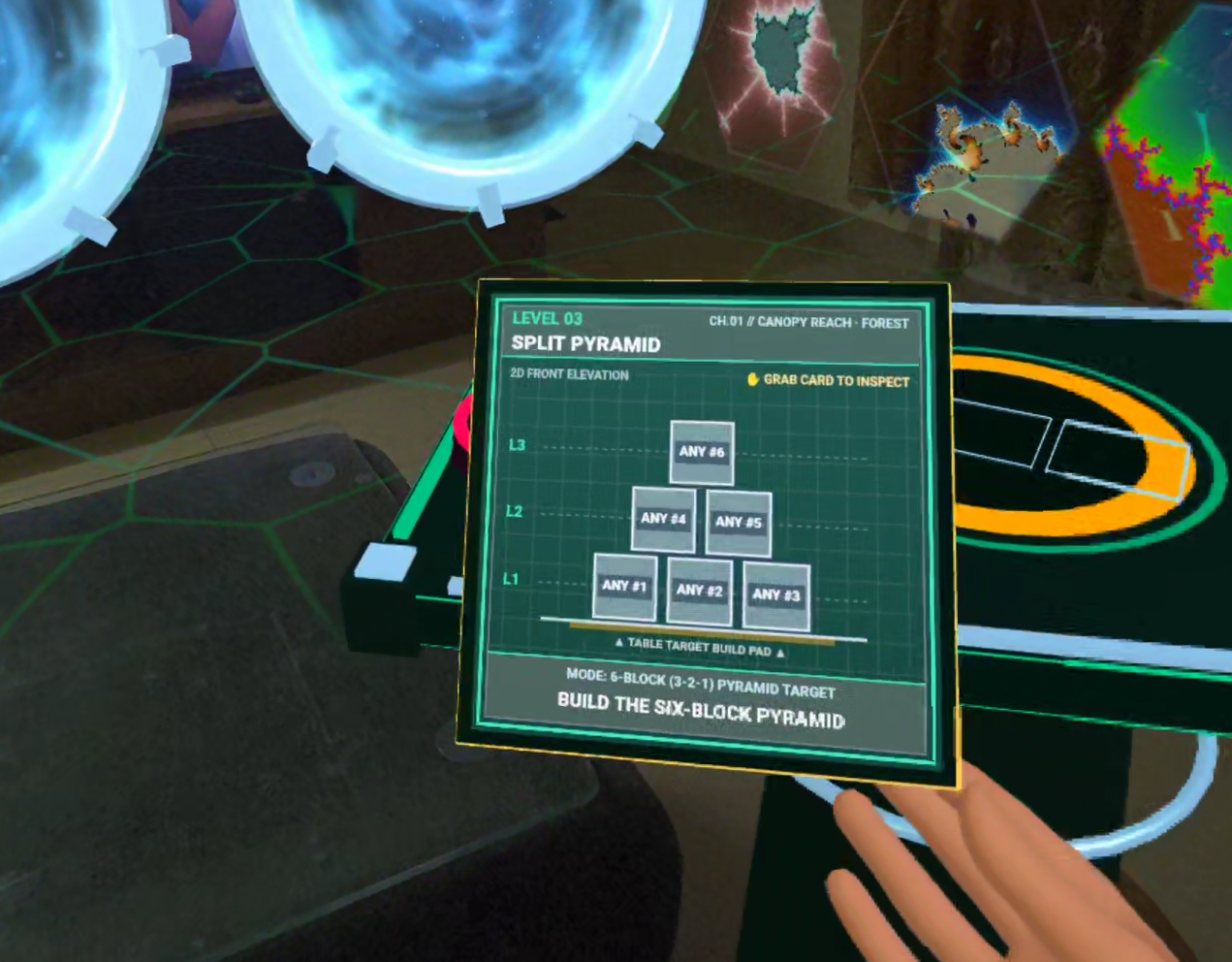
solution card
-
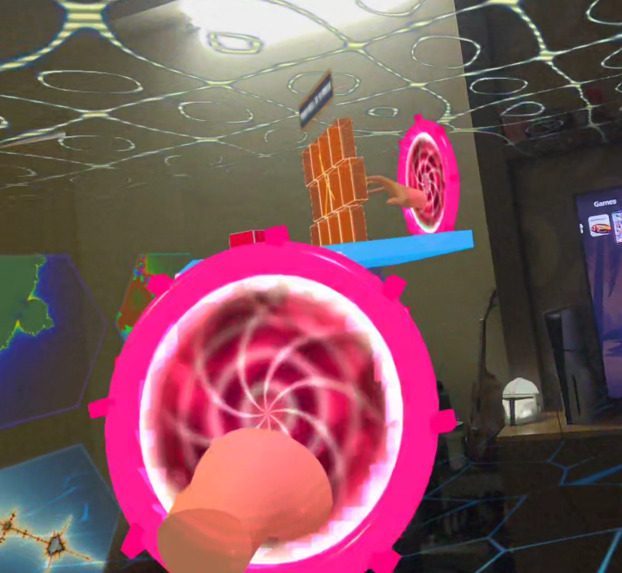
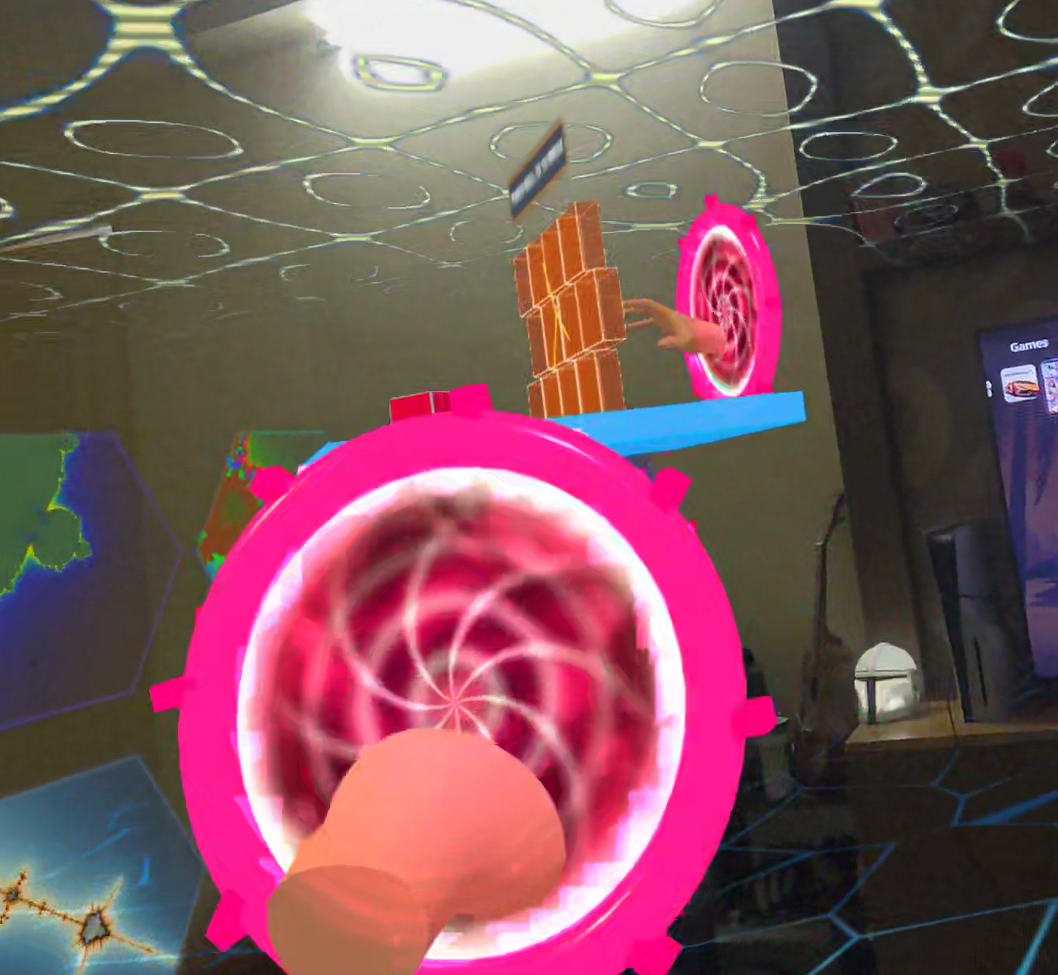
break walls
Inspiration
On a plane, a bus or a sofa, you can't walk around, and you won't have a controller with you. Glasses will put computing in exactly those places, so I asked: what does a great game look like when you can't move and only have your hands? The answer was to bring the room to you. Arm's Length gives you portals that let your hand reach anywhere in your room, while you stay seated.
What it does
- Sit and reach. You sit at a table in your real room. Portals on the table open onto exit portals on your walls. Put your hand into one, and it comes out across the room.
- Solve with your hands. Grab and stack blocks, punch through brick walls, throw darts to pop balloons, throw balls through portals, and carry a key across the room to twist open a locked door.
- Gestures change the world. Hold a peace sign or a call-me sign to switch which portal is live.
- Your room comes alive. WALLBLOOM covers your walls in endlessly zooming fractal tiles and your ceiling in shifting standing-wave patterns, all pulsing to the music. As you solve, the music opens up from muffled to clear.
- Always know the goal. A solution card on the table shows a blueprint of what you need to build, so you never have to guess.
- 18 short levels in 4 chapters. Each one has a goal of six words or fewer, and each takes about a minute. The later levels chain everything together: smash, unlock, pop, then build. The bonus finale has you slingshot a ball around a black hole.
- Your hands, your style. Play with plain hands, a see-through outline, or mehndi (henna) patterns.
How I built it
- Engine: Meta's Immersive Web SDK (IWSDK) on WebXR with Three.js, so it runs from a link in the Quest browser.
- Room: WebXR plane detection finds your walls and floor. The game picks the best wall for exit portals and keeps the visuals away from anything you need to see.
- Portals: Clipping planes cut your virtual hand at the entry portal and draw it emerging from the exit, so your reach feels continuous.
- Hands: A custom gesture system on the 25 tracked joints handles grab, pinch and the held portal gestures. Throws use a short velocity history and a gentle aim-assist cone, so they feel fair without a controller.
- Levels: Every level is pure data in a level catalog. One puzzle system drives all 18, so adding a level means adding data, not code.
- Contraptions: Brick walls count three punches in motion before they crack and fall. Locked doors take a key you carry through a portal and twist with your wrist. The bonus level uses a gravity slingshot around a black hole.
- Sound and visuals: WALLBLOOM uses Web Audio: one looping music track per chapter, a low-pass filter that opens as you solve, sampled sound effects for pops, brick hits, falling walls and the lock, and procedural sounds as a fallback. A live frequency analysis drives the fractal shaders on the walls and the standing-wave patterns on the ceiling.
- Performance: Instanced meshes and zero per-frame heap allocations keep it at Quest frame rates.
Challenges
- Hands through portals. Making a hand look like it truly leaves one portal and enters another, with no visible seam, took careful clipping and pose transforms.
- Grabbing that feels right. Blocks had to stick to the palm at the point of contact and snap cleanly into place without fighting the player.
- Punching that feels fair. A brick wall should only break when you actually punch it, not when your hand brushes past, so a strike only counts when your fist is moving.
- Seated reach. Every entry portal sits within about 58 cm of the player. Everything far away is reached through a portal, never by leaning.
- Rooms I've never seen. Walls come in every size, so portals and the wall visuals adapt to whatever planes the headset finds.
What I learned
Constraints make better design. Removing walking and controllers forced every puzzle to be about reach, and the portal turned "I can't get there" into the whole game.
What's next
- More levels and gesture puzzles, and a shareable level editor.
- Better use of room geometry, with puzzles that use your actual furniture.
- Target launch on the Meta Horizon Store: Q2 2027
Built With
- hand-tracking
- iwer
- iwsdk
- meta-quest
- mixed-reality
- passthrough
- plane-detection
- pmndrs-uikit
- three.js
- typescript
- vite
- web-audio
- webxr