-
-
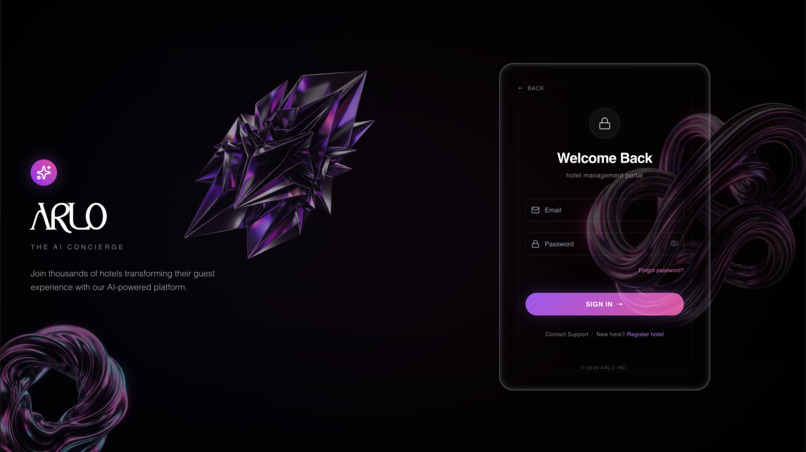
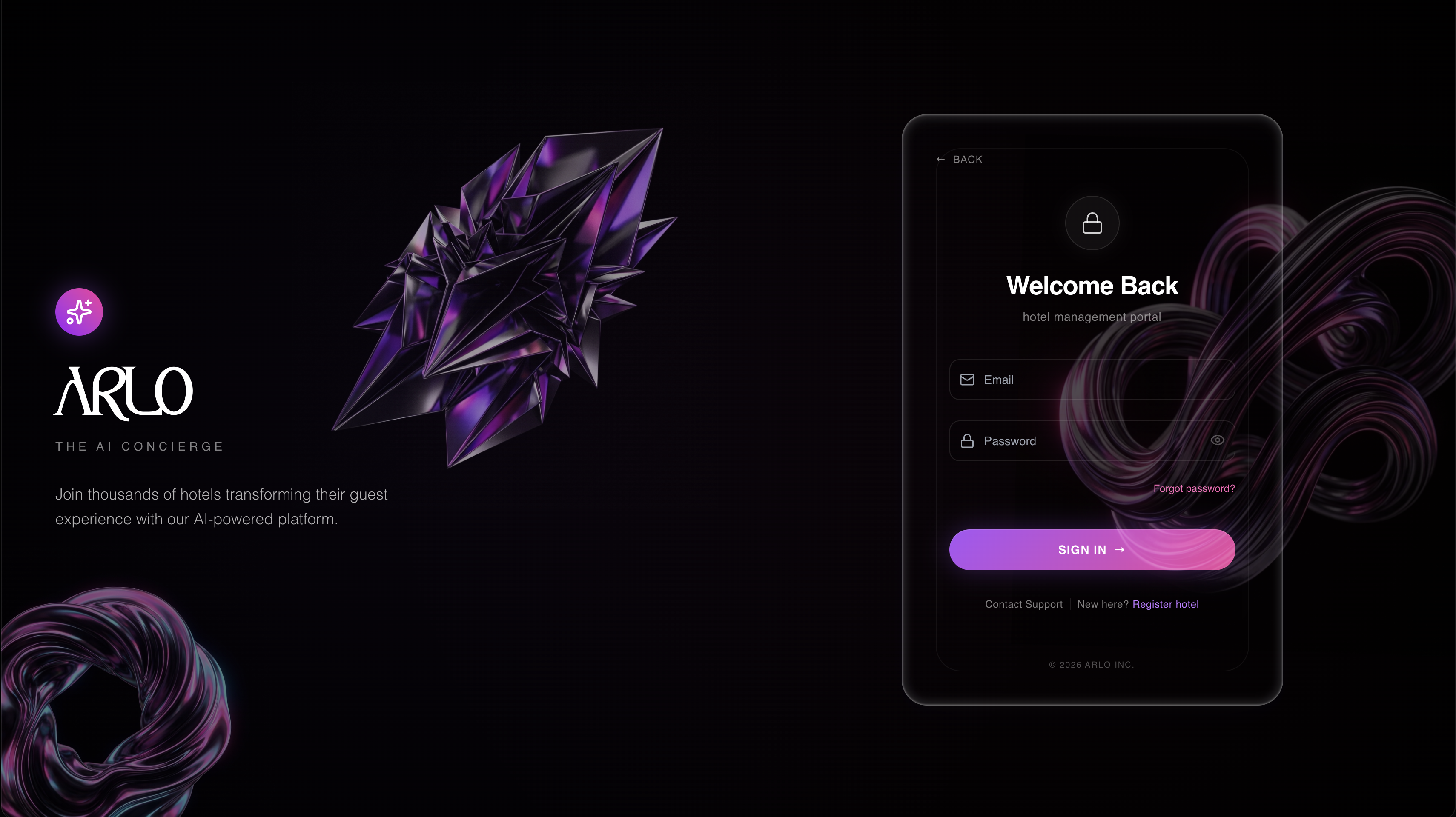
Staff Login and Landing Page
-
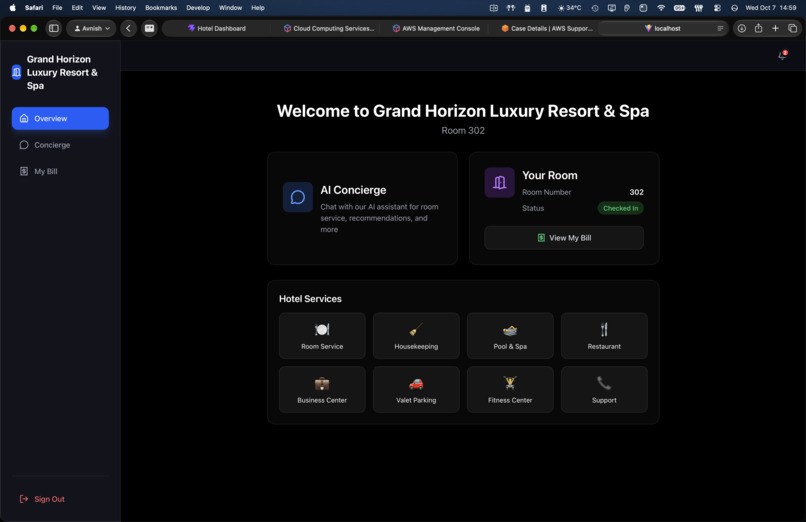
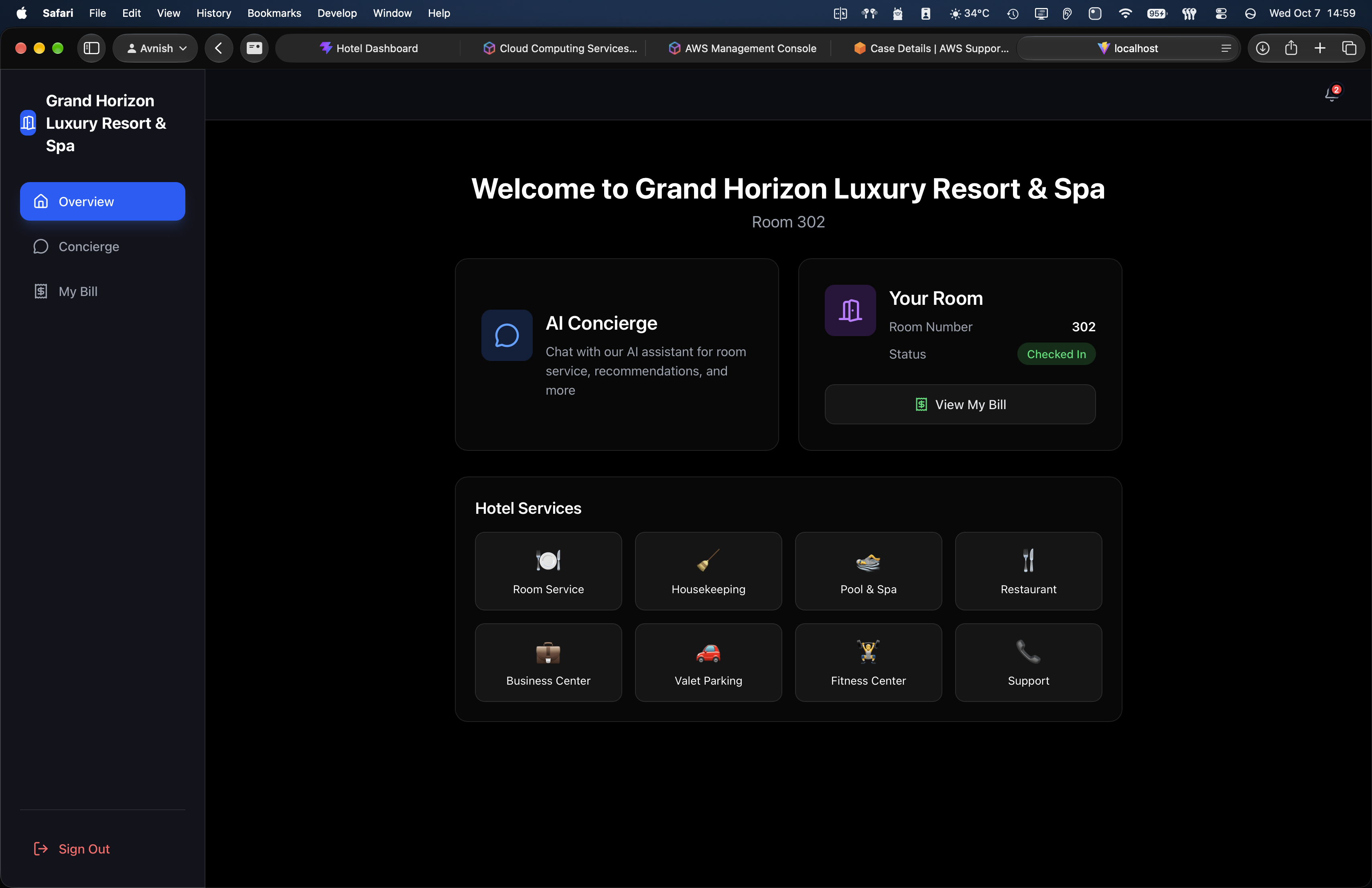
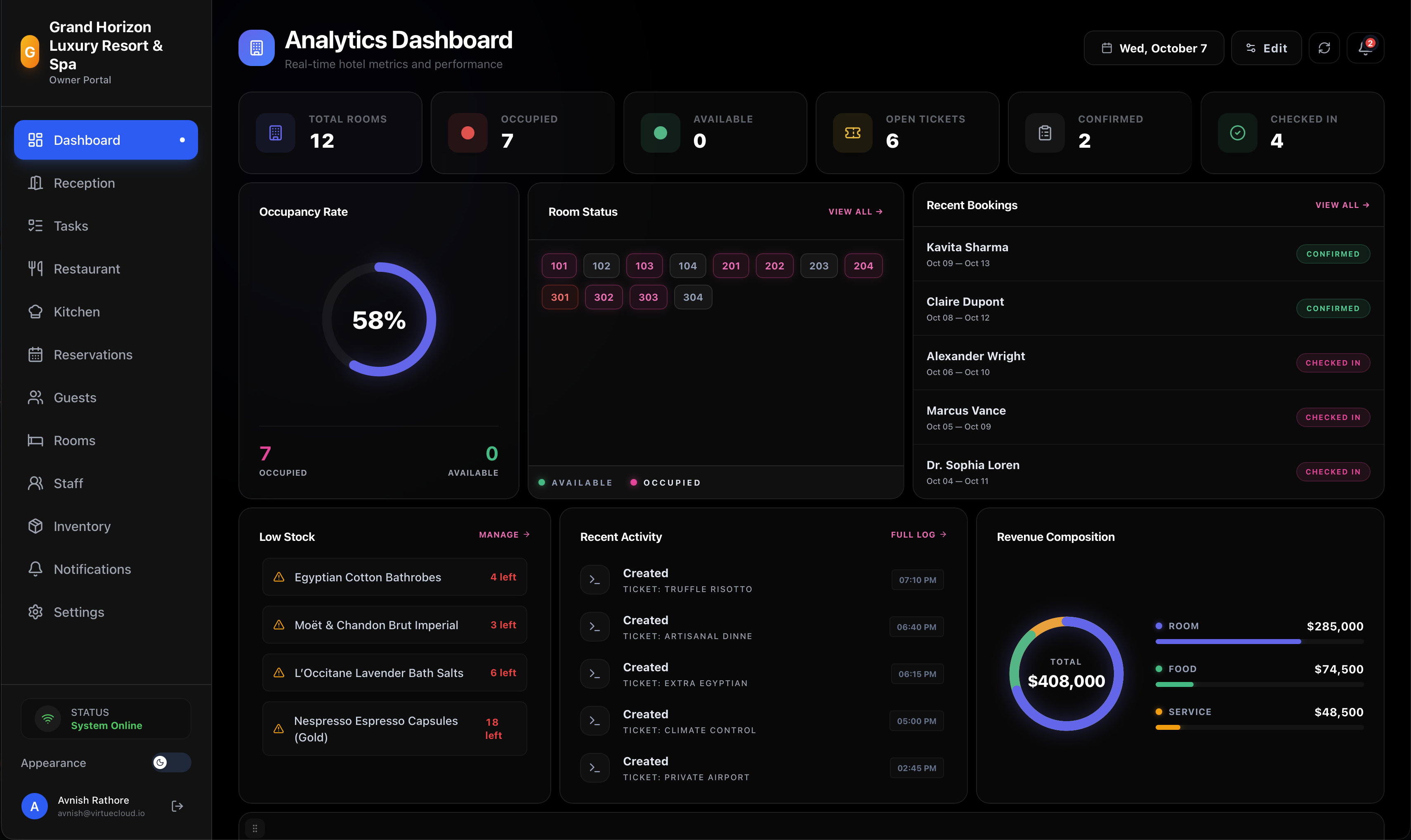
Main Page of Dashboard
-
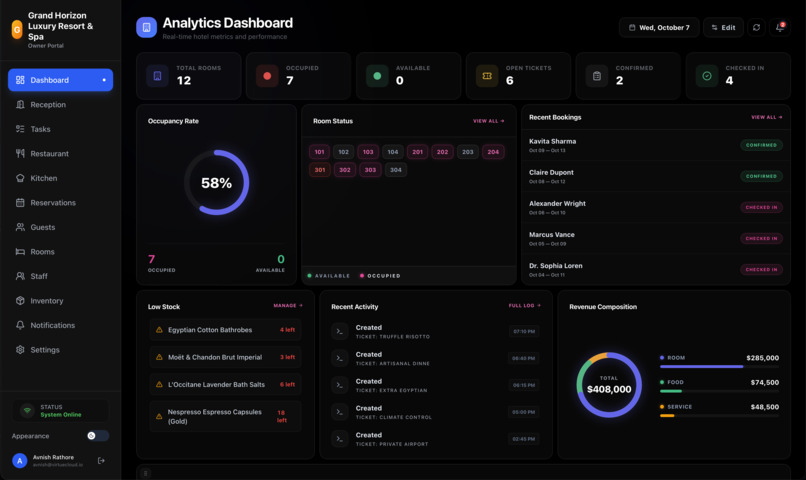
Reception Dashboard Page
-
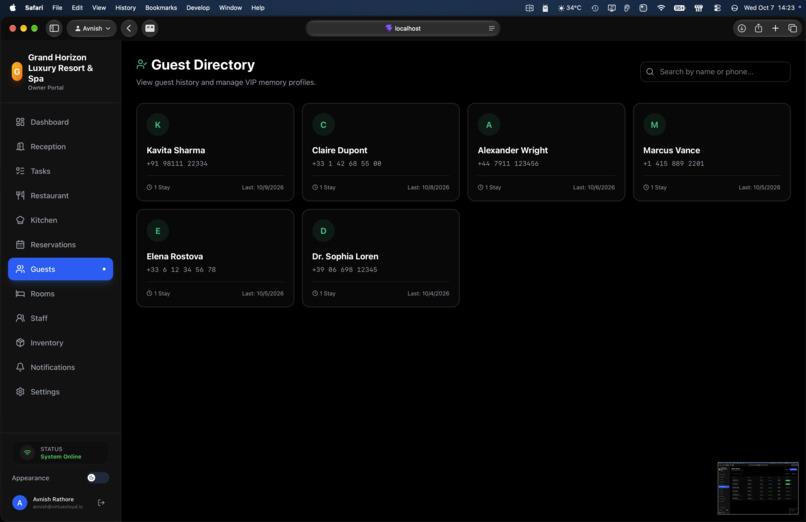
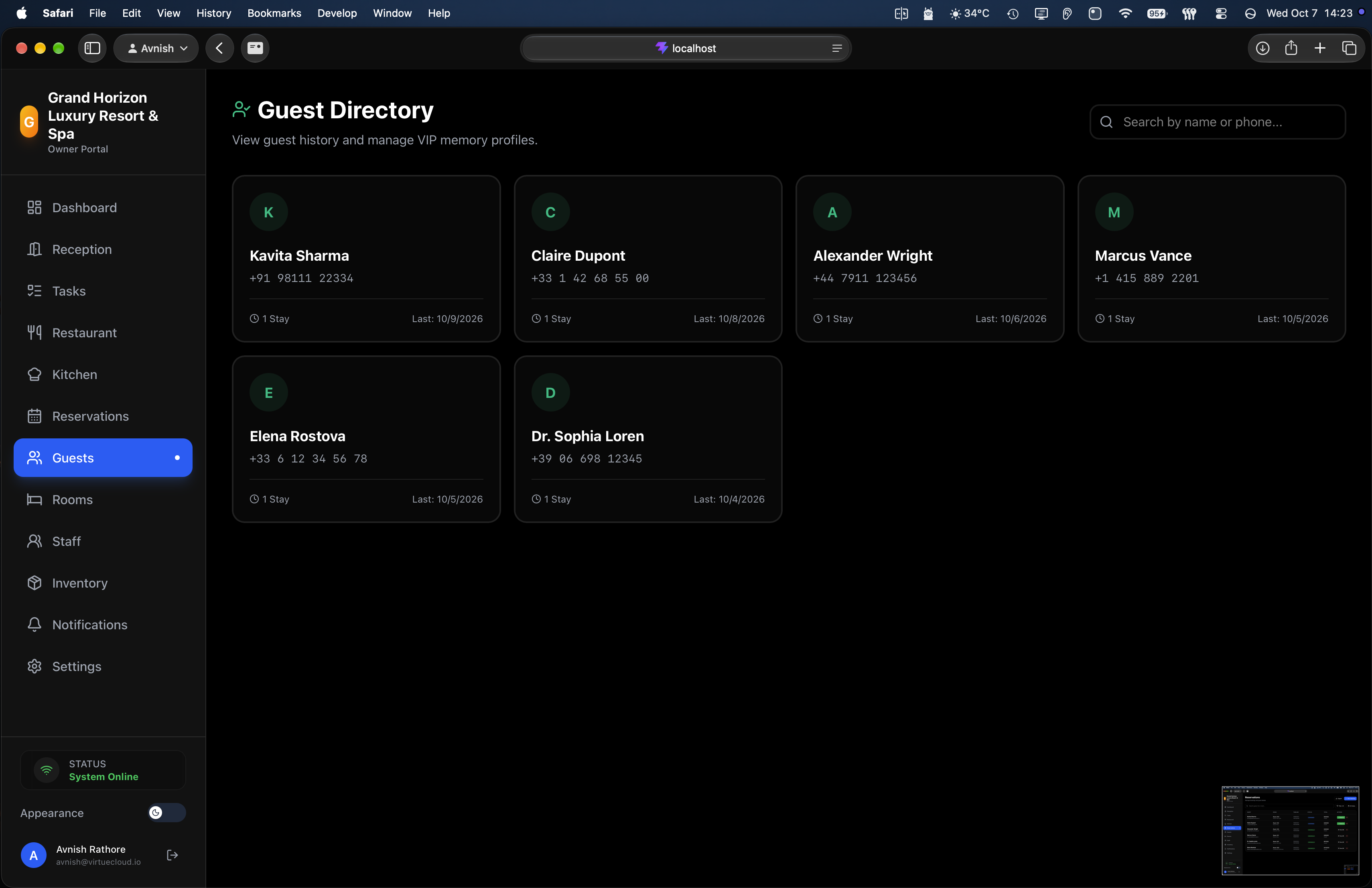
Guest View Page
-
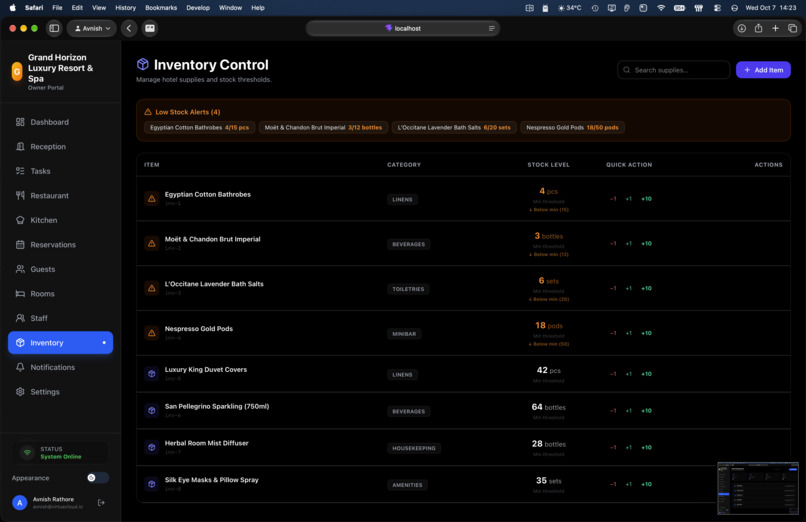
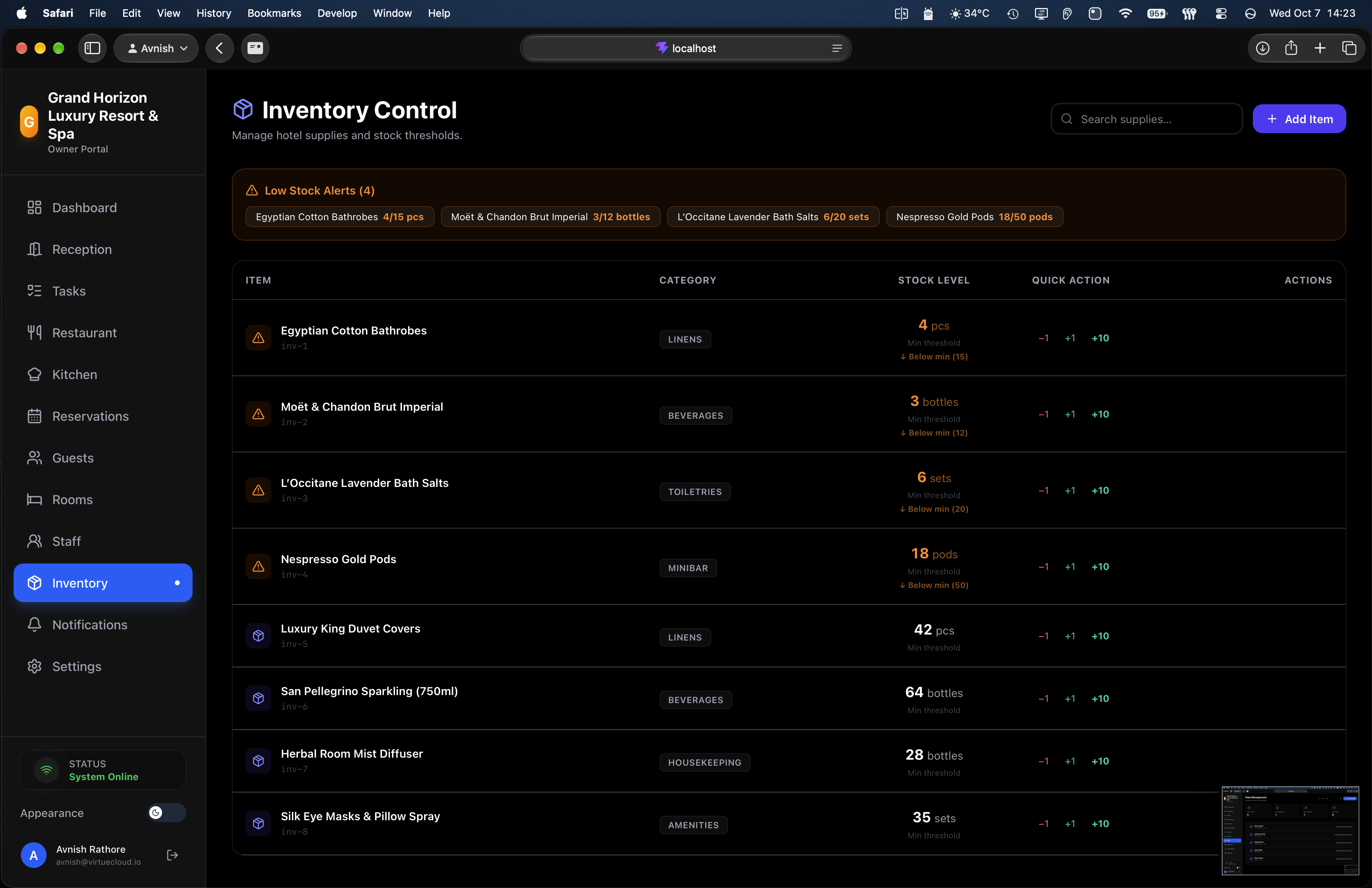
Inventory Control Page
-
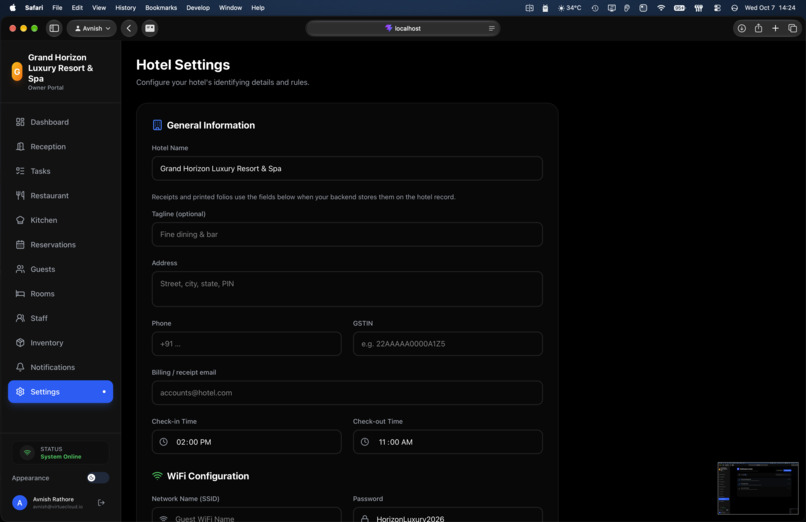
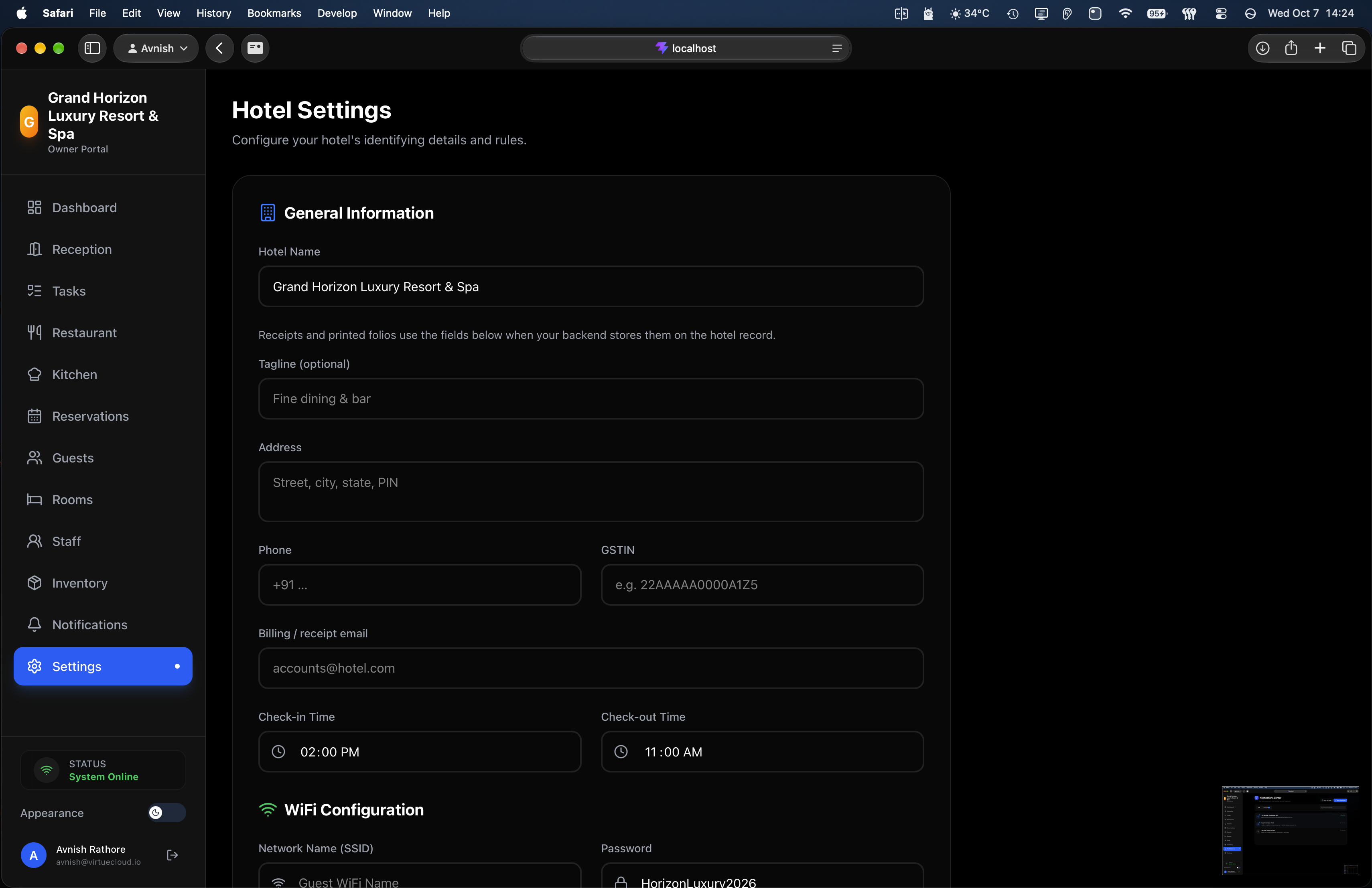
Hotel's Settings Page
-
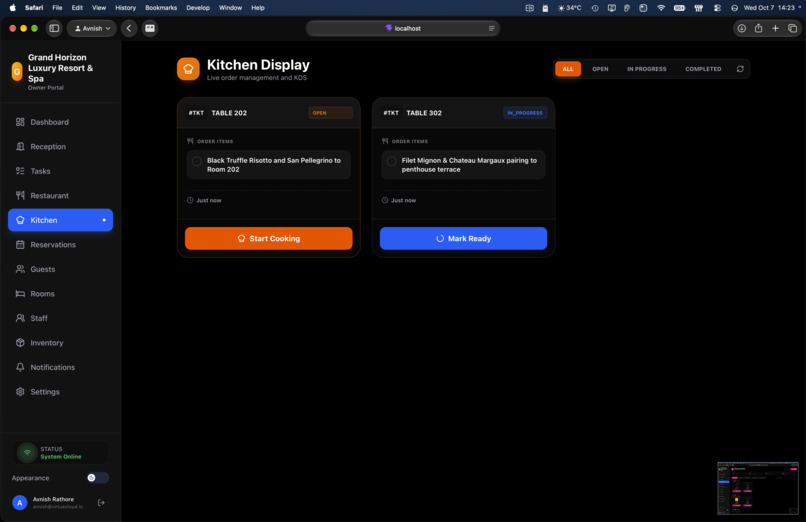
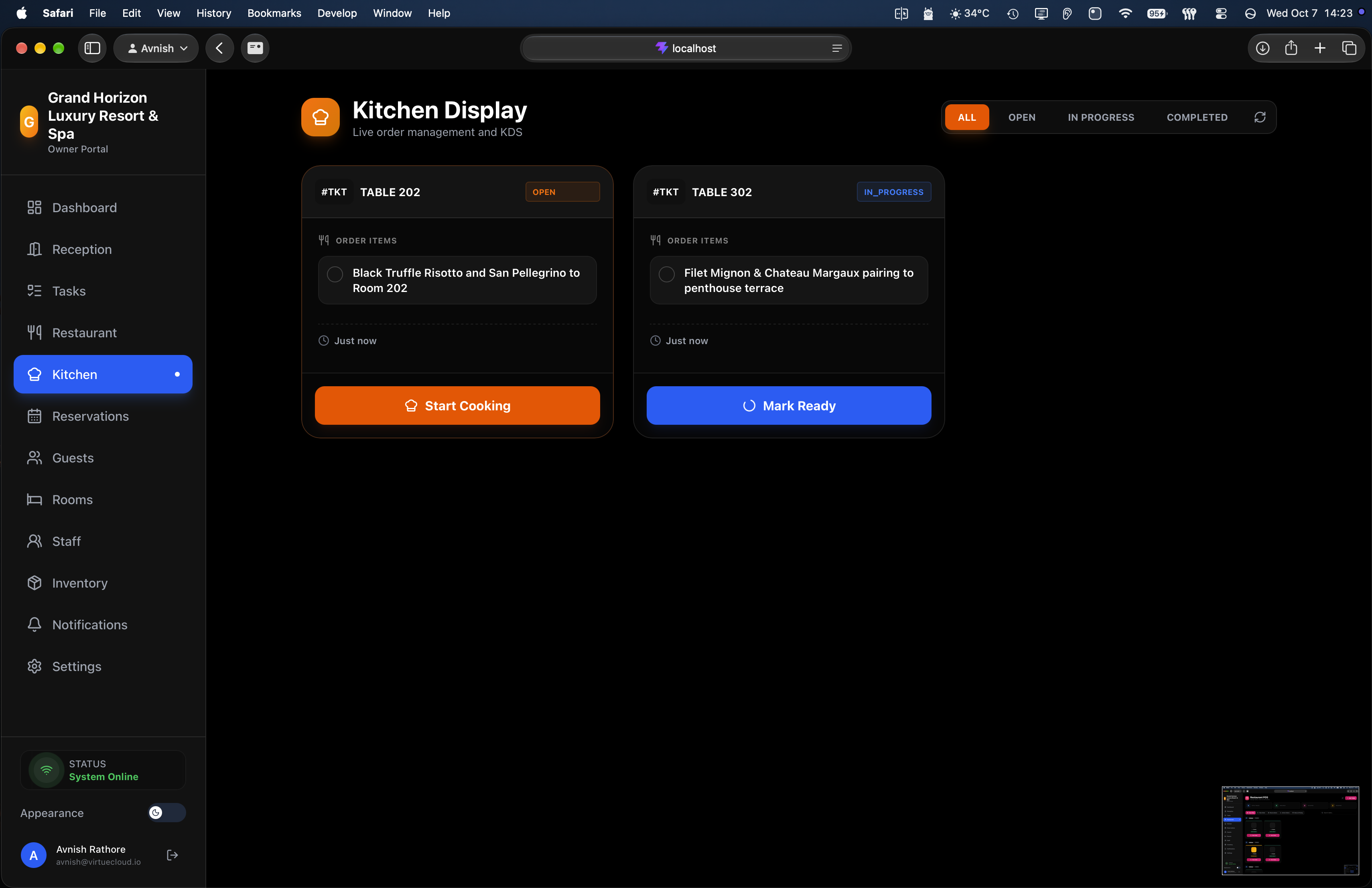
Kitchen Activity Page
-
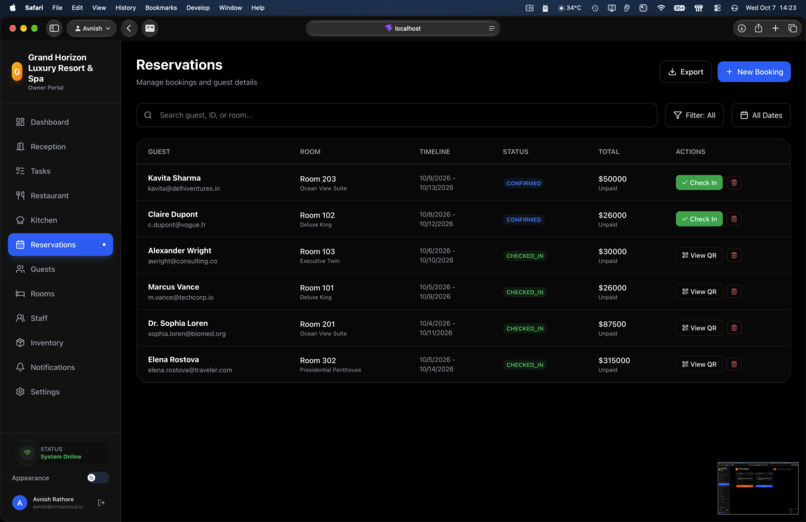
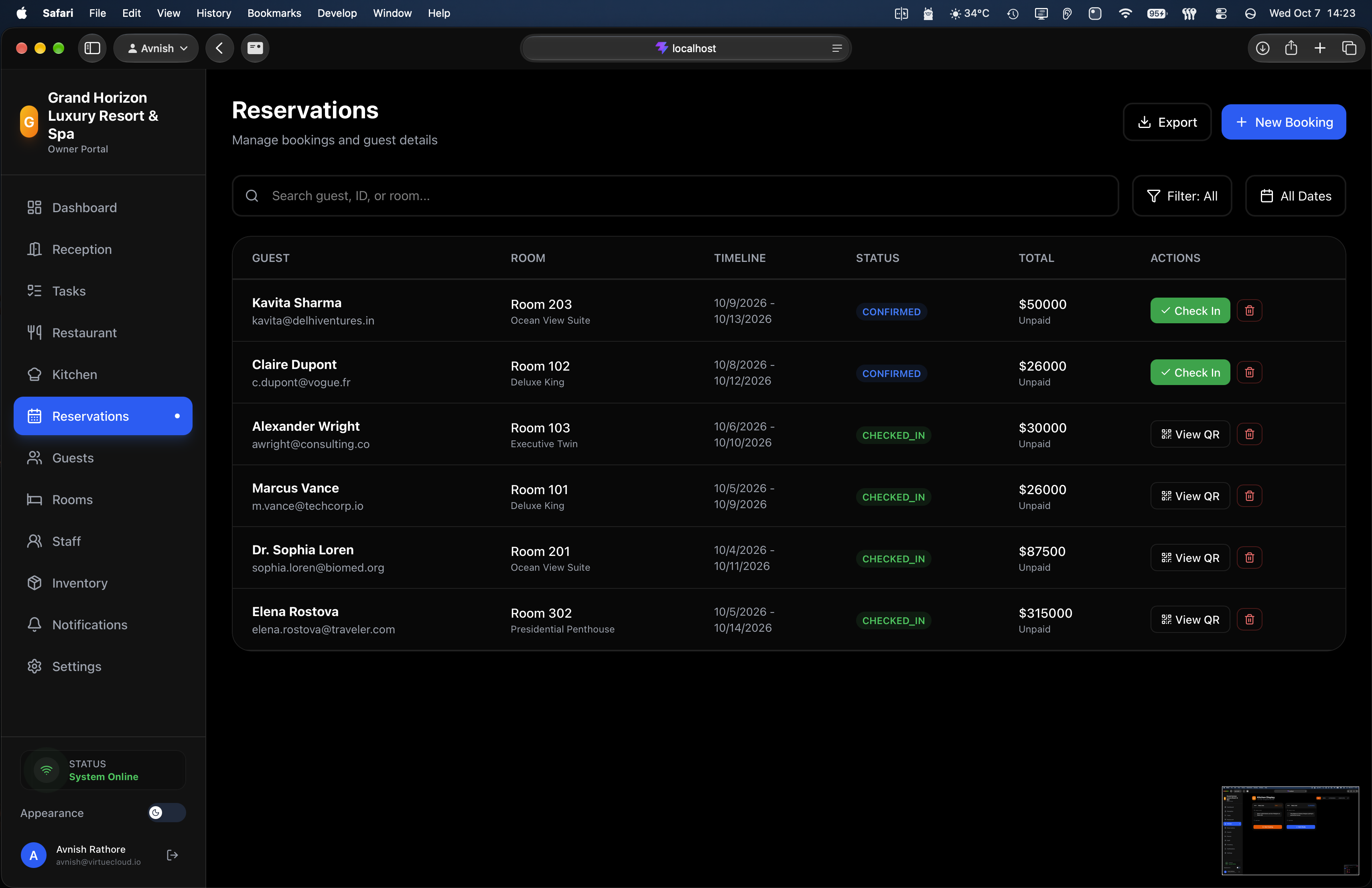
Reservation's Page
-
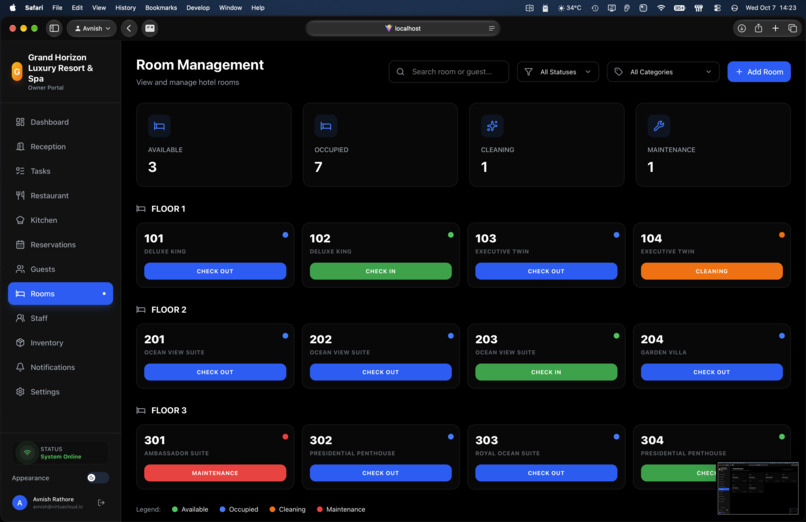
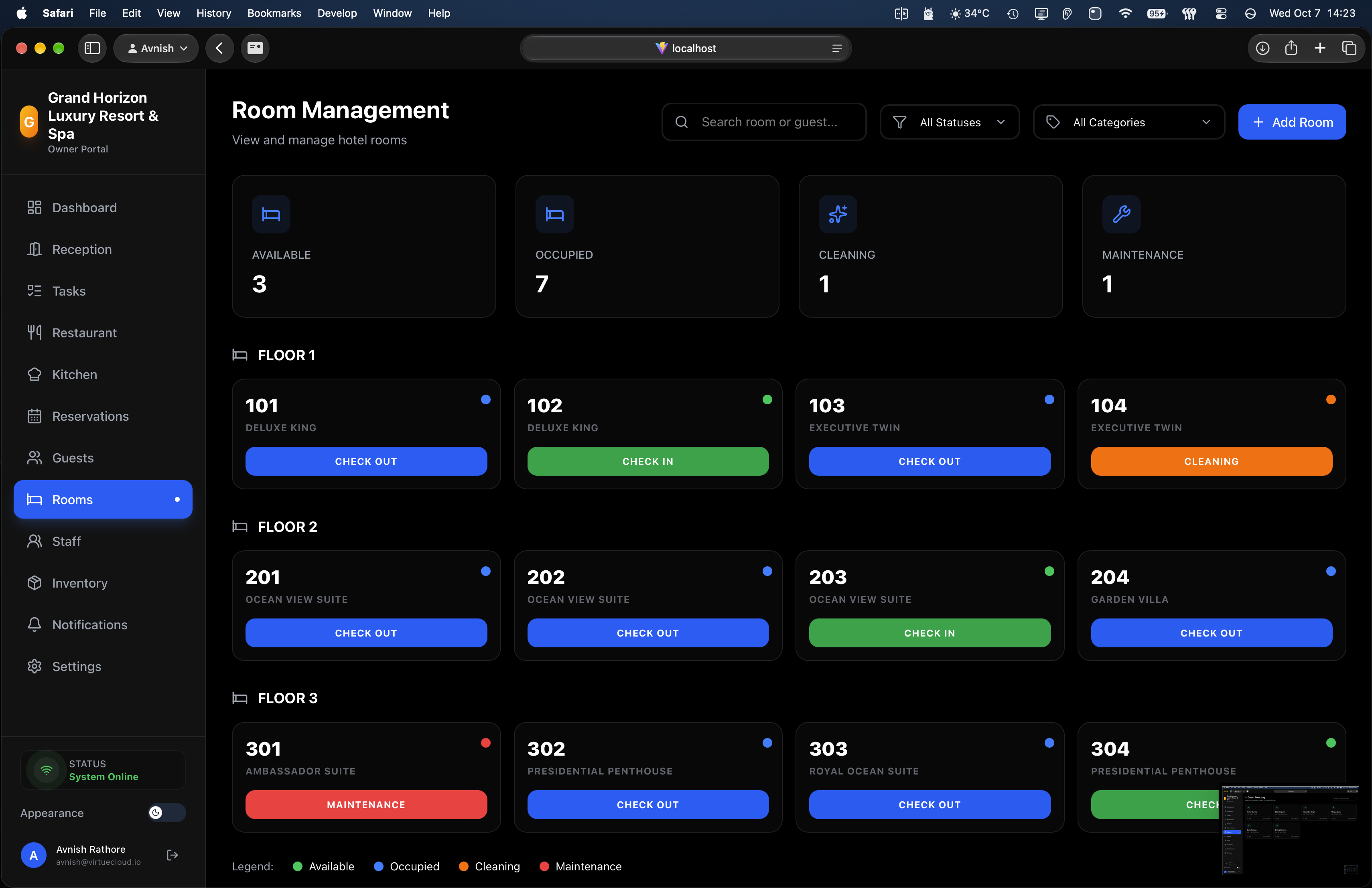
Room Management Page
-
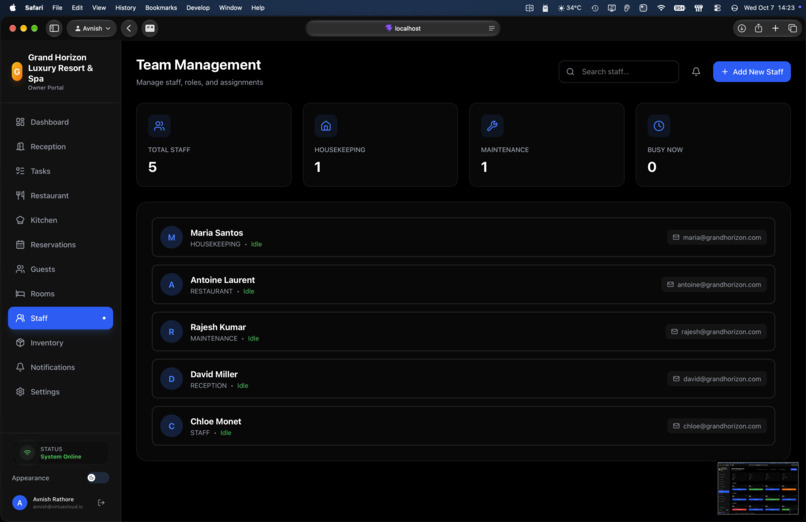
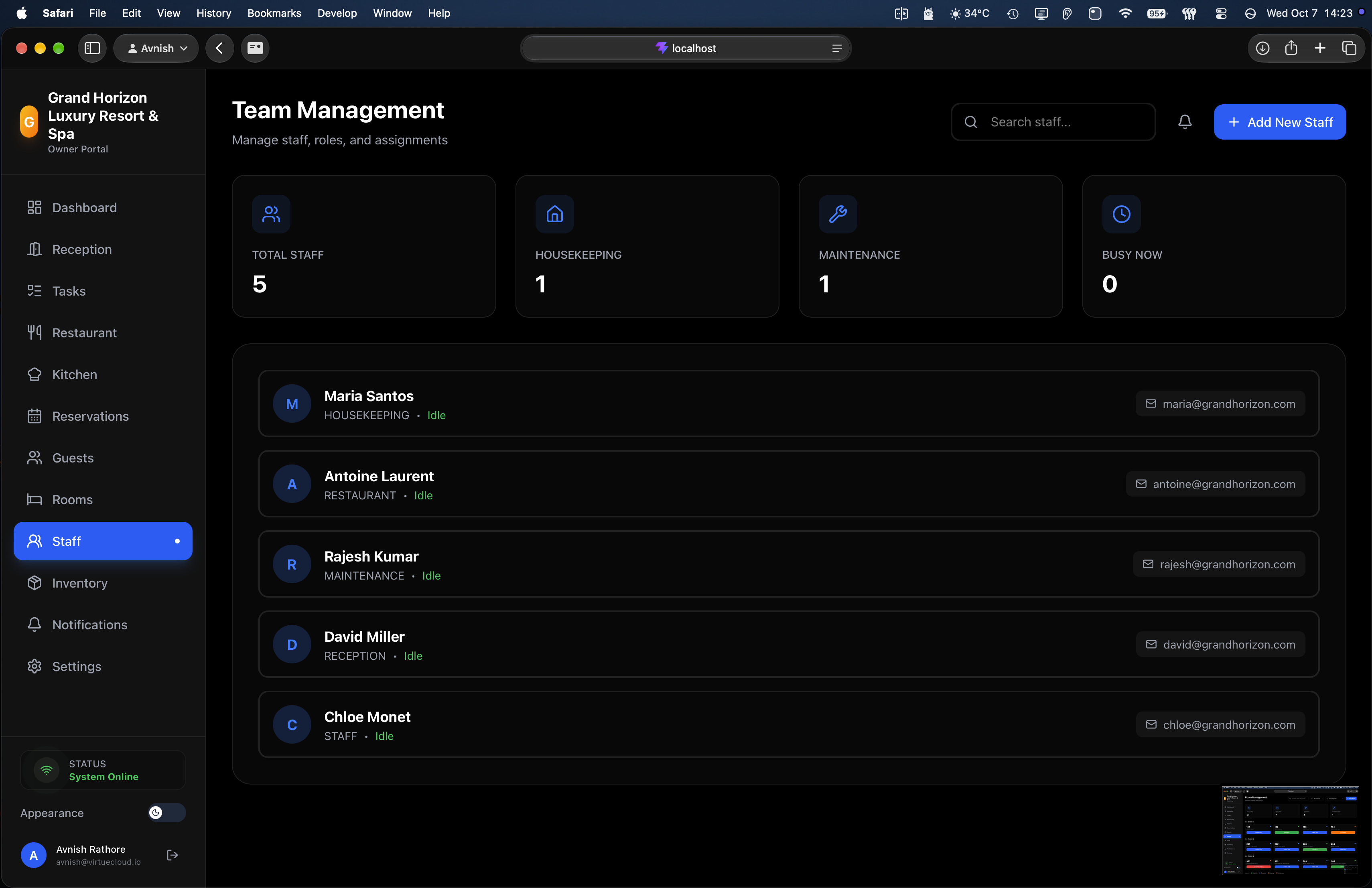
Team Management Page
-
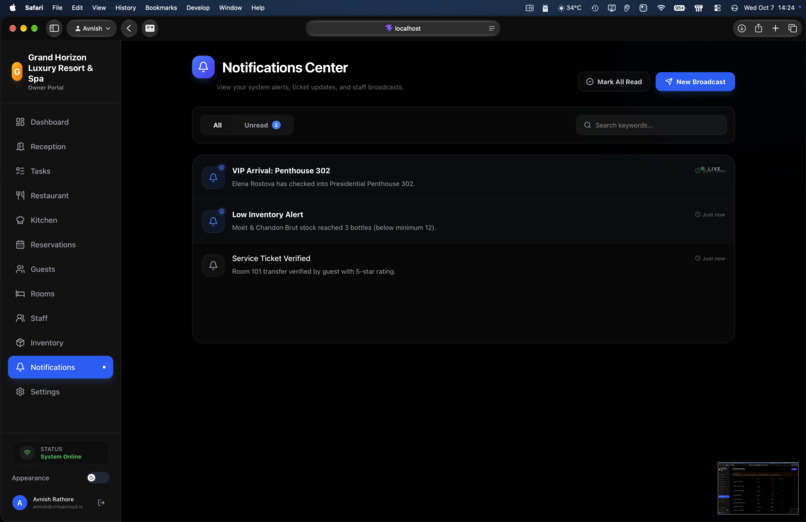
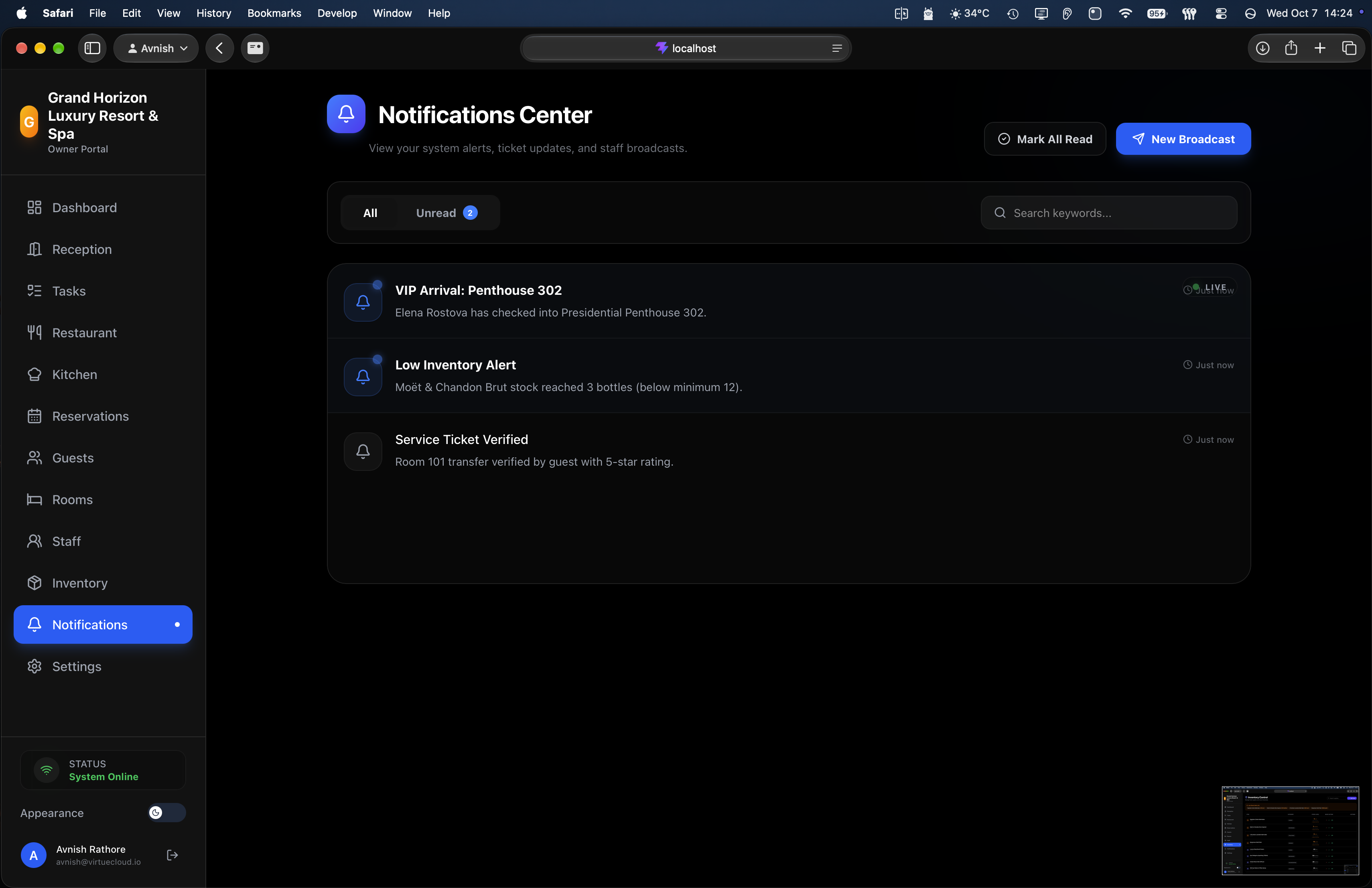
Notification's Page
-
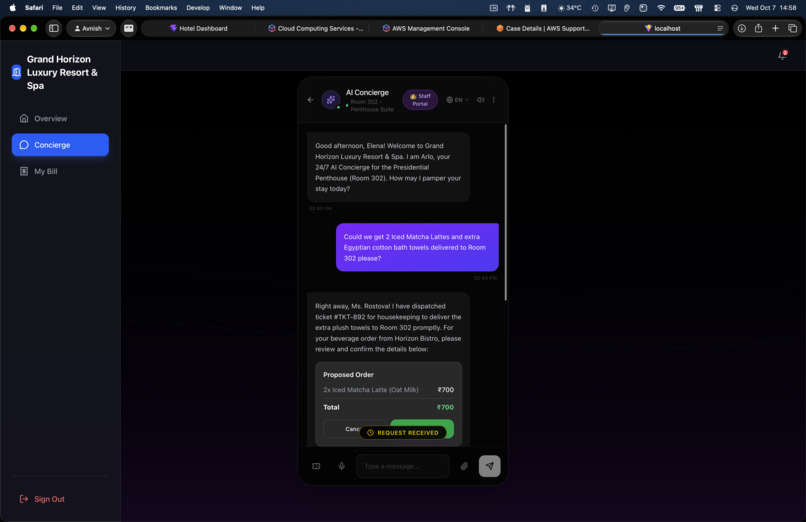
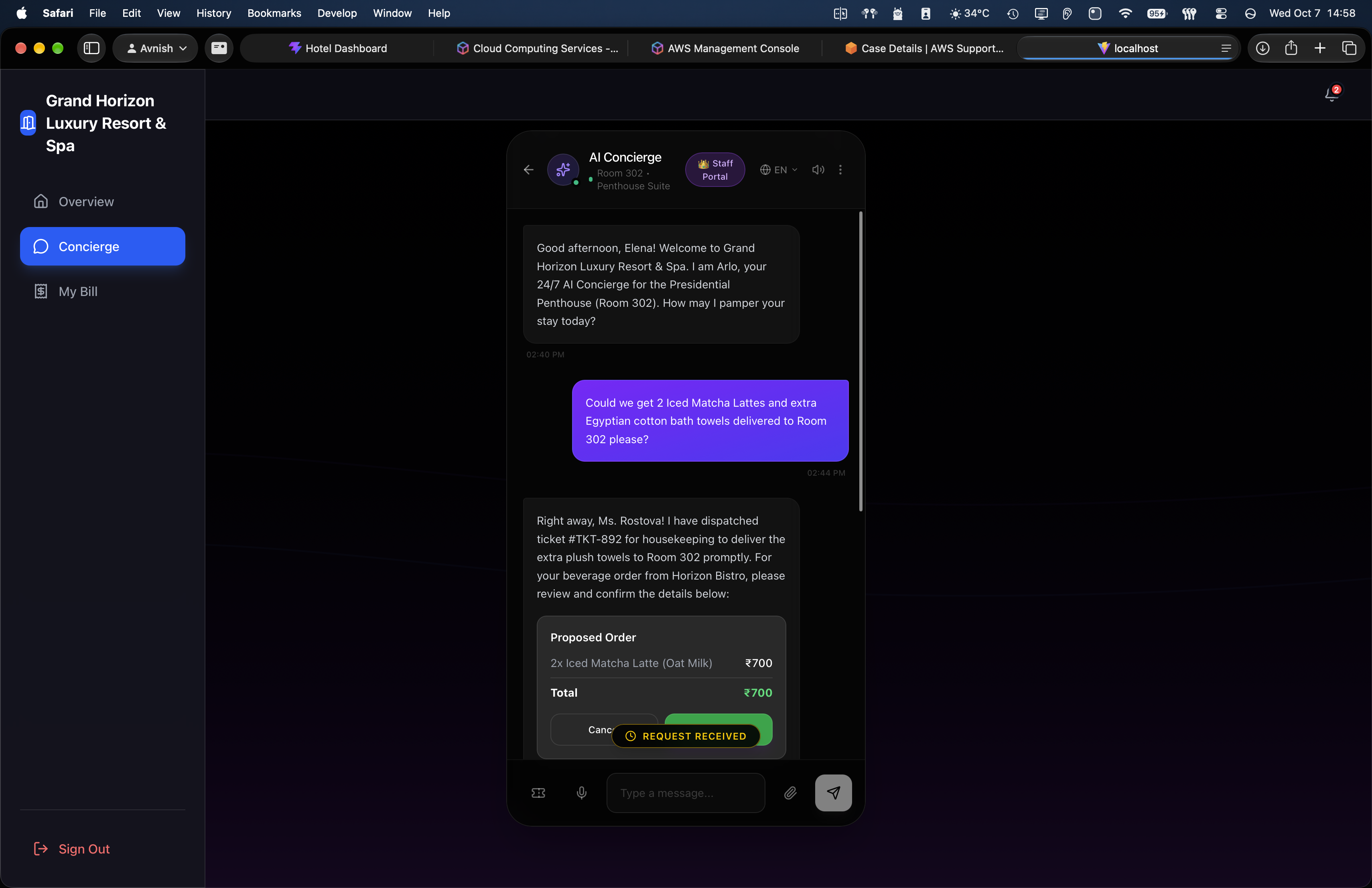
AI Chatbot Page 1
-
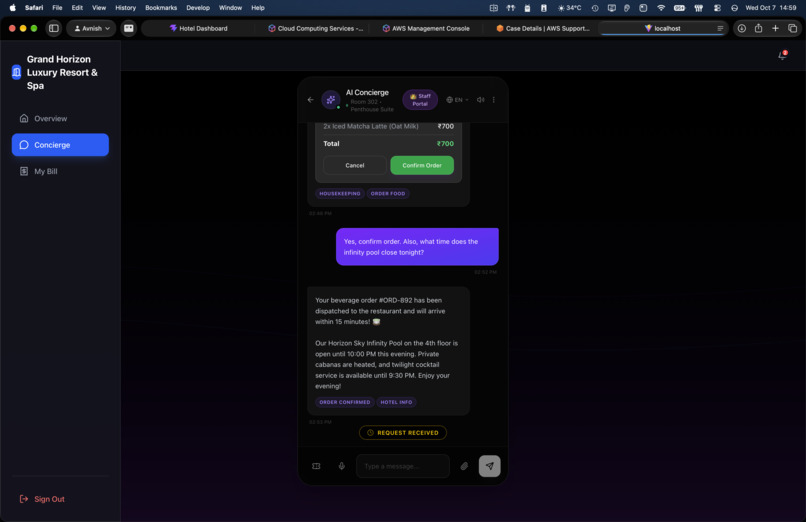
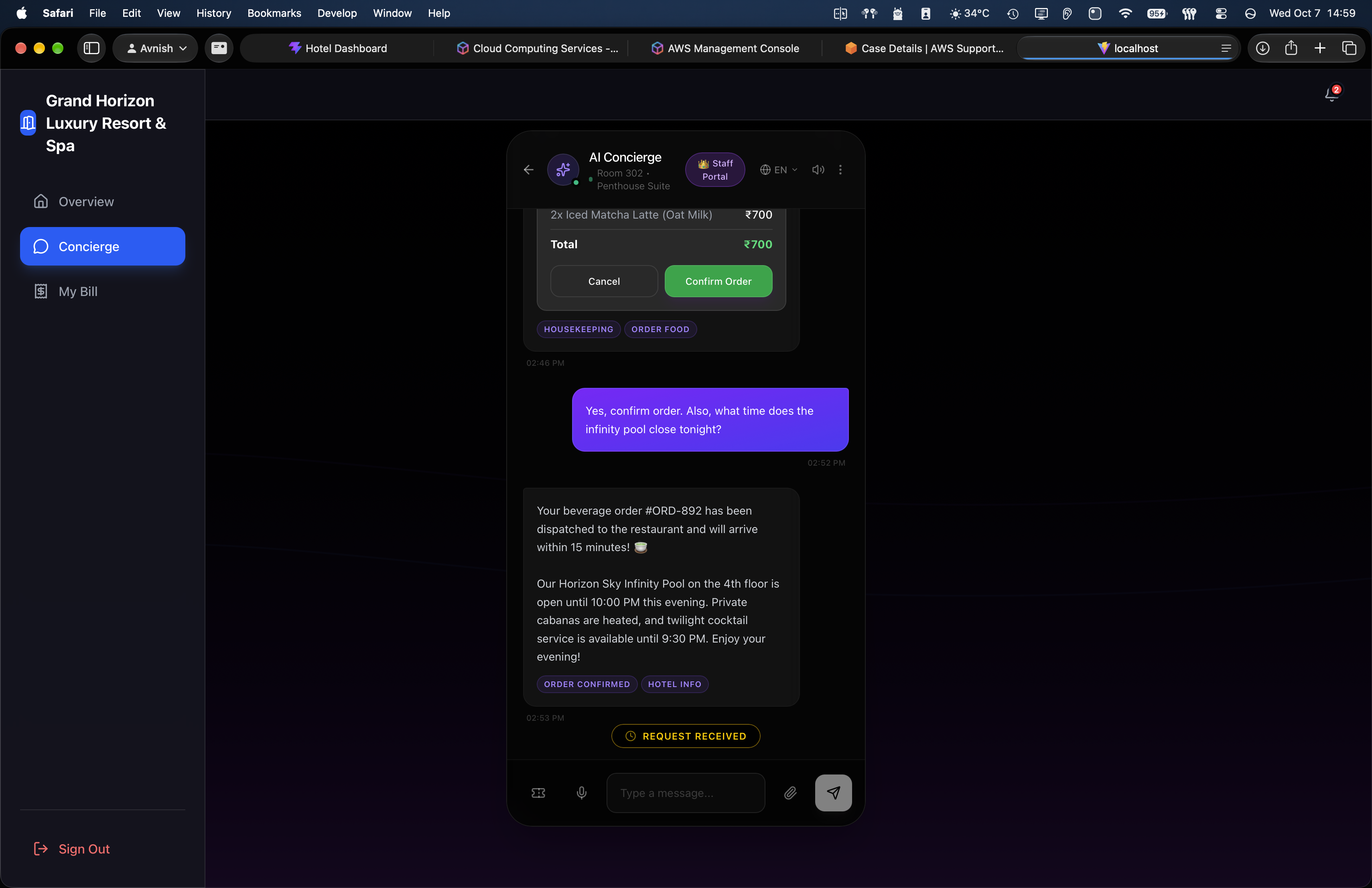
AI Chatbot Page 2
-
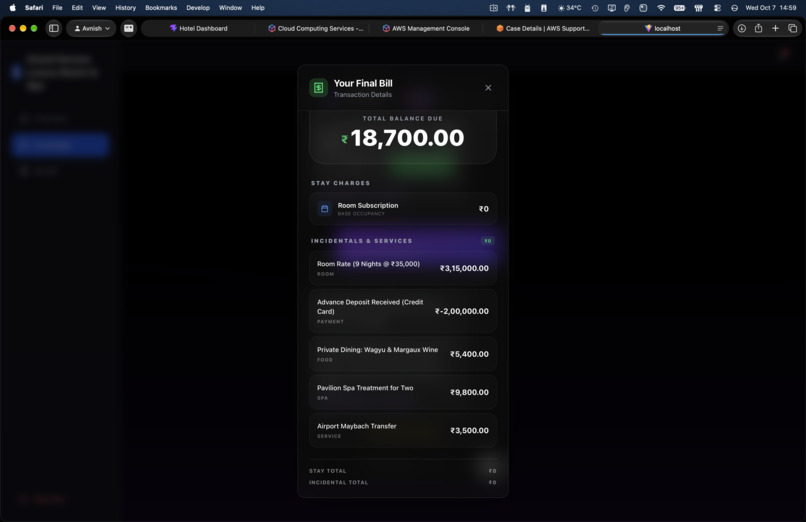
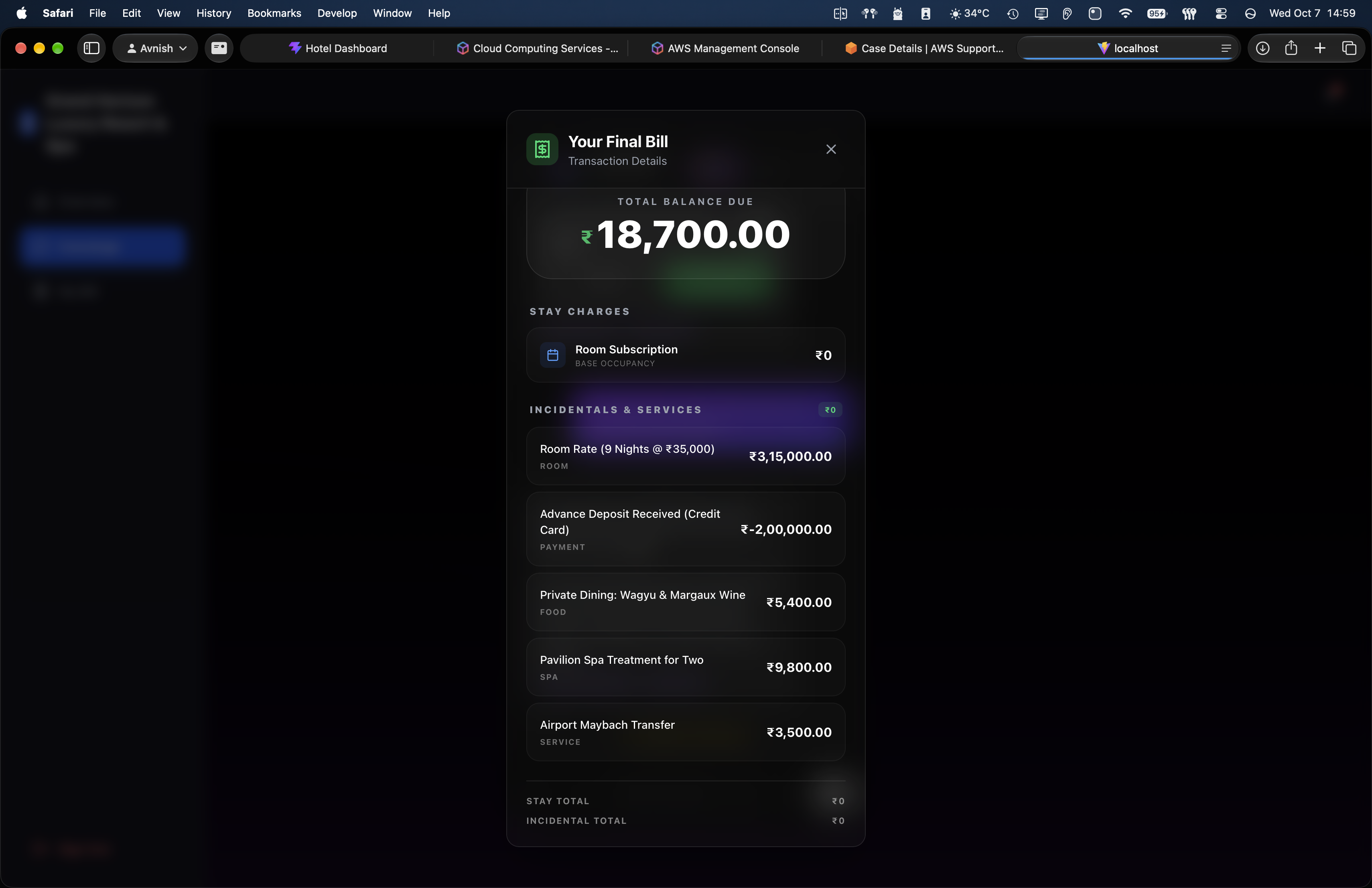
Guest Bill Calculation Page
Inspiration
Hotels strive to deliver exceptional guest experiences, yet many everyday services still rely on phone calls, manual coordination, and disconnected systems. Guests often have to call reception to order food, request housekeeping, report maintenance issues, or ask simple questions.
We wanted to make hotel services as simple as having a conversation. This inspired us to build ARLO (Reception AI), an AI-powered hospitality platform that connects guest communication with real hotel operations. Our vision is to help hotels deliver seamless guest experiences while reducing repetitive manual work for their teams.
What it does
ARLO is an AI-powered hotel concierge and operations platform that connects guests, staff, and management through one unified system.
Guests can scan a room QR code or open a magic link to access ARLO without downloading an app. They can use voice or text to:
- Order food and room service.
- Request housekeeping and report maintenance issues.
- Book cabs, airport transfers, and other services.
- Ask questions about hotel amenities, Wi-Fi, timings, and local attractions.
- Track service requests and receive real-time updates.
Behind the scenes, ARLO routes requests to specialized AI agents and connects them to kitchen displays, staff task queues, maintenance tickets, and billing workflows.
Hotel staff and managers can use a centralized dashboard to monitor operations, track service-level agreements (SLAs), manage inventory, and gain real-time visibility into hotel activities.
How we built it
We built ARLO using a multi-agent AI architecture powered by Amazon Bedrock. Instead of relying on a single AI model to handle every task, we designed eight specialized agents coordinated by a central supervisor.
Each agent has a specific responsibility, including food ordering, ticketing, bookings, concierge assistance, conversation context, validation, and fallback handling.
We use Amazon Nova Pro for tasks requiring structured extraction and stronger reasoning, and Amazon Nova Micro for lightweight conversational and validation tasks.
The system follows a supervisor-and-worker approach. When a guest sends a message, the supervisor identifies individual intents and routes them to the appropriate agents. These agents can process multiple requests in parallel, and their results are combined into a single response.
Our technology stack includes:
- AI: Amazon Bedrock and Amazon Nova models.
- Frontend: React-based guest interfaces and management dashboards.
- Backend integration: REST APIs for connecting operational workflows.
- Real-time communication: WebSockets for live updates.
- Data and state management: PostgreSQL and Redis.
We also implemented a Review Guardian agent that validates proposed actions before they are written to operational records. This helps protect hotel workflows from incorrect AI-generated actions.
Challenges we ran into
One of our biggest challenges was moving beyond a conversational chatbot to build a system that could translate natural language into real operational actions.
- Handling multiple requests: Guests may ask for room service and report a maintenance issue in the same message. We addressed this through intent separation and parallel agent execution.
- Connecting AI with live operations: Orders, tickets, staff tasks, and billing need to remain synchronized. Integrating these workflows required coordination between the AI, backend, and real-time communication layers.
- Ensuring reliable actions: Incorrect AI-generated actions could affect hotel operations. We designed a Review Guardian to validate proposed changes before they are saved.
- Balancing speed and accuracy: Different tasks require different levels of reasoning. Selecting appropriate models for specialized agents helped us design for responsiveness and precision.
- Simplifying the guest experience: We wanted guests to access services without installing an app, while still supporting the complex workflows needed by hotel staff and managers.
These challenges reinforced the importance of building AI systems that are not only intelligent but also structured, reliable, and connected to real-world workflows.
Accomplishments that we're proud of
We are proud to have developed a concept that brings guest communication and hotel operations together in a single AI-powered platform.
- Eight-agent AI architecture: Specialized agents collaborate to handle different hospitality workflows.
- Frictionless guest access: QR codes and magic links let guests use the platform through a browser without downloading an app.
- Parallel request handling: Multiple intents within a single guest message can be routed to their respective workflows simultaneously.
- Safety-focused design: The Review Guardian validates proposed actions before they reach operational records.
- Real-time operational visibility: Guest requests connect with kitchen operations, staff tasks, service tickets, and billing.
- Unified management experience: A centralized dashboard brings key hotel activities and operational insights together.
Most importantly, we are proud of the direction ARLO represents: using AI not just to answer questions, but to help complete the work behind those questions.
What we learned
Building ARLO helped us understand how multi-agent AI can solve practical business problems when combined with application logic and operational integrations.
We learned that specialized agents can make complex workflows easier to organize, that parallel execution can support faster handling of independent requests, and that validation is essential when AI interacts with operational data.
We also learned that real-time synchronization is a critical part of the user experience. A request is only truly useful when the right team receives it and the guest can see its progress.
Finally, we recognized that successful AI products require a balance of intelligence, usability, reliability, and cost. The best experience for the user is often one that hides the technical complexity behind a simple, natural interaction.
What's next for Arlo
Our next goal is to evolve ARLO into a more comprehensive autonomous hospitality operating system.
We plan to explore deeper integrations with property management systems, expand multilingual capabilities, improve workflow automation, and enhance operational analytics for hotel owners and managers.
We also see opportunities to strengthen personalization, improve service recommendations, and support multi-property hotel operations through a unified platform.
Our long-term vision is to help hotels spend less time coordinating routine tasks and more time delivering exceptional hospitality, while giving guests a seamless way to access the services they need.
ARLO is our step toward a future where every hotel guest has an intelligent concierge and every service request can move seamlessly from conversation to completion.
Built With
- alb
- amazon-web-services
- api
- bedrock
- cloudfront
- ec2
- ecr
- express.js
- node.js
- postgreysql
- prosgress
- react
- redis
- rest

Log in or sign up for Devpost to join the conversation.