Inspiration
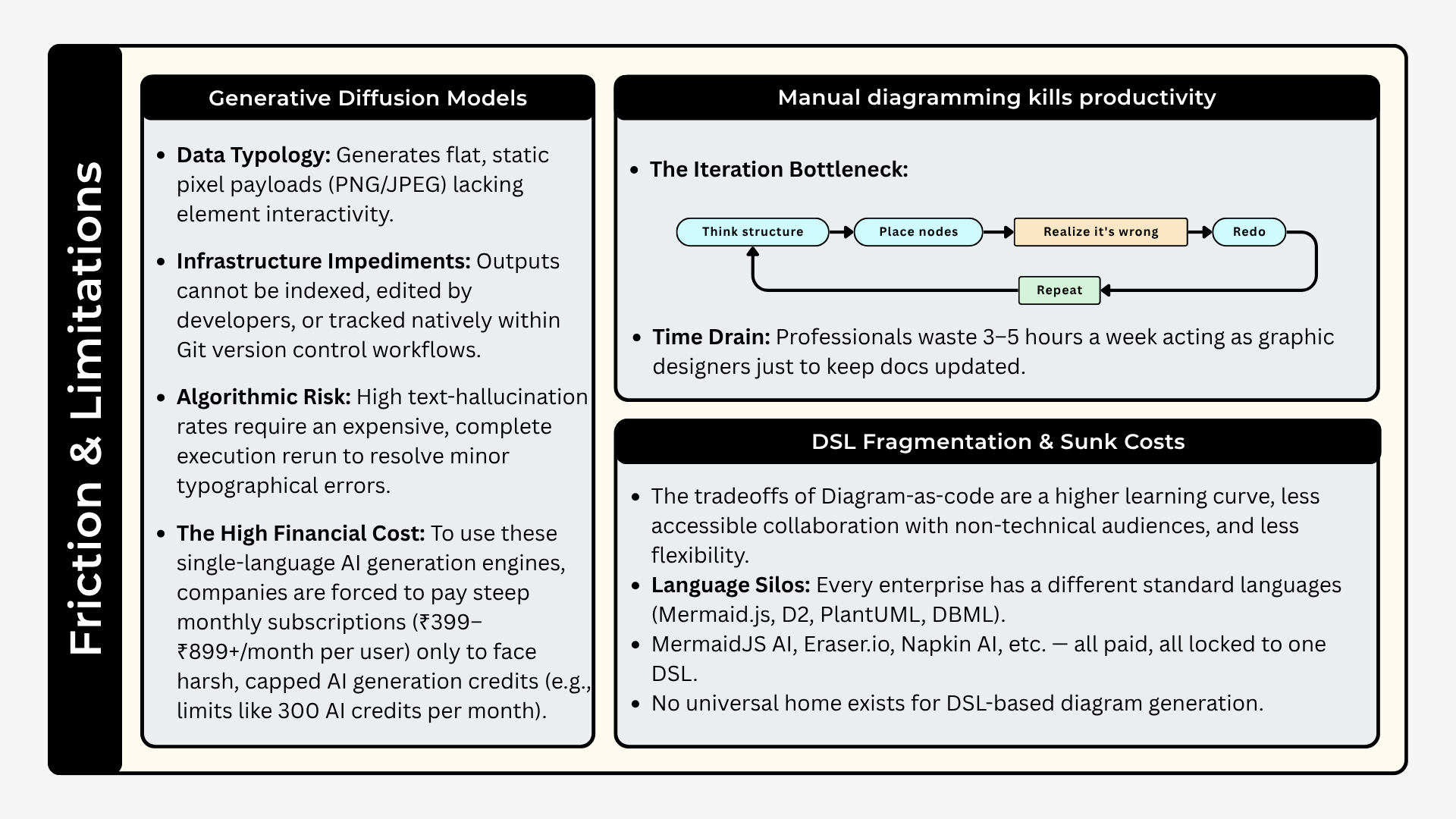
Software developers and product managers waste hours acting as graphic designers, manually dragging nodes and aligning arrows just to keep project documentation updated. Existing automated tools are locked into expensive, single-language proprietary SaaS silos with harsh monthly generation limits. More importantly, these tools compromise enterprise security by forcing teams to send their proprietary codebase data to external cloud servers. We wanted to build a secure, free, and completely open ecosystem where developers have absolute infrastructure autonomy.
What it does
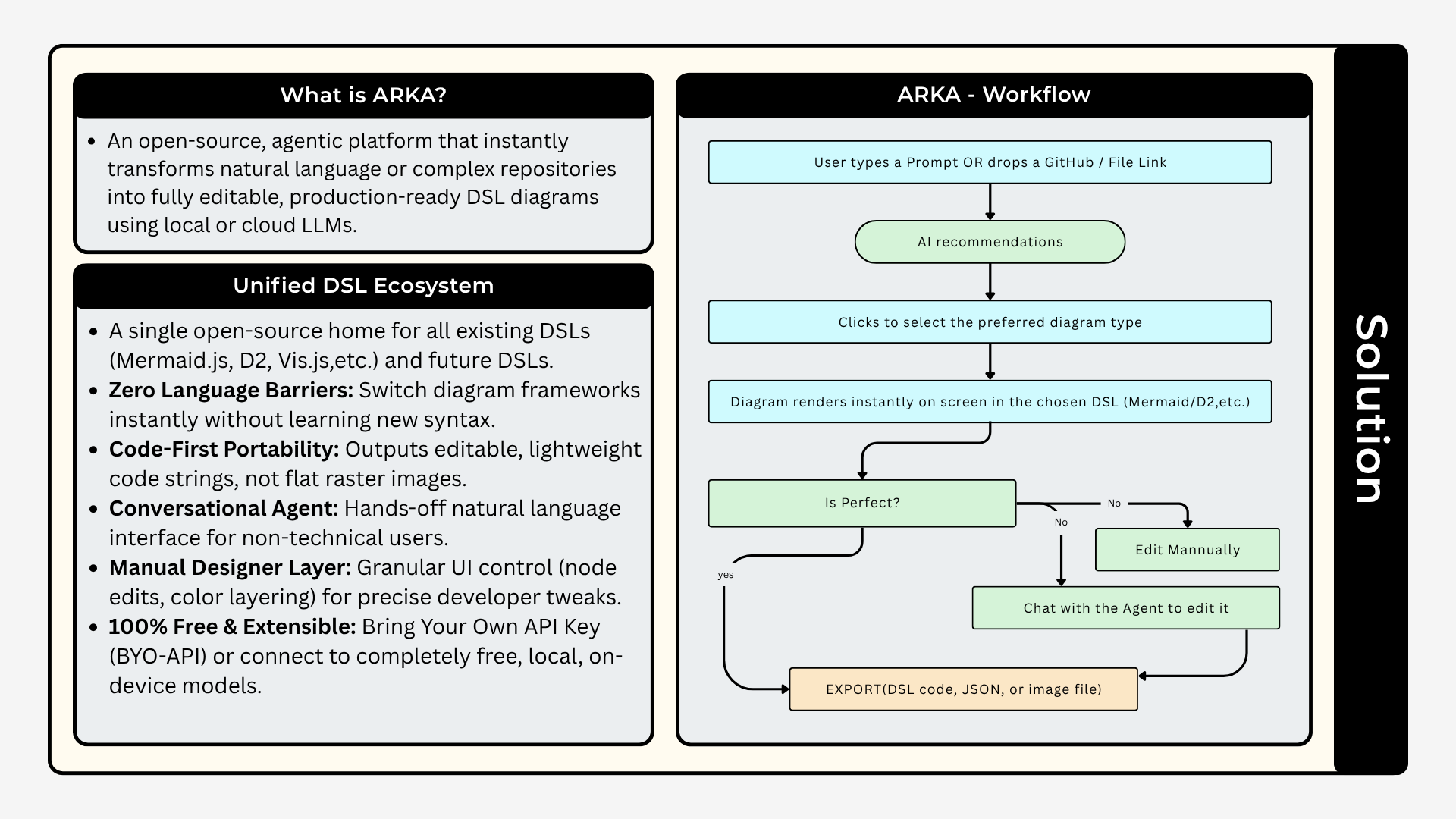
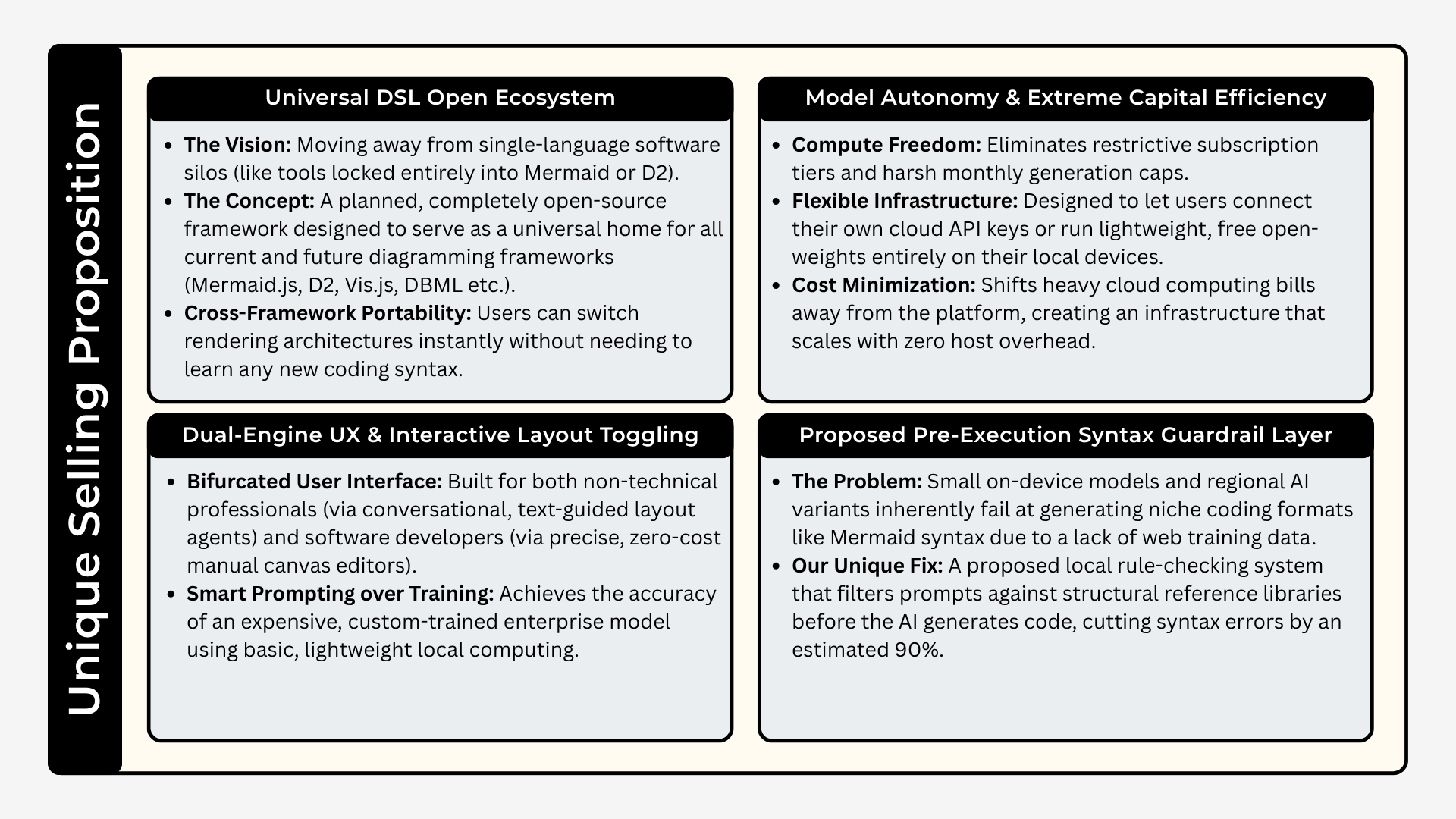
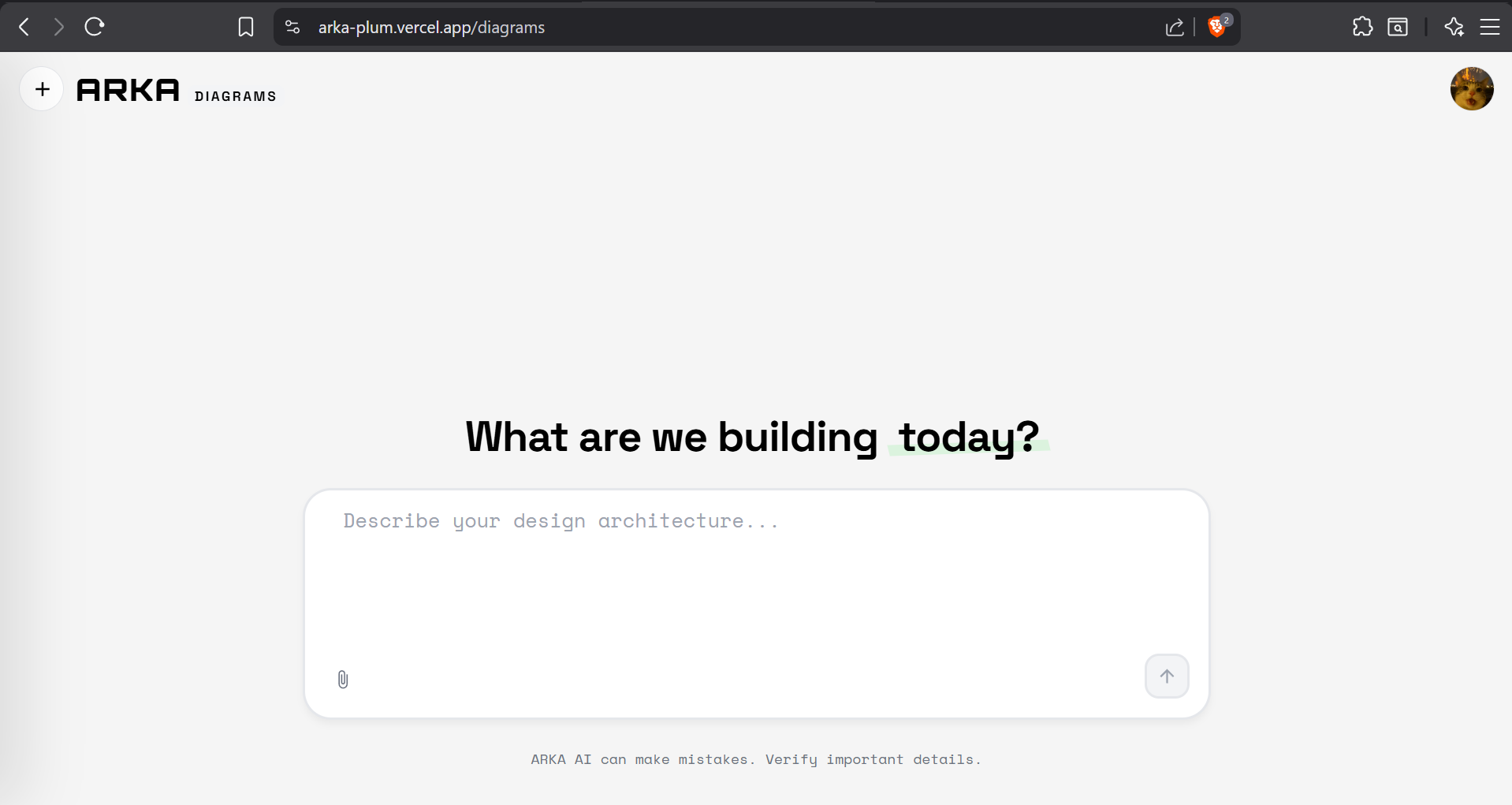
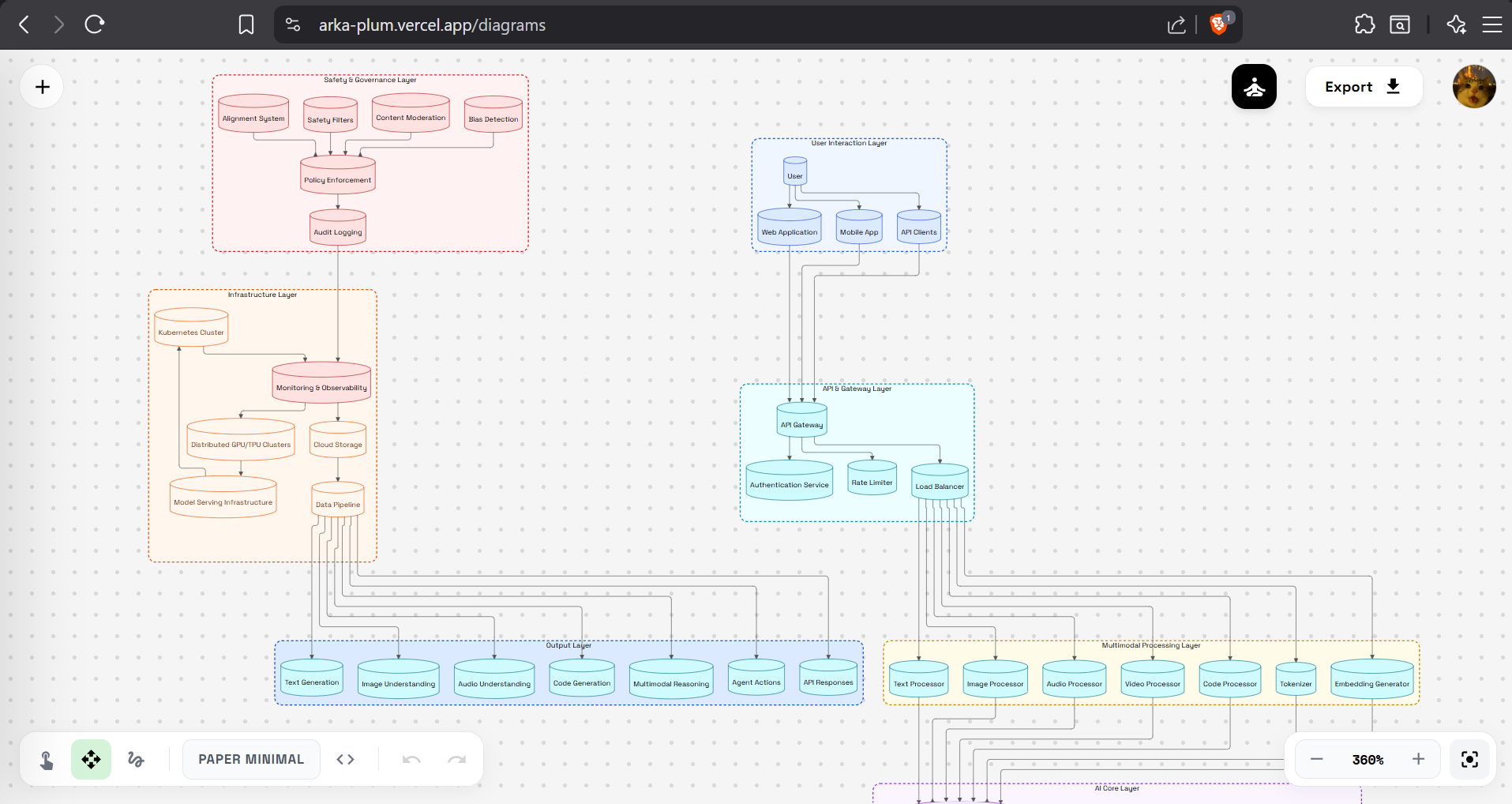
ARKA is an open-source, model-agnostic agentic platform that instantly converts natural language prompts or entire code repositories into fully editable, production-ready DSL diagrams (such as Mermaid.js, D2, and Vis.js). It features a unique dual-engine UX: a seamless conversational layout agent for non-technical teams and a granular manual design canvas for developers. It empowers users to run free, lightweight open-weight models completely offline on-device, ensuring absolute data privacy and zero API overhead.
How we built it
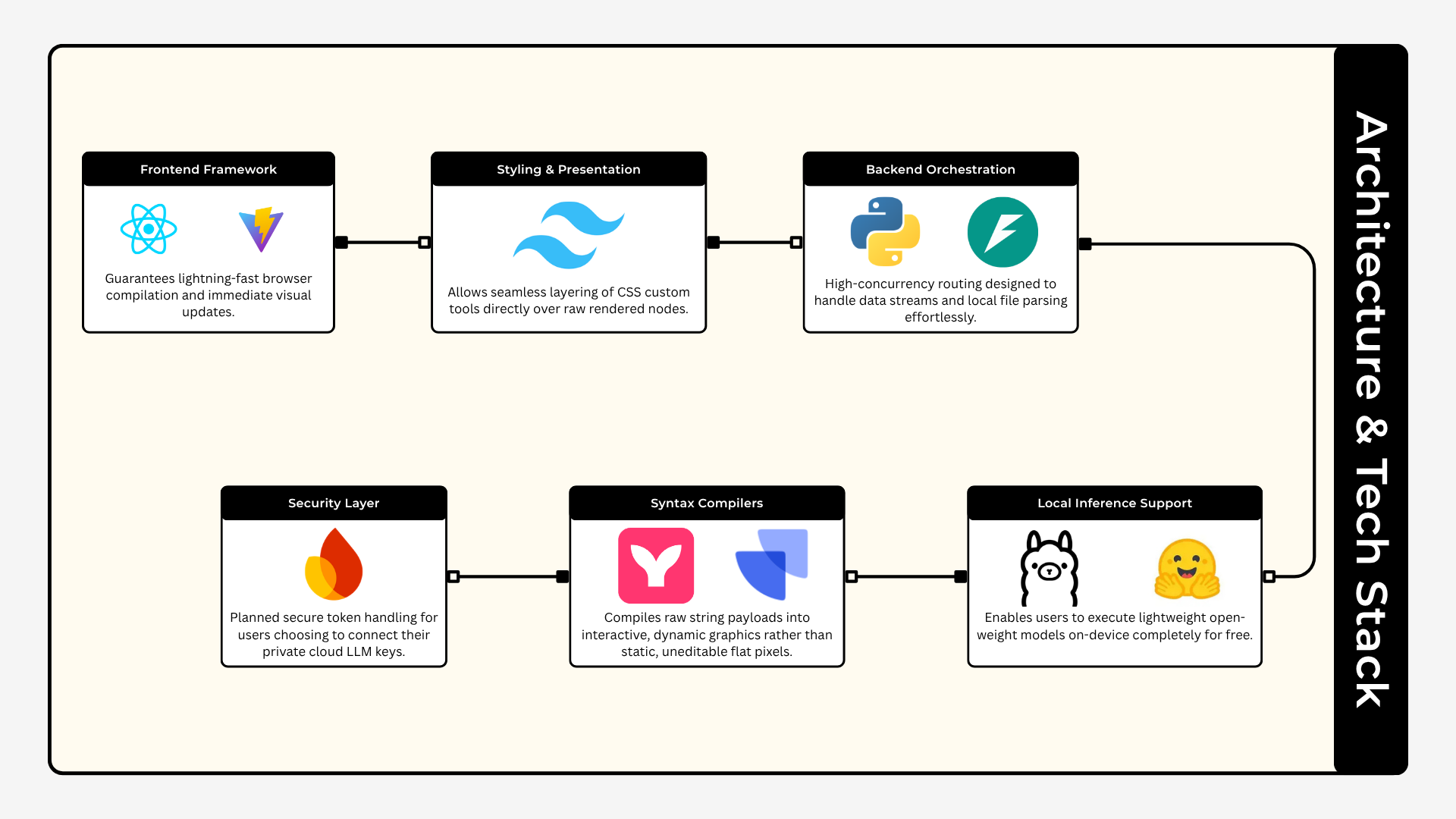
The platform is engineered with a modular, highly concurrent architecture:
- Frontend: Built using React.js and Vite for lightning-fast client-side compilation, alongside Tailwind CSS for fluid UI layering over raw rendered nodes.
- Backend Core: Powered by Python and FastAPI to manage data streams, repository parsing, and model orchestration loops.
- Inference Pipeline: Utilizes Ollama and vLLM to support offline local model execution, paired with native Mermaid.js and layout syntax compilers.
- The Environment Layer: Implemented a pre-execution guardrail system and a real-time validation compiler loop that catches code execution errors and feeds automated fixes back to the running agent.
Challenges we ran into
Niche visual coding languages like Mermaid or D2 suffer from a massive lack of web training data. As a result, smaller or regional LLMs (such as 8B to 31B parameters) inherently make frequent syntax and structural errors compared to massive cloud models. Instead of taking the expensive route of custom enterprise fine-tuning, we overcame this by building a localized rule-checking environment—our Syntax Knowledge Bank—which successfully intercepts prompts and constraints the agent to follow flawless compilation parameters.
Accomplishments that we're proud of
- Engineering a system where a small model can execute complex system designs (like multi-branch CI/CD pipelines) with a 90% drop in syntax rendering faults.
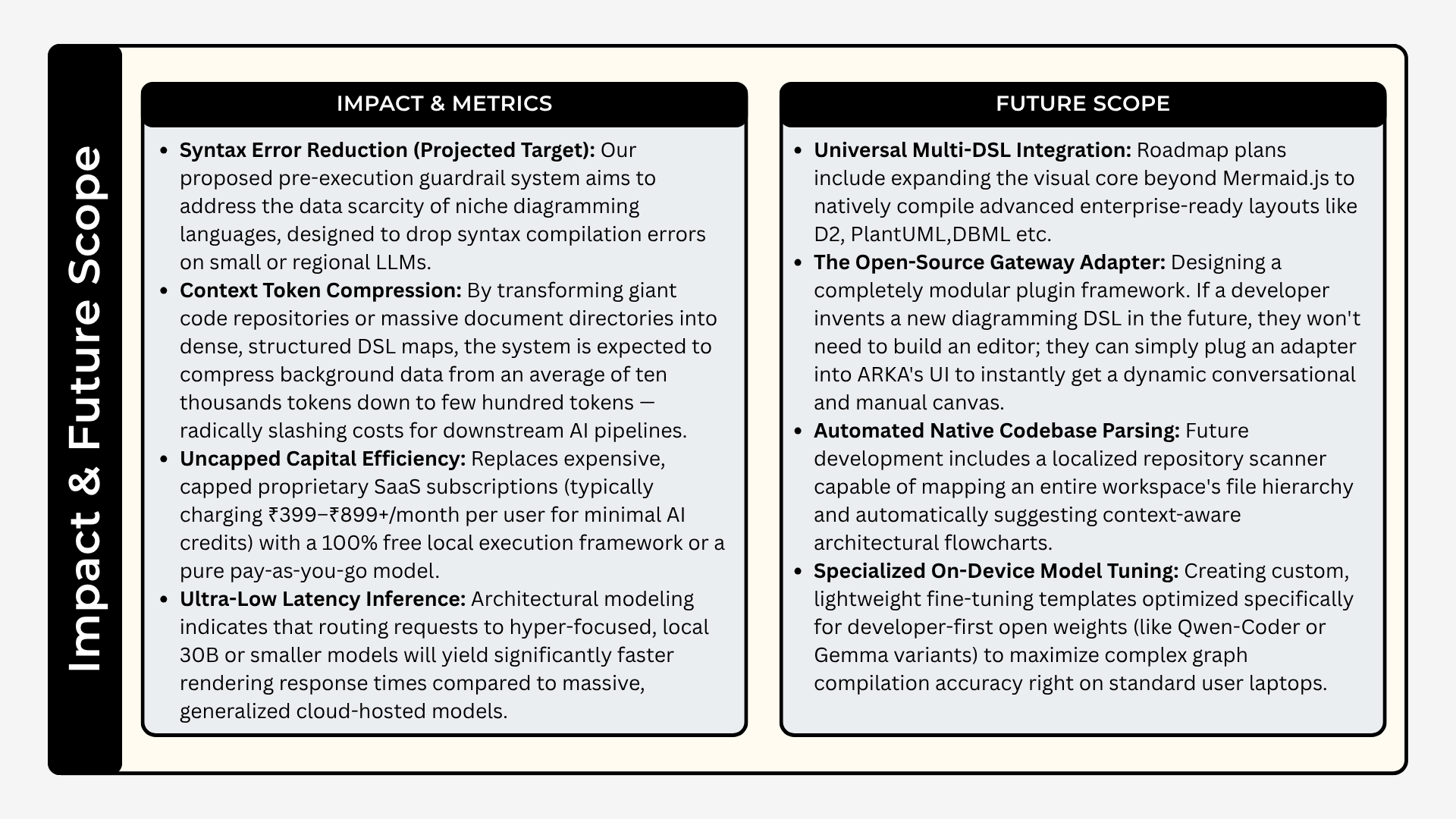
- Achieving up to 98% context token compression by translating giant repository structures into dense, lightweight textual DSL code before deep processing.
- Keeping the framework entirely model-agnostic, validating that a local developer setup can bypass steep commercial subscription paywalls.
What we learned
We have learned that you don't always need a massive cloud model to execute specialized tasks. There are specific, highly structured workloads—like generating diagram code—that smaller, lightweight models can perform just as effectively as larger ones, provided they are equipped with better tools and a highly optimized agentic environment.
What's next for ARKA
Our immediate roadmap involves expanding support for enterprise-wide visual schemas like D2, vis.js. We are also working on building autonomous deep-repository scanners that can map out a localized project's entire file workspace automatically, alongside fine-tuning lightweight open-weights explicitly tailored for visual compilers.

Log in or sign up for Devpost to join the conversation.