-
-
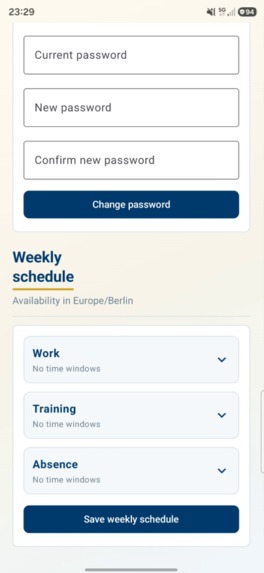
09_Account 2
-
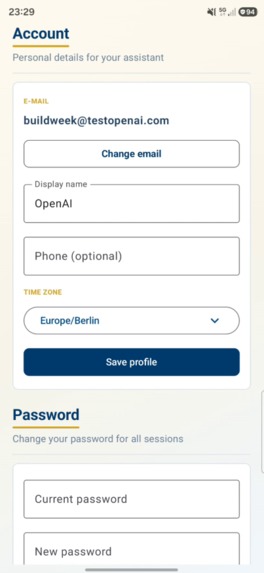
08_Account 1
-
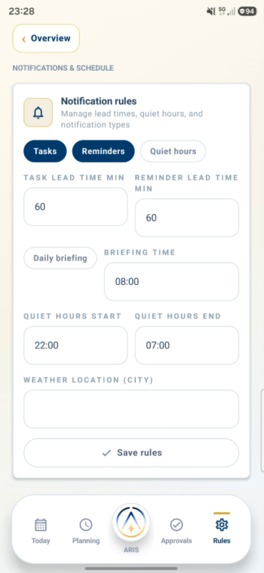
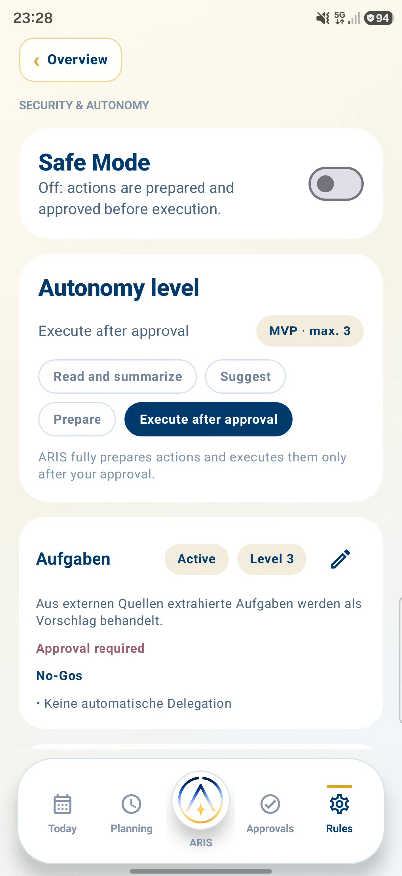
14_Settings 3
-
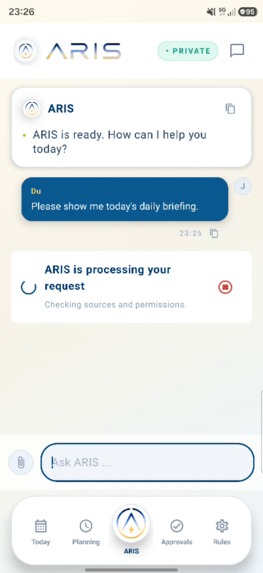
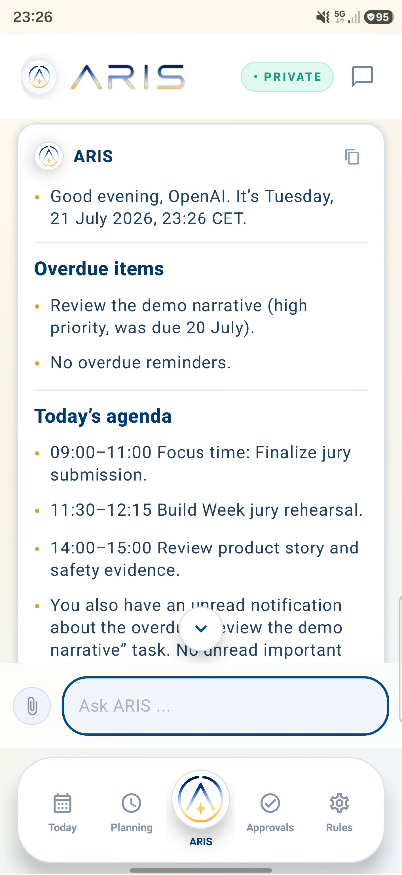
06_Chat Screen 1
-
12_Settings 1
-
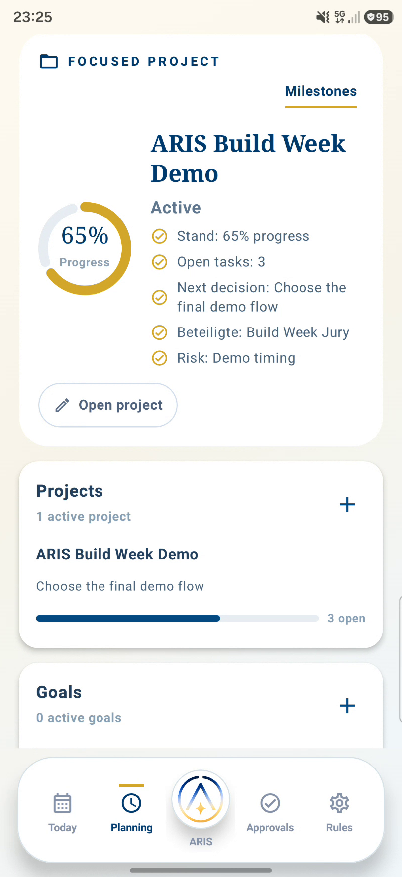
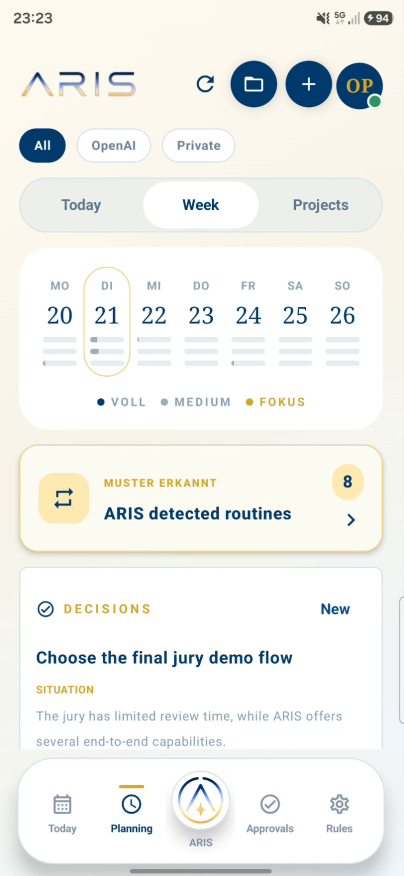
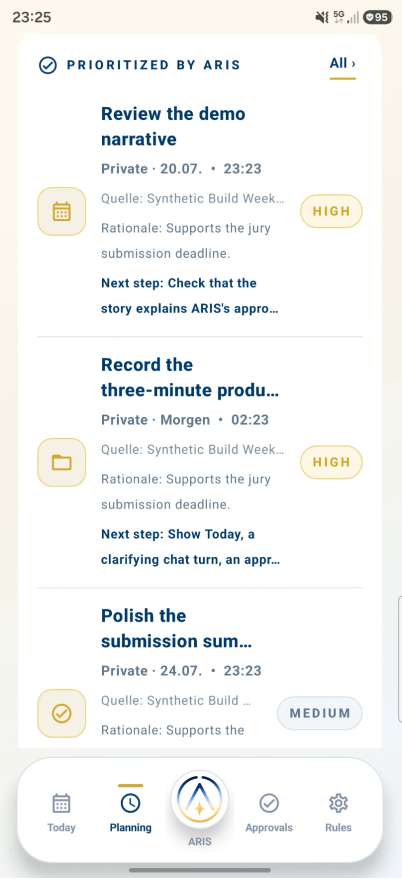
05_Planning Screen 3
-
13_Settings 2
-
03_Planning Screen 1
-
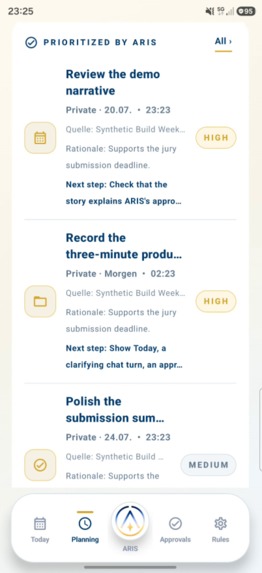
04_Planning Screen 2
-
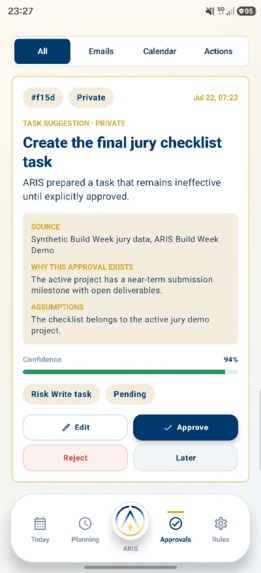
10_Approvals 1
-
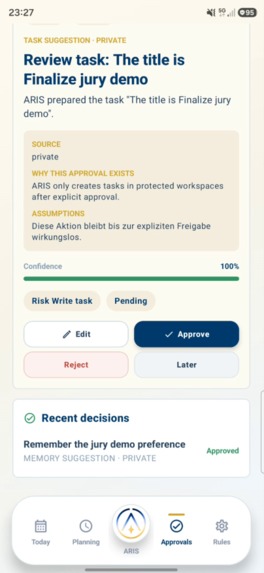
11_Approvals 2
-
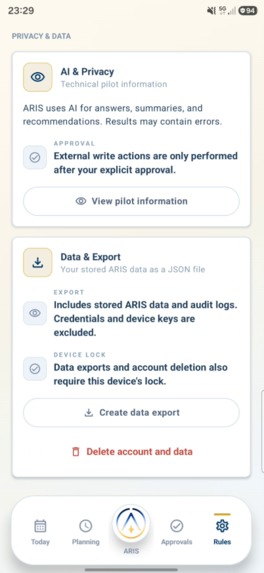
15_Settings 4
-
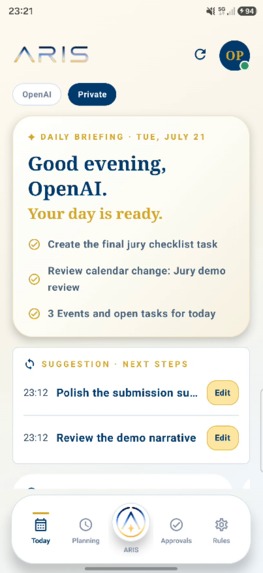
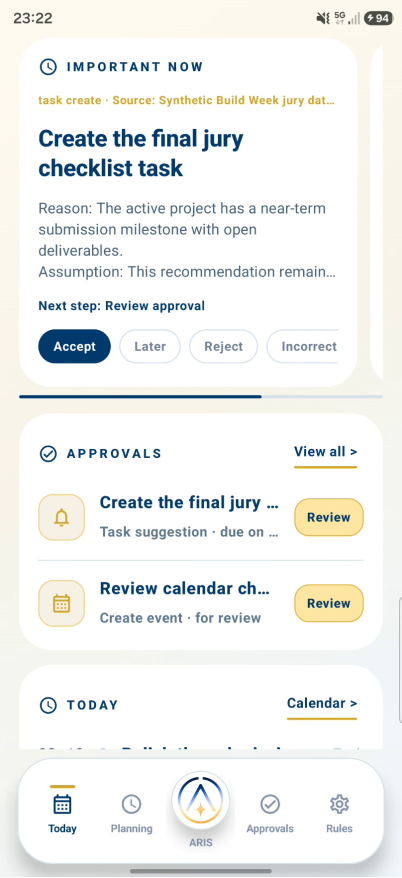
01_Homescreen 1
-
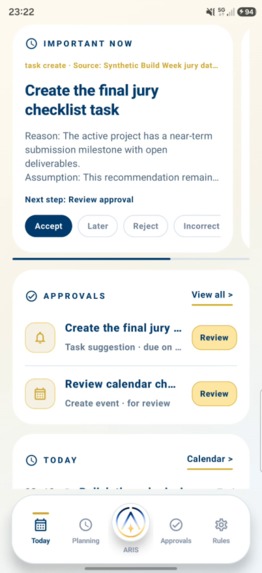
02_Homescreen 2
-
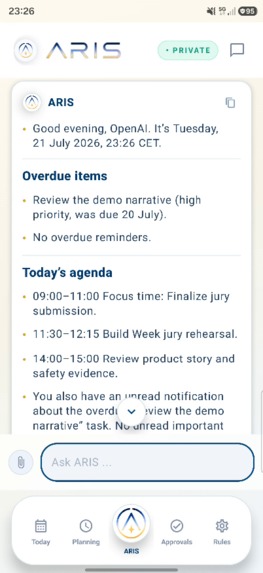
07_Chat Screen 2
ARIS: A Safety-First Personal AI Operating System
Inspiration
ARIS grew out of a very concrete problem in my own daily work. I operate across multiple projects and workspaces, each with different priorities, appointments, emails, and tasks. What I was missing was one assistant that understands these boundaries and still gives a reliable overview of what actually matters next.
The goal was never an AI that quietly takes over. I wanted an assistant that reduces organisational mental load, proactively suggests useful next steps, and leaves the user in control of every meaningful action. Control is not optional here. It is the whole point.
What it does
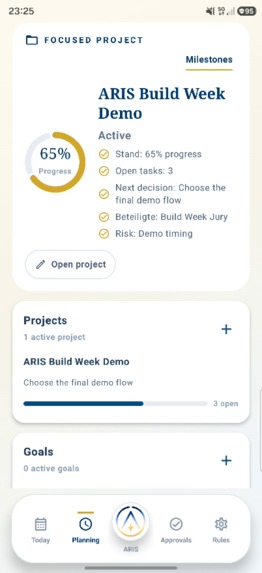
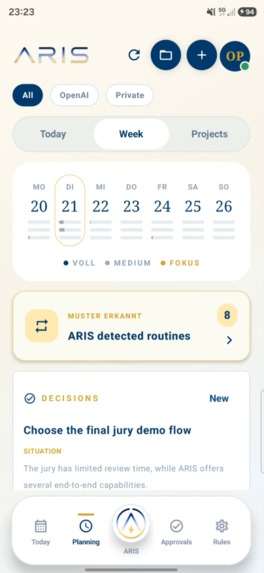
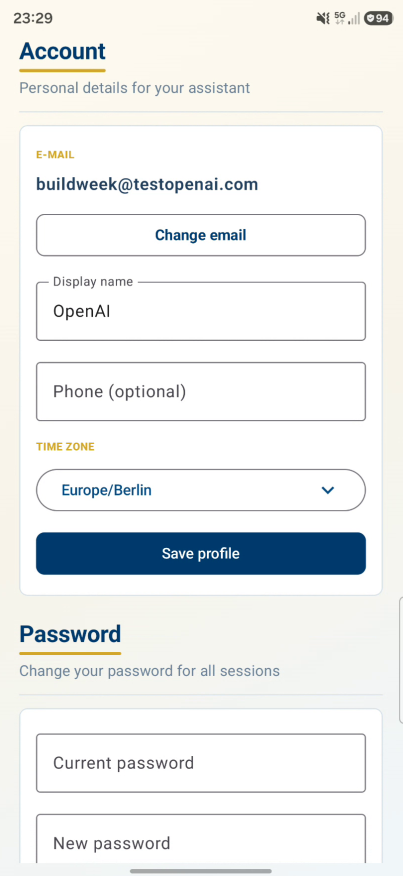
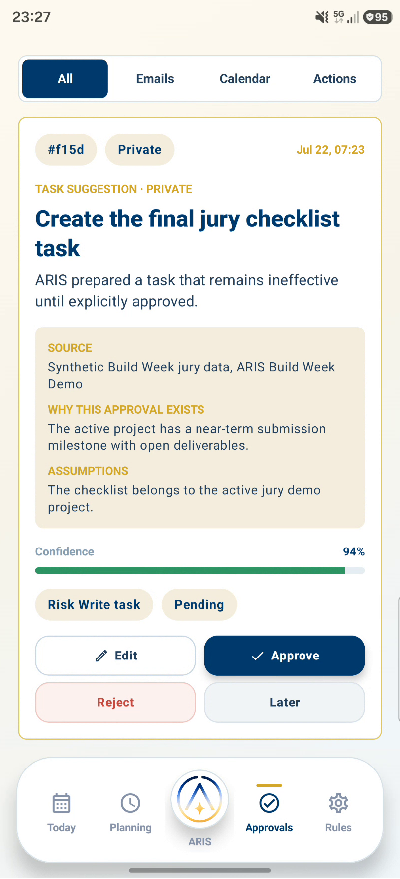
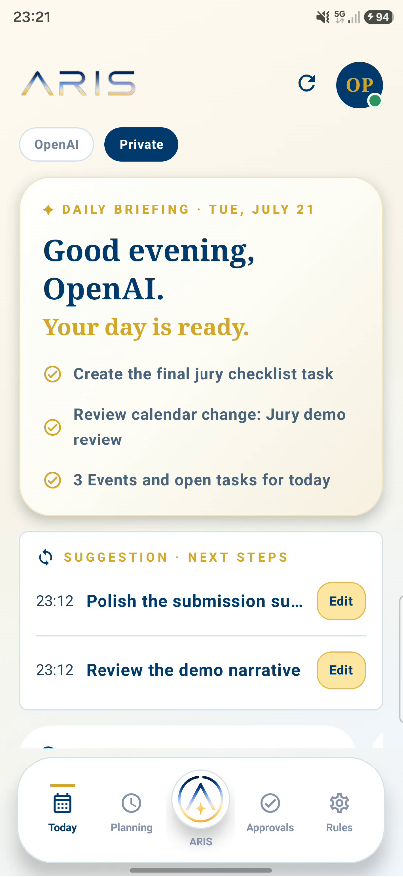
ARIS is a safety-first personal AI operating system for Android (Android first, for now). It brings together daily planning, calendar context, emails, tasks, reminders, and personal preferences, and turns that into a clear focus for the user.
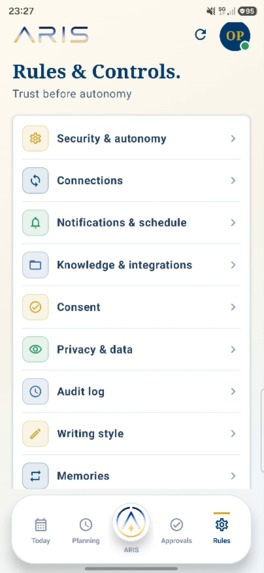
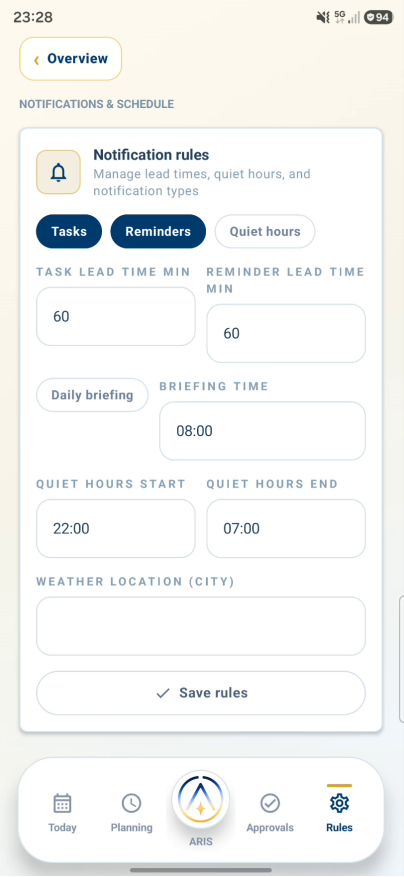
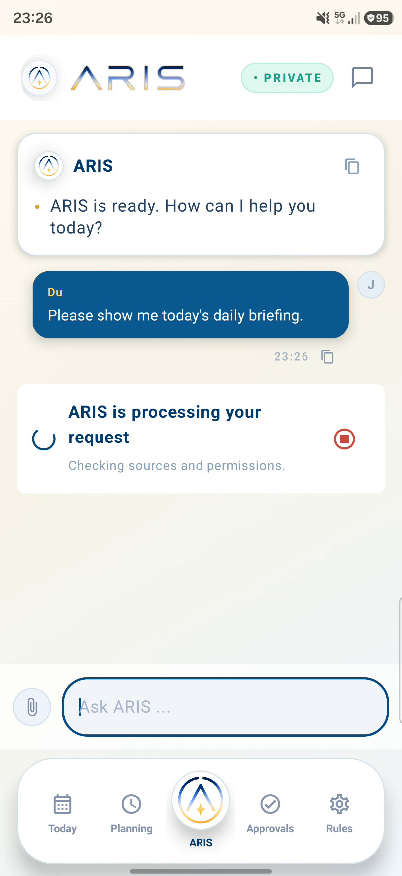
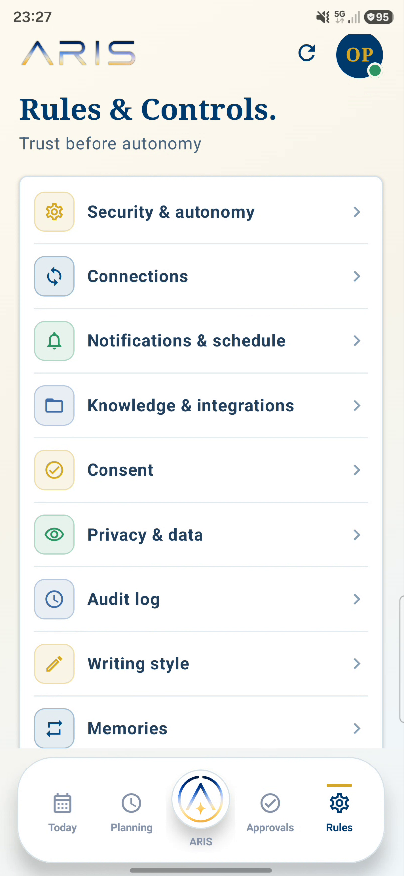
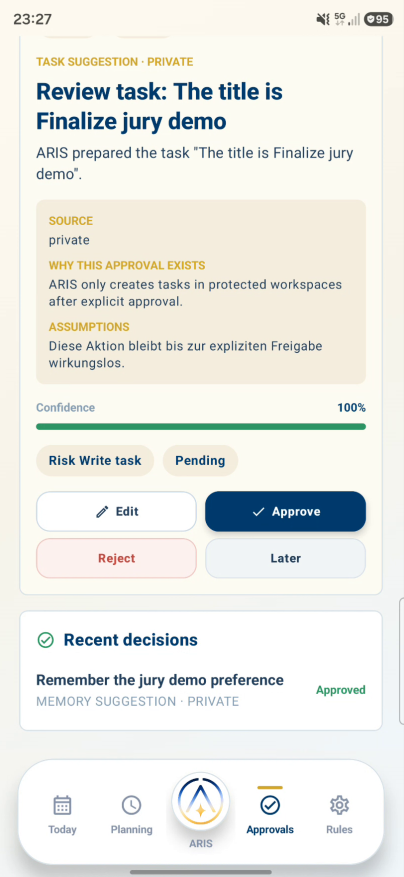
In practice, it prepares a daily briefing, flags conflicts and free focus windows, prioritises information, suggests next steps, drafts emails, and supports task planning. Every external action requires clear user approval. Users control their own integrations, permissions, rules, memories, internal knowledge, and autonomy settings, and can define their own rules per integration.
How we built it
ARIS is a Samsung-first Android prototype built with Kotlin and Jetpack Compose, with a FastAPI backend behind it. The architecture covers calendar and email integrations, daily briefings, task and reminder support, approval workflows, rules, memory controls, and audit logs.
The starting point was an earlier prototype built with Codex and GPT-5.5. At the beginning of the hackathon, I made the call to rethink the product from the ground up and initiated a major rebuild with Codex, using GPT-5.6 Terra and GPT-5.6 Sol. That rebuild shifted ARIS from a chat-first assistant to a more structured, mobile-first product centred on planning, trust, and control. In practice, this was the right call. Restarting cleanly beats patching a weak foundation.
Challenges we ran into
The real challenge was balancing proactivity with safety. An assistant should anticipate useful actions, but it must never leave the user with the feeling that it acted beyond its mandate.
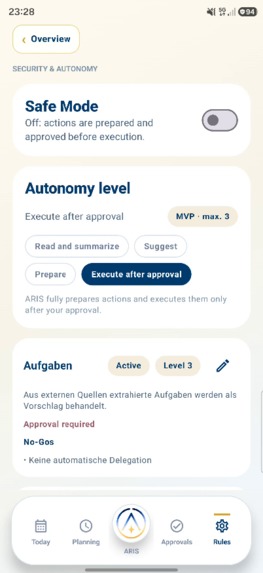
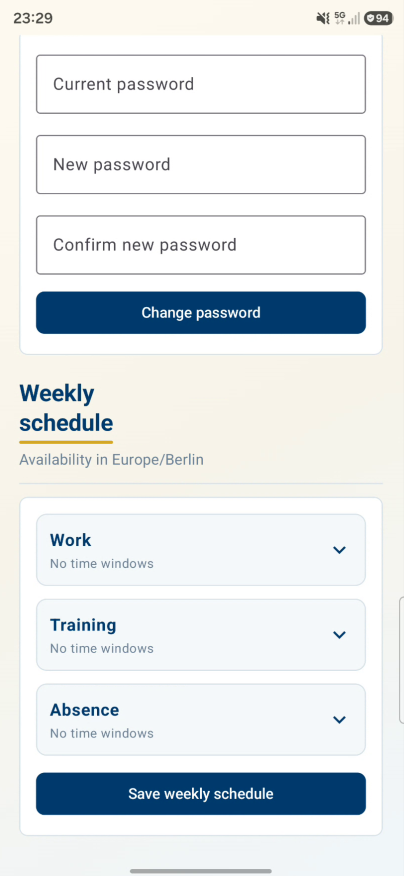
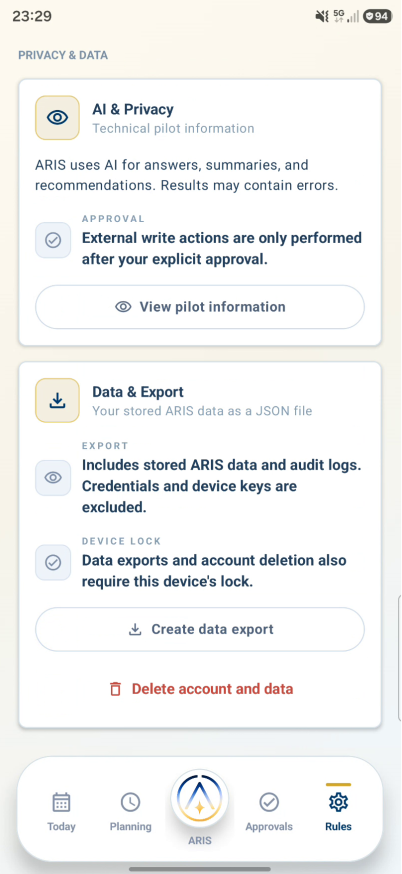
This led directly to a safety model built on explicit approvals, safe mode, transparent reasoning, visible sources, risk levels, editable memories, and integration-level consent. The second major challenge was scope. Turning a broad vision for a personal AI operating system into a credible, focused hackathon prototype meant cutting hard and repeatedly.
Accomplishments that we're proud of
What stands out most is that ARIS is designed around user agency, not maximum automation. Trust, privacy, and control are not afterthoughts bolted on at the end. They are part of the core product experience from day one. Safety and GDPR by design, not by patch.
I am also proud of the full product rethink mid-hackathon. Instead of polishing an older prototype, I chose to rebuild around a clearer vision: a calm, proactive assistant that supports the user while asking before it acts. And frankly, I was surprised by how well GPT-5.6 handled that rebuild.
What we learned
I am not a traditional programmer. I am not a programmer at all, in fact. About a year and a half ago, I tried building an Android app by copying code from a ChatGPT chat window into Android Studio. After a month of fragile progress, I gave up.
This project showed me how much has changed since then. With Codex and modern coding agents, I could plan, build, test, review, and rebuild a complex application in a structured way. Building with AI today is not just about generating code. It is a coach for developing the idea, a design partner for evaluating options, a technical assistant and product planner for writing specs and implementation plans, a tracker for keeping everything organised, and finally the worker that implements what was planned. It is genuinely remarkable how far this has come, and I am curious to see where it goes next.
What's next for ARIS
The next step is deepening the core workflows: more reliable calendar and email integrations, richer daily briefings, better task extraction, configurable automation rules, and more transparent approval experiences. Long-term memory via RAG-based chat search is on the roadmap, along with higher autonomy levels users can unlock over time.
The long-term vision is a trusted personal AI operating system for everyone who relies on safe software products. One that can work with sensitive business context while remaining privacy-conscious, controllable, and genuinely helpful.
Built With
- ai-agents
- alembic
- android
- fastapi
- firebase-cloud-messaging
- gmail-api
- google-calendar-api
- gpt-oss-120b
- jetpack-compose
- kotlin
- kotlin-coroutines
- llms
- oauth-2.0
- okhttp
- openai
- openai-compatible-api
- postgresql
- python
- rest-apis
- sqlalchemy
- sqlite
- vosk
- websockets

Log in or sign up for Devpost to join the conversation.