-
-
Arduino Setup
-
Facial Recognition
-
Website Dashboard
Inspiration: Every member of our team has watched iron man multiple times and we have always been fascinated with the capabilities of Jarvis. JARVIS is Just A Rather Very Intelligent System which is an AI that controls Tony Stark's home for him. We wanted to create a system that would be able to perform the same tasks Jarvis does(except help Tony Stark fight villains). We wanted to make this system practical to everyday households, and we wanted it to be able to reduce the waste of each household. This smart home system aids in advancing one of the most important technological revolutions of the past ten years: The Internet of Things.
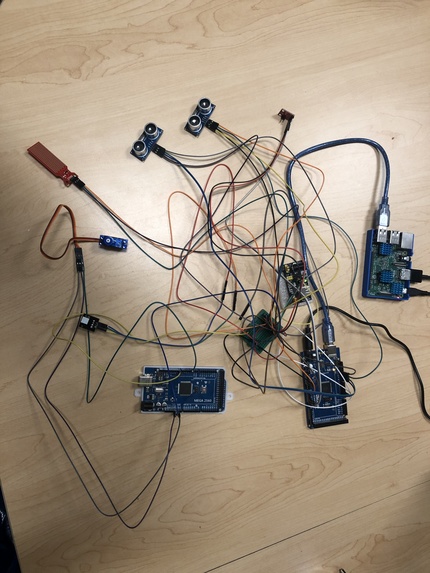
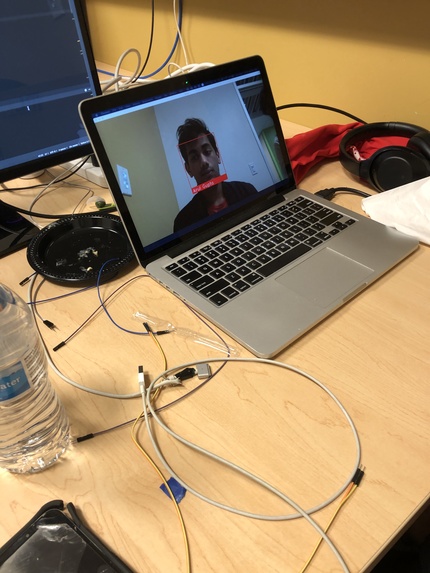
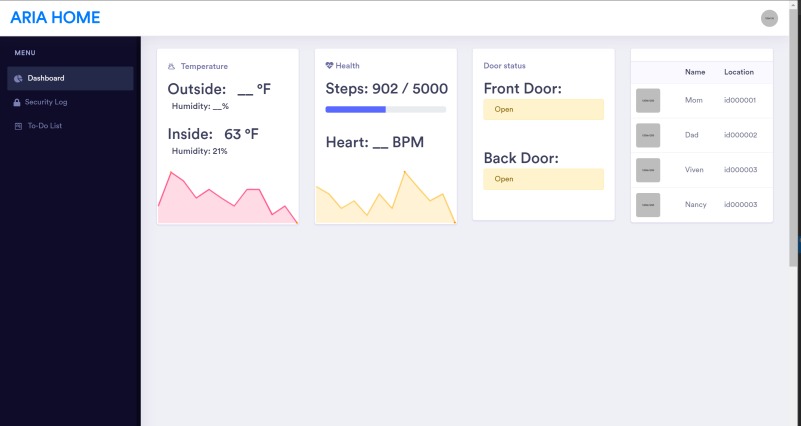
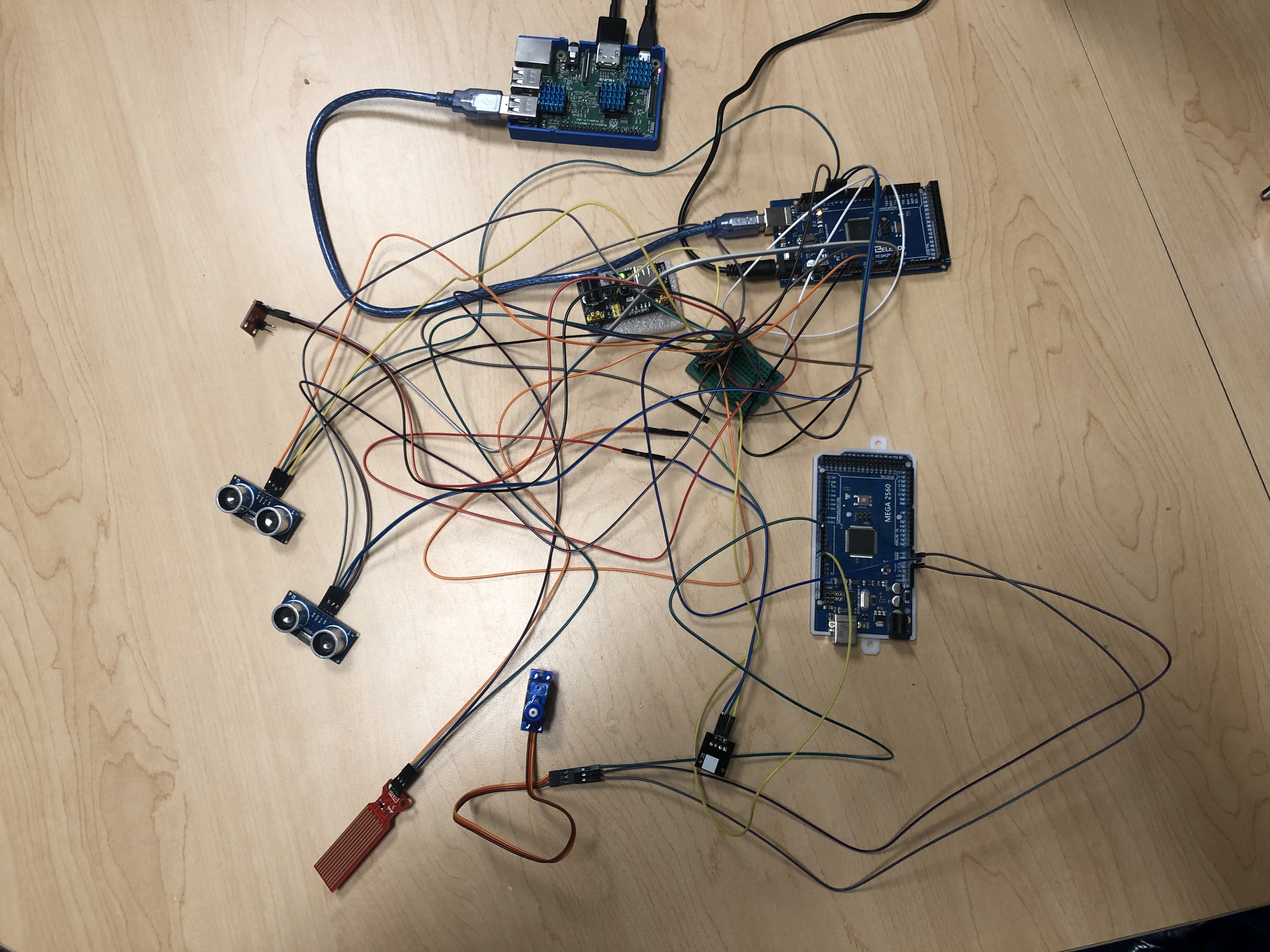
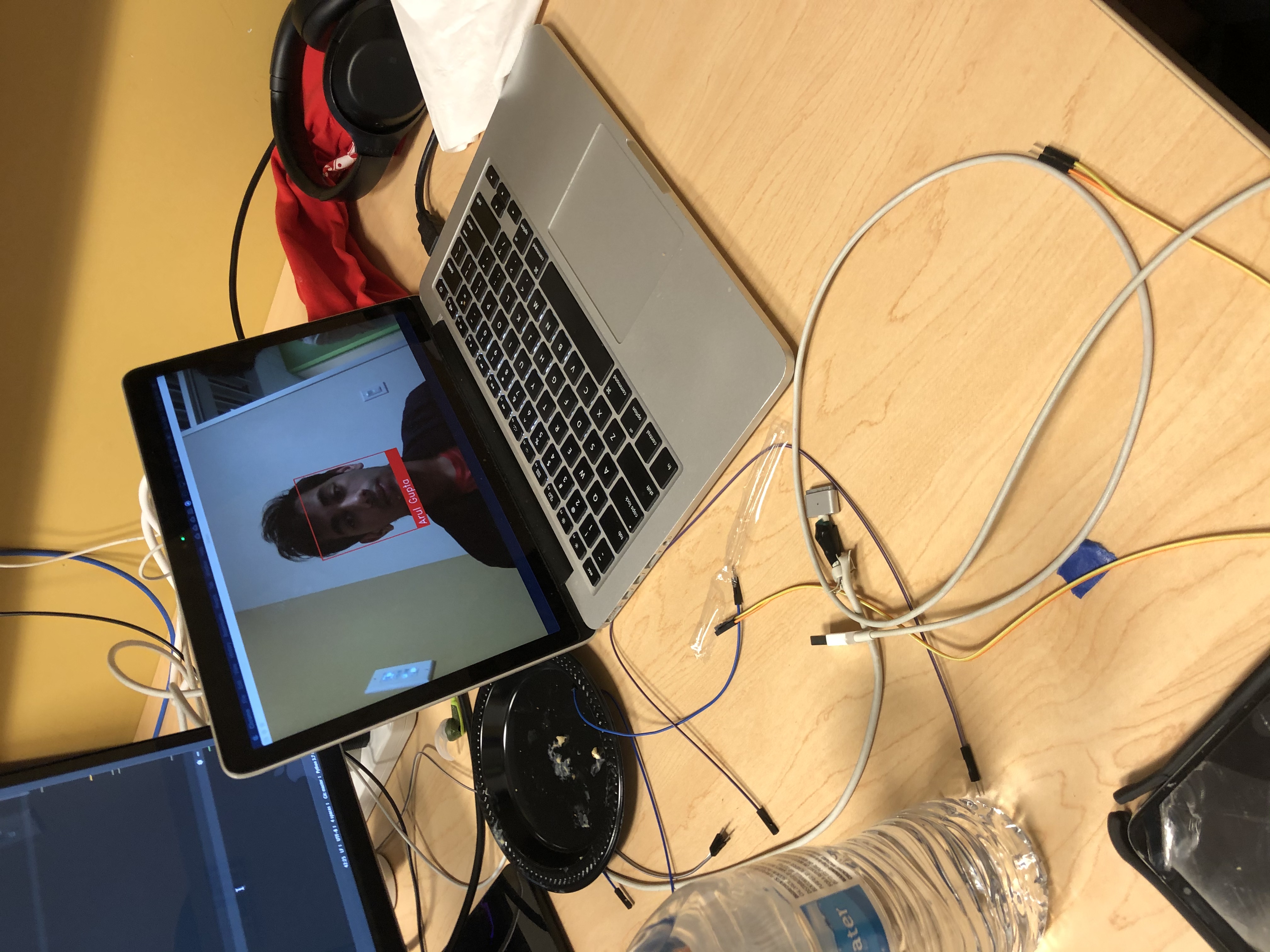
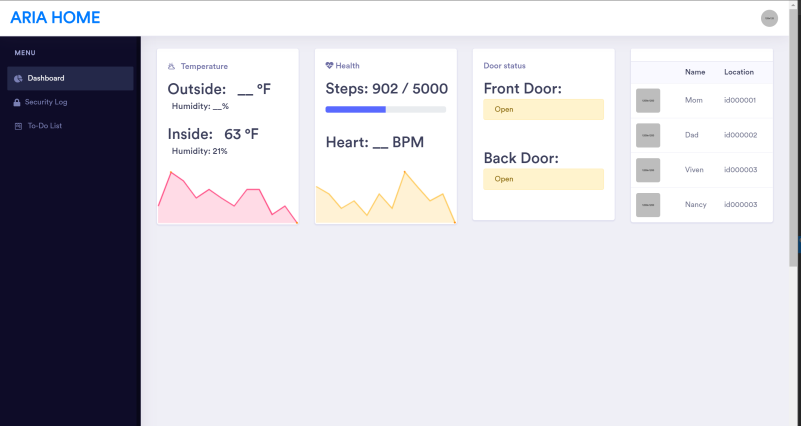
What it does: Our project currently establishes an infrastructure for an integrated smart home. So far, multiple arduinos collect data such as humidity, temperature, and air quality, and publishes it to a personal webpage for you to keep track of. From there, you can control parts of your house, such as garage doors or lights (servo and led), with feedback between the Arduino and website going both ways. The Arduino is also equipped with ultrasonics, which can be used to tell when certain doors are open or closed. Using facial recognition software, our home security system can tell when you or your family is outside a door, or whether outsiders are there instead. Location tracking updates are posted to the website for one member of a family through our GPS driven phone app. We have also integrated with apple health kit to post health data to the website, with all publishing happening through ROS and Firebase. It also uses Blockstack to have a top-notch security system of user information. Aria also has an integrated voice demo, where you can ask for stats like temperature and time and have it respond. All of this information is personal and users don't want their information getting out, so we decided to use the advantage of the decentralized network in blokstack. This highly secure login system allows us to make sure that data breaches are something of the past. Using a domain name from domain.com, we were able to host our site to display and update stats in real-time.
How I built it: First, we discussed our idea - and once we decided on what we wanted to do, we planned out the different components and their interactions through a flow chart. We first split our team and assigned responsibilities, with one person working on arduino, one person on the website, one on facial recognition and one on integrating the different parts with each other. For each aspect, we first did research on what features we wanted to have, then went about learning the skills we needed to create those features. With each new feature, we would test it multiple times, before moving on through our task list.
Challenges I ran into: The integration of ROS was especially difficult, as there was no existing RossSerial package for raspi. We had to switch to Ubuntu on the Raspberry Pi to find a package to solve this problem. We also struggled with the robustness of the Arduino, as sensors would sometimes lag, and cause the system to slow. We combated this by rewriting our code to make it more efficient in terms of memory usage and streamline out unnecessary aspects.
Accomplishments that I'm proud of: Integration of new ideas - ones that we hadn't worked with before, into our project, from machine learning to ROSS to Apple integration. Our facial recognition software is one we were especially proud of, as it was able to identify individual people, distinguishing between different faces. We also figured out how to implement a voice demo, where you can ask the assistant for temperature and time and have it respond.
What I learned: As a team, we each learned an assortment of new skills that we did not know before. One of our team members explored Robot Operating System(ROS) with both raspberry pi and ubuntu to run all of the sensors that are connected to the Arduino board. Another one of our team members explored using Arduino with a total of 7 different sensors, which allowed us to get a variety of different readings to make our home system as comprehensive as possible. In addition, another one of our team members explored facial recognition and machine learning to detect when his face was in the view of the camera. He also learned to access health data from apple using swift to make sure the person can also easily see their health. Finally, to make sure everything is secured another one of our team members explored the decentralized network blockstack and using CSS.
What's next for ariaHome: Our final vision for this project images a comprehensive home assistant - one that is able to manage all the parts of your life that you don't have time for, saving you money, time, and ease of mind. We could integrate location data for all members of a family to know where members of a household are at any time - and use that information to regulate house thermostats and electric outputs, making homes more energy-efficient. A further integrated home security system could send alerts for unexpected visitors, based on location-based expectations of who should be at the house and when. Integrated health data could send notifications to other members of the family if anyone has unexpected spikes in health rate and blood pressure, indicating a medical emergency, or could even connect to your Spotify to play calming music when you’re stressed. An integrated to-do list could remind you when you’re not in a location you’re supposed to be, and a smart fridge could remind you when to buy ingredients and what might be spoiled. Protected by blockstack security, a home that knows everything about you can help you through all aspects of life, without sacrificing security.
Built With
- arduino
- barometer
- blockstack
- camera
- css
- facenet
- firebase
- google-cloud
- html5
- humidity/temp-sensor
- javascript
- keras
- led
- location-tracking
- node.js
- opencv
- python
- radar.io
- raspberry-pi
- ros
- servo
- swift
- ultrasonic-sensor
- voice-recognition

Log in or sign up for Devpost to join the conversation.