-
-
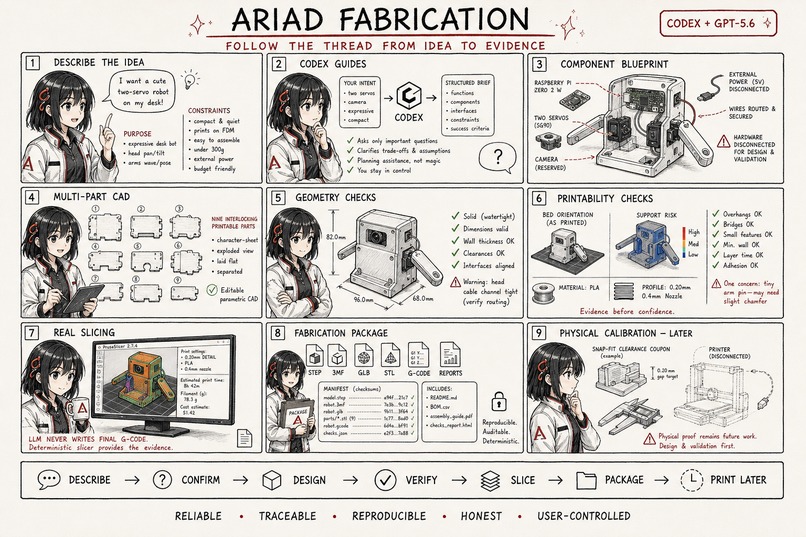
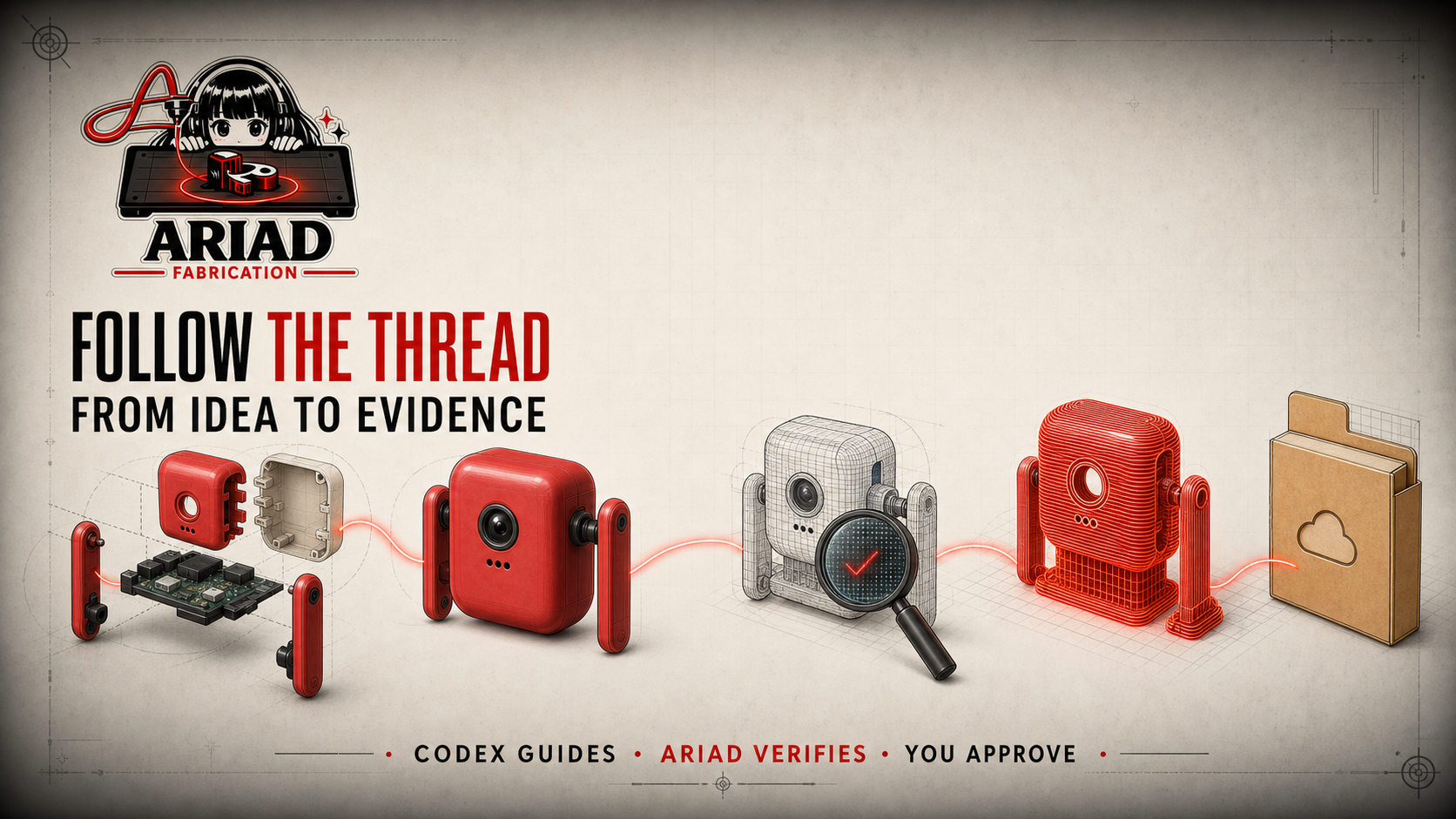
Ariad Project Story Banner
-
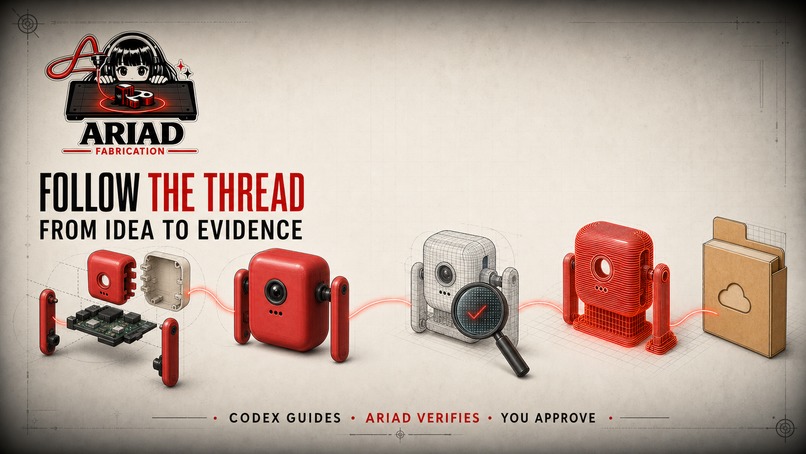
Opening Title Card
-
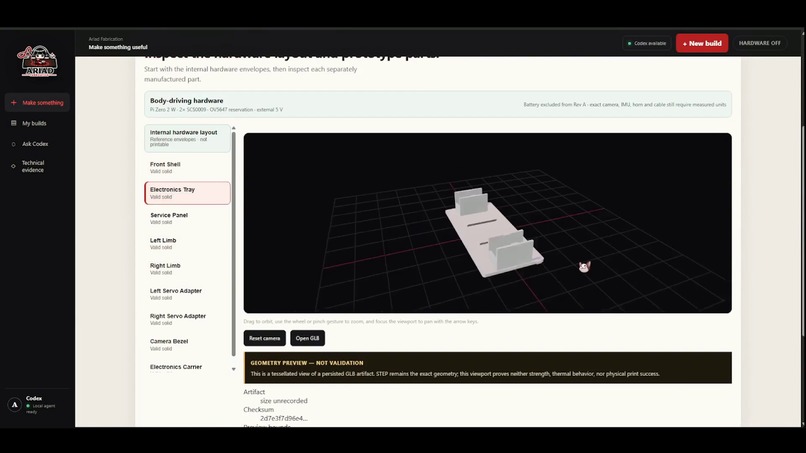
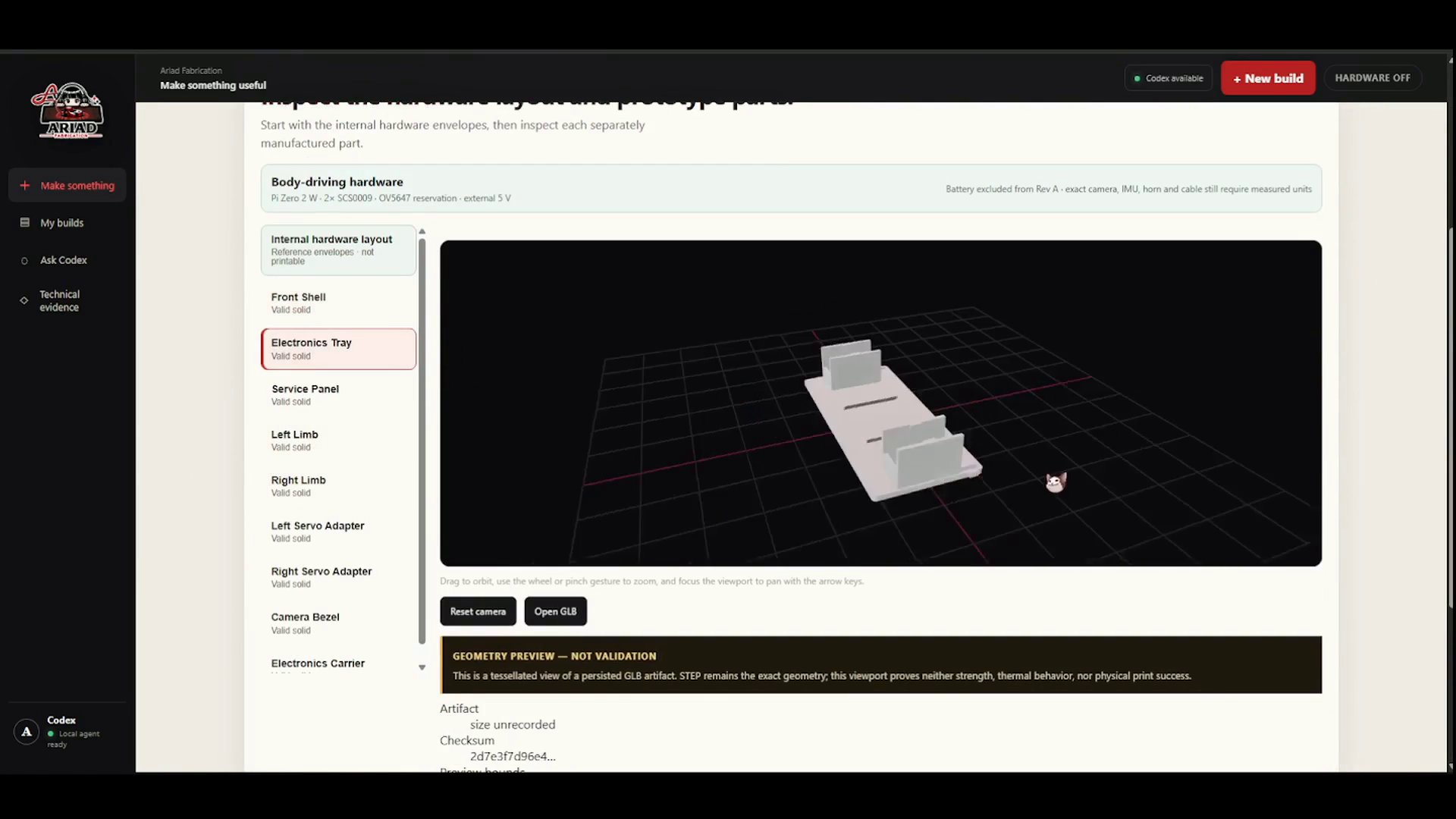
CAD Workspace
-
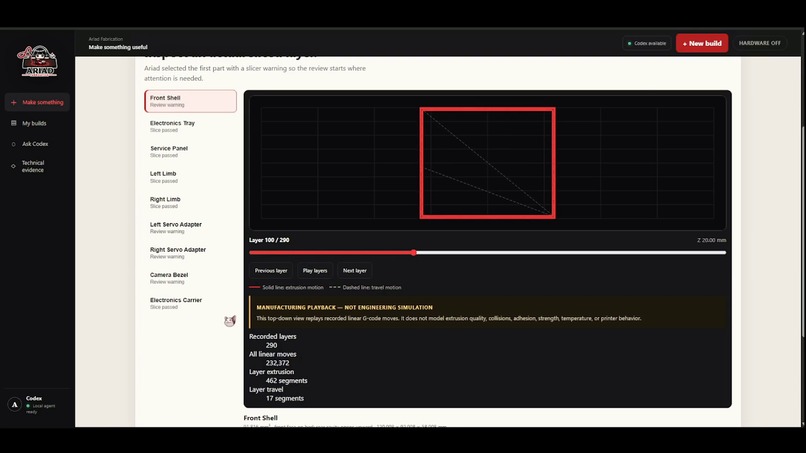
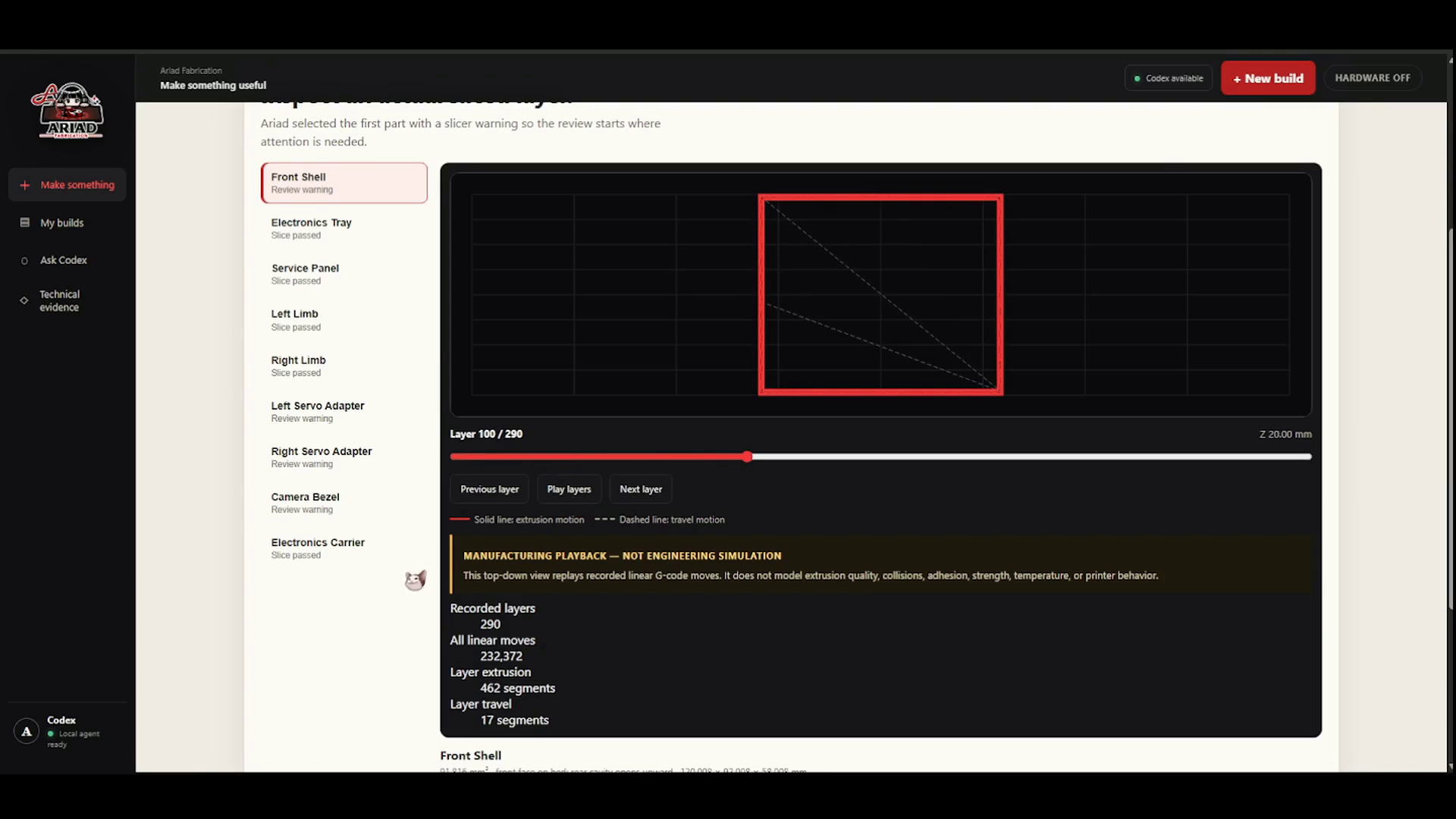
Real slicing evidence
-
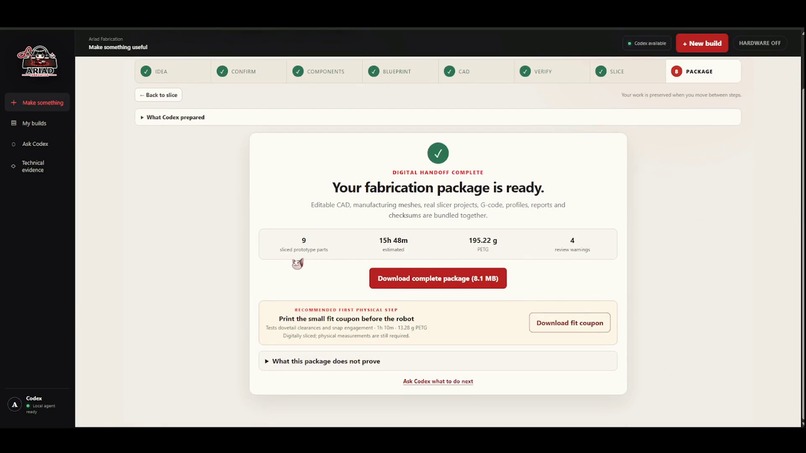
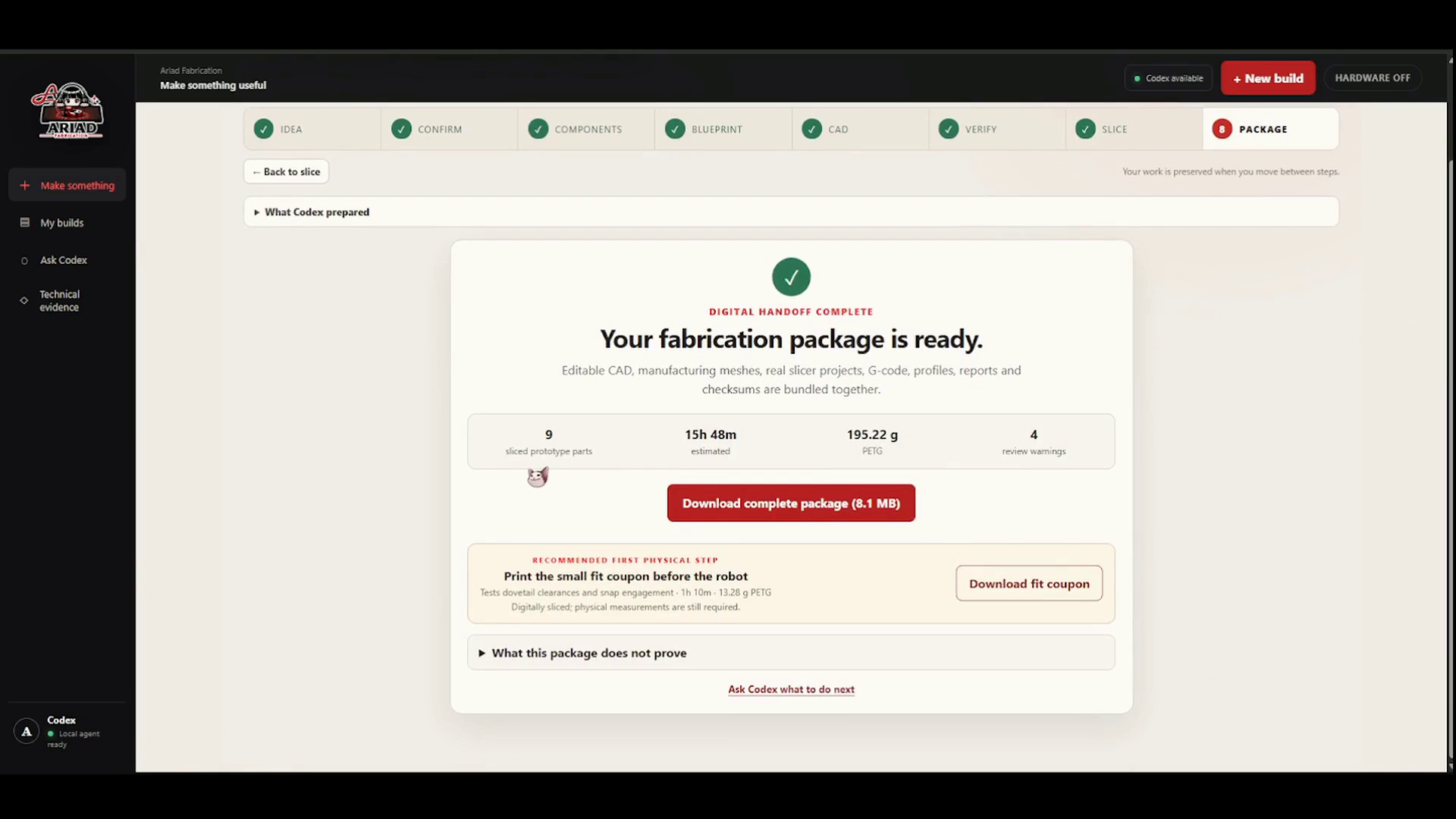
Fabrication Package
Inspiration
I started Ariad because I wanted to explore physical projects and 3D printing, but the path from an idea to a trustworthy printable model felt overwhelming. Generating a picture or an attractive mesh is easy; understanding components, dimensions, assembly, print orientation, clearances, slicing, and what remains unproven is much harder.
Ariad is my attempt to make that journey approachable without hiding the engineering evidence.
What it does
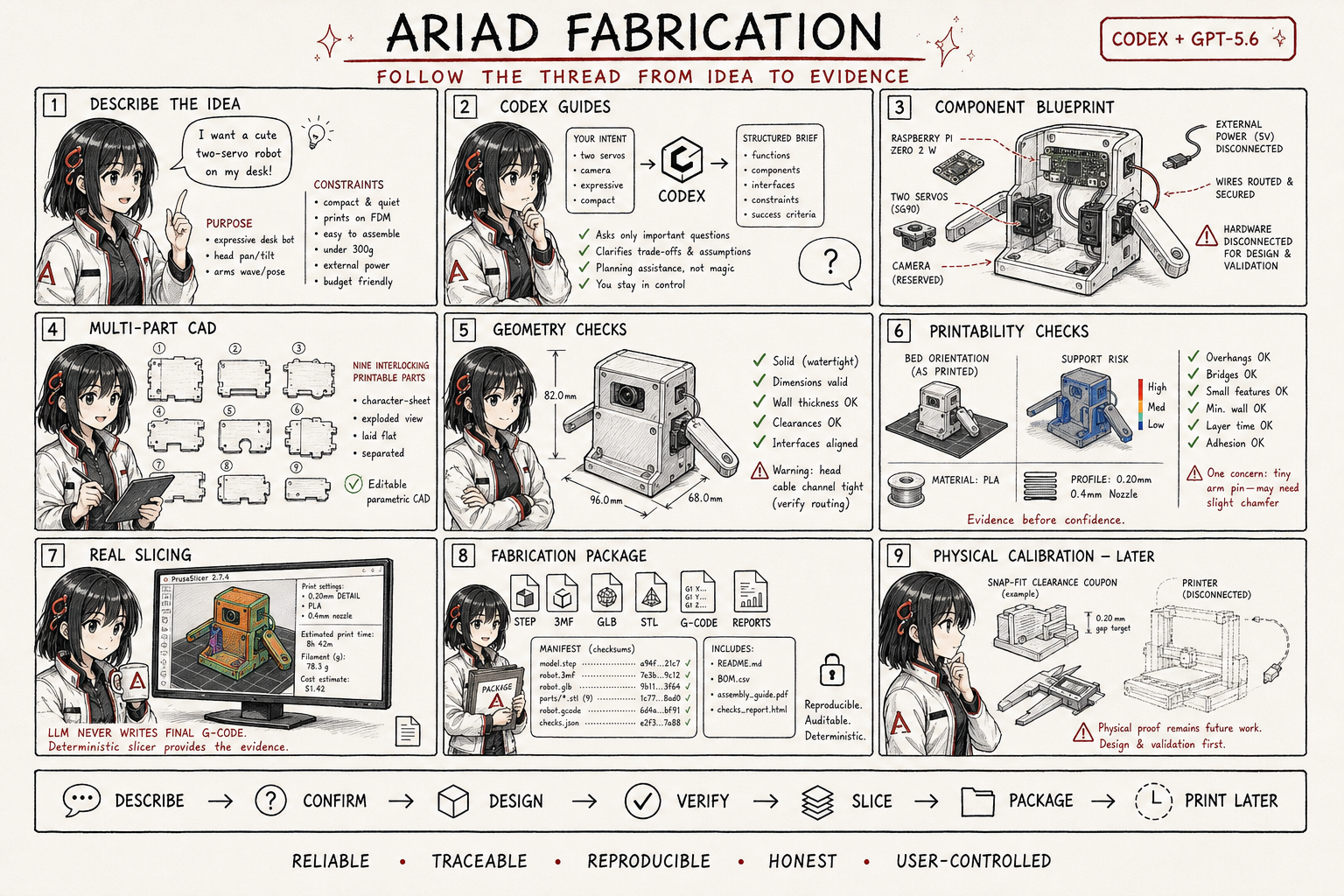
Ariad is a local-first fabrication workspace driven by Codex. A user describes what they want to make in ordinary language, and Codex carries that intent through a structured workflow:
- Clarify the intended object and its requirements.
- Identify real components and important dimensions.
- Create a visual blueprint and assembly plan.
- Generate editable, parametric CAD.
- Check geometry and printability constraints.
- Slice the parts using a real PrusaSlicer profile.
- Preview the resulting toolpath.
- Export an auditable fabrication package.
The demonstration follows a small two-servo robot enclosure designed around a Raspberry Pi Zero 2 W. Instead of treating the robot as one decorative mesh, Ariad separates it into printable parts with interlocking assembly features.
How I built it
The interface is built with React and TypeScript. A Python and FastAPI backend manages project revisions, CAD generation, validation, slicing, evidence, and exported artifacts.
CadQuery and OpenCascade produce editable parametric geometry rather than an opaque AI-generated mesh. Three.js provides the interactive 3D viewport. PrusaSlicer creates the actual slicer output and G-code used by the toolpath preview.
A locally authenticated Codex agent is the user-facing guide. Codex interprets the request and helps drive the journey, while Ariad provides constrained fabrication tools and evidence gates. GPT-5.6 was used through Codex during the project’s design, implementation, debugging, workflow iteration, and demo preparation.
Challenges
The largest challenge was learning that prompt-to-3D is not simply prompt-to-mesh. A convincing render does not prove that an object can be assembled or printed.
I had to redesign the workflow around components, tolerances, print orientation, interlocking parts, repeatable revisions, and honest evidence. I also iterated heavily on the interface because early versions exposed too much technical detail and made the user feel responsible for managing the pipeline.
Another challenge was preserving a clear boundary between digital evidence and physical proof. Ariad can generate and slice the current demonstration, but it does not claim that the robot has been physically validated on a printer.
What I learned
I learned that AI is most useful here as a guide and orchestrator, not as an unquestioned source of geometry. Reliable fabrication requires deterministic tools, traceable assumptions, editable source files, and explicit checkpoints.
I also learned to design the product around the complete assembly before designing the exterior shell. The electronics, motors, clearances, joints, and printing strategy must inform the CAD from the beginning.
What I am proud of
Ariad now demonstrates a continuous journey from a plain-language request to multi-part CAD, geometry evidence, real slicer output, toolpath playback, and an exportable fabrication package.
Every revision remains inspectable, and the interface clearly distinguishes generated evidence from future physical validation.
What's next
The next milestone is physical calibration. I plan to measure the exact electronics, print small fit and clearance coupons, revise the parametric dimensions from those measurements, and then produce the first complete robot enclosure.
Longer term, Ariad could support more CAD strategies, additional slicers, reusable component profiles, safe generated-code execution, and optional read-only printer integration.
Built With
- cadquery
- codexcli
- fastapi
- github
- gpt-5.6
- openaicodex
- opencascade
- powershell
- prusaslicer
- python
- react
- three.js
- typescript
- vite


Log in or sign up for Devpost to join the conversation.