-
-
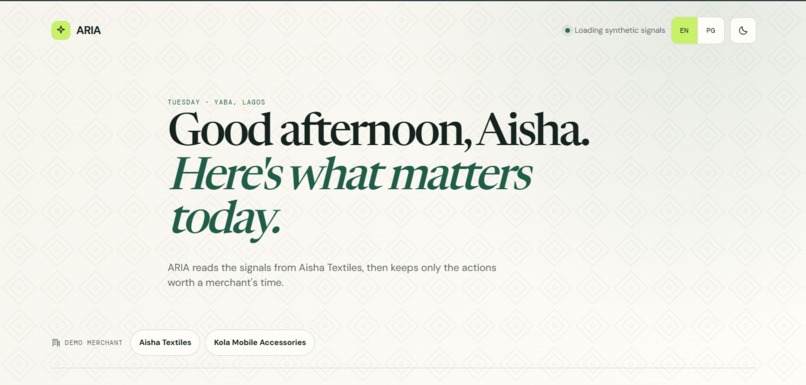
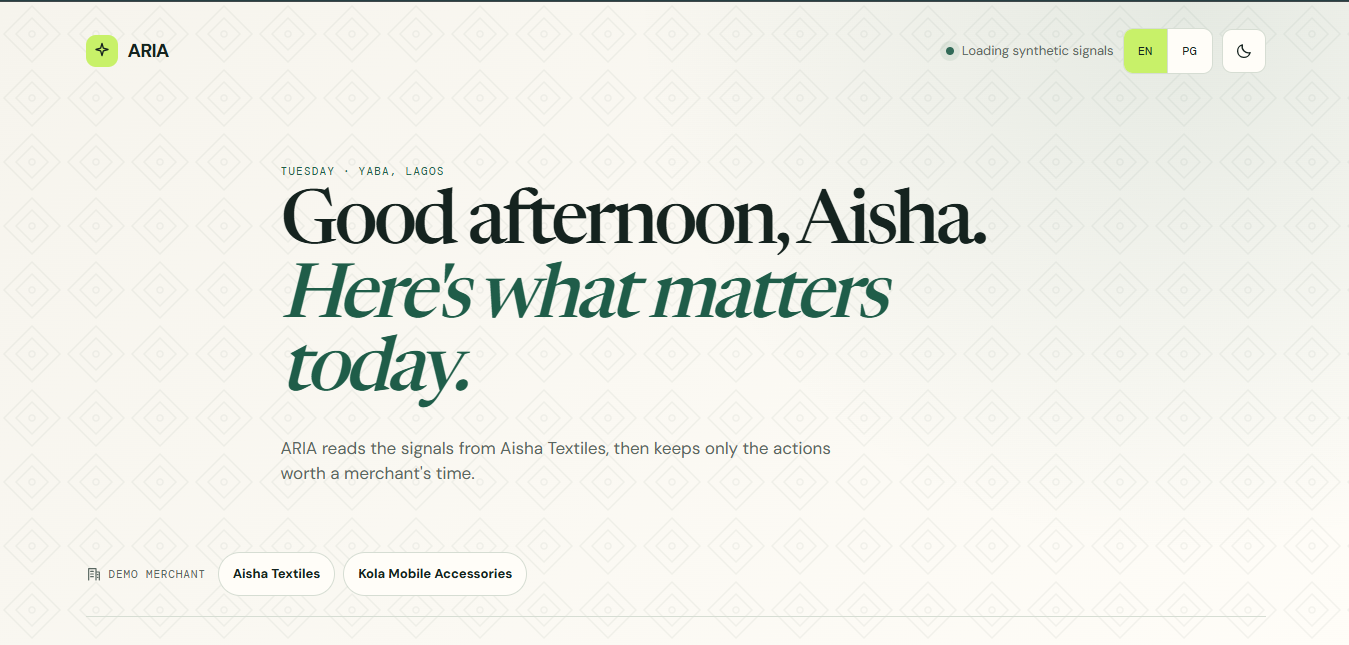
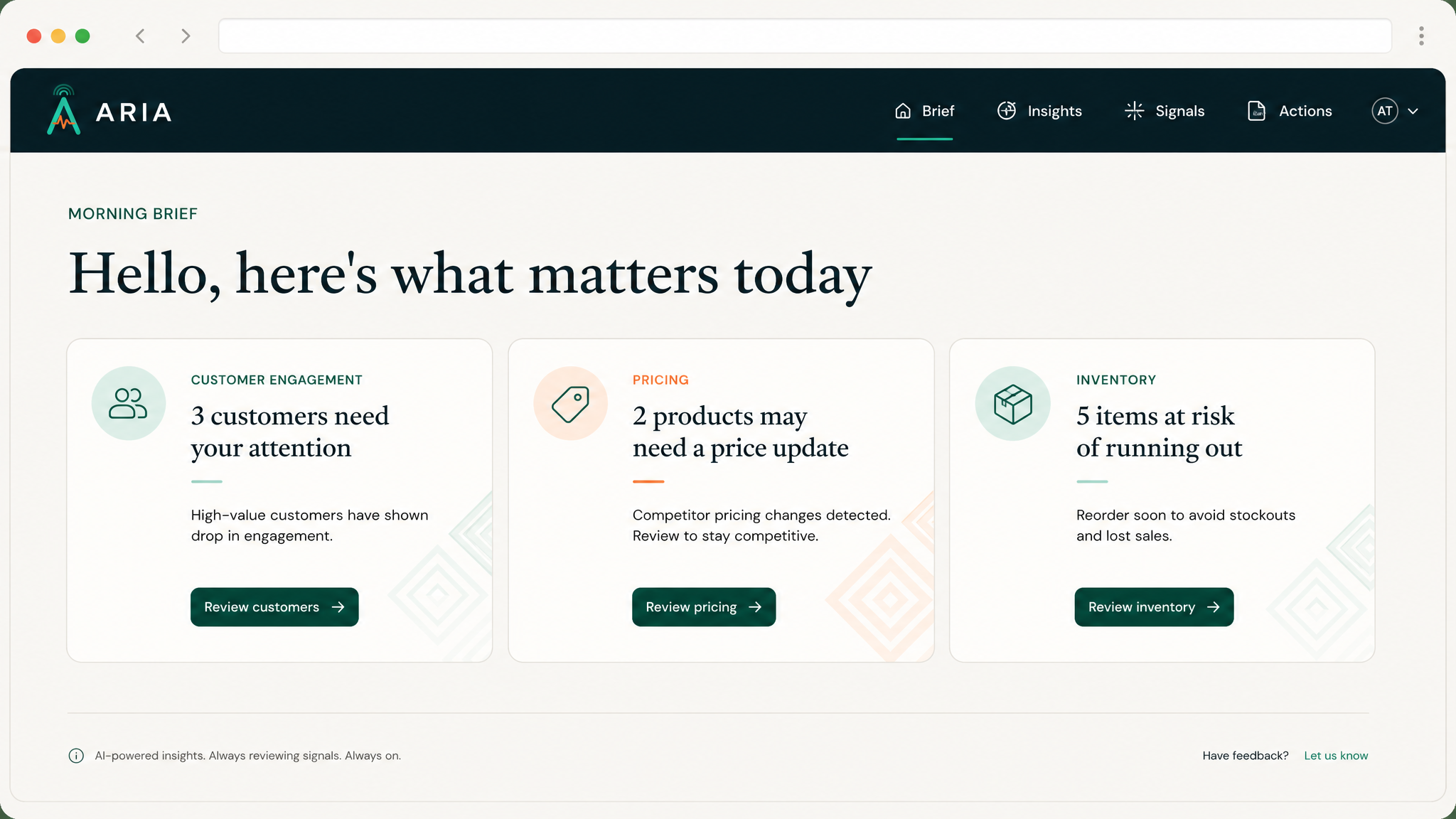
Light mode home page
-
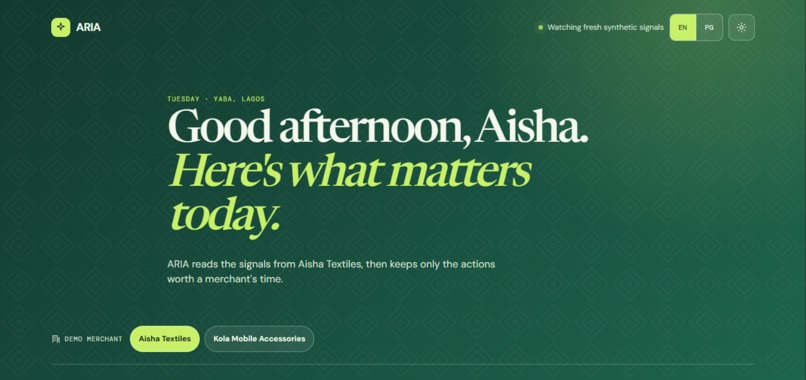
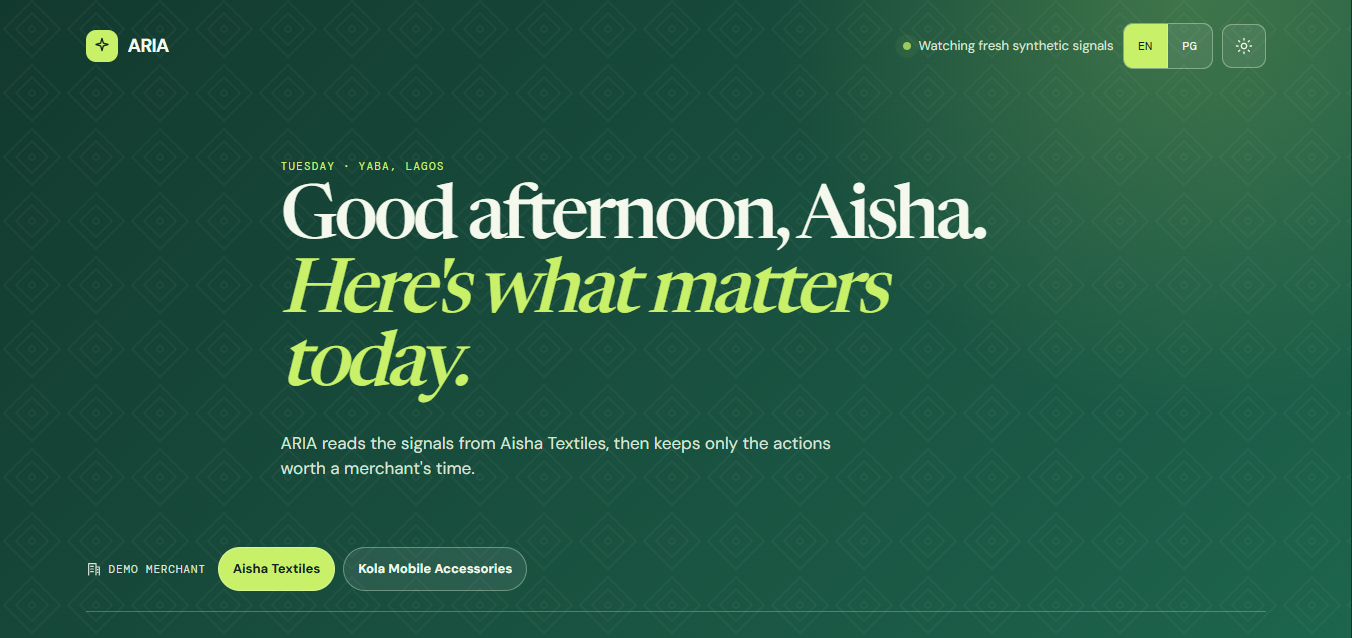
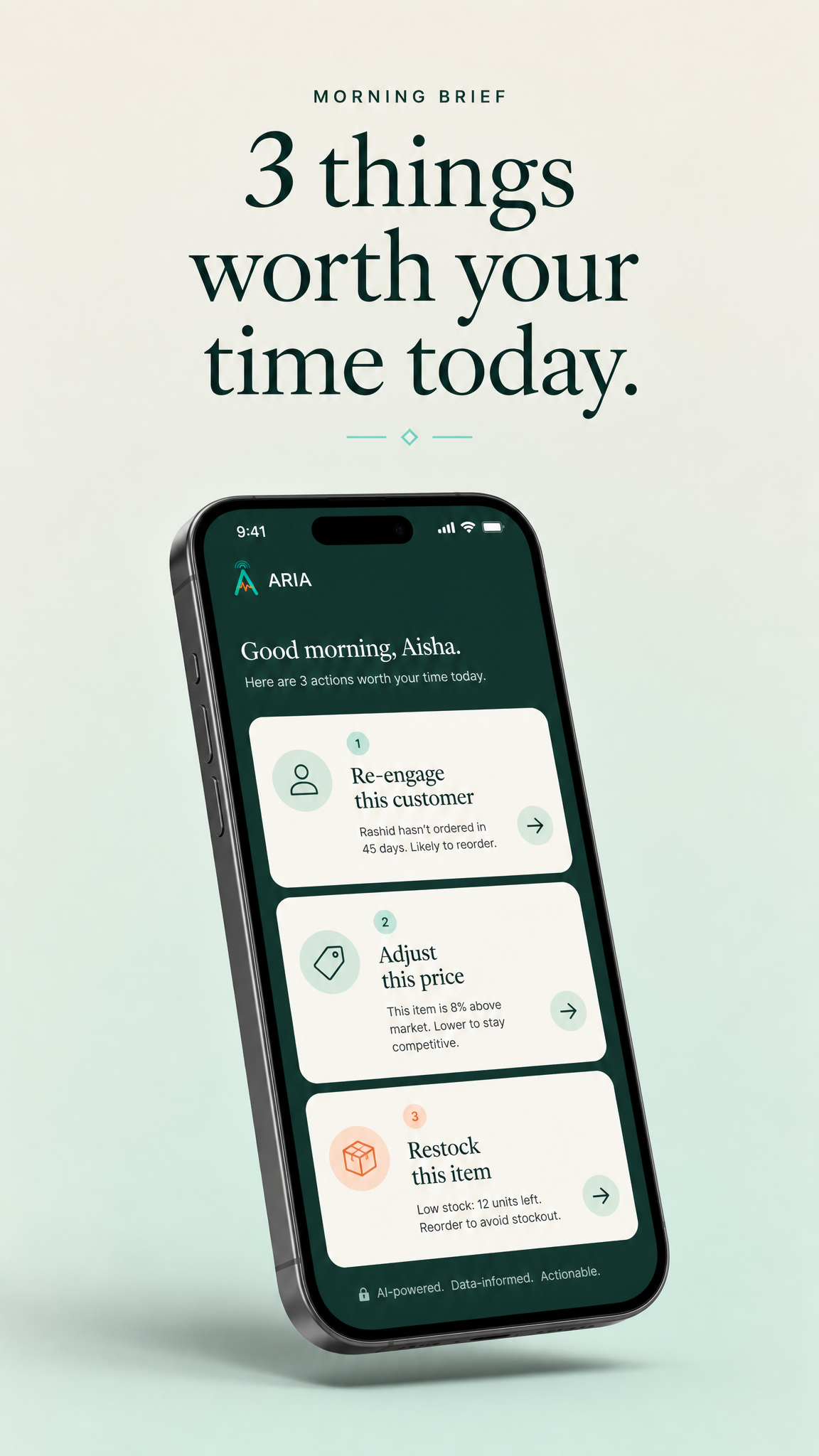
Dark mode home page
-
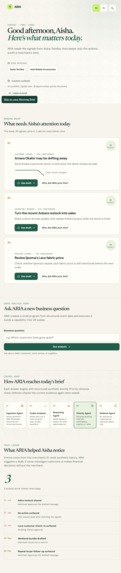
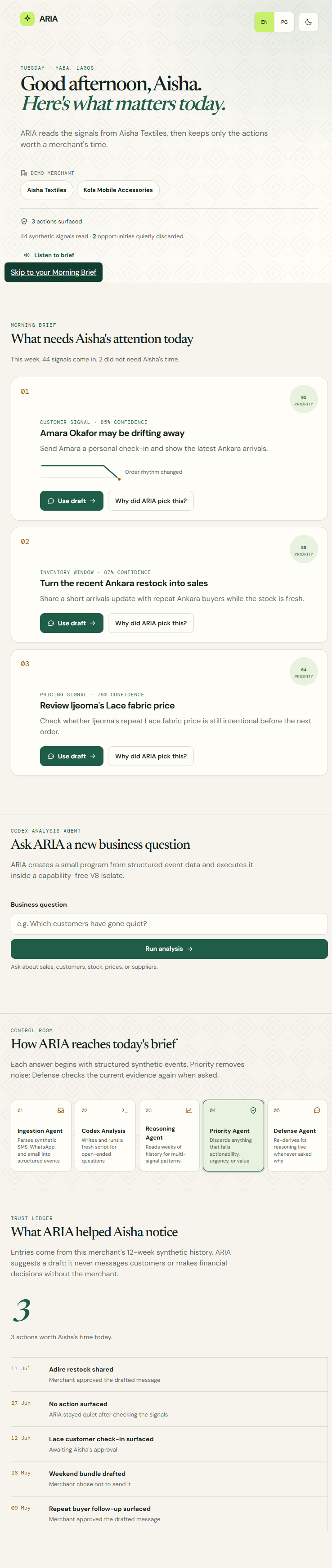
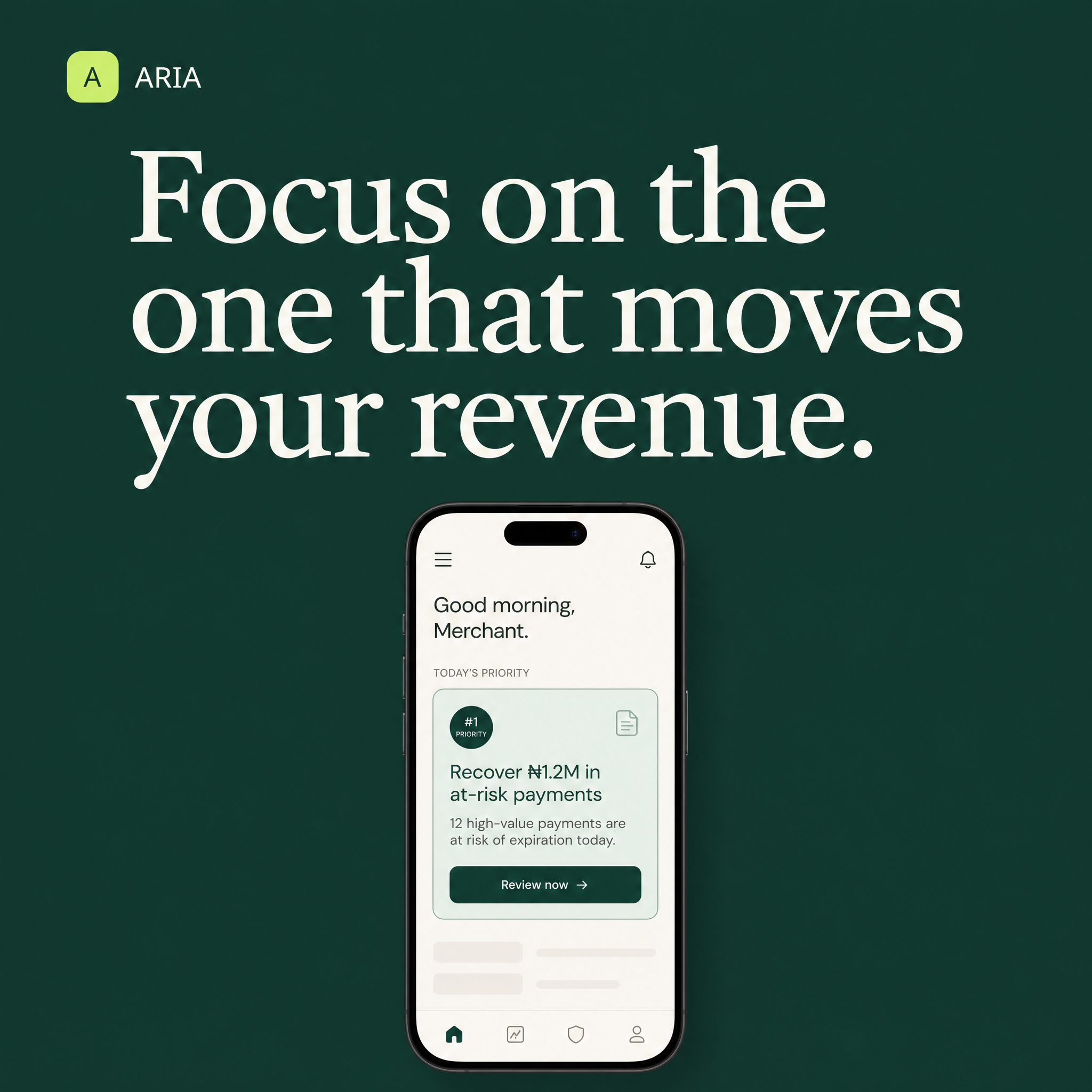
Light mode fullscreen
-
-
-
-
-
-

-

Inspiration
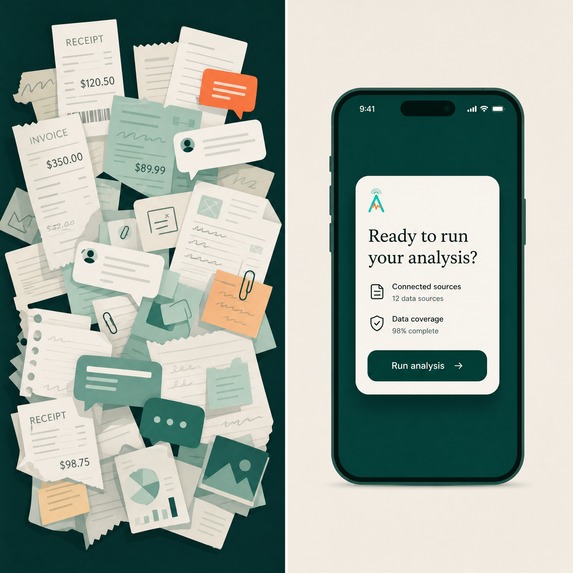
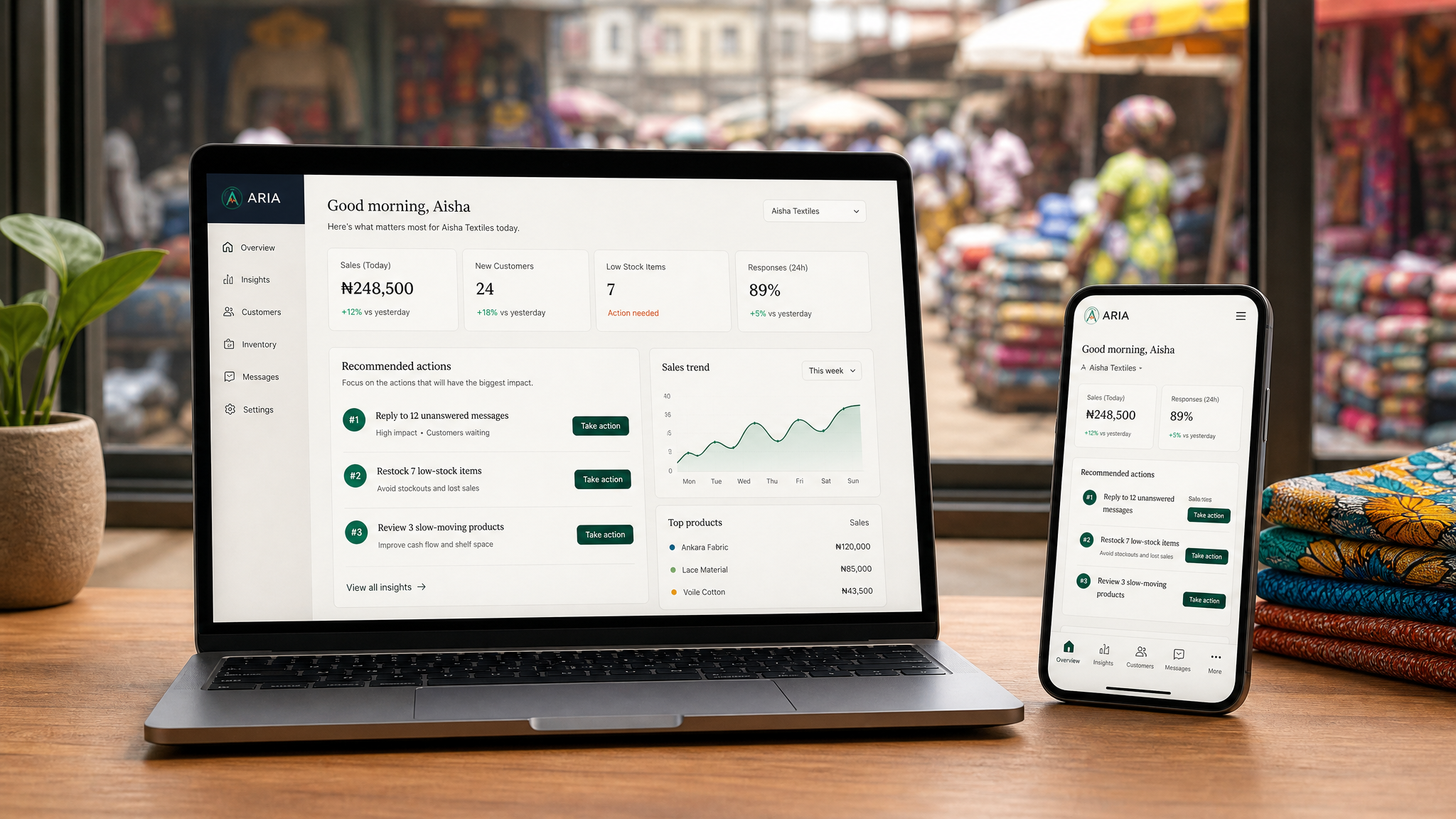
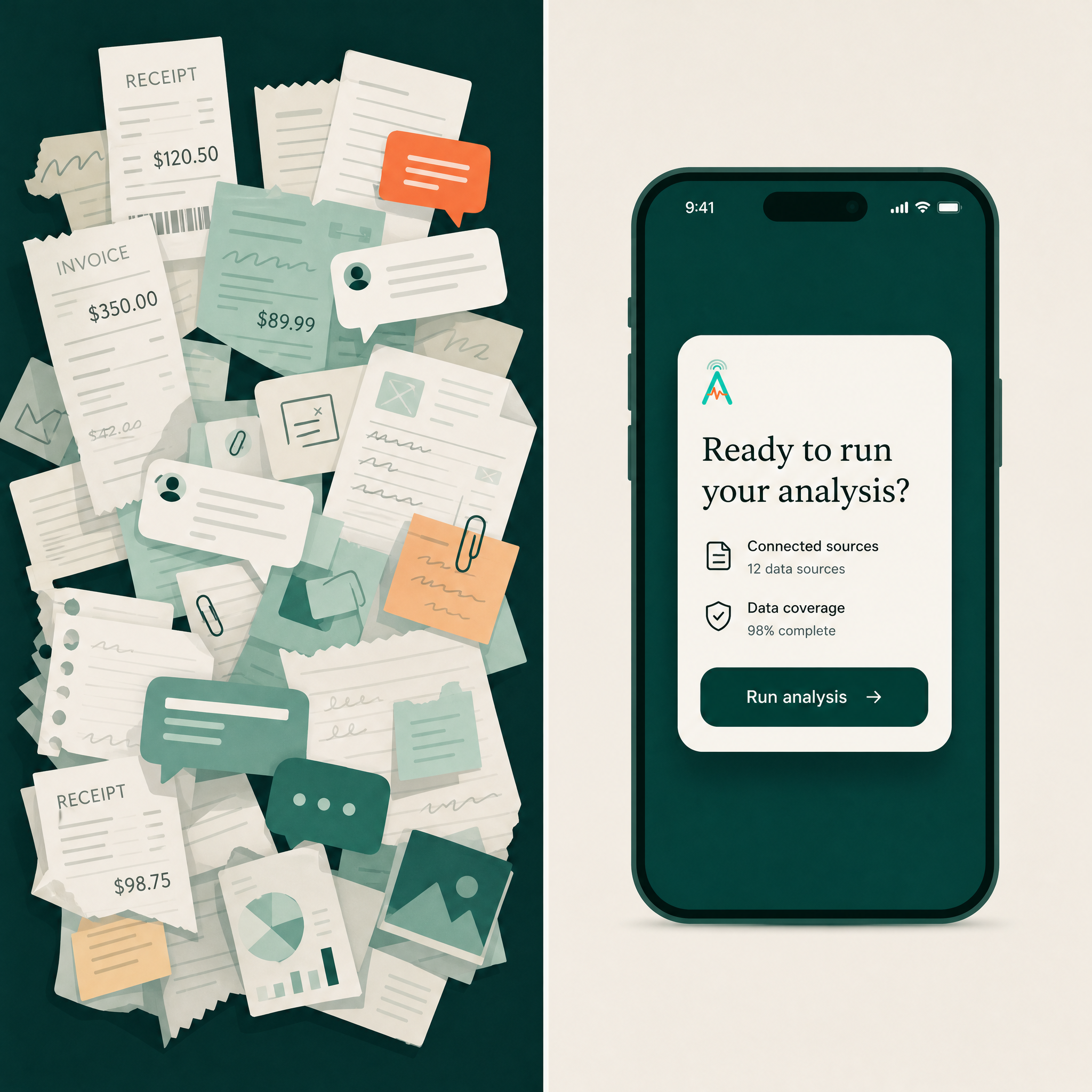
41 million Nigerian SMEs have no analytics team. No CRM. No intelligence layer. A merchant processing ₦5,000,000 a month makes every business decision — who to follow up with, what to restock, which customer is drifting — on gut instinct and memory. The data to answer every one of those questions already exists in her WhatsApp messages and bank alerts. Nobody was reading it intelligently. ARIA was built to change that.
What it does
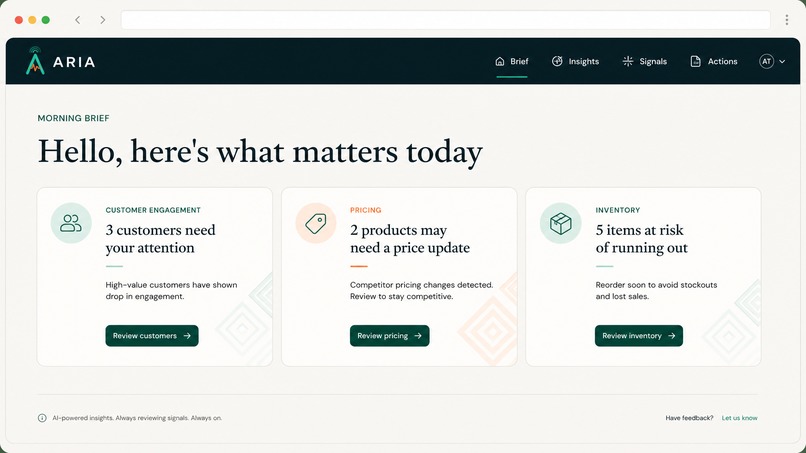
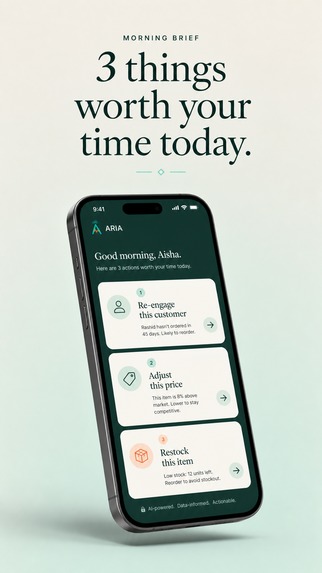
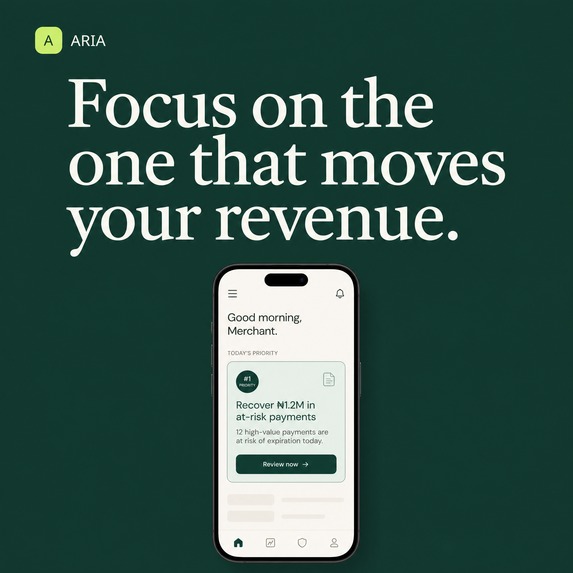
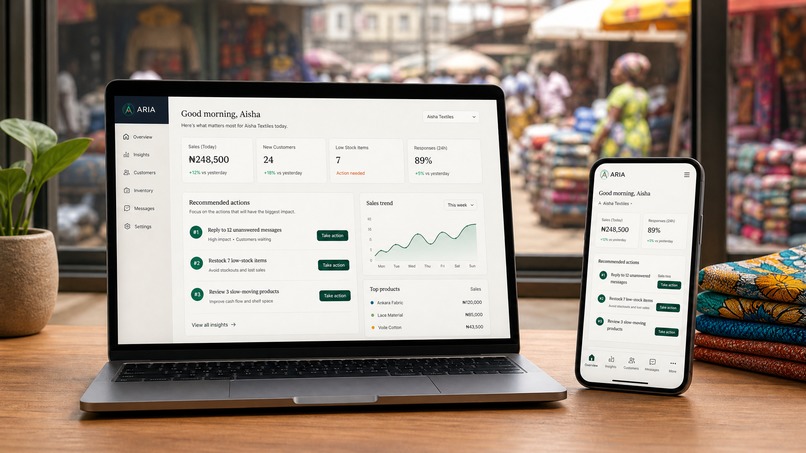
ARIA is a continuously running multi-agent system — not a chatbot, not a prompt loop. It works in the background, accumulates intelligence from unstructured merchant data, and delivers a proactive daily briefing with exactly three prioritised actions. The merchant reads it in 90 seconds and knows what to do.
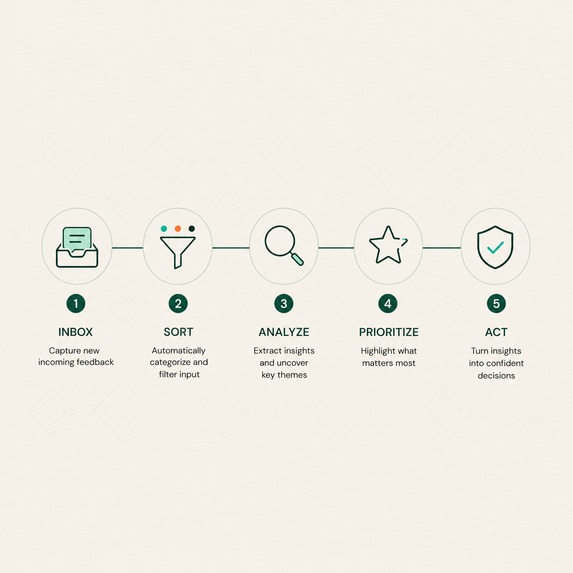
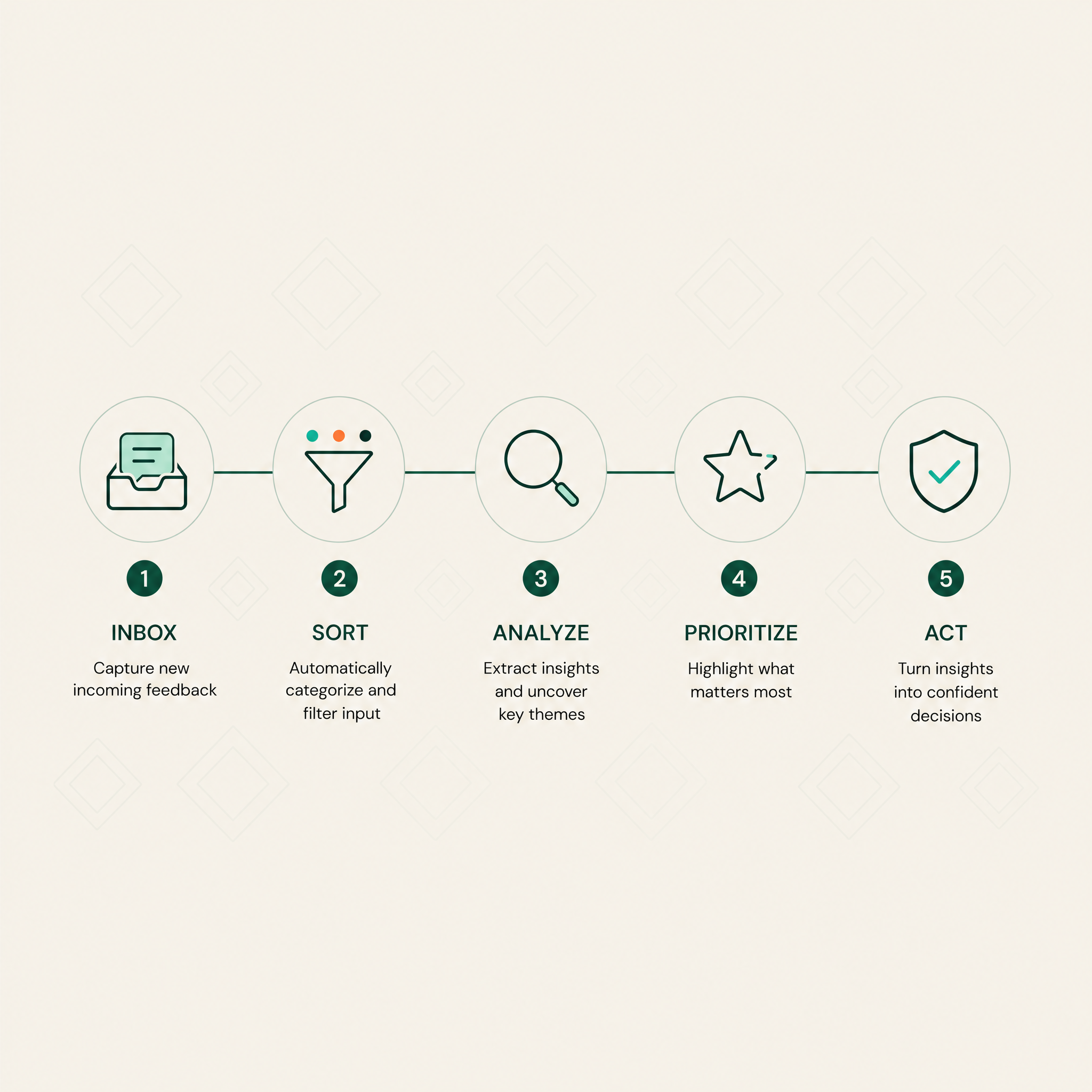
Four agents run in a LangGraph pipeline:
Ingestion Agent — Parses raw SMS bank alerts and WhatsApp Business messages into structured transaction and customer events continuously.
Codex Analysis Agent — When ARIA needs to answer a business question, it does not use pre-written functions. It calls Codex to write a bespoke Python analysis script, executes it against the ingested data, and incorporates the result. ARIA's analytical capability scales infinitely because Codex generates new analysis code as needed.
GPT-5.6 Intelligence Agent — Reasons across accumulated signals to identify implications. Not just "Chioma hasn't ordered in 21 days" — but "her cycle was 12 days for six months, her last order was smaller than usual, the recovery window is the next 48 hours."
Decision Layer — Before anything reaches the merchant, every insight is evaluated: Is it actionable? Is it urgent? Is it high-impact? Has it already been addressed? Only what passes all four filters is surfaced. ARIA does not tell you everything it knows. It tells you only what you need to act on today.
How we built it
Every core function was built through Codex inside ChatGPT. We treated Codex as the co-developer throughout — describing what we needed in natural language, letting Codex generate the implementation, reviewing, and iterating. The Codex Analysis Agent itself — the component that writes and executes bespoke analysis scripts at runtime — was architected and built entirely through Codex sessions.
The stack: LangGraph for multi-agent orchestration, GPT-5.6 for cross-signal reasoning, Codex for live analysis script generation, FastAPI for the backend, PostgreSQL for event storage, Python for execution.
Challenges we ran into
The hardest problem was not building the agents — it was the decision layer. Generating intelligence is tractable. Knowing what NOT to surface is genuinely difficult. An agent that tells a merchant everything it knows creates noise, not help. We iterated through five versions of the priority/filter function before the output felt like a briefing rather than a data dump.
The second challenge was the Codex Analysis Agent's execution safety — when Codex writes a script that runs against live merchant data, you need sandboxing, timeout enforcement, and output validation to prevent runaway execution. This took significant engineering time to get right.
Accomplishments that we're proud of
The moment that made the whole build feel real: watching ARIA receive 30 days of a merchant's raw WhatsApp messages and bank alerts, generate and execute a Codex- written customer churn analysis script, reason across the output with GPT-5.6, filter through the decision layer, and produce a complete business briefing with a drafted customer message — without a single user prompt after the initial data upload. That is not a chatbot. That is an autonomous agent doing genuine business work.
What we learned
Intelligence without a decision layer is noise. The move from AI outputs to AI outcomes requires an architectural component that evaluates relevance before anything reaches the user. This is the lesson we carried from studying what wins at the highest level, and it is what we built first.
What's next for ARIA
WhatsApp Business API integration for direct delivery of the daily briefing. Payday cycle intelligence — syncing recovery timing to Nigerian payroll patterns. A self-serve onboarding flow where any merchant connects their bank alert forwarding and WhatsApp number in under 10 minutes. And expansion beyond Nigeria — the architecture is market-agnostic. The Nigerian context is the proof of concept.
Built With
- agents
- api
- architecture
- autonomous
- business
- codex
- decision
- fastapi
- fintech
- gpt-5.6
- intelligence
- langchain
- langgraph
- layer
- multi-agent
- nigerian
- openai
- postgresql
- python
- rest
- sme
- systems


Log in or sign up for Devpost to join the conversation.