Inspiration
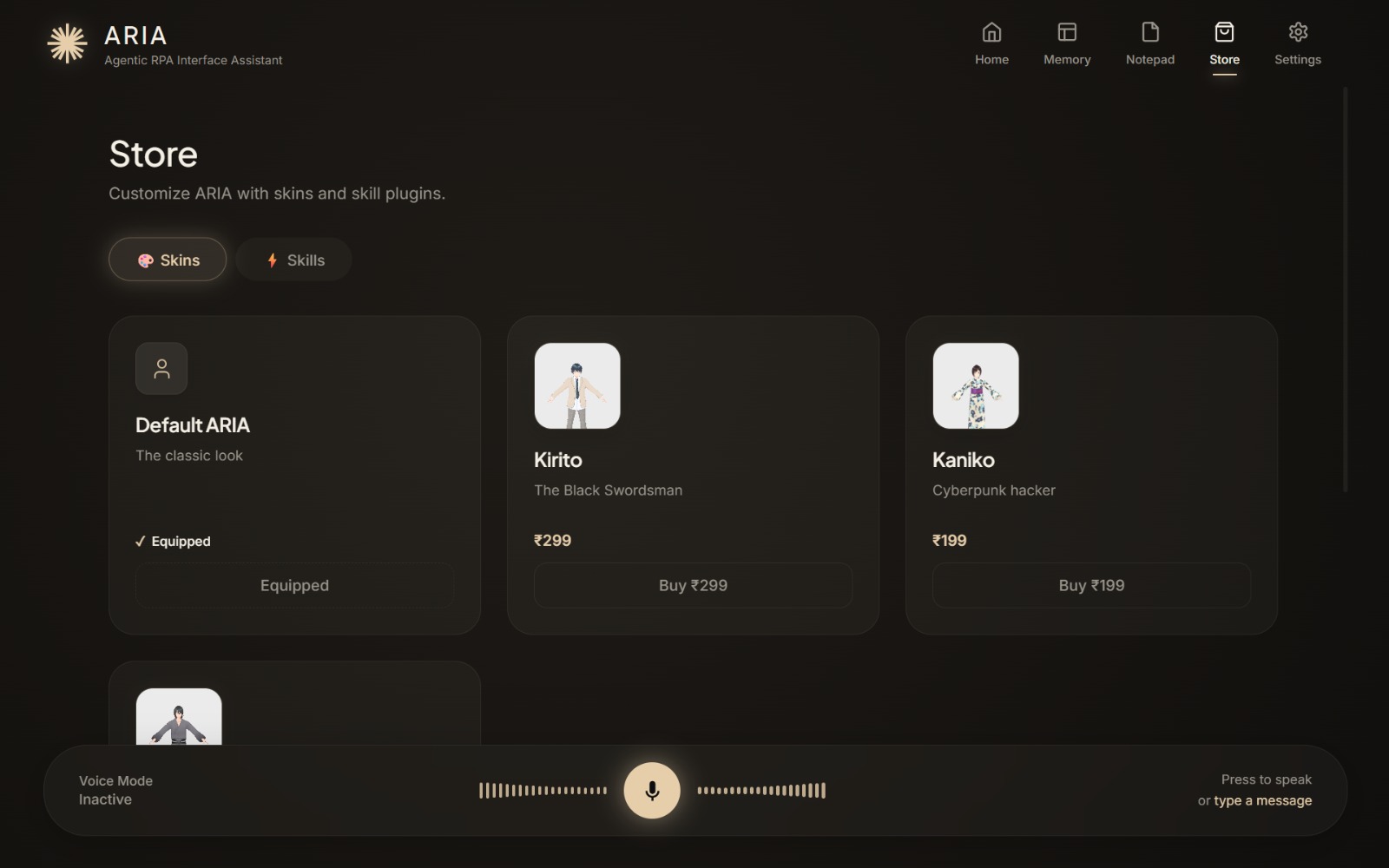
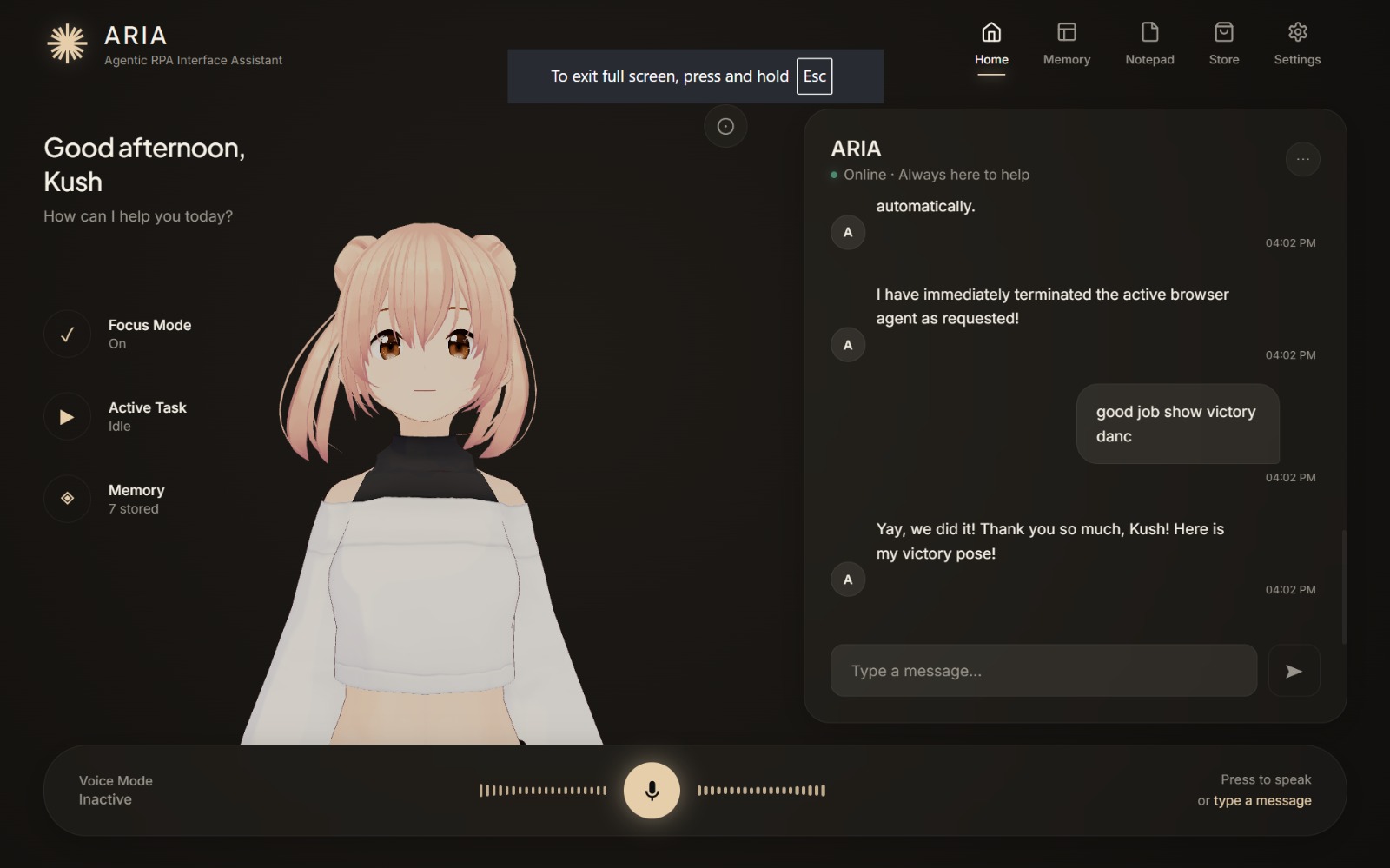
ARIA was inspired by the vision of creating a next-generation AI assistant that goes beyond conversation and can actually perform real digital tasks autonomously. We wanted to combine the intelligence of AI agents with a human-like interactive experience through a real-time 3D avatar interface. Our goal was to make automation more accessible, visual, and engaging while reducing repetitive manual web tasks.
What it does
ARIA (Agentic RPA Interface Assistant) is an AI-powered desktop companion featuring a 3D avatar interface and an autonomous agent backend capable of visual form automation, intelligent web interaction, and data scraping. It can navigate websites, interact with forms, extract information, and assist users with repetitive digital workflows through AI-driven automation.
How we built it
We built ARIA using a modular architecture consisting of a frontend 3D avatar interface and an AI automation backend. The frontend was designed to provide a responsive and immersive user experience, while the backend handled intelligent decision-making, browser interaction, and workflow execution. We integrated visual automation techniques, web interaction modules, and AI-driven task orchestration to enable autonomous execution of tasks such as form-filling and web scraping.
Challenges we ran into
One of the major challenges was integrating the AI agent with reliable visual automation workflows. Dynamic websites, changing UI elements, and maintaining accurate interaction behavior created several technical hurdles. We also faced challenges in synchronizing the 3D avatar frontend with backend task execution while keeping the system responsive and efficient. Ensuring smooth communication between multiple modules required significant debugging and optimization.
Accomplishments that we're proud of
We are proud of successfully building a working autonomous AI assistant capable of performing real-world web automation tasks. Integrating a live 3D avatar with intelligent backend automation gave the project a unique identity and futuristic feel. We also managed to create a scalable architecture that can be expanded into more advanced AI workflow systems in the future.
What we learned
Through this project, we gained hands-on experience in AI agents, browser automation, frontend-backend integration, workflow orchestration, and user-centric interface design. We learned how challenging real-time automation can be when dealing with unpredictable web environments and how important system modularity and optimization are for scalability.
What's next for ARIA
In the future, we plan to make ARIA more multimodal and capable of voice interaction, autonomous task planning, and cross-application workflow automation. We also aim to integrate memory-based personalization, advanced computer vision, and support for enterprise productivity workflows. Our long-term vision is to evolve ARIA into a fully capable AI desktop operating companion.
Built With
- 3d
- ai-agents
- and
- beautiful-soup
- blender
- browser-automation
- css
- flask
- html
- javascript
- opencv
- rendering
- rest-apis
- selenium
- sqlite
- three.js
- web-scraping

Log in or sign up for Devpost to join the conversation.