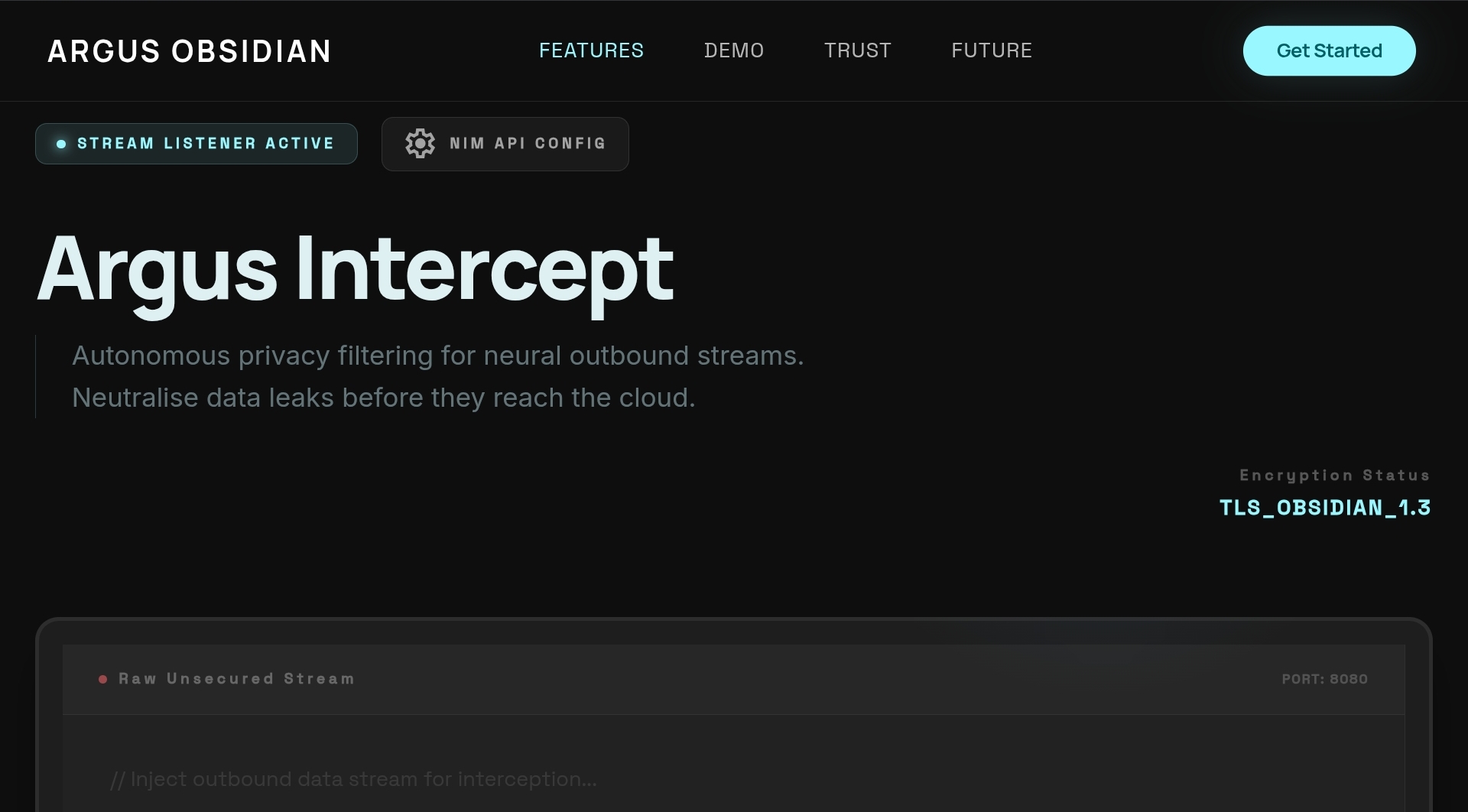
Inspiration ARGUS OBSIDIAN was inspired by a simple but important problem: people are increasingly using AI tools in everyday life, but they often share sensitive information without realizing the privacy risk. Students paste resumes, developers share API keys, freelancers work with client data, and professionals use AI for productivity every day. I wanted to build a system that allows people to use AI naturally without exposing private information. That idea became ARGUS OBSIDIAN: a privacy-first AI layer that protects users before their data reaches an AI model.
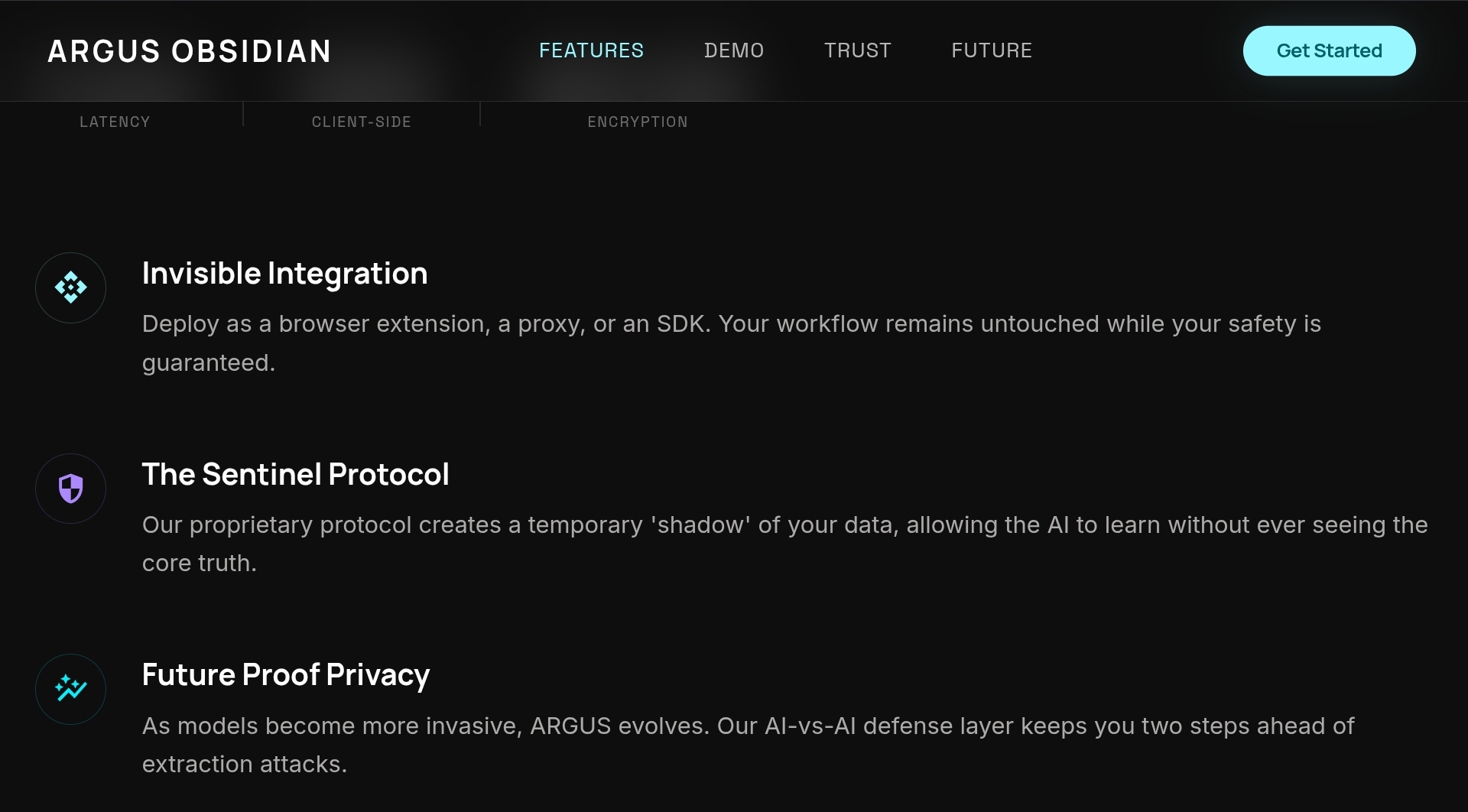
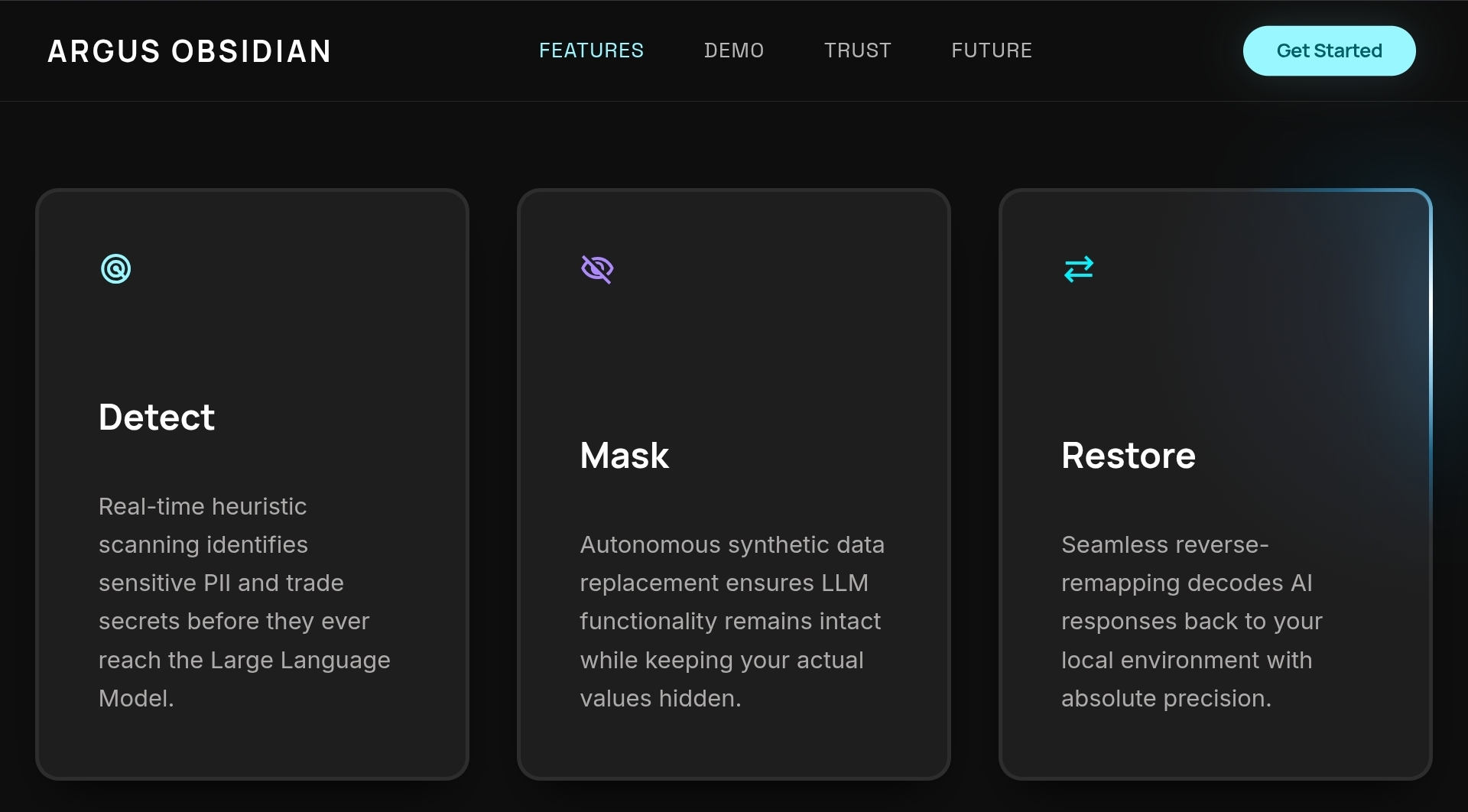
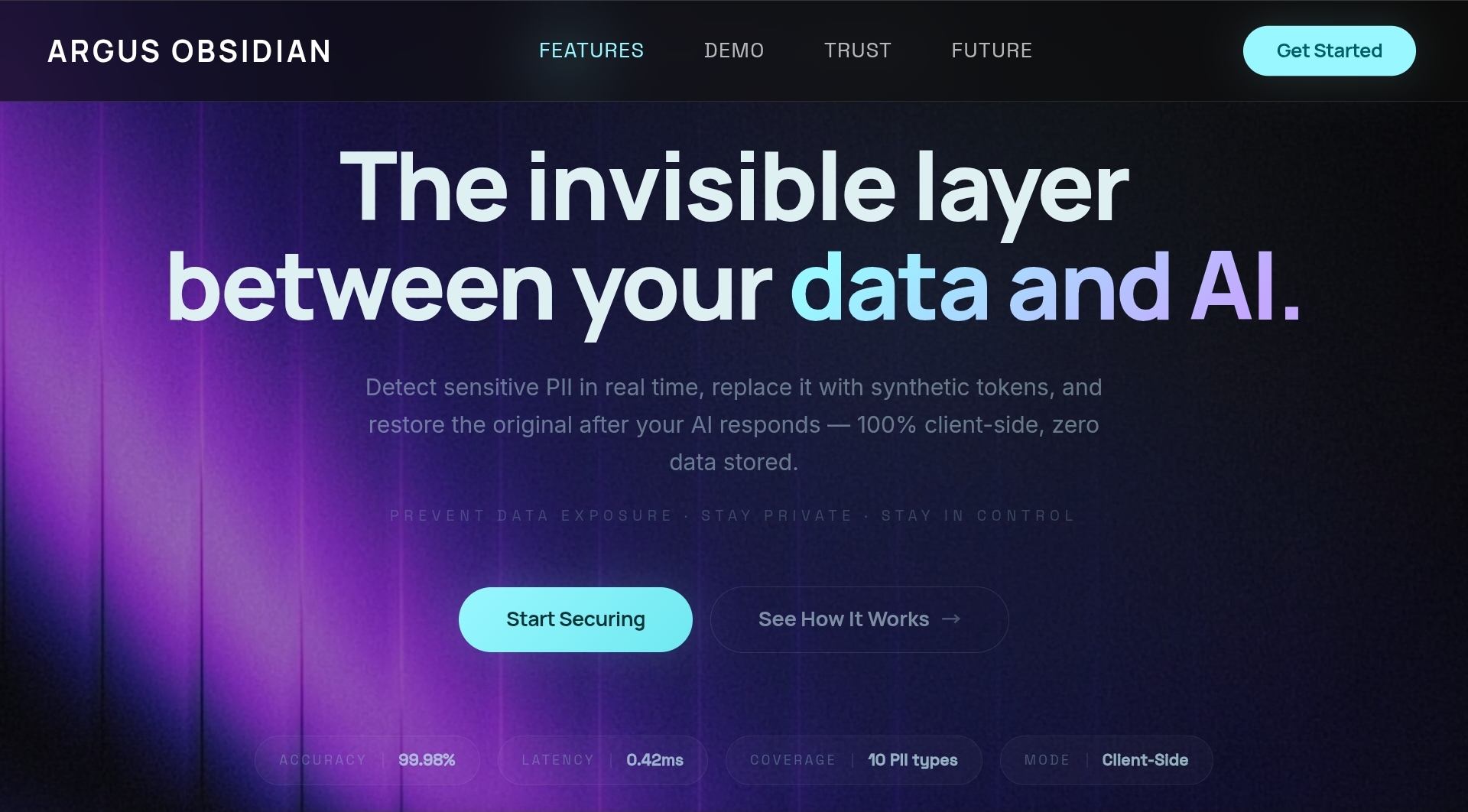
What it does ARGUS OBSIDIAN automatically detects sensitive information such as emails, phone numbers, passwords, API keys, addresses, and private text. It masks that data before sending the prompt to the AI model and then restores the original context in the response. This allows users to interact with AI safely, without changing how they normally work. The goal is to make privacy automatic, invisible, and seamless.
How we built it We built ARGUS OBSIDIAN as a web-based privacy layer with a clean frontend and a backend processing pipeline. The system follows a secure flow:
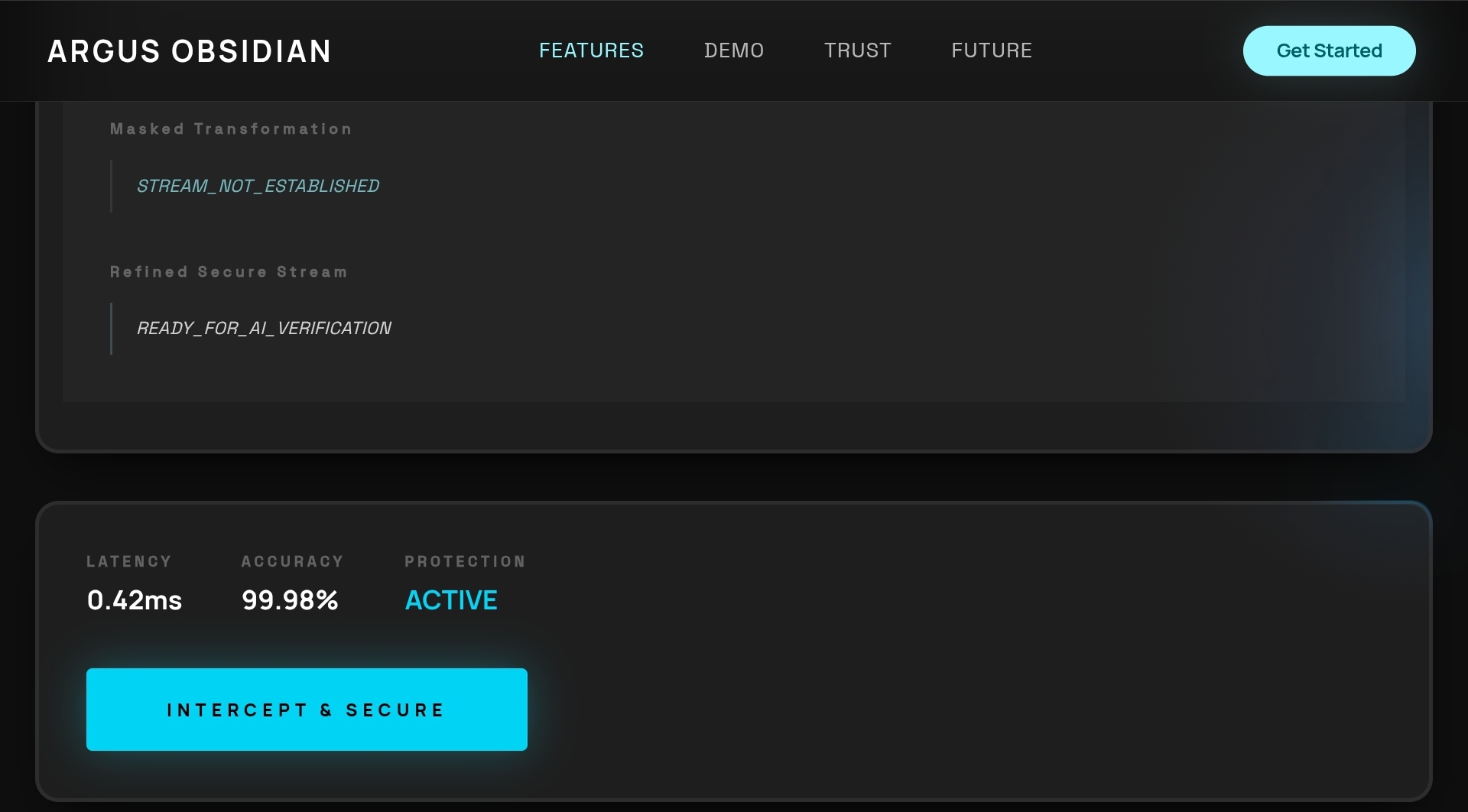
Detect → Mask → Send → Restore → Display
The frontend provides a simple and intuitive interface for users to paste or type text. The backend handles sensitive data detection, masking, and response restoration. We integrated NVIDIA Nemotron for AI processing and designed the product to keep the user experience fast and smooth while protecting private data in real time.
Challenges we ran into One of the biggest challenges was balancing privacy, performance, and usability at the same time. Sensitive data detection had to be accurate enough to be useful, but also fast enough to feel seamless. Another challenge was making the product feel simple and trustworthy instead of technical or complicated. We also had to ensure the system could protect user data without interrupting the natural AI workflow.
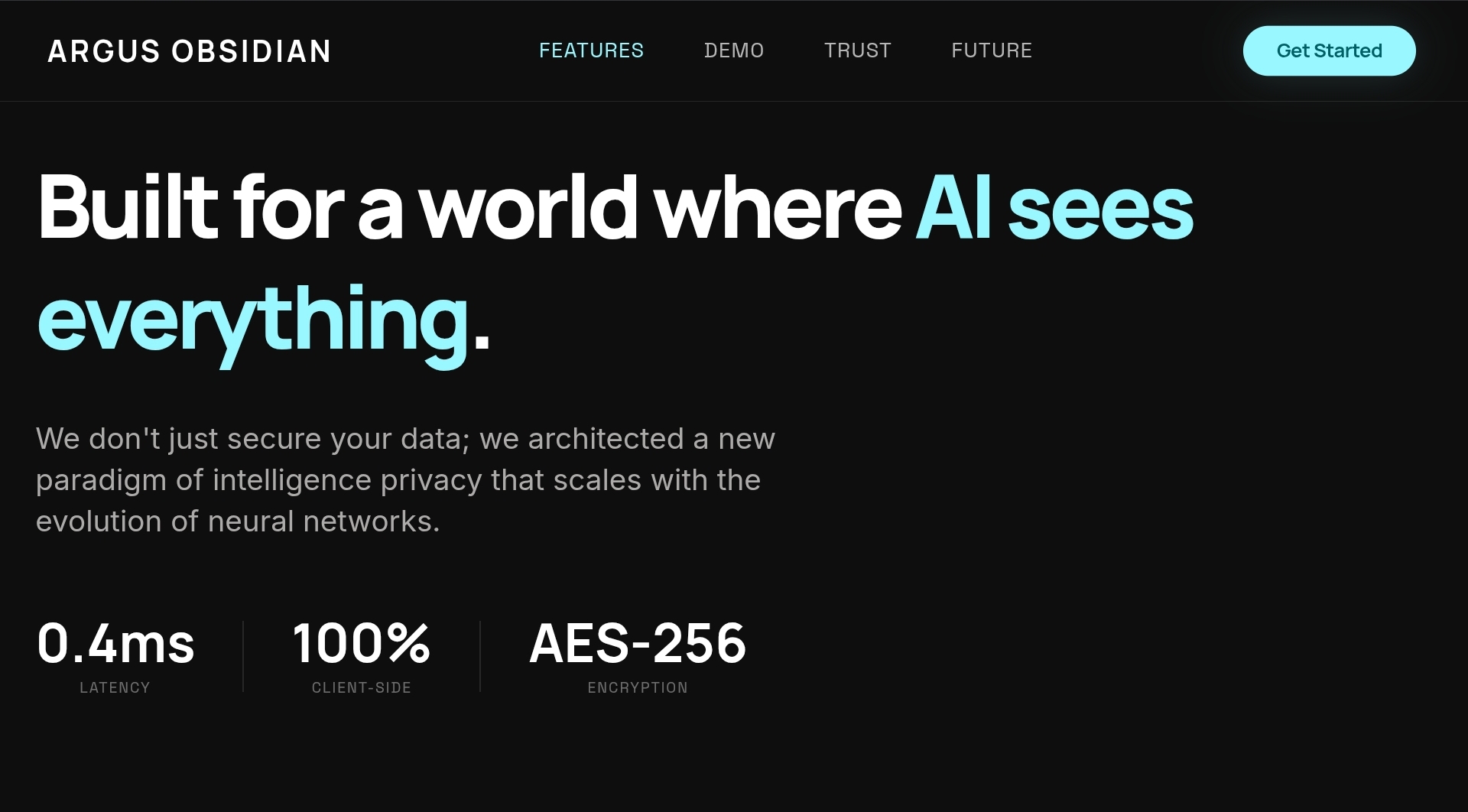
Accomplishments that we're proud of We are proud that ARGUS OBSIDIAN is not just a concept, but a working privacy-first AI system with a real-time masking pipeline. We successfully turned a serious privacy problem into a practical product that users can understand and use easily. Another accomplishment is creating a design that feels modern and premium while still focusing on safety and trust.
What we learned We learned that privacy tools must be effortless if people are going to use them consistently. If a solution adds too much friction, users will ignore it, even if the risk is real. We also learned that good product design is not only about features, but about making users feel safe and confident. The project taught us how to think like builders, not just coders.
What's next for ARGUS OBSIDIAN: The Privacy Layer for AI Next, we want to expand ARGUS OBSIDIAN beyond a single interface into a broader privacy layer for real-world AI usage. One important future direction is for agencies and service workflows, where AI can sit between the user and the company to help with tasks like ticket booking, support requests, form filling, and communication without exposing sensitive data to the AI system. In that model, the AI becomes a private intermediary that protects user information while still completing the task.
We also want to build browser and IDE integrations, support more sensitive data types, improve detection rules, and make the product work across more AI platforms. Our long-term goal is to turn ARGUS OBSIDIAN into a trusted privacy layer for every AI interaction, from personal use to agency workflows and enterprise environments.
Built With
- apis
- css
- css3
- fastapi
- git
- github
- html5
- javascript
- nemotron
- node.js
- react
- regex-based
- rest
- tailwind
- typescript


Log in or sign up for Devpost to join the conversation.